


Let us simplify the ‘Timeline of Indian History’. This is a journey of the history of one of the greatest civilizations that the Indian Subcontinent has been. The Indian history timeline is the easiest way to understand the history of an ancient civilization with huge diversity.
This timeline covers all the major events and aspects of history that defines the Indian Subcontinent today. Furthermore, this is not only the history of India but also the timeline of the history of Pakistan and Bangladesh.
Indian History Timeline Chart

Bhimbetka Rock Shelters (30000-7000 BC)
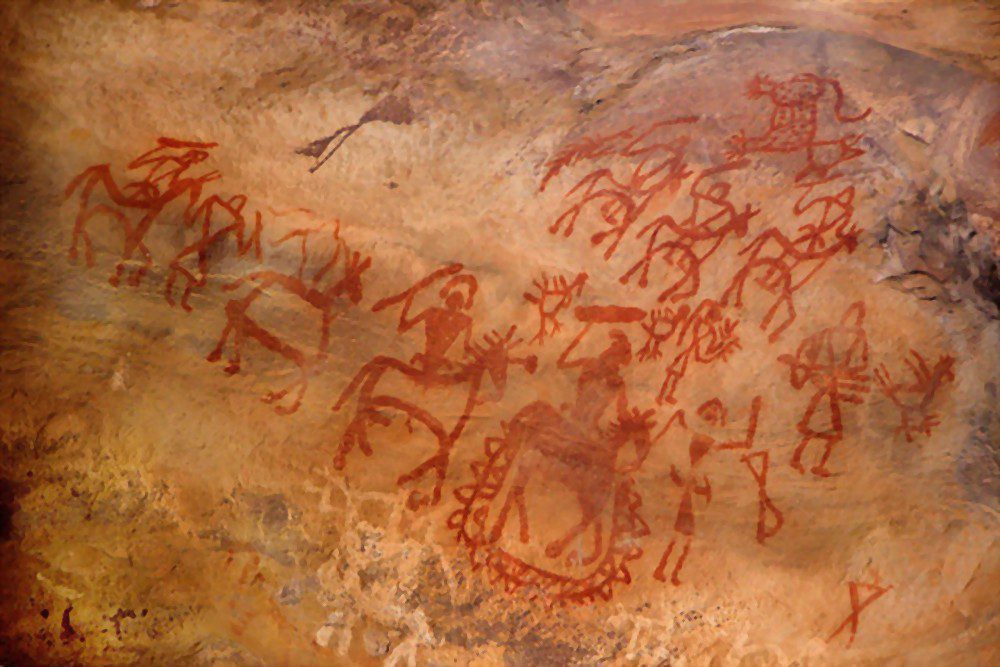
The earliest records of the Indian subcontinent history exist in the form of the Rock Shelters of Bhimbetka. It’s an archaeological site in central India that spans the prehistoric paleolithic and mesolithic periods, as well as the historic period.
It shows the earliest traces of human life on the Indian subcontinent and evidence of Stone Age starting at the site.
Some of the Bhimbetka rock shelters feature prehistoric cave paintings and the earliest are about 30,000 years old.
These shelters are situated on the southern edge of the central Indian plateau, in the foothills of the Vindhyan Mountains.
There are five groups of rock shelters, each of them decorated with paintings that are believed to date from the Mesolithic Period right through to the historical period.
The Bhimbetka site has the oldest known rock art in the Indian subcontinent, as well as is one of the largest prehistoric complexes.
Mehrgarh Culture (7000 BC to 3300 BC)
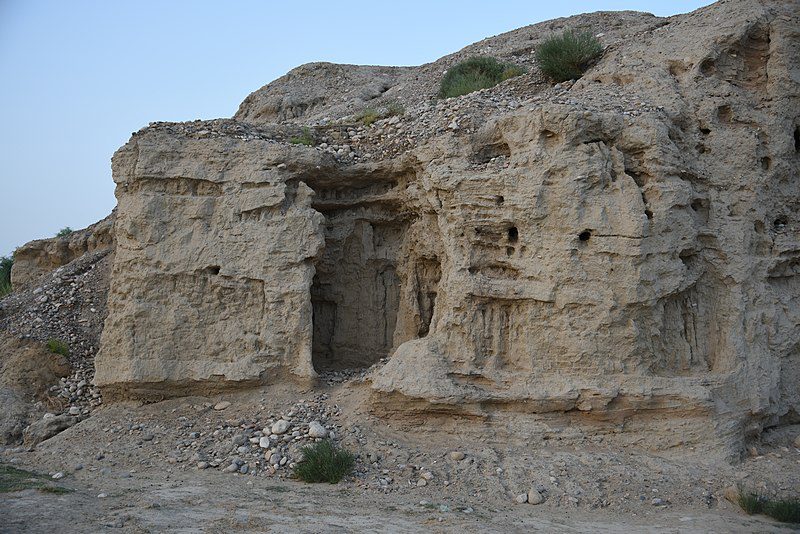
Mehrgarh is one of the most significant sites belonging to the Neolithic Age. At the same time, it is one of the oldest sites that indicate the introduction of the concept of farming and herding.
Mehrgarh, sometimes also anglicized as Mehergarh or Mehrgar, is located near the Bolan Pass on the Kacchi Plain of Balochistan, Pakistan, to the west of the Indus River valley
The site of Mehrgarh, spread over an area of 495-acre, was discovered in the year 1974.
Indus Valley Civilization (3300 BC to 1700 BC)
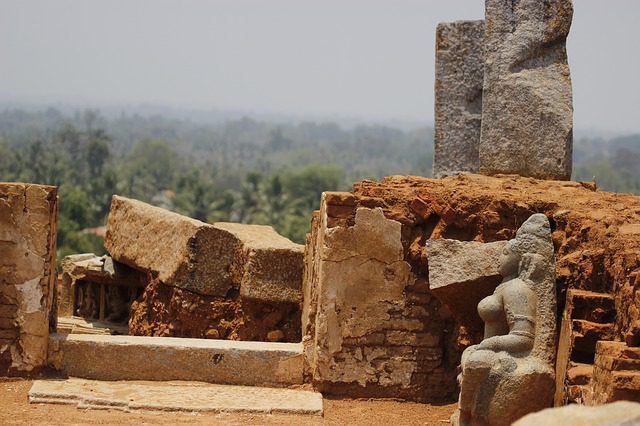
The Indus Valley Civilization was discovered in the 1920s. This is one of the most significant periods in the history of India. Indus Valley Civilization is divided into 6 significant phases.
Early Harappan Phase (3300 BC to 2600 BC)
The early Harappan Phase lasted for approximately 700 years, starting with the Ravi Phase.
It is one of the three earliest urban civilizations and made use of an early form of the Indus script, known as Harappan script, for writing purposes.
Around 2800 BC, the Kot Diji phase of the Indus Valley Civilization started.
Mature Harappan Phase (2600 BC to 1700 BC)
The Mature Harappan Phase started around 2600 BC. Large cities and urban areas started emerging and the civilization expanded to over 2,500 cities and settlements.
Urban planning, excellent sewage and drainage system, system of uniform weights and measures, knowledge of proto-dentistry, etc are some of the other elements that characterize the mature phase.
Late Harappan Phase (1700 BC to 1300 BC)
The Late Harappan Phase began around 1700 BC and came to an end around 1300 BC. However, one can find many elements of the Indus Valley Civilization in later cultures.
Vedic Period/Age (1700 BC to 500 BC)
The Vedic Period or the Vedic Age refers to the time of the compilation of the sacred Vedic Sanskrit texts in India.
Situated on the Indo-Gangetic Plain, the Vedic Civilization formed the basis of Hinduism and the Indian culture. The Vedic Period can be divided into the following two phases:
Early Vedic/Rig Vedic Period (1700 BC to 1000 BC)
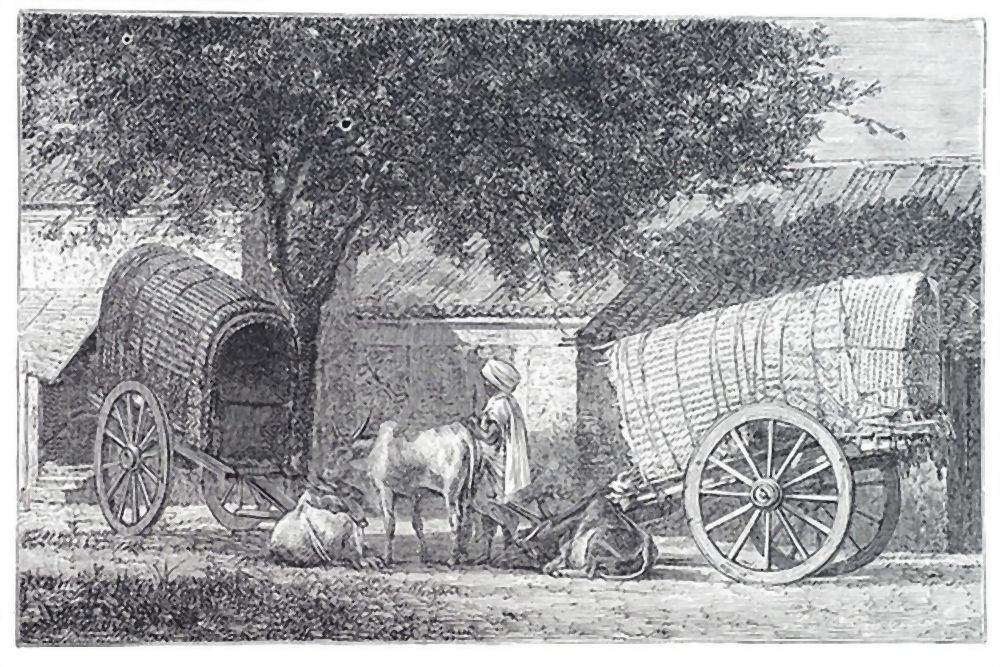
Early Vedic Period represents the time period when the oldest of all Vedas, Rig Veda was compiled.
During this period, the king was believed to be the protector of the people, who took an active part in the government.
The caste system started becoming rigid and the families started becoming patriarchal. The major events of this time are:
- 1700 BC – Late Harappan and Early Vedic period coincide
- 1300 BC – The end of Cemetery H culture
- 1000 BC – Iron Age of India
Later Vedic Age (1000 BC to 500 BC)
The emergence of the later Vedic period was marked with agriculture becoming the dominant economic activity and a decline in the significance of cattle rearing.
The political organization changed completely, with the reduction in the involvement of people in the administration. The major events are:
- 600 BC – The formation of Sixteen Maha Janapadas (Great Kingdoms)
- 599 BC – The birth of Mahavira, founder of Jainism
- 563 BC – The birth of Siddhartha Gautama (Buddha), founder of Buddhism
- 538 BC – Cyrus the Great conquered parts of Pakistan
- 500 BC – Earliest written records in Brahmi
- 500 BC – Panini standardized grammar and morphology of Sanskrit, converting it
- into Classical Sanskrit. With this, the Vedic Civilization came to an end.
Ancient India (500 BCE – 550 AD)
Rise of Jainism and Buddhism
-
The emergence of Buddhism in India -

Buddhism
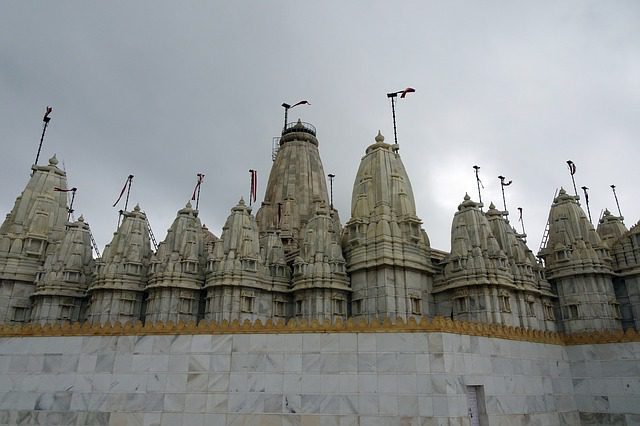
Jainism or Jain Dharma is the religious philosophy that originated in the Ancient India. The religion is based on the teachings of the Tirthankaras.
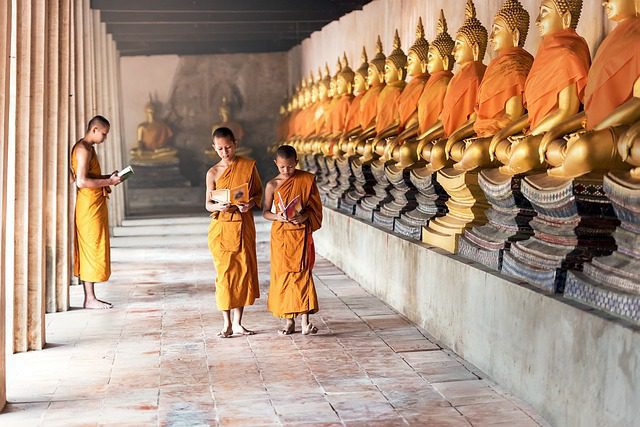
The 24th Tirthankara, Lord Mahavira, is credited with propagating the religion in the various parts of the world. Buddhism is based on the teachings of Lord Buddha, who was born as Prince Siddhartha Gautama.
After attaining Enlightenment, Lord Buddha set on a task of teaching others how to achieve nirvana. His teachings were later propagated throughout the world by Emperor Asoka.
The other major events of the Ancient Indian period are:
- 333 BC – Darius III was defeated by Alexander the Great. The Macedonian Empire was established
- 326 BC – Ambhi, King of Taxila surrendered to Alexander, Battle of the Hydaspes River
- 321 BC – Chandra Gupta Maurya established the Maurya Empire
- 273 BC – Emperor Ashoka took over the Maurya Empire
- 266 BC – Ashoka conquered most of South Asia, Afghanistan and Iran
- 265 BC – The battle of Kalinga, after which Emperor Ashoka embraced Buddhism
- 232 BC: Ashoka died and was succeeded by Dasaratha
- 230 BC – Satavahana Empire was established
- 200 to 100 BC – Tholkappiyam standardized grammar and morphology of Tamil
- 184 BC – Collapse of Maurya Empire with the assassination of Emperor Brihadrata, Establishment of the Sunga dynasty
- 180 BC – Establishment of the Indo-Greek kingdom
- 80 BC – Establishment of the Indo-Scythian kingdom
- 10 BC – Establishment of the Indo-Parthian kingdom
- 68 AD – Establishment of the Kushan Empire by Kujula Kadphises
- 78 AD – Gautamiputra Satkarni took over Satavahana Empire and defeated Scythian king Vikramaditya
- 240 AD – Establishment of the Gupta Empire by Sri-Gupta
- 320 AD – Chandragupta I took over the Gupta Empire
- 335 AD – Samudragupta took over the Gupta Empire and started expanding it
- 350 AD – Establishment of the Pallava Empire
- 380 AD – Chandragupta II took over the Gupta Empire
- 399 to 414 AD – Chinese scholar Fa-Hien traveled to India
Medieval Period (550 AD to 1526 AD)
The medieval period can be divided into the following two phases:
Early Medieval Period (Upto 1300 AD)
- 606 AD – Harshavardhana became the King
- 630 AD – Hiuen Tsiang traveled to India
- 761 AD – First Muslim invasion by Mohammed Bin Qasim
- 800 AD – The birth of Shankaracharya
- 814 AD – Nripatunga Amoghavarsha I became Rashtrakuta king
- 1000 AD – Invasion by Mahmud of Ghazni
- 1017AD – Alberuni traveled to India
- 1100s AD – Rule of the Chandelas, Cholas, Kadambas, and Rashrakutas
- 1120 AD – Kalyani Chalukya Empire attained peak, Vikramaditya VI introduced Vikrama Chalukya Era
- 1191 AD – First battle of Tarain between Mohammed Ghori & Prithivi Raj Chauhan III
- 1192 AD – Second battle of Tarain between Ghauri and Prithivi Raj Chauhan III
- 1194 AD – Battle of Chandawar between Ghauri and Jayachandra
- 1288 AD – Marco Polo came to India
Late Medieval Period (1300 AD to 1500 AD)
- 1300 AD – Establishment of the Khilji Dynasty
- 1336 to 1565 AD – Vijayanagar Empire
- 1498 AD – First voyage of Vasco-da-Gama to Goa
Post-Medieval Era (1526 AD to 1818 AD)
The major events in the post medieval era are:
- 1526 AD – Babur, the Mughal ruler of Kabul, invaded Delhi and Agra and killed Sultan Ibrahim Lodi
- 1527 AD – Battle of Khanwa, in which Babur annexed Mewar
- 1530 AD – Babur died and was succeeded Humayun
- 1556 AD – Humayun died and was succeeded by his son Akbar
- 1600 AD – East India company was formed in England
- 1605 AD – Akbar died and was succeeded by Jehangir
- 1628 AD – Jehangir died and was succeeded by Shah Jahan
- 1630 AD – Shivaji was born
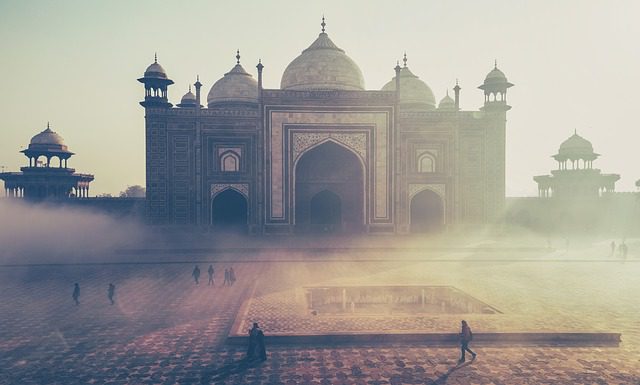
- 1658 AD – Shah Jahan built Taj Mahal, Jamia Masjid and Red Fort.
- 1659 AD – Shivaji defeated Adilshahi troops at the Battle of Pratapgarh
- 1674 AD – Maratha Empire was established
- 1680 AD – Shivaji died
- 1707 AD – Aurangzeb died and was succeeded by Bahadur Shah I
- 1707 AD – Maratha Empire broke into two divisions
- 1734 AD – Pamheiba invaded Tripura
- 1737 AD – Bajirao I conquered Delhi
- 1740 AD – Bajirao I died and was succeeded by Balaji Bajirao
- 1757 AD – Battle of Plassey was fought
- 1761 AD – Third battle of Panipat ended the expansion of Maratha Empire
- 1766 AD – First Anglo-Mysore War
- 1777 AD – First Anglo-Maratha War
- 1779 AD – Battle of Wadgaon
- 1780 AD – Second Anglo-Mysore War
- 1789 AD – Third Anglo-Mysore War
- 1798 AD – Fourth Anglo-Mysore War
- 1799 AD – Tipu Sultan died, Wodeyar dynasty was restored
- 1803 AD – Second Anglo-Maratha War
- 1817 AD – Third Anglo-Maratha War begins
- 1818 AD – End of the Maratha Empire and British control over most of India
Colonial Era (1818 AD to 1947 AD)
The Colonial Era started with the British taking control over almost all the parts of India and ended with the freedom of India in 1947.
The major events that took place during the Colonial Era are:
- 1829 AD – Prohibition of Sati
- 1857 AD – First Indian war of Independence, known as Indian Mutiny
- 1885 AD – Indian National Congress was formed
- 1930 AD – Dandi Salt March, Simon Commission, First Round Table Conference
- 1915 AD – Home Rule League was founded by Annie Besant
- 1919 AD – Massacre at Jallianwalabagh
- 1931 AD – Bhagat Singh was hanged by the British, Second Round Table Conference, Gandhi-Irvin Pact
- 1919 AD – Khilafat Movement, Jalianwala Bagh Massacre, Rowlat Act
- 1937 AD – Congress won power in many states, World War II broke out
- 1921 AD – Civil Disobedience Movement
- 1928 AD – Murder of Lala Lajpat Rai
- 1942 AD – Quit India Movement, Rise of Subhash Chandra Bose
- 1922 AD – Quit India Movement suspended after the Chauri-Chura violence
- 1946 AD – Muslim League adamant about the formation of Pakistan
- 1947 AD – India gained independence and witnessed partition
Independent and Modern India (1947 onwards)
In 1947, India became independent and from that year onwards, started India’s struggle to become one of the leading nations of the world.
Today, the country is regarded as one of the fastest-growing major economies of the world.
Receive Daily Updates
Recent Posts
- In the Large States category (overall), Chhattisgarh ranks 1st, followed by Odisha and Telangana, whereas, towards the bottom are Maharashtra at 16th, Assam at 17th and Gujarat at 18th. Gujarat is one State that has seen startling performance ranking 5th in the PAI 2021 Index outperforming traditionally good performing States like Andhra Pradesh and Karnataka, but ranks last in terms of Delta
- In the Small States category (overall), Nagaland tops, followed by Mizoram and Tripura. Towards the tail end of the overall Delta ranking is Uttarakhand (9th), Arunachal Pradesh (10th) and Meghalaya (11th). Nagaland despite being a poor performer in the PAI 2021 Index has come out to be the top performer in Delta, similarly, Mizoram’s performance in Delta is also reflected in it’s ranking in the PAI 2021 Index
- In terms of Equity, in the Large States category, Chhattisgarh has the best Delta rate on Equity indicators, this is also reflected in the performance of Chhattisgarh in the Equity Pillar where it ranks 4th. Following Chhattisgarh is Odisha ranking 2nd in Delta-Equity ranking, but ranks 17th in the Equity Pillar of PAI 2021. Telangana ranks 3rd in Delta-Equity ranking even though it is not a top performer in this Pillar in the overall PAI 2021 Index. Jharkhand (16th), Uttar Pradesh (17th) and Assam (18th) rank at the bottom with Uttar Pradesh’s performance in line with the PAI 2021 Index
- Odisha and Nagaland have shown the best year-on-year improvement under 12 Key Development indicators.
- In the 60:40 division States, the top three performers are Kerala, Goa and Tamil Nadu and, the bottom three performers are Uttar Pradesh, Jharkhand and Bihar.
- In the 90:10 division States, the top three performers were Himachal Pradesh, Sikkim and Mizoram; and, the bottom three performers are Manipur, Assam and Meghalaya.
- Among the 60:40 division States, Orissa, Chhattisgarh and Madhya Pradesh are the top three performers and Tamil Nadu, Telangana and Delhi appear as the bottom three performers.
- Among the 90:10 division States, the top three performers are Manipur, Arunachal Pradesh and Nagaland; and, the bottom three performers are Jammu and Kashmir, Uttarakhand and Himachal Pradesh
- Among the 60:40 division States, Goa, West Bengal and Delhi appear as the top three performers and Andhra Pradesh, Telangana and Bihar appear as the bottom three performers.
- Among the 90:10 division States, Mizoram, Himachal Pradesh and Tripura were the top three performers and Jammu & Kashmir, Nagaland and Arunachal Pradesh were the bottom three performers
- West Bengal, Bihar and Tamil Nadu were the top three States amongst the 60:40 division States; while Haryana, Punjab and Rajasthan appeared as the bottom three performers
- In the case of 90:10 division States, Mizoram, Assam and Tripura were the top three performers and Nagaland, Jammu & Kashmir and Uttarakhand featured as the bottom three
- Among the 60:40 division States, the top three performers are Kerala, Andhra Pradesh and Orissa and the bottom three performers are Madhya Pradesh, Jharkhand and Goa
- In the 90:10 division States, the top three performers are Mizoram, Sikkim and Nagaland and the bottom three performers are Manipur and Assam
In a diverse country like India, where each State is socially, culturally, economically, and politically distinct, measuring Governance becomes increasingly tricky. The Public Affairs Index (PAI 2021) is a scientifically rigorous, data-based framework that measures the quality of governance at the Sub-national level and ranks the States and Union Territories (UTs) of India on a Composite Index (CI).
States are classified into two categories – Large and Small – using population as the criteria.
In PAI 2021, PAC defined three significant pillars that embody Governance – Growth, Equity, and Sustainability. Each of the three Pillars is circumscribed by five governance praxis Themes.
The themes include – Voice and Accountability, Government Effectiveness, Rule of Law, Regulatory Quality and Control of Corruption.
At the bottom of the pyramid, 43 component indicators are mapped to 14 Sustainable Development Goals (SDGs) that are relevant to the States and UTs.
This forms the foundation of the conceptual framework of PAI 2021. The choice of the 43 indicators that go into the calculation of the CI were dictated by the objective of uncovering the complexity and multidimensional character of development governance

The Equity Principle
The Equity Pillar of the PAI 2021 Index analyses the inclusiveness impact at the Sub-national level in the country; inclusiveness in terms of the welfare of a society that depends primarily on establishing that all people feel that they have a say in the governance and are not excluded from the mainstream policy framework.
This requires all individuals and communities, but particularly the most vulnerable, to have an opportunity to improve or maintain their wellbeing. This chapter of PAI 2021 reflects the performance of States and UTs during the pandemic and questions the governance infrastructure in the country, analysing the effectiveness of schemes and the general livelihood of the people in terms of Equity.


Growth and its Discontents
Growth in its multidimensional form encompasses the essence of access to and the availability and optimal utilisation of resources. By resources, PAI 2021 refer to human resources, infrastructure and the budgetary allocations. Capacity building of an economy cannot take place if all the key players of growth do not drive development. The multiplier effects of better health care, improved educational outcomes, increased capital accumulation and lower unemployment levels contribute magnificently in the growth and development of the States.


The Pursuit Of Sustainability
The Sustainability Pillar analyses the access to and usage of resources that has an impact on environment, economy and humankind. The Pillar subsumes two themes and uses seven indicators to measure the effectiveness of government efforts with regards to Sustainability.


The Curious Case Of The Delta
The Delta Analysis presents the results on the State performance on year-on-year improvement. The rankings are measured as the Delta value over the last five to 10 years of data available for 12 Key Development Indicators (KDI). In PAI 2021, 12 indicators across the three Pillars of Equity (five indicators), Growth (five indicators) and Sustainability (two indicators). These KDIs are the outcome indicators crucial to assess Human Development. The Performance in the Delta Analysis is then compared to the Overall PAI 2021 Index.
Key Findings:-
In the Scheme of Things
The Scheme Analysis adds an additional dimension to ranking of the States on their governance. It attempts to complement the Governance Model by trying to understand the developmental activities undertaken by State Governments in the form of schemes. It also tries to understand whether better performance of States in schemes reflect in better governance.
The Centrally Sponsored schemes that were analysed are National Health Mission (NHM), Umbrella Integrated Child Development Services scheme (ICDS), Mahatma Gandh National Rural Employment Guarantee Scheme (MGNREGS), Samagra Shiksha Abhiyan (SmSA) and MidDay Meal Scheme (MDMS).
National Health Mission (NHM)
INTEGRATED CHILD DEVELOPMENT SERVICES (ICDS)
MID- DAY MEAL SCHEME (MDMS)
SAMAGRA SHIKSHA ABHIYAN (SMSA)
MAHATMA GANDHI NATIONAL RURAL EMPLOYMENT GUARANTEE SCHEME (MGNREGS)