


India’s quiet reaction to Ayatollah Khamenei’s death can be explained in simple language using ideas from realism in International Relations, which says countries mainly act to protect their national interest and power.
A leader who often criticised India
Ayatollah Khamenei was important for Iran, but his words on India were often negative.
-
In 2017, he asked the Muslim world to support “oppressed Muslims of Kashmir,” echoing Pakistan’s stand on a very sensitive issue for India.
-
After Article 370 was removed in 2019, he again spoke about Kashmir and demanded a “just policy,” which India saw as interference.
-
During the CAA protests and Delhi riots in 2020, he accused India of a “massacre” of Muslims and attacked “extremist Hindus.”
So, even though India and Iran had ties based on culture, energy, and geography, Khamenei’s repeated public criticism made him a controversial figure inside India.
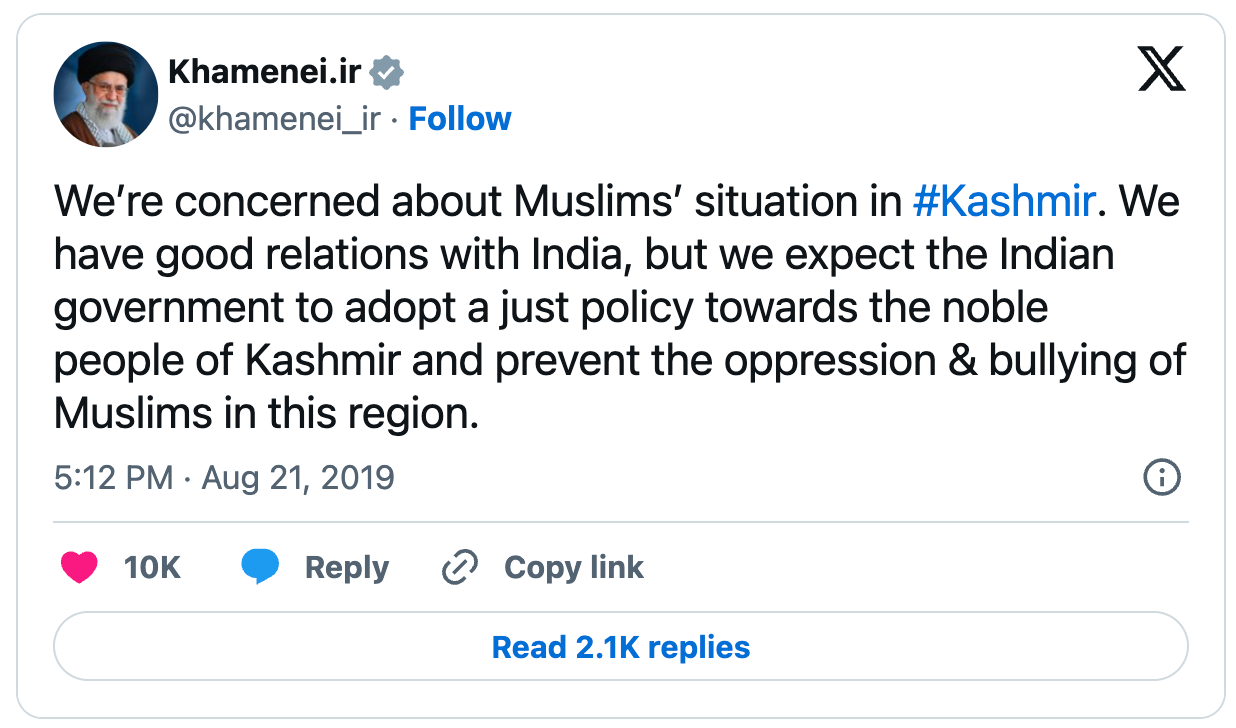
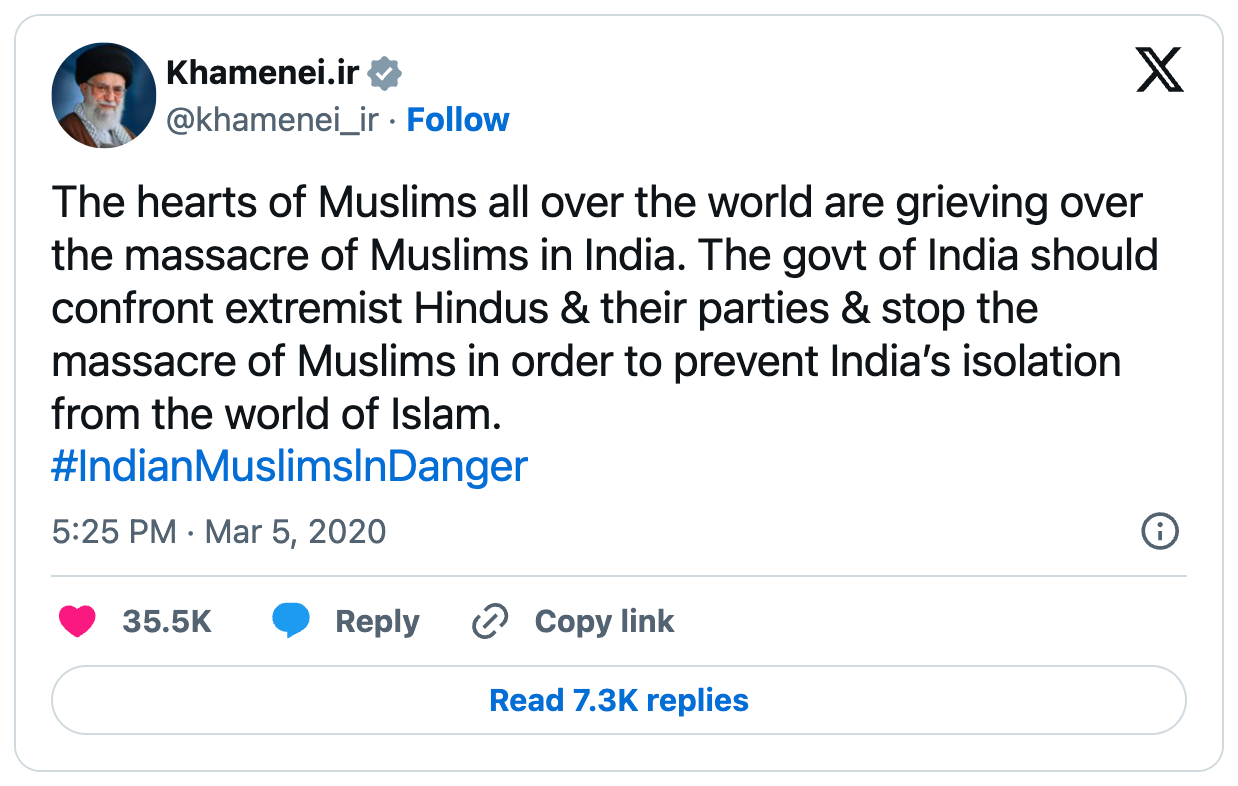
How India balanced protest and cooperation
Each time Khamenei commented on Kashmir or CAA, India called in the Iranian ambassador and clearly said that Kashmir and citizenship laws are internal matters. At the same time, India did not break ties with Iran. It continued to work on:
-
Oil trade when sanctions allowed.
-
The Chabahar port, which gives India access to Afghanistan and Central Asia without going through Pakistan.
This is a classic example of realism: India defended its sovereignty in public, but kept cooperation where it served national interest. Realist theory says states can disagree on values or statements but still work together when interests match.
Silence as a deliberate signal
When Khamenei died, the Indian government did not issue a big public condolence message. Opposition leaders like Sonia Gandhi criticised this as going against India’s tradition of honouring major world leaders. But in realist terms, the government seems to have calculated three things:
-
A warm tribute to a leader who repeatedly criticised India on Kashmir and CAA would look inconsistent and could upset many Indians.
-
Any strong statement—whether very positive or very negative—could be read by the US, Israel, Gulf states, and Iran as India taking sides in a tense West Asia situation.]
-
Silence avoids sending the wrong signal abroad while also avoiding domestic controversy.
Realism helps explain this: states often use silence or very careful words as tools of foreign policy. The goal is to protect security, economic interests, and room for manoeuvre, not to express emotion.
Domestic politics and international image
Inside India, Khamenei’s remarks were used by both sides in domestic politics.
-
Critics of the government cited his words on Muslims and Kashmir as outside “proof” of their concerns.
-
Supporters saw his statements as foreign interference that lined up with Pakistan’s narrative.
The government’s silence fits its broader line that India will not accept “lectures” on internal matters from Western countries or from religious leaders in the Muslim world. Opposition, on the other hand, argues that such silence damages India’s image as a bridge between different regions.
Here, another political science idea appears: two-level games. This theory says governments always juggle two tables at once—global diplomacy and domestic politics. India’s leaders had to think about:
-
How Iran, the US, Gulf countries, and others would read any message.
-
How Indian voters, especially on sensitive issues like Kashmir and CAA, would react.
A realist reset in India–Iran ties
Looking ahead, India and Iran still need each other for energy, regional stability, and connectivity through Chabahar. But India is less willing to overlook public criticism from Tehran’s top leadership. Under realism, states try to separate the state-to-state relationship from the personal legacy of one leader when it suits their interest.
India’s quiet reaction, seen through realist theory, is not just avoidance; it is a calculated reset. India is signalling that:
-
It respects Iran as a state and a people.
-
It will protect its core interests and dignity when leaders speak against it.
-
Future relations will be based more on clear interests than on emotional or ideological language.