


Oil vs Environment:
Deep in the heart of South America, a silent war is raging—between oil and the environment. The Amazon rainforest, often called the “lungs of the planet,” is now the epicenter of an oil rush. Beneath its emerald canopy lies immense wealth—nearly 20% of the world’s newly discovered oil reserves. But what lies above is even more precious: rivers teeming with life, ancient trees, and over 385 indigenous ethnic communities calling it home.
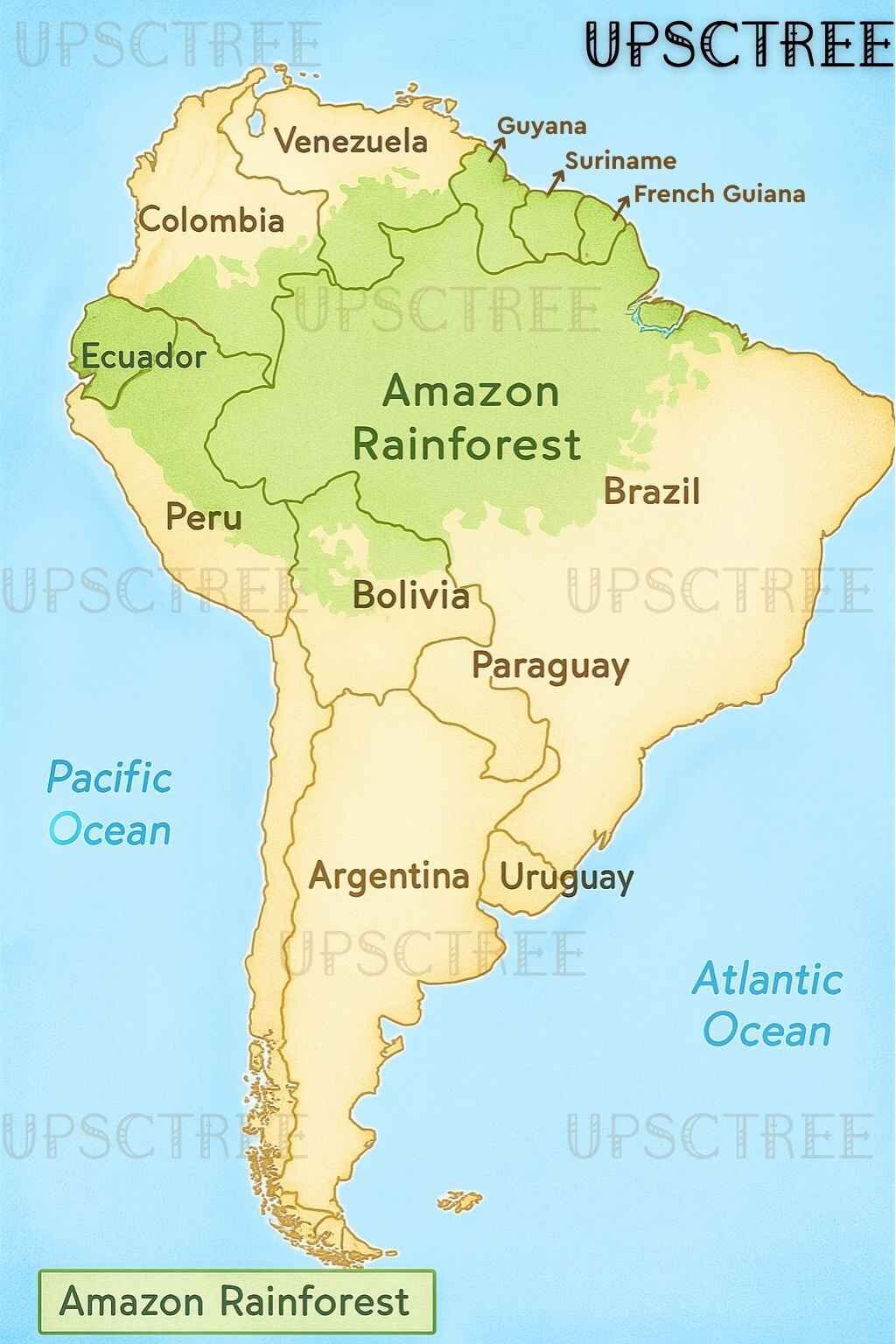 In August 2023, eight Amazonian countries—members of the Amazon Cooperation Treaty Organization (ACTO)—met in Belem, Brazil, for the first time in 14 years. Their dilemma? How to reconcile the promise of oil riches with the peril of environmental ruin.
⚠️ A Forest Under Siege
From Venezuela’s Orinoco belt to Peru’s Maranon River, oil pipelines snake across fragile landscapes—many of them decades old, corroded, and prone to failure. Thousands of oil spills over the past 50 years have blackened rivers, poisoned soils, and accelerated deforestation.
In Ecuador, a catastrophic oil spill in March 2025 turned the coast of Esmeraldas into an ecological disaster zone. Despite a 2023 referendum halting oil drilling in the Yasuní National Park, remnants of infrastructure still litter this UNESCO Biosphere Reserve.
In Colombia, President Gustavo Petro spoke of forming an “Amazon NATO”—a protective alliance for the rainforest—even as sabotage and spills continue to desecrate sacred rivers like the Putumayo.
Meanwhile, Guyana, on the brink of new exploration near the Branco River, passed a strict Oil Pollution Prevention Bill, holding oil companies financially and legally accountable for any damage.
🇧🇷 The Brazil Dilemma
Brazil, holding 60% of the Amazon and ranked as the seventh-largest oil producer, stands at a crucial crossroads. Petrobras, the state oil giant, awaits permission to drill near the mouth of the Amazon River, where nutrient-rich waters feed delicate marine ecosystems.
Environment Minister Marina Silva, an Amazonian native, is firmly against it. But President Lula da Silva offers a balancing act: “We won’t harm nature—but we can’t ignore the wealth beneath us.”
🌿Green Dreams vs Black Gold
For ACTO countries, oil revenues are vital for development and social welfare. But the cost of careless extraction is too high. What they need is not abandonment—but accountability.
That’s why the recent BRICS Summit in Brazil and the upcoming COP30 in Belem are pivotal moments. Here lies the chance to demand:
- Stronger safeguards against environmental negligence
- Transparent, ethical oil exploration
- Financial support from wealthier nations to protect one of Earth’s last great wildernesses
💡 A New Approach: “Clean After Energy”
The road to a green future isn’t about slamming the brakes—it’s about steering wisely. As the world moves toward renewable energy, Amazonian nations must ensure their transition doesn’t leave behind a wasteland. Before we go clean, we must clean up.
Because when the forest falls silent, the world will hear the echo.
Receive Daily Updates
Recent Posts
Steve Ovett, the famous British middle-distance athlete, won the 800-metres gold medal at the Moscow Olympics of 1980. Just a few days later, he was about to win a 5,000-metres race at London’s Crystal Palace. Known for his burst of acceleration on the home stretch, he had supreme confidence in his ability to out-sprint rivals. With the final 100 metres remaining,
[wptelegram-join-channel link=”https://t.me/s/upsctree” text=”Join @upsctree on Telegram”]Ovett waved to the crowd and raised a hand in triumph. But he had celebrated a bit too early. At the finishing line, Ireland’s John Treacy edged past Ovett. For those few moments, Ovett had lost his sense of reality and ignored the possibility of a negative event.
This analogy works well for the India story and our policy failures , including during the ongoing covid pandemic. While we have never been as well prepared or had significant successes in terms of growth stability as Ovett did in his illustrious running career, we tend to celebrate too early. Indeed, we have done so many times before.
It is as if we’re convinced that India is destined for greater heights, come what may, and so we never run through the finish line. Do we and our policymakers suffer from a collective optimism bias, which, as the Nobel Prize winner Daniel Kahneman once wrote, “may well be the most significant of the cognitive biases”? The optimism bias arises from mistaken beliefs which form expectations that are better than the reality. It makes us underestimate chances of a negative outcome and ignore warnings repeatedly.
The Indian economy had a dream run for five years from 2003-04 to 2007-08, with an average annual growth rate of around 9%. Many believed that India was on its way to clocking consistent double-digit growth and comparisons with China were rife. It was conveniently overlooked that this output expansion had come mainly came from a few sectors: automobiles, telecom and business services.
Indians were made to believe that we could sprint without high-quality education, healthcare, infrastructure or banking sectors, which form the backbone of any stable economy. The plan was to build them as we went along, but then in the euphoria of short-term success, it got lost.
India’s exports of goods grew from $20 billion in 1990-91 to over $310 billion in 2019-20. Looking at these absolute figures it would seem as if India has arrived on the world stage. However, India’s share of global trade has moved up only marginally. Even now, the country accounts for less than 2% of the world’s goods exports.
More importantly, hidden behind this performance was the role played by one sector that should have never made it to India’s list of exports—refined petroleum. The share of refined petroleum exports in India’s goods exports increased from 1.4% in 1996-97 to over 18% in 2011-12.
An import-intensive sector with low labour intensity, exports of refined petroleum zoomed because of the then policy regime of a retail price ceiling on petroleum products in the domestic market. While we have done well in the export of services, our share is still less than 4% of world exports.
India seemed to emerge from the 2008 global financial crisis relatively unscathed. But, a temporary demand push had played a role in the revival—the incomes of many households, both rural and urban, had shot up. Fiscal stimulus to the rural economy and implementation of the Sixth Pay Commission scales had led to the salaries of around 20% of organized-sector employees jumping up. We celebrated, but once again, neither did we resolve the crisis brewing elsewhere in India’s banking sector, nor did we improve our capacity for healthcare or quality education.
Employment saw little economy-wide growth in our boom years. Manufacturing jobs, if anything, shrank. But we continued to celebrate. Youth flocked to low-productivity service-sector jobs, such as those in hotels and restaurants, security and other services. The dependence on such jobs on one hand and high-skilled services on the other was bound to make Indian society more unequal.
And then, there is agriculture, an elephant in the room. If and when farm-sector reforms get implemented, celebrations would once again be premature. The vast majority of India’s farmers have small plots of land, and though these farms are at least as productive as larger ones, net absolute incomes from small plots can only be meagre.
A further rise in farm productivity and consequent increase in supply, if not matched by a demand rise, especially with access to export markets, would result in downward pressure on market prices for farm produce and a further decline in the net incomes of small farmers.
We should learn from what John Treacy did right. He didn’t give up, and pushed for the finish line like it was his only chance at winning. Treacy had years of long-distance practice. The same goes for our economy. A long grind is required to build up its base before we can win and celebrate. And Ovett did not blame anyone for his loss. We play the blame game. Everyone else, right from China and the US to ‘greedy corporates’, seems to be responsible for our failures.
We have lowered absolute poverty levels and had technology-based successes like Aadhaar and digital access to public services. But there are no short cuts to good quality and adequate healthcare and education services. We must remain optimistic but stay firmly away from the optimism bias.
In the end, it is not about how we start, but how we finish. The disastrous second wave of covid and our inability to manage it is a ghastly reminder of this fact.