By Categories: History

On the night of 22 September 1914, Madras city was winding up another hectic day. Since the disturbances of World War 1 had not affected South India, days and nights were peaceful and as any other day, the city was getting ready for a night’s slumber, downing its lights one by one. At 9.45 pm, a ship, ‘The Swan of the East,’ slipped in stealthy and dropped anchor at the harbor.

A few minutes later, the peace of the night was shattered by the roar of cannons that aimed for British oil tanks erected on the harbor. The attack was lethal, precise and swift and in minutes, about 10 lakh liters of kerosene stocked in the tankers burst into flames lighting up Madras city as if it was mid day. SMS Emden had struck Madras!

On that fateful day, Madras had a providential escape, thanks to winds that were blowing out to the sea. Shaken by the boldness of the attack that challenged the British naval might, the people of Madras shuddered at the thought that SMS Emden had hit their city; the same ship that is believed to have caused maximum damage to its enemies in the history of naval warfare.

Even though the ship had not aimed for other parts of the city and the few shots that fell elsewhere were those that had missed their targets, the attack prompted an exodus from the city. By then, Emden had entered into the coastal waters of Kerala. It hung around the Minicoy Islands in Lakshwadeep from October 15 for five days and during that time sank five British vessels. However, enemy sailors were not left to die on the seas. A ship that was carrying sugarcane from Sri Lanka to New York, St Egbert, was captured by SMS Emden and all the enemy sailors, about 350 of them, were sent home to Kochi Harbor on it. Perhaps, inspired by this audacious impunity of SMS Emden in the waters of Kerala, ‘Emanden’ which means gigantic, huge or even demonic, became local parlance.

Meanwhile, stories began to circulate about the exploits of SMS Emden and especially about the second officer in charge of the ship, presumed to be Chempaka Raman Pillai. It is believed that the city of Madras was spared a more destructive fate because Raman Pillai was in command.

An English lady wrote during that time that some German sailors who had alighted at Kochi from St Egbert had dined at a Jew’s house. It is believed that one of them was Chempaka Raman Pillai, a man who wanted to create an anti-British army and redeem India from British rule. The attack by SMS Emden was reportedly part of the plan. Tamil Nadu still remembers the unexpected attack on the night of 22 September 1914, and stories about Raman Pillai’s exploits still do the rounds.

Eight years ago, chief minister Karunanidhi had unveiled a statue of Chempaka Raman Pillai at the Gandhi Mandapam Campus in Chennai. Kerala, however, has long forgotten the patriot, except for the word, ‘Emandan,’ which itself has lost its real meaning and continues to be used as a cheap mimicry on the valor of the man and his sincere designs for independent India.

Who was Chempaka Raman Pillai and how did he reach Germany?

There was once a small home at the same spot where the AG’s office is now situated, near the secretariat, in Thiruvananthapuram. There the family of Raman Pillai, alias Venkidi, used to stay. While studying in Model School, he rallied against the British and shouted ‘Jai Hind’ in the school campus. Fearing retribution, the frightened principal called in the police. A constable, Chinnaswami Pillai, was sent to investigate the misdemeanor of the erring kid. It turned out that Venkidi was the son of Chinnaswami Pillai.

During that time, British botanist, Sir Walter Strickland, was camping at Thiruvananthapuram and he had come to study butterflies that were found in the Western Ghats. Here, he met a boy who had presented a paper in a well-known science journal about the ability of spiders to change their color. Strickland was impressed by the skills of the 18-year boy, T. Padmanabha Pillai and took him to Europe for further studies. Along with him, his close friend and neighbor, Chempaka Raman Pillai was also taken to Europe.

Raman Pillai continued his education in Austria and went on to complete his diploma in engineering. He also graduated in public governance and economics and had a grasp over 12 languages. He lived for 20 years in Germany working in German companies in various roles. According to his wife, Lakshmibhai, he had everything to live like a king. However, his destiny would lead him to entirely different and less-fanciful circumstances in life; circumstances that could perhaps be called cruel and unfortunate.

The Emden connection

As per official records, Pillai was not aboard SMS Emden during the two months the ship was traversing the Indian Ocean. He was, as per records, involved in hectic parleys with politicians and like-minded revolutionaries. However, his wife has corroborated the assumption that Pillai had indeed alighted from SMS Emden at Kochi. With or without Pillai, the German ship must have received ample support from Indian revolutionaries. Memoirs of SMS Emden’s first officer, Lt Hellmuth von Mücke, points to this possibility.

After touching the British-Indian waters, SMS Emden had looked to depart via the Indonesian coast. Dr Douwes Dekker, an exiled freedom fighter, remembers that he had extended support to Raman Pillai to attack British India. Even the British Intelligence has gone on records saying that a ‘prominent Indian revolutionary’ had met the German ambassador to Switzerland to appraise him about the plans and strategies of Indian revolutionaries. Raman Pillai is also believed to have been close to the German emperor, according to ornithologist Salim Ali, who had mentioned his meeting with Pillai in Germany in his autobiography.

The plan to attack British India

Pillai formed a group of international pro-Indians in Switzerland, which had taken a neutral stance during the First World War. A publication, ‘Pro India’, was also launched in German and English. He partnered with Virendranath Chattopadhyaya (Chatto), brother of Sarojini Naidu, for the endeavors. John Wellinger, who was in control of the British spy network in those times, is believed to have sent a team under his deputy, ‘R,’ to finish off the revolutionaries. Pillai and Chatto however escaped to Berlin. R turned out to be the famous novelist Somerset Maugham and he later created many characters in his novels based on the life of Indian revolutionaries.

In Berlin, Chatto and Pillai were in the company of many Indian revolutionaries operating under the Indian Independence League. Keralites among them were novelist C.V. Raman Pillai’s nephew A.R. Pillai; A.C. Nanu Nambiar, son of short-story writer, Vengayil Kunjiraman Nair; and T Padmanabha Pillai, whom Chempaka Raman Pillai had accompanied earlier to Europe. Chatto and Raman Pillai (Chempak) formed the Chatto-Chempak Berlin Committee. It received support from other revolutionaries. They decided to mobilize money and weapons on Indian shores.

With the aim of driving out the British and establishing a socialist democracy in India, Pillai travelled across Europe, Asia and German colonies in Africa, incognito. The German foreign office offered money and support and many revolutionaries including, Padmanabha Pillai, returned to India to direct the war against the British.

A vessel was arranged to drop off weapons at Java, which was the closest war-neutral region near India. It was agreed that a German war ship would drop off the weapons there. Narendranath Bhattacharya was sent to receive the weapons. However, the ship did not come and the plan did not materialize. Bhattacharya later went to Moscow, changed his name to M.N. Roy and formed the Indian Communist Party with his foreigner wife.
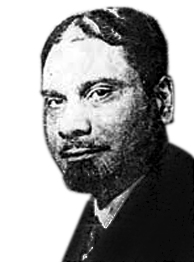
Chempakaraman Pillai - Wikipedia

Raman Pillai wanted to attack British India from the north-western side of Kashmir. For that he sourced support from rebel forces in Turkey and highly placed officials under the Emir of Afghanistan. The Emir was however against providing any support while his close relatives and allies agreed to provide financial help for the movement.

On July 31, 1914, Raman Pillai formed the Indian National Voluntary Corps and urged war on British India. He called on all Indians, especially Muslims and Sikhs, to fight for India. He also sent emissaries to Japan and China to forge alliances. All these activities led to the notion that he was in SMS Emden when it struck Chennai.

Swami Vivekananda’s brother, Bhupendranath Dutta, was sent to Russia to garner support for the cause. Two members were also sent to talk to US leaders. Pillai started a military camp in Mesopotamia and formed a provisional government in Kabul to look after Indian affairs when revolution would start. Raman Pillai was to handle foreign affairs of the new government.

However, all the grand plans came to nought when Germany was defeated in World War 1. In 1919, Pillai went to Germany. The Russian revolution that happened two years earlier saw many leaders, including Chatto, leaving for Russia. Chatto was later unceremoniously executed by Stalin’s army. M.N. Roy quit Marxism, pained at the cruelty perpetuated by Stalin.

Raman Pillai continued to work in a German company, but kept his efforts for Indian independence alive. He directed an exhibition of Indian products in Germany in 1924. In 1930, he became the Berlin representative of the Indian Chamber of Commerce. He was the only non-white in the National People’s Party that supported the Nazis.

The squabble with Hitler

Raman Pillai initially enjoyed a cordial relationship with Hitler, whose prominence was rising. However, during a press meet on August 10, 1931, Hitler said that if non-Aryan Indians were ruled by the British, it is their fate. This irritated Pillai. The same year on December 4, Hitler said, “Britain losing India would not augur well for any nation, including Germany.”

Miffed at Hitler taking sides with the British, Raman Pillai wrote to him thus, “You seem to attribute more importance to the color of the skin than blood. Our skins may be dark; not our hearts.”

Raman Pillai gave a deadline for Hitler to withdraw his statement and apologize. Hitler sent his secretary to Pillai to apologize, but also expressed his irritation at being attributed with a black heart. Raman Pillai retorted that Indians would tell the truth even in the face of death. One day after the deadline set by Pillai, Hitler expressed his regret for his comments; the rift between the two leaders thus developed into a complete breakdown of relations that would never be mended. In January 1933, Hitler became chancellor and in June he became an autocrat usurping power and establishing his unquestioned influence over Germany.

Nazis soon raided and arrogated Pillai’s house in Berlin. He was also manhandled and bundled out from his dwelling. He moved to Italy for treatment where it was found that blood had clotted in his brain. By that time, he did not have the financial means to afford good treatment required for his cure. His end came on May 28, 1934, in an ordinary nursing home in Italy. His wife lamented that a man who was brave enough to defy Hitler in his own land had died, unceremoniously, a broken man.

A patriot forgotten

In his autobiography, Bhagat Singh’s uncle and freedom fighter Sardar Ajith Singh had written that when Subhash Chandra Bose visited Vienna, he had visited Raman Pillai. Chempaka Raman Pillai was instrumental in inspiring Netaji to start an army and had even founded the INV before the INA was formed. However, nothing remains as a token of respect to that patriot in his own motherland. There is a statue of Netaji at Thiruvananthapuram near University Stadium. The ‘Jai Hind’ inscribed on the statue, a term coined by Raman Pillai, is all that remains that may remind us of this man who died for his nation. The clarion call that inspired many to take up arms against the British now ironically echoes the level of ingratitude his own people have for him.

The tragic death of Pillai’s widow

Lakshmibhai returned to Mumbai in 1935 with the ashes of her husband. His last wish was to return to India in a warship that flew the Indian flag. Lakshmibhai had to wait for another 32 years for that wish to be fulfilled. On September 17, 1966, INS Delhi set sail from Mumbai with Pillai’s ashes and reached Kochi on the 19th. From there it went to Thiruvananthapuram and Kanyakumari where Lakshmibhai met with her husband’s family and stayed with them for some time and then returned to Mumbai. She died in 1972. How her end came was reported by acclaimed journalist P.K. Ravindranath.

According to Ravindranath’s account, Lakshmibhai met him in 1969 and told him that she had a set of documents related to Pillai. She demanded Rs 1.5 lakh for the papers, using which he proposed to write a biography. Since he did not have the money, the plan was shelved.

Lakshmibhai was from Satara in Maharashtra and was taken to Russia by a missionary who was her stepfather. During the Russian revolution, he sought refuge in Berlin with her and that is where she met Pillai. After Pillai’s death, she ensured that Pillai’s documents did not fall in the hands of the Nazis and brought them home. She lived in constant fear that she would be jailed by the British. After Indian independence, she was allotted a flat by Morarji Desai at Church Gate in Mumbai. She lived there alone with none to help her. One day, Ravindranath was summoned by Lakshmibhai. She was weak and unwell, and said that she could not move about, but did not care to have the fruits and food that he had brought for her. She also rejected Ravindranath’s offer to arrange food three times a day.

On December 1972, Ravindranath was called by the staff of St George Hospital to identify a dead body; Lakshmibhai had died mainly due to starvation. Ravindranath identified the frail body of the wife of India’s unsung revolutionary. Her famished fingers still clenched 17 keys; she had protected her husband’s documents to her last breath.

Ravindranath immediately requested the Maharashtra CM to transfer the documents to the National Archives. Her house was soon cordoned off and in January 1973, the documents were safely transferred to the National Archives. Let us hope someone would study the documents and come out with more information throwing light on the life of Chempaka Raman Pillai.

Most of the Keralite comrades of Pillai in Berlin had returned to India during the war in order to lead an uprising against the British rule. A.R. Pillai could set foot in India only 12 years after the start of the war. He, however, was under the constant surveillance of the British secret services.

Padmanabha Pillai, who reached Thiruvananthapuram, secured a job as a curator using his contacts with the royal family. He, however, continued his political activities and his scientific pursuits. On one of his official tours, he went to the University of Bern to present a paper on his studies on frogs. On his way back, he disappeared and only his coat was retrieved from the beaches of Thailand. His belongings were later collected by his relatives from Colombo. After his father-in-law burned all his papers fearing retribution from the British, Padmanabha Pillai ceased to exist in the annals of the Indian revolutionary movement.


Share is Caring, Choose Your Platform!

Recent Posts

  • Context:-

    At the recently concluded Leaders’ Summit on Climate in April 2021, Lowering Emissions by Accelerating Forest Finance (LEAF) Coalition, a collective of the United States, United Kingdom and Norway governments, came up with a $1 billion fund plan that shall be offered to countries committed to arrest the decline of their tropical forests by 2030.

    [wptelegram-join-channel link=”https://t.me/s/upsctree” text=”Join @upsctree on Telegram”]

    What is LEAF Coalition?

    • Lowering Emissions by Accelerating Forest Finance (LEAF) Coalition, a collective of the United States, United Kingdom and Norway governments, came up with a $1 billion fund.
    • LEAF is supported by transnational corporations (TNCs) like Unilever plc, Amazon.com, Inc, Nestle, Airbnb, Inc as well as Emergent, a US-based non-profit.

    Why LEAF Coalition?

    • The world lost more than 10 million hectares of primary tropical forest cover last year, an area roughly the size of Switzerland.
    • Ending tropical and subtropical forest loss by 2030 is a crucial part of meeting global climate, biodiversity and sustainable development goals. Protecting tropical forests offers one of the biggest opportunities for climate action in the coming decade.
    • Tropical forests are massive carbon sinks and by investing in their protection, public and private players are likely to stock up on their carbon credits.
    • The LEAF coalition initiative is a step towards concretising the aims and objectives of the Reducing Emissions from Deforestation and Forest Degradation (REDD+) mechanism.
    • REDD+ was created by the United Nations Framework Convention on Climate Change (UNFCCC). It monetised the value of carbon locked up in the tropical forests of most developing countries, thereby propelling these countries to help mitigate climate change.
    • It is a unique initiative as it seeks to help developing countries in battling the double-edged sword of development versus ecological commitment. 
    • The initiative comes at a crucial time. The tropics have lost close to 12.2 million hectares (mha) of tree cover last year according to global estimates released by Global Forest Watch.
    • Of this, a loss of 4.2 mha occurred within humid tropical primary forests alone. It should come as no surprise that most of these lost forests were located in the developing countries of Latin America, Africa and South Asia.
    • Brazil has fared dismally on the parameter of ‘annual primary forest loss’ among all countries. It has lost 1.7 mha of primary forests that are rich storehouse of carbon. India’s estimated loss in 2020 stands at 20.8 kilo hectares.

    Brazil & India 

    • Between 2002-2020, Brazil’s total area of humid primary forest reduced by 7.7 per cent while India’s reduced by 3.4 per cent.
    • Although the loss in India is not as drastic as in Brazil, its position is nevertheless precarious. For India, this loss is equivalent to 951 metric tonnes worth carbon dioxide emissions released in the atmosphere.
    • It is important to draw comparisons between Brazil and India as both countries have adopted a rather lackadaisical attitude towards deforestation-induced climate change. The Brazilian government hardly did anything to control the massive fires that gutted the Amazon rainforest in 2019.
    • It is mostly around May that forest fires peak in India. However, this year India, witnessed massive forest fires in early March in states like Odisha, Uttarakhand, Madhya Pradesh and Mizoram among others.
    • The European Union’s Copernicus Atmospheric Monitoring Service claimed that 0.2 metric tonnes of carbon was emitted in the Uttarakhand forest fires.

    According to the UN-REDD programme, after the energy sector, deforestation accounts for massive carbon emissions — close to 11 per cent — in the atmosphere. Rapid urbanisation and commercialisation of forest produce are the main causes behind rampant deforestation across tropical forests.

    Tribes, Forests and Government

    Disregarding climate change as a valid excuse for the fires, Indian government officials were quick to lay the blame for deforestation on activities of forest dwellers and even labelled them “mischievous elements” and “unwanted elements”.

    Policy makers around the world have emphasised the role of indigenous tribes and local communities in checking deforestation. These communities depend on forests for their survival as well as livelihood. Hence, they understand the need to protect forests. However, by posing legitimate environmental concerns as obstacles to real development, governments of developing countries swiftly avoid protection of forests and rights of forest dwellers.

    For instance, the Government of India has not been forthcoming in recognising the socio-economic, civil, political or even cultural rights of forest dwellers. According to data from the Union Ministry of Tribal Affairs in December, 2020 over 55 per cent of this population has still not been granted either individual or community ownership of their lands.  

    To make matters worse, the government has undertaken systematic and sustained measures to render the landmark Scheduled Tribes and Other Traditional Forest Dwellers (Recognition of Forest Rights) Act, 2006 ineffective in its implementation. The Act had sought to legitimise claims of forest dwellers on occupied forest land.

    Various government decisions have seriously undermined the position of indigenous people within India. These include proposing amendments to the obsolete Indian Forest Act, 1927 that give forest officials the power to take away forest dwellers’ rights and to even use firearms with impunity.

    There is also the Supreme Court’s order of February, 2019 directing state governments to evict illegal encroachers of forest land or millions of forest dwellers inhabiting forests since generations as a measure to conserve wildlife. Finally, there is the lack of data on novel coronavirus disease (COVID-19) deaths among the forest dwelling population;

    Tardy administration, insufficient supervision, apathetic attitude and a lack of political intent defeat the cause of forest dwelling populations in India, thereby directly affecting efforts at arresting deforestation.

    Way Forward

    • Implementation of the LEAF Coalition plan will help pump in fresh rigour among developing countries like India, that are reluctant to recognise the contributions of their forest dwelling populations in mitigating climate change.
    • With the deadline for proposal submission fast approaching, India needs to act swiftly on a revised strategy.
    • Although India has pledged to carry out its REDD+ commitments, it is impossible to do so without seeking knowledge from its forest dwelling population.

    Tuntiak Katan, a global indigenous leader from Ecuador and general coordinator of the Global Alliance of Territorial Communities, aptly indicated the next steps at the Climate Summit:

    “The first step is recognition of land rights. The second step is the recognition of the contributions of local communities and indigenous communities, meaning the contributions of indigenous peoples.We also need recognition of traditional knowledge practices in order to fight climate change”

    Perhaps India can begin by taking the first step.


    INTRODUCTION:-

    The Constitution of India was adopted on 26 November 1949, which means it was finalised by the Constituent Assembly on that day. But it became operative two months after its adoption, i.e., on 26 January 1950, which is also known as the date of its “commencement”.

    [wptelegram-join-channel link=”https://t.me/s/upsctree” text=”Join @upsctree on Telegram”]

    However, some provisions of it, i.e., those relating to citizenship, elections, provisional Parliament, temporary and transitional provisions had become operative on 26 November 1949 itself. The reason for its commencement after two months of its adoption was to signify the January 26 as the original date of achievement of Independence.

    It was this day, i.e. 26th January, in 1930 which the Indian National Congress (INC) had first celebrated as the Independence Day of India. It is important to note that the Constitution of India is product of a longdrawn process and deliberations.

    EVOLUTION OF THE INDIAN CONSTITUTION 1858-1935

    The Constitution of India embodies provisions providing basic democratic rights of human beings including the persons who are not Indian citizens. It also embodies provisions for the availability of institutions for legislation, execution and jurisdiction for the fulfilment these rights.

    It presents a vision for social transformation and deepening of democracy in India. The process of evolution of democratic institutions and rights had started much before the Constituent Assembly really made the Constitution of India.

    It, however, must be underlined that the features of democratic institutions and values which were introduced during the colonial period were meant to serve the colonial interests in contrast to the purpose of the provisions of the Constitution made by the Constituent Assembly of India.

    Although the Indian Constitution was result of the deliberations (from December 9, 1947 to November 26, 1949) of the Constituent Assembly, some of its features had evolved over three quarters of a century through various Acts, i.e., from 1858 to 1935.

    The Government of India Act, 1935, and Other Acts

    With the transfer of power from the East India Company to the British Crown, the British Parliament got involved in managing affairs of India. For achieving this purpose, from 1858 till 1935, the colonial government introduced certain features of constitution or rules of governance through different Acts. The Government of India Act, 1935 was the most important among these Acts.

    First of these other Acts was Government of India Act, 1858. It provided for a combination of centralised and decetralised power structure to govern India. The centralised structure was introduced in the areas which were under the direct control of the Crown. These areas were known as British India provinces or provinces. The decentralized structure was introduced in the areas which were not under the direct control of the Crown. These areas were ruled by the Indian princes, and were known as princely states or states.

    Under this system, the princes had freedom to govern in all internal matters of their princely states, but they were subject to the British control. In the centralized structure of power which was introduced in the provinces, all powers to govern India vested in the Secretary of State for India (and through him in the Crown). He acted on behalf of the Crown.

    He was assisted by a fifteen-member council of ministers.There did not exist separation of executive, legislative and judicial functions of government; these all were concentrated in the hands of the Secretary of State for India. In British India, the Secretary of State of India was assisted by the Viceroy, who was assisted by an executive council.

    At the district level, the viceroy was assisted by a small number of British administrators. The provincial government did not have financial autonomy. In 1870 viceroy Lord Mayo ensured that all parts of provincial administration received due share of revenue to meet their needs.

    The scope of political institutions in the provinces was expanded a little further following the introduction of Council of India Act, 1909. This Act introduced for the first time a “representative element” in British India, which included elected non-official members.This Act also introduced separate representation to Muslim community.

    The Government of India Act 1919 devolved some authority to the provincial governments, retaining the control of the central government (unitary government) on them.It relaxed the control of the central government in a limited way. It divided the subjects for jurisdiction of administration and sources of revenue between centre and provinces.

    Under this arrangement, the provincial government was given control on resources of revenue such as land, irrigation and judicial stamps. The provincial subjects were divided into “transferred’ and “reserved” categories.

    The “transferred” subjects were governed by the governor, and “reserved” subjects were governed by the legislature. The governor (executive head) was not accountable to the legislature.

    The Government of India Act, 1935 was different from the earlier Government of India Acts. Unlike the earlier Acts, the Government of India Act, 1935 also provided for provincial government enjoying provincial autonomy. It provided “safeguards” for minorities.

    Such “safeguards” included provisions for separate representations to Muslims, Sikhs, the Europeans, Indian Christians and Anglo-Indians. This Act also provided for three lists of divisions of power between the federation (central government) and provinces: federal (central), concurrent and provincial.

    The Act also provided for establishment of a federal court to adjudicate disputes between federation and provinces. The executive head of the provincial government was Governor, who enjoyed special power. Under the special power the Governor could veto the decisions of the provincial legislature.

    He acted on behalf of the Crown, and was not a subordinate of the Governor-General (the changed designation of Viceroy). He enjoyed discretionary powers to exercise his “individual judgments” in certain matters. In such matters, he did not need to work under the advice of ministers: he was to act under the control of the Governor-General, and indeed the Secretary of the State.

    He was also not accountable to the legislature but he was required to act on the advice of ministers, who were accountable to the legislature.

    Government of India Act, 1935 also had provisions for setting up a central government consisting of representatives from the provinces(areas ruled by the British India government) and the states (the areas covered under princely states).Such government was supposed to be known as federal government because of composition with members both from provinces and the states.

    However, the federal government could not be formed because there was no unanimity among the princes to join the federation; consent of all princes was essential for the formation of federation. Thus, only the provincial governments could be formed as per this Act.

    And election to the provincial legislature as per the Government of India Act, 1935 was held in 1937. Following the election of 1937, provincial governments headed by the Indian National Congresswere formed in eight provinces. The Indian National Congress government resigned in 1937. Nevertheless, according to M. Govinda Rao and Nirvikar Singh (2005), the Government of India Act, 1935 provided a basis to the Constituent Assembly to make the Constitution.

    The Nehru Report(1928): First Indian Initiative to Draft Constitution

    As you have read above, attempts to introduce elements of constitution in British India through different Act since 1858 were made by the British rulers. Indians had no role in it.

    The first attempt by Indians themselves to prepare a Constitution of India was made in the Nehru Report(1928).Earlier, effort by Indians was made in the name of the swaraj (self-rule) by leaders of Indian national movement during the non-cooperation movement in 1921-22.

    The Nehru Report was known as such because it was named after the chairman of its drafting committee, Motilal Nehru. The decision to constitute the drafting committee was taken in the conference of the established All India parties. The principal among these parties included Indian National Congress, Swaraj Party and Muslim League. The Justice Party of Madras and Unionist Party of Punjab did not participate in this meeting.

    The Nehru Report demanded universal suffrage for adults and responsible government both in the centre and in the provinces. It, however, supported the Dominion Status, not complete independence for India.

    It meant that Indians would have freedom to legislate on certain limited matters under the control of the British India government. For this, the Nehru Report prepared list of central and provincial subjects, and fundamental rights. It also raised demands for universal suffrage for men and women adults.

    Indeed, it was in 1934, a few years after the preparation of the Nehru report, that the Indian National Congress officially demanded a constitution of Indian people, without the interference of outsiders.

    FORMATION OF THE CONSTITUENT ASSEMBLY

    The Cripps Mission

    Initially, the colonial authorities resisted the demand for creation of a Constitution of India. But with the change in the circumstances – the outbreak of the World War II and formation of the new Coalition (Labour-led) government in Britain, the British government was forced to acknowledge the urgency to solve the problem related to Constitution of Indians.

    In 1942, the British government sent its cabinet member – Sir Stafford Cripps with the draft declaration on proposals (regarding formation of constitution for Indians) to be implemented at the end of the WW II provided both the Muslim League and the Indian National Congress had agreed to accept them.

    The draft proposals of the Cripps Mission recommended the following:

    1. providing Dominion Status to India, i.e., equal partnership of the British Commonwealth of Nations;
    2. all Provinces (ruled by the British India government) and Indian States (ruled by Indian princes) should constitute one Indian Union by the British Constitution;
    3. the Constitution of India should be framed by an elected Constituent Assembly of Indian people but if any province (or Indian State) which was not prepared to accept the Constitution was to be free to retain its constitutional position which had existed at that time.
    4. Such provinces were to be free to enter separate constitutional arrangements.

    Both the Indian National Congress and the Muslim League did not accept the proposals of the Cripps Mission. The Muslim League demanded that India should be divided on the communal lines and some provinces should form an independent state of Pakistan; and, there should be two Constituent Assemblies, one for Pakistan and another for India.

    The Cabinet Mission

    The British Indian government made several attempts to bridge the differences between the Indian National Congress and the Muslim League. But it was unsuccessful.

    The British government sent another delegation of the Cabinet members, known as the Cabinet Delegation, which came to be known as the Cabinet Mission Plan. It consisted of three cabinet members – Lord Pathic Lawrence, Sir Stafford Cripps and Mr. A.V. Alexander.

    The Cabinet Delegation also failed to bring the Indian National Congress and the Muslim League to an agreement. It, however, made its own proposal which was announced simultaneously on 16 May, 1946 in England as well as in India.

    The Cabinet delegation made the following recommendations:

    1. there should a Union of India consisting of British India and the States, which would have jurisdiction over subjects of Foreign Affairs, Defense and Communication;
    2. all residuary powers would belong to the Provinces and the States;
    3. the Union would have Executive and Legislature consisting of the representatives from the Provinces and the States but for decision relating to a major communal issue in the legislature a majority of representatives of two major communities would be present, and voting along with the majority of all members present and voting would be required;
    4. the provinces would be free to form Groups with executives and legislatures;
    5. and each group would be free to determine the Provincial Subjects which would be taken up by the Group organisation.

    Election to the Constituent Assembly

    Meanwhile, according to the proposals of the Cabinet Mission, the election to the Constituent Assembly was held in which members of both the Indian National Congress and the Muslim League were returned. The members of the Constituent Assembly were elected by the Provincial Legislative Assemblies.

    However, differences between the Indian National Congress and the Muslim League arose on interpretation of “Group Clauses” of the Cabinet Mission.

    The British government intervened at this stage and explained to the leaders in London that the contention of the Muslim League was correct. And on December 6, 1946, the British Government published a statement, which for the first time acknowledged the possibility of two Constituent Assemblies and two States.

    As a result, when the Constituent Assembly first met on December 9, 1946, it was boycotted by the Muslim League, and it functioned without the participation of the Muslim League.

    NATURE OF THE CONSTITUENT ASSEMBLY’S REPRESENTATION

    It is often argued that the Constituent Assembly of India did not represent the masses of India because its representatives were not elected through the universal adult franchise. Rather they were indirectly elected by the restricted adult franchise confined to the elite sections of society – the educated and tax payers.

    According to Granville Austin the reasons for the restricted franchise and indirect election to the Constituent Assembly members were spelled by the Cabinet Mission Plan. These were to avoid the cumbersome and slow progress in the process of Constitution making.

    The Cabinet Mission provided for the indirect election to the Constituent Assembly by the elected members of the provincial legislature. The Indian National Congress agreed to this proposal of the Cabinet Mission forsaking the claim of adult franchise to hold election to the Constituent Assembly.

    Despite having been elected through the restricted adult franchise, the Constituent Assembly represented different shades of opinions and religious communities of India. Austin observed that though there was a majority of the Indian National Congress in the Constituent Assembly, it had an “unwritten and unquestioned belief” that the Indian National Congress should represent social and ideological diversity.

    There was also its “deliberate policy” that the representatives of various minority communities and viewpoints should be represented in the Constituent Assembly. The Constituent Assembly consisted of members with different ideological orientations, and three religious communities -Sikhs, Muslims and General (Hindus and all other communities like the Anglo-Indians, Parsis, etc).

    In words of K. Santaram “There was hardly any shade of opinion not represented in the Assembly”. Majority of the Constituent Assembly members belonged to the Indian National Congress. It also included more than a dozen non-Indian National Congress members.

    Some of these were A.K. Ayyer, H.N. Kunjru, N.G. Ayyanger, S.P. Mukherjee and Dr. B.R. Ambedkar. S.P. Mookerji represented the Hindu Mahasabha.

    The Constituent Assembly included representatives from the Princely States as well. It needs to be underscored that Dr. Ambedkar was initially elected to the Constituent Assembly from Bengal as member of the Scheduled Caste Federation. But he lost this seat due to the partition of Bengal and was re-elected by the Bombay Indian National Congress (as a non-Indian National Congress candidate) at the request of the Indian National Congress High Command.

    The Constituent Assembly sought to address concerns of every person irrespective of their social and cultural orientations. Before incorporating a provision in the constitution, it held elaborate deliberations. Thus, the members of the Constituent Assembly could overcome the limitations of having been elected by the restricted franchise.

    The Constituent Assembly sought to accommodate universal values of democracy. The Constituent Assembly adopted several provisions from different constitutions of world and adapted them to the needs of India. In fact, Austin argues that while incorporating different provisions in the Constitution including those which were borrowed from other countries the Constituent Assembly adopted “two wholly Indian concepts” of resolving differences among its members, i.e., consensus and accommodation.

    Most members of the Constituent Assembly participated in its proceedings. But these were twenty individuals who played the most influential role in the Assembly.

    Some of them were Rajendra Prasad, Maulan Azad, Vallabhbhai Patel, Jawaharlal Nehru, Govind Ballabh Pant, P. Sitaramayya, A.K. Ayyar, N.G. Ayyangar, K.M. Munshi, Dr. B.R. Ambedkar and Satyanarayan Sinha. Though the Constituent Assembly was the sole forum where deliberations took place, yet the deliberations took place in coordination of three bodies – the Constituent Assembly, the Indian National Congress Party, and the interim government.

    Some members of the Constituent Assembly were also members of other bodies at the same time. Austin said that “an oligarchy” of four – Nehru, Patel, Prasad and Azad had enjoyed unquestioned honour and prestige in the Assembly. They dominated the proceedings of the Constituent Assembly.Some of these were simultaneously in the government, Indian National Congress Party and the Constituent Assembly.

    Prasad was President of Indian National Congress before becoming the President of the Constituent Assembly. Patel and Nehru were Prime Minister and Deputy Prime Minister respectively at the same time. They were part of the inner circles of the committees of the Constituent Assembly.

    The Constitution Drafting Committee meticulously incorporated in the draft constitution the decisions of the Constituent Assembly. Dr. B.R. Ambedkar, chairman of the Drafting Committee played the leading role in drafting of the Constitution.

    Acknowledging the pivotal role of Dr. Ambedkar, T.T. Krishnamachari, a member of the Drafting Committee, said in one of his speeches: “The House is perhaps aware that out of the seven members nominated by you, one had resigned from the house and was replaced. One had died and was not replaced. One was away in America and his place was not filled up, and another person was engaged in State Affairs, and there was a void to that extent. One or two people were far away from Delhi and perhaps reasons of health did not permit them to attend. So it happened ultimately that the burden of drafting this constitution fell upon Dr. Ambedkar and I have no doubt that we are grateful to him for having achieved this task in a manner which is undoubtedly commendable.”

    Dr. Ambedkar on his part “gave much of credit” to S.N. Mukerjee – B.N. Rau’s and Ambedkar’s assistant, the Drafting Officer of the Assembly, “for the careful wording of the Constitution”.

    THE ROLE OF THE CONSTITUENT ASSEMBLY IN THE MAKING OF INDIAN CONSTITUTION 1946-1949

    The inaugural session of the Constituent Assembly was held on 9 December 1946. It was supposed to be attended by all 296 members but only 207 members could attend it because the Muslim League members absented from it.

    As stated earlier, they had boycotted the Constituent Assembly. In this meeting, Acharya J.B. Kripalani requested Dr. Sachchidananda Sinha to be the temporary chairman of the House. The members passed a resolution on 10 December 1946 for election of a permanent chairman, and on 11 December 1946, Dr. Rajendra Prasad was elected as the permanent Chairman of the Constituent Assembly.

    The Constituent Assembly divided its work among different committees for its smooth functioning. Some of the important committees were:

    (a) Union Power Committee. It was chaired by Jawaharlal Nehru and had nine members;

    (b) Committee on Fundamental Rights and Minorities. It had 54 members and Sardar Ballabh bhai Patel was its chairman;

    (c) Steering Committee and its 3 members which included Dr. K.M. Munshi (chairman), Gopalaswami Iyangar and Bhagwan Das;

    (d) Provincial Constitution Committee. It had 25 members with Sardar Patel as its chairman;

    (e) Committee on Union Constitution. It had 15 members with Jawahalal Nehru as its chairman.

    After discussing the reports of these committees, the Constituent Assembly appointed a Drafting Committee on 29 August 1947 under the chairmanship of Dr. B.R. Ambedakar. The draft was prepared by Sir B.N. Rau, Advisor to the Constituent Assembly.

    A 7-member Committee was constituted to examine the draft. Dr. B.R. Ambedkar, who was Law Minister as well as chairman of the Drafting Committee piloted the draft in the Assembly. Dr. Ambedkar presented “Draft Constitution of India”. The “Draft Constitution” was published in February, 1948.

    It was discussed by the Constituent Assembly clause by in its several sessions and was completed by October 17, 1949. This discussion was known as the second reading. The Constituent Assembly again met on 14 November 1949 to discuss the draft further or to give it a third reading.

    It was finalised on 26 November 1949 after receiving the signature of the President of the Constituent Assembly. But it was January 26, 1950 which became the date of commencement of the Constitution.

    SALIENT FEATURES OF THE CONSTITUION

    The Indian Constitution has some salient features. These features give Indian Constitution a distinct identity. It is based on the features of different constitutions of the world. In the words of Dr. Ambedkar, The Indian constitution was prepared “after ransacking all the known Constitutions of the world”.

    The chapter on Fundamental Rights  is based on the American Constitution; the Parliamentary System has been adopted from the British Constitution; the Directive Principles of State Policy  have been adopted from the constitution of Ireland; the Emergency provisions  are based on the Constitution of Weimar (Germany) and Government of India Act, 1935.

    The features which have been borrowed from other Constitutions have been modified in the light of the needs of our country. It is the longest written constitution. At the time of its formation, the constitution of India had 395 Articles and 8 Schedules. It ensures both Justiciable and Non-Justiciable Rights: Fundamental Rights and the Directive Principles of the State Policy.The constituent makers preferred universal adult franchise over the separate electorates. 

    Universal Adult Suffrage and Abolition of the Separate Electorate

    After debating its draft list of Fundamental rights the Sub-Committee on Fundamental Rights did not recommend inclusion of all of them in the section III of the Constitution as the Fundamental Rights. Instead, it suggested that these should be incorporated in other places in the Constitution.

    One such example is that of the Universal suffrage, and Secrete and periodic elections. The sub Committee agreed unanimously in favour of the Universal suffrage but suggested that it should not be part of the Fundamental Rights.

    Accordingly, it was placed in the Article 326 of the Part XV on election.The word “universal”, however, is missing from the Article 326. But the fact that every adult citizen of the country is entitled to vote makes it practically a universal adult franchise.

    In fact, before Indians really got the right to universal adult franchise, the prominent leaders of the Indian National movement strove for the abolition of the separate electorate in favour of the joint electorate.

    The British had sought to continue separate electorate in India since the Morley-Minto reforms, 1909 till the Communal Award of 1932 in the Constitution.

    The Communal Award aimed to accord separate electorate for Muslims, Europeans, Sikhs, Indian Christians and Anglo-Indians. It also provided for seats for the Depressed Classes which were to be filled in elections from special constituencies. In such constituencies only the depressed classes could vote.

    In addition, the depressed classes were also entitled to vote in general constituencies. Gandhi opposed the recommendation of the notion of separate electorate for the depressed classes. In opposition to the proposal for separate electorate, he set on fast unto death in September 1932. Gandhi’s fast evoked opposition from Ambedkar. However, both Gandhi and Ambedkar reached compromise in Poona Pact.

    According to the Poona Pact, seats were reserved for the depressed classes in the general constituencies. This resulted in the abolition of the separate electorate.The abolition of separate electorate got reflected in the reservation of seats in the legislative bodies Constitution.

    CONCLUSION

    The making of Indian Constitution largely consisted of two phases – 1858 to 1935 and 1946 to 1949. With the transfer of power from the East India Company to the British Crown, the British government introduced different elements of governance through different Acts.

    These also included the elements of representation of Indians in the institutions of governance. The motive of the British to introduce them was to serve their colonial interests rather than to provide democratic rights to them. The provision for communal representation introduced through the Morley-Minto Reforms in 1909 and through the Communal Award in 1932 was opposed by the leaders of the Indian National Movement.

    Gandhi’s fast resulted in the Poona Pact abolishing the separate electorate and in giving the reservation to the depressed classes in the provincial legislature. After the Indian National Congress emphasized the need for making of a Constitution of India by their own Constitient Assembly, the changed political situation following the Second World War and change of government in Britain, the British reluctantly realized the urgency for establishment of the Constituent Assembly of India for Indians.

    The Constituent Assembly which was set up following the recommendations of the Cabinet Mission Plan was elected through the restricted adult franchise by the provincial assemblies. Despite having elected by the privileged sections of the society, the Constituent Assembly represented different shades of opinions and ideologies.

    It also represented different social groups of India. The Constituent Assembly discussed all issues thoroughly before reaching decision on them. The decision and suggestions of different sub-Committees of the Constituent Assembly were finally incorporated in the Constitution of India.

    The Constitution of India is a document which provides a vision for social change. The Constitution is an embodiment of principles of liberal democracy and secularism, with some elements of social democracy. It ensures protection of cultural, linguistic and religious rights of individuals and communities.