By Categories: History

Let us simplify the ‘Timeline of Indian History’. This is a journey of the history of one of the greatest civilizations that the Indian Subcontinent has been. The Indian history timeline is the easiest way to understand the history of an ancient civilization with huge diversity.

This timeline covers all the major events and aspects of history that defines the Indian Subcontinent today. Furthermore, this is not only the history of India but also the timeline of the history of Pakistan and Bangladesh.

Indian History Timeline Chart

Bhimbetka Rock Shelters (30000-7000 BC)
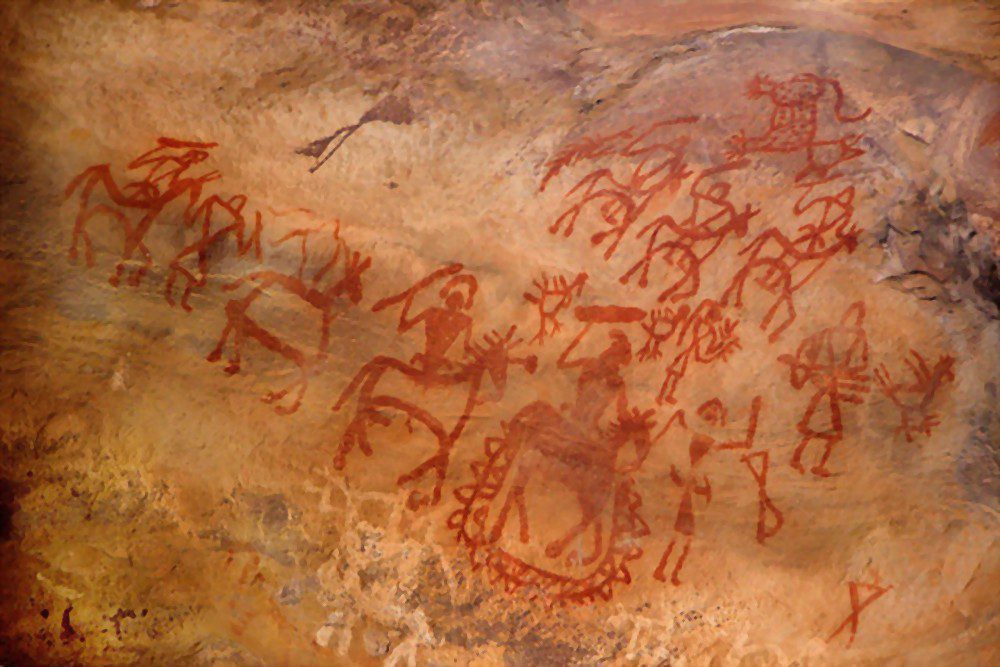
Bhimbetka Rock Shelters

The earliest records of the Indian subcontinent history exist in the form of the Rock Shelters of Bhimbetka. It’s an archaeological site in central India that spans the prehistoric paleolithic and mesolithic periods, as well as the historic period.

It shows the earliest traces of human life on the Indian subcontinent and evidence of Stone Age starting at the site.

Some of the Bhimbetka rock shelters feature prehistoric cave paintings and the earliest are about 30,000 years old.

These shelters are situated on the southern edge of the central Indian plateau, in the foothills of the Vindhyan Mountains.

There are five groups of rock shelters, each of them decorated with paintings that are believed to date from the Mesolithic Period right through to the historical period.

The Bhimbetka site has the oldest known rock art in the Indian subcontinent, as well as is one of the largest prehistoric complexes.

Mehrgarh Culture (7000 BC to 3300 BC)
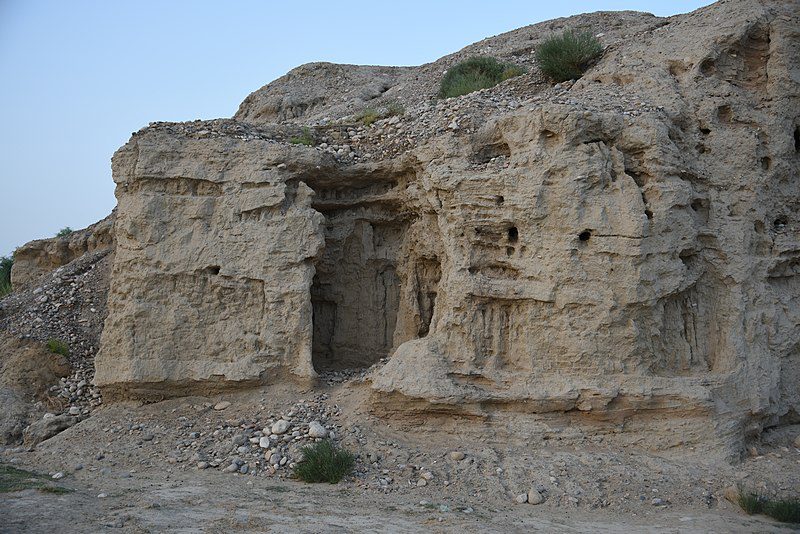
Mehrgarh is one of the most significant sites belonging to the Neolithic Age. At the same time, it is one of the oldest sites that indicate the introduction of the concept of farming and herding.

Mehrgarh, sometimes also anglicized as Mehergarh or Mehrgar, is located near the Bolan Pass on the Kacchi Plain of Balochistan, Pakistan, to the west of the Indus River valley

The site of Mehrgarh, spread over an area of 495-acre, was discovered in the year 1974.

Indus Valley Civilization (3300 BC to 1700 BC)
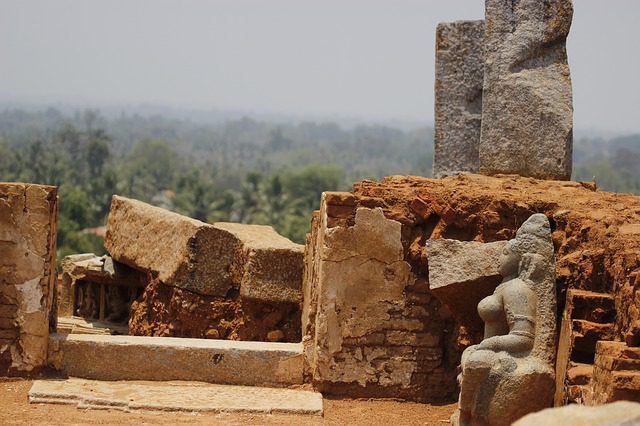
The Indus Valley Civilization was discovered in the 1920s. This is one of the most significant periods in the history of India. Indus Valley Civilization is divided into 6 significant phases.

Early Harappan Phase (3300 BC to 2600 BC)

The early Harappan Phase lasted for approximately 700 years, starting with the Ravi Phase.

It is one of the three earliest urban civilizations and made use of an early form of the Indus script, known as Harappan script, for writing purposes.

Around 2800 BC, the Kot Diji phase of the Indus Valley Civilization started.

Mature Harappan Phase (2600 BC to 1700 BC)

The Mature Harappan Phase started around 2600 BC. Large cities and urban areas started emerging and the civilization expanded to over 2,500 cities and settlements.

Urban planning, excellent sewage and drainage system, system of uniform weights and measures, knowledge of proto-dentistry, etc are some of the other elements that characterize the mature phase.

Late Harappan Phase (1700 BC to 1300 BC)

The Late Harappan Phase began around 1700 BC and came to an end around 1300 BC. However, one can find many elements of the Indus Valley Civilization in later cultures.

Vedic Period/Age (1700 BC to 500 BC)

The Vedic Period or the Vedic Age refers to the time of the compilation of the sacred Vedic Sanskrit texts in India.

Situated on the Indo-Gangetic Plain, the Vedic Civilization formed the basis of Hinduism and the Indian culture. The Vedic Period can be divided into the following two phases:

Early Vedic/Rig Vedic Period (1700 BC to 1000 BC)
Early Vedic-Rig Vedic Period

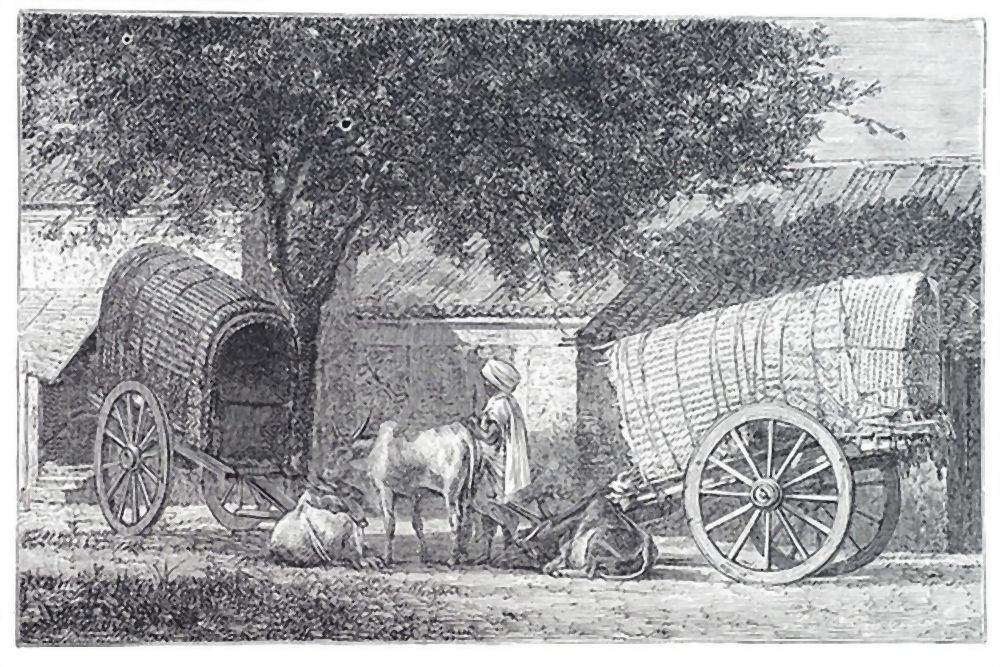
Early Vedic Period represents the time period when the oldest of all Vedas, Rig Veda was compiled.

During this period, the king was believed to be the protector of the people, who took an active part in the government.

The caste system started becoming rigid and the families started becoming patriarchal. The major events of this time are:

  • 1700 BC – Late Harappan and Early Vedic period coincide
  • 1300 BC – The end of Cemetery H culture
  • 1000 BC – Iron Age of India

Later Vedic Age (1000 BC to 500 BC)

The emergence of the later Vedic period was marked with agriculture becoming the dominant economic activity and a decline in the significance of cattle rearing.

The political organization changed completely, with the reduction in the involvement of people in the administration. The major events are:

  • 600 BC – The formation of Sixteen Maha Janapadas (Great Kingdoms)
  • 599 BC – The birth of Mahavira, founder of Jainism
  • 563 BC – The birth of Siddhartha Gautama (Buddha), founder of Buddhism
  • 538 BC – Cyrus the Great conquered parts of Pakistan
  • 500 BC – Earliest written records in Brahmi
  • 500 BC – Panini standardized grammar and morphology of Sanskrit, converting it
  • into Classical Sanskrit. With this, the Vedic Civilization came to an end.

Ancient India (500 BCE – 550 AD)

Rise of Jainism and Buddhism
Rise of Jainism and Buddhism
  • The emergence of Buddhism in India
  • Buddhism

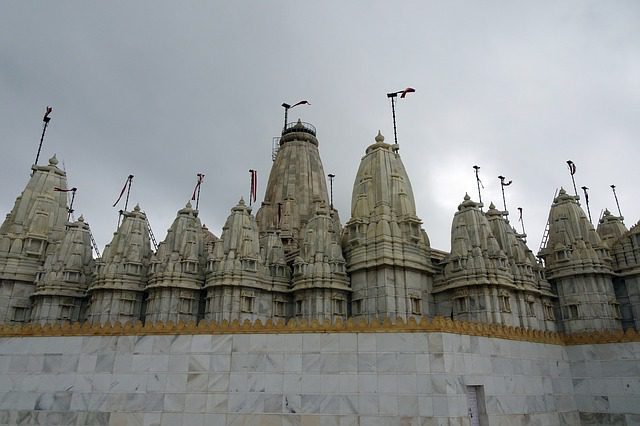
Jainism or Jain Dharma is the religious philosophy that originated in the Ancient India. The religion is based on the teachings of the Tirthankaras.

The 24th Tirthankara, Lord Mahavira, is credited with propagating the religion in the various parts of the world. Buddhism is based on the teachings of Lord Buddha, who was born as Prince Siddhartha Gautama.

After attaining Enlightenment, Lord Buddha set on a task of teaching others how to achieve nirvana. His teachings were later propagated throughout the world by Emperor Asoka.

The other major events of the Ancient Indian period are:

  • 333 BC – Darius III was defeated by Alexander the Great. The Macedonian Empire was established
  • 326 BC – Ambhi, King of Taxila surrendered to Alexander, Battle of the Hydaspes River
  • 321 BC – Chandra Gupta Maurya established the Maurya Empire
  • 273 BC – Emperor Ashoka took over the Maurya Empire
  • 266 BC – Ashoka conquered most of South Asia, Afghanistan and Iran
  • 265 BC – The battle of Kalinga, after which Emperor Ashoka embraced Buddhism
  • 232 BC: Ashoka died and was succeeded by Dasaratha
  • 230 BC – Satavahana Empire was established
  • 200 to 100 BC – Tholkappiyam standardized grammar and morphology of Tamil
  • 184 BC – Collapse of Maurya Empire with the assassination of Emperor Brihadrata, Establishment of the Sunga dynasty
  • 180 BC – Establishment of the Indo-Greek kingdom
  • 80 BC – Establishment of the Indo-Scythian kingdom
  • 10 BC – Establishment of the Indo-Parthian kingdom
  • 68 AD – Establishment of the Kushan Empire by Kujula Kadphises
  • 78 AD – Gautamiputra Satkarni took over Satavahana Empire and defeated Scythian king Vikramaditya
  • 240 AD – Establishment of the Gupta Empire by Sri-Gupta
  • 320 AD – Chandragupta I took over the Gupta Empire
  • 335 AD – Samudragupta took over the Gupta Empire and started expanding it
  • 350 AD – Establishment of the Pallava Empire
  • 380 AD – Chandragupta II took over the Gupta Empire
  • 399 to 414 AD – Chinese scholar Fa-Hien traveled to India

Medieval Period (550 AD to 1526 AD)
Medieval Period India

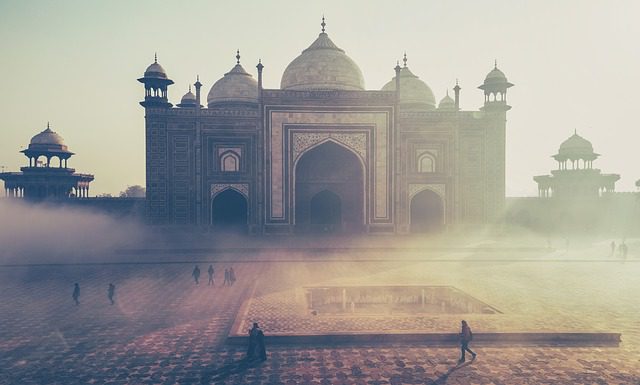
The medieval period can be divided into the following two phases:

Early Medieval Period (Upto 1300 AD)

  • 606 AD – Harshavardhana became the King
  • 630 AD – Hiuen Tsiang traveled to India
  • 761 AD – First Muslim invasion by Mohammed Bin Qasim
  • 800 AD – The birth of Shankaracharya
  • 814 AD – Nripatunga Amoghavarsha I became Rashtrakuta king
  • 1000 AD – Invasion by Mahmud of Ghazni
  • 1017AD – Alberuni traveled to India
  • 1100s AD – Rule of the Chandelas, Cholas, Kadambas, and Rashrakutas
  • 1120 AD – Kalyani Chalukya Empire attained peak, Vikramaditya VI introduced Vikrama Chalukya Era
  • 1191 AD – First battle of Tarain between Mohammed Ghori & Prithivi Raj Chauhan III
  • 1192 AD – Second battle of Tarain between Ghauri and Prithivi Raj Chauhan III
  • 1194 AD – Battle of Chandawar between Ghauri and Jayachandra
  • 1288 AD – Marco Polo came to India

Late Medieval Period (1300 AD to 1500 AD)

  • 1300 AD – Establishment of the Khilji Dynasty
  • 1336 to 1565 AD – Vijayanagar Empire
  • 1498 AD – First voyage of Vasco-da-Gama to Goa

Post-Medieval Era (1526 AD to 1818 AD)

The major events in the post medieval era are:

  • 1526 AD – Babur, the Mughal ruler of Kabul, invaded Delhi and Agra and killed Sultan Ibrahim Lodi
  • 1527 AD – Battle of Khanwa, in which Babur annexed Mewar
  • 1530 AD – Babur died and was succeeded Humayun
  • 1556 AD – Humayun died and was succeeded by his son Akbar
  • 1600 AD – East India company was formed in England
  • 1605 AD – Akbar died and was succeeded by Jehangir
  • 1628 AD – Jehangir died and was succeeded by Shah Jahan
  • 1630 AD – Shivaji was born
  • 1658 AD – Shah Jahan built Taj Mahal, Jamia Masjid and Red Fort.
  • 1659 AD – Shivaji defeated Adilshahi troops at the Battle of Pratapgarh
  • 1674 AD – Maratha Empire was established
  • 1680 AD – Shivaji died
  • 1707 AD – Aurangzeb died and was succeeded by Bahadur Shah I
  • 1707 AD – Maratha Empire broke into two divisions
  • 1734 AD – Pamheiba invaded Tripura
  • 1737 AD – Bajirao I conquered Delhi
  • 1740 AD – Bajirao I died and was succeeded by Balaji Bajirao
  • 1757 AD – Battle of Plassey was fought
  • 1761 AD – Third battle of Panipat ended the expansion of Maratha Empire
  • 1766 AD – First Anglo-Mysore War
  • 1777 AD – First Anglo-Maratha War
  • 1779 AD – Battle of Wadgaon
  • 1780 AD – Second Anglo-Mysore War
  • 1789 AD – Third Anglo-Mysore War
  • 1798 AD – Fourth Anglo-Mysore War
  • 1799 AD – Tipu Sultan died, Wodeyar dynasty was restored
  • 1803 AD – Second Anglo-Maratha War
  • 1817 AD – Third Anglo-Maratha War begins
  • 1818 AD – End of the Maratha Empire and British control over most of India

Colonial Era (1818 AD to 1947 AD)

The Colonial Era started with the British taking control over almost all the parts of India and ended with the freedom of India in 1947.

The major events that took place during the Colonial Era are:

  • 1829 AD – Prohibition of Sati
  • 1857 AD – First Indian war of Independence, known as Indian Mutiny
  • 1885 AD – Indian National Congress was formed
  • 1930 AD – Dandi Salt March, Simon Commission, First Round Table Conference
  • 1915 AD – Home Rule League was founded by Annie Besant
  • 1919 AD – Massacre at Jallianwalabagh
  • 1931 AD – Bhagat Singh was hanged by the British, Second Round Table Conference, Gandhi-Irvin Pact
  • 1919 AD – Khilafat Movement, Jalianwala Bagh Massacre, Rowlat Act
  • 1937 AD – Congress won power in many states, World War II broke out
  • 1921 AD – Civil Disobedience Movement
  • 1928 AD – Murder of Lala Lajpat Rai
  • 1942 AD – Quit India Movement, Rise of Subhash Chandra Bose
  • 1922 AD – Quit India Movement suspended after the Chauri-Chura violence
  • 1946 AD – Muslim League adamant about the formation of Pakistan
  • 1947 AD – India gained independence and witnessed partition

Independent and Modern India (1947 onwards)

In 1947, India became independent and from that year onwards, started India’s struggle to become one of the leading nations of the world.

Today, the country is regarded as one of the fastest-growing major economies of the world.

Share is Caring, Choose Your Platform!

Recent Posts

    Context

    Sunil Mittal, the chairman of Bharti Airtel, said recently that it would be “tragic” if India’s telecom-access market was to be reduced to only two competing operators. He was probably referring to the possible exit of the financially-stressed Vodafone Idea and the increasing irrelevance of government-owned operators, BSNL and MTNL. This would essentially leave the market to Reliance Jio and Airtel. A looming duopoly, or the exit of a global telecommunications major, are both worrying. They deserve a careful and creative response.

    [wptelegram-join-channel link=”https://t.me/s/upsctree” text=”Join @upsctree on Telegram”]

    Thus Far

    • India’s telecom market has seen monopoly as well as hyper-competition.
    • Twenty-five years ago, the government alone could provide services.
    • Ten years later, there were nearly a dozen competing operators.
    • Most service areas now have four players.
    • The erstwhile monopolies, BSNL and MTNL, are now bit players and often ignored.

    The reduced competition is worrying. Competition has delivered relatively low prices, advanced technologies, and an acceptable quality of services. These gains are now at risk. There is a long way to go in expanding access as well as network capacity.

    The Indian Telecom Irony

    • India is ranked second globally—after China—in the number of people connected to the internet. However, it is also first in the number of people unconnected.
    • Over 50% of Indians are not connected to the internet, despite giant strides in network reach and capacity.
    • India’s per capita or device data usage is low. It has an impressive 4G mobile network. However, its fixed network—wireline or optical fibre—is sparse and often poor.
    • 5G deployment has yet to start and will be expensive.

    Vodafone Tragedy

    Filling the gaps in infrastructure and access will require large investments and competition. The exit of Vodafone Idea will hurt both objectives. The company faces an existential crisis since it was hit hardest by the Supreme Court judgment on the AGR issue in 2019, with an estimated liability of Rs 58,000 crore.

    The closure of Vodafone Idea is an arguably greater concern than the fading role of BSNL and MTNL. The government companies are yet to deploy 4G and have become progressively less competitive. Vodafone Idea, on the other hand, still accounts for about a quarter of subscriptions and revenues and can boast of a quality network.

    It has been adjudged the fastest, for three consecutive quarters, by Ookla, a web-service that monitors internet metrics. India can ill-afford to waste such network capacity. The company’s liabilities will deter any potential buyer.

    Vodafone+MTNL+BSNL ?

    A possible way out could be to combine the resources of the MTNL and BSNL and Vodafone Idea through a strategic partnership. Creative government action can save Vodafone Idea as well as improve the competitiveness of BSNL and MTNL.

    It could help secure government dues, investment, and jobs. It is worth recalling here that, about 30 years ago, the Australian government’s conditions for the entry of its first private operator, Optus, required the latter to take over the loss-making government satellite company, Aussat. Similar out-of-the-box thinking may well be key to escape the looming collateral damage.

    It is not trivial to expand competition in India’s telecom market. Especially since there are no major regulatory barriers to entry anymore. Any new private player will be driven largely by commercial considerations. Global experience suggests that well-entrenched incumbents have massive advantages. New players are daunted by the large investments—and much patience!—needed to set up networks, lure existing customers and sign new ones.

    However, regulators and policymakers have other options to expand choice for telecom consumers. Their counterparts in mature regulatory regimes—e.g., in the European Union—have helped develop extensive markets for resale. Recognising the limited influence of smaller players, regulators mandate that the incumbent offer wholesale prices to resellers who then expand choice for end-users.

    This has been virtually impossible in India. There is a near absence of noteworthy virtual network operators (VNOs) and other resellers. A key barrier to resale is India’s licence fee regime which requires licence-holders to share a proportion of their revenues with the government. Thus, resale could hurt exchequer revenues unless resellers are subject to identical levies. Understandably, the levies—and consequently additional reporting and compliance—is a disincentive for smaller players. The disincentive flows from levies based on revenues which comes with considerable costs of compliance. It would almost vanish if the levies were replaced by say, a flat fee computed objectively.

    The ball is in the court of the regulator and the government. They have options. But will they take decisive action to exercise them? It will be ‘tragic’ if they can’t.


  • INTRODUCTION

    Since most of the early scholars, researchers and historians were men, many aspects of society did not find a place in history books. For example, child-birth, menstruation, women’s work, transgenders, households etc. did not find much mention.

    [wptelegram-join-channel link=”https://t.me/s/upsctree” text=”Join @upsctree on Telegram”]

    Rather than building a holistic picture of the past, some select aspects such as polity and the different roles of men became the central focus of history writing. Women were confined to one corner of the chapter where a paragraph or two was devoted to the ‘status and position of women’.

    Even the details of these paragraphs were hardly different from each other. This made it look like as if history (and thereby society, polity, economy and all culture) belonged to men while women were only a small static unit to be mentioned separately. Of course, there were some exceptions, but these were however rare. This practice is being corrected now and the roles and presence of women are being read into all parts of historical questions.

    SOURCES FOR UNDERSTANDING GENDER HISTORY

    Sources are the bases of history writing. From simple pre-historic tools to abstruse texts, everything can be utilized to understand life and roles of women in history. The presence as well as the absence of women from sources needs to be duly noticed, deliberated and argued upon and only then to be theorised upon.

    Certain objects being directly related to the lives of women or depicting the ideas of the female principle are of central importance. These include but are not limited to female figurines, art objects, texts attributed to or authored or compiled by women, monuments created by or for women, various objects relating to their lifestyle, objects associated with women on account of their cultural roles and so on.

    It has been rightly pointed out by Uma Chakravarti that much of the gender history written in early phase was a ‘partial view from above’. This referred to the utilization of select textual sources and focused only on relational identity of women. There were, however, a few exceptions.

    GENDER HISTORIOGRAPHY

    Amongst the many narratives propagated to denigrate Indian civilization and culture by the British colonial rulers, the condition of Indian women became a point of central reference. Various social evils that made the life of women miserable were pointed out and efforts were also made to introduce ‘reforms.’ Sati, child-marriages, imposed widowhood, polygamy, dowry, educational and economic inequality, purdah (ghoonghat) and many other practices prevailed during the colonial period that made the life of women difficult and pitiable.

    Some practices affected women of higher social and economic households while others led to misery for poorer women. Many social reform movements were started in the 19th century to address these issues and contributions were made by Indian reformers as well as British officials and other Europeans.

    Women in India came to be treated as a homogeneous category and over generalisation became the norm. While many communities in India practised widow remarriage and did not practise (much less forced) sati and while some practised divorces or separation, the image of the Indian woman who had been subjugated as woman, wife and widow became a dominant theme in history writing.

    Secondly, a western vision was placed over the non-western societies and hence interpretations were far removed from the context. For example, notion of stridhan was equated with dowry and little regard was paid to the provisions regarding its use and ownership by women.

    The huge social stigma that came along with the selling of jewellery of the household (one of the main components of stridhan) was paid no attention to. Similarly, penal provisions listed by ancient texts for misappropriation of women’s property were not even looked into.

    During the Paleolithic age, hunting and gathering was norm. However much importance was given to Hunting than gathering in all literature of history. Studies, however, show that hunted prey formed only 35% of the diet while gathering fruits and other edible material supplied the major portion. Gathering of food resources was ordinarily done by women. Since gathering was an important activity, more than hunting for game, it could point to significant role playing by women.

    The gendered understanding of Harappan civilization is being built upon and various archaeological remains have been studied in this respect. The female figurines, idols of pregnant women, the statue of the ‘dancing girl’, various pieces of jewellery and personal belongings that have been discovered at various sites and offer useful insights on the public and private lives of women and men.

    The statue of a girl obtained from Mohanjodaro has been called a ‘dancing girl’ on grounds of familiarity with the institution of devadasis in the later times. Such backward looking explanations are problematic.

    There is a wide variety of terracotta female figurines that have been found at different sites right from the pre-Harappan times. Women figures are found suckling a baby, holding utensils, kneading dough, nursing infants, carrying objects like drums, seated figures for board games, with steatopygia (fat deposition on the hips and elsewhere), with floral head-dresses and in many other forms.

    Even figurines of pregnant women are quite common. However, most of these have been uncritically associated with fertility, religiosity and reproductive ideas, and have been passed off as representations of the Mother Goddesses. While some of them were votive objects, others are held to be toys or other utilities. The focus on female form has been so stereotypical that women have been seen as associated only with home, hearth, fertility, sexuality and divinity. So much so that sometimes even male figurines in assumed womanly roles were classified as female figurines.

    POSITION OF WOMEN IN EARLY INDIA

    The first literary tradition in the Indian subcontinent (and the oldest in the world) is that of the Vedic corpus. From the four Samhitas to the Upanishads, we find many interesting references to women in various roles. Some of these women have left their mark on the cultural heritage to this day and are remembered in various ritual and social contexts. Their names, stories, some highly revered hymns, and other interesting facets are mentioned in the Vedic corpus.

    The Vedic literature has been classified as Early Vedic and Later Vedic. The Rigvedic society and polity seems to be teeming with life and agro-pastoral economy was enmeshed in close kinship ties. Women as well as men participated in society, economy and polity. Some of the most revered hymns including the gayatri mantra are ascribed to women.

    Various natural phenomena are depicted as Goddesses and they are offered prayers. While quantitative analysis highlights the predominance of Indra, Agni, Varuna and other male gods, the power and stature of the goddesses is equally well established.

    Women participated in all three Vedic socio-political assemblies viz. Sabha, Samiti and Vidhata. They had access to education and were even engaged in knowledge creation. They could choose to be brahmavadinis with or without matrimony.

    Hence, there is no reason to believe that they were only confined to home and hearth. T. S. Rukmani attempts to understand if women had agency in early India. Her work has highlighted many interesting details. The author acknowledges the fact that though the patriarchal set up put women at a loss, there were instances where women found space to exercise their agency.

    She points out that though the texts like the Kalpasutras (Srautasutras, Dharmasutras and Grhasutras) revolved around the ideology of Dharma and there was not much space to express alternative ideas, still these works also find some leeway to express ideas reflecting changed conditions.

    For example, there is a statement in the Apastamba Dharmasutra that one should follow what women say in the funeral samskaras. Stephanie Jamison believes that in hospitality and exchange relations, women played an important role. She says that the approval of the wife was important in the successful completion of the soma sacrifice. In another study it has been shown that women enjoyed agency in deciding what was given in a sacrifice, bhiksha to a sanyasin. The men had no authority in telling her what to do in these circumstances.

    Vedic society was the one which valued marriage immensely. In such contexts, Gender Perspectives if a woman chose not to marry, then it would point to her exercising choice in her decision to go against the grain and remain unmarried.

    Mention may be made of Gargi. She was a composer of hymns and has been called a brahmavadini. This term applies to a woman who was a composer of hymns and chose to remain unmarried, devoting herself to the pursuit of learning.

    Similarly, in the case of Maitreyi, she consciously opts to be educated in the Upanishadic lore and Yajnavalkya does not dissuade her from exercising her choice.

    The statement in the Rigveda that learned daughters should marry learned bridegrooms indicates that women had a say in marriage. Though male offspring is desired, there is a mantra in the Rigveda, recitation of which ensures the birth of a learned daughter.

    Altekar refers to the yajnas like seethayagna, rudrayajna etc. that were to be performed exclusively by women. Some of the women were known for their exceptional calibre, for example, from the Rigveda Samhita we find mention of women like Apala, Ghosha, Lopamudra, Gargi, Maitreyi, Shachi, Vishwavara Atri, Sulabha and others.

    Women have not only been praised as independent individuals but also with reference to their contributions towards their natal or marital families.

    The Later Vedic literature shows the progression towards a State society with a change in the organization of the society and polity. The chief comes to be referred to as bhupati instead of gopati. However, within the twelve important positions (ratnis) mentioned, the chief queen retains a special position under the title mahisi.

    The importance of the chief queen continued as gleaned from several references to them in the Epics, Arthashastra and even in coins and epigraphs from early historical times.

    The other Samhitas also refer to women sages such as Rishikas. The wife is referred to as sahadharmini. Brahmanas or the texts dealing with the performance of the yajna (Vedic ritual), requires a man to be accompanied by his wife to be able to carry out rituals.

    For example, Aitareya Brahmana looks upon the wife as essential to spiritual wholesomeness of the husband. However, there is a mention of some problematic institutions as well.

    Uma Chakravarti has pointed towards the condition of Vedic Dasis (female servant/slave) who are referred to in numerous instances. They were the objects of dana (donation/gift) and dakshina (fee).

    It is generally believed that from the post Vedic period the condition of the women steadily deteriorated. However, Panini’s Ashtadhyayi and subsequent grammatical literature speak highly of women acharyas and Upadhyayas.

    Thus, the memory and practice of a brahmavadini continued even after the Vedic period. The Ramayana, Mahabharata and even the Puranas keep the memory of brhamavadini alive.

    Mention may be made of Anasuya, Kunti, Damyanti, Draupadi, Gandhari, Rukmini who continued to fire the imagination of the poets. Texts show that the daughter of Kuni-garga refused marriage because she did not find anyone worthy of her.

    The Epics also mention women whose opinions were sought in major events. For example, after the thirteen years of exile, while debating upon the future course of action regarding the restoration of their share, the Pandavas along with Krshna asks Draupadi for her views. Similarly, when Krishna goes to the Kaurava’s court to plead the case of Pandavas, Gandhari is called upon to persuade her sons to listen to reason.

    Since a woman taking sanyasa was an act of transgression, one can explore women’s agency through such instances. In the Ramayana, Sabari, who was the disciple of Sage Matanga, and whose hermitage was on the banks of river Pampa was one such sanyasin.

    Such women find mention in Smriti literature and Arthashashtra. Kautilya’s prohibition against initiating women into Sanyasa can make sense only if women were being initiated into sanyasa. He advises the king to employ female parivrajakas as spies.

    Megasthenes mentions women who accompanied their husbands to the forest, probably referring to the Vanaprastha stage. Another category of literature called Shastras that comprises of sutras (aphorisms) and the smriti texts (‘that which is remembered’) becomes important in the postVedic period.

    These textual traditions cover many subjects relating to the four kinds of pursuits of life referred to as purusharthas (namely dharma, karma, kama and moksha). In all these texts we find very liberal values and freedom for both women and men.

    The setting up of a household is seen as an ideal for men as well as women (though asceticism for learning is equally praised for both). For example, Apastambha Sutra opines that rituals carried out by an unmarried man do not please the devatas (divinities). Similarly, Manusmriti provides that ‘for three years shall a girl wait after the onset of her puberty; after that time, she may find for herself a husband of equal status. If a woman who has not been given in marriage finds a husband on her own, she does not incur any sin, and neither does the man she finds’

    Thus, we see that women enjoyed choice in matters of matrimony. It is interesting to note that unmarried daughters were to be provided for by the father. In fact, daughter is stated to be the object of utmost affection. Should a girl lose her parents, her economic interests were well looked after. It was provided that from their shares, ‘the brothers shall give individually to the unmarried girls, one-quarter from the share of each. Those unwilling to give will become outcastes’

    With regards to defining contemporary attitude towards women, Apastambha Sutra prescribed that ‘All must make a way for a woman when she is treading a path.’ Later Dharmashastra also makes similar statements.

    Yagnavalkyasmriti mentions that ‘women are the embodiment of all divine virtues on earth.’ However, there are several provisions that look problematic.

    On one hand, we have reverence assigned to the feminine (divine and worldly) and important roles being played by them, on the other hand we have questionable provisions and descriptions like right to chastise them through beating or discarding.

    The post-Vedic phase from 6th century BCE onwards is also rich in literary traditions with ample depictions of women. Interestingly, we have an entire body of literature that is ascribed totally to women who became Buddhist nuns. These are referred to as Therigathas i.e. the Songs of the Elder Bhikkhunis (Buddhist Women who joined the Sangha).

    The Arthashastra Gender Perspectives gives us information on women who were engaged in economic activities of various kinds. They formed a part of both the skilled and the unskilled workforce. They were into professional as well as non-professional employment.

    Some of their vocations were related to their gender, while the others were not. There were female state employees as well as independent working women. Similarly, some of them were engaged in activities which though not dependent on their biological constitution are nonetheless categorized as women’s domain, e.g. domestic services etc. Some of them were actual state employees, while some others were in contractual relations with the State. For example, we have female bodyguards and spies in the State employment.

    Jaiswal suggests that these women perhaps came from Bhila or Kirata tribe. Female spies were not only to gather information and relay it to proper source, but also to carry out assassinations. However, a closer look at the text shows that there were different classes of female spies engaged for different purposes. Amongst others ‘women skilled in arts were to be employed as spies living inside their houses’. Others were required to work as assassins. Some were to the play the roles of young and beautiful widows to tempt the lust of greedy enemy.

    We also have various Buddhist and Jaina traditions giving us some glimpses of the ideas and institutions of the times. Apart from the orthodox (Vedic and Brahmanic) and heterodox normative tradition we have many popular texts like the Epics in Sanskrit and Jatakas in Pali.

    Even Prakrit language has many interesting narratives and poetic texts. The Therigatha by the Buddhist nuns are an interesting literary source that provides us with a glimpse of various women who attained arhantship or similar other stages of Realisation.

    The deliberation on the age and deterioration of the body by Ambapali, the non-importance of sensual or bodily pleasures by Nanda, Vimla and Shubha etc points towards the intellectual and spiritual engagements and attainments of women.

    It is interesting to note that an absolutely contrary picture is presented by the Jatakas wherein more often than not, women are depicted as evil. It is important to note that women were given an evil aura mostly in their roles as wives or beloveds.

    Both the texts and the archaeological remains have been studied by various scholars and opposing interpretations are not rare. For example, on one side Sita (from Ramayana) and Draupadi (from Mahabharata) have been seen as victims of the patriarchal order; on the other hand, they are also represented as selfwilled women.

    Draupadi after the game of dice presents herself as a forceful and articulate woman. It’s her wit that saves her husbands from becoming slaves of the Kauravas. Her incensed outrage at the attack on her modesty, her bitter lamentations to Krishna, her furious tirade against Yudhishthira for his seeming inability to defend her honour and many more such instances show her to be an aggressive woman. This persona is juxtaposed to her representations as an ideal wife elsewhere. However, Draupadi is never idealised as a perfect wife who endures the most severe trials without complaint. This honour is reserved for Sita in the Ramayana. She is also presented as a victim like Draupadi and voices her concern at her fate openly. However, her aggression is directed inwards as indicated by her action against the self which culminate in her union with the mother Earth.

    Are the limited number of hymns ascribed to the Vedic women a signifier of their general status? Are the goddesses merely representational with no connection to the ideas and behaviour towards women? Did only princesses choose their spouses? Are the warrior women an exception? Such searching questions need to be addressed with due diligence.

    While women studies are a good development there is a need to expand the horizons to include other varieties of human existence. We have narratives of fluid sexuality in various texts. The one year of Arjuna’s life spent as Brihallana and rebirth of Amba as Shikhandi are some interesting instances. The artefacts found at the site of Sheri Khan Tarakai include visibly hermaphroditic figurines. There is a need to understand the notions of the feminine, masculine, neuter, and other forms of gender and sexual identities. These will have ramifications for understanding the ideas of conjugality, family, community, society and even polity and spirituality.

    CONCLUSION

    Human civilisations were built by men as well as women, however, history writing has a huge male-bias. Women were confined to questions of status and position that were largely evaluated in terms of their roles in the domestic sphere.

    Their treatment as wives and widows became a central focus of most research alongside their place in ritual or religious context. This made them peripheral to mainstream history. This was questioned by various scholars from time to time and led to the development of gendered understanding of history. Focusing attention on women’s history helps to rectify the method which sees women as a monolithic homogeneous category. Writing gender history has helped in building an image of the past that is wholesome and nuanced.