


1) Birth of a new Planet:-
-
Astronomers have observed for first time a planet taking shape out of microscopic dust particles 450 light years from Earth The primordial process that turns enormous clouds of cosmic dust into newborn planets over millions of years has been observed directly for the first time.
-
Astronomers caught sight of a planet in the making around a young star in the neighbourhood of Taurus 450 light years from Earth.
-
The discovery is a boon for scientists who have never before had a real star system against which they can check theories of how the universe came to be dotted with different worlds.
- Covered in a haze of dust particles, the planet-in-the-making was spotted near LkCa 15, a two-million-year-old star 450 light years away.
2) Pushtimarg and Bhakti tradition:-
- A unique exhibition in Chicago showcases the private devotions of the Pushtimarg sect of Hinduism.
- This sect of Hinduism is little known even within India due to its closed and private devotions. Even today, phones and cameras are not allowed within the precincts of the main temple at Nathdwara(Rajasthan). Outside the sect, there is little appreciation of its unique traditions that have been preserved and elaborated upon since the 16th century.
- Pushtimarg:-
- Vallabhacharya is one of the five main Acharyas of the Bhakti tradition of Hinduism. (The other four being Shankaracharya, Ramanujacharya, Madhavacharya and Shri Nimbarkacharya.) He propagated the philosophy of Shuddhadvaita which forms the basis of Pushtimarg devotional practice. These acharyas have made significant contribution to the bhakti movement and led to the medieval rise in popularity of the Hindu Religion. The devotional movement is based on the idea that love of God should be seen as an end in itself, not as a means to something else
- Shuddhadvaita:-
- Shuddadvaita is the “purely non-dual” philosophy propounded by Vallabhacharya (1479-1531 CE), the founding philosopher and guru of the Vallabhā sampradāya (“tradition of Vallabh”) or Puśtimārg (“The path of grace”), a Hindu Vaishnava tradition focused on the worship of Krishna. Vallabhacharya’s pure form (nondualist) philosophy is different from Advaita. The Shrinathji temple at Nathdwara, and compositions of eight poets (aṣṭachap), including Surdas, are central to the worship by the followers of the sect.
- The formal initiation into Pushtimarg is called Brahmasambandha. The absolute and exclusive rights to grant “Brahmsambandh” in the path of grace, in order to transform an Ordinary jiva (soul) into a Pushti “Jeev” lie only with the descendants of Vallabhacharya, known as Goswami Balaks – Vallabhkul (The word “Goswami” literally means – the one who has control over all the senses), who Vallabh Vaishnavas respectfully and lovingly refer to as: “Goswami”,”Bawa” or “Jai Jai”. They are the actual and direct descendants of Vallabhacharya Mahaprabhu. Goswamis are responsible for the “pushti”(literally means spiritual nourishment) of all the disciples initiated by them.
Philosophical Concepts:-
- Pushti Marg Because the Lord is accessible only through His own grace. The Lord cannot be attained by a given formula – He is attainable only if He wants to be attained !
- Rudra Marg Because Shri Vallabh won the great debate on the shastras at Vijaynagar,after the kanakabhishek ceremony, Vishnuswami humbly offered Shri Vallabh his seat and it was accepted by him. And also as the knowledge in this line was first given to Rudra i.e. Lord Shiva and it has come down from Him in disciplic succession.
- Shuddha-Advaita Pure Monism where there is no difference between the creator and the created.
- Bhrahmavada Brahman, the source and cause of all that is in the Universe, IS the universe. Purest form of monism anywhere, in any religion. Uniquely, this is the only philosophy that states, categorically, that everything, absolutely everything, is perfect just the way it is. Everything is imbibed with the sprite of the Lord and as the Lord is eternally perfect, everything is perfect !
3)Drop in public and private investments top concerns:-
- India’s central bank chief Raghuram Rajan said Asia’s third-largest economy is being hampered by a drop in public and private investments, but held out hope that strong foreign capital flows will help rectify this weakness
- Weak capital investment has been a hurdle in India’s quest to realise its growth potential and with factories running 30 percent below capacity, private companies are in no rush to invest in new projects.
-
Despite the slowdown in growth and investments, Rajan said strong foreign direct investment and some traction in infrastructure development may encourage private investments.
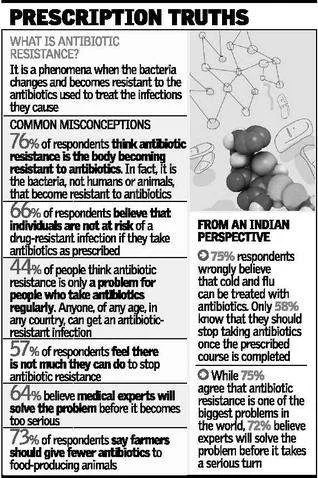
4) Antibiotic Resistance:-
- World Health Organisation (WHO) survey conducted in 12 countries has said that most people don’t understand how to keep antibiotic resistance from growing
- The WHO survey points out some of the practices, gaps in understanding and misconceptions that contribute to this phenomenon.

5) CCEA approves disinvestment of 10 percent paid up equity capital in Coal India Limited :-
- The Cabinet Committee on Economic Affairs, has approved the disinvestment of 10 percent paid up equity capital of Coal India Limited.
- Disinvestment:-
- The action of an organization or government selling or liquidating an asset or subsidiary. Also known as “divestiture”
- A reduction in capital expenditure, or the decision of a company not to replenish depleted capital goods.
- A company or government organization will divest an asset or subsidiary as a strategic move for the company, planning to put the proceeds from the divestiture to better use that garners a higher return on investment.
- A company will likely not replace capital goods or continue to invest in certain assets unless it feels it is receiving a return that justifies the investment. If there is a better place to invest, they may deplete certain capital goods and invest in other more profitable assets.Alternatively a company may have to divest unwillingly if it needs cash to sustain operations.
6)Ministry of Social Justice and Empowerment, partners ICRC for Enable Makeathon
The union ministry of Social Justice and Empowerment has partnered with the International Committee of the Red Cross (ICRC) for Enable Makeathon.
What is Enable Makethon?
- The Enable Makeathon is a project initiated by the International Committee of the Red Cross (ICRC) and its partners to help create new assistive devices for persons with disabilities living in rural areas across the world.
- It is motivated by the spirit of broad collaboration with the government, the private sector, the academia as well as other interested individuals.
- It is a 60-day programme by the end of which participants – including technology and design experts, persons with disabilities and mentors – would have developed solutions and products for persons with disabilities in the form of prototypes.
7)Housing For All:-
News:-2,28,000 houses for urban poor cleared under Housing for All Mission
It is scheme which proposes to build 2 crore houses across the nation by 2022.
The components of the scheme are as follows:
- Slum rehabilitation of Slum Dwellers with participation of private developers using land as a resource.
- Promotion of affordable housing for weaker section through credit linked subsidy.
- Affordable housing in partnership with Public & Private sectors.
- Subsidy for beneficiary-led individual house construction or enhancement.
Details of the scheme:
- The scheme will be implemented as a Centrally Sponsored Scheme except the credit linked subsidy component, which will be implemented as a Central Sector Scheme.
- The scheme prescribes certain mandatory reforms for easing up the urban land market for housing, to make adequate urban land available for affordable housing.
- Houses constructed under the mission would be allotted in the name of the female head of the households or in the joint name of the male head of the household and his wife.
- A Technology Sub-mission under the Mission would be set up to facilitate adoption of modern, innovative and green technologies and building material for faster and quality construction of houses. The Technology Sub-Mission will also facilitate preparation and adoption of layout designs and building plans suitable for various geo-climatic zones. It will also assist States/Cities in deploying disaster resistant and environment friendly technologies.
- The Technology Sub-Mission will coordinate with various regulatory and administrative bodies for mainstreaming and up scaling deployment of modern construction technologies and material in place of conventional construction. The Technology Sub-Mission will also coordinate with other agencies working in green and energy efficient technologies, climate change etc.
- In the spirit of cooperative federalism, the Mission will provide flexibility to States for choosing best options to meet the demand of housing in their states.
8) IBSA-India, Brazil,South Africa :-
News:- The Union Cabinet has approved the signing of the Tripartite Agreement among India, Brazil and South Africa (IBSA), on the IBSA Fund for the Alleviation of Poverty and Hunger.
- The IBSA Dialogue Forum (India, Brazil, South Africa) is an international tripartite grouping for promoting international cooperation among these countries. It represents three important poles for galvanizing South-South cooperation and greater understanding between three important continents of the developing world namely, Africa, Asia and South America. The forum provides the three countries with a platform to engage in discussions for cooperation in the field of agriculture, trade, culture, and defence among others.
- Objective:-The IBSA Dialogue Forum aims to promote South-South cooperation and build consensus on issues of international importance. It also aims at increasing the trade opportunities among the three countries, as well as facilitate the trilateral exchange of information, technologies and skills to complement each other strengths. Subsequently, it promotes the international poverty alleviation and social development with main focus being on equitable development. It also aims to explore avenues to promote cooperation in broad range of areas, which include agriculture, climate change/global Warming, culture, defence, education, energy, health, information society, science and technology, social development, trade and investment, tourism and transport.
Receive Daily Updates
Recent Posts
Petrol in India is cheaper than in countries like Hong Kong, Germany and the UK but costlier than in China, Brazil, Japan, the US, Russia, Pakistan and Sri Lanka, a Bank of Baroda Economics Research report showed.
Rising fuel prices in India have led to considerable debate on which government, state or central, should be lowering their taxes to keep prices under control.
The rise in fuel prices is mainly due to the global price of crude oil (raw material for making petrol and diesel) going up. Further, a stronger dollar has added to the cost of crude oil.
Amongst comparable countries (per capita wise), prices in India are higher than those in Vietnam, Kenya, Ukraine, Bangladesh, Nepal, Pakistan, Sri Lanka, and Venezuela. Countries that are major oil producers have much lower prices.
In the report, the Philippines has a comparable petrol price but has a per capita income higher than India by over 50 per cent.
Countries which have a lower per capita income like Kenya, Bangladesh, Nepal, Pakistan, and Venezuela have much lower prices of petrol and hence are impacted less than India.
“Therefore there is still a strong case for the government to consider lowering the taxes on fuel to protect the interest of the people,” the report argued.
India is the world’s third-biggest oil consuming and importing nation. It imports 85 per cent of its oil needs and so prices retail fuel at import parity rates.
With the global surge in energy prices, the cost of producing petrol, diesel and other petroleum products also went up for oil companies in India.
They raised petrol and diesel prices by Rs 10 a litre in just over a fortnight beginning March 22 but hit a pause button soon after as the move faced criticism and the opposition parties asked the government to cut taxes instead.
India imports most of its oil from a group of countries called the ‘OPEC +’ (i.e, Iran, Iraq, Saudi Arabia, Venezuela, Kuwait, United Arab Emirates, Russia, etc), which produces 40% of the world’s crude oil.
As they have the power to dictate fuel supply and prices, their decision of limiting the global supply reduces supply in India, thus raising prices
The government charges about 167% tax (excise) on petrol and 129% on diesel as compared to US (20%), UK (62%), Italy and Germany (65%).
The abominable excise duty is 2/3rd of the cost, and the base price, dealer commission and freight form the rest.
Here is an approximate break-up (in Rs):
a)Base Price | 39 |
b)Freight | 0.34 |
c) Price Charged to Dealers = (a+b) | 39.34 |
d) Excise Duty | 40.17 |
e) Dealer Commission | 4.68 |
f) VAT | 25.35 |
g) Retail Selling Price | 109.54 |
Looked closely, much of the cost of petrol and diesel is due to higher tax rate by govt, specifically excise duty.
So the question is why government is not reducing the prices ?
India, being a developing country, it does require gigantic amount of funding for its infrastructure projects as well as welfare schemes.
However, we as a society is yet to be tax-compliant. Many people evade the direct tax and that’s the reason why govt’s hands are tied. Govt. needs the money to fund various programs and at the same time it is not generating enough revenue from direct taxes.
That’s the reason why, govt is bumping up its revenue through higher indirect taxes such as GST or excise duty as in the case of petrol and diesel.
Direct taxes are progressive as it taxes according to an individuals’ income however indirect tax such as excise duty or GST are regressive in the sense that the poorest of the poor and richest of the rich have to pay the same amount.
Does not matter, if you are an auto-driver or owner of a Mercedes, end of the day both pay the same price for petrol/diesel-that’s why it is regressive in nature.
But unlike direct tax where tax evasion is rampant, indirect tax can not be evaded due to their very nature and as long as huge no of Indians keep evading direct taxes, indirect tax such as excise duty will be difficult for the govt to reduce, because it may reduce the revenue and hamper may programs of the govt.