


ISSUE OF ETHICS: FOCI AND CONCERNS
It is a truism that the crux of administrative morality is ethical decision-making. The questions of facts and values cannot be separated from ethical decision-making. Thus, the science of administration gets integrated with the ethics of administration. And in this integrated regime, only that empirical concern is valued, which respects the normative concerns in the delivery of administrative services.
[wptelegram-join-channel link=”https://t.me/s/upsctree” text=”Join @upsctree on Telegram”]
Woodrow Wilson, “The Study of Administration” (1887), in his inaugural address averred that justice was more important than sympathy. Thus, he placed justice at the top of value-hierarchy in a governance system. Paradoxically, there has been a lot of discussion on the formallegal aspects of administrative law since then, but very little analysis has been made of the philosophical dimension of administrative justice.
The other two issues of ethical decision-making, viz. fairness and objectivity are, in fact, integral components of administrative justice. When administrators are true to their profession, they are expected to be impartial and fair and not get influenced by nepotism, favoritism and greed while making decisions of governance.
Objectivity should not be misconstrued as a mechanical and rigid adherence to laws and rules. From the decision-making angle, it has undoubtedly wider ramifications encompassing a set of positive orientations. Currently, the notion of ethics has expanded itself to involve all major realms of human existence
Let us attempt to outline certain salient aspects of ethics in public administration. Broadly, they could be summarised as following maxims:
- Maxim of Legality and Rationality: An administrator will follow the law and rules that are framed to govern and guide various categories of policies and decisions.
- Maxim of Responsibility and Accountability: An administrator would not hesitate to accept responsibility for his decision and actions. He would hold himself morally responsible for his actions and for the use of his discretion while making decisions. Moreover, he would be willing to be held accountable to higher authorities of governance and even to the people who are the ultimate beneficiaries of his decisions and actions.
- Maxim of Work Commitment: An administrator would be committed to his duties and perform his work with involvement, intelligence and dexterity. As Swami Vivekananda observed: “Every duty is holy and devotion to duty is the highest form of worship.” This would also entail a respect for time, punctuality and fulfillment of promises made. Work is considered not as a burden but as an opportunity to serve and constructively contribute to society.
- Maxim of Excellence: An administrator would ensure the highest standards of quality in administrative decisions and action and would not compromise with standards because of convenience or complacency. In a competitive international environment, an administrative system should faithfully adhere to the requisites of Total Quality Management.
- Maxim of Fusion: An administrator would rationally bring about a fusion of individual, organisational and social goals to help evolve unison of ideals and imbibe in his behaviour a commitment to such a fusion. In situation of conflicting goals, a concern for ethics should govern the choices made.
- Maxim of Responsiveness and Resilience: An administrator would respond effectively to the demands and challenges from the external as well as internal environment. He would adapt to environmental transformation and yet sustain the ethical norms of conduct. In situations of deviation from the prescribed ethical norms, the administrative system would show resilience and bounce back into the accepted ethical mould at the earliest opportunity.
- Maxim of Utilitarianism: While making and implementing policies and decisions, an administrator will ensure that these lead to the greatest good (happiness, benefits) of the greatest number.
- Maxim of Compassion: An administrator, without violating the prescribed laws and rules, would demonstrate compassion for the poor, the disabled and the weak while using his discretion in making decisions. At least, he would not grant any benefits to the stronger section of society only because they are strong and would not deny the due consideration to the weak, despite their weakness.
- Maxim of National Interest: Though universalistic in orientation and liberal in outlook, a civil servant, while performing his duties, would keep in view the impact of his action on his nation’s strength and prestige. The Japanese, the Koreans, the Germans and the Chinese citizens (including civil servants), while performing their official roles, have at the back of their mind a concern and respect for their nation. This automatically raises the level of service rendered and the products delivered.
- Maxim of Justice: Those responsible for formulation and execution of policies and decisions of governance would ensure that respect is shown to the principles of equality, equity, fairness, impartiality and objectivity and no special favours are doled out on the criteria of status, position, power, gender, class, caste or wealth
- Maxim of Transparency: An administrator will make decisions and implement them in a transparent manner so that those affected by the decisions and those who wish to evaluate their rationale, will be able to understand the reasons behind such decisions and the sources of information on which these decisions were made.
- Maxim of Integrity: An administrator would undertake an administrative action on the basis of honesty and not use his power, position and discretion to serve his personal interest and the illegitimate interests of other individuals or groups
There could be many more tenets added to the above catalogue of maxims of morality in administration. However, the overall objective is to ensure ‘Good Governance’ with a prime concern for ethical principles, practices, orientations and behaviour. There are no dogmas involved in defining administrative ethics. The chief concern while doing so is the positive consequence of administrative action and not just ostensibly rational modes of administrative processes.
CODE OF ADMINISTRATIVE ETHICS
The concept of ethics has been a latecomer in the realm of public administration. For too long, doing one’s duty well was considered to be an equivalent of bureaucratic ethics. Interestingly, in the United States, the original city managers’ and federal code of ethics placed notable stress on efficiency as ethical concept.
In the early 20th century, the perspective began to change. In 1924, the International City/Country Management Association adopted the public sector’s first code of ethics that reflected anti-corruption and anti-politics facets of the municipal reforms movement.
In 1958, the US Congress imposed a code of ethics on the Federal Government and in 1978, founded the Office of Government Ethics as an upshot of the Ethics in Government Act of 1978. In 1992, the Office of Government Ethics released the Federal Government’s first comprehensive set of standards of ethical conduct, comprising standards pertaining to gifts, conflicts of financial interest, impartiality, misuse of office, seeking outside employment, and outside activities.
Almost all the American states have also promulgated their respective codes of ethics, though compared to the federal initiative, they are less comprehensive.
Today, codes of ethics, ethics boards, and ethics training have been accepted as integral aspects of public administration in the U.S. The American Society for Public Administration (ASPA) had adopted in 1984 a Code of Ethics for its members (comprising intellectuals as well as practicing administrators). It was revised in 1994. Certain salient points of the ASPA’s Code of Ethics are as follows:
- Exercise of discretionary authority to promote public interest
- Recognition and support to the public’s right to know the public business
- Exercise of compassion, benevolence, fairness and optimism
- Prevention of all forms of mismanagement of public funds by establishing and maintaining strong fiscal and management controls, by supporting audits and investigative activities
- Protection of Constitutional principles of equality, fairness, representativeness, responsiveness and due process in protecting citizens’ rights
- Maintenance of truthfulness and honesty and not to compromise them for advancement, honour, or personal gain • Guarding zealously against conflict of interest or its appearance: e.g. nepotism, improper outside employment, misuse of public resources or the acceptance of gifts
- Establishment of procedures that promote ethical behaviour and hold individuals and organisations accountable for their conduct
There are several other `commitments’ that form a part of the ASPA’s Code of Ethics. The document can serve as a model for various public sector organisations in India and other countries.
NATURE OF WORK ETHICS IN PUBLIC ADMINISTRATION
An important dimension of ethics in public administration is work ethics. It represents a commitment to the fulfillment of one’s official responsibilities with a spirit of dedication, involvement and sincerity. It also implies that a government functionary would love his work and not treat it as a burden or a load.
And that efficiency, productivity and punctuality will be the hallmark of his administrative behaviour. Efficiency has been a constant concern of administrative analysis and good governance. The notion, transcending the Classical School, has permeated the New Public Management philosophy.
Efficiency implies doing one’s best in one’s job, with a concern for maximum possible utilisation of human, material and financial resources and even for time to achieve the prescribed and desired objectives .
Let us take a fresh look at the notion of efficiency. Can we treat efficiency as `ethics’? Truly yes, for a genuinely efficient person has a regard for the higher goals of governance, including public welfare and he devotes himself to the expeditious achievement of those goals. Thus, an `efficient person is also an ethical person. He or she possesses administrative morality that is essentially rooted in a conviction in the desirability of ethical conduct.
Here, we are not equating efficiency with mechanical productivity but with higher levels of performance that juxtaposes the ideal with the applied facets of organisational functions. This raises another question.
Why is that the quality of services and goods produced by the government organisations relatively poorer than normally observed in nongovernmental sector? Government schools, government dispensaries and government offices provide an unsatisfactory look and render dissatisfactory services. In fact, the overall work culture in public systems in India is relatively lower than that prevailing in the public sector and that existing in the government systems in most developing countries.
Even when we compare India with China, South Korea and Japan, we have staggeringly low per capita productivity. The answer might lie in systemic flaws – poor infrastructure, sloppy monitoring, lackluster control and evaluation and almost an absence of reward and punishment system.
Yet, the major factor behind the poor quality of output of public systems is the carelessness and callousness on the part of government functionaries. Most of them do not have a feeling of `one-ness’ with their organisation and their job.
They do not put in their best in their work and are halfheartedly involved in their duties. Resultantly, there are unrealistic policies, irrational decisions, erratic changes in government systems and an indifference towards the beneficiaries of the system. All this may not be illegal, yet it is grossly immoral. In rendering public service, sometimes even being amoral is being immoral.
Once we agree that work ethics is important to organisational morality and once we accept that sound time management and a respect for punctuality and promptness (as against procrastination) in work disposal is a valued attribute, we should device strategies for improving work ethics in developing countries including India.
A few corrective steps may be considered in this context. There should be prescribed specific norms of productivity and work performance for organisational units and even individuals. A comprehensive and inclusive performance appraisal system should be adopted.
This would be feasible only if job is descriptive and role and responsibilities of each position are specified. There should be maximum delegation of powers at every level with a concurrent system of effective monitoring and work audit.
Punctuality and promptness in administrative affairs must be valued and along with the quality of work performed; these should become the criteria for reward and punishment in organisations. The seniors should lead by setting an ethical example.
They should motivate their juniors to take initiative, and responsibility, and also be enterprising and efficient. Conversely, those suffering from indolence, indecision, inefficiency and dishonesty should be punished. This would set an example and create a healthy work culture for those who conduct the public business. The same spirit pervades the pronouncements of public leaders at the helm of governments in most nations.
Thus, ethics has regained its status as a distinctive characteristic of Good Governance. The trend is not likely to reverse in the foreseeable future. Hopefully, there would be a greater concern for quality in public affairs and public service, and the movement of Total Quality Management (TQM) will pervade the governmental functioning and influence the performance of governmental structure. Ethics means good service and this maxim applies most to public systems
Public administration is designed to serve `public’. By its very nature, it ought to be people-oriented and even people-centred. While bureaucracies are expected to be guided by laws and rules, it is not necessary to make them mechanistically rulecentric.
Public administrative organisations are human organisations and they ought to be humane in their policies, decisions, orientation and behaviour. Being responsive to people’s needs enjoins upon civil servants to be responsive to their psychological needs of being cared for, nurtured, and helped. It is in this context that administrators ought to evolve and demonstrate a higher level of emotional as well as spiritual intelligence that would make them empathetic as well sympathetic to feelings of a common person.
Despite all the visible prosperity in India, one cannot ignore massive and deplorable poverty in the country. As a long as there is a single poor person in this country, the moral responsibility of administration remains to help him. But the larger issue of empathy and compassion is not confined to demonstrating positive behaviour towards the less-privileged sections of society. .
It transcends this orientation. In fact, anyone having access to administration should be meted out a treatment of respect. This treatment should not be just ostensible, but real, authentic and profound. Ethical behaviour emanates from a pure and kind heart, and therefore, those who are in the business of serving people should train their heart to be sensitive and compassionate.
Compassion involves a sense of empathy. It does not end with pity. It invokes sensibilities to understand and even feel the pain of others and motivates one to be truly helpful in overcoming this pain. Hence, administrative ethics in public affairs envisages that the domain of feelings and the universe of rationality should find a happy blending in thought as well as actions of civil servants.
A positive and healthy approach to services entails courtesy and politeness in administrative behaviour, a desire to help resolve their problems, and satisfy them even when, extra help cannot be rendered and matters have to be disposed off in accordance with the legal and formal requirements of the system. A citizen-centric administration would be strengthened through such an attitude.
Two areas where administrators ought to show an attentive and caring attitude is to provide correct and useful information to clients when they need it and to redress satisfactorily the citizens’ grievances. Even when a grievance cannot be redressed, at least a citizen needs be given an explanation as to why it cannot it be redressed. What is important is a positive approach in dealing with people and being helpful to them, and not avoiding them or considering them as burdensome. Ethics entails a respectful attitude to the citizens.
To be Continued…
Receive Daily Updates
Recent Posts
The United Nations has shaped so much of global co-operation and regulation that we wouldn’t recognise our world today without the UN’s pervasive role in it. So many small details of our lives – such as postage and copyright laws – are subject to international co-operation nurtured by the UN.
In its 75th year, however, the UN is in a difficult moment as the world faces climate crisis, a global pandemic, great power competition, trade wars, economic depression and a wider breakdown in international co-operation.
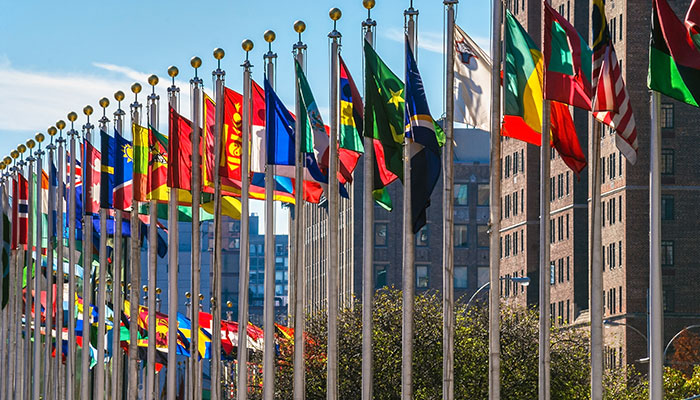
Still, the UN has faced tough times before – over many decades during the Cold War, the Security Council was crippled by deep tensions between the US and the Soviet Union. The UN is not as sidelined or divided today as it was then. However, as the relationship between China and the US sours, the achievements of global co-operation are being eroded.
The way in which people speak about the UN often implies a level of coherence and bureaucratic independence that the UN rarely possesses. A failure of the UN is normally better understood as a failure of international co-operation.
We see this recently in the UN’s inability to deal with crises from the ethnic cleansing of the Rohingya Muslims in Myanmar, to civil conflict in Syria, and the failure of the Security Council to adopt a COVID-19 resolution calling for ceasefires in conflict zones and a co-operative international response to the pandemic.
The UN administration is not primarily to blame for these failures; rather, the problem is the great powers – in the case of COVID-19, China and the US – refusing to co-operate.
Where states fail to agree, the UN is powerless to act.
Marking the 75th anniversary of the official formation of the UN, when 50 founding nations signed the UN Charter on June 26, 1945, we look at some of its key triumphs and resounding failures.
Five successes
1. Peacekeeping
The United Nations was created with the goal of being a collective security organisation. The UN Charter establishes that the use of force is only lawful either in self-defence or if authorised by the UN Security Council. The Security Council’s five permanent members, being China, US, UK, Russia and France, can veto any such resolution.
The UN’s consistent role in seeking to manage conflict is one of its greatest successes.
A key component of this role is peacekeeping. The UN under its second secretary-general, the Swedish statesman Dag Hammarskjöld – who was posthumously awarded the Nobel Peace prize after he died in a suspicious plane crash – created the concept of peacekeeping. Hammarskjöld was responding to the 1956 Suez Crisis, in which the US opposed the invasion of Egypt by its allies Israel, France and the UK.
UN peacekeeping missions involve the use of impartial and armed UN forces, drawn from member states, to stabilise fragile situations. “The essence of peacekeeping is the use of soldiers as a catalyst for peace rather than as the instruments of war,” said then UN Secretary-General Javier Pérez de Cuéllar, when the forces won the 1988 Nobel Peace Prize following missions in conflict zones in the Middle East, Africa, Asia, Central America and Europe.
However, peacekeeping also counts among the UN’s major failures.
2. Law of the Sea
Negotiated between 1973 and 1982, the UN Convention on the Law of the Sea (UNCLOS) set up the current international law of the seas. It defines states’ rights and creates concepts such as exclusive economic zones, as well as procedures for the settling of disputes, new arrangements for governing deep sea bed mining, and importantly, new provisions for the protection of marine resources and ocean conservation.
Mostly, countries have abided by the convention. There are various disputes that China has over the East and South China Seas which present a conflict between power and law, in that although UNCLOS creates mechanisms for resolving disputes, a powerful state isn’t necessarily going to submit to those mechanisms.
Secondly, on the conservation front, although UNCLOS is a huge step forward, it has failed to adequately protect oceans that are outside any state’s control. Ocean ecosystems have been dramatically transformed through overfishing. This is an ecological catastrophe that UNCLOS has slowed, but failed to address comprehensively.
3. Decolonisation
The idea of racial equality and of a people’s right to self-determination was discussed in the wake of World War I and rejected. After World War II, however, those principles were endorsed within the UN system, and the Trusteeship Council, which monitored the process of decolonisation, was one of the initial bodies of the UN.
Although many national independence movements only won liberation through bloody conflicts, the UN has overseen a process of decolonisation that has transformed international politics. In 1945, around one third of the world’s population lived under colonial rule. Today, there are less than 2 million people living in colonies.
When it comes to the world’s First Nations, however, the UN generally has done little to address their concerns, aside from the non-binding UN Declaration on the Rights of Indigenous Peoples of 2007.
4. Human rights
The Human Rights Declaration of 1948 for the first time set out fundamental human rights to be universally protected, recognising that the “inherent dignity and of the equal and inalienable rights of all members of the human family is the foundation of freedom, justice and peace in the world”.
Since 1948, 10 human rights treaties have been adopted – including conventions on the rights of children and migrant workers, and against torture and discrimination based on gender and race – each monitored by its own committee of independent experts.
The language of human rights has created a new framework for thinking about the relationship between the individual, the state and the international system. Although some people would prefer that political movements focus on ‘liberation’ rather than ‘rights’, the idea of human rights has made the individual person a focus of national and international attention.
5. Free trade
Depending on your politics, you might view the World Trade Organisation as a huge success, or a huge failure.
The WTO creates a near-binding system of international trade law with a clear and efficient dispute resolution process.
The majority Australian consensus is that the WTO is a success because it has been good for Australian famers especially, through its winding back of subsidies and tariffs.
However, the WTO enabled an era of globalisation which is now politically controversial.
Recently, the US has sought to disrupt the system. In addition to the trade war with China, the Trump Administration has also refused to appoint tribunal members to the WTO’s Appellate Body, so it has crippled the dispute resolution process. Of course, the Trump Administration is not the first to take issue with China’s trade strategies, which include subsidises for ‘State Owned Enterprises’ and demands that foreign firms transfer intellectual property in exchange for market access.
The existence of the UN has created a forum where nations can discuss new problems, and climate change is one of them. The Intergovernmental Panel on Climate Change (IPCC) was set up in 1988 to assess climate science and provide policymakers with assessments and options. In 1992, the UN Framework Convention on Climate Change created a permanent forum for negotiations.
However, despite an international scientific body in the IPCC, and 165 signatory nations to the climate treaty, global greenhouse gas emissions have continued to increase.
Under the Paris Agreement, even if every country meets its greenhouse gas emission targets we are still on track for ‘dangerous warming’. Yet, no major country is even on track to meet its targets; while emissions will probably decline this year as a result of COVID-19, atmospheric concentrations of greenhouse gases will still increase.
This illustrates a core conundrum of the UN in that it opens the possibility of global cooperation, but is unable to constrain states from pursuing their narrowly conceived self-interests. Deep co-operation remains challenging.
Five failures of the UN
1. Peacekeeping
During the Bosnian War, Dutch peacekeeping forces stationed in the town of Srebrenica, declared a ‘safe area’ by the UN in 1993, failed in 1995 to stop the massacre of more than 8000 Muslim men and boys by Bosnian Serb forces. This is one of the most widely discussed examples of the failures of international peacekeeping operations.
On the massacre’s 10th anniversary, then UN Secretary General Kofi Annan wrote that the UN had “made serious errors of judgement, rooted in a philosophy of impartiality”, contributing to a mass murder that would “haunt our history forever”.
If you look at some of the other infamous failures of peacekeeping missions – in places such as Rwanda, Somalia and Angola – it is the limited powers given to peacekeeping operations that have resulted in those failures.
2. The invasion of Iraq
The invasion of Iraq by the US in 2003, which was unlawful and without Security Council authorisation, reflects the fact that the UN is has very limited capacity to constrain the actions of great powers.
The Security Council designers created the veto power so that any of the five permanent members could reject a Council resolution, so in that way it is programmed to fail when a great power really wants to do something that the international community generally condemns.
In the case of the Iraq invasion, the US didn’t veto a resolution, but rather sought authorisation that it did not get. The UN, if you go by the idea of collective security, should have responded by defending Iraq against this unlawful use of force.
The invasion proved a humanitarian disaster with the loss of more than 400,000 lives, and many believe that it led to the emergence of the terrorist Islamic State.
3. Refugee crises
The UN brokered the 1951 Refugee Convention to address the plight of people displaced in Europe due to World War II; years later, the 1967 Protocol removed time and geographical restrictions so that the Convention can now apply universally (although many countries in Asia have refused to sign it, owing in part to its Eurocentric origins).
Despite these treaties, and the work of the UN High Commission for Refugees, there is somewhere between 30 and 40 million refugees, many of them, such as many Palestinians, living for decades outside their homelands. This is in addition to more than 40 million people displaced within their own countries.
While for a long time refugee numbers were reducing, in recent years, particularly driven by the Syrian conflict, there have been increases in the number of people being displaced.
During the COVID-19 crisis, boatloads of Rohingya refugees were turned away by port after port. This tragedy has echoes of pre-World War II when ships of Jewish refugees fleeing Nazi Germany were refused entry by multiple countries.
And as a catastrophe of a different kind looms, there is no international framework in place for responding to people who will be displaced by rising seas and other effects of climate change.
4. Conflicts without end
Across the world, there is a shopping list of unresolved civil conflicts and disputed territories.
Palestine and Kashmir are two of the longest-running failures of the UN to resolve disputed lands. More recent, ongoing conflicts include the civil wars in Syria and Yemen.
The common denominator of unresolved conflicts is either division among the great powers, or a lack of international interest due to the geopolitical stakes not being sufficiently high. For instance, the inaction during the Rwandan civil war in the 1990s was not due to a division among great powers, but rather a lack of political will to engage.
In Syria, by contrast, Russia and the US have opposing interests and back opposing sides: Russia backs the government of the Syrian dictator Bashar al-Assad, whereas the US does not.
5. Acting like it’s 1945
The UN is increasingly out of step with the reality of geopolitics today.
The permanent members of the Security Council reflect the division of power internationally at the end of World War II. The continuing exclusion of Germany, Japan, and rising powers such as India and Indonesia, reflects the failure to reflect the changing balance of power.
Also, bodies such as the IMF and the World Bank, which are part of the UN system, continue to be dominated by the West. In response, China has created potential rival institutions such as the Asian Infrastructure Investment Bank.
Western domination of UN institutions undermines their credibility. However, a more fundamental problem is that institutions designed in 1945 are a poor fit with the systemic global challenges – of which climate change is foremost – that we face today.