


 Written by: Umakant Sir (Founder, Mentor and Civil Servant).
Transforming one village at a time:
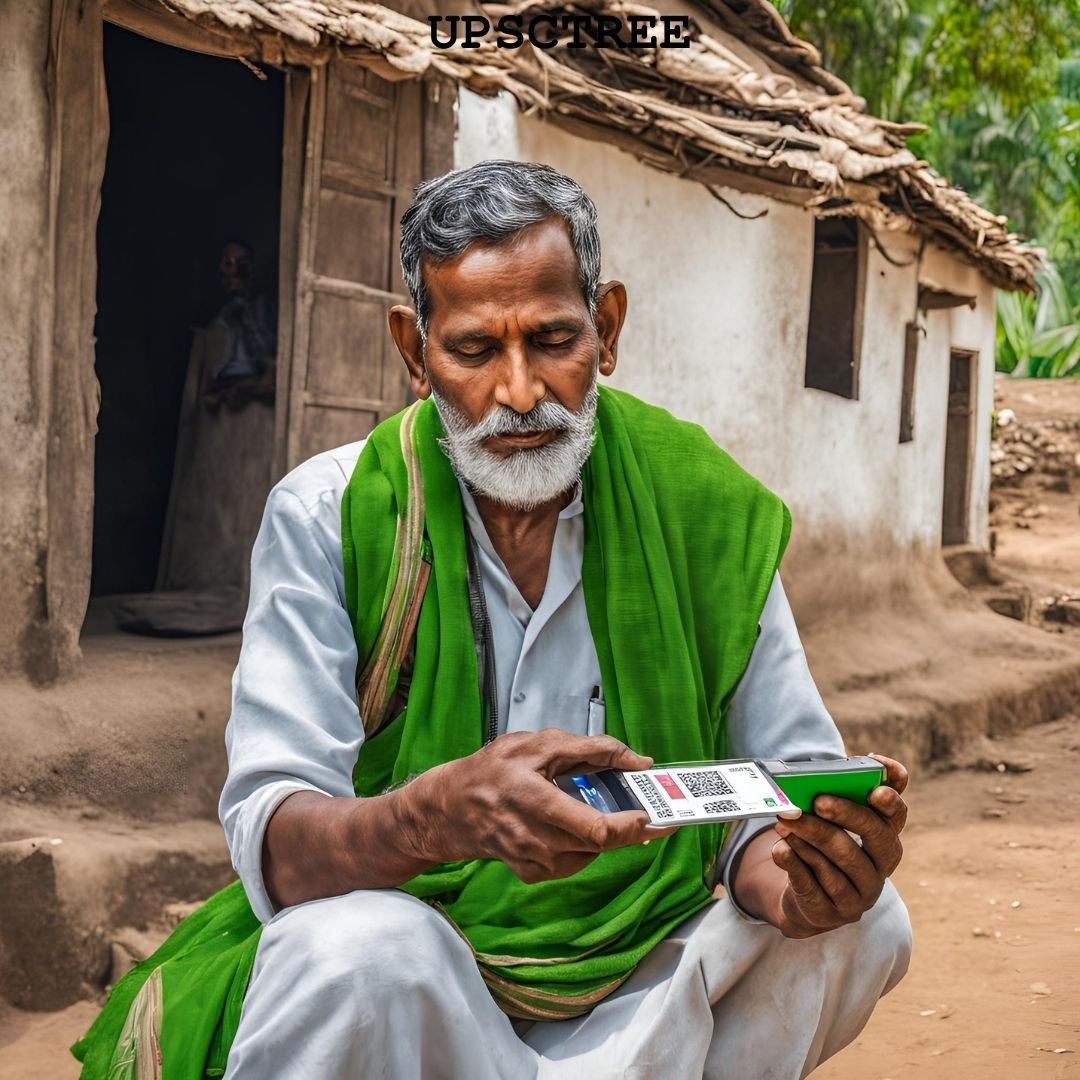
In the remote village of Chiragpur, nestled amidst rolling hills, Ramesh, a farmer, faced a challenge that had plagued his ancestors for generations—access to basic services.
The nearest bank was 30 kilometers away, official documents required multiple visits to the district office, and selling his crops involved dealing with middlemen who took hefty cuts. Technology, for him, was as distant as the city lights he could see faintly from his fields at night.
But everything changed one day when the village school introduced a simple smartphone in their digital literacy drive. With a few taps, Ramesh discovered that he could open a bank account using his Aadhaar card. For the first time, he received payments for his crops directly into his account via UPI, eliminating the middleman. Through the village’s lone Wi-Fi hotspot, his daughter attended online classes on ePathshala, and his wife consulted a doctor through telemedicine powered by the Ayushman Bharat Digital Mission.
Chiragpur transformed, not through skyscrapers or sprawling highways, but through the invisible yet powerful network of India’s Digital Public Infrastructure (DPI). From Aadhaar to UPI, DigiLocker to e-Sanjeevani, the village was now interconnected with the world in ways Ramesh had never imagined.
As India scales its digital horizons, the story of Chiragpur exemplifies how DPI is not just about technology but about empowering the last person in the line. It is a journey from exclusion to inclusion, from barriers to boundless opportunities—transforming the nation one village at a time.
What is Digital Public Infrastructure:
Though the term DPI is relatively new, the concept is not. The internet, powered by common protocols like HTTP, HTML, and SMTP, is a prime example of DPI. It ensures global information exchange and interoperability.
For example:
When you go to buy a new SIM card or get a new utility service (Internet/Wi-Fi etc.), you no need to provide any document for this purpose. Thats is a prime example of DPI. The service provider verifies you, through Aadhar authentication and you walk out with your service at a lightning speed (Compare this with the bygone era, when to get a SIM card you had to stand in queue and apply before 6 months or a year in advance).
Transforming India’s Public delivery landscape:
Since the usage and adoption of DPI at scale, the public delivery landscape of India has changed substantially. Here are few “damn” good examples of DPI.
List of Digital Public Infrastructure (DPI) in India:
DPI Component |
Description |
Applications |
Benefits |
Aadhaar |
Unique biometric-based identity system. |
– Authentication for services |
– Reduces duplication |
|
– Direct Benefit Transfers (DBT). |
– Enables efficient service delivery. |
||
Unified Payments Interface (UPI) |
Real-time payment system enabling instant money transfers via mobile devices. |
– Peer-to-peer transactions |
– Promotes cashless economy |
|
– Merchant payments |
– Low transaction costs. |
||
|
– Bill payments. |
|
||
DigiLocker |
Digital platform for storing and sharing government-issued documents. |
– Storage of ID proofs, certificates, and licenses. |
– Reduces paperwork |
|
– Verification for various services. |
– Provides easy access to documents. |
||
CoWIN |
Platform for COVID-19 vaccination registration and tracking. |
– Vaccine scheduling |
– Streamlines vaccine administration |
|
– Issuance of vaccination certificates. |
– Provides authenticated records. |
||
Ayushman Bharat Digital Mission (ABDM) |
Digital framework for health services. |
– Unified Health ID |
– Enhances healthcare accessibility |
|
– Telemedicine |
– Enables seamless health records sharing. |
||
|
– Health data interoperability. |
|
||
ONDC (Open Network for Digital Commerce) |
Open e-commerce platform promoting inclusivity and competition. |
– E-commerce for small businesses |
– Reduces market dominance |
|
– Interoperable networks for buyers and sellers. |
– Promotes entrepreneurship. |
||
e-Sanjeevani |
Telemedicine platform connecting patients with doctors virtually. |
– Online consultations |
– Improves healthcare access in remote areas |
|
– Specialist referrals. |
– Saves time and resources. |
||
FASTag |
RFID-based electronic toll collection system. |
– Automated toll payments |
– Reduces congestion |
|
– Traffic management. |
– Promotes fuel efficiency. |
||
National Academic Depository (NAD) |
Digital repository for academic certificates. |
– Secure storage and verification of degrees and transcripts. |
– Prevents forgery |
|
– Simplifies access for institutions and students. |
|||
Account Aggregator Framework |
Data-sharing system for financial services. |
– Lending |
– Empowers individuals with control over their data |
|
– Investment management |
– Facilitates easier access to credit. |
||
|
– Personal finance tools. |
|
||
PM-WANI |
Wi-Fi hotspot initiative to provide affordable internet connectivity. |
– Public Wi-Fi access |
– Promotes internet penetration |
|
– Digital inclusivity in rural and urban areas. |
– Supports economic opportunities. |
Receive Daily Updates
Recent Posts
Steve Ovett, the famous British middle-distance athlete, won the 800-metres gold medal at the Moscow Olympics of 1980. Just a few days later, he was about to win a 5,000-metres race at London’s Crystal Palace. Known for his burst of acceleration on the home stretch, he had supreme confidence in his ability to out-sprint rivals. With the final 100 metres remaining,
[wptelegram-join-channel link=”https://t.me/s/upsctree” text=”Join @upsctree on Telegram”]Ovett waved to the crowd and raised a hand in triumph. But he had celebrated a bit too early. At the finishing line, Ireland’s John Treacy edged past Ovett. For those few moments, Ovett had lost his sense of reality and ignored the possibility of a negative event.
This analogy works well for the India story and our policy failures , including during the ongoing covid pandemic. While we have never been as well prepared or had significant successes in terms of growth stability as Ovett did in his illustrious running career, we tend to celebrate too early. Indeed, we have done so many times before.
It is as if we’re convinced that India is destined for greater heights, come what may, and so we never run through the finish line. Do we and our policymakers suffer from a collective optimism bias, which, as the Nobel Prize winner Daniel Kahneman once wrote, “may well be the most significant of the cognitive biases”? The optimism bias arises from mistaken beliefs which form expectations that are better than the reality. It makes us underestimate chances of a negative outcome and ignore warnings repeatedly.
The Indian economy had a dream run for five years from 2003-04 to 2007-08, with an average annual growth rate of around 9%. Many believed that India was on its way to clocking consistent double-digit growth and comparisons with China were rife. It was conveniently overlooked that this output expansion had come mainly came from a few sectors: automobiles, telecom and business services.
Indians were made to believe that we could sprint without high-quality education, healthcare, infrastructure or banking sectors, which form the backbone of any stable economy. The plan was to build them as we went along, but then in the euphoria of short-term success, it got lost.
India’s exports of goods grew from $20 billion in 1990-91 to over $310 billion in 2019-20. Looking at these absolute figures it would seem as if India has arrived on the world stage. However, India’s share of global trade has moved up only marginally. Even now, the country accounts for less than 2% of the world’s goods exports.
More importantly, hidden behind this performance was the role played by one sector that should have never made it to India’s list of exports—refined petroleum. The share of refined petroleum exports in India’s goods exports increased from 1.4% in 1996-97 to over 18% in 2011-12.
An import-intensive sector with low labour intensity, exports of refined petroleum zoomed because of the then policy regime of a retail price ceiling on petroleum products in the domestic market. While we have done well in the export of services, our share is still less than 4% of world exports.
India seemed to emerge from the 2008 global financial crisis relatively unscathed. But, a temporary demand push had played a role in the revival—the incomes of many households, both rural and urban, had shot up. Fiscal stimulus to the rural economy and implementation of the Sixth Pay Commission scales had led to the salaries of around 20% of organized-sector employees jumping up. We celebrated, but once again, neither did we resolve the crisis brewing elsewhere in India’s banking sector, nor did we improve our capacity for healthcare or quality education.
Employment saw little economy-wide growth in our boom years. Manufacturing jobs, if anything, shrank. But we continued to celebrate. Youth flocked to low-productivity service-sector jobs, such as those in hotels and restaurants, security and other services. The dependence on such jobs on one hand and high-skilled services on the other was bound to make Indian society more unequal.
And then, there is agriculture, an elephant in the room. If and when farm-sector reforms get implemented, celebrations would once again be premature. The vast majority of India’s farmers have small plots of land, and though these farms are at least as productive as larger ones, net absolute incomes from small plots can only be meagre.
A further rise in farm productivity and consequent increase in supply, if not matched by a demand rise, especially with access to export markets, would result in downward pressure on market prices for farm produce and a further decline in the net incomes of small farmers.
We should learn from what John Treacy did right. He didn’t give up, and pushed for the finish line like it was his only chance at winning. Treacy had years of long-distance practice. The same goes for our economy. A long grind is required to build up its base before we can win and celebrate. And Ovett did not blame anyone for his loss. We play the blame game. Everyone else, right from China and the US to ‘greedy corporates’, seems to be responsible for our failures.
We have lowered absolute poverty levels and had technology-based successes like Aadhaar and digital access to public services. But there are no short cuts to good quality and adequate healthcare and education services. We must remain optimistic but stay firmly away from the optimism bias.
In the end, it is not about how we start, but how we finish. The disastrous second wave of covid and our inability to manage it is a ghastly reminder of this fact.