


Buddhist Circuit:-
Background:-
In the Mahaparinirvana sutra, the Buddha tells his followers that they can attain merit and a noble rebirth by going on pilgrimage to the places where he was born (Lumbini), gained enlightenment (Bodhgaya), first taught (Sarnath), and attained Nirvana (Kushinagar).(“Ananda, these are four places for who are confidently treading on the path of Dhamma to visit which may further inspire them in Dhamma” as said by Buddha)
India, the country where Buddhisim originated, still has rich reminiscence of the Buddhist legacy. As part of its drive towards austerity, the only kind of art and architecture that it supported were Stupas (stone cased moulds that commemorated relics of Budha), Chaityas (prayer halls) and Viharas (cells for the monks).
Buddhist Circuit and The Place of Importance :-
| Places coverd | |
| GAYA: | |
 |
 |
| Gaya derives its name from the mythological demon Gayasur (which literally means Gaya the holy demon), demon (asur, a Sanskrit word) and Gaya. Lord Vishnu killed Gayasur, the holy demon by using the pressure of his foot over him. This incident transformed Gayasur into the series of rocky hills that make up the landscape of the Gaya city. Gaya was so holy that he had the power to absolve the sins of those who touched him or looked at him; after his death many people have flocked to Gaya to perform shraddha sacrifices on his body to absolve the sins of their ancestors. The most popular temple today is Vishnupad Temple, a place along the Falgu River, marked by a footprint of Vishnu incised into a block of basalt that marks the act of Lord Vishnu subduing Gayasur by placing his foot on Gayasurs chest. Buddhist tradition regards the footstep in the Vishnupad Temple as a footstep of Buddha. For Buddhists, Gaya is an important pilgrimage place because it was at Brahmayoni hill that Buddha preached the Fire Sermon (Adittapariyaya Sutta) to one thousand former fire-worshipping ascetics, who all became enlightened while listening to this discourse. At that time, the hill was called Gayasisa. | |
 |
|
| BODHGAYA | |
 |
|
| According to Buddhist traditions, 500 BC Prince Gautama Siddhartha, wandering as a monk, reached the sylvan banks of Falgu River, near the city of Gaya. There he sat in meditation under a bodhi tree. After three days and three nights of meditation, Siddhartha attained enlightenment and insight, and the answers that he had sought. He then spent seven weeks at seven different spots in the vicinity meditating and considering his experience. After seven weeks, he traveled to Sarnath, where he began teaching Buddhism.
Disciples of Gautama Siddhartha began to visit the place where he had gained enlightenment during the full moon in the month of Vaisakh (April-May), as per the Hindu calendar. Over time, the place became known as Bodhgaya, the day of enlightenment as Buddha Purnima, and the tree as the Bodhi Tree. As the place of the Buddhas Enlightenment, Bodhgaya is the spiritual home of Buddhists. Located in Bihar, 115 kms from Patna, the land is rich and fertile, dotted with green fields and watered by the river Phalgu – the same ancient Nairanjana River where the Buddha bathed after attaining enlightenment. A range of low forested hills silhouette the small hamlets flanking the glistening, sandy banks of the river. Monks and nuns rub shoulders with tourists and believers from all over the world. An all-pervading calm envelops the town, giving visitors a sense of peace. |
|
|
|
| RAJGIR | |
 |
 |
| The meandering river Banganga and five hills ensconce picturesque Rajgir, ancient Rajgriha (literally, the abode of kings). During the lifetime of the Buddha this was the capital of the powerful Magadhan kingdom, ruled by the virtuous king Bimbisara. Like many others in search of Truth, Prince Siddhartha, after he renounced his royal heritage came to this city to seek the path of salvation. Later, he overwhelmed the citizens of Rajagriha with his serenity and grace and converted King Bimbisara of Magadha and countless others to his religion. The hills and caves surrounding Rajagriha were home to spiritual teachers, ranging from the materialism of the early Charavaka School to the metaphysics of Upanishadic philosophers. In fact the first Buddhist council after the Buddha was hosted here at the Saptaparni caves. It was Rajgir which saw Gautam Buddha spending several months meditating, and preaching at Griddhkuta, (Hill of the Vultures). He also delivered some of his famous sermons. The rich merchant community here soon became the Buddhas followers and built many structures of typical Buddhist architecture. | |
|
|
| NALANDA | |
 |
 |
| Nalanda -the most renowned university in ancient India derived its name from Na-alam-da, meaning Insatiable in Giving, one of the names by which the Lord Buddha was known. Nalanda was one of the worlds first residential universities, i.e., it had dormitories for students. In its heyday it accommodated over 10,000 students and 2,000 teachers. The university was considered an architectural masterpiece, and was marked by a lofty wall and one gate. The subjects taught at Nalanda University covered every field of learning, and it attracted pupils and scholars from Korea, Japan, China, Tibet, Indonesia, Persia and Turkey.
The Buddha is mentioned as having several times stayed at Nalanda. When he visited Nalanda he would usually reside in Pavarikas mango grove, and while there he had discussions with Upali-Gahapati and Dighatapassi[, with Kevatta, and also several conversations with Asibandhakaputta. The Buddha visited Nalanda during his last tour through Magadha, and it was there that Sariputta uttered his “lions roar, affirming his faith in the Buddha, shortly before his death. Also, Nalanda was the residence of Sonnadinna. Mahavira is several times mentioned as staying at Nalanda, which was evidently a centre of activity of the Jains. |
|
|
|
| VARANASI | |
 |
 |
| The city of Varanasi is situated along the west bank of the Ganges in the north Indian state of Uttar Pradesh. Called Benaras by the British, Varanasi is a holy city in Hinduism, being one of the most sacred pilgrimage places for Hindus of all denominations. More than 1,000,000 pilgrims visit the city each year. The city finds mention in the great epics of Mahabharata and Ramayana. The renowned American novelist Mark Twain once wrote, ” Benaras is older than history, older than tradition, older even than legend and looks twice as old as all of them put together.” It has the holy shrine of Lord Kashi Vishwanath (a manifestation of Lord Shiva), and also one of the twelve revered Jyotirlingas of Lord Shiva. According to mythology, Lord Shiva once in fact lived in Kashi ( Varanasi ). Hindus believe that bathing in Ganga remits sins and that dying in Kashi ensures release of a persons soul from the cycle of its transmigrations.
Varanasi is one of the holiest places in Buddhism too. It was believed that over twenty-five centuries ago, a sage travelled 200 kms from Bodhgaya, where he had attained Nirvana to reach the ghats of Varanasi of Kashi as it was then called. The city had seen saffron clad spiritual teachers before him, who came here, drawn by its magnetic, inexplicable spiritual power. The Sage was looking for five Hindu ascetics, old companions from whom he had parted, because they had insisted that the only path to salvation was through self-mortification. The Buddha found them at Rishipattana, the Deer park near Kashi, and gave them the gift of the spiritual knowledge which he had attained since he parted with them, and they became his first followers, and the first members of the Sangha. |
|
|
|
| SARNATH | |
 |
 |
| Sarnath is located 13 kilometres north-east of Varanasi, in Uttar Pradesh, India . It Sarnath (also Mrigadava, Migadaya, Rishipattana, Isipatana) is the deer park where Gautama Buddha first taught the Dharma, and where the Buddhist Sangha came into existence through the enlightenment of Kondanna. Gautama Buddha started teaching not to debate but for the advantage of and out of compassion for human beings. He explained the middle way which avoids extremes, the Four Noble Truths, and prescribed the Eight-fold path.
There are remains dating as far back as the 3rd century B.C. when Emperor Ashoka founded various institutions, stupas, monasteries and pillar edicts. The runs at Sarnath and the art collection in the Archaeological Museum are representations/ examples of the glorious past of Sarnath. Archaeological remains are open from Sunrise to Sunset. |
|
|
|
| GORAKHPUR | |
 |
 |
| Gorakhpur is a city in the eastern part of the state of Uttar Pradesh in India, near the border with Nepal. It is the administrative headquarters of Gorakhpur District and Gorakhpur Division. Gorakhpur is famous as a religious centre: the city was home to Buddhist, Hindu, Jain and Sikh saints and is named after the medieval saint Gorakshanath. The city is also home to many historic Buddhist sites.
Gautama Buddha, founder of Buddhism, renounced his princely clothing at the confluence of the rivers Rapti and Rohini, near Gorakhpur , before setting out on his quest of truth in 600 BC. The city is also associated with the travels of Lord Buddhas contemporary Lord Mahavira, the 24th Tirthankara of Jainism |
|
|
|
| KUSHINAGAR | |
 |
 |
| At this location, near the Hiranyavati River, Gautama Buddha attained Parinirvana (or Final Nirvana) after falling ill from eating a meal of a species of mushroom. It is said that the Buddha had three reasons for coming to Kusin�r� to die:
1. Because it was the proper venue for the preaching of the Mah�-Sudassana Sutta; |
|
|
|
| LUMBINI (NEPAL) | |
 |
 |
| Lumbini (meaning “the lovely”) is a Buddhist pilgrimage site located in Rupandehi District, Lumbini Zone of Nepal, near the Indian border. It is the place where Mayadevi gave birth to Siddhartha Gautama, who later became a Buddha (Gautama Buddha), and founded the religion of Buddhism. Gautama Buddha lived between approximately 563 BCE and 483 BCE. For Buddhists, this is one of the four main pilgrimage sites based around the life of Gautama Buddha, the other three being Kushinagar, Bodhgaya, and Sarnath.
Lumbini is located 25 km east of the municipality of Kapilavastu, the place where the Buddha grew up and lived up to the age of 29. Kapilvastu is the name of place as well as the neighbouring district. Lumbini has various Buddhist temples including the Mayadevi temple. There is also the Puskarini pond and remains of Kapilvastu palace in Lumbini. There are other sites near Lumbini where, according to Buddhist tradition, previous Buddhas were born and achieved enlightenment and died. |
|
|
|
| SRAVASTI | |
 |
 |
| Sravasti, the capital of the ancient kingdom of Kosala , has the honour for sheltering Buddha for 24 rainy seasons in the Jetvana Gardens . The city believed to be founded by the mythological king Sravast, has age-old stupas, majestic monasteries and several temples. Buddha is said to have performed some miracles here.
This holy place also has the famous Anand Bodhi tree, an offspring of the one, said to have been planted by Buddhas main disciple. Another famous incident in Sravasti was – during the time of Sakyamuni, Sudatta, a rich and pious merchant, lived in Sravasti. While on a visit to Rajgir, he heard the Buddhas sermon and decided to become the Lords disciple. But he was caught in dilemma and asked the Lord whether he could become a follower without forsaking worldly life. To his query, the Master replied that it was enough that he followed his vocation in a righteous manner. |
|
|
|
| AGRA | |
 |
 |
| Agras Taj Mahal is one of the most famous buildings in the world, the mausoleum of Shah Jahans favorite wife, Mumtaz Mahal. It is one of the New 7 Wonders of the world, and one of three World Heritage Sites in Agra, the others being Agra Fort and Fatehpur Sikri.
Completed in 1653 A.D., the Taj Mahal is believed to be built by the Mughal Badshah (king) Shah Jahan as the final resting place for his beloved wife, Mumtaz. Finished in marble, it is perhaps Indias most fascinating and beautiful monument. This perfectly symmetrical monument took 22 years (1630-1652) of hard labour and 20,000 workers, masons and jewellers to build and is set amidst landscaped gardens. Built by the Persian architect, Ustad Isa, the Taj Mahal is on the bank of the Yamuna River . It can be observed like a mirage from the Agra Fort from where Emperor Shah Jahan stared at it, for the last eight years his life as a prisoner of his son Aurangzeb. It is a masterpiece of symmetry, seeming to be floating in the air from a distance, and each revealed as an illusion experienced as one enters through the main gate. Verses of the Holy Koran are inscribed on it and at the top of gate 22 small domes, signifying the number of years the monument took to build. The Taj Mahal was built on a marble platform that stands above a sandstone one. The most elegant dome of the Taj, with a diameter of 60 feet, rises 80 feet over the building and directly under the dome is the tomb of Mumtaz Mahal. Shah Jahans tomb was erected next to hers by his son Aurangzeb. Fantastic inlay works using semi-precious stones decorate the interiors. |
|
Other Buddhist Destinations in India
Arunachal Pradesh – Bomdila and Tawang
Sikkim – Kalimpong and Rumtek
Jammu & Kashmir – Ladakh, Harwan, Ambarani and Parihaspura
Himachal Pradesh – Spiti, Kinnaur and Dharamshala
Haryana – Stupa at Sugh, Yamunanagar and Asangh (Jind)
Madhya Pradesh – Sardarah, Sanchi and Murakott
Maharashtra – Karala, Ellora, Kanheri, Ajanta Caves, Pitalgora and Nasik Caves
West Bengal – Darjeeling and Kolkata (Indian Museum)
Andhra Pradesh – Amravati, Salihunda, Borrah Caves and Nagarjunkonda
Receive Daily Updates
Recent Posts
The United Nations has shaped so much of global co-operation and regulation that we wouldn’t recognise our world today without the UN’s pervasive role in it. So many small details of our lives – such as postage and copyright laws – are subject to international co-operation nurtured by the UN.
In its 75th year, however, the UN is in a difficult moment as the world faces climate crisis, a global pandemic, great power competition, trade wars, economic depression and a wider breakdown in international co-operation.
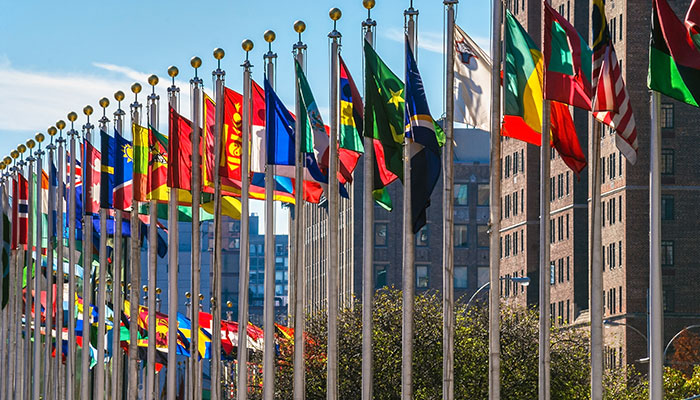
Still, the UN has faced tough times before – over many decades during the Cold War, the Security Council was crippled by deep tensions between the US and the Soviet Union. The UN is not as sidelined or divided today as it was then. However, as the relationship between China and the US sours, the achievements of global co-operation are being eroded.
The way in which people speak about the UN often implies a level of coherence and bureaucratic independence that the UN rarely possesses. A failure of the UN is normally better understood as a failure of international co-operation.
We see this recently in the UN’s inability to deal with crises from the ethnic cleansing of the Rohingya Muslims in Myanmar, to civil conflict in Syria, and the failure of the Security Council to adopt a COVID-19 resolution calling for ceasefires in conflict zones and a co-operative international response to the pandemic.
The UN administration is not primarily to blame for these failures; rather, the problem is the great powers – in the case of COVID-19, China and the US – refusing to co-operate.
Where states fail to agree, the UN is powerless to act.
Marking the 75th anniversary of the official formation of the UN, when 50 founding nations signed the UN Charter on June 26, 1945, we look at some of its key triumphs and resounding failures.
Five successes
1. Peacekeeping
The United Nations was created with the goal of being a collective security organisation. The UN Charter establishes that the use of force is only lawful either in self-defence or if authorised by the UN Security Council. The Security Council’s five permanent members, being China, US, UK, Russia and France, can veto any such resolution.
The UN’s consistent role in seeking to manage conflict is one of its greatest successes.
A key component of this role is peacekeeping. The UN under its second secretary-general, the Swedish statesman Dag Hammarskjöld – who was posthumously awarded the Nobel Peace prize after he died in a suspicious plane crash – created the concept of peacekeeping. Hammarskjöld was responding to the 1956 Suez Crisis, in which the US opposed the invasion of Egypt by its allies Israel, France and the UK.
UN peacekeeping missions involve the use of impartial and armed UN forces, drawn from member states, to stabilise fragile situations. “The essence of peacekeeping is the use of soldiers as a catalyst for peace rather than as the instruments of war,” said then UN Secretary-General Javier Pérez de Cuéllar, when the forces won the 1988 Nobel Peace Prize following missions in conflict zones in the Middle East, Africa, Asia, Central America and Europe.
However, peacekeeping also counts among the UN’s major failures.
2. Law of the Sea
Negotiated between 1973 and 1982, the UN Convention on the Law of the Sea (UNCLOS) set up the current international law of the seas. It defines states’ rights and creates concepts such as exclusive economic zones, as well as procedures for the settling of disputes, new arrangements for governing deep sea bed mining, and importantly, new provisions for the protection of marine resources and ocean conservation.
Mostly, countries have abided by the convention. There are various disputes that China has over the East and South China Seas which present a conflict between power and law, in that although UNCLOS creates mechanisms for resolving disputes, a powerful state isn’t necessarily going to submit to those mechanisms.
Secondly, on the conservation front, although UNCLOS is a huge step forward, it has failed to adequately protect oceans that are outside any state’s control. Ocean ecosystems have been dramatically transformed through overfishing. This is an ecological catastrophe that UNCLOS has slowed, but failed to address comprehensively.
3. Decolonisation
The idea of racial equality and of a people’s right to self-determination was discussed in the wake of World War I and rejected. After World War II, however, those principles were endorsed within the UN system, and the Trusteeship Council, which monitored the process of decolonisation, was one of the initial bodies of the UN.
Although many national independence movements only won liberation through bloody conflicts, the UN has overseen a process of decolonisation that has transformed international politics. In 1945, around one third of the world’s population lived under colonial rule. Today, there are less than 2 million people living in colonies.
When it comes to the world’s First Nations, however, the UN generally has done little to address their concerns, aside from the non-binding UN Declaration on the Rights of Indigenous Peoples of 2007.
4. Human rights
The Human Rights Declaration of 1948 for the first time set out fundamental human rights to be universally protected, recognising that the “inherent dignity and of the equal and inalienable rights of all members of the human family is the foundation of freedom, justice and peace in the world”.
Since 1948, 10 human rights treaties have been adopted – including conventions on the rights of children and migrant workers, and against torture and discrimination based on gender and race – each monitored by its own committee of independent experts.
The language of human rights has created a new framework for thinking about the relationship between the individual, the state and the international system. Although some people would prefer that political movements focus on ‘liberation’ rather than ‘rights’, the idea of human rights has made the individual person a focus of national and international attention.
5. Free trade
Depending on your politics, you might view the World Trade Organisation as a huge success, or a huge failure.
The WTO creates a near-binding system of international trade law with a clear and efficient dispute resolution process.
The majority Australian consensus is that the WTO is a success because it has been good for Australian famers especially, through its winding back of subsidies and tariffs.
However, the WTO enabled an era of globalisation which is now politically controversial.
Recently, the US has sought to disrupt the system. In addition to the trade war with China, the Trump Administration has also refused to appoint tribunal members to the WTO’s Appellate Body, so it has crippled the dispute resolution process. Of course, the Trump Administration is not the first to take issue with China’s trade strategies, which include subsidises for ‘State Owned Enterprises’ and demands that foreign firms transfer intellectual property in exchange for market access.
The existence of the UN has created a forum where nations can discuss new problems, and climate change is one of them. The Intergovernmental Panel on Climate Change (IPCC) was set up in 1988 to assess climate science and provide policymakers with assessments and options. In 1992, the UN Framework Convention on Climate Change created a permanent forum for negotiations.
However, despite an international scientific body in the IPCC, and 165 signatory nations to the climate treaty, global greenhouse gas emissions have continued to increase.
Under the Paris Agreement, even if every country meets its greenhouse gas emission targets we are still on track for ‘dangerous warming’. Yet, no major country is even on track to meet its targets; while emissions will probably decline this year as a result of COVID-19, atmospheric concentrations of greenhouse gases will still increase.
This illustrates a core conundrum of the UN in that it opens the possibility of global cooperation, but is unable to constrain states from pursuing their narrowly conceived self-interests. Deep co-operation remains challenging.
Five failures of the UN
1. Peacekeeping
During the Bosnian War, Dutch peacekeeping forces stationed in the town of Srebrenica, declared a ‘safe area’ by the UN in 1993, failed in 1995 to stop the massacre of more than 8000 Muslim men and boys by Bosnian Serb forces. This is one of the most widely discussed examples of the failures of international peacekeeping operations.
On the massacre’s 10th anniversary, then UN Secretary General Kofi Annan wrote that the UN had “made serious errors of judgement, rooted in a philosophy of impartiality”, contributing to a mass murder that would “haunt our history forever”.
If you look at some of the other infamous failures of peacekeeping missions – in places such as Rwanda, Somalia and Angola – it is the limited powers given to peacekeeping operations that have resulted in those failures.
2. The invasion of Iraq
The invasion of Iraq by the US in 2003, which was unlawful and without Security Council authorisation, reflects the fact that the UN is has very limited capacity to constrain the actions of great powers.
The Security Council designers created the veto power so that any of the five permanent members could reject a Council resolution, so in that way it is programmed to fail when a great power really wants to do something that the international community generally condemns.
In the case of the Iraq invasion, the US didn’t veto a resolution, but rather sought authorisation that it did not get. The UN, if you go by the idea of collective security, should have responded by defending Iraq against this unlawful use of force.
The invasion proved a humanitarian disaster with the loss of more than 400,000 lives, and many believe that it led to the emergence of the terrorist Islamic State.
3. Refugee crises
The UN brokered the 1951 Refugee Convention to address the plight of people displaced in Europe due to World War II; years later, the 1967 Protocol removed time and geographical restrictions so that the Convention can now apply universally (although many countries in Asia have refused to sign it, owing in part to its Eurocentric origins).
Despite these treaties, and the work of the UN High Commission for Refugees, there is somewhere between 30 and 40 million refugees, many of them, such as many Palestinians, living for decades outside their homelands. This is in addition to more than 40 million people displaced within their own countries.
While for a long time refugee numbers were reducing, in recent years, particularly driven by the Syrian conflict, there have been increases in the number of people being displaced.
During the COVID-19 crisis, boatloads of Rohingya refugees were turned away by port after port. This tragedy has echoes of pre-World War II when ships of Jewish refugees fleeing Nazi Germany were refused entry by multiple countries.
And as a catastrophe of a different kind looms, there is no international framework in place for responding to people who will be displaced by rising seas and other effects of climate change.
4. Conflicts without end
Across the world, there is a shopping list of unresolved civil conflicts and disputed territories.
Palestine and Kashmir are two of the longest-running failures of the UN to resolve disputed lands. More recent, ongoing conflicts include the civil wars in Syria and Yemen.
The common denominator of unresolved conflicts is either division among the great powers, or a lack of international interest due to the geopolitical stakes not being sufficiently high. For instance, the inaction during the Rwandan civil war in the 1990s was not due to a division among great powers, but rather a lack of political will to engage.
In Syria, by contrast, Russia and the US have opposing interests and back opposing sides: Russia backs the government of the Syrian dictator Bashar al-Assad, whereas the US does not.
5. Acting like it’s 1945
The UN is increasingly out of step with the reality of geopolitics today.
The permanent members of the Security Council reflect the division of power internationally at the end of World War II. The continuing exclusion of Germany, Japan, and rising powers such as India and Indonesia, reflects the failure to reflect the changing balance of power.
Also, bodies such as the IMF and the World Bank, which are part of the UN system, continue to be dominated by the West. In response, China has created potential rival institutions such as the Asian Infrastructure Investment Bank.
Western domination of UN institutions undermines their credibility. However, a more fundamental problem is that institutions designed in 1945 are a poor fit with the systemic global challenges – of which climate change is foremost – that we face today.