


IS launches mobile app for children:-
Islamic State (IS) has reportedly launched its first mobile app for children to teach them the Arabic alphabet and the vocabulary taught by it includes jihadist themes along with words like ‘tank’, ‘gun’ and ‘rocket’
The IS’s ‘Library of Zeal’ has released an application, titled Huroof, for teaching the Arabic alphabet to children on Android devices, The Long War Journal reported. The application was released through IS’s Telegram channels. The journal posted several images of the app, which is brightly coloured and has the look and feel of a children’s application.
The alphabet application is not the Islamic State’s first mobile application, however it is the first to be directed exclusively at children.
The jihadist group has released several videos that show children being trained for jihad or indoctrinated in schools.
Dirty bombs: what are they and how dangerous are they?
Background :- In April 2016, major nations and organisations seeking to prevent nuclear terrorism and proliferation of nuclear material, gathered in Washington for the Nuclear Security Summit (NSS). On the agenda of the U.S.-led discussions were strategies to block terror groups such as the Islamic State from obtaining radioactive material and setting off a ‘dirty bomb’, or worse. Here, we try and answer a few questions on dirty bombs and its usage.
What is a ‘dirty bomb’?
A dirty bomb combines radioactive material with explosives. The aim is to cause harm by spreading radioactive material that can contaminate an area and poison the human body. This is different from a nuclear bomb that utilises radioactive materials to create an explosion.
What are the materials used for making a ‘dirty bomb’?
Although dirty bombs haven’t been used anywhere, people have reportedly experimented with making one using Cesium-137 and explosives like RDX. High-energy gamma emitters like Cobalt-60 may also be used.
Caesium-137 is produced by nuclear fission processes and is essentially used to treat cancer in hospitals. Although it can be found in small quantities in the environment (from nuclear weapon tests in past), Caesium-137 otherwise is extremely rare. Cobalt-60 is made bombarding Cobalt-59 with a neutron and is used for cancer treatment; it is also used in industries.
What prevents someone from assembling a dirty bomb?
Assembling a radioactive device involving long exposure to very high radiation can make one sick. Radiation exposure can cause burns and radiation sickness, with nausea and hair loss. Prolonged exposure can cause death.
Even if someone succeeds in assembling the bomb it is very difficult to transport a radioactive device. The device will need heavy shielding by metals like lead, which would make it very heavy.
Is India equipped to detect a dirty bomb?
Bhabha Atomic Research Centre (BARC) has developed many systems such as the aerial gamma spectrometry system which can be used to detect even shielded and hidden devices. BARC has also developed technology to detect elements from solid and liquid industrial wastes, as most of these radioactive elements can dissolve in water.
Exotic heat-resistant gel: a spinoff from ISRO
A near-invisible silica gel that would serve as a thermal barrier in cryogenic fuel tanks, boot soles and sun films may sound like a magical product straight from a sci-fi.But it’s a tangible reality that researchers of the Indian Space Research Organization at its Vikram Sarabhai Space Centre (VSSC), Thiruvananthapuram, have made possible.
The yet to be christened product, the hydrophobic silica aero gel as it is known now, is supposed to have low thermal conductivity and density and high specific surface area and can be applied on any surface.With its “exotic properties,” silica aero gels are attractive candidates for many unique thermal, optical, acoustic, catalytic and chemical applications and are best known for their “super-insulating property.”
Silica aero gels can be made in chunks (granular), beads, powder and tape or sheet form, and may be used as the application demands, according to VSSC.
As air fills the gel up to 95 per cent of its size, it comes as super lightweight material. The air molecules trapped inside the gel would act as insulators, and its heat conductivity is close to zero. They could be used for coating the windows of houses and vehicles as they would let in 95 per cent of the light that falls on the surface and fully deflect the heat.
The researchers stumbled upon the exotic properties of the gel during their search for a super thermal insulator for the cryogenic fuel tanks of rockets. The temperature on the surface of the rockets is likely to be between 300 and 400 degree Celsius during its flight, and the cryogenic fuel needs to be insulated. Thus, the gel was developed.
As the gel acts as a thermal barrier, it could be used as a protective component of clothes and boots of solders stationed in extremely cold regions such as Siachen and Kargil. The weight of military clothes could be brought down to ordinary dresses after applying the gel over it thus giving the much required freedom of movement for the soldiers. To coat a jacket may require around 500 grams of gel. Discussions are on with some textile developers for the design of cloths by applying gel over it.
Besides apparel for soldiers, the gel could also be used for heavy duty dresses used by researchers working in Arctic/Antarctic expeditions. For insulating cryogenic fuel tanks, 2.8 kg of gel is required. It needs to be produced in large quantities for commercial use and discussions are on with some entrepreneurs.
The other applications of the material include acoustic insulations, building and pipeline insulation and window facades as translucent panels which allow natural light but not heat for hot areas where air conditioners are and trapping heat in cold places.
It would also be used for controlling oil spills and vibration. Other applications include acoustic damping materials and insulation in refrigerators, fillers or additives in paints, sealants, adhesives, cement, coatings, foams, and for increasing the heat resistance of the material, according to VSSC sources.
National Intellectual Property Rights Policy
The Union Cabinet approved the National Intellectual Property Rights (IPR) Policy that will lay the future roadmap for intellectual property in India. The Policy recognises the abundance of creative and innovative energies that flow in India, and the need to tap into and channelise these energies towards a better and brighter future for all.
The National IPR Policy is a vision document that aims to create and exploit synergies between all forms of intellectual property (IP), concerned statutes and agencies. It sets in place an institutional mechanism for implementation, monitoring and review.
It aims to incorporate and adapt global best practices to the Indian scenario. This policy shall weave in the strengths of the Government, research and development organizations, educational institutions, corporate entities including MSMEs, start-ups and other stakeholders in the creation of an innovation-conducive environment, which stimulates creativity and innovation across sectors, as also facilitates a stable, transparent and service-oriented IPR administration in the country.
The Policy recognizes that India has a well-established TRIPS-compliant legislative, administrative and judicial framework to safeguard IPRs, which meets its international obligations while utilizing the flexibilities provided in the international regime to address its developmental concerns. It reiterates India’s commitment to the Doha Development Agenda and the TRIPS agreement.
While IPRs are becoming increasingly important in the global arena, there is a need to increase awareness on IPRs in India, be it regarding the IPRs owned by oneself or respect for others’ IPRs. The importance of IPRs as a marketable financial asset and economic tool also needs to be recognised. For this, domestic IP filings, as also commercialization of patents granted, need to increase. Innovation and sub-optimal spending on R&D too are issues to be addressed.
The broad contours of the National IPR Policy are as follows:-
Vision Statement: An India where creativity and innovation are stimulated by Intellectual Property for the benefit of all; an India where intellectual property promotes advancement in science and technology, arts and culture, traditional knowledge and biodiversity resources; an India where knowledge is the main driver of development, and knowledge owned is transformed into knowledge shared.
Mission Statement:
Stimulate a dynamic, vibrant and balanced intellectual property rights system in India to:
o foster creativity and innovation and thereby, promote entrepreneurship and enhance socio-economic and cultural development, and
o focus on enhancing access to healthcare, food security and environmental protection, among other sectors of vital social, economic and technological importance.
Objectives:
The Policy lays down the following seven objectives:
- IPR Awareness: Outreach and Promotion – To create public awareness about the economic, social and cultural benefits of IPRs among all sections of society.
- Generation of IPRs – To stimulate the generation of IPRs.
- Legal and Legislative Framework – To have strong and effective IPR laws, which balance the interests of rights owners with larger public interest.
- Administration and Management – To modernize and strengthen service-oriented IPR administration.
- Commercialization of IPRs – Get value for IPRs through commercialization.
- Enforcement and Adjudication – To strengthen the enforcement and adjudicatory mechanisms for combating IPR infringements.
- Human Capital Development – To strengthen and expand human resources, institutions and capacities for teaching, training, research and skill building in IPRs.
These objectives are sought to be achieved through detailed action points. The action by different Ministries/ Departments shall be monitored by DIPP which shall be the nodal department to coordinate, guide and oversee implementation and future development of IPRs in India.
The National Intellectual Property Rights (IPR) Policy will endeavor for a “Creative India; Innovative India:
Smart’ paper responds to gestures
Scientists, including one of Indian-origin, have created ‘smart’ paper with sensing capabilities that can respond to gesture commands and connect to the digital world.
- The method relies on small radio frequency (RFID) tags that are stuck on, printed or drawn onto the paper to create interactive, lightweight interfaces that can do anything from controlling music using a paper baton, to live polling in a classroom.
- The technology — PaperID — leverages inexpensive, off-the-shelf RFID tags, which function without batteries but can be detected through a reader device placed in the same room as the tags. Each tag has a unique identification, so a reader’s antenna can pick out an individual among many.
- When a person’s hand waves, touches, swipes or covers a tag, the hand disturbs the signal path between an individual tag and its reader. Algorithms can recognize the specific movements, then classify a signal interruption as a specific command. For example, swiping a hand over a tag placed on a pop-up book might cause the book to play a specific, programmed sound.
- Using the technology, connecting real-world items such as a paper airplane or a classroom survey form to an Internet of Things environment may be possible.
- They also can track the velocity of objects in movement, such as following the motion of a tagged paper conductor’s wand and adjusting the pace of the music based on the tempo of the wand in mid-air.
RFID tagging is an ID system that uses small radio frequency identification devices for identification and tracking purposes. An RFID tagging system includes the tag itself, a read/write device, and a host system application for data collection, processing, and transmission. An RFID tag (sometimes called an RFID transponder) consists of a chip, some memory and an antenna.RFID tags that contain their own power source are known as active tags. Those without a power source are known as passive tags. A passive tag is briefly activated by the radio frequency (RF) scan of the reader.
Recent Posts
The United Nations has shaped so much of global co-operation and regulation that we wouldn’t recognise our world today without the UN’s pervasive role in it. So many small details of our lives – such as postage and copyright laws – are subject to international co-operation nurtured by the UN.
In its 75th year, however, the UN is in a difficult moment as the world faces climate crisis, a global pandemic, great power competition, trade wars, economic depression and a wider breakdown in international co-operation.
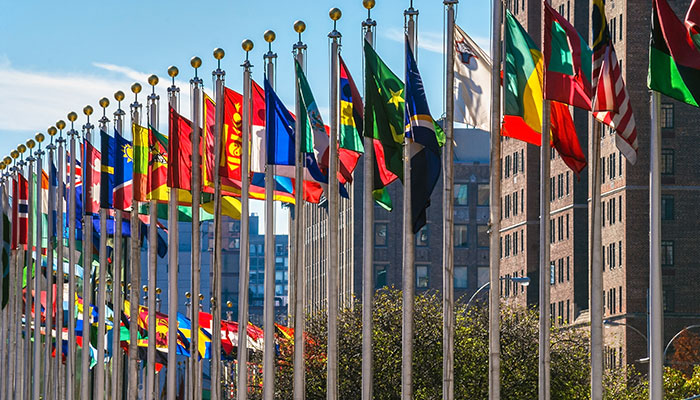
Still, the UN has faced tough times before – over many decades during the Cold War, the Security Council was crippled by deep tensions between the US and the Soviet Union. The UN is not as sidelined or divided today as it was then. However, as the relationship between China and the US sours, the achievements of global co-operation are being eroded.
The way in which people speak about the UN often implies a level of coherence and bureaucratic independence that the UN rarely possesses. A failure of the UN is normally better understood as a failure of international co-operation.
We see this recently in the UN’s inability to deal with crises from the ethnic cleansing of the Rohingya Muslims in Myanmar, to civil conflict in Syria, and the failure of the Security Council to adopt a COVID-19 resolution calling for ceasefires in conflict zones and a co-operative international response to the pandemic.
The UN administration is not primarily to blame for these failures; rather, the problem is the great powers – in the case of COVID-19, China and the US – refusing to co-operate.
Where states fail to agree, the UN is powerless to act.
Marking the 75th anniversary of the official formation of the UN, when 50 founding nations signed the UN Charter on June 26, 1945, we look at some of its key triumphs and resounding failures.
Five successes
1. Peacekeeping
The United Nations was created with the goal of being a collective security organisation. The UN Charter establishes that the use of force is only lawful either in self-defence or if authorised by the UN Security Council. The Security Council’s five permanent members, being China, US, UK, Russia and France, can veto any such resolution.
The UN’s consistent role in seeking to manage conflict is one of its greatest successes.
A key component of this role is peacekeeping. The UN under its second secretary-general, the Swedish statesman Dag Hammarskjöld – who was posthumously awarded the Nobel Peace prize after he died in a suspicious plane crash – created the concept of peacekeeping. Hammarskjöld was responding to the 1956 Suez Crisis, in which the US opposed the invasion of Egypt by its allies Israel, France and the UK.
UN peacekeeping missions involve the use of impartial and armed UN forces, drawn from member states, to stabilise fragile situations. “The essence of peacekeeping is the use of soldiers as a catalyst for peace rather than as the instruments of war,” said then UN Secretary-General Javier Pérez de Cuéllar, when the forces won the 1988 Nobel Peace Prize following missions in conflict zones in the Middle East, Africa, Asia, Central America and Europe.
However, peacekeeping also counts among the UN’s major failures.
2. Law of the Sea
Negotiated between 1973 and 1982, the UN Convention on the Law of the Sea (UNCLOS) set up the current international law of the seas. It defines states’ rights and creates concepts such as exclusive economic zones, as well as procedures for the settling of disputes, new arrangements for governing deep sea bed mining, and importantly, new provisions for the protection of marine resources and ocean conservation.
Mostly, countries have abided by the convention. There are various disputes that China has over the East and South China Seas which present a conflict between power and law, in that although UNCLOS creates mechanisms for resolving disputes, a powerful state isn’t necessarily going to submit to those mechanisms.
Secondly, on the conservation front, although UNCLOS is a huge step forward, it has failed to adequately protect oceans that are outside any state’s control. Ocean ecosystems have been dramatically transformed through overfishing. This is an ecological catastrophe that UNCLOS has slowed, but failed to address comprehensively.
3. Decolonisation
The idea of racial equality and of a people’s right to self-determination was discussed in the wake of World War I and rejected. After World War II, however, those principles were endorsed within the UN system, and the Trusteeship Council, which monitored the process of decolonisation, was one of the initial bodies of the UN.
Although many national independence movements only won liberation through bloody conflicts, the UN has overseen a process of decolonisation that has transformed international politics. In 1945, around one third of the world’s population lived under colonial rule. Today, there are less than 2 million people living in colonies.
When it comes to the world’s First Nations, however, the UN generally has done little to address their concerns, aside from the non-binding UN Declaration on the Rights of Indigenous Peoples of 2007.
4. Human rights
The Human Rights Declaration of 1948 for the first time set out fundamental human rights to be universally protected, recognising that the “inherent dignity and of the equal and inalienable rights of all members of the human family is the foundation of freedom, justice and peace in the world”.
Since 1948, 10 human rights treaties have been adopted – including conventions on the rights of children and migrant workers, and against torture and discrimination based on gender and race – each monitored by its own committee of independent experts.
The language of human rights has created a new framework for thinking about the relationship between the individual, the state and the international system. Although some people would prefer that political movements focus on ‘liberation’ rather than ‘rights’, the idea of human rights has made the individual person a focus of national and international attention.
5. Free trade
Depending on your politics, you might view the World Trade Organisation as a huge success, or a huge failure.
The WTO creates a near-binding system of international trade law with a clear and efficient dispute resolution process.
The majority Australian consensus is that the WTO is a success because it has been good for Australian famers especially, through its winding back of subsidies and tariffs.
However, the WTO enabled an era of globalisation which is now politically controversial.
Recently, the US has sought to disrupt the system. In addition to the trade war with China, the Trump Administration has also refused to appoint tribunal members to the WTO’s Appellate Body, so it has crippled the dispute resolution process. Of course, the Trump Administration is not the first to take issue with China’s trade strategies, which include subsidises for ‘State Owned Enterprises’ and demands that foreign firms transfer intellectual property in exchange for market access.
The existence of the UN has created a forum where nations can discuss new problems, and climate change is one of them. The Intergovernmental Panel on Climate Change (IPCC) was set up in 1988 to assess climate science and provide policymakers with assessments and options. In 1992, the UN Framework Convention on Climate Change created a permanent forum for negotiations.
However, despite an international scientific body in the IPCC, and 165 signatory nations to the climate treaty, global greenhouse gas emissions have continued to increase.
Under the Paris Agreement, even if every country meets its greenhouse gas emission targets we are still on track for ‘dangerous warming’. Yet, no major country is even on track to meet its targets; while emissions will probably decline this year as a result of COVID-19, atmospheric concentrations of greenhouse gases will still increase.
This illustrates a core conundrum of the UN in that it opens the possibility of global cooperation, but is unable to constrain states from pursuing their narrowly conceived self-interests. Deep co-operation remains challenging.
Five failures of the UN
1. Peacekeeping
During the Bosnian War, Dutch peacekeeping forces stationed in the town of Srebrenica, declared a ‘safe area’ by the UN in 1993, failed in 1995 to stop the massacre of more than 8000 Muslim men and boys by Bosnian Serb forces. This is one of the most widely discussed examples of the failures of international peacekeeping operations.
On the massacre’s 10th anniversary, then UN Secretary General Kofi Annan wrote that the UN had “made serious errors of judgement, rooted in a philosophy of impartiality”, contributing to a mass murder that would “haunt our history forever”.
If you look at some of the other infamous failures of peacekeeping missions – in places such as Rwanda, Somalia and Angola – it is the limited powers given to peacekeeping operations that have resulted in those failures.
2. The invasion of Iraq
The invasion of Iraq by the US in 2003, which was unlawful and without Security Council authorisation, reflects the fact that the UN is has very limited capacity to constrain the actions of great powers.
The Security Council designers created the veto power so that any of the five permanent members could reject a Council resolution, so in that way it is programmed to fail when a great power really wants to do something that the international community generally condemns.
In the case of the Iraq invasion, the US didn’t veto a resolution, but rather sought authorisation that it did not get. The UN, if you go by the idea of collective security, should have responded by defending Iraq against this unlawful use of force.
The invasion proved a humanitarian disaster with the loss of more than 400,000 lives, and many believe that it led to the emergence of the terrorist Islamic State.
3. Refugee crises
The UN brokered the 1951 Refugee Convention to address the plight of people displaced in Europe due to World War II; years later, the 1967 Protocol removed time and geographical restrictions so that the Convention can now apply universally (although many countries in Asia have refused to sign it, owing in part to its Eurocentric origins).
Despite these treaties, and the work of the UN High Commission for Refugees, there is somewhere between 30 and 40 million refugees, many of them, such as many Palestinians, living for decades outside their homelands. This is in addition to more than 40 million people displaced within their own countries.
While for a long time refugee numbers were reducing, in recent years, particularly driven by the Syrian conflict, there have been increases in the number of people being displaced.
During the COVID-19 crisis, boatloads of Rohingya refugees were turned away by port after port. This tragedy has echoes of pre-World War II when ships of Jewish refugees fleeing Nazi Germany were refused entry by multiple countries.
And as a catastrophe of a different kind looms, there is no international framework in place for responding to people who will be displaced by rising seas and other effects of climate change.
4. Conflicts without end
Across the world, there is a shopping list of unresolved civil conflicts and disputed territories.
Palestine and Kashmir are two of the longest-running failures of the UN to resolve disputed lands. More recent, ongoing conflicts include the civil wars in Syria and Yemen.
The common denominator of unresolved conflicts is either division among the great powers, or a lack of international interest due to the geopolitical stakes not being sufficiently high. For instance, the inaction during the Rwandan civil war in the 1990s was not due to a division among great powers, but rather a lack of political will to engage.
In Syria, by contrast, Russia and the US have opposing interests and back opposing sides: Russia backs the government of the Syrian dictator Bashar al-Assad, whereas the US does not.
5. Acting like it’s 1945
The UN is increasingly out of step with the reality of geopolitics today.
The permanent members of the Security Council reflect the division of power internationally at the end of World War II. The continuing exclusion of Germany, Japan, and rising powers such as India and Indonesia, reflects the failure to reflect the changing balance of power.
Also, bodies such as the IMF and the World Bank, which are part of the UN system, continue to be dominated by the West. In response, China has created potential rival institutions such as the Asian Infrastructure Investment Bank.
Western domination of UN institutions undermines their credibility. However, a more fundamental problem is that institutions designed in 1945 are a poor fit with the systemic global challenges – of which climate change is foremost – that we face today.