Ken-Betwa river-linking project faces new hurdle

A new hurdle has come in the way of the Ken-Betwa river interlink project in its terms of financing. The NITI Aayog (National Institution for Transforming India) has recommended that Madhya Pradesh contribute 40% of the project cost, with the Centre contributing 60%. The Ministry of Water Resources (MoWR) has opposed this and requested that 90% of the funds be routed through the Centre.A lack of clarity on the funding pattern could mean more delays to the Rs. 10,000-crore project that would be the first ever inter-State river interlinking project.

The project was given a go-ahead by the National Board for Wildlife (NBWL) last August. An environment clearance panel has also cleared the project.

Image result for ken betwa


For The First Time Ever, ISRO To Launch 103 Satellites On A Single Rocket

 The Indian Space Research Organisation (ISRO) is aiming for a world record by putting into orbit 103 satellites – three Indian and 100 foreign – on a single PSLV-C37 rocket in February 2017, the agency informed on Wednesday (4 January). The previous world record is held by Russian rocket Dnepr, which launched 39 satellites at one go in June 2014.

Earlier, the plan was to launch 83 satellites (80 foreign) on a single rocket in the last week of January. But with the addition of 20 more foreign satellites, the launch was delayed by a week and will now take place in the first week of February.

Foreign satellites weigh 500 to 600 kilograms and belong to seven countries – Israel, Kazakhstan, Netherlands, France, Germany, Switzerland and the United States. The three Indian satellites are Cartosat-2 series, weighing 730 kg as primary payload, and INS-IA and INS-1B, weighing 30 kg.

The major challenge for the proposed mission is to hold the rocket in the same orbit till all the satellites are ejected. As all the 103 satellites will be put in a single orbit, the rocket will not be switched on and off.

For ISRO, the launch of multiple satellites at one go is not a new thing as the agency has undertaken several such missions in the past. Setting a record in June, the agency had successfully launched 20 satellites, including its earth observation Cartosat-2 series, in a single mission on board PSLV-C34.


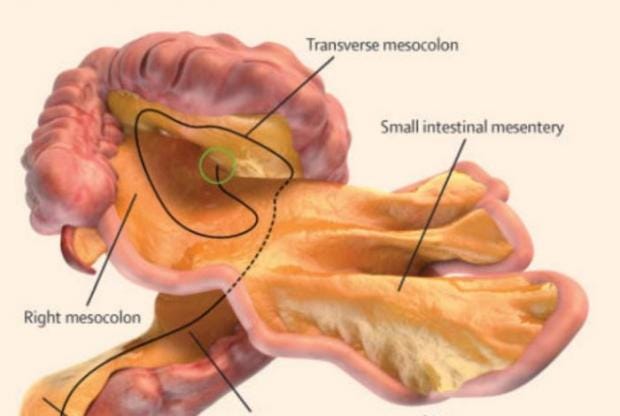
 Mesentery, the New Organ Discovered in the Human Body

  •  Irish scientists have recently identified a new human organ that has existed in the digestive system for hundreds of years.
  • mesentery-0.jpg


Share is Caring, Choose Your Platform!

Recent Posts

  • Petrol in India is cheaper than in countries like Hong Kong, Germany and the UK but costlier than in China, Brazil, Japan, the US, Russia, Pakistan and Sri Lanka, a Bank of Baroda Economics Research report showed.

    Rising fuel prices in India have led to considerable debate on which government, state or central, should be lowering their taxes to keep prices under control.

    The rise in fuel prices is mainly due to the global price of crude oil (raw material for making petrol and diesel) going up. Further, a stronger dollar has added to the cost of crude oil.

    Amongst comparable countries (per capita wise), prices in India are higher than those in Vietnam, Kenya, Ukraine, Bangladesh, Nepal, Pakistan, Sri Lanka, and Venezuela. Countries that are major oil producers have much lower prices.

    In the report, the Philippines has a comparable petrol price but has a per capita income higher than India by over 50 per cent.

    Countries which have a lower per capita income like Kenya, Bangladesh, Nepal, Pakistan, and Venezuela have much lower prices of petrol and hence are impacted less than India.

    “Therefore there is still a strong case for the government to consider lowering the taxes on fuel to protect the interest of the people,” the report argued.

    India is the world’s third-biggest oil consuming and importing nation. It imports 85 per cent of its oil needs and so prices retail fuel at import parity rates.

    With the global surge in energy prices, the cost of producing petrol, diesel and other petroleum products also went up for oil companies in India.

    They raised petrol and diesel prices by Rs 10 a litre in just over a fortnight beginning March 22 but hit a pause button soon after as the move faced criticism and the opposition parties asked the government to cut taxes instead.

    India imports most of its oil from a group of countries called the ‘OPEC +’ (i.e, Iran, Iraq, Saudi Arabia, Venezuela, Kuwait, United Arab Emirates, Russia, etc), which produces 40% of the world’s crude oil.

    As they have the power to dictate fuel supply and prices, their decision of limiting the global supply reduces supply in India, thus raising prices

    The government charges about 167% tax (excise) on petrol and 129% on diesel as compared to US (20%), UK (62%), Italy and Germany (65%).

    The abominable excise duty is 2/3rd of the cost, and the base price, dealer commission and freight form the rest.

    Here is an approximate break-up (in Rs):

    a)Base Price

    39

    b)Freight

    0.34

    c) Price Charged to Dealers = (a+b)

    39.34

    d) Excise Duty

    40.17

    e) Dealer Commission

    4.68

    f) VAT

    25.35

    g) Retail Selling Price

    109.54


    Looked closely, much of the cost of petrol and diesel is due to higher tax rate by govt, specifically excise duty.

    So the question is why government is not reducing the prices ?

    India, being a developing country, it does require gigantic amount of funding for its infrastructure projects as well as welfare schemes.

    However, we as a society is yet to be tax-compliant. Many people evade the direct tax and that’s the reason why govt’s hands are tied. Govt. needs the money to fund various programs and at the same time it is not generating enough revenue from direct taxes.

    That’s the reason why, govt is bumping up its revenue through higher indirect taxes such as GST or excise duty as in the case of petrol and diesel.

    Direct taxes are progressive as it taxes according to an individuals’ income however indirect tax such as excise duty or GST are regressive in the sense that the poorest of the poor and richest of the rich have to pay the same amount.

    Does not matter, if you are an auto-driver or owner of a Mercedes, end of the day both pay the same price for petrol/diesel-that’s why it is regressive in nature.

    But unlike direct tax where tax evasion is rampant, indirect tax can not be evaded due to their very nature and as long as huge no of Indians keep evading direct taxes, indirect tax such as excise duty will be difficult for the govt to reduce, because it may reduce the revenue and hamper may programs of the govt.