


Gandhi and Maulana Azad – Both were tried for Sedition.
Tilak too was tried for sedition
First introduced in 1870, the primary objective of the sedition law was to deal with “increasing Wahabi activities” in India during those times as they posed a challenge to the British colonial government.
[wptelegram-join-channel link=”https://t.me/s/upsctree” text=”Join @upsctree on Telegram”]
Read the newspapers carefully and you will find that second only to murder and rape, the offence which has seized the small minds of our ministers and the police is sedition. It is as if the country is infested with sedition and the people are in a mind to revolt. The offence is initially tried by magistrates, and they have to grapple with the elastic definition of sedition.
Two English barristers of high eminence agreed that the definition of sedition “is frighteningly broad and the crime has been used in the past to suppress political views” (Media Law by Geoffrey Roberts and Andrew Nicol, Q.C.). What a burden to impose on the poor magistrate, the struggling High Court judge, and the very mighty, self-conscious Supreme Court judges who delight in delivering long judgments embellished with high sounding and irrelevant quotes!
From the condemnation of Socrates to the persecution of modern writers and journalists, our world had seen too many examples of state control of unofficial ideas. A central purpose of the European Convention on Human Rights had been to set close limits to any such assumed power. We in this country continued to owe a debt to the jury which in 1670 refused to convict the Quakers, William Penn and William Mead, for preaching ideas which offended against state orthodoxy.” (Redmond Bate vs Director of Public Prosecutions before Lord Justice Sedley and Justice Collins on July 23, 1999; The Times, July 28, 1999.)
The criminal offence of sedition was born as sin in India — the sin of racism. It was gasping for breath in its home, Britain, and was consigned to the grave of obsolete laws for good reason, as a news report in India read: “A colonial era law intended to suppress the voice of freedom continues in force in India, but Britain itself abolished sedition as a criminal offence in 2009 as it was considered to be a relic of an era where freedom of expression was not considered a right as it is now.”
Sedition was abolished through the Coroners and Justice Act, 2009, under the Gordon Brown government. Three offences were abolished: the offences of sedition and seditious libel; the offence of defamatory libel; and the offence of obscene libel.
Claire Ward, the then Justice Minister, said at the time of the Act’s enactment: “Sedition and seditious and defamatory libel are arcane offences — from a bygone era when freedom of expression wasn’t seen as the right it is today. Freedom of speech is now seen as the touchstone of democracy, and the ability of individuals to criticise the state is crucial to maintaining freedom.” Britain’s Law Commission had recommended the abolition of the law of sedition in 1977.
According to Ward, “The existence of these obsolete offences in this country had been used by other countries as justification for the retention of similar laws which have been actively used to suppress political dissent and restrict press freedom.”
Claire Ward did not know the Indian mentality. Britain’s repeal of sedition in 2009 notwithstanding, India hugely enjoys the presence of sedition in its obsolete laws.
K.M. Munshi’s amendment
Bal Gangadhar Tilak, Annie Besant, the Ali Brothers, Maulana Azad, Gandhi and very many others suffered imprisonment under this archaic, barbaric law. It is to the credit of K.M. Munshi that he single-handedly secured its deletion from the Constitution.
It is the lasting disgrace of the Supreme Court that it brought it back by the back door 14 years later, ignoring totally the Constituent Assembly Debates and the enormous labour preceding it. K.M. Munshi was a member of the Drafting Committee.
The Draft Constitution was published in February 1948 and reprinted in October 1948 with changes by the Drafting Committee. The Constituent Assembly debated the offending provision on December 10, 1948. K.M. Munshi moved his amendment:
“Sir, the importance of this amendment is that it seeks to delete the word ‘sedition’ and use a much better phraseology, viz., ‘which undermines the security of, or tends to overthrow, the state’. The object is to remove the word ‘sedition’ which is of doubtful and varying import and to introduce words which are now considered to be the gist of an offence against the state.
“I was pointing out that the word ‘sedition’ has been a word of varying import and has created considerable doubt in the minds of not only the members of this House but of courts of law all over the world. Its definition has been very simple and given so far back as 1868.
It says ‘sedition embraces all those practices whether by word or deed or writing which are calculated to disturb the tranquillity of the state and lead ignorant persons to subvert the government’. But in practice it has had a curious fortune. A hundred and fifty years ago in England, holding a meeting or conducting a procession was considered sedition.
Even holding an opinion which will bring ill-will towards government was considered sedition once. Our notorious Section 124-A of the Penal Code was sometimes construed so widely that I remember in a case a criticism of a District Magistrate was urged to be covered by Section 124-A.
But the public opinion has changed considerably since, and now that we have a democratic government a line must be drawn between criticism of government, which should be welcome, and incitement, which would undermine the security or order on which civilised life is based, or which is calculated to overthrow the state.
Therefore, the word ‘sedition’ has been omitted. As a matter of fact, the essence of democracy is criticism of government. The party system necessarily involves an advocacy of the replacement of one government by another. This amendment therefore seeks to use words which properly answer to the implication of the word ‘sedition’ as understood by the present generation in a democracy and therefore there is no substantial change; the equivocal word ‘sedition’ only is sought to be deleted from the article. Otherwise, an erroneous impression would be created that we want to perpetuate 124-A of the IPC [Indian Penal Code] or its meaning, which was considered good law in earlier days.”
This is exactly what the Supreme Court did 14 years later.
The adoption of K.M. Munshi’s amendment unanimously by the Constituent Assembly on December 1, 1948, in effect erased Section124-A of the Penal Code on sedition. The Assembly was not deliberating in a blank. All talk of sedition implied reference to Section124-A of the Penal Code which defined sedition.
Let us trace the course of the litigation. First comes Romesh Thapar vs. State of Madras. A decision was made by a bench of five Supreme Court judges on May 16, 1950. The judgment was delivered by one of the court’s finest judges, Justice Patanjali Sastri, erudite, clear-headed and liberal.
He said, “It is also worthy of note that the word ‘sedition’ which occurred in Article 13(2) of the Draft Constitution prepared by the Drafting Committee was deleted before the Article was finally passed as Article 19(2). In this connection it may be recalled that the Federal Court had, in defining sedition in Niharendu Dutt Mazumdar vs The King-Emperor held that ‘The acts or words complained of must either incite to disorder or must be such as to satisfy reasonable men that this is their intention or tendency’ but the Privy Council overruled that [602] decision and emphatically reaffirmed the view expressed in Tilak’s case to the effect that ‘the offence consisted in exciting or attempting to excite in others certain bad feelings towards the government and not in exciting or attempting to excite mutiny or rebellion or any sort of actual disturbance, great or small.” (King-Emperor vs Sadashiv Narayan Bhalerao.)
“Deletion of the word “sedition” from the draft Article 13(2), therefore, shows that criticism of government exciting disaffection. or bad feelings towards it, is not to be regarded as a justifying ground for restricting the freedom of expression and of the press, unless it is such as to undermine the security of or tend to overthrow the state. It is also significant that the corresponding Irish formula of “undermining the public order or the authority of the state” [Article 49 (6) (i) of the Constitution of Eire, 1937], did not apparently find favour with the framers of the Indian Constitution.
Thus, very narrow and stringent limits have been set to permissible legislative abridgement of the right of free speech and expression, and this was doubtless due to the realisation that freedom of free speech and expression of the press lay at the foundation of all democratic organisations, for without free political discussion, no public education, so essential for the proper functioning of the processes of popular government, is possible…
“We are therefore of opinion that unless a law restricting freedom of speech and expression is directed solely against the undermining of the security of the state or the overthrow of it, such law cannot fall within the reservation under clause (2) of Article 19 although the restrictions which it seeks to impose may have been conceived generally in the interests of public order.”
Romesh Thapar had challenged in the Supreme Court the Madras government’s order banning the entry into the State of Cross Roads, a lively, pro-communist weekly published from Bombay, where Romesh Thapar was then resident. The Supreme Court held that the order was unconstitutional.
Justice Fazal Ali dissented.
Order upholding “sedition”
On January 30, 1962, came the disastrous Kedar Nath Singh vs State of Bihar which upheld sedition as defined in the colonial Section 124-A of the IPC. It was also a bench of five, and Justice S.R. Das was a member of both benches, in Thapar’s case and this. The judgment was delivered by Chief Justice of India Bhuvaneshwar Prasad Sinha. The offending speech that was under litigation had been delivered by a communist (Kedar Nath Singh) in intemperate language, but it was not seditious.
There is a clear distinction in law between extolling revolution, as the British politician Harold Laski did, and inciting it.
Chief Justice Bhuvaneshwar Prasad Sinha ignored completely the Constituent Assembly Debates, as did the concurring judges in the case. Unlike K.M. Munshi, they had not been to jail or suffered under British rule. What is astonishing is that Justice S.R. Das was a member of both benches. Like the Vicar of Bray, he merrily went along with both sides.
Chief Justice Bhuvaneshwar Prasad Sinha cited English cases. One such case said as far back as in 1867 that sedition was “nearly allied to that of treason”.
The tendency of sedition is to incite the people to “insurrection and rebellion” or “public disturbances or to lead to civil war”. Justice Patanjali Sastri’s words in Romesh Thapar were quoted, “It is also worthy of note that the word ‘sedition’ which occurred in Article 13(2) of the Draft Constitution prepared by the Drafting Committee was deleted before the Article was finally passed as Article 19(3). But the framers of the Constitution may well have reflected with Madison who was ‘the leading spirit in the preparation of the First Amendment of the Federal Constitution’ that it is better to leave a few of its noxious branches to their luxuriant growth, than, by pruning them away, to injure the vigour of those yielding the proper fruits.” This is pure guess work to reach a desired end.
How wrong-headed can you possibly get? Justice Sastri did not use the italicised words. The entire tenor and tone of their two judgments are fundamentally different, with Justice S.R. Das playing on both sides.
Chief Justice Bhuvaneshwar Prasad Sinha spoke of “subverting” the government by bringing that government “contempt or hatred”. Ergo, love thy government as thyself. Do Donald Trump, Boris Johnson or Emmanuel Macron demand the people’s love on pain of imprisonment? Does lack of “affection” imply subversion? Chief Justice Bhuvaneshwar Prasad Sinha and his four colleagues denounced “vilification and condemnation of the government in words which incite violence or have the tendency to create public disorder”. This is not sedition. If it were, cartoonists and columnists would be out of business.
“It is only when the words, written or spoken, etc. which have the pernicious tendency or intention of creating disorder or disturbance of law and order that the law steps in to prevent such activities in the interest of public order. So construed, the section, in our opinion strikes the correct balance between individual fundamental rights and the interest of public order. It is also well settled that in interpreting an enactment the court should have regard not merely to the literal meaning of the words used, but also take into consideration the antecedent history of the legislation,” the judgement said. The antecedent history of the sedition law belongs to the British colonial era.
History of sedition in India
It is doubtful if any of those fine judges was aware of the history of sedition in India. It was carefully traced by Walter Russell Donogh, an English barrister who practised in the Calcutta High Court, in “A Treatise on the Laws of Sedition and Cognate Offences of British India, Penal and Preventive with an Excerpt of the Acts in Force Relating to the Press, the Stage and Public Meetings” (Calcutta, Thacker, Spark & Co. 1991).
A maxim on the frontispiece of the work reveals his outlook: “Salus Reipublicae Suprema Lex.” The safety of the republic is the supreme law. This did not apply to colonial rule.
In 1837, the idea of sedition existed in gremio as one of the clauses of Thomas Babington Macaulay’s draft Criminal Procedure Code. That Bill was shelved for more than 20 years, and when at last it saw the light of day in 1860, the sedition clause for some unaccountable reason had been omitted. It was not until 1870, 10 years later, that the want of such a provision in a complete code of crimes came to be recognised. The result was that a Special Act (XXVII of 1870) was passed by way of amendment to the Penal Code, introducing Macaulay’s original clause practically unaltered, 33 years after its conception. Sir James Fitzjames Stephen, when introducing this Bill in August 1870 to amend the Penal Code observed that the provision in question was one which, by some unaccountable mistake, had been omitted from the Penal Code as ultimately passed. It stood as Section 113 in the draft Code published in 1837, and Sir Barnes Peacock was quite unable to account for its “omission” when the Code was enacted. It punished “attempts to excite feelings of disaffection to the government”.
“No one in his senses would contend that because a given law is good and suitable in England, it is therefore good and suitable in India. If a rule of law exists in England we may fairly consider whether it is suitable to India, but the answer to the question must always depend on the conditions which prevail in India. How much licence of speech can be safely allowed is a question of time and place. If I smoke a cigar on the maidan it pleases me, and hurts no one else. If I smoke a cigar in the powder magazine of the Fort, I endanger the lives of many, and do an act well deserving punishment. Language may be tolerated in England which it is unsafe to tolerate in India because in India it is apt to be transformed into action instead of passing off as harmless gas. ln legislating for India we must have regard to Indian conditions, and we must rely mainly on the advice of those who speak under the weight of responsibility and have the peace and good government of India under their charge.
“The difference between the social conditions prevailing in England and those of India appears to have been entirely overlooked by the most vigorous opponents of the Bill, for their arguments would seem to be based on the assumption of their complete similarity.”
This would account for the strenuous efforts made for the introduction of the English law, or what the colonial administration supposed to be the English law of sedition, in India.
On this point the observations of the Lieutenant-Governor of Bengal, Sir Alexander Mackenzie, carry with them the weight of authority and experience. “Much of the outcry,” he said, “against the present Bill rests upon its supposed divergence from the law of England on seditious libel, and on the assertion that the law as settled in 1870 was sufficient and ought to be final.
Now I venture to assert these two propositions — first, that the law of England, built up by judicial rulings to meet the circumstances of a homogeneous people directly interested in and sharing in its own government, is not necessarily a norm to which the law of India ought strictly to conform; and second, that the conditions of the country have themselves so altered since 1870 that what was adequate then is not necessarily adequate now.
As to the first point — If the section is in strict accord with the English law, all criticism of it loses weight; if it is not, there is in the very great difference in the conditions of the two countries ample justification for any deviation from the English law necessary for effectively checking the offence of sedition in India. It is clear that a sedition law which is adequate for a people ruled by a government of its own nationality and faith may be inadequate, or in some respects unsuited, for a country under foreign rule and inhabited by many races, with diverse customs and conflicting creeds. It is impossible in India to accept the test of direct incitement to violence or intention to commit rebellion, and limit the interference of the government to such cases.”
“To anyone,” he continued, “who studies, as I do from week to week, the utterances of the press in India, nothing can be more clear than that, though we seldom have such bold sedition preached as led to the recent trials in Bombay, or as prevailed here in 1870, we are now face to face with a far more insidious and equally dangerous style of writing and speaking. And, this is an evil which is yearly growing, and with the spread of what is called education is becoming more far-reaching in its noxious effects. It is indeed, in my opinion, to our own system of education that we owe all the trouble.
I have long been convinced that it is thoroughly unsound. We are turning out by scores of thousands young men who are trained only in words, look mainly for government employment, and failing to get it become, as the Maharaja of Travancore described them, ‘a host of discontented, disobedient, and sometimes troublesome young men’. This is the class that writes for the Native Press, perorates on platforms, and generally vents its spleen upon the government which has not been able to find appointments for more than a fraction of its members. To honest, well-informed criticism no English government would ever object.
But every government has the right to object when its critics wander off from criticism to calumny. No government, such as ours in India can afford to allow the minds of an ignorant and credulous oriental population to be gradually poisoned and embittered by persistent calumny of the government and all its measures. If these sections lead to a more careful, well-considered and responsible journalism, they will confer a benefit not only on the state and the public, but on the journalistic profession itself.”
The Supreme Court’s ruling in 1962 gave birth to oddities. For example, in Nazir Khan in State of Delhi (2003) & SCC 458 at 488. Sedition was designed by a colonial regime to contain discontent. It yearned for acceptance and affection. It has no place in a democracy. But this is what the Supreme Court rules. Sedition was deliberately omitted from the Constitution. Section124 of the IPC became non esse. It was deliberately restored by the Supreme Court.
Receive Daily Updates
Recent Posts
The United Nations has shaped so much of global co-operation and regulation that we wouldn’t recognise our world today without the UN’s pervasive role in it. So many small details of our lives – such as postage and copyright laws – are subject to international co-operation nurtured by the UN.
In its 75th year, however, the UN is in a difficult moment as the world faces climate crisis, a global pandemic, great power competition, trade wars, economic depression and a wider breakdown in international co-operation.
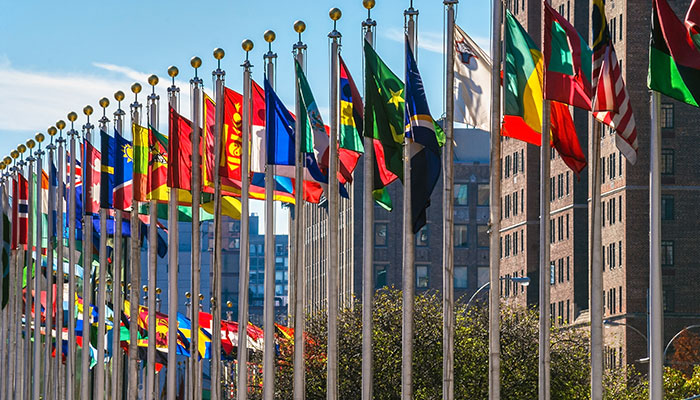
Still, the UN has faced tough times before – over many decades during the Cold War, the Security Council was crippled by deep tensions between the US and the Soviet Union. The UN is not as sidelined or divided today as it was then. However, as the relationship between China and the US sours, the achievements of global co-operation are being eroded.
The way in which people speak about the UN often implies a level of coherence and bureaucratic independence that the UN rarely possesses. A failure of the UN is normally better understood as a failure of international co-operation.
We see this recently in the UN’s inability to deal with crises from the ethnic cleansing of the Rohingya Muslims in Myanmar, to civil conflict in Syria, and the failure of the Security Council to adopt a COVID-19 resolution calling for ceasefires in conflict zones and a co-operative international response to the pandemic.
The UN administration is not primarily to blame for these failures; rather, the problem is the great powers – in the case of COVID-19, China and the US – refusing to co-operate.
Where states fail to agree, the UN is powerless to act.
Marking the 75th anniversary of the official formation of the UN, when 50 founding nations signed the UN Charter on June 26, 1945, we look at some of its key triumphs and resounding failures.
Five successes
1. Peacekeeping
The United Nations was created with the goal of being a collective security organisation. The UN Charter establishes that the use of force is only lawful either in self-defence or if authorised by the UN Security Council. The Security Council’s five permanent members, being China, US, UK, Russia and France, can veto any such resolution.
The UN’s consistent role in seeking to manage conflict is one of its greatest successes.
A key component of this role is peacekeeping. The UN under its second secretary-general, the Swedish statesman Dag Hammarskjöld – who was posthumously awarded the Nobel Peace prize after he died in a suspicious plane crash – created the concept of peacekeeping. Hammarskjöld was responding to the 1956 Suez Crisis, in which the US opposed the invasion of Egypt by its allies Israel, France and the UK.
UN peacekeeping missions involve the use of impartial and armed UN forces, drawn from member states, to stabilise fragile situations. “The essence of peacekeeping is the use of soldiers as a catalyst for peace rather than as the instruments of war,” said then UN Secretary-General Javier Pérez de Cuéllar, when the forces won the 1988 Nobel Peace Prize following missions in conflict zones in the Middle East, Africa, Asia, Central America and Europe.
However, peacekeeping also counts among the UN’s major failures.
2. Law of the Sea
Negotiated between 1973 and 1982, the UN Convention on the Law of the Sea (UNCLOS) set up the current international law of the seas. It defines states’ rights and creates concepts such as exclusive economic zones, as well as procedures for the settling of disputes, new arrangements for governing deep sea bed mining, and importantly, new provisions for the protection of marine resources and ocean conservation.
Mostly, countries have abided by the convention. There are various disputes that China has over the East and South China Seas which present a conflict between power and law, in that although UNCLOS creates mechanisms for resolving disputes, a powerful state isn’t necessarily going to submit to those mechanisms.
Secondly, on the conservation front, although UNCLOS is a huge step forward, it has failed to adequately protect oceans that are outside any state’s control. Ocean ecosystems have been dramatically transformed through overfishing. This is an ecological catastrophe that UNCLOS has slowed, but failed to address comprehensively.
3. Decolonisation
The idea of racial equality and of a people’s right to self-determination was discussed in the wake of World War I and rejected. After World War II, however, those principles were endorsed within the UN system, and the Trusteeship Council, which monitored the process of decolonisation, was one of the initial bodies of the UN.
Although many national independence movements only won liberation through bloody conflicts, the UN has overseen a process of decolonisation that has transformed international politics. In 1945, around one third of the world’s population lived under colonial rule. Today, there are less than 2 million people living in colonies.
When it comes to the world’s First Nations, however, the UN generally has done little to address their concerns, aside from the non-binding UN Declaration on the Rights of Indigenous Peoples of 2007.
4. Human rights
The Human Rights Declaration of 1948 for the first time set out fundamental human rights to be universally protected, recognising that the “inherent dignity and of the equal and inalienable rights of all members of the human family is the foundation of freedom, justice and peace in the world”.
Since 1948, 10 human rights treaties have been adopted – including conventions on the rights of children and migrant workers, and against torture and discrimination based on gender and race – each monitored by its own committee of independent experts.
The language of human rights has created a new framework for thinking about the relationship between the individual, the state and the international system. Although some people would prefer that political movements focus on ‘liberation’ rather than ‘rights’, the idea of human rights has made the individual person a focus of national and international attention.
5. Free trade
Depending on your politics, you might view the World Trade Organisation as a huge success, or a huge failure.
The WTO creates a near-binding system of international trade law with a clear and efficient dispute resolution process.
The majority Australian consensus is that the WTO is a success because it has been good for Australian famers especially, through its winding back of subsidies and tariffs.
However, the WTO enabled an era of globalisation which is now politically controversial.
Recently, the US has sought to disrupt the system. In addition to the trade war with China, the Trump Administration has also refused to appoint tribunal members to the WTO’s Appellate Body, so it has crippled the dispute resolution process. Of course, the Trump Administration is not the first to take issue with China’s trade strategies, which include subsidises for ‘State Owned Enterprises’ and demands that foreign firms transfer intellectual property in exchange for market access.
The existence of the UN has created a forum where nations can discuss new problems, and climate change is one of them. The Intergovernmental Panel on Climate Change (IPCC) was set up in 1988 to assess climate science and provide policymakers with assessments and options. In 1992, the UN Framework Convention on Climate Change created a permanent forum for negotiations.
However, despite an international scientific body in the IPCC, and 165 signatory nations to the climate treaty, global greenhouse gas emissions have continued to increase.
Under the Paris Agreement, even if every country meets its greenhouse gas emission targets we are still on track for ‘dangerous warming’. Yet, no major country is even on track to meet its targets; while emissions will probably decline this year as a result of COVID-19, atmospheric concentrations of greenhouse gases will still increase.
This illustrates a core conundrum of the UN in that it opens the possibility of global cooperation, but is unable to constrain states from pursuing their narrowly conceived self-interests. Deep co-operation remains challenging.
Five failures of the UN
1. Peacekeeping
During the Bosnian War, Dutch peacekeeping forces stationed in the town of Srebrenica, declared a ‘safe area’ by the UN in 1993, failed in 1995 to stop the massacre of more than 8000 Muslim men and boys by Bosnian Serb forces. This is one of the most widely discussed examples of the failures of international peacekeeping operations.
On the massacre’s 10th anniversary, then UN Secretary General Kofi Annan wrote that the UN had “made serious errors of judgement, rooted in a philosophy of impartiality”, contributing to a mass murder that would “haunt our history forever”.
If you look at some of the other infamous failures of peacekeeping missions – in places such as Rwanda, Somalia and Angola – it is the limited powers given to peacekeeping operations that have resulted in those failures.
2. The invasion of Iraq
The invasion of Iraq by the US in 2003, which was unlawful and without Security Council authorisation, reflects the fact that the UN is has very limited capacity to constrain the actions of great powers.
The Security Council designers created the veto power so that any of the five permanent members could reject a Council resolution, so in that way it is programmed to fail when a great power really wants to do something that the international community generally condemns.
In the case of the Iraq invasion, the US didn’t veto a resolution, but rather sought authorisation that it did not get. The UN, if you go by the idea of collective security, should have responded by defending Iraq against this unlawful use of force.
The invasion proved a humanitarian disaster with the loss of more than 400,000 lives, and many believe that it led to the emergence of the terrorist Islamic State.
3. Refugee crises
The UN brokered the 1951 Refugee Convention to address the plight of people displaced in Europe due to World War II; years later, the 1967 Protocol removed time and geographical restrictions so that the Convention can now apply universally (although many countries in Asia have refused to sign it, owing in part to its Eurocentric origins).
Despite these treaties, and the work of the UN High Commission for Refugees, there is somewhere between 30 and 40 million refugees, many of them, such as many Palestinians, living for decades outside their homelands. This is in addition to more than 40 million people displaced within their own countries.
While for a long time refugee numbers were reducing, in recent years, particularly driven by the Syrian conflict, there have been increases in the number of people being displaced.
During the COVID-19 crisis, boatloads of Rohingya refugees were turned away by port after port. This tragedy has echoes of pre-World War II when ships of Jewish refugees fleeing Nazi Germany were refused entry by multiple countries.
And as a catastrophe of a different kind looms, there is no international framework in place for responding to people who will be displaced by rising seas and other effects of climate change.
4. Conflicts without end
Across the world, there is a shopping list of unresolved civil conflicts and disputed territories.
Palestine and Kashmir are two of the longest-running failures of the UN to resolve disputed lands. More recent, ongoing conflicts include the civil wars in Syria and Yemen.
The common denominator of unresolved conflicts is either division among the great powers, or a lack of international interest due to the geopolitical stakes not being sufficiently high. For instance, the inaction during the Rwandan civil war in the 1990s was not due to a division among great powers, but rather a lack of political will to engage.
In Syria, by contrast, Russia and the US have opposing interests and back opposing sides: Russia backs the government of the Syrian dictator Bashar al-Assad, whereas the US does not.
5. Acting like it’s 1945
The UN is increasingly out of step with the reality of geopolitics today.
The permanent members of the Security Council reflect the division of power internationally at the end of World War II. The continuing exclusion of Germany, Japan, and rising powers such as India and Indonesia, reflects the failure to reflect the changing balance of power.
Also, bodies such as the IMF and the World Bank, which are part of the UN system, continue to be dominated by the West. In response, China has created potential rival institutions such as the Asian Infrastructure Investment Bank.
Western domination of UN institutions undermines their credibility. However, a more fundamental problem is that institutions designed in 1945 are a poor fit with the systemic global challenges – of which climate change is foremost – that we face today.