


Scientists have fabricated a device that can mimic human brain cognitive actions and is more efficient than conventional techniques in emulating artificial intelligence, thus enhancing the computational speed and power consumption efficiency.
[wptelegram-join-channel link=”https://t.me/s/upsctree” text=”Join @upsctree on Telegram”]
Artificial intelligence is now a part of our daily lives, starting from email filters and smart replies in communication to helping battle the Covid-19 pandemic. But AI can do much more such as facilitate self-driving autonomous vehicles, augmented reality for healthcare, drug discovery, big data handling, real-time pattern/image recognition, solving real-world problems, and so on.
These can be realised with the help of a neuromorphic device which can mimic the human brain synapse to bring about brain-inspired efficient computing ability. The human brain comprises of nearly a hundred billion neurons consisting of axons and dendrites. These neurons massively interconnect with each other via axons and dendrites, forming colossal junctions called synapse. This complex bio-neural network is believed to give rise to superior cognitive abilities.
Software-based artificial neural networks (ANN) can be seen defeating humans in games (AlphaGo and AlphaZero) or helping handle the Covid-19 situation. However, the power-hungry (in megawatts) von Neumann computer architecture slows down ANNs performance due to the available serial processing while the brain does the job via parallel processing consuming just 20 W.
It is estimated that the brain consumes 20% of the total body energy. From the calory conversion, it amounts to 20 watts. While the conventional computing platforms consume megawatts, i.e., 10 lakh watts of energy, to mimic basic human cognition.
To overcome this bottleneck, a hardware-based solution involves an artificial synaptic device that, unlike transistors, could emulate the functions of human brain synapse. Scientists had long been trying to develop a synaptic device that can mimic complex psychological behaviors without the aid of external supporting (CMOS) circuits.
To address this challenge, Scientists from Jawaharlal Nehru Centre for Advanced Scientific Research, Bengaluru, an autonomous institute of the Department of Science & Technology, Government of India, devised a novel approach of fabricating an artificial synaptic network (ASN) resembling the biological neural network via a simple self-forming method (the device structure is formed by itself while heating). This work has been recently published in the journal ‘Materials Horizons’.
Aiming to develop a synaptic device for neuromorphic applications with a humble fabrication method, the JNCASR team explored a material system mimicking neuronal bodies and axonal network connectivity much like the biological system. In order to realize such a structure, they found that a self-forming process was easy, scalable, and cost-effective.
In their research JNCASR team dewetted Silver (Ag) metal to form branched islands and nanoparticles with nanogap separations to resemble bio neurons and neurotransmitters where dewetting is a process of rupture of continuous film into disconnected/isolated islands or spherical particles.
With such an architecture, several higher-order cognitive activities are emulated. The fabricated artificial synaptic network (ASN) consisted of Silver (Ag) agglomerates network separated by nanogaps filled with isolated nanoparticles. They found that dewetting Ag film at a higher temperature resulted in the formation of island structures separated by nanogaps resembling the bio-neural network.
Using programmed electrical signals as a real-world stimulus, this hierarchical structure emulated various learning activities such as short-term memory (STM), long-term memory (LTM), potentiation, depression, associative learning, interest-based learning, supervision, etc. impression of supervision.
Synaptic fatigue due to excessive learning and its self-recovery was also mimicked. Remarkably, all these behaviors were emulated in a single material system without the aid of external CMOS circuits. A prototype kit has been developed to emulate Pavlov’s dog behavior which demonstrates the potential of this device towards neuromorphic artificial intelligence. By organizing a nanomaterial resembling the biological neural substance, the JNCASR team has moved a step further in accomplishing advanced neuromorphic artificial intelligence.
Nature has had an incredible amount of time and diversity to engineer ever new forms and functions through evolution. Learning and emulating new processes, technologies, materials and devices from the nature and biology are the important pathways to the significant advances of the future which will increasingly integrate the worlds of the living with the man-made technologies.
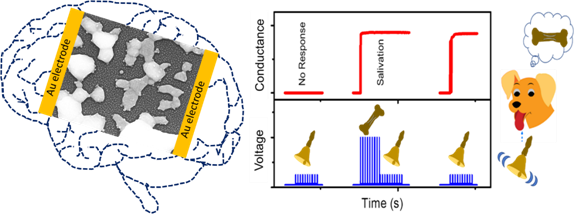
Pavlov’s dog -Classical Conditioning
First discovered by Russian physiologist Ivan Pavlov, this method of conditioning focuses on pairing a neutral stimulus with the response from a biologically potent stimulus. This can be seen in the example of Pavlov’s dogs.
The physiologist discovered this phenomenon when he was studying digestion in dogs. When the food was brought in, the dogs salivated; an involuntary biological response to food. However, he experimented with ringing a bell every time the food was brought in, thus creating a connection between the sound of the bell and the food.
This resulted in the dogs salivating whenever they heard the bell ring, thus being ‘conditioned’ to respond in a way similar to how they would to a conditioned stimulus (food), except without the stimulus being present. Thus, they had ‘learned’ that the sound of the bell meant food was coming.
Receive Daily Updates
Recent Posts
Petrol in India is cheaper than in countries like Hong Kong, Germany and the UK but costlier than in China, Brazil, Japan, the US, Russia, Pakistan and Sri Lanka, a Bank of Baroda Economics Research report showed.
Rising fuel prices in India have led to considerable debate on which government, state or central, should be lowering their taxes to keep prices under control.
The rise in fuel prices is mainly due to the global price of crude oil (raw material for making petrol and diesel) going up. Further, a stronger dollar has added to the cost of crude oil.
Amongst comparable countries (per capita wise), prices in India are higher than those in Vietnam, Kenya, Ukraine, Bangladesh, Nepal, Pakistan, Sri Lanka, and Venezuela. Countries that are major oil producers have much lower prices.
In the report, the Philippines has a comparable petrol price but has a per capita income higher than India by over 50 per cent.
Countries which have a lower per capita income like Kenya, Bangladesh, Nepal, Pakistan, and Venezuela have much lower prices of petrol and hence are impacted less than India.
“Therefore there is still a strong case for the government to consider lowering the taxes on fuel to protect the interest of the people,” the report argued.
India is the world’s third-biggest oil consuming and importing nation. It imports 85 per cent of its oil needs and so prices retail fuel at import parity rates.
With the global surge in energy prices, the cost of producing petrol, diesel and other petroleum products also went up for oil companies in India.
They raised petrol and diesel prices by Rs 10 a litre in just over a fortnight beginning March 22 but hit a pause button soon after as the move faced criticism and the opposition parties asked the government to cut taxes instead.
India imports most of its oil from a group of countries called the ‘OPEC +’ (i.e, Iran, Iraq, Saudi Arabia, Venezuela, Kuwait, United Arab Emirates, Russia, etc), which produces 40% of the world’s crude oil.
As they have the power to dictate fuel supply and prices, their decision of limiting the global supply reduces supply in India, thus raising prices
The government charges about 167% tax (excise) on petrol and 129% on diesel as compared to US (20%), UK (62%), Italy and Germany (65%).
The abominable excise duty is 2/3rd of the cost, and the base price, dealer commission and freight form the rest.
Here is an approximate break-up (in Rs):
a)Base Price | 39 |
b)Freight | 0.34 |
c) Price Charged to Dealers = (a+b) | 39.34 |
d) Excise Duty | 40.17 |
e) Dealer Commission | 4.68 |
f) VAT | 25.35 |
g) Retail Selling Price | 109.54 |
Looked closely, much of the cost of petrol and diesel is due to higher tax rate by govt, specifically excise duty.
So the question is why government is not reducing the prices ?
India, being a developing country, it does require gigantic amount of funding for its infrastructure projects as well as welfare schemes.
However, we as a society is yet to be tax-compliant. Many people evade the direct tax and that’s the reason why govt’s hands are tied. Govt. needs the money to fund various programs and at the same time it is not generating enough revenue from direct taxes.
That’s the reason why, govt is bumping up its revenue through higher indirect taxes such as GST or excise duty as in the case of petrol and diesel.
Direct taxes are progressive as it taxes according to an individuals’ income however indirect tax such as excise duty or GST are regressive in the sense that the poorest of the poor and richest of the rich have to pay the same amount.
Does not matter, if you are an auto-driver or owner of a Mercedes, end of the day both pay the same price for petrol/diesel-that’s why it is regressive in nature.
But unlike direct tax where tax evasion is rampant, indirect tax can not be evaded due to their very nature and as long as huge no of Indians keep evading direct taxes, indirect tax such as excise duty will be difficult for the govt to reduce, because it may reduce the revenue and hamper may programs of the govt.