


WCRP History
The main objectives of WCRP, defined at its inception and still valid today, are to determine the predictability of climate and to determine the effect of human activities on climate.
WCRP has made enormous contributions to advancing climate science over the past 30+ years. As a result of WCRP efforts, it is now possible for climate scientists to monitor, simulate and project global climate with unprecedented accuracy, and provide climate information for use in governance, decision-making and in support of a wide range of practical end-user applications.
India and WCRP
In 2015, Agreement was signed between Indian Institute of Tropical Meteorology (ESSO-IITM), an autonomous organization under the Earth System Science Organization (ESSO), Ministry of Earth Sciences and World Climate Research Program (WCRP), Geneva for setting up of an International Climate Variability and Predictability (CLIVAR) Monsoon Project Office (ICMPO) at ESSO-IITM in Pune.
The ICMPO at ESSO-IITM Pune will be responsible for implementation of (i) intra-seasonal, seasonal and inter-annual variability and predictability of Monsoon systems, in close cooperation with relevant WCRP activities and (ii) development of a CLIVAR “Research Opportunity” on links between the Monsoons and the cryosphere.
ESSO-IITM is a premiere research Institute generating scientific knowledge in the field of meteorology and atmospheric sciences that has potential application in various fields such as agriculture, economics, health, water resources, transportation, communications, etc. It functions as a national centre for basic and applied research in Monsoon meteorology.
The main foci of WCRP research are:
- observing changes in the components of the Earth system (atmosphere, oceans, land and cryosphere) and in the interfaces between these components;
- improving our knowledge and understanding of global and regional climate variability and change, and of the mechanisms responsible for this change;
- assessing and attributing significant trends in global and regional climates;
- developing and improving numerical models that are capable of simulating and assessing the climate system for a wide range of space and time scales; and
- investigating the sensitivity of the climate system to natural and human-induced forcing and estimating the changes resulting from specific disturbing influences.
The organizational structure consists of:
- WCRP Joint Scientific Committee (JSC) Advisory councils
- WCRP Modelling Advisory Council (WMAC)
- WCRP Data Advisory Council (WDAC).
- WCRP Working Groups
- WCRP Core Projects
- WCRP Grand Challenges
- The Joint Planning Staff (JPS)
- Climate and Cryosphere (CliC): CliC encourages and promotes research into the cryosphere in order to improve understanding of the cryosphere and its interactions with the global climate system, and to enhance the ability to use parts of the cryosphere for detection of climate change.
- Climate and Ocean Variability, Predictability and Change (CLIVAR): CLIVAR’s mission is to understand the dynamics, the interaction, and the predictability of the coupled ocean-atmosphere system. To this end it facilitates observations, analysis and predictions of changes in the Earth’s climate system, enabling better understanding of climate variability, predictability and change.
- Global Energy and Water Exchanges (GEWEX): GEWEX is an integrated program of research, observations, and science activities that focuses on the atmospheric, terrestrial, radiative, hydrological, coupled precesses, and interactions that determine the global and regional hydrological cycle, radiation and energy transitions and their involvement in global changes.
- Stratosphere-troposphere Processes And their Role in Climate (SPARC): SPARC coordinates international efforts to bring knowledge of the stratosphere to bear on relevant issues in climate variability and prediction.
In addition, WCRP has the following major projects:
Coordinated Regional Climate Downscaling Experiment (CORDEX): The CORDEX vision is to advance and coordinate the science and application of regional climate downscaling through global partnerships.
WCRP Grand Challenges
The WCRP Grand Challenges represent areas of emphasis in scientific research, modelling, analysis and observations for WCRP and its affiliate projects in the coming decade. They were developed by the WCRP Joint Scientific Committee (JSC) through consultation with WCRP sponsors, stakeholders and affiliate networks of scientists. WCRP promotes the Grand Challenges through community-organized workshops, conferences and strategic planning meetings to identify exciting and high-priority research that requires international partnership and coordination, and that yields “actionable information” for decision makers.
The Grand Challenges:
- are both highly specific and highly focused, identifying a specific barrier preventing progress in a critical area of climate science;
- enable the development of targeted research efforts with the likelihood of significant progress over 5-10 years, even if their ultimate success is uncertain;
- enable the implementation of effective and measurable performance metrics;
- are transformative – a Grand Challenge should bring the best minds to the table (voluntarily), building and strengthening communities of collaborative innovators, perhaps also extending beyond “in-house expertise”;
- capture the public’s imagination – teams of renowned scientists working to solve pressing challenges; and
- offer compelling storylines to capture the interest of media and the public
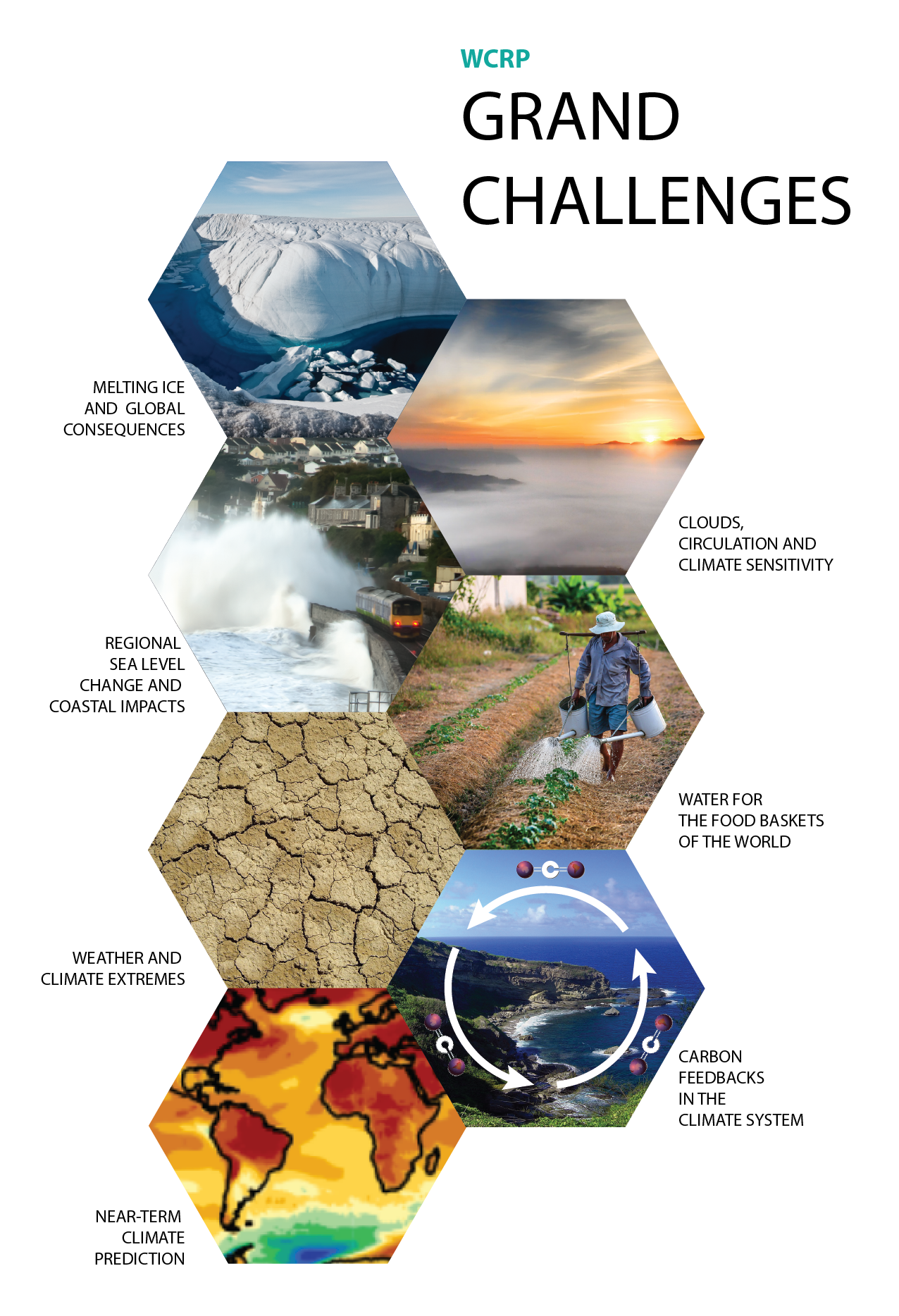
- Melting Ice and Global Consequences Clouds,
- Circulation and Climate Sensitivity
- Carbon Feedbacks in the Climate System
- Weather and Climate Extremes
- Water for the Food Baskets of the World
- Regional Sea-Level Change and Coastal Impacts
- Near-term Climate Prediction
Receive Daily Updates
Recent Posts
Steve Ovett, the famous British middle-distance athlete, won the 800-metres gold medal at the Moscow Olympics of 1980. Just a few days later, he was about to win a 5,000-metres race at London’s Crystal Palace. Known for his burst of acceleration on the home stretch, he had supreme confidence in his ability to out-sprint rivals. With the final 100 metres remaining,
[wptelegram-join-channel link=”https://t.me/s/upsctree” text=”Join @upsctree on Telegram”]Ovett waved to the crowd and raised a hand in triumph. But he had celebrated a bit too early. At the finishing line, Ireland’s John Treacy edged past Ovett. For those few moments, Ovett had lost his sense of reality and ignored the possibility of a negative event.
This analogy works well for the India story and our policy failures , including during the ongoing covid pandemic. While we have never been as well prepared or had significant successes in terms of growth stability as Ovett did in his illustrious running career, we tend to celebrate too early. Indeed, we have done so many times before.
It is as if we’re convinced that India is destined for greater heights, come what may, and so we never run through the finish line. Do we and our policymakers suffer from a collective optimism bias, which, as the Nobel Prize winner Daniel Kahneman once wrote, “may well be the most significant of the cognitive biases”? The optimism bias arises from mistaken beliefs which form expectations that are better than the reality. It makes us underestimate chances of a negative outcome and ignore warnings repeatedly.
The Indian economy had a dream run for five years from 2003-04 to 2007-08, with an average annual growth rate of around 9%. Many believed that India was on its way to clocking consistent double-digit growth and comparisons with China were rife. It was conveniently overlooked that this output expansion had come mainly came from a few sectors: automobiles, telecom and business services.
Indians were made to believe that we could sprint without high-quality education, healthcare, infrastructure or banking sectors, which form the backbone of any stable economy. The plan was to build them as we went along, but then in the euphoria of short-term success, it got lost.
India’s exports of goods grew from $20 billion in 1990-91 to over $310 billion in 2019-20. Looking at these absolute figures it would seem as if India has arrived on the world stage. However, India’s share of global trade has moved up only marginally. Even now, the country accounts for less than 2% of the world’s goods exports.
More importantly, hidden behind this performance was the role played by one sector that should have never made it to India’s list of exports—refined petroleum. The share of refined petroleum exports in India’s goods exports increased from 1.4% in 1996-97 to over 18% in 2011-12.
An import-intensive sector with low labour intensity, exports of refined petroleum zoomed because of the then policy regime of a retail price ceiling on petroleum products in the domestic market. While we have done well in the export of services, our share is still less than 4% of world exports.
India seemed to emerge from the 2008 global financial crisis relatively unscathed. But, a temporary demand push had played a role in the revival—the incomes of many households, both rural and urban, had shot up. Fiscal stimulus to the rural economy and implementation of the Sixth Pay Commission scales had led to the salaries of around 20% of organized-sector employees jumping up. We celebrated, but once again, neither did we resolve the crisis brewing elsewhere in India’s banking sector, nor did we improve our capacity for healthcare or quality education.
Employment saw little economy-wide growth in our boom years. Manufacturing jobs, if anything, shrank. But we continued to celebrate. Youth flocked to low-productivity service-sector jobs, such as those in hotels and restaurants, security and other services. The dependence on such jobs on one hand and high-skilled services on the other was bound to make Indian society more unequal.
And then, there is agriculture, an elephant in the room. If and when farm-sector reforms get implemented, celebrations would once again be premature. The vast majority of India’s farmers have small plots of land, and though these farms are at least as productive as larger ones, net absolute incomes from small plots can only be meagre.
A further rise in farm productivity and consequent increase in supply, if not matched by a demand rise, especially with access to export markets, would result in downward pressure on market prices for farm produce and a further decline in the net incomes of small farmers.
We should learn from what John Treacy did right. He didn’t give up, and pushed for the finish line like it was his only chance at winning. Treacy had years of long-distance practice. The same goes for our economy. A long grind is required to build up its base before we can win and celebrate. And Ovett did not blame anyone for his loss. We play the blame game. Everyone else, right from China and the US to ‘greedy corporates’, seems to be responsible for our failures.
We have lowered absolute poverty levels and had technology-based successes like Aadhaar and digital access to public services. But there are no short cuts to good quality and adequate healthcare and education services. We must remain optimistic but stay firmly away from the optimism bias.
In the end, it is not about how we start, but how we finish. The disastrous second wave of covid and our inability to manage it is a ghastly reminder of this fact.