


WCRP History
The main objectives of WCRP, defined at its inception and still valid today, are to determine the predictability of climate and to determine the effect of human activities on climate.
WCRP has made enormous contributions to advancing climate science over the past 30+ years. As a result of WCRP efforts, it is now possible for climate scientists to monitor, simulate and project global climate with unprecedented accuracy, and provide climate information for use in governance, decision-making and in support of a wide range of practical end-user applications.
India and WCRP
In 2015, Agreement was signed between Indian Institute of Tropical Meteorology (ESSO-IITM), an autonomous organization under the Earth System Science Organization (ESSO), Ministry of Earth Sciences and World Climate Research Program (WCRP), Geneva for setting up of an International Climate Variability and Predictability (CLIVAR) Monsoon Project Office (ICMPO) at ESSO-IITM in Pune.
The ICMPO at ESSO-IITM Pune will be responsible for implementation of (i) intra-seasonal, seasonal and inter-annual variability and predictability of Monsoon systems, in close cooperation with relevant WCRP activities and (ii) development of a CLIVAR “Research Opportunity” on links between the Monsoons and the cryosphere.
ESSO-IITM is a premiere research Institute generating scientific knowledge in the field of meteorology and atmospheric sciences that has potential application in various fields such as agriculture, economics, health, water resources, transportation, communications, etc. It functions as a national centre for basic and applied research in Monsoon meteorology.
The main foci of WCRP research are:
- observing changes in the components of the Earth system (atmosphere, oceans, land and cryosphere) and in the interfaces between these components;
- improving our knowledge and understanding of global and regional climate variability and change, and of the mechanisms responsible for this change;
- assessing and attributing significant trends in global and regional climates;
- developing and improving numerical models that are capable of simulating and assessing the climate system for a wide range of space and time scales; and
- investigating the sensitivity of the climate system to natural and human-induced forcing and estimating the changes resulting from specific disturbing influences.
The organizational structure consists of:
- WCRP Joint Scientific Committee (JSC) Advisory councils
- WCRP Modelling Advisory Council (WMAC)
- WCRP Data Advisory Council (WDAC).
- WCRP Working Groups
- WCRP Core Projects
- WCRP Grand Challenges
- The Joint Planning Staff (JPS)
- Climate and Cryosphere (CliC): CliC encourages and promotes research into the cryosphere in order to improve understanding of the cryosphere and its interactions with the global climate system, and to enhance the ability to use parts of the cryosphere for detection of climate change.
- Climate and Ocean Variability, Predictability and Change (CLIVAR): CLIVAR’s mission is to understand the dynamics, the interaction, and the predictability of the coupled ocean-atmosphere system. To this end it facilitates observations, analysis and predictions of changes in the Earth’s climate system, enabling better understanding of climate variability, predictability and change.
- Global Energy and Water Exchanges (GEWEX): GEWEX is an integrated program of research, observations, and science activities that focuses on the atmospheric, terrestrial, radiative, hydrological, coupled precesses, and interactions that determine the global and regional hydrological cycle, radiation and energy transitions and their involvement in global changes.
- Stratosphere-troposphere Processes And their Role in Climate (SPARC): SPARC coordinates international efforts to bring knowledge of the stratosphere to bear on relevant issues in climate variability and prediction.
In addition, WCRP has the following major projects:
Coordinated Regional Climate Downscaling Experiment (CORDEX): The CORDEX vision is to advance and coordinate the science and application of regional climate downscaling through global partnerships.
WCRP Grand Challenges
The WCRP Grand Challenges represent areas of emphasis in scientific research, modelling, analysis and observations for WCRP and its affiliate projects in the coming decade. They were developed by the WCRP Joint Scientific Committee (JSC) through consultation with WCRP sponsors, stakeholders and affiliate networks of scientists. WCRP promotes the Grand Challenges through community-organized workshops, conferences and strategic planning meetings to identify exciting and high-priority research that requires international partnership and coordination, and that yields “actionable information” for decision makers.
The Grand Challenges:
- are both highly specific and highly focused, identifying a specific barrier preventing progress in a critical area of climate science;
- enable the development of targeted research efforts with the likelihood of significant progress over 5-10 years, even if their ultimate success is uncertain;
- enable the implementation of effective and measurable performance metrics;
- are transformative – a Grand Challenge should bring the best minds to the table (voluntarily), building and strengthening communities of collaborative innovators, perhaps also extending beyond “in-house expertise”;
- capture the public’s imagination – teams of renowned scientists working to solve pressing challenges; and
- offer compelling storylines to capture the interest of media and the public
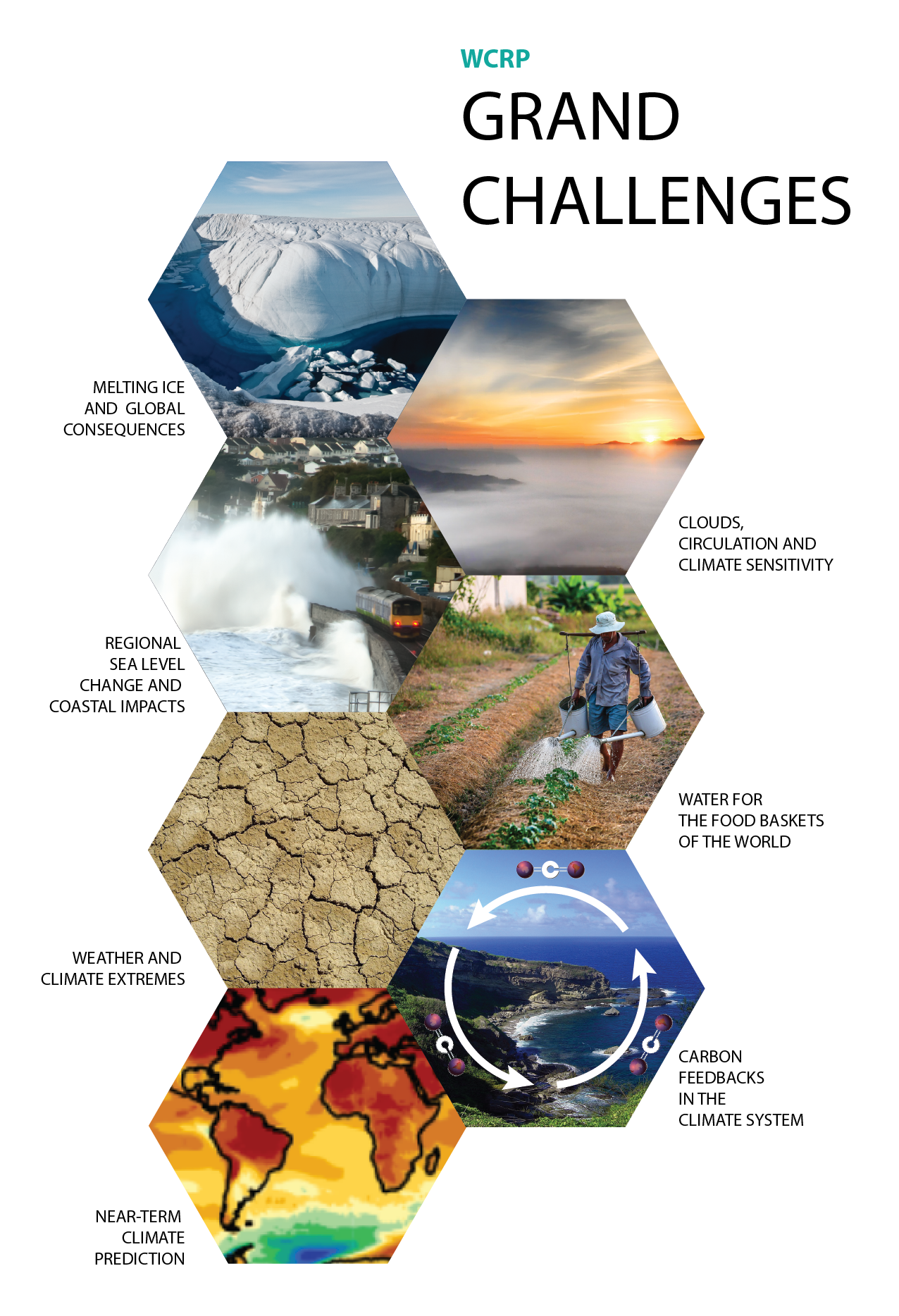
- Melting Ice and Global Consequences Clouds,
- Circulation and Climate Sensitivity
- Carbon Feedbacks in the Climate System
- Weather and Climate Extremes
- Water for the Food Baskets of the World
- Regional Sea-Level Change and Coastal Impacts
- Near-term Climate Prediction
Receive Daily Updates
Recent Posts
- In the Large States category (overall), Chhattisgarh ranks 1st, followed by Odisha and Telangana, whereas, towards the bottom are Maharashtra at 16th, Assam at 17th and Gujarat at 18th. Gujarat is one State that has seen startling performance ranking 5th in the PAI 2021 Index outperforming traditionally good performing States like Andhra Pradesh and Karnataka, but ranks last in terms of Delta
- In the Small States category (overall), Nagaland tops, followed by Mizoram and Tripura. Towards the tail end of the overall Delta ranking is Uttarakhand (9th), Arunachal Pradesh (10th) and Meghalaya (11th). Nagaland despite being a poor performer in the PAI 2021 Index has come out to be the top performer in Delta, similarly, Mizoram’s performance in Delta is also reflected in it’s ranking in the PAI 2021 Index
- In terms of Equity, in the Large States category, Chhattisgarh has the best Delta rate on Equity indicators, this is also reflected in the performance of Chhattisgarh in the Equity Pillar where it ranks 4th. Following Chhattisgarh is Odisha ranking 2nd in Delta-Equity ranking, but ranks 17th in the Equity Pillar of PAI 2021. Telangana ranks 3rd in Delta-Equity ranking even though it is not a top performer in this Pillar in the overall PAI 2021 Index. Jharkhand (16th), Uttar Pradesh (17th) and Assam (18th) rank at the bottom with Uttar Pradesh’s performance in line with the PAI 2021 Index
- Odisha and Nagaland have shown the best year-on-year improvement under 12 Key Development indicators.
- In the 60:40 division States, the top three performers are Kerala, Goa and Tamil Nadu and, the bottom three performers are Uttar Pradesh, Jharkhand and Bihar.
- In the 90:10 division States, the top three performers were Himachal Pradesh, Sikkim and Mizoram; and, the bottom three performers are Manipur, Assam and Meghalaya.
- Among the 60:40 division States, Orissa, Chhattisgarh and Madhya Pradesh are the top three performers and Tamil Nadu, Telangana and Delhi appear as the bottom three performers.
- Among the 90:10 division States, the top three performers are Manipur, Arunachal Pradesh and Nagaland; and, the bottom three performers are Jammu and Kashmir, Uttarakhand and Himachal Pradesh
- Among the 60:40 division States, Goa, West Bengal and Delhi appear as the top three performers and Andhra Pradesh, Telangana and Bihar appear as the bottom three performers.
- Among the 90:10 division States, Mizoram, Himachal Pradesh and Tripura were the top three performers and Jammu & Kashmir, Nagaland and Arunachal Pradesh were the bottom three performers
- West Bengal, Bihar and Tamil Nadu were the top three States amongst the 60:40 division States; while Haryana, Punjab and Rajasthan appeared as the bottom three performers
- In the case of 90:10 division States, Mizoram, Assam and Tripura were the top three performers and Nagaland, Jammu & Kashmir and Uttarakhand featured as the bottom three
- Among the 60:40 division States, the top three performers are Kerala, Andhra Pradesh and Orissa and the bottom three performers are Madhya Pradesh, Jharkhand and Goa
- In the 90:10 division States, the top three performers are Mizoram, Sikkim and Nagaland and the bottom three performers are Manipur and Assam
In a diverse country like India, where each State is socially, culturally, economically, and politically distinct, measuring Governance becomes increasingly tricky. The Public Affairs Index (PAI 2021) is a scientifically rigorous, data-based framework that measures the quality of governance at the Sub-national level and ranks the States and Union Territories (UTs) of India on a Composite Index (CI).
States are classified into two categories – Large and Small – using population as the criteria.
In PAI 2021, PAC defined three significant pillars that embody Governance – Growth, Equity, and Sustainability. Each of the three Pillars is circumscribed by five governance praxis Themes.
The themes include – Voice and Accountability, Government Effectiveness, Rule of Law, Regulatory Quality and Control of Corruption.
At the bottom of the pyramid, 43 component indicators are mapped to 14 Sustainable Development Goals (SDGs) that are relevant to the States and UTs.
This forms the foundation of the conceptual framework of PAI 2021. The choice of the 43 indicators that go into the calculation of the CI were dictated by the objective of uncovering the complexity and multidimensional character of development governance

The Equity Principle
The Equity Pillar of the PAI 2021 Index analyses the inclusiveness impact at the Sub-national level in the country; inclusiveness in terms of the welfare of a society that depends primarily on establishing that all people feel that they have a say in the governance and are not excluded from the mainstream policy framework.
This requires all individuals and communities, but particularly the most vulnerable, to have an opportunity to improve or maintain their wellbeing. This chapter of PAI 2021 reflects the performance of States and UTs during the pandemic and questions the governance infrastructure in the country, analysing the effectiveness of schemes and the general livelihood of the people in terms of Equity.


Growth and its Discontents
Growth in its multidimensional form encompasses the essence of access to and the availability and optimal utilisation of resources. By resources, PAI 2021 refer to human resources, infrastructure and the budgetary allocations. Capacity building of an economy cannot take place if all the key players of growth do not drive development. The multiplier effects of better health care, improved educational outcomes, increased capital accumulation and lower unemployment levels contribute magnificently in the growth and development of the States.


The Pursuit Of Sustainability
The Sustainability Pillar analyses the access to and usage of resources that has an impact on environment, economy and humankind. The Pillar subsumes two themes and uses seven indicators to measure the effectiveness of government efforts with regards to Sustainability.


The Curious Case Of The Delta
The Delta Analysis presents the results on the State performance on year-on-year improvement. The rankings are measured as the Delta value over the last five to 10 years of data available for 12 Key Development Indicators (KDI). In PAI 2021, 12 indicators across the three Pillars of Equity (five indicators), Growth (five indicators) and Sustainability (two indicators). These KDIs are the outcome indicators crucial to assess Human Development. The Performance in the Delta Analysis is then compared to the Overall PAI 2021 Index.
Key Findings:-
In the Scheme of Things
The Scheme Analysis adds an additional dimension to ranking of the States on their governance. It attempts to complement the Governance Model by trying to understand the developmental activities undertaken by State Governments in the form of schemes. It also tries to understand whether better performance of States in schemes reflect in better governance.
The Centrally Sponsored schemes that were analysed are National Health Mission (NHM), Umbrella Integrated Child Development Services scheme (ICDS), Mahatma Gandh National Rural Employment Guarantee Scheme (MGNREGS), Samagra Shiksha Abhiyan (SmSA) and MidDay Meal Scheme (MDMS).
National Health Mission (NHM)
INTEGRATED CHILD DEVELOPMENT SERVICES (ICDS)
MID- DAY MEAL SCHEME (MDMS)
SAMAGRA SHIKSHA ABHIYAN (SMSA)
MAHATMA GANDHI NATIONAL RURAL EMPLOYMENT GUARANTEE SCHEME (MGNREGS)