


Context:-Chief Justice of India N.V. Ramana on Saturday said the media is running “kangaroo courts” on issues even experienced judges find difficult to decide.
He said. ill-informed, biased and agenda-driven debates in the media on issues pending in courts are affecting justice delivery
Media has breached its responsibility, taking democracy two steps backwards, affecting people and harming the system, the Chief Justice said
Famous cases of media trials in India

Media was once a boon that enlightened people and made them aware of what is going around in the world. The Indian media has to follow the principles laid down in the Constitution of India. There are essentially three pillars of democracy that are the legislature, executive and judiciary and now the media has become the fourth pillar of democracy. It highlights the social, legal, economic and cultural problems of the society.
Media has now transformed itself into a Janta Adalats or ‘public court’ and started intervening in the proceedings of the court. The vital gap between the convict and accused is completely overlooked by the media by keeping at stake the cardinal principles of ‘presumption of innocence until proven guilty’ and ‘guilt beyond reasonable doubt’. Now what is being observed is a separate investigation done by the media itself which is called a media trial. Along with investigation, it includes forming public opinion against the suspect or the accused even before the court takes cognizance of the case. As a result of this, the public is prejudiced due to which the accused who should have been assumed innocent is presumed to be a criminal abandoning all his rights and liberty unrepressed.
The excessive publicity of the accused or the suspect in the media before the trial in a court of law, either incriminates a fair trial or results in characterizing the accused or suspect as the one who has certainly committed the crime, this amounts to undue interference with the “administration of justice”, which calls for proceedings against media for contempt of court. The rules that have been designed to regulate the journalism and journalism conduct are unfortunately inadequate to prevent the encroachment upon civil rights.
Whenever there is any sensitive case that comes to be tried before the court, then among the people there is an anticipated upsurge in curiosity. Always looking forward to sensational news, Media including newspapers, television channels, news websites, etc. start publishing their own interpretation of facts. It is called investigative journalism and is not prohibited in India. The influence of media coverage via newspapers and television on an individual by creating a perception of innocence or guilt even before the Court of law announces its judgment, it is called as “Media Trial” or ” Trial by Media”.
There have been multiple cases which have been tried by Media, few of the famous cases have been discussed below-
Sanjay Dutt Case
After the Supreme Court sentenced Sanjay Dutt to 5 years imprisonment, he had to serve in jail due to his involvement in the 1993 Mumbai Serial Blast. In 1994, Sanjay Dutt was arrested at the airport and he confessed that in January, 1993 Abu Sale, Mafia Don had visited his home with Hanif Kadawala and Samir Hingora, they were Magnum proprietors and alleged close associates of Dawood Ibrahim, who is an underworld don. In his statement, Sanjay Dutt also said that these people along with ammunition had got three AK-56 rifles with them, out of which one was kept by Sanjay Dutt.
According to him, he kept the gun in order to protect his family because of the threats that he had received during the riots in Mumbai which was followed by the Babri Masjid demolition in December, 1992. After Sanjay Dutt heard the arrest of Hanif Kadawala and Samir Hingora and the serial blasts in Mumbai, Dutt asked his friend Yusuf Nulwalla to destroy the rifle. Though, the statement was later withdrawn by him. After this, he was soon charged and arrested under Terrorist and Disruptive Activities (Prevention) Act (TADA), 1987 for receiving ammunition from Abu Salem and his involvement in the blasts.
However, after 18 months of imprisonment, Sanjay Dutt was able to secure a bail. The TADA court after 11 years acquitted Sanjay Dutt of all charges made against him after observing that he had acquired guns for self-defence and he was not a terrorist. He was sentenced to six years in jail for conviction under the Arms Act, for which Sanjay Dutt had managed to secure a bail from the Supreme Court. On 31 July, 2007, he was sent to Pune’s Yerawada prison. However, he was later out on bail. On March 21, 2013, the Supreme Court had further cut short his term to five and which ended on February 27, 2016.
Being a famous actor, this case was highlighted by the media to an extent, the media portrayed the picture of Sanjay Dutt as a terrorist, which was later held by the Court that he was not accused of those charges. After this incident, being an actor he had to suffer a lot of problems and outrage and his reputation got depleted.
Sheena Bohra Murder Case
In the year 2012 Indrani Mukerjea was arrested for the murder of Sheena Bora, the shocking news, in this case, was that Sheena was the daughter, not the sister as claimed by Indrani Mukerjea. The media highlighted the case and even after her arrest Indrani never accepted that she had two children and was stuck to her statement claiming Sheena as her sister. The murder also brought into light the murky financial dealings of Indra Mukerjea and her husband Peter Mukerjea. They successfully manipulated facts hence no trail was initiated against them for three years.
The personal life of Indrani Mukerjea had been pierced by the tormenting eyes of the media which paved the way for fresh debate in the murder trial issue of the accused. Indrani’s character and personal life, all the aspects which have no ration with the investigation of the murder of Sheena were under the public lens of scrutiny through media. The journalism ethics had been again under the controversial debate due to their meddling with the personal matter of the accused.
Jessica Lal Murder
In 1999, Jessica Lal (model turned barmaid) working in a restaurant owned by socialite Bona Ramani in Mehrauli, South Delhi’s, was shot dead by Manu Sharma (alias Siddharth Vashisth), son of Congress former Union Minister, Venod Sharma after Jessica refused to serve liquor to him and his friends. This case immediately gained media coverage after the murder when the accused was acquitted by the trial court. This case became one of the top cases where the public pressure and media compelled the justice system to take a second look at this case. Though Manu Sharma was acquitted initially in the year 2006 as the Delhi police failed to sustain the grounds on which they had built up their case after public outcry due to the media coverage of the case, the Delhi High Court sentenced him to life imprisonment.
The Tikku, Kakkar double murder case
This was a very sensational case where two Delhi residents were murdered by a money-crazy criminal and his female associate. Police said that Vijay Palande, prime accused and former gangster used his wife, Simran Sood, who was a model as a ‘honeytrap’ to commit the crimes for confiscating the victim’s properties. In April, 2012, Palande along with his mates Manoj Gajkosh and Dhananjay Shinde murdered businessman Arunkumar Tikku who was a resident of Delhi.
The police said that Palande had encouraged the son of the victim, Anuj Tikku who was an actor with a motive that Tikku can acquire Palande’s apartment which was located in the Lokhandwala Complex in Mumbai’s upscale. The Mumbai crime branch had arrested the trio along with Simran Sood in connection to the abduction and murder of Delhi-based aspiring producer Karankumar Kakkad. Palande made a confession that he suspected Kakkad was an underworld mole, who would kill him, so Palande had to kill Kakkad. The police also said that Simran had acquainted Palande as her “brother” to Tikku and Kakkad.
In 1998 Palande had been convicted of a double murder and then again in the year 2002, he jumped parole in 2003, went for a cosmetic surgery to Bangkok to change his features and in 2005 he returned to Mumbai.
In 2012, this double murder case shook the nation and made its way to TV and newspaper headlines as one of the most chilling murder mysteries in valuing a sophisticated serial killer in recent times in India. He was arrested for masterminding the murders of Tikku and Kakkar. On November 18, 2011, Palande was given a life sentence for the murder of the two men.
The Delhi rape case
The brutal gang rape on the night of 16 December 2012 of a 23-year-old physiotherapy intern who besides being raped was tortured and beaten in a private bus in which she was travelling with her male friend. Including the driver, six men on the bus who raped her and beat her friend. She was admitted to the hospital and after eleven days she was shifted for an emergency to the hospital in Singapore but died after two days.
Since the laws in India do not permit the press to reveal the name of the game victim, the victim has become widely known as Nirbhaya, meaning “fearless”, and the girl’s struggle against the incident and her death has become a symbol of resistance by the women in the world.
This incident inflamed extensive national and international coverage. The incident was criticized widely, both in India as well as abroad. Thereafter, there were multiple protests in different parts of the country against the central and state governments for failing to provide proper security for women.
Due to so much outrage in the media, there were multiple amendments in the laws including the Juvenile Justice Act, where for the heinous crime the age for punishment had been reduced to from eighteen to sixteen.
Neeraj Grover Murder Case
The case received much media attention due to its extremely gruesome nature. In May, 2008, Neeraj who worked in a Mumbai-based production house was found dead. The dead body of Neeraj was chopped into pieces and then stuffed in three garbage bags and then they took the body to the forest and set it on fire. A police complaint was filed by one of Neeraj’s friend, Maria Susairaj that he was missing but later it was found that Maria was involved in the murder. It was discovered that Maria’s boyfriend Lieutenant M.L. Jerome Mathew was behind the murder of Neeraj because he suspected Maria having an affair with Neeraj and killed him in a fit of rage. The killing and subsequent trial attained significant media coverage in India which reported public outrage on the verdict given to the accused who had chopped the body into multiple pieces and set it on fire. One of the news channels had criticized the defamation of the accused, claiming that the accused was under a lot of stress.
Nitish Katara Murder Case
This was a case of honour killing, Vikas Yadav, son of famous politician DP Yadav had brutally murdered Nitish Katara. Nitish had an affair with Bharti Yadav who was the sister of Vikas Yadav, Vikas never approved of their love. At the mutual friend’s wedding where both Vikas and Nitish were present, Vikas took the opportunity and killed Nitish by taking him for a ride. According to the autopsy report, Vikas had badly beaten Nitish that even his digestive system had fallen apart and a DNA test was conducted for identification. Vikas was sentenced to life imprisonment.
Sometimes in the media trial, the accused is even not given proper conviction which he is entitled to.
Nithari Kand
In 2007, dead bodies of children and adults were found in the house of Moninder Sinh Pandher situated in Nithari village of Noida. It was revealed as soon as the investigation begins that servant of Pandher, Surender Kohli had been involved in raping and killing women which included minors and even used to eat their body parts, there was one case where he even cooked the body parts. Moninder Sinh Pandher was acquitted in 2009 of the charges against him in one case but he is still a co-accused in other case and his death penalty has been overturned. The Allahabad High Court commuted Surender Kohli’s death sentence to life imprisonment. After that, the CBI Court had pronounced both Surinder Koli and Moninder Singh Pandher guilty in the attempt to rape and murder of Pinki Sarkar who was 20 years old. This was the eighth murder committed by them out of sixteen murder cases in which judgement has been delivered. The case got highlighted by the media and the accused was served the punishment.
Ayodhya dispute
It is one of the most discussed and famous cases in India. This case has strong religious, historical and political roots. The dispute revolves around a piece of land in the birthplace of Lord Rama, Ayodhya. The critical issues, in this case, were between the Hindu and Muslim communities regarding this piece of land that carried some religious beliefs between the community Hindus and Muslims. The famous Babri Masjid which is thought to be at the same place was demolished by violent Hindu activists during a rally on 6th December 1992 which is thought to be located where a Ram Temple already existed and the place where Lord Rama was born.
This Act of demolition led to violent riots and consequently, a case was filed in the Allahabad High Court for the entitlement of land. With time the case kept on becoming more controversial and the final judgment came finally after 18 years. The judgement was passed keeping in mind the religious sentiments of both the communities. The court ordered that the Ayodhya land that was of 2.77 acres will be split up into three parts. One-third of the land was registered to Sunni Waqf Board, another one third to Hindu Mahasabha to build Ram temple and the remaining one third be passed to Nirmohi Akhara (Hindu religious group).
This case had been tried long by the media and showing little disputes over the media and irrelevant things related to the case which just worked as feeling the disputes between the two communities all over India.
Sunanda Pushkar Murder Case
Sunanda Pushkar was the wife of the former Union minister Shashi Tharoor. Sunanda got married to Shashi Tharoor in August, 2010 after two failed marriages. On 17 January, 2014 Sunanda was found dead in a hotel suite of Leela Palace, New Delhi under highly mysterious circumstances.
A day before her murder she had a dispute on twitter with a Pakistani journalist, Mehr Tarar. The dispute was regarding the tweets of the journalist which hinted at a possibility of an affair between the journalist and Sunanda’s Husband, Shashi Tharoor. The case is still under investigation, her autopsy report claimed that Sunanda died due to an overdose of sleeping pills, but later in October, the medical team reported that they had been pressured to provide a tailored report. The Police stated that Sunanda had been poisoned and murdered but there was no suspect. No one has been arrested for the murder of Sunanda Pushkar to date.
This was another case of media trial where the media claimed that Shashi Tharoor had committed the murder when the case was still under investigation and the trial wasn’t started in the Court of law yet. Shashi Tharoor had to face a lot of controversy after that.
The Priyadarshini Mattoo Case
Priyadarshini Mattoo was a law student who was residing at her Uncle’s house in New Delhi. On 23 January, 1996 she was found dead. Initially the main accused was thought to be her senior, Santosh Kumar Singh who used to stalk and harass her for years. Later, it was disclosed that the main accused was the son of an IPS Officer, Santosh. He strangled her by wrapping an electric wire around her neck. Santos with the helmet had smacked her face many times that made her face unrecognisable.
A sustained public outcry and a media campaign against the acquittal led to an appeal in the High Court which culminated in the conviction and death sentence. On 30 October 2006, the Delhi high court had ordered the death sentence which was later converted into life imprisonment by the Supreme Court.
Pradyuman Thakur Murder Case
A class II student, Pradyum was found dead in the washroom of Gurugram’s Ryan International School. As per the initial report, the bus conductor was arrested on the ground that he had sexually assaulted the child and then killed him. However, later it came to know that it was a student of class XI who killed him in order to postpone the exams. Though the bus driver was found not guilty, because of the media trial initially, he suffered damage to his reputation and career. The case was under investigation and the media should not have interfered so much, only after the Court pronounced its verdict, the media should share its opinion based on true facts and circumstances.
Arushi-Hemraj Murder Case
This case gained a lot of media attention and was in the news for a very long time. Arushi was murdered along with her household worker Hemraj in May, 2008. Initially, a lot of names occurred on the suspect list. The sensational media coverage was criticized by many as a trial by the media, which involved salacious allegations against Aarushi and suspects. The media raised questions on Arushi’s character as her affair with Hemraj, though no provident evidence had been found for the same. The parents were convicted for the murder and sentenced to life imprisonment in November, 2013. But it was argued by many critics that the case was based on very weak evidence, the evidence was not strong enough to fully blame parents for the murder, there were other suspects too but because of media trial interference, it raised questions in minds of the people. In the Allahabad High Court, the decision was challenged by the Talwar’s, which later in 2017 acquitted them as giving them benefit of doubt and calling the evidence as unsatisfactory.
Pramod Mahajan Killing
Pramod Mahajan, a famous politician of the Bharatiya Janata Party (BJP) was killed by his younger brother Pravin in his house in broad daylight. After killing his brother, Pravin went to the nearest police station and admitted his crime, he said, “I am Pravin… I shot Pramod.” It was during the court proceedings and media coverage that the disturbed relationship came to the lead. Pravin said that his brother raised him “like a pet dog”. Pravin was sentenced to life imprisonment but he died of a suspected brain haemorrhage in March 2010.
Yakub Menon Case
Yakub Abdul Razzaq Memon (30 July, 1962 – 30 July, 2015) was held to be a terrorist and on 27 July 2007, he was convicted for his involvement in the 1993 Bombay blasts by the Special Terrorist and Disruptive Activities Court. Yakub Memon’s brother Tiger Memon was one of the prime suspects in the bombings. All of his petitions and appeals which demanded clemency were all rejected and on 30th July, 2015 he was executed by hanging in Nagpur jail.
Due to so much of the media coverage and trial by media, in this case, the lawyer defending the accused had been heavily criticized which made it difficult for the lawyers to fulfil their ethical duty of providing legal aid to the parties.
Media has an indispensable role in a democratic country. All the pillars of the democracy should function independently without intervening upon the functions of others. Media had overstepped upon the sanctity of the judiciary in high-profile criminal cases like the Indrani Mukerjee case, Jessica Lal case etc. Some of the accused are set free due to the media intervention.
A three-judge bench led by Chief Justice of India R M Lodha described the issue as very serious and stated that to put in place the Court would consider few guidelines in order to balance the interest and rights of the stakeholders. The guidelines observed by the Court are as follows:
In the wake of growing instances of media trials, there is a need that the Supreme Court should delve into the issue as it leads to public condemnation of the accused on the basis of information provided by prosecutors and police, though the trial before the court of law has still not been initiated.
The Courts have taken a serious note on the reports of a media briefing by the police and other investigating agencies. Nothing should be done in order to hamper the investigation process and secrecy of the inquiry. All of these need certain checks as they all fall within the purview of Article 21 of the Constitution.
When a trial is already going on in the Court, the parallel process of trial by media should not be allowed. It is now expected that the Supreme Court will consider to frame guidelines for the media over covering criminal cases and briefing by the investigating agencies.
In Saibal Kumar Gupta and Ors. v. B.K. Sen and Anr., 1961, the Supreme Court held, there’s no doubt that it would be mischievous for a newspaper to intrude into a crime and execute an independent investigation for which the accused or suspect has been arrested and then to publish the outcomes of that investigation. This is mischievous because when there is an ongoing trial by one of the regular tribunals of the country then trial by newspapers must be prohibited. This is based upon the view that such action by the newspaper of doing an investigation tends to interfere with the course of justice, whether the investigation tends to prejudice the accused or the prosecution.
In Sushil Sharma v. The State (Delhi Administration) and Ors, 1996, the Delhi High Court held that no conviction will be based upon the media report but upon the facts that have been placed on record. It is supposed that the Judge dealing with the case should be neutral. If the decision is based upon the accepted news items, the petitioner will insist upon denial of a fair trial because it would cause aspiration on the Judge of being not neutral. Even if there is less report or no report available, the charge should be framed on the basis of material available on record.
The purpose of media has eventually changed with the progression of time. There is interference by the media in the role of the judiciary in most of the cases instead of just stating the case facts. The underlying foundation of the judicial system has been eaten by the termite of corruption in the largest democratic set-up. Unethical steps are followed by the litigants in order to save the accused from conviction through bribing the public authorities to distort the evidence, pressurize the defence to withdraw the case, etc. Due to this enormous institutional imbalance, there has been pre-emptive media coverage of criminal trials. Media has been successful in making a prejudicial stance in the minds of the public by their sensational style of journalism.
- If a suspect or an accused has already been projected by the media as guilty even before the trial in the Court, then there are possibilities of serious prejudice to the accused.
- If the person who is suspect or an accused is acquitted by the Court after the due process, even the acquittal may not prove to be helpful for the accused to rebuild his image in the society.
- Exaggerated and unreasonable publicity in the media, characterizing the person as guilty, even when the verdict is still pending, amounts to undue influence with the “administration of justice”, which called for proceeding against the media for contempt of Court.
- If the identity of the witness is revealed, then there is a possibility that the witness will be under pressure from the police as well as the accused or his associates.
- The witness at an early stage wants to withdraw and get out of chaos soon.
- Then the protection of the witness is a serious issue. This brings a question about the admissibility of the evidence of a hostile witness and whether there should be an amendment in the law for the prevention of witnesses from changing their statements.
- Even Judges come within the purview of criticism which can either be on their judicial conduct or conduct in a purely private capacity. But it becomes a matter of concern when the criticism about the Judges is ill-informed or entirely not on the foundation which may have a tendency to undermine the faith of the people in the judiciary.
- A Judge has to protect himself from such media pressure which can ‘unconsciously’ influence the juries or the judges and as human beings, the judges are prone at least subconsciously or unconsciously to such indirect influences.
In the case of State of Maharashtra v. Rajendra Jawanmal Gandhi, 1997, the Supreme Court held that a trial by electronic media, press or by way of public agitation is anti-thesis to the rule of law and can lead to a miscarriage of justice.
Article 19(1)(a) of the Constitution of India guarantees freedom of speech and expression. A crucial role is played by freedom of speech in the formation of public opinion on economic, social, and political matters.
Keeping this view in mind in Indian Express Newspapers (Bombay) (P) Ltd. v. Union of India, 1985, Venkataramiah, J. of the Supreme Court of India has stated that the freedom of the press is the heart of social and political intercourse. The press has now assumed the role of public educators and makes education possible at a large scale by imparting formal and non-formal education particularly in the developing world, where all forms of modern communication like television and other kinds are not available to all the sections of the society. The objective of the press is to boost the public interest by publishing opinions and facts without which the responsible judgement cannot be made by a democratic electorate (Government). Newspapers which are purveyors of news and views of the people have a bearing on public administration and frequently carry material which would not be pleasing to Governments and other authorities.
From the above statement of the Supreme Court, it can be demonstrated that freedom of the press is essential for the proper functioning of the democratic process. It is obvious that every citizen is entitled to participate in the democratic process and democracy means the Government of the people, by the people and for the people. Every individual in order to allow him to exercise his right intelligently of making a choice, then free and general discussion of public matters becomes essential. This constitutional viewpoint of the freedom of the press in India is explained through this.
In the case of Papnasam Labour Union v. Madura Coats Ltd, 1994, few guidelines were laid down by the Supreme Court and principles that are needed to be kept in view while considering the constitutionality of a statutory provision, the restrictions were imposed on the fundamental rights guaranteed under Articles 19(1)(a) to (g) of the Constitution of India when the freedom is challenged on the grounds of unreasonableness.
Article 21 of the Constitution of India guarantees the right to a fair trial as it has been considered to be part of the right to life and liberty. The basic meaning of “Right to Fair Trial” is that a trial should not be impacted by the extrinsic pressures, which is recognized as a basic principle of justice in India. Articles 129 and Article 215 of the Constitution of India and Contempt of Courts Act, 1971 contain provisions that aim at safeguarding this right. In our country, the criminal justice system sticks to the ‘presumption of innocence’ that is, unless proven guilty, a person is presumed to be innocent by the competent court. The role of the Media is to objectively broadcast the news which implies that the media should not adjudicate upon any case but only adhere to the publication of the factual part of the case. The print media and electronic media are now immersed in an insatiable competition of sales and TRPs (Television Rating Points) respectively.
The Press Council of India directs the Media that it should not give unreasonable publicity parallel to the victim, accused, witnesses and also not to disclose any information that is confidential which may hamper or prejudice the process of investigation. It is also required that the media should not identify any witness as then their chances to turn hostile increases and mainly the media should not be running any parallel trial of the case that brings an undue pressure on the judge or the jury adjudicating upon the case.
In the case of Zahira Habibullah Sheikh v. State of Gujarat, 2006, the Supreme Court has held that it is reflected in numerous practices and rules, a fair trial would obviously mean a trial that is conducted before a Judge who is impartial and a fair prosecutor in an atmosphere of judicial calm. A Fair trial includes a trial, in which bias or prejudice for or against the witnesses, accused or the cause which is being tried is eliminated.
In the case of Vijay Singhal and Ors. vs. Govt. of NCT of Delhi and Anr., 2013, it was held by the Court that the trials’ objective is to meet the ends of justice, and if, there is a competition in order to meet that end between the right to freedom of expression against the right to a free trial, the right to free trial would Trump upon the right to freedom of expression.
It was held by the Supreme Court in the case of Sahara India Real Estate Corporation Ltd. and Ors. vs. Securities and Exchange Board of India and Anr., 2012, that the media has a right to know what is happening in courts and to communicate the information to the public which strengthens the confidence of the public in the transparency of the court proceedings. Sometimes a reporting of trial that is accurate and fair like a murder trial would anyway give rise to a substantial risk of prejudice that might not be related to the pending trials but later in the connected trials. The fairness of the later or connected trials is not only safeguarded by the postponement but it also helps in preventing the possible contempt by the Media.
The Supreme Court and High Court in many judgments have criticized the trial by the media on the sub-judice matter as it prejudices the opinion of the judge or the jury on that particular case and sometimes even on similar cases later. The Press Council of India has also prescribed in their 2010 edition of Norm of Journalism Conduct to abstain from performing such sensational journalism.
Now we can see that the media have started for the lawyers not to take up the case of the accused, thus, infringing the right of the accused to be represented before the court by the lawyer of his choice. In this way, the media trials are serving against the system of natural justice. Like in the case of Jessica Lal murder case, when the famous lawyer Ram Jethmalani decided to defend the print accused of the case, Manu Sharma, he had to face societal criticisms. In another case where a lawyer Kamini Jaiswal, who was representing SAR Geelani, a professor at Delhi University who was an accused of the 2001 Parliament attack, then Jaiswal was called “an anti-national”. Similarly, the lawyer Prashant Bhushan, who was the counsel appearing on behalf of Yakub Memon was also opposed.
In such instances, the security of the lawyers falls in danger because of which they are unable to fulfil their obligation of ethical duty to provide legal aid in criminal matters. As a result media trials affect the principle of natural justice.
Trial by Media comes under a Contempt of Court and needs to be punished. The contempt has been identified by the Contempt of Court Act as civil and criminal.
Criminal contempt has been divided further into three types, that are:
- Prejudicing trial;
- Scandalizing;
- Hindering the administration of justice.
Interference or prejudice with the judicial process: This prerequisite owes its origin to the principle of natural justice. Every accused has the right to a free trial which is clubbed with the principle of ‘Justice may not only be done it must also seem to be done’. In multiple ways, attempts are made in order to prejudice a trial. If such cases where prejudice takes place, are permitted to be successful then the result will be that most of the people will be convicted of offences which they have never committed like in the case of Pradyum Thakur where the bus driver was convicted earlier but later it was found that the real culprit was the boy’s senior in his school itself.
Contempt of court has been initiated to curb such unfair and unjust trials. Any publication of news that is circulated with an intention to poison the minds of the accused, witnesses, or the jurors or to create such an atmosphere where the administration of justice would become difficult or impossible, amounts to contempt. Contempt of Court also includes commenting on the pending cases or abuse of party only when a case is triable by a judge. No right lies with the media to play the role of an investigator, in any case, to try to prejudice the court.
In this report under the Chairmanship of Justice M. Jagannath a Rao in August, 2006, the following recommendations had been made:
- To prohibit the publication of anything that is prejudicial to the reputation if accused- a restriction which shall from the mine of the arrest.
- The starting point of a criminal case should not be from the filing of the charge sheet but from the time of arrest of an accused. The perception behind such an amendment is that it would prevent prejudicing or prejudging the case.
- To address the damaging effect on the administration of justice of the sensationalized news reports.
- The High Court is empowered to direct the postponement of the telecast or the publication in criminal cases and to prevent the media from restoring to such a telecast or publication.
There have been numerous instances where the media has been blamed and accused of conducting the trial of the accused by passing the “Verdict” according to their investigation before the judgement is passed by the Court. It is essential that the trial must be carried out by the Court and not the media. The trial by the media is certainly an undue interference in the procedure of delivery of justice.
The legislature has a great responsibility to perform while drafting laws on media, ensuring that their freedom is not curtailed. Media has the right to discuss and comment on the case judgments but they have no right or freedom to start a trial on sub-judice matters. The right of the accused to have a fair trial is always more important than the freedom of media before starting the trial of the pending case. Media trial hinders the purpose of justice.
It becomes clear that the influence of the media had a more negative effect rather than a positive effect (except for a few exceptions). The Courts should properly regulate the media. The Courts should not grant free hand to the media in the Court proceedings as they are not some event of the sport.
The most favorable way for legislating the media is by exercising the contempt of court to penalize the ones who interfere with the basic code of conduct. The Supreme Court has approved in a number of cases the use of contempt powers by the Courts against the newspapers and media channels. Freedom of speech and expression cannot be allowed to the media to an extent to prejudice the trial itself.
Credit:- This article is written by Vanya Verma pursuing B.B.A.LL.B (Hons.) from Alliance University, Bangalore. This article deals with famous cases that have been tried by the media and what is the criticism of media trials as to how it interferes with the Court proceedings.
Recent Posts
The United Nations has shaped so much of global co-operation and regulation that we wouldn’t recognise our world today without the UN’s pervasive role in it. So many small details of our lives – such as postage and copyright laws – are subject to international co-operation nurtured by the UN.
In its 75th year, however, the UN is in a difficult moment as the world faces climate crisis, a global pandemic, great power competition, trade wars, economic depression and a wider breakdown in international co-operation.
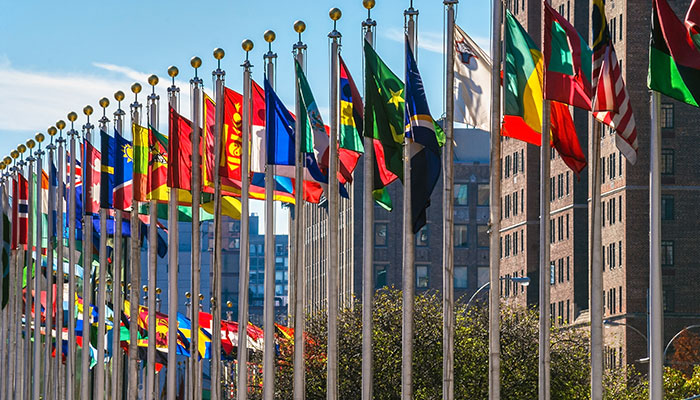
Still, the UN has faced tough times before – over many decades during the Cold War, the Security Council was crippled by deep tensions between the US and the Soviet Union. The UN is not as sidelined or divided today as it was then. However, as the relationship between China and the US sours, the achievements of global co-operation are being eroded.
The way in which people speak about the UN often implies a level of coherence and bureaucratic independence that the UN rarely possesses. A failure of the UN is normally better understood as a failure of international co-operation.
We see this recently in the UN’s inability to deal with crises from the ethnic cleansing of the Rohingya Muslims in Myanmar, to civil conflict in Syria, and the failure of the Security Council to adopt a COVID-19 resolution calling for ceasefires in conflict zones and a co-operative international response to the pandemic.
The UN administration is not primarily to blame for these failures; rather, the problem is the great powers – in the case of COVID-19, China and the US – refusing to co-operate.
Where states fail to agree, the UN is powerless to act.
Marking the 75th anniversary of the official formation of the UN, when 50 founding nations signed the UN Charter on June 26, 1945, we look at some of its key triumphs and resounding failures.
Five successes
1. Peacekeeping
The United Nations was created with the goal of being a collective security organisation. The UN Charter establishes that the use of force is only lawful either in self-defence or if authorised by the UN Security Council. The Security Council’s five permanent members, being China, US, UK, Russia and France, can veto any such resolution.
The UN’s consistent role in seeking to manage conflict is one of its greatest successes.
A key component of this role is peacekeeping. The UN under its second secretary-general, the Swedish statesman Dag Hammarskjöld – who was posthumously awarded the Nobel Peace prize after he died in a suspicious plane crash – created the concept of peacekeeping. Hammarskjöld was responding to the 1956 Suez Crisis, in which the US opposed the invasion of Egypt by its allies Israel, France and the UK.
UN peacekeeping missions involve the use of impartial and armed UN forces, drawn from member states, to stabilise fragile situations. “The essence of peacekeeping is the use of soldiers as a catalyst for peace rather than as the instruments of war,” said then UN Secretary-General Javier Pérez de Cuéllar, when the forces won the 1988 Nobel Peace Prize following missions in conflict zones in the Middle East, Africa, Asia, Central America and Europe.
However, peacekeeping also counts among the UN’s major failures.
2. Law of the Sea
Negotiated between 1973 and 1982, the UN Convention on the Law of the Sea (UNCLOS) set up the current international law of the seas. It defines states’ rights and creates concepts such as exclusive economic zones, as well as procedures for the settling of disputes, new arrangements for governing deep sea bed mining, and importantly, new provisions for the protection of marine resources and ocean conservation.
Mostly, countries have abided by the convention. There are various disputes that China has over the East and South China Seas which present a conflict between power and law, in that although UNCLOS creates mechanisms for resolving disputes, a powerful state isn’t necessarily going to submit to those mechanisms.
Secondly, on the conservation front, although UNCLOS is a huge step forward, it has failed to adequately protect oceans that are outside any state’s control. Ocean ecosystems have been dramatically transformed through overfishing. This is an ecological catastrophe that UNCLOS has slowed, but failed to address comprehensively.
3. Decolonisation
The idea of racial equality and of a people’s right to self-determination was discussed in the wake of World War I and rejected. After World War II, however, those principles were endorsed within the UN system, and the Trusteeship Council, which monitored the process of decolonisation, was one of the initial bodies of the UN.
Although many national independence movements only won liberation through bloody conflicts, the UN has overseen a process of decolonisation that has transformed international politics. In 1945, around one third of the world’s population lived under colonial rule. Today, there are less than 2 million people living in colonies.
When it comes to the world’s First Nations, however, the UN generally has done little to address their concerns, aside from the non-binding UN Declaration on the Rights of Indigenous Peoples of 2007.
4. Human rights
The Human Rights Declaration of 1948 for the first time set out fundamental human rights to be universally protected, recognising that the “inherent dignity and of the equal and inalienable rights of all members of the human family is the foundation of freedom, justice and peace in the world”.
Since 1948, 10 human rights treaties have been adopted – including conventions on the rights of children and migrant workers, and against torture and discrimination based on gender and race – each monitored by its own committee of independent experts.
The language of human rights has created a new framework for thinking about the relationship between the individual, the state and the international system. Although some people would prefer that political movements focus on ‘liberation’ rather than ‘rights’, the idea of human rights has made the individual person a focus of national and international attention.
5. Free trade
Depending on your politics, you might view the World Trade Organisation as a huge success, or a huge failure.
The WTO creates a near-binding system of international trade law with a clear and efficient dispute resolution process.
The majority Australian consensus is that the WTO is a success because it has been good for Australian famers especially, through its winding back of subsidies and tariffs.
However, the WTO enabled an era of globalisation which is now politically controversial.
Recently, the US has sought to disrupt the system. In addition to the trade war with China, the Trump Administration has also refused to appoint tribunal members to the WTO’s Appellate Body, so it has crippled the dispute resolution process. Of course, the Trump Administration is not the first to take issue with China’s trade strategies, which include subsidises for ‘State Owned Enterprises’ and demands that foreign firms transfer intellectual property in exchange for market access.
The existence of the UN has created a forum where nations can discuss new problems, and climate change is one of them. The Intergovernmental Panel on Climate Change (IPCC) was set up in 1988 to assess climate science and provide policymakers with assessments and options. In 1992, the UN Framework Convention on Climate Change created a permanent forum for negotiations.
However, despite an international scientific body in the IPCC, and 165 signatory nations to the climate treaty, global greenhouse gas emissions have continued to increase.
Under the Paris Agreement, even if every country meets its greenhouse gas emission targets we are still on track for ‘dangerous warming’. Yet, no major country is even on track to meet its targets; while emissions will probably decline this year as a result of COVID-19, atmospheric concentrations of greenhouse gases will still increase.
This illustrates a core conundrum of the UN in that it opens the possibility of global cooperation, but is unable to constrain states from pursuing their narrowly conceived self-interests. Deep co-operation remains challenging.
Five failures of the UN
1. Peacekeeping
During the Bosnian War, Dutch peacekeeping forces stationed in the town of Srebrenica, declared a ‘safe area’ by the UN in 1993, failed in 1995 to stop the massacre of more than 8000 Muslim men and boys by Bosnian Serb forces. This is one of the most widely discussed examples of the failures of international peacekeeping operations.
On the massacre’s 10th anniversary, then UN Secretary General Kofi Annan wrote that the UN had “made serious errors of judgement, rooted in a philosophy of impartiality”, contributing to a mass murder that would “haunt our history forever”.
If you look at some of the other infamous failures of peacekeeping missions – in places such as Rwanda, Somalia and Angola – it is the limited powers given to peacekeeping operations that have resulted in those failures.
2. The invasion of Iraq
The invasion of Iraq by the US in 2003, which was unlawful and without Security Council authorisation, reflects the fact that the UN is has very limited capacity to constrain the actions of great powers.
The Security Council designers created the veto power so that any of the five permanent members could reject a Council resolution, so in that way it is programmed to fail when a great power really wants to do something that the international community generally condemns.
In the case of the Iraq invasion, the US didn’t veto a resolution, but rather sought authorisation that it did not get. The UN, if you go by the idea of collective security, should have responded by defending Iraq against this unlawful use of force.
The invasion proved a humanitarian disaster with the loss of more than 400,000 lives, and many believe that it led to the emergence of the terrorist Islamic State.
3. Refugee crises
The UN brokered the 1951 Refugee Convention to address the plight of people displaced in Europe due to World War II; years later, the 1967 Protocol removed time and geographical restrictions so that the Convention can now apply universally (although many countries in Asia have refused to sign it, owing in part to its Eurocentric origins).
Despite these treaties, and the work of the UN High Commission for Refugees, there is somewhere between 30 and 40 million refugees, many of them, such as many Palestinians, living for decades outside their homelands. This is in addition to more than 40 million people displaced within their own countries.
While for a long time refugee numbers were reducing, in recent years, particularly driven by the Syrian conflict, there have been increases in the number of people being displaced.
During the COVID-19 crisis, boatloads of Rohingya refugees were turned away by port after port. This tragedy has echoes of pre-World War II when ships of Jewish refugees fleeing Nazi Germany were refused entry by multiple countries.
And as a catastrophe of a different kind looms, there is no international framework in place for responding to people who will be displaced by rising seas and other effects of climate change.
4. Conflicts without end
Across the world, there is a shopping list of unresolved civil conflicts and disputed territories.
Palestine and Kashmir are two of the longest-running failures of the UN to resolve disputed lands. More recent, ongoing conflicts include the civil wars in Syria and Yemen.
The common denominator of unresolved conflicts is either division among the great powers, or a lack of international interest due to the geopolitical stakes not being sufficiently high. For instance, the inaction during the Rwandan civil war in the 1990s was not due to a division among great powers, but rather a lack of political will to engage.
In Syria, by contrast, Russia and the US have opposing interests and back opposing sides: Russia backs the government of the Syrian dictator Bashar al-Assad, whereas the US does not.
5. Acting like it’s 1945
The UN is increasingly out of step with the reality of geopolitics today.
The permanent members of the Security Council reflect the division of power internationally at the end of World War II. The continuing exclusion of Germany, Japan, and rising powers such as India and Indonesia, reflects the failure to reflect the changing balance of power.
Also, bodies such as the IMF and the World Bank, which are part of the UN system, continue to be dominated by the West. In response, China has created potential rival institutions such as the Asian Infrastructure Investment Bank.
Western domination of UN institutions undermines their credibility. However, a more fundamental problem is that institutions designed in 1945 are a poor fit with the systemic global challenges – of which climate change is foremost – that we face today.