


Oil vs Environment:
Deep in the heart of South America, a silent war is raging—between oil and the environment. The Amazon rainforest, often called the “lungs of the planet,” is now the epicenter of an oil rush. Beneath its emerald canopy lies immense wealth—nearly 20% of the world’s newly discovered oil reserves. But what lies above is even more precious: rivers teeming with life, ancient trees, and over 385 indigenous ethnic communities calling it home.
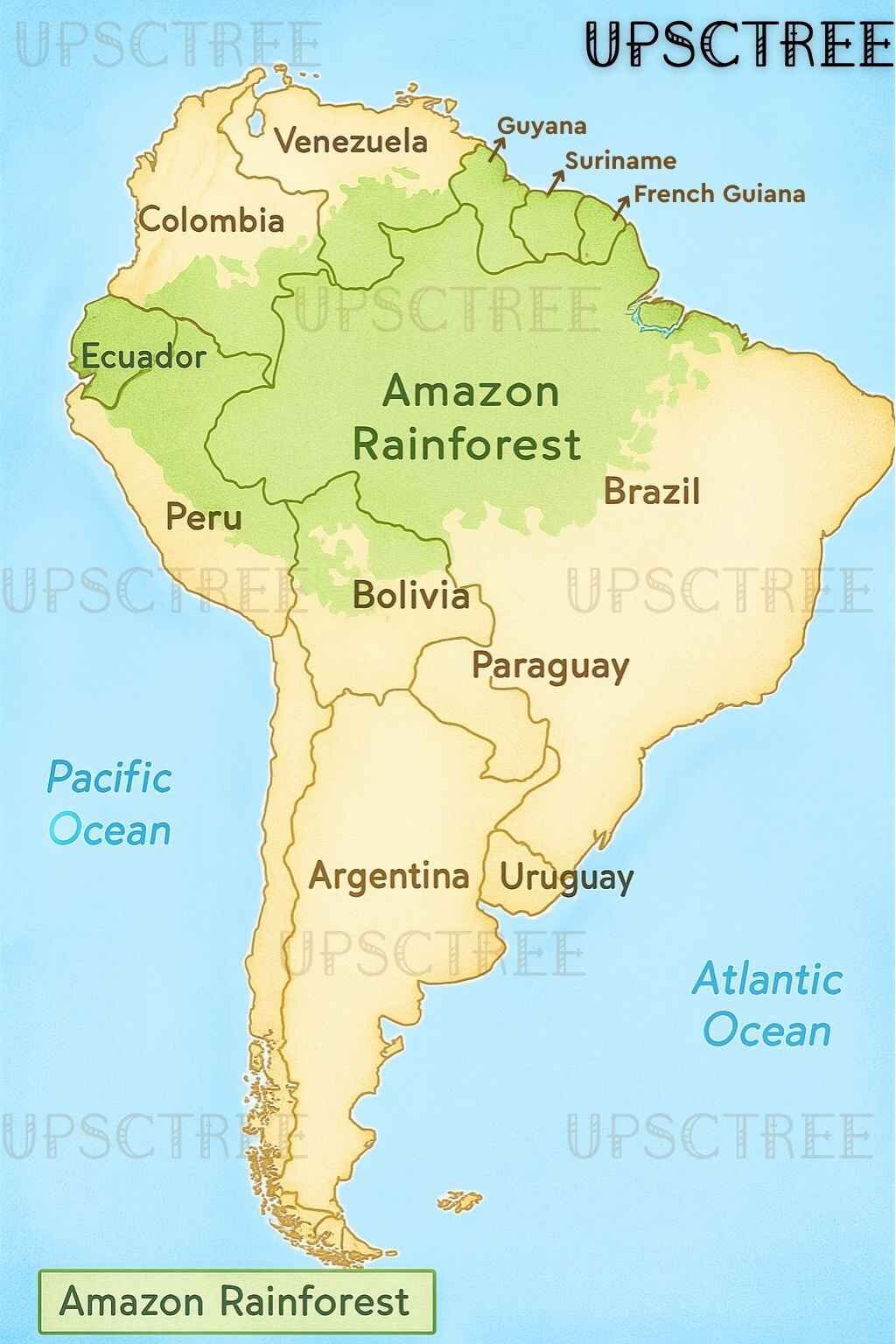 In August 2023, eight Amazonian countries—members of the Amazon Cooperation Treaty Organization (ACTO)—met in Belem, Brazil, for the first time in 14 years. Their dilemma? How to reconcile the promise of oil riches with the peril of environmental ruin.
⚠️ A Forest Under Siege
From Venezuela’s Orinoco belt to Peru’s Maranon River, oil pipelines snake across fragile landscapes—many of them decades old, corroded, and prone to failure. Thousands of oil spills over the past 50 years have blackened rivers, poisoned soils, and accelerated deforestation.
In Ecuador, a catastrophic oil spill in March 2025 turned the coast of Esmeraldas into an ecological disaster zone. Despite a 2023 referendum halting oil drilling in the Yasuní National Park, remnants of infrastructure still litter this UNESCO Biosphere Reserve.
In Colombia, President Gustavo Petro spoke of forming an “Amazon NATO”—a protective alliance for the rainforest—even as sabotage and spills continue to desecrate sacred rivers like the Putumayo.
Meanwhile, Guyana, on the brink of new exploration near the Branco River, passed a strict Oil Pollution Prevention Bill, holding oil companies financially and legally accountable for any damage.
🇧🇷 The Brazil Dilemma
Brazil, holding 60% of the Amazon and ranked as the seventh-largest oil producer, stands at a crucial crossroads. Petrobras, the state oil giant, awaits permission to drill near the mouth of the Amazon River, where nutrient-rich waters feed delicate marine ecosystems.
Environment Minister Marina Silva, an Amazonian native, is firmly against it. But President Lula da Silva offers a balancing act: “We won’t harm nature—but we can’t ignore the wealth beneath us.”
🌿Green Dreams vs Black Gold
For ACTO countries, oil revenues are vital for development and social welfare. But the cost of careless extraction is too high. What they need is not abandonment—but accountability.
That’s why the recent BRICS Summit in Brazil and the upcoming COP30 in Belem are pivotal moments. Here lies the chance to demand:
- Stronger safeguards against environmental negligence
- Transparent, ethical oil exploration
- Financial support from wealthier nations to protect one of Earth’s last great wildernesses
💡 A New Approach: “Clean After Energy”
The road to a green future isn’t about slamming the brakes—it’s about steering wisely. As the world moves toward renewable energy, Amazonian nations must ensure their transition doesn’t leave behind a wasteland. Before we go clean, we must clean up.
Because when the forest falls silent, the world will hear the echo.
Recent Posts
Petrol in India is cheaper than in countries like Hong Kong, Germany and the UK but costlier than in China, Brazil, Japan, the US, Russia, Pakistan and Sri Lanka, a Bank of Baroda Economics Research report showed.
Rising fuel prices in India have led to considerable debate on which government, state or central, should be lowering their taxes to keep prices under control.
The rise in fuel prices is mainly due to the global price of crude oil (raw material for making petrol and diesel) going up. Further, a stronger dollar has added to the cost of crude oil.
Amongst comparable countries (per capita wise), prices in India are higher than those in Vietnam, Kenya, Ukraine, Bangladesh, Nepal, Pakistan, Sri Lanka, and Venezuela. Countries that are major oil producers have much lower prices.
In the report, the Philippines has a comparable petrol price but has a per capita income higher than India by over 50 per cent.
Countries which have a lower per capita income like Kenya, Bangladesh, Nepal, Pakistan, and Venezuela have much lower prices of petrol and hence are impacted less than India.
“Therefore there is still a strong case for the government to consider lowering the taxes on fuel to protect the interest of the people,” the report argued.
India is the world’s third-biggest oil consuming and importing nation. It imports 85 per cent of its oil needs and so prices retail fuel at import parity rates.
With the global surge in energy prices, the cost of producing petrol, diesel and other petroleum products also went up for oil companies in India.
They raised petrol and diesel prices by Rs 10 a litre in just over a fortnight beginning March 22 but hit a pause button soon after as the move faced criticism and the opposition parties asked the government to cut taxes instead.
India imports most of its oil from a group of countries called the ‘OPEC +’ (i.e, Iran, Iraq, Saudi Arabia, Venezuela, Kuwait, United Arab Emirates, Russia, etc), which produces 40% of the world’s crude oil.
As they have the power to dictate fuel supply and prices, their decision of limiting the global supply reduces supply in India, thus raising prices
The government charges about 167% tax (excise) on petrol and 129% on diesel as compared to US (20%), UK (62%), Italy and Germany (65%).
The abominable excise duty is 2/3rd of the cost, and the base price, dealer commission and freight form the rest.
Here is an approximate break-up (in Rs):
a)Base Price | 39 |
b)Freight | 0.34 |
c) Price Charged to Dealers = (a+b) | 39.34 |
d) Excise Duty | 40.17 |
e) Dealer Commission | 4.68 |
f) VAT | 25.35 |
g) Retail Selling Price | 109.54 |
Looked closely, much of the cost of petrol and diesel is due to higher tax rate by govt, specifically excise duty.
So the question is why government is not reducing the prices ?
India, being a developing country, it does require gigantic amount of funding for its infrastructure projects as well as welfare schemes.
However, we as a society is yet to be tax-compliant. Many people evade the direct tax and that’s the reason why govt’s hands are tied. Govt. needs the money to fund various programs and at the same time it is not generating enough revenue from direct taxes.
That’s the reason why, govt is bumping up its revenue through higher indirect taxes such as GST or excise duty as in the case of petrol and diesel.
Direct taxes are progressive as it taxes according to an individuals’ income however indirect tax such as excise duty or GST are regressive in the sense that the poorest of the poor and richest of the rich have to pay the same amount.
Does not matter, if you are an auto-driver or owner of a Mercedes, end of the day both pay the same price for petrol/diesel-that’s why it is regressive in nature.
But unlike direct tax where tax evasion is rampant, indirect tax can not be evaded due to their very nature and as long as huge no of Indians keep evading direct taxes, indirect tax such as excise duty will be difficult for the govt to reduce, because it may reduce the revenue and hamper may programs of the govt.