


Globalization is the buzzword in the contemporary world. Broadly speaking, the term ‘globalization’ means integration of economies and societies through cross country flows of information, ideas, technologies, goods, services, capital, finance and people. Cross border integration can have several dimensions – cultural, social, political and economic. In fact, cultural and social integration even more than economic integration.
Globalization has made countries to realize that nations can no longer be cocooned in their own cultural or economic nests but invariably be part of the larger picture which takes into account the competencies, interests and the dependencies of economies world -wide. The zeal of globalization has even forced Governments to be tuned to the merits of a Global economy.
Large volumes of money movement, increased volumes of trade, changes in information technology and communication are all integral to a global world.
There is also a significant movement of people from one country to another for trade and work. Such increases in the movement of goods, labor, and services have weakened national barriers and restrictions that are imposed by a nation state. Some identify a new emergence of a “global village.”
In the past two decades, economic globalization has been the driving force behind the overall process of globalization.
“Global interaction, rather than insulated isolation, has been the basis of economic progress in the world. Trade, along with migration, communication, and dissemination of scientific and technical knowledge, has helped to break the dominance of rampant poverty and the pervasiveness of ‘nasty, brutish and short’ lives that characterized the world. And yet, despite all the progress, life is still severely nasty, brutish and short for a large part of the world population. The great rewards of globalized trade have come to some, but not to others.”
Globalization and Its Impact on People: Families and Mental Health:
Globalization is associated with rapid and significant human changes. The movements of people from rural to urban areas has accelerated, and the growth of cities in the developing world especially is linked to substandard living for many. Family disruption and social and domestic violence are increasing. For example, 2004 New Delhi police reports indicate that deaths in the city of about six women everyday are dowry-related suicides.
Concepts of national identity, and of family, job and tradition are changing rapidly and significantly. There is concern that competitiveness introduced by globalization is leading to more individualistic societies. On the other hand, rapid change can encourage fundamentalism, a desire for the past, and a loss of tolerance for differences in religion and culture. The nation state is losing influence relative to global economic pressures, and in some countries there is a failure or hesitation to develop social policies. All of these changes increase the likelihood that vulnerable people will be exploited, and threats to the human rights of less able people will increase.
It is believed by economists that the crash of the stock market in Asia in 1994 was an example of the rapid spread of adverse human consequences because of the interdependence of economies and people. Millions of people lost prosperity and livelihoods, and education and health services were among those cut across the region. The effects, including social unrest and poverty, are still evident.
Domestic violence and suicide increased in this period in several of the countries in the region. It is believed that the illicit drug trade has grown in recent years to form a significant proportion of the total business volume in the world.
In a capitalistic market, multinational companies are taking the lead in establishing themselves and creating a major presence in almost every part of the world. Coca Cola, McDonalds, and Nike are examples of such growth and proliferation. The media then plays a major role in advertising the benefits of new products and services as being BETTER AND SUPERIOR to what the local market has. And slowly but steadily the food that we eat, the clothes we wear and the life style we lead begins to change. This process becomes consumerism within a capitalistic culture.
So people as consumers are being studied for their patterns and behaviors of spending. At one level it may appear that globalization has no significant impact on families and that our lives are ‘normal’ in most circumstances. Many people are not totally aware of how they form a crucial part of this phenomenon. The reality is that every single individual is affected in one way or another. These changes affect people’s identities and cultural values, which sometimes become altered significantly. Whether it is between generations, or intra-personally, new values can cause dissonance and conflict with existing deeper-rooted values. Sometimes such transitions and changes can further cause difficulty with internal growth and development.
Psychological Impact of Globalization:
The most significant psychological consequence of globalization is that it transforms one’s identity: in terms of how people think about themselves in relation to the social environment. According to Jeffrey Arnett (2002), there are four major issues related to identity, which develop due to globalization:-.
The first is the development of a bi-cultural identity or perhaps a hybrid identity, which means that part of one’s identity is rooted in the local culture while another part stems from an awareness of one’s relation to the global world. The development of global identities is no longer just a part of immigrants and ethic minorities. People today especially the young develop an identity that gives them a sense of belonging to a worldwide culture, which includes an awareness of events, practices, styles and information that are a part of the global culture.
Media such as television and especially the Internet, which allows for instant communication with any place in the world, play an important part in developing a global identity. Yet, along with this new global identity people continue to retain and develop their local identity for daily interactions with their family, friends and community.
A good example of bi-cultural identity is among the educated youth in India who despite being integrated into the global fast paced technological world, may continue to have deep rooted traditional Indian values with respect to their personal lives and choices such as preference for an arranged marriage, caring for parents in their old age. Although developing a bi-cultural identity means that a local identity is retained alongside a global identity, there is no doubt that local cultures are being modified by globalization. As traditional cultural practices and beliefs change, a bicultural or a hybrid multicultural identity likely develops to include the elements of the native, local and global culture. This is especially true with immigrants.
The second issue is identity confusion, which individuals from non-western cultures experience as a response to globalization. While people may adapt to changes and develop bi-cultural or hybrid, multicultural identities, some may find it difficult to adapt to rapid changes. The ways of the global culture may seem out of reach, too foreign, or even undermining their own cultural values and beliefs. Instead of becoming bicultural, they may feel isolated and excluded from both their local culture and the global culture, truly belonging to neither. The terms delocalization and dis-placement have been used to describe these processes. For some young people, however, delocalization may result in an acute sense of alienation and impermanence as they grow up with a lack of cultural certainty, a lack of clear guidelines for how life is to be lived and how to interpret their experience. Identity confusion among young people may be reflected in problems such as depression, suicide, and substance use. A variety of cultures have experienced a sharp increase in suicide and substance use among their young people since their rapid move toward joining the global culture.
The third change brought about by globalization is the growth of the self-selected culture, which means people choose to form groups with like-minded persons who wish to have an identity that is untainted by the global culture and its values. The values of the global culture, which are based on individualism, free market economics, and democracy and include freedom, of choice, individual rights, openness to change, and tolerance of differences are part of “western values.” For most people worldwide, what the global culture has to offer is appealing.
One of the most vehement criticisms of globalization is that it threatens to create one homogeneous worldwide culture in which all children grow up wanting to be like the latest pop music star, eat Big Macs, vacation at Disney World, and wear blue jeans, and Nikes. This outcome is unlikely since most people will develop a bicultural identity that includes a local identity along with their global identity. Besides, while most young people may jump with accept globalization and its changes, there will e other who will remain out of it by joining a self-selected culture of fellow dissenters. Such groups can have a religious basis, which can result in fundamentalism or espouse clear non-religious anti-global views
The fourth consequence of globalization is the spread of emerging adulthood. The timing of transitions to adult roles such as work, marriage and parenthood are occurring at later stages in most parts of the world as the need for preparing for jobs in an economy that is highly technological and information based is slowly extending from the late teens to the mid-twenties.
Additionally, as the traditional hierarchies of authority weaken and break down under the pressure of globalization, the youth are forced to develop control over their own lives including marriage and parenthood. The spread of emerging adulthood is related to issues of identity. Where a period of emerging adulthood is present, young people have a longer period for identity explorations in love and work before they commit themselves to long-term choices. By experiencing different love relationships, different educational possibilities, and different jobs, they learn more about themselves and they clarify their preferences and abilities. Emerging adulthood is possible only in societies where economic development is high enough that the labor of young people is not urgently needed.
They are allowed to spend their late teens and early to mid-twenties exploring possibilities for self development because there is no pressing need for them to contribute to the economic well-being of their families (Arnett, 2000).
For young people in developing countries, emerging adulthood exists only for the wealthier segment of society, mainly in urban areas, whereas the rural poor have no emerging adulthood and may even have no adolescence because they begin adult-like work at an early age and begin relatively early. Young people who are poor and/or live in rural areas are more likely to suffer from what Amartya Sen (1999) has called the “unfreedoms” of poverty, lack of education, and restricted, economic opportunities.
Social scientists (Saraswathi and Larson, 2002) observe, that the lives of middleclass youth in India, South East Asia, and Europe have more in common with each other than they do with those of poor youth in their own countries.
Globalization appears to be a significant force in the psychological development of the people of the 21st century. Globalization has been going on in some form or another for centuries: Cultures have long influenced each other through trade, migration, and war. As a consequence of globalization, the challenges of creating a viable identity are perhaps greater than they have been in the past.
According to Giddens (2000), “when globalization alters and erodes traditional ways, identity “has to be created and recreated on a more active basis than before” (p. 65). Identity is less influenced by prescribed social roles and based more on individual choices, on decisions that each person makes about what values to embrace and what paths to pursue in love and work. Some people react to this responsibility with identity confusion or seek refuge in a selfselected culture that offers more structure and takes over some decisions.
Social and Cultural Impacts of Globalization: The study of families and changes they experience as a system although rich and complex can be very time consuming and expensive and perhaps best obtained one family at a time through clinical counters.
However, the study of social changes is extensive and often support the impact of changes in families. Allow me to present a general view of how globalization has impacted families and family life for Indians.
India is a culturally diverse country. Sixteen per cent of the world’s population lives in the country. There are over 826 languages and thousands of dialects spoken. The difference in regions, topography and climate allow for different types of lifestyles and culture. Although about 70 per cent of the populations live in rural areas, India is rapidly urbanizing with more than 225 cities with over 100,000 population, and at least ten cities alone with over a million people.
By United Nations standards, Indian has begun to age. Over 7.7% of the population is above 60 years and this number is expected to reach 12.6% by the year 2025. . Improved sanitation, increased attention to maternal health and better childcare facilities greatly reduced infant mortality rates.
Globalization is hardly a new force affecting India. To think so is to ignore a diverse and pluralistic long-standing civilization that was shaped by a long list of “invading” (globalizing) cultures that became what we now know as India. The previous globalizers of India include the Aryans, Greeks, Turks, Afghans, Muslims and most recently, the Europeans, Portuguese, French, Dutch and finally the English.
The former globalizers that came with invading armies have increasingly been replaced by less violent but equally powerful globalizers.
Television is arguably the most dominant gateway of globalization affecting India today. While TV was launched in India in the late 1950s it only became widespread in the 1980s, after the governments ended their monopoly as the only broadcaster. Satellite TV arrived in 1991, bringing with it far reaching consumerism. In terms of people, India faces some resource and infrastructure constraints. Increased longevity has led to the emergence of many health and social issues. Fragmentation of the traditional family network is leading to an erosion of the available support within the immediate and extended family.
Migration of younger generations from rural to urban areas and from one urban center to another as well as transnational migration has resulted results in the elderly being left to fend for themselves at a time when family support becomes more crucial.
With more women joining the workforce system, the care of aged within families has declined. For those who live within extended families the elderly have to live in harmony with the younger generation that has to face a highly competitive world of globalization.
While the nuclear family system is increasingly becoming the norm, modern life-styles, changing professional and personal expectations are impacting relationships of marriage and commitment. In cities young people are starting to choose their own partners. Arranged marriages, however, continue. Meanwhile, as divorce rates increase especially in cities, the concept of single parenthood has not caught on in the Indian culture. According to the India’s Ministry of Health reports (1997), teenage pregnancies are reaching an all-time high. In the southern state of Kerala, teenage abortions rose by 20 per cent in a year, while the western state of Maharashtra, one-fifth of all abortion were with girls less than 15.
Consumerism has permeated and changed the fabric of contemporary Indian society.Western fashions are coming to India: the traditional Indian dress is increasingly being displaced by western dresses especially in urban areas.
Indian MTV, soap television, and films set a stage for patterns of behavior, dress codes and jargon. Despite prohibition of child labor by the Indian constitution, over 60 to a 115 million children in India work.
While most rural child workers are agricultural laborers, urban children work in manufacturing, processing, servicing and repairs.
Globalization most directly exploits an estimated 300,000 Indian children who work in India’s hand-knotted carpet industry, which exports over $300 million worth of goods a year. Uncounted other children work in less formal sectors, such as the incense industry, used both domestically and exported. Reports indicate that urban Indian children and youth face significant competition and pressure to succeed.
The growth of the computer and technology sector has provided middle class educated women with better wages, flex-timings, and the capacity to negotiate their role and status within the household and society. On the other hand, women continue to work in poorly paid, mentally and physically unhealthy, and insecure situations.
For most women, their domestic responsibilities are not alleviated. Wage gaps have not showed any significant changes in most employment sectors other than information technology. Additionally, prostitution, abuse and dowry related suicides are on the increase despite globalization and some say that the materialistic greed is one of the main causes.
Conclusion
At last we can conclude that Globalization and marginalization go hand in hand in India. With millions of poor farmers, rural laborers, urban unemployed, slum-dwellers, 3 million refugees, 100 million street children, and the millions displaced by ‘the development’ projects, poverty in this era of globalization has assumed new dimensions.
The question of “are the poor getting poorer?” related to inequality both nationally and internationally. It is apparent that in order to ensure that the potential gains from globalization are shared among all groups (rich and poor countries and between groups within a country) major reforms may be needed.
As Amartya Sen states, “Even if the poor were to get just a little richer, this would not necessarily imply that the poor were getting a fair share of the potentially vast benefits of global economic interrelations.”
The Economic impact due to Globalization:
- Globalization has given nations greater access to global markets, technology, financial resources and quality services and skilled human resources.
- Improvement in and greater access to quality goods and services and an exponential increase in the volume of trade.
- Access to global capital resources via the stock market and international debt depending on the economic potential of nations and their markets.
- Access to technologies depending on the nations responsiveness to respect to protection of IPR and the responsible usage of technologies.
- Access to the world markets to the skilled human resources from nations with inherent intellectual and technical capabilities (the outsourcing of IT, Pharma, BPO and KPO work).
- Increase in exports of goods and services in which nations have their respective competencies.
- Increased access to better and qualitative education.
- Increased the purchasing capability of the nation through the creation of a sizeable middle class which is hungry for quality goods and services while there coexists a large poor class whose time is yet to come. One would expect that the fruits of liberalization and globalization would have a trickle down effect through the collection of taxes and revenues by Government due to increased trade and commerce.
The SOCIAL impact due to Globalization:
- The free flow of Information both general and commercial.
- Globalization has through greater exposure liberalized our attitudes, reduced our biases and predispositions about people, situations and communities worldwide.
- The advent of Information, Communication Technologies (ICT),
- Nations have built greater awareness of themselves and the other countries and cultures of the world.
- One can see in India that inhibitions have been diluted because of the advent of media and the medium of entertainment. This has also naturally had some affect on the old cultural values with the focus now being on consumerism and success.
- The experience in India is of relevance because of the greater cultural and literacy diversity between states and the economic divide between the urban and rural areas of India.
- There has been a tremendous increase in consumerism, for goods and services whether necessary or perceived.
- A distinct change in life-styles with rapid adaptation to worldwide trends.
- The winds of globalization have been speeded up in this era of an Information Society and the increasing usage of Information and Communication Technologies (ICT). Greater awareness of markets and knowledge of Capital resources have opened up the floodgates of International competition and trade.
- The world today is a closer place due to these technologies which is indirectly fostering Globalization. But again for those citizens who do not have adequate literacy levels, the digital divide is proving to be further detrimental to their progress.
RURAL POOR:
In the villages, farmers are not much aware of global economic system. Most of the food crops are converted into cash crops. Sugar cane farmers are getting advance loan from banks and MNCs. They used to supply hybrid seedlings, fertilizers and highly advanced equipments. This equipment utility reduced the human labour force. Hence the rural people are shifting from place to place for want of labour for their livelihood. Natural manure is replaced by synthetic fertilizers. As there is a shift from food crops to export crops, the prices of food items went on high, and the poor people couldn’t buy from their meager income. Similar trend continued for clothing, housing, transportation, health etc. So people were forced to consume less of even basic necessities.
Deaton (2003) opines that more than one fourth of the World’s poor live in India. India’s economic liberalization in the early 1990s resulted in high rates of growth, whether it reduced the numbers of poor or benefit only increasingly wealthy urban elite is a question. Because of growing inequality, consumption by the poor couldn’t rise as fast as average consumption and poverty reduction was only about two-thirds of what it would have been had the distribution and consumption remained unchanged (Deaton, 2003). The gap between rural and urban areas widened because of the vast differences in the levels of literacy, availability of living facilities such as water, drainage, housing, power, lighting, food and transport etc.
TRIBAL:
There is an urgent need for improving the social and economic conditions of the tribal community and to solve their problems. India has failed to have a national policy of tribal development, to provide them with basic facilities like clean drinking water, education, employment and access to health facilities. Due to widespread corruption and negligence, there was ineffective implementation of programs for development of tribal communities. The tribal became ousters due to the construction of large dams. They lost their habitats and livelihood. Tribal women had to walk several kilometers for safe drinking water. Thousands of them die every year due to starvation and epidemics. As the tribal are uneducated and ignorant, land protection was not possible for them. When foreigners are allowed to exploit their traditional knowledge about medicinal plants their livelihoods are in danger.
MULTINATIONAL CORPORATIONS:
Due to globalization food items are being exported to India in the form of increased consumption of meat, western fast food, sodas and cool drinks, which may result in public health crisis as speculated by certain researchers. The rich biodiversity of India has yielded many healthy foods prepared from locally available organisms. But the marketing by MNCs with large advertisement campaigns lead the people to resort to their products (Mascarenhas, 2003).
Changes in social and cultural life:
- Access to television grew from 10% of the urban population (1991) to 75% of the urban population (1999) and to 90% (2009).
- Cable television and foreign movies became widely available for the first time and have acted as a catalyst in bulldozing the cultural boundaries.
- All these technologies have changed perceptions and dreams of ordinary people.
- Unmarried boys and girls are sharing same apartment and staying away from their parents.
- Indian youths leaving education in mid-way and joining MNC’s
- There has been a increase in the violence, particularly against women.
- Scientific and technological innovations have made life quite comfortable, fast and enjoyable.
- Society has become more open compared to its earlier conservative look due to exposure to other cultures through DTH or cable network.
- People are less worried for government jobs as MNC’s and private or public sector are offering more lucrative jobs.
- Extension of internet facilities even to rural areas.
- In place of old cinema halls, multiplex theatres re coming up.
- Old restaurants are now replaced by Mc. Donalds. Fast food and Chinese dishes have replaced juice corners and Parathas.
- More inflow of money has aggravated deep rooted problem of corruption
- More scandals and scams compared to pre-globalization era
The Merits of Globalization are as follows:
- There is an International market for companies and for consumers there is a wider range of products to choose from.
- Increase in flow of investments from developed countries to developing countries, which can be used for economic reconstruction.
- Greater and faster flow of information (through TV, Internet) between countries and greater cultural interaction has helped to overcome cultural barriers.
- Technological development has resulted in reverse brain drain in developing countries.
- India gained highly from the LPG model as its GDP increased to 9.7% in 2007-2008. In respect of market capitalization, India ranks fourth in the world.
- The Demerits of Globalization are as follows:
- The outsourcing of jobs to developing countries has resulted in loss of jobs in developed countries as a result, now they are following protectionism measures, for example USA is stopping BPO.
- There is a greater threat of spread of communicable diseases.
- There is an underlying threat of multinational corporations with immense power ruling the globe. For smaller developing nations at the receiving end, it could indirectly lead to a subtle form of colonization.
- Exploitation of labour by offering low wages
- Even after globalization, condition of agriculture has not improved. The share of agriculture in the GDP is only 18%. The number of landless families has increased and farmers are still committing suicide.
- Global recession impact on Indian economy resulted in loss of jobs in IT Sector.
- Swami Vivekananda, who foresaw the hazards of globalization and impact of MNC culture in India as early as in 1893 when he spoke at the Parliament of World Religions in Chicago. Here are the golden verses for you,”‘Shall India die? Then, from the world all spirituality will be extinct, all sweet-souled sympathy for religion will be extinct, all ideality will be extinct ; and in its place will reign the duality of lust and luxury as the male and female deities, with money as its priest, fraud, force, and competition its ceremonies, and human soul its sacrifice. Such a thing can never be’. Precisely such a terrible thing is taking place in India today on account of the inexorable and immutable process of Globalization”.
Conclusion:
The process of globalization is not new. The globalization of the economic, social and cultural structures happened in all ages. Earlier the pace of such a process was so slow that we hardly noticed it. However, today with the advent of the information technology, newer means of communication have made the world a very small place. Not only the pace of the globalization process, but the penetration and integration of the changes induced in our day to day life has made the impact of globalization many fold higher. With this process the world has become one huge market place.
But seeing the positive effects of globalization, it can be said that very soon India will overcome these hurdles too and march strongly on its path of development.
Receive Daily Updates
Recent Posts
The United Nations has shaped so much of global co-operation and regulation that we wouldn’t recognise our world today without the UN’s pervasive role in it. So many small details of our lives – such as postage and copyright laws – are subject to international co-operation nurtured by the UN.
In its 75th year, however, the UN is in a difficult moment as the world faces climate crisis, a global pandemic, great power competition, trade wars, economic depression and a wider breakdown in international co-operation.
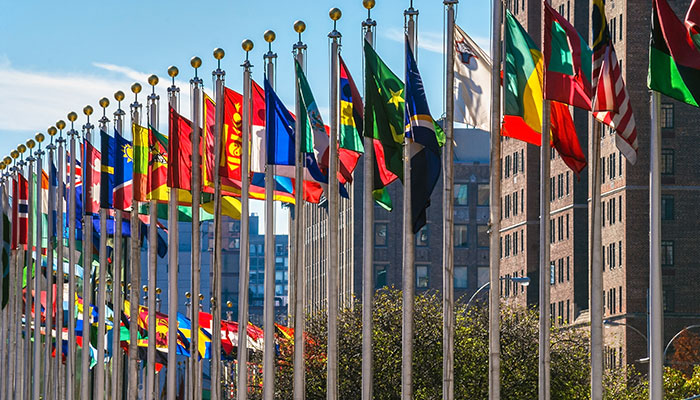
Still, the UN has faced tough times before – over many decades during the Cold War, the Security Council was crippled by deep tensions between the US and the Soviet Union. The UN is not as sidelined or divided today as it was then. However, as the relationship between China and the US sours, the achievements of global co-operation are being eroded.
The way in which people speak about the UN often implies a level of coherence and bureaucratic independence that the UN rarely possesses. A failure of the UN is normally better understood as a failure of international co-operation.
We see this recently in the UN’s inability to deal with crises from the ethnic cleansing of the Rohingya Muslims in Myanmar, to civil conflict in Syria, and the failure of the Security Council to adopt a COVID-19 resolution calling for ceasefires in conflict zones and a co-operative international response to the pandemic.
The UN administration is not primarily to blame for these failures; rather, the problem is the great powers – in the case of COVID-19, China and the US – refusing to co-operate.
Where states fail to agree, the UN is powerless to act.
Marking the 75th anniversary of the official formation of the UN, when 50 founding nations signed the UN Charter on June 26, 1945, we look at some of its key triumphs and resounding failures.
Five successes
1. Peacekeeping
The United Nations was created with the goal of being a collective security organisation. The UN Charter establishes that the use of force is only lawful either in self-defence or if authorised by the UN Security Council. The Security Council’s five permanent members, being China, US, UK, Russia and France, can veto any such resolution.
The UN’s consistent role in seeking to manage conflict is one of its greatest successes.
A key component of this role is peacekeeping. The UN under its second secretary-general, the Swedish statesman Dag Hammarskjöld – who was posthumously awarded the Nobel Peace prize after he died in a suspicious plane crash – created the concept of peacekeeping. Hammarskjöld was responding to the 1956 Suez Crisis, in which the US opposed the invasion of Egypt by its allies Israel, France and the UK.
UN peacekeeping missions involve the use of impartial and armed UN forces, drawn from member states, to stabilise fragile situations. “The essence of peacekeeping is the use of soldiers as a catalyst for peace rather than as the instruments of war,” said then UN Secretary-General Javier Pérez de Cuéllar, when the forces won the 1988 Nobel Peace Prize following missions in conflict zones in the Middle East, Africa, Asia, Central America and Europe.
However, peacekeeping also counts among the UN’s major failures.
2. Law of the Sea
Negotiated between 1973 and 1982, the UN Convention on the Law of the Sea (UNCLOS) set up the current international law of the seas. It defines states’ rights and creates concepts such as exclusive economic zones, as well as procedures for the settling of disputes, new arrangements for governing deep sea bed mining, and importantly, new provisions for the protection of marine resources and ocean conservation.
Mostly, countries have abided by the convention. There are various disputes that China has over the East and South China Seas which present a conflict between power and law, in that although UNCLOS creates mechanisms for resolving disputes, a powerful state isn’t necessarily going to submit to those mechanisms.
Secondly, on the conservation front, although UNCLOS is a huge step forward, it has failed to adequately protect oceans that are outside any state’s control. Ocean ecosystems have been dramatically transformed through overfishing. This is an ecological catastrophe that UNCLOS has slowed, but failed to address comprehensively.
3. Decolonisation
The idea of racial equality and of a people’s right to self-determination was discussed in the wake of World War I and rejected. After World War II, however, those principles were endorsed within the UN system, and the Trusteeship Council, which monitored the process of decolonisation, was one of the initial bodies of the UN.
Although many national independence movements only won liberation through bloody conflicts, the UN has overseen a process of decolonisation that has transformed international politics. In 1945, around one third of the world’s population lived under colonial rule. Today, there are less than 2 million people living in colonies.
When it comes to the world’s First Nations, however, the UN generally has done little to address their concerns, aside from the non-binding UN Declaration on the Rights of Indigenous Peoples of 2007.
4. Human rights
The Human Rights Declaration of 1948 for the first time set out fundamental human rights to be universally protected, recognising that the “inherent dignity and of the equal and inalienable rights of all members of the human family is the foundation of freedom, justice and peace in the world”.
Since 1948, 10 human rights treaties have been adopted – including conventions on the rights of children and migrant workers, and against torture and discrimination based on gender and race – each monitored by its own committee of independent experts.
The language of human rights has created a new framework for thinking about the relationship between the individual, the state and the international system. Although some people would prefer that political movements focus on ‘liberation’ rather than ‘rights’, the idea of human rights has made the individual person a focus of national and international attention.
5. Free trade
Depending on your politics, you might view the World Trade Organisation as a huge success, or a huge failure.
The WTO creates a near-binding system of international trade law with a clear and efficient dispute resolution process.
The majority Australian consensus is that the WTO is a success because it has been good for Australian famers especially, through its winding back of subsidies and tariffs.
However, the WTO enabled an era of globalisation which is now politically controversial.
Recently, the US has sought to disrupt the system. In addition to the trade war with China, the Trump Administration has also refused to appoint tribunal members to the WTO’s Appellate Body, so it has crippled the dispute resolution process. Of course, the Trump Administration is not the first to take issue with China’s trade strategies, which include subsidises for ‘State Owned Enterprises’ and demands that foreign firms transfer intellectual property in exchange for market access.
The existence of the UN has created a forum where nations can discuss new problems, and climate change is one of them. The Intergovernmental Panel on Climate Change (IPCC) was set up in 1988 to assess climate science and provide policymakers with assessments and options. In 1992, the UN Framework Convention on Climate Change created a permanent forum for negotiations.
However, despite an international scientific body in the IPCC, and 165 signatory nations to the climate treaty, global greenhouse gas emissions have continued to increase.
Under the Paris Agreement, even if every country meets its greenhouse gas emission targets we are still on track for ‘dangerous warming’. Yet, no major country is even on track to meet its targets; while emissions will probably decline this year as a result of COVID-19, atmospheric concentrations of greenhouse gases will still increase.
This illustrates a core conundrum of the UN in that it opens the possibility of global cooperation, but is unable to constrain states from pursuing their narrowly conceived self-interests. Deep co-operation remains challenging.
Five failures of the UN
1. Peacekeeping
During the Bosnian War, Dutch peacekeeping forces stationed in the town of Srebrenica, declared a ‘safe area’ by the UN in 1993, failed in 1995 to stop the massacre of more than 8000 Muslim men and boys by Bosnian Serb forces. This is one of the most widely discussed examples of the failures of international peacekeeping operations.
On the massacre’s 10th anniversary, then UN Secretary General Kofi Annan wrote that the UN had “made serious errors of judgement, rooted in a philosophy of impartiality”, contributing to a mass murder that would “haunt our history forever”.
If you look at some of the other infamous failures of peacekeeping missions – in places such as Rwanda, Somalia and Angola – it is the limited powers given to peacekeeping operations that have resulted in those failures.
2. The invasion of Iraq
The invasion of Iraq by the US in 2003, which was unlawful and without Security Council authorisation, reflects the fact that the UN is has very limited capacity to constrain the actions of great powers.
The Security Council designers created the veto power so that any of the five permanent members could reject a Council resolution, so in that way it is programmed to fail when a great power really wants to do something that the international community generally condemns.
In the case of the Iraq invasion, the US didn’t veto a resolution, but rather sought authorisation that it did not get. The UN, if you go by the idea of collective security, should have responded by defending Iraq against this unlawful use of force.
The invasion proved a humanitarian disaster with the loss of more than 400,000 lives, and many believe that it led to the emergence of the terrorist Islamic State.
3. Refugee crises
The UN brokered the 1951 Refugee Convention to address the plight of people displaced in Europe due to World War II; years later, the 1967 Protocol removed time and geographical restrictions so that the Convention can now apply universally (although many countries in Asia have refused to sign it, owing in part to its Eurocentric origins).
Despite these treaties, and the work of the UN High Commission for Refugees, there is somewhere between 30 and 40 million refugees, many of them, such as many Palestinians, living for decades outside their homelands. This is in addition to more than 40 million people displaced within their own countries.
While for a long time refugee numbers were reducing, in recent years, particularly driven by the Syrian conflict, there have been increases in the number of people being displaced.
During the COVID-19 crisis, boatloads of Rohingya refugees were turned away by port after port. This tragedy has echoes of pre-World War II when ships of Jewish refugees fleeing Nazi Germany were refused entry by multiple countries.
And as a catastrophe of a different kind looms, there is no international framework in place for responding to people who will be displaced by rising seas and other effects of climate change.
4. Conflicts without end
Across the world, there is a shopping list of unresolved civil conflicts and disputed territories.
Palestine and Kashmir are two of the longest-running failures of the UN to resolve disputed lands. More recent, ongoing conflicts include the civil wars in Syria and Yemen.
The common denominator of unresolved conflicts is either division among the great powers, or a lack of international interest due to the geopolitical stakes not being sufficiently high. For instance, the inaction during the Rwandan civil war in the 1990s was not due to a division among great powers, but rather a lack of political will to engage.
In Syria, by contrast, Russia and the US have opposing interests and back opposing sides: Russia backs the government of the Syrian dictator Bashar al-Assad, whereas the US does not.
5. Acting like it’s 1945
The UN is increasingly out of step with the reality of geopolitics today.
The permanent members of the Security Council reflect the division of power internationally at the end of World War II. The continuing exclusion of Germany, Japan, and rising powers such as India and Indonesia, reflects the failure to reflect the changing balance of power.
Also, bodies such as the IMF and the World Bank, which are part of the UN system, continue to be dominated by the West. In response, China has created potential rival institutions such as the Asian Infrastructure Investment Bank.
Western domination of UN institutions undermines their credibility. However, a more fundamental problem is that institutions designed in 1945 are a poor fit with the systemic global challenges – of which climate change is foremost – that we face today.