By Categories: History

On the night of 22 September 1914, Madras city was winding up another hectic day. Since the disturbances of World War 1 had not affected South India, days and nights were peaceful and as any other day, the city was getting ready for a night’s slumber, downing its lights one by one. At 9.45 pm, a ship, ‘The Swan of the East,’ slipped in stealthy and dropped anchor at the harbor.

A few minutes later, the peace of the night was shattered by the roar of cannons that aimed for British oil tanks erected on the harbor. The attack was lethal, precise and swift and in minutes, about 10 lakh liters of kerosene stocked in the tankers burst into flames lighting up Madras city as if it was mid day. SMS Emden had struck Madras!

On that fateful day, Madras had a providential escape, thanks to winds that were blowing out to the sea. Shaken by the boldness of the attack that challenged the British naval might, the people of Madras shuddered at the thought that SMS Emden had hit their city; the same ship that is believed to have caused maximum damage to its enemies in the history of naval warfare.

Even though the ship had not aimed for other parts of the city and the few shots that fell elsewhere were those that had missed their targets, the attack prompted an exodus from the city. By then, Emden had entered into the coastal waters of Kerala. It hung around the Minicoy Islands in Lakshwadeep from October 15 for five days and during that time sank five British vessels. However, enemy sailors were not left to die on the seas. A ship that was carrying sugarcane from Sri Lanka to New York, St Egbert, was captured by SMS Emden and all the enemy sailors, about 350 of them, were sent home to Kochi Harbor on it. Perhaps, inspired by this audacious impunity of SMS Emden in the waters of Kerala, ‘Emanden’ which means gigantic, huge or even demonic, became local parlance.

Meanwhile, stories began to circulate about the exploits of SMS Emden and especially about the second officer in charge of the ship, presumed to be Chempaka Raman Pillai. It is believed that the city of Madras was spared a more destructive fate because Raman Pillai was in command.

An English lady wrote during that time that some German sailors who had alighted at Kochi from St Egbert had dined at a Jew’s house. It is believed that one of them was Chempaka Raman Pillai, a man who wanted to create an anti-British army and redeem India from British rule. The attack by SMS Emden was reportedly part of the plan. Tamil Nadu still remembers the unexpected attack on the night of 22 September 1914, and stories about Raman Pillai’s exploits still do the rounds.

Eight years ago, chief minister Karunanidhi had unveiled a statue of Chempaka Raman Pillai at the Gandhi Mandapam Campus in Chennai. Kerala, however, has long forgotten the patriot, except for the word, ‘Emandan,’ which itself has lost its real meaning and continues to be used as a cheap mimicry on the valor of the man and his sincere designs for independent India.

Who was Chempaka Raman Pillai and how did he reach Germany?

There was once a small home at the same spot where the AG’s office is now situated, near the secretariat, in Thiruvananthapuram. There the family of Raman Pillai, alias Venkidi, used to stay. While studying in Model School, he rallied against the British and shouted ‘Jai Hind’ in the school campus. Fearing retribution, the frightened principal called in the police. A constable, Chinnaswami Pillai, was sent to investigate the misdemeanor of the erring kid. It turned out that Venkidi was the son of Chinnaswami Pillai.

During that time, British botanist, Sir Walter Strickland, was camping at Thiruvananthapuram and he had come to study butterflies that were found in the Western Ghats. Here, he met a boy who had presented a paper in a well-known science journal about the ability of spiders to change their color. Strickland was impressed by the skills of the 18-year boy, T. Padmanabha Pillai and took him to Europe for further studies. Along with him, his close friend and neighbor, Chempaka Raman Pillai was also taken to Europe.

Raman Pillai continued his education in Austria and went on to complete his diploma in engineering. He also graduated in public governance and economics and had a grasp over 12 languages. He lived for 20 years in Germany working in German companies in various roles. According to his wife, Lakshmibhai, he had everything to live like a king. However, his destiny would lead him to entirely different and less-fanciful circumstances in life; circumstances that could perhaps be called cruel and unfortunate.

The Emden connection

As per official records, Pillai was not aboard SMS Emden during the two months the ship was traversing the Indian Ocean. He was, as per records, involved in hectic parleys with politicians and like-minded revolutionaries. However, his wife has corroborated the assumption that Pillai had indeed alighted from SMS Emden at Kochi. With or without Pillai, the German ship must have received ample support from Indian revolutionaries. Memoirs of SMS Emden’s first officer, Lt Hellmuth von Mücke, points to this possibility.

After touching the British-Indian waters, SMS Emden had looked to depart via the Indonesian coast. Dr Douwes Dekker, an exiled freedom fighter, remembers that he had extended support to Raman Pillai to attack British India. Even the British Intelligence has gone on records saying that a ‘prominent Indian revolutionary’ had met the German ambassador to Switzerland to appraise him about the plans and strategies of Indian revolutionaries. Raman Pillai is also believed to have been close to the German emperor, according to ornithologist Salim Ali, who had mentioned his meeting with Pillai in Germany in his autobiography.

The plan to attack British India

Pillai formed a group of international pro-Indians in Switzerland, which had taken a neutral stance during the First World War. A publication, ‘Pro India’, was also launched in German and English. He partnered with Virendranath Chattopadhyaya (Chatto), brother of Sarojini Naidu, for the endeavors. John Wellinger, who was in control of the British spy network in those times, is believed to have sent a team under his deputy, ‘R,’ to finish off the revolutionaries. Pillai and Chatto however escaped to Berlin. R turned out to be the famous novelist Somerset Maugham and he later created many characters in his novels based on the life of Indian revolutionaries.

In Berlin, Chatto and Pillai were in the company of many Indian revolutionaries operating under the Indian Independence League. Keralites among them were novelist C.V. Raman Pillai’s nephew A.R. Pillai; A.C. Nanu Nambiar, son of short-story writer, Vengayil Kunjiraman Nair; and T Padmanabha Pillai, whom Chempaka Raman Pillai had accompanied earlier to Europe. Chatto and Raman Pillai (Chempak) formed the Chatto-Chempak Berlin Committee. It received support from other revolutionaries. They decided to mobilize money and weapons on Indian shores.

With the aim of driving out the British and establishing a socialist democracy in India, Pillai travelled across Europe, Asia and German colonies in Africa, incognito. The German foreign office offered money and support and many revolutionaries including, Padmanabha Pillai, returned to India to direct the war against the British.

A vessel was arranged to drop off weapons at Java, which was the closest war-neutral region near India. It was agreed that a German war ship would drop off the weapons there. Narendranath Bhattacharya was sent to receive the weapons. However, the ship did not come and the plan did not materialize. Bhattacharya later went to Moscow, changed his name to M.N. Roy and formed the Indian Communist Party with his foreigner wife.
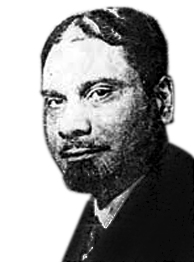
Chempakaraman Pillai - Wikipedia

Raman Pillai wanted to attack British India from the north-western side of Kashmir. For that he sourced support from rebel forces in Turkey and highly placed officials under the Emir of Afghanistan. The Emir was however against providing any support while his close relatives and allies agreed to provide financial help for the movement.

On July 31, 1914, Raman Pillai formed the Indian National Voluntary Corps and urged war on British India. He called on all Indians, especially Muslims and Sikhs, to fight for India. He also sent emissaries to Japan and China to forge alliances. All these activities led to the notion that he was in SMS Emden when it struck Chennai.

Swami Vivekananda’s brother, Bhupendranath Dutta, was sent to Russia to garner support for the cause. Two members were also sent to talk to US leaders. Pillai started a military camp in Mesopotamia and formed a provisional government in Kabul to look after Indian affairs when revolution would start. Raman Pillai was to handle foreign affairs of the new government.

However, all the grand plans came to nought when Germany was defeated in World War 1. In 1919, Pillai went to Germany. The Russian revolution that happened two years earlier saw many leaders, including Chatto, leaving for Russia. Chatto was later unceremoniously executed by Stalin’s army. M.N. Roy quit Marxism, pained at the cruelty perpetuated by Stalin.

Raman Pillai continued to work in a German company, but kept his efforts for Indian independence alive. He directed an exhibition of Indian products in Germany in 1924. In 1930, he became the Berlin representative of the Indian Chamber of Commerce. He was the only non-white in the National People’s Party that supported the Nazis.

The squabble with Hitler

Raman Pillai initially enjoyed a cordial relationship with Hitler, whose prominence was rising. However, during a press meet on August 10, 1931, Hitler said that if non-Aryan Indians were ruled by the British, it is their fate. This irritated Pillai. The same year on December 4, Hitler said, “Britain losing India would not augur well for any nation, including Germany.”

Miffed at Hitler taking sides with the British, Raman Pillai wrote to him thus, “You seem to attribute more importance to the color of the skin than blood. Our skins may be dark; not our hearts.”

Raman Pillai gave a deadline for Hitler to withdraw his statement and apologize. Hitler sent his secretary to Pillai to apologize, but also expressed his irritation at being attributed with a black heart. Raman Pillai retorted that Indians would tell the truth even in the face of death. One day after the deadline set by Pillai, Hitler expressed his regret for his comments; the rift between the two leaders thus developed into a complete breakdown of relations that would never be mended. In January 1933, Hitler became chancellor and in June he became an autocrat usurping power and establishing his unquestioned influence over Germany.

Nazis soon raided and arrogated Pillai’s house in Berlin. He was also manhandled and bundled out from his dwelling. He moved to Italy for treatment where it was found that blood had clotted in his brain. By that time, he did not have the financial means to afford good treatment required for his cure. His end came on May 28, 1934, in an ordinary nursing home in Italy. His wife lamented that a man who was brave enough to defy Hitler in his own land had died, unceremoniously, a broken man.

A patriot forgotten

In his autobiography, Bhagat Singh’s uncle and freedom fighter Sardar Ajith Singh had written that when Subhash Chandra Bose visited Vienna, he had visited Raman Pillai. Chempaka Raman Pillai was instrumental in inspiring Netaji to start an army and had even founded the INV before the INA was formed. However, nothing remains as a token of respect to that patriot in his own motherland. There is a statue of Netaji at Thiruvananthapuram near University Stadium. The ‘Jai Hind’ inscribed on the statue, a term coined by Raman Pillai, is all that remains that may remind us of this man who died for his nation. The clarion call that inspired many to take up arms against the British now ironically echoes the level of ingratitude his own people have for him.

The tragic death of Pillai’s widow

Lakshmibhai returned to Mumbai in 1935 with the ashes of her husband. His last wish was to return to India in a warship that flew the Indian flag. Lakshmibhai had to wait for another 32 years for that wish to be fulfilled. On September 17, 1966, INS Delhi set sail from Mumbai with Pillai’s ashes and reached Kochi on the 19th. From there it went to Thiruvananthapuram and Kanyakumari where Lakshmibhai met with her husband’s family and stayed with them for some time and then returned to Mumbai. She died in 1972. How her end came was reported by acclaimed journalist P.K. Ravindranath.

According to Ravindranath’s account, Lakshmibhai met him in 1969 and told him that she had a set of documents related to Pillai. She demanded Rs 1.5 lakh for the papers, using which he proposed to write a biography. Since he did not have the money, the plan was shelved.

Lakshmibhai was from Satara in Maharashtra and was taken to Russia by a missionary who was her stepfather. During the Russian revolution, he sought refuge in Berlin with her and that is where she met Pillai. After Pillai’s death, she ensured that Pillai’s documents did not fall in the hands of the Nazis and brought them home. She lived in constant fear that she would be jailed by the British. After Indian independence, she was allotted a flat by Morarji Desai at Church Gate in Mumbai. She lived there alone with none to help her. One day, Ravindranath was summoned by Lakshmibhai. She was weak and unwell, and said that she could not move about, but did not care to have the fruits and food that he had brought for her. She also rejected Ravindranath’s offer to arrange food three times a day.

On December 1972, Ravindranath was called by the staff of St George Hospital to identify a dead body; Lakshmibhai had died mainly due to starvation. Ravindranath identified the frail body of the wife of India’s unsung revolutionary. Her famished fingers still clenched 17 keys; she had protected her husband’s documents to her last breath.

Ravindranath immediately requested the Maharashtra CM to transfer the documents to the National Archives. Her house was soon cordoned off and in January 1973, the documents were safely transferred to the National Archives. Let us hope someone would study the documents and come out with more information throwing light on the life of Chempaka Raman Pillai.

Most of the Keralite comrades of Pillai in Berlin had returned to India during the war in order to lead an uprising against the British rule. A.R. Pillai could set foot in India only 12 years after the start of the war. He, however, was under the constant surveillance of the British secret services.

Padmanabha Pillai, who reached Thiruvananthapuram, secured a job as a curator using his contacts with the royal family. He, however, continued his political activities and his scientific pursuits. On one of his official tours, he went to the University of Bern to present a paper on his studies on frogs. On his way back, he disappeared and only his coat was retrieved from the beaches of Thailand. His belongings were later collected by his relatives from Colombo. After his father-in-law burned all his papers fearing retribution from the British, Padmanabha Pillai ceased to exist in the annals of the Indian revolutionary movement.


Share is Caring, Choose Your Platform!

Recent Posts

  • Steve Ovett, the famous British middle-distance athlete, won the 800-metres gold medal at the Moscow Olympics of 1980. Just a few days later, he was about to win a 5,000-metres race at London’s Crystal Palace. Known for his burst of acceleration on the home stretch, he had supreme confidence in his ability to out-sprint rivals. With the final 100 metres remaining,

    [wptelegram-join-channel link=”https://t.me/s/upsctree” text=”Join @upsctree on Telegram”]

    Ovett waved to the crowd and raised a hand in triumph. But he had celebrated a bit too early. At the finishing line, Ireland’s John Treacy edged past Ovett. For those few moments, Ovett had lost his sense of reality and ignored the possibility of a negative event.

    This analogy works well for the India story and our policy failures , including during the ongoing covid pandemic. While we have never been as well prepared or had significant successes in terms of growth stability as Ovett did in his illustrious running career, we tend to celebrate too early. Indeed, we have done so many times before.

    It is as if we’re convinced that India is destined for greater heights, come what may, and so we never run through the finish line. Do we and our policymakers suffer from a collective optimism bias, which, as the Nobel Prize winner Daniel Kahneman once wrote, “may well be the most significant of the cognitive biases”? The optimism bias arises from mistaken beliefs which form expectations that are better than the reality. It makes us underestimate chances of a negative outcome and ignore warnings repeatedly.

    The Indian economy had a dream run for five years from 2003-04 to 2007-08, with an average annual growth rate of around 9%. Many believed that India was on its way to clocking consistent double-digit growth and comparisons with China were rife. It was conveniently overlooked that this output expansion had come mainly came from a few sectors: automobiles, telecom and business services.

    Indians were made to believe that we could sprint without high-quality education, healthcare, infrastructure or banking sectors, which form the backbone of any stable economy. The plan was to build them as we went along, but then in the euphoria of short-term success, it got lost.

    India’s exports of goods grew from $20 billion in 1990-91 to over $310 billion in 2019-20. Looking at these absolute figures it would seem as if India has arrived on the world stage. However, India’s share of global trade has moved up only marginally. Even now, the country accounts for less than 2% of the world’s goods exports.

    More importantly, hidden behind this performance was the role played by one sector that should have never made it to India’s list of exports—refined petroleum. The share of refined petroleum exports in India’s goods exports increased from 1.4% in 1996-97 to over 18% in 2011-12.

    An import-intensive sector with low labour intensity, exports of refined petroleum zoomed because of the then policy regime of a retail price ceiling on petroleum products in the domestic market. While we have done well in the export of services, our share is still less than 4% of world exports.

    India seemed to emerge from the 2008 global financial crisis relatively unscathed. But, a temporary demand push had played a role in the revival—the incomes of many households, both rural and urban, had shot up. Fiscal stimulus to the rural economy and implementation of the Sixth Pay Commission scales had led to the salaries of around 20% of organized-sector employees jumping up. We celebrated, but once again, neither did we resolve the crisis brewing elsewhere in India’s banking sector, nor did we improve our capacity for healthcare or quality education.

    Employment saw little economy-wide growth in our boom years. Manufacturing jobs, if anything, shrank. But we continued to celebrate. Youth flocked to low-productivity service-sector jobs, such as those in hotels and restaurants, security and other services. The dependence on such jobs on one hand and high-skilled services on the other was bound to make Indian society more unequal.

    And then, there is agriculture, an elephant in the room. If and when farm-sector reforms get implemented, celebrations would once again be premature. The vast majority of India’s farmers have small plots of land, and though these farms are at least as productive as larger ones, net absolute incomes from small plots can only be meagre.

    A further rise in farm productivity and consequent increase in supply, if not matched by a demand rise, especially with access to export markets, would result in downward pressure on market prices for farm produce and a further decline in the net incomes of small farmers.

    We should learn from what John Treacy did right. He didn’t give up, and pushed for the finish line like it was his only chance at winning. Treacy had years of long-distance practice. The same goes for our economy. A long grind is required to build up its base before we can win and celebrate. And Ovett did not blame anyone for his loss. We play the blame game. Everyone else, right from China and the US to ‘greedy corporates’, seems to be responsible for our failures.

    We have lowered absolute poverty levels and had technology-based successes like Aadhaar and digital access to public services. But there are no short cuts to good quality and adequate healthcare and education services. We must remain optimistic but stay firmly away from the optimism bias.

    In the end, it is not about how we start, but how we finish. The disastrous second wave of covid and our inability to manage it is a ghastly reminder of this fact.


  • On March 31, the World Economic Forum (WEF) released its annual Gender Gap Report 2021. The Global Gender Gap report is an annual report released by the WEF. The gender gap is the difference between women and men as reflected in social, political, intellectual, cultural, or economic attainments or attitudes. The gap between men and women across health, education, politics, and economics widened for the first time since records began in 2006.

    [wptelegram-join-channel link=”https://t.me/s/upsctree” text=”Join @upsctree on Telegram”]

    No need to remember all the data, only pick out few important ones to use in your answers.

    The Global gender gap index aims to measure this gap in four key areas : health, education, economics, and politics. It surveys economies to measure gender disparity by collating and analyzing data that fall under four indices : economic participation and opportunity, educational attainment, health and survival, and political empowerment.

    The 2021 Global Gender Gap Index benchmarks 156 countries on their progress towards gender parity. The index aims to serve as a compass to track progress on relative gaps between women and men in health, education, economy, and politics.

    Although no country has achieved full gender parity, the top two countries (Iceland and Finland) have closed at least 85% of their gap, and the remaining seven countries (Lithuania, Namibia, New Zealand, Norway, Sweden, Rwanda, and Ireland) have closed at least 80% of their gap. Geographically, the global top 10 continues to be dominated by Nordic countries, with —Iceland, Norway, Finland, and Sweden—in the top five.

    The top 10 is completed by one country from Asia Pacific (New Zealand 4th), two Sub-Saharan countries (Namibia, 6th and Rwanda, 7th, one country from Eastern Europe (the new entrant to the top 10, Lithuania, 8th), and another two Western European countries (Ireland, 9th, and Switzerland, 10th, another country in the top-10 for the first time).There is a relatively equitable distribution of available income, resources, and opportunities for men and women in these countries. The tremendous gender gaps are identified primarily in the Middle East, Africa, and South Asia.

    Here, we can discuss the overall global gender gap scores across the index’s four main components : Economic Participation and Opportunity, Educational Attainment, Health and Survival, and Political Empowerment.

    The indicators of the four main components are

    (1) Economic Participation and Opportunity:
    o Labour force participation rate,
    o wage equality for similar work,
    o estimated earned income,
    o Legislators, senior officials, and managers,
    o Professional and technical workers.

    (2) Educational Attainment:
    o Literacy rate (%)
    o Enrollment in primary education (%)
    o Enrollment in secondary education (%)
    o Enrollment in tertiary education (%).

    (3) Health and Survival:
    o Sex ratio at birth (%)
    o Healthy life expectancy (years).

    (4) Political Empowerment:
    o Women in Parliament (%)
    o Women in Ministerial positions (%)
    o Years with a female head of State (last 50 years)
    o The share of tenure years.

    The objective is to shed light on which factors are driving the overall average decline in the global gender gap score. The analysis results show that this year’s decline is mainly caused by a reversal in performance on the Political Empowerment gap.

    Global Trends and Outcomes:

    – Globally, this year, i.e., 2021, the average distance completed to gender parity gap is 68% (This means that the remaining gender gap to close stands at 32%) a step back compared to 2020 (-0.6 percentage points). These figures are mainly driven by a decline in the performance of large countries. On its current trajectory, it will now take 135.6 years to close the gender gap worldwide.

    – The gender gap in Political Empowerment remains the largest of the four gaps tracked, with only 22% closed to date, having further widened since the 2020 edition of the report by 2.4 percentage points. Across the 156 countries covered by the index, women represent only 26.1% of some 35,500 Parliament seats and 22.6% of over 3,400 Ministers worldwide. In 81 countries, there has never been a woman head of State as of January 15, 2021. At the current rate of progress, the World Economic Forum estimates that it will take 145.5 years to attain gender parity in politics.

    – The gender gap in Economic Participation and Opportunity remains the second-largest of the four key gaps tracked by the index. According to this year’s index results, 58% of this gap has been closed so far. The gap has seen marginal improvement since the 2020 edition of the report, and as a result, we estimate that it will take another 267.6 years to close.

    – Gender gaps in Educational Attainment and Health and Survival are nearly closed. In Educational Attainment, 95% of this gender gap has been closed globally, with 37 countries already attaining gender parity. However, the ‘last mile’ of progress is proceeding slowly. The index estimates that it will take another 14.2 years to close this gap on its current trajectory completely.

    In Health and Survival, 96% of this gender gap has been closed, registering a marginal decline since last year (not due to COVID-19), and the time to close this gap remains undefined. For both education and health, while progress is higher than economy and politics in the global data, there are important future implications of disruptions due to the pandemic and continued variations in quality across income, geography, race, and ethnicity.

    India-Specific Findings:

    India had slipped 28 spots to rank 140 out of the 156 countries covered. The pandemic causing a disproportionate impact on women jeopardizes rolling back the little progress made in the last decades-forcing more women to drop off the workforce and leaving them vulnerable to domestic violence.

    India’s poor performance on the Global Gender Gap report card hints at a serious wake-up call and learning lessons from the Nordic region for the Government and policy makers.

    Within the 156 countries covered, women hold only 26 percent of Parliamentary seats and 22 percent of Ministerial positions. India, in some ways, reflects this widening gap, where the number of Ministers declined from 23.1 percent in 2019 to 9.1 percent in 2021. The number of women in Parliament stands low at 14.4 percent. In India, the gender gap has widened to 62.5 %, down from 66.8% the previous year.

    It is mainly due to women’s inadequate representation in politics, technical and leadership roles, a decrease in women’s labor force participation rate, poor healthcare, lagging female to male literacy ratio, and income inequality.

    The gap is the widest on the political empowerment dimension, with economic participation and opportunity being next in line. However, the gap on educational attainment and health and survival has been practically bridged.

    India is the third-worst performer among South Asian countries, with Pakistan and Afghanistan trailing and Bangladesh being at the top. The report states that the country fared the worst in political empowerment, regressing from 23.9% to 9.1%.

    Its ranking on the health and survival dimension is among the five worst performers. The economic participation and opportunity gap saw a decline of 3% compared to 2020, while India’s educational attainment front is in the 114th position.

    India has deteriorated to 51st place from 18th place in 2020 on political empowerment. Still, it has slipped to 155th position from 150th position in 2020 on health and survival, 151st place in economic participation and opportunity from 149th place, and 114th place for educational attainment from 112th.

    In 2020 reports, among the 153 countries studied, India is the only country where the economic gender gap of 64.6% is larger than the political gender gap of 58.9%. In 2021 report, among the 156 countries, the economic gender gap of India is 67.4%, 3.8% gender gap in education, 6.3% gap in health and survival, and 72.4% gender gap in political empowerment. In health and survival, the gender gap of the sex ratio at birth is above 9.1%, and healthy life expectancy is almost the same.

    Discrimination against women has also been reflected in Health and Survival subindex statistics. With 93.7% of this gap closed to date, India ranks among the bottom five countries in this subindex. The wide sex ratio at birth gaps is due to the high incidence of gender-based sex-selective practices. Besides, more than one in four women has faced intimate violence in her lifetime.The gender gap in the literacy rate is above 20.1%.

    Yet, gender gaps persist in literacy : one-third of women are illiterate (34.2%) than 17.6% of men. In political empowerment, globally, women in Parliament is at 128th position and gender gap of 83.2%, and 90% gap in a Ministerial position. The gap in wages equality for similar work is above 51.8%. On health and survival, four large countries Pakistan, India, Vietnam, and China, fare poorly, with millions of women there not getting the same access to health as men.

    The pandemic has only slowed down in its tracks the progress India was making towards achieving gender parity. The country urgently needs to focus on “health and survival,” which points towards a skewed sex ratio because of the high incidence of gender-based sex-selective practices and women’s economic participation. Women’s labour force participation rate and the share of women in technical roles declined in 2020, reducing the estimated earned income of women, one-fifth of men.

    Learning from the Nordic region, noteworthy participation of women in politics, institutions, and public life is the catalyst for transformational change. Women need to be equal participants in the labour force to pioneer the societal changes the world needs in this integral period of transition.

    Every effort must be directed towards achieving gender parallelism by facilitating women in leadership and decision-making positions. Social protection programmes should be gender-responsive and account for the differential needs of women and girls. Research and scientific literature also provide unequivocal evidence that countries led by women are dealing with the pandemic more effectively than many others.

    Gendered inequality, thereby, is a global concern. India should focus on targeted policies and earmarked public and private investments in care and equalized access. Women are not ready to wait for another century for equality. It’s time India accelerates its efforts and fight for an inclusive, equal, global recovery.

    India will not fully develop unless both women and men are equally supported to reach their full potential. There are risks, violations, and vulnerabilities women face just because they are women. Most of these risks are directly linked to women’s economic, political, social, and cultural disadvantages in their daily lives. It becomes acute during crises and disasters.

    With the prevalence of gender discrimination, and social norms and practices, women become exposed to the possibility of child marriage, teenage pregnancy, child domestic work, poor education and health, sexual abuse, exploitation, and violence. Many of these manifestations will not change unless women are valued more.


    2021 WEF Global Gender Gap report, which confirmed its 2016 finding of a decline in worldwide progress towards gender parity.

    [wptelegram-join-channel link=”https://t.me/s/upsctree” text=”Join @upsctree on Telegram”]

    Over 2.8 billion women are legally restricted from having the same choice of jobs as men. As many as 104 countries still have laws preventing women from working in specific jobs, 59 countries have no laws on sexual harassment in the workplace, and it is astonishing that a handful of countries still allow husbands to legally stop their wives from working.

    Globally, women’s participation in the labour force is estimated at 63% (as against 94% of men who participate), but India’s is at a dismal 25% or so currently. Most women are in informal and vulnerable employment—domestic help, agriculture, etc—and are always paid less than men.

    Recent reports from Assam suggest that women workers in plantations are paid much less than men and never promoted to supervisory roles. The gender wage gap is about 24% globally, and women have lost far more jobs than men during lockdowns.

    The problem of gender disparity is compounded by hurdles put up by governments, society and businesses: unequal access to social security schemes, banking services, education, digital services and so on, even as a glass ceiling has kept leadership roles out of women’s reach.

    Yes, many governments and businesses had been working on parity before the pandemic struck. But the global gender gap, defined by differences reflected in the social, political, intellectual, cultural and economic attainments or attitudes of men and women, will not narrow in the near future without all major stakeholders working together on a clear agenda—that of economic growth by inclusion.

    The WEF report estimates 135 years to close the gap at our current rate of progress based on four pillars: educational attainment, health, economic participation and political empowerment.

    India has slipped from rank 112 to 140 in a single year, confirming how hard women were hit by the pandemic. Pakistan and Afghanistan are the only two Asian countries that fared worse.

    Here are a few things we must do:

    One, frame policies for equal-opportunity employment. Use technology and artificial intelligence to eliminate biases of gender, caste, etc, and select candidates at all levels on merit. Numerous surveys indicate that women in general have a better chance of landing jobs if their gender is not known to recruiters.

    Two, foster a culture of gender sensitivity. Take a review of current policies and move from gender-neutral to gender-sensitive. Encourage and insist on diversity and inclusion at all levels, and promote more women internally to leadership roles. Demolish silos to let women grab potential opportunities in hitherto male-dominant roles. Work-from-home has taught us how efficiently women can manage flex-timings and productivity.

    Three, deploy corporate social responsibility (CSR) funds for the education and skilling of women and girls at the bottom of the pyramid. CSR allocations to toilet building, the PM-Cares fund and firms’ own trusts could be re-channelled for this.

    Four, get more women into research and development (R&D) roles. A study of over 4,000 companies found that more women in R&D jobs resulted in radical innovation. It appears women score far higher than men in championing change. If you seek growth from affordable products and services for low-income groups, women often have the best ideas.

    Five, break barriers to allow progress. Cultural and structural issues must be fixed. Unconscious biases and discrimination are rampant even in highly-esteemed organizations. Establish fair and transparent human resource policies.

    Six, get involved in local communities to engage them. As Michael Porter said, it is not possible for businesses to sustain long-term shareholder value without ensuring the welfare of the communities they exist in. It is in the best interest of enterprises to engage with local communities to understand and work towards lowering cultural and other barriers in society. It will also help connect with potential customers, employees and special interest groups driving the gender-equity agenda and achieve better diversity.