


On the night of 22 September 1914, Madras city was winding up another hectic day. Since the disturbances of World War 1 had not affected South India, days and nights were peaceful and as any other day, the city was getting ready for a night’s slumber, downing its lights one by one. At 9.45 pm, a ship, ‘The Swan of the East,’ slipped in stealthy and dropped anchor at the harbor.
A few minutes later, the peace of the night was shattered by the roar of cannons that aimed for British oil tanks erected on the harbor. The attack was lethal, precise and swift and in minutes, about 10 lakh liters of kerosene stocked in the tankers burst into flames lighting up Madras city as if it was mid day. SMS Emden had struck Madras!
On that fateful day, Madras had a providential escape, thanks to winds that were blowing out to the sea. Shaken by the boldness of the attack that challenged the British naval might, the people of Madras shuddered at the thought that SMS Emden had hit their city; the same ship that is believed to have caused maximum damage to its enemies in the history of naval warfare.
Even though the ship had not aimed for other parts of the city and the few shots that fell elsewhere were those that had missed their targets, the attack prompted an exodus from the city. By then, Emden had entered into the coastal waters of Kerala. It hung around the Minicoy Islands in Lakshwadeep from October 15 for five days and during that time sank five British vessels. However, enemy sailors were not left to die on the seas. A ship that was carrying sugarcane from Sri Lanka to New York, St Egbert, was captured by SMS Emden and all the enemy sailors, about 350 of them, were sent home to Kochi Harbor on it. Perhaps, inspired by this audacious impunity of SMS Emden in the waters of Kerala, ‘Emanden’ which means gigantic, huge or even demonic, became local parlance.
Meanwhile, stories began to circulate about the exploits of SMS Emden and especially about the second officer in charge of the ship, presumed to be Chempaka Raman Pillai. It is believed that the city of Madras was spared a more destructive fate because Raman Pillai was in command.
An English lady wrote during that time that some German sailors who had alighted at Kochi from St Egbert had dined at a Jew’s house. It is believed that one of them was Chempaka Raman Pillai, a man who wanted to create an anti-British army and redeem India from British rule. The attack by SMS Emden was reportedly part of the plan. Tamil Nadu still remembers the unexpected attack on the night of 22 September 1914, and stories about Raman Pillai’s exploits still do the rounds.
Eight years ago, chief minister Karunanidhi had unveiled a statue of Chempaka Raman Pillai at the Gandhi Mandapam Campus in Chennai. Kerala, however, has long forgotten the patriot, except for the word, ‘Emandan,’ which itself has lost its real meaning and continues to be used as a cheap mimicry on the valor of the man and his sincere designs for independent India.
Who was Chempaka Raman Pillai and how did he reach Germany?
There was once a small home at the same spot where the AG’s office is now situated, near the secretariat, in Thiruvananthapuram. There the family of Raman Pillai, alias Venkidi, used to stay. While studying in Model School, he rallied against the British and shouted ‘Jai Hind’ in the school campus. Fearing retribution, the frightened principal called in the police. A constable, Chinnaswami Pillai, was sent to investigate the misdemeanor of the erring kid. It turned out that Venkidi was the son of Chinnaswami Pillai.
During that time, British botanist, Sir Walter Strickland, was camping at Thiruvananthapuram and he had come to study butterflies that were found in the Western Ghats. Here, he met a boy who had presented a paper in a well-known science journal about the ability of spiders to change their color. Strickland was impressed by the skills of the 18-year boy, T. Padmanabha Pillai and took him to Europe for further studies. Along with him, his close friend and neighbor, Chempaka Raman Pillai was also taken to Europe.
Raman Pillai continued his education in Austria and went on to complete his diploma in engineering. He also graduated in public governance and economics and had a grasp over 12 languages. He lived for 20 years in Germany working in German companies in various roles. According to his wife, Lakshmibhai, he had everything to live like a king. However, his destiny would lead him to entirely different and less-fanciful circumstances in life; circumstances that could perhaps be called cruel and unfortunate.
The Emden connection
As per official records, Pillai was not aboard SMS Emden during the two months the ship was traversing the Indian Ocean. He was, as per records, involved in hectic parleys with politicians and like-minded revolutionaries. However, his wife has corroborated the assumption that Pillai had indeed alighted from SMS Emden at Kochi. With or without Pillai, the German ship must have received ample support from Indian revolutionaries. Memoirs of SMS Emden’s first officer, Lt Hellmuth von Mücke, points to this possibility.
After touching the British-Indian waters, SMS Emden had looked to depart via the Indonesian coast. Dr Douwes Dekker, an exiled freedom fighter, remembers that he had extended support to Raman Pillai to attack British India. Even the British Intelligence has gone on records saying that a ‘prominent Indian revolutionary’ had met the German ambassador to Switzerland to appraise him about the plans and strategies of Indian revolutionaries. Raman Pillai is also believed to have been close to the German emperor, according to ornithologist Salim Ali, who had mentioned his meeting with Pillai in Germany in his autobiography.
The plan to attack British India
Pillai formed a group of international pro-Indians in Switzerland, which had taken a neutral stance during the First World War. A publication, ‘Pro India’, was also launched in German and English. He partnered with Virendranath Chattopadhyaya (Chatto), brother of Sarojini Naidu, for the endeavors. John Wellinger, who was in control of the British spy network in those times, is believed to have sent a team under his deputy, ‘R,’ to finish off the revolutionaries. Pillai and Chatto however escaped to Berlin. R turned out to be the famous novelist Somerset Maugham and he later created many characters in his novels based on the life of Indian revolutionaries.
In Berlin, Chatto and Pillai were in the company of many Indian revolutionaries operating under the Indian Independence League. Keralites among them were novelist C.V. Raman Pillai’s nephew A.R. Pillai; A.C. Nanu Nambiar, son of short-story writer, Vengayil Kunjiraman Nair; and T Padmanabha Pillai, whom Chempaka Raman Pillai had accompanied earlier to Europe. Chatto and Raman Pillai (Chempak) formed the Chatto-Chempak Berlin Committee. It received support from other revolutionaries. They decided to mobilize money and weapons on Indian shores.
With the aim of driving out the British and establishing a socialist democracy in India, Pillai travelled across Europe, Asia and German colonies in Africa, incognito. The German foreign office offered money and support and many revolutionaries including, Padmanabha Pillai, returned to India to direct the war against the British.
A vessel was arranged to drop off weapons at Java, which was the closest war-neutral region near India. It was agreed that a German war ship would drop off the weapons there. Narendranath Bhattacharya was sent to receive the weapons. However, the ship did not come and the plan did not materialize. Bhattacharya later went to Moscow, changed his name to M.N. Roy and formed the Indian Communist Party with his foreigner wife.
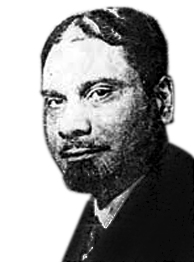
Raman Pillai wanted to attack British India from the north-western side of Kashmir. For that he sourced support from rebel forces in Turkey and highly placed officials under the Emir of Afghanistan. The Emir was however against providing any support while his close relatives and allies agreed to provide financial help for the movement.
On July 31, 1914, Raman Pillai formed the Indian National Voluntary Corps and urged war on British India. He called on all Indians, especially Muslims and Sikhs, to fight for India. He also sent emissaries to Japan and China to forge alliances. All these activities led to the notion that he was in SMS Emden when it struck Chennai.
Swami Vivekananda’s brother, Bhupendranath Dutta, was sent to Russia to garner support for the cause. Two members were also sent to talk to US leaders. Pillai started a military camp in Mesopotamia and formed a provisional government in Kabul to look after Indian affairs when revolution would start. Raman Pillai was to handle foreign affairs of the new government.
However, all the grand plans came to nought when Germany was defeated in World War 1. In 1919, Pillai went to Germany. The Russian revolution that happened two years earlier saw many leaders, including Chatto, leaving for Russia. Chatto was later unceremoniously executed by Stalin’s army. M.N. Roy quit Marxism, pained at the cruelty perpetuated by Stalin.
Raman Pillai continued to work in a German company, but kept his efforts for Indian independence alive. He directed an exhibition of Indian products in Germany in 1924. In 1930, he became the Berlin representative of the Indian Chamber of Commerce. He was the only non-white in the National People’s Party that supported the Nazis.
The squabble with Hitler
Raman Pillai initially enjoyed a cordial relationship with Hitler, whose prominence was rising. However, during a press meet on August 10, 1931, Hitler said that if non-Aryan Indians were ruled by the British, it is their fate. This irritated Pillai. The same year on December 4, Hitler said, “Britain losing India would not augur well for any nation, including Germany.”
Miffed at Hitler taking sides with the British, Raman Pillai wrote to him thus, “You seem to attribute more importance to the color of the skin than blood. Our skins may be dark; not our hearts.”
Raman Pillai gave a deadline for Hitler to withdraw his statement and apologize. Hitler sent his secretary to Pillai to apologize, but also expressed his irritation at being attributed with a black heart. Raman Pillai retorted that Indians would tell the truth even in the face of death. One day after the deadline set by Pillai, Hitler expressed his regret for his comments; the rift between the two leaders thus developed into a complete breakdown of relations that would never be mended. In January 1933, Hitler became chancellor and in June he became an autocrat usurping power and establishing his unquestioned influence over Germany.
Nazis soon raided and arrogated Pillai’s house in Berlin. He was also manhandled and bundled out from his dwelling. He moved to Italy for treatment where it was found that blood had clotted in his brain. By that time, he did not have the financial means to afford good treatment required for his cure. His end came on May 28, 1934, in an ordinary nursing home in Italy. His wife lamented that a man who was brave enough to defy Hitler in his own land had died, unceremoniously, a broken man.
A patriot forgotten
In his autobiography, Bhagat Singh’s uncle and freedom fighter Sardar Ajith Singh had written that when Subhash Chandra Bose visited Vienna, he had visited Raman Pillai. Chempaka Raman Pillai was instrumental in inspiring Netaji to start an army and had even founded the INV before the INA was formed. However, nothing remains as a token of respect to that patriot in his own motherland. There is a statue of Netaji at Thiruvananthapuram near University Stadium. The ‘Jai Hind’ inscribed on the statue, a term coined by Raman Pillai, is all that remains that may remind us of this man who died for his nation. The clarion call that inspired many to take up arms against the British now ironically echoes the level of ingratitude his own people have for him.
The tragic death of Pillai’s widow
Lakshmibhai returned to Mumbai in 1935 with the ashes of her husband. His last wish was to return to India in a warship that flew the Indian flag. Lakshmibhai had to wait for another 32 years for that wish to be fulfilled. On September 17, 1966, INS Delhi set sail from Mumbai with Pillai’s ashes and reached Kochi on the 19th. From there it went to Thiruvananthapuram and Kanyakumari where Lakshmibhai met with her husband’s family and stayed with them for some time and then returned to Mumbai. She died in 1972. How her end came was reported by acclaimed journalist P.K. Ravindranath.
According to Ravindranath’s account, Lakshmibhai met him in 1969 and told him that she had a set of documents related to Pillai. She demanded Rs 1.5 lakh for the papers, using which he proposed to write a biography. Since he did not have the money, the plan was shelved.
Lakshmibhai was from Satara in Maharashtra and was taken to Russia by a missionary who was her stepfather. During the Russian revolution, he sought refuge in Berlin with her and that is where she met Pillai. After Pillai’s death, she ensured that Pillai’s documents did not fall in the hands of the Nazis and brought them home. She lived in constant fear that she would be jailed by the British. After Indian independence, she was allotted a flat by Morarji Desai at Church Gate in Mumbai. She lived there alone with none to help her. One day, Ravindranath was summoned by Lakshmibhai. She was weak and unwell, and said that she could not move about, but did not care to have the fruits and food that he had brought for her. She also rejected Ravindranath’s offer to arrange food three times a day.
On December 1972, Ravindranath was called by the staff of St George Hospital to identify a dead body; Lakshmibhai had died mainly due to starvation. Ravindranath identified the frail body of the wife of India’s unsung revolutionary. Her famished fingers still clenched 17 keys; she had protected her husband’s documents to her last breath.
Ravindranath immediately requested the Maharashtra CM to transfer the documents to the National Archives. Her house was soon cordoned off and in January 1973, the documents were safely transferred to the National Archives. Let us hope someone would study the documents and come out with more information throwing light on the life of Chempaka Raman Pillai.
Most of the Keralite comrades of Pillai in Berlin had returned to India during the war in order to lead an uprising against the British rule. A.R. Pillai could set foot in India only 12 years after the start of the war. He, however, was under the constant surveillance of the British secret services.
Padmanabha Pillai, who reached Thiruvananthapuram, secured a job as a curator using his contacts with the royal family. He, however, continued his political activities and his scientific pursuits. On one of his official tours, he went to the University of Bern to present a paper on his studies on frogs. On his way back, he disappeared and only his coat was retrieved from the beaches of Thailand. His belongings were later collected by his relatives from Colombo. After his father-in-law burned all his papers fearing retribution from the British, Padmanabha Pillai ceased to exist in the annals of the Indian revolutionary movement.
Recent Posts
The United Nations has shaped so much of global co-operation and regulation that we wouldn’t recognise our world today without the UN’s pervasive role in it. So many small details of our lives – such as postage and copyright laws – are subject to international co-operation nurtured by the UN.
In its 75th year, however, the UN is in a difficult moment as the world faces climate crisis, a global pandemic, great power competition, trade wars, economic depression and a wider breakdown in international co-operation.
Still, the UN has faced tough times before – over many decades during the Cold War, the Security Council was crippled by deep tensions between the US and the Soviet Union. The UN is not as sidelined or divided today as it was then. However, as the relationship between China and the US sours, the achievements of global co-operation are being eroded.
The way in which people speak about the UN often implies a level of coherence and bureaucratic independence that the UN rarely possesses. A failure of the UN is normally better understood as a failure of international co-operation.
We see this recently in the UN’s inability to deal with crises from the ethnic cleansing of the Rohingya Muslims in Myanmar, to civil conflict in Syria, and the failure of the Security Council to adopt a COVID-19 resolution calling for ceasefires in conflict zones and a co-operative international response to the pandemic.
The UN administration is not primarily to blame for these failures; rather, the problem is the great powers – in the case of COVID-19, China and the US – refusing to co-operate.
Where states fail to agree, the UN is powerless to act.
Marking the 75th anniversary of the official formation of the UN, when 50 founding nations signed the UN Charter on June 26, 1945, we look at some of its key triumphs and resounding failures.
Five successes
1. Peacekeeping
The United Nations was created with the goal of being a collective security organisation. The UN Charter establishes that the use of force is only lawful either in self-defence or if authorised by the UN Security Council. The Security Council’s five permanent members, being China, US, UK, Russia and France, can veto any such resolution.
The UN’s consistent role in seeking to manage conflict is one of its greatest successes.
A key component of this role is peacekeeping. The UN under its second secretary-general, the Swedish statesman Dag Hammarskjöld – who was posthumously awarded the Nobel Peace prize after he died in a suspicious plane crash – created the concept of peacekeeping. Hammarskjöld was responding to the 1956 Suez Crisis, in which the US opposed the invasion of Egypt by its allies Israel, France and the UK.
UN peacekeeping missions involve the use of impartial and armed UN forces, drawn from member states, to stabilise fragile situations. “The essence of peacekeeping is the use of soldiers as a catalyst for peace rather than as the instruments of war,” said then UN Secretary-General Javier Pérez de Cuéllar, when the forces won the 1988 Nobel Peace Prize following missions in conflict zones in the Middle East, Africa, Asia, Central America and Europe.
However, peacekeeping also counts among the UN’s major failures.
2. Law of the Sea
Negotiated between 1973 and 1982, the UN Convention on the Law of the Sea (UNCLOS) set up the current international law of the seas. It defines states’ rights and creates concepts such as exclusive economic zones, as well as procedures for the settling of disputes, new arrangements for governing deep sea bed mining, and importantly, new provisions for the protection of marine resources and ocean conservation.
Mostly, countries have abided by the convention. There are various disputes that China has over the East and South China Seas which present a conflict between power and law, in that although UNCLOS creates mechanisms for resolving disputes, a powerful state isn’t necessarily going to submit to those mechanisms.
Secondly, on the conservation front, although UNCLOS is a huge step forward, it has failed to adequately protect oceans that are outside any state’s control. Ocean ecosystems have been dramatically transformed through overfishing. This is an ecological catastrophe that UNCLOS has slowed, but failed to address comprehensively.
3. Decolonisation
The idea of racial equality and of a people’s right to self-determination was discussed in the wake of World War I and rejected. After World War II, however, those principles were endorsed within the UN system, and the Trusteeship Council, which monitored the process of decolonisation, was one of the initial bodies of the UN.
Although many national independence movements only won liberation through bloody conflicts, the UN has overseen a process of decolonisation that has transformed international politics. In 1945, around one third of the world’s population lived under colonial rule. Today, there are less than 2 million people living in colonies.
When it comes to the world’s First Nations, however, the UN generally has done little to address their concerns, aside from the non-binding UN Declaration on the Rights of Indigenous Peoples of 2007.
4. Human rights
The Human Rights Declaration of 1948 for the first time set out fundamental human rights to be universally protected, recognising that the “inherent dignity and of the equal and inalienable rights of all members of the human family is the foundation of freedom, justice and peace in the world”.
Since 1948, 10 human rights treaties have been adopted – including conventions on the rights of children and migrant workers, and against torture and discrimination based on gender and race – each monitored by its own committee of independent experts.
The language of human rights has created a new framework for thinking about the relationship between the individual, the state and the international system. Although some people would prefer that political movements focus on ‘liberation’ rather than ‘rights’, the idea of human rights has made the individual person a focus of national and international attention.
5. Free trade
Depending on your politics, you might view the World Trade Organisation as a huge success, or a huge failure.
The WTO creates a near-binding system of international trade law with a clear and efficient dispute resolution process.
The majority Australian consensus is that the WTO is a success because it has been good for Australian famers especially, through its winding back of subsidies and tariffs.
However, the WTO enabled an era of globalisation which is now politically controversial.
Recently, the US has sought to disrupt the system. In addition to the trade war with China, the Trump Administration has also refused to appoint tribunal members to the WTO’s Appellate Body, so it has crippled the dispute resolution process. Of course, the Trump Administration is not the first to take issue with China’s trade strategies, which include subsidises for ‘State Owned Enterprises’ and demands that foreign firms transfer intellectual property in exchange for market access.
The existence of the UN has created a forum where nations can discuss new problems, and climate change is one of them. The Intergovernmental Panel on Climate Change (IPCC) was set up in 1988 to assess climate science and provide policymakers with assessments and options. In 1992, the UN Framework Convention on Climate Change created a permanent forum for negotiations.
However, despite an international scientific body in the IPCC, and 165 signatory nations to the climate treaty, global greenhouse gas emissions have continued to increase.
Under the Paris Agreement, even if every country meets its greenhouse gas emission targets we are still on track for ‘dangerous warming’. Yet, no major country is even on track to meet its targets; while emissions will probably decline this year as a result of COVID-19, atmospheric concentrations of greenhouse gases will still increase.
This illustrates a core conundrum of the UN in that it opens the possibility of global cooperation, but is unable to constrain states from pursuing their narrowly conceived self-interests. Deep co-operation remains challenging.
Five failures of the UN
1. Peacekeeping
During the Bosnian War, Dutch peacekeeping forces stationed in the town of Srebrenica, declared a ‘safe area’ by the UN in 1993, failed in 1995 to stop the massacre of more than 8000 Muslim men and boys by Bosnian Serb forces. This is one of the most widely discussed examples of the failures of international peacekeeping operations.
On the massacre’s 10th anniversary, then UN Secretary General Kofi Annan wrote that the UN had “made serious errors of judgement, rooted in a philosophy of impartiality”, contributing to a mass murder that would “haunt our history forever”.
If you look at some of the other infamous failures of peacekeeping missions – in places such as Rwanda, Somalia and Angola – it is the limited powers given to peacekeeping operations that have resulted in those failures.
2. The invasion of Iraq
The invasion of Iraq by the US in 2003, which was unlawful and without Security Council authorisation, reflects the fact that the UN is has very limited capacity to constrain the actions of great powers.
The Security Council designers created the veto power so that any of the five permanent members could reject a Council resolution, so in that way it is programmed to fail when a great power really wants to do something that the international community generally condemns.
In the case of the Iraq invasion, the US didn’t veto a resolution, but rather sought authorisation that it did not get. The UN, if you go by the idea of collective security, should have responded by defending Iraq against this unlawful use of force.
The invasion proved a humanitarian disaster with the loss of more than 400,000 lives, and many believe that it led to the emergence of the terrorist Islamic State.
3. Refugee crises
The UN brokered the 1951 Refugee Convention to address the plight of people displaced in Europe due to World War II; years later, the 1967 Protocol removed time and geographical restrictions so that the Convention can now apply universally (although many countries in Asia have refused to sign it, owing in part to its Eurocentric origins).
Despite these treaties, and the work of the UN High Commission for Refugees, there is somewhere between 30 and 40 million refugees, many of them, such as many Palestinians, living for decades outside their homelands. This is in addition to more than 40 million people displaced within their own countries.
While for a long time refugee numbers were reducing, in recent years, particularly driven by the Syrian conflict, there have been increases in the number of people being displaced.
During the COVID-19 crisis, boatloads of Rohingya refugees were turned away by port after port. This tragedy has echoes of pre-World War II when ships of Jewish refugees fleeing Nazi Germany were refused entry by multiple countries.
And as a catastrophe of a different kind looms, there is no international framework in place for responding to people who will be displaced by rising seas and other effects of climate change.
4. Conflicts without end
Across the world, there is a shopping list of unresolved civil conflicts and disputed territories.
Palestine and Kashmir are two of the longest-running failures of the UN to resolve disputed lands. More recent, ongoing conflicts include the civil wars in Syria and Yemen.
The common denominator of unresolved conflicts is either division among the great powers, or a lack of international interest due to the geopolitical stakes not being sufficiently high. For instance, the inaction during the Rwandan civil war in the 1990s was not due to a division among great powers, but rather a lack of political will to engage.
In Syria, by contrast, Russia and the US have opposing interests and back opposing sides: Russia backs the government of the Syrian dictator Bashar al-Assad, whereas the US does not.
5. Acting like it’s 1945
The UN is increasingly out of step with the reality of geopolitics today.
The permanent members of the Security Council reflect the division of power internationally at the end of World War II. The continuing exclusion of Germany, Japan, and rising powers such as India and Indonesia, reflects the failure to reflect the changing balance of power.
Also, bodies such as the IMF and the World Bank, which are part of the UN system, continue to be dominated by the West. In response, China has created potential rival institutions such as the Asian Infrastructure Investment Bank.
Western domination of UN institutions undermines their credibility. However, a more fundamental problem is that institutions designed in 1945 are a poor fit with the systemic global challenges – of which climate change is foremost – that we face today.