


After the fall of Tipu Sultan (1799), the East India Company government restored the Mysore kingdom to the Wodeyar dynasty. It decided to pay a stipend to Tipu’s sons and intern them in two palaces, Hyder Mahal and Tipu Mahal, specially constructed for them in the Vellore Fort. Along with the family of Tipu Sultan, about 3,000 Mysoreans settled in Pettai, a habitat around the fort. For about five years there was calm. Then suddenly erupted an armed insurgency in the Fort.
The English garrison of Vellore at the time of the uprising consisted of four companies of His Majesty’s 69th Regiment, six companies of the 1st Battalion of the 1st Regiment of Native Infantry, and the 2nd Battalion of the 23rd Regiment.
The Europeans were about 370 in number, the natives 1,700. Colonel John Fancourt was the garrison’s commandant. The 1st Battalion of the 1st Regiment comprised Mysore Muslims, many of whom had been in the service of Tipu.
Its Commandant was Lt. Colonel Nathaniel Forbes. The 23rd Regiment had been raised in the district of Tirunelveli and contained in its ranks a number of followers of the Palayakkarars of southern Tamil Nadu. John McKerras commanded this regiment.
Controversial Rules
Soon after Sir John Cradock assumed office as the new Commander-in-Chief of the Madras Army (1805), he obtained the Governor’s permission to codify the regulations of the military department. The newly compiled code of military regulations and dress, notified to the Army by the Commander-in-Chief on March 13, 1806, insisted that an Indian soldier should not denote his caste on his forehead or wear earrings when dressed in his uniform and should have his chin clean-shaven at all parades.
This caused resentment in the Indian infantry as it was viewed as an attempt to coerce natives into Christianity. The most offensive part, from the Indian perspective, was the leather cockade in the new turban. Usually the turban was made of an iron frame and blue braid cloth and a plume, or cotton tuft. This time the cockade was made of animal skin. Pig’s skin was anathema to Muslims, while upper-caste Hindus shunned anything to do with cowhide.
First Protest
The first incident of protest occurred in May. The men in the 2nd Battalion of the 4th Regiment at Vellore refused to wear the new turban. On the evening of May 6, the Adjutant reported that the men refused to put on their side arms. The following day, the commandant Lt.-Col. Darley paraded the corps.
When the men were about to be dispersed, someone from the sepoy crowd jeered “dhoot, dhoot”, meaning “get lost”. The matter was reported to the Commander-in-Chief, who ordered that the ringleaders be arrested and sent to Madras for trial.
The court martial, after investigations, tried 21 privates (10 Muslims and 11 Hindus) for defiance. Governor William Bentinck communicated the result of the trial to the Adjutant General for action.
Two soldiers, Sheik Abdul Rymen and Anantaraman, refused to apologise and hence were sentenced to receive 900 lashes each and were discharged from service. The remaining 19, who complied with the orders of the court and apologised, were sentenced to 500 lashes each but pardoned. The Company government heaved a sigh of relief that a great disaster had been averted. But in two months a major uprising broke out in Vellore Fort.
At 2 a.m. in the morning on July 10, the guns boomed in Vellore Fort. Col. Fancourt, alerted by the firing at the main guard, which was close to his house, rushed out in his dressing gown. He was shot on his own doorstep and died a few hours later.
The second victim was Lt.-Col. Kerras, the Commanding Officer of the 23rd Regiment. Sergeant John Eley of the 69th regiment, who was wounded and had a handkerchief tied round his head, was brought from the ramparts. He begged the sepoys for mercy. But he was chased into the guard room and slain.
Major Armstrong of the 16th Native Infantry was outside the Fort when he heard the sound of firing. He alighted from the palanquin he was travelling in, advanced to the glacis and asked what the firing meant. He was answered by a volley from the ramparts, which killed him instantly.
Scores of native soldiers surrounded the barracks, stormed the houses of the Europeans and put to death, with unsparing ferocity, all those they could locate. Totally 15 European officers and 119 European soldiers were killed on that day. The victorious Indian soldiers then hoisted the Mysore Sultan’s Tiger standard in the Fort.
A Jamedar on the late evening of July 9 in a drunken mood disclosed the plan of revolt, and as a consequence the sepoys were constrained to launch the revolt that day itself. Therefore, the information of the revolt did not reach Pettai. Contrary to expectation, armed forces from Kunrathur and Arcot also did not arrive to join the rebels.
Adjutant Ewing, who could slip out of the Fort, managed to assemble several Europeans and join Col. Nathaniel Forbes, who lived outside the Fort. Accompanied by a number of unarmed men belonging to the 1st Battalion of the 1st Regiment, these two officers took possession of the hill fort and waited there until British authority was re-established in the main Fort.
The native troops made the tactical blunder of not checking how many European privates were hiding in the fort and how many had left it and rallied under their surviving masters. As a result, Sergeant Jones of the 1st Regiment and Sergeant Dean of the 23rd Regiment could collect all those who survived the firing of native troops and succeeded in bringing them under their control.
Suppression of revolt
The Indian troops remained unchallenged until Colonel Gillespie, stationed at Arcot, 25 kilometres away, arrived at 9 a.m. with a squadron of the 19th Dragoons and the 7th Madras Cavalry. The Dragoons, supported by the Madras Cavalry, then charged into the Fort and wreaked vengeance on the mutineers.
Hundreds of fleeing soldiers were caught and butchered, while many were taken prisoner in different parts of the country within the next few days. There is no consensus among historians on the death toll. However, W.J. Wilson’s number of 879 out of 1,700 in the Fort is acceptable.
General Harcourt’s official figures tell us the number of prisoners. There were 466 prisoners in Vellore, while 321 were still at large. Apart from these 787 prisoners, there were also persons kept in confinement in different parts of the country.
Court of Inquiry
Immediately after the suppression of the rebellion, Colonel Gillespie constituted a court of inquiry, presided over by Lt.-Col. Kennedy of His Majesty’s 19th Dragoons. However, a Special Commission was appointed by the Company government on July 12, 1806, with Major General Pater as President.
Many officials, realising that the safety of the Empire depended on the bonding between the native troops and their British officers, pressed for admonition and not “barbarous punishment”. General pardon was given to 516 mutineers, who were allowed to continue in service without any restraint. At the same time, on the basis of depositions before the court of inquiry, the Native General Court Martial awarded death punishment and banishment to select individuals.
Even before the commission of inquiry presented its findings, the Mysore princes were ordered to be sent to Calcutta. Moiz-Ud-Din, against whom there was still suspicion, was kept for some time in confinement but was eventually liberated.
Eight of the retainers of the Mysore princes were tried before a Special Commission at Chittoor in April 1807, and the proceedings were confirmed by the government in May. One was sentenced to death, two to transportation for life, one to imprisonment for life, one to imprisonment for 10 years, and three were acquitted.
The officers and men engaged in the suppression of the mutiny were thanked for their services. Sergeant Brady of the 69th Regiment was promoted as Conductor of Ordnance, Colonel Gillespie was presented 7,000 pagodas (Rs. 24,500), and Sergeant Brady 800 pagodas (Rs.2,800) in acknowledgement of their services.
The native cavalry detachment that consisted of 107 men of the 7th Regiment under Captain Doveton, and of 305 men drawn from all ranks of the other seven regiments, under Captain Mason of the 5th Regiment, was rewarded with enhanced pay.
Finding Scapegoats
The Special Commission presided over by J. Pater, which commenced its inquiry on July 21, presented its findings to the government on August 9. According to the commission, the decisive factor for the revolt was the residence of Tipu’s family at Vellore. The confessional statements extorted from the sepoys were mostly on a promise of pardon or enticement. As a result, many of them turned approver.
The higher tribunals of the Home Government held the Governor of Madras, the Commander-in-Chief, and the Adjutant General responsible for the bungling and ordered their recall. The Adjutant General P.A. Agnew was subsequently restored to his post. The Deputy Adjutant General Major Pierce was made a scapegoat and ordered to return to England.
The obnoxious regulations to which the soldiers objected were withdrawn. A government order issued on July 17, and reissued on September 24, prohibited all unauthorised alterations in dress and interference with the native soldiers’ national customs.
It was further directed that the turban sanctioned by the government on March 15, 1797, should continue to be the pattern for the army. The new regulation about the turban was repealed on September 24, 1806. The government dissolved the 1st and 23rd Regiments from December 31, 1806, and in their places stationed two regiments of two battalions each, numbered the 24th and the 25th Regiments.
Causes of the Revolt
The military historian John William Kaye and the historian S.S. Furnell attributed the trouble to the estranged relationship between European and native officers, caused by the racial arrogance of the former and their lack of acquaintance with native languages.
The refusal of the erstwhile Palayakkarars and rajas to reconcile themselves to Company rule, French instigation stoking their hopes of regaining their regimes, and the contact of Fateh Ali, Tipu’s nephew, with the Marathas and the French in Pondicherry were thought to be contributory factors by the historian Dodwell.
Some military officials attributed the mutiny to the activity of Christian missionaries. According to historians James Mill and H.H. Wilson, the interference of the government in matters of religious faith was disastrous. The role of Fakirs in inciting the people and the army against the government was emphasised by Furnell.
The exploitative land revenue policy of the British resulting in successive droughts, and increasing incidence of poverty, the loss of power and authority suffered by south Indian potentates, and the Palayakkarars, who were looking for an opportunity to be rid of the British, and the apprehension of the Indian armed personnel that the controversial military regulations, dress and hat were aimed at forcing them into Christianity were the factors that contributed to the outbreak of the revolt.
United action
Sinking their regional, religious, linguistic and caste differences, Indian soldiers decided to rally behind Tipu’s family to forge a united front against the common adversary, the British. Albeit confined to cantonments, in its origin and in terms of causes, the 1806 Vellore Revolt is certainly a forerunner to the more widespread Great Rebellion of 1857.
Receive Daily Updates
Recent Posts
The United Nations has shaped so much of global co-operation and regulation that we wouldn’t recognise our world today without the UN’s pervasive role in it. So many small details of our lives – such as postage and copyright laws – are subject to international co-operation nurtured by the UN.
In its 75th year, however, the UN is in a difficult moment as the world faces climate crisis, a global pandemic, great power competition, trade wars, economic depression and a wider breakdown in international co-operation.
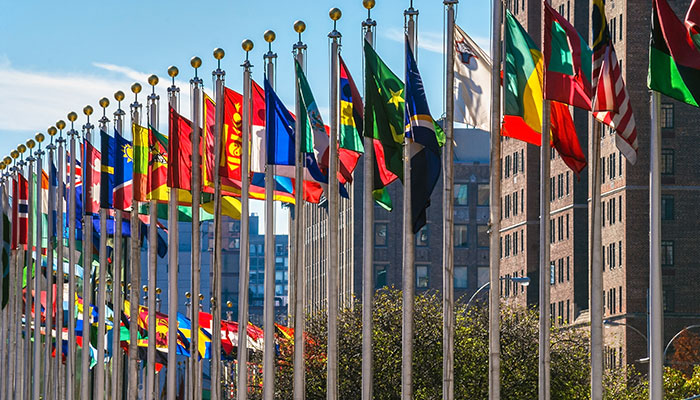
Still, the UN has faced tough times before – over many decades during the Cold War, the Security Council was crippled by deep tensions between the US and the Soviet Union. The UN is not as sidelined or divided today as it was then. However, as the relationship between China and the US sours, the achievements of global co-operation are being eroded.
The way in which people speak about the UN often implies a level of coherence and bureaucratic independence that the UN rarely possesses. A failure of the UN is normally better understood as a failure of international co-operation.
We see this recently in the UN’s inability to deal with crises from the ethnic cleansing of the Rohingya Muslims in Myanmar, to civil conflict in Syria, and the failure of the Security Council to adopt a COVID-19 resolution calling for ceasefires in conflict zones and a co-operative international response to the pandemic.
The UN administration is not primarily to blame for these failures; rather, the problem is the great powers – in the case of COVID-19, China and the US – refusing to co-operate.
Where states fail to agree, the UN is powerless to act.
Marking the 75th anniversary of the official formation of the UN, when 50 founding nations signed the UN Charter on June 26, 1945, we look at some of its key triumphs and resounding failures.
Five successes
1. Peacekeeping
The United Nations was created with the goal of being a collective security organisation. The UN Charter establishes that the use of force is only lawful either in self-defence or if authorised by the UN Security Council. The Security Council’s five permanent members, being China, US, UK, Russia and France, can veto any such resolution.
The UN’s consistent role in seeking to manage conflict is one of its greatest successes.
A key component of this role is peacekeeping. The UN under its second secretary-general, the Swedish statesman Dag Hammarskjöld – who was posthumously awarded the Nobel Peace prize after he died in a suspicious plane crash – created the concept of peacekeeping. Hammarskjöld was responding to the 1956 Suez Crisis, in which the US opposed the invasion of Egypt by its allies Israel, France and the UK.
UN peacekeeping missions involve the use of impartial and armed UN forces, drawn from member states, to stabilise fragile situations. “The essence of peacekeeping is the use of soldiers as a catalyst for peace rather than as the instruments of war,” said then UN Secretary-General Javier Pérez de Cuéllar, when the forces won the 1988 Nobel Peace Prize following missions in conflict zones in the Middle East, Africa, Asia, Central America and Europe.
However, peacekeeping also counts among the UN’s major failures.
2. Law of the Sea
Negotiated between 1973 and 1982, the UN Convention on the Law of the Sea (UNCLOS) set up the current international law of the seas. It defines states’ rights and creates concepts such as exclusive economic zones, as well as procedures for the settling of disputes, new arrangements for governing deep sea bed mining, and importantly, new provisions for the protection of marine resources and ocean conservation.
Mostly, countries have abided by the convention. There are various disputes that China has over the East and South China Seas which present a conflict between power and law, in that although UNCLOS creates mechanisms for resolving disputes, a powerful state isn’t necessarily going to submit to those mechanisms.
Secondly, on the conservation front, although UNCLOS is a huge step forward, it has failed to adequately protect oceans that are outside any state’s control. Ocean ecosystems have been dramatically transformed through overfishing. This is an ecological catastrophe that UNCLOS has slowed, but failed to address comprehensively.
3. Decolonisation
The idea of racial equality and of a people’s right to self-determination was discussed in the wake of World War I and rejected. After World War II, however, those principles were endorsed within the UN system, and the Trusteeship Council, which monitored the process of decolonisation, was one of the initial bodies of the UN.
Although many national independence movements only won liberation through bloody conflicts, the UN has overseen a process of decolonisation that has transformed international politics. In 1945, around one third of the world’s population lived under colonial rule. Today, there are less than 2 million people living in colonies.
When it comes to the world’s First Nations, however, the UN generally has done little to address their concerns, aside from the non-binding UN Declaration on the Rights of Indigenous Peoples of 2007.
4. Human rights
The Human Rights Declaration of 1948 for the first time set out fundamental human rights to be universally protected, recognising that the “inherent dignity and of the equal and inalienable rights of all members of the human family is the foundation of freedom, justice and peace in the world”.
Since 1948, 10 human rights treaties have been adopted – including conventions on the rights of children and migrant workers, and against torture and discrimination based on gender and race – each monitored by its own committee of independent experts.
The language of human rights has created a new framework for thinking about the relationship between the individual, the state and the international system. Although some people would prefer that political movements focus on ‘liberation’ rather than ‘rights’, the idea of human rights has made the individual person a focus of national and international attention.
5. Free trade
Depending on your politics, you might view the World Trade Organisation as a huge success, or a huge failure.
The WTO creates a near-binding system of international trade law with a clear and efficient dispute resolution process.
The majority Australian consensus is that the WTO is a success because it has been good for Australian famers especially, through its winding back of subsidies and tariffs.
However, the WTO enabled an era of globalisation which is now politically controversial.
Recently, the US has sought to disrupt the system. In addition to the trade war with China, the Trump Administration has also refused to appoint tribunal members to the WTO’s Appellate Body, so it has crippled the dispute resolution process. Of course, the Trump Administration is not the first to take issue with China’s trade strategies, which include subsidises for ‘State Owned Enterprises’ and demands that foreign firms transfer intellectual property in exchange for market access.
The existence of the UN has created a forum where nations can discuss new problems, and climate change is one of them. The Intergovernmental Panel on Climate Change (IPCC) was set up in 1988 to assess climate science and provide policymakers with assessments and options. In 1992, the UN Framework Convention on Climate Change created a permanent forum for negotiations.
However, despite an international scientific body in the IPCC, and 165 signatory nations to the climate treaty, global greenhouse gas emissions have continued to increase.
Under the Paris Agreement, even if every country meets its greenhouse gas emission targets we are still on track for ‘dangerous warming’. Yet, no major country is even on track to meet its targets; while emissions will probably decline this year as a result of COVID-19, atmospheric concentrations of greenhouse gases will still increase.
This illustrates a core conundrum of the UN in that it opens the possibility of global cooperation, but is unable to constrain states from pursuing their narrowly conceived self-interests. Deep co-operation remains challenging.
Five failures of the UN
1. Peacekeeping
During the Bosnian War, Dutch peacekeeping forces stationed in the town of Srebrenica, declared a ‘safe area’ by the UN in 1993, failed in 1995 to stop the massacre of more than 8000 Muslim men and boys by Bosnian Serb forces. This is one of the most widely discussed examples of the failures of international peacekeeping operations.
On the massacre’s 10th anniversary, then UN Secretary General Kofi Annan wrote that the UN had “made serious errors of judgement, rooted in a philosophy of impartiality”, contributing to a mass murder that would “haunt our history forever”.
If you look at some of the other infamous failures of peacekeeping missions – in places such as Rwanda, Somalia and Angola – it is the limited powers given to peacekeeping operations that have resulted in those failures.
2. The invasion of Iraq
The invasion of Iraq by the US in 2003, which was unlawful and without Security Council authorisation, reflects the fact that the UN is has very limited capacity to constrain the actions of great powers.
The Security Council designers created the veto power so that any of the five permanent members could reject a Council resolution, so in that way it is programmed to fail when a great power really wants to do something that the international community generally condemns.
In the case of the Iraq invasion, the US didn’t veto a resolution, but rather sought authorisation that it did not get. The UN, if you go by the idea of collective security, should have responded by defending Iraq against this unlawful use of force.
The invasion proved a humanitarian disaster with the loss of more than 400,000 lives, and many believe that it led to the emergence of the terrorist Islamic State.
3. Refugee crises
The UN brokered the 1951 Refugee Convention to address the plight of people displaced in Europe due to World War II; years later, the 1967 Protocol removed time and geographical restrictions so that the Convention can now apply universally (although many countries in Asia have refused to sign it, owing in part to its Eurocentric origins).
Despite these treaties, and the work of the UN High Commission for Refugees, there is somewhere between 30 and 40 million refugees, many of them, such as many Palestinians, living for decades outside their homelands. This is in addition to more than 40 million people displaced within their own countries.
While for a long time refugee numbers were reducing, in recent years, particularly driven by the Syrian conflict, there have been increases in the number of people being displaced.
During the COVID-19 crisis, boatloads of Rohingya refugees were turned away by port after port. This tragedy has echoes of pre-World War II when ships of Jewish refugees fleeing Nazi Germany were refused entry by multiple countries.
And as a catastrophe of a different kind looms, there is no international framework in place for responding to people who will be displaced by rising seas and other effects of climate change.
4. Conflicts without end
Across the world, there is a shopping list of unresolved civil conflicts and disputed territories.
Palestine and Kashmir are two of the longest-running failures of the UN to resolve disputed lands. More recent, ongoing conflicts include the civil wars in Syria and Yemen.
The common denominator of unresolved conflicts is either division among the great powers, or a lack of international interest due to the geopolitical stakes not being sufficiently high. For instance, the inaction during the Rwandan civil war in the 1990s was not due to a division among great powers, but rather a lack of political will to engage.
In Syria, by contrast, Russia and the US have opposing interests and back opposing sides: Russia backs the government of the Syrian dictator Bashar al-Assad, whereas the US does not.
5. Acting like it’s 1945
The UN is increasingly out of step with the reality of geopolitics today.
The permanent members of the Security Council reflect the division of power internationally at the end of World War II. The continuing exclusion of Germany, Japan, and rising powers such as India and Indonesia, reflects the failure to reflect the changing balance of power.
Also, bodies such as the IMF and the World Bank, which are part of the UN system, continue to be dominated by the West. In response, China has created potential rival institutions such as the Asian Infrastructure Investment Bank.
Western domination of UN institutions undermines their credibility. However, a more fundamental problem is that institutions designed in 1945 are a poor fit with the systemic global challenges – of which climate change is foremost – that we face today.