


Note :- This book review might be less helpful as far as answering mains is concerned but can be more helpful to write a good essay on related topic.

Homo Deus comes not just as an interesting intellectual exercise but as a warning, a clarion call for the what the future holds for us.
Yuval Noah Harari. Homo Deus: A Brief History of Tomorrow.
At first glance, a history of the future seems like an odd beast, a crossbreed between scholarly research and soothsaying. However, Yuval Noah Harari’s Homo Deus: A Brief History of Tomorrow claims to be exactly that.
Launching from his previous work, Homo Sapiens: A Brief History of Humankind, Harari peers into what the social, rather than the biological, evolution of the species might have in store for the planet. To be sure, it is not the first of its kind; Antonio Negri’s Empire is another such ‘history of the future’, but one that dwells on political evolution. Homo Deus, however, comes not just as an interesting intellectual exercise but as a warning; for, Harari warns us, humans are within grasp of having the ability to profoundly influence the terms of their existence. Indeed, this is a journey of humans from being petty animals to becoming gods.
The first step in this pyramid of achievements has been the control over our existence. Ten-thousand years ago, man developed agriculture, and two-hundred years ago, science matured to a stage where humans could genuinely fight back against the pestilence of nature. Although millions still live in poverty and die of hunger and disease, there is no reason for this to be; their deplorable state of existence today is caused almost exclusively by human factors than by the will of any god. In 2011, Harari cites, more people succumbed to obesity-related complications (three million) than famine (one million); more people died of old age than due to plagues, and more people are likely to perish in an accident or commit suicide than die in a war.
The latest front in the war against sickness is old age. Life expectancy doubled in the previous century, and the race is on to achieve the same this century too. Every year, multinational corporations like Google, with the help of scientists like Ray Kurzweil and Bill Maris, are spending billions of dollars on life extension research. A lifespan of, say, 150 years, would dramatically affect contemporary social structures, Harari warns. Relationships, marriage, family, professional careers, immigration and even our political frameworks would be under stress for a rethink. Although Harari does not believe immortality to be within our grasp yet, he says enabling humans to live beyond 150 years would require “re-engineering the most fundamental structures and processes of the human body”. The optimism in this regard speaks volumes. Besides, average global life expectancy between 90 and 100 would still bring about dramatic changes.
The second step is the reworking and enhancement of our bodies: biological engineering to manipulate genetic code, cybernetics to enhance strength, speed and health, and the invention of artificial entities that could obviate the need for human presence in several routine activities. These developments are much closer than we think. Genetics, prosthetics technology and artificial intelligence have all advanced leaps and bounds over the last decade. Transcranial helmets can now predict, to some extent, human behaviour, and even help stimulate or suppress certain brain actions. In essence, they are at the threshold of human behaviour manipulation.
With the development of technology like CRISPR (clustered regularly interspaced short palindromic repeats), it has become much easier to edit DNA. Introduced with the objective of curing and even eliminating diseases, it is not too far down the road to imagine a system, as Harari does, to which you have surrendered all your medical records to optimise on fitness routines, diets, restaurants, entertainment and even courtship. Such a system might even assist or make political choices. A slight semblance of this may already be seen in today’s online targeted marketing – companies use search history, online activity and other clues to tailor holiday packages, clothes and a myriad other products to your needs and tastes.
The final leap and departure from Homo sapiens has been the stuff of science fiction dystopias for long – genetically enhancing offspring for intelligence, athletic ability and desirable physical features. Anyone who can afford it will be able to design their child to be, essentially, an übermensch. Humans would become gods in their own right.
The dangers are obvious. Over even a short span of time, privileged access to genetic enhancement can cause a divergence point within the species beyond which there would be two distinct groups – a superior, enhanced class of Homo deus, and an inferior, natural group of Homo sapiens. Harari suggests, alarmingly, that the relationship between these two strata may be reflected in the way humans have treated animals down the ages – lovingly yet harshly, but ultimately devoid of agency.
Contrary to what many science fiction scenarios portray, humans will not lose control of their technology but gradually hand over control to it until they become a side-note in their own evolution. The first steps in this direction are already visible – artificial intelligence, big data, automation, biometric sensors and other advancements are already beginning to take over the simpler tasks of doctors, lawyers, publishers, marketers, engineers and even musicians, as we hand over more and more data to machines to make our lives more convenient.
A third ascension that is occurring simultaneously with the other two is an intellectual preparation for what Harari calls a post-humanist existence. Over the centuries, humans have moved away from ascribing supernatural reasons to natural phenomena to understanding the science and logic behind them. This enlightenment spurred the development of a humanist ethos wherein human well-being became the central concern and not the appeasement of some god or the preservation of an old social order. Free markets and the individual – free will – became the reigning gods of this new religion and happiness its holy grail.
Harari’s interesting hypothesis, peppered with fascinating – and at times, amusing – examples is unfortunately interwoven in a fair amount of extraneous theorising that makes for engaging background, but does not contribute directly to his argument. For example, the author’s perception of reality strikes as alarmingly postmodern as he dismisses nations, gods and even currency as imagined constructs. That social imagination is imbued with powerful meaning, tradition and value seems to be lost on Harari, and it is to those values one must look to avoid the great decoupling, as Harari phrases elegantly, of high intelligence and developed consciousness.
The interesting question here is whether, with greater scientific understanding of the human brain and genetics, the decimation of the myth of free will, will catalyse Homo sapiens’ free fall into prisoners of their own dreams or evoke an emergency rethink. Harari worries that the fall into Homo deus could spell the end of the liberal world order. Although no one is sure who will disrupt the current orthodoxy of humanism, it is more likely the next challenge will come from entrepreneur-inventors in Silicon Valley rather than the deserts of Arabia.
Harari is not the first to warn us of our future. With every changing age come prophets sounding the clarion call to save humanity. They warned us about Christianity and Islam; they cautioned us against the Renaissance; they exhorted us against the Enlightenment; they counselled us against the industrial revolution; and now, they alert us to the dangers of biotechnology. Sometimes, the seers were right, and at other times, not so much. Even in this age, Evgeny Morozov, a researcher on the political and social impact of technology, has been harping on the dark side of our mindless interaction with technology for almost a decade. Both Morozov and Harari agree on humanity’s destination. But while the former considers the humanist ideals of justice and equality as sacrosanct, the latter thinks they are passé: the agricultural revolution overthrew the ideals of hunter-gatherers, and industrial revolution did the same to agriculturists; the biotechnological revolution will do the same to humanism.
Is Harari right about the future? Only time can answer that definitively, but perhaps the picture is not as grim as Harari fears it to be. The advent of nuclear weapons did not mean the end of life on earth, nor did the industrial revolution wipe out the idyllic beauty of the countryside. Each technological change brought with it new challenges, but also offered new solutions to society’s problems. New regulations were required and different fields of study were pioneered. How well societies managed the transition depended more on human capital than we like to give credit for. If, as Martin Luther King wrote in the seventh sermon of ‘Strength to Love’, our scientific power has indeed outrun our spiritual power and left us with guided missiles and misguided men, Harari’s dystopia may have a better than even chance of coming true.
Yet, if we do look ahead before we leap, humans may be able to ride this revolution too, as it has done others before it. While millions still voluntarily give information to systems online without thinking, and governments have had almost a free rein in the digital world, privacy advocacy has also increased in the last decade. Like anything else, it will require enough people to care to divert Harari’s dystopia. Harari himself cautions that the scenarios mentioned in his book “should be understood as possibilities rather than prophecies.” Society demands awareness of its members today as it once did labour, faith or anything else. Otherwise, it is not our technology but we ourselves that are our own worst enemies.
Receive Daily Updates
Recent Posts
The United Nations has shaped so much of global co-operation and regulation that we wouldn’t recognise our world today without the UN’s pervasive role in it. So many small details of our lives – such as postage and copyright laws – are subject to international co-operation nurtured by the UN.
In its 75th year, however, the UN is in a difficult moment as the world faces climate crisis, a global pandemic, great power competition, trade wars, economic depression and a wider breakdown in international co-operation.
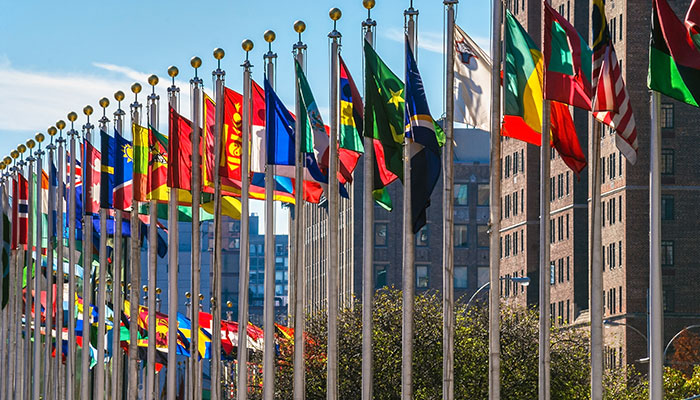
Still, the UN has faced tough times before – over many decades during the Cold War, the Security Council was crippled by deep tensions between the US and the Soviet Union. The UN is not as sidelined or divided today as it was then. However, as the relationship between China and the US sours, the achievements of global co-operation are being eroded.
The way in which people speak about the UN often implies a level of coherence and bureaucratic independence that the UN rarely possesses. A failure of the UN is normally better understood as a failure of international co-operation.
We see this recently in the UN’s inability to deal with crises from the ethnic cleansing of the Rohingya Muslims in Myanmar, to civil conflict in Syria, and the failure of the Security Council to adopt a COVID-19 resolution calling for ceasefires in conflict zones and a co-operative international response to the pandemic.
The UN administration is not primarily to blame for these failures; rather, the problem is the great powers – in the case of COVID-19, China and the US – refusing to co-operate.
Where states fail to agree, the UN is powerless to act.
Marking the 75th anniversary of the official formation of the UN, when 50 founding nations signed the UN Charter on June 26, 1945, we look at some of its key triumphs and resounding failures.
Five successes
1. Peacekeeping
The United Nations was created with the goal of being a collective security organisation. The UN Charter establishes that the use of force is only lawful either in self-defence or if authorised by the UN Security Council. The Security Council’s five permanent members, being China, US, UK, Russia and France, can veto any such resolution.
The UN’s consistent role in seeking to manage conflict is one of its greatest successes.
A key component of this role is peacekeeping. The UN under its second secretary-general, the Swedish statesman Dag Hammarskjöld – who was posthumously awarded the Nobel Peace prize after he died in a suspicious plane crash – created the concept of peacekeeping. Hammarskjöld was responding to the 1956 Suez Crisis, in which the US opposed the invasion of Egypt by its allies Israel, France and the UK.
UN peacekeeping missions involve the use of impartial and armed UN forces, drawn from member states, to stabilise fragile situations. “The essence of peacekeeping is the use of soldiers as a catalyst for peace rather than as the instruments of war,” said then UN Secretary-General Javier Pérez de Cuéllar, when the forces won the 1988 Nobel Peace Prize following missions in conflict zones in the Middle East, Africa, Asia, Central America and Europe.
However, peacekeeping also counts among the UN’s major failures.
2. Law of the Sea
Negotiated between 1973 and 1982, the UN Convention on the Law of the Sea (UNCLOS) set up the current international law of the seas. It defines states’ rights and creates concepts such as exclusive economic zones, as well as procedures for the settling of disputes, new arrangements for governing deep sea bed mining, and importantly, new provisions for the protection of marine resources and ocean conservation.
Mostly, countries have abided by the convention. There are various disputes that China has over the East and South China Seas which present a conflict between power and law, in that although UNCLOS creates mechanisms for resolving disputes, a powerful state isn’t necessarily going to submit to those mechanisms.
Secondly, on the conservation front, although UNCLOS is a huge step forward, it has failed to adequately protect oceans that are outside any state’s control. Ocean ecosystems have been dramatically transformed through overfishing. This is an ecological catastrophe that UNCLOS has slowed, but failed to address comprehensively.
3. Decolonisation
The idea of racial equality and of a people’s right to self-determination was discussed in the wake of World War I and rejected. After World War II, however, those principles were endorsed within the UN system, and the Trusteeship Council, which monitored the process of decolonisation, was one of the initial bodies of the UN.
Although many national independence movements only won liberation through bloody conflicts, the UN has overseen a process of decolonisation that has transformed international politics. In 1945, around one third of the world’s population lived under colonial rule. Today, there are less than 2 million people living in colonies.
When it comes to the world’s First Nations, however, the UN generally has done little to address their concerns, aside from the non-binding UN Declaration on the Rights of Indigenous Peoples of 2007.
4. Human rights
The Human Rights Declaration of 1948 for the first time set out fundamental human rights to be universally protected, recognising that the “inherent dignity and of the equal and inalienable rights of all members of the human family is the foundation of freedom, justice and peace in the world”.
Since 1948, 10 human rights treaties have been adopted – including conventions on the rights of children and migrant workers, and against torture and discrimination based on gender and race – each monitored by its own committee of independent experts.
The language of human rights has created a new framework for thinking about the relationship between the individual, the state and the international system. Although some people would prefer that political movements focus on ‘liberation’ rather than ‘rights’, the idea of human rights has made the individual person a focus of national and international attention.
5. Free trade
Depending on your politics, you might view the World Trade Organisation as a huge success, or a huge failure.
The WTO creates a near-binding system of international trade law with a clear and efficient dispute resolution process.
The majority Australian consensus is that the WTO is a success because it has been good for Australian famers especially, through its winding back of subsidies and tariffs.
However, the WTO enabled an era of globalisation which is now politically controversial.
Recently, the US has sought to disrupt the system. In addition to the trade war with China, the Trump Administration has also refused to appoint tribunal members to the WTO’s Appellate Body, so it has crippled the dispute resolution process. Of course, the Trump Administration is not the first to take issue with China’s trade strategies, which include subsidises for ‘State Owned Enterprises’ and demands that foreign firms transfer intellectual property in exchange for market access.
The existence of the UN has created a forum where nations can discuss new problems, and climate change is one of them. The Intergovernmental Panel on Climate Change (IPCC) was set up in 1988 to assess climate science and provide policymakers with assessments and options. In 1992, the UN Framework Convention on Climate Change created a permanent forum for negotiations.
However, despite an international scientific body in the IPCC, and 165 signatory nations to the climate treaty, global greenhouse gas emissions have continued to increase.
Under the Paris Agreement, even if every country meets its greenhouse gas emission targets we are still on track for ‘dangerous warming’. Yet, no major country is even on track to meet its targets; while emissions will probably decline this year as a result of COVID-19, atmospheric concentrations of greenhouse gases will still increase.
This illustrates a core conundrum of the UN in that it opens the possibility of global cooperation, but is unable to constrain states from pursuing their narrowly conceived self-interests. Deep co-operation remains challenging.
Five failures of the UN
1. Peacekeeping
During the Bosnian War, Dutch peacekeeping forces stationed in the town of Srebrenica, declared a ‘safe area’ by the UN in 1993, failed in 1995 to stop the massacre of more than 8000 Muslim men and boys by Bosnian Serb forces. This is one of the most widely discussed examples of the failures of international peacekeeping operations.
On the massacre’s 10th anniversary, then UN Secretary General Kofi Annan wrote that the UN had “made serious errors of judgement, rooted in a philosophy of impartiality”, contributing to a mass murder that would “haunt our history forever”.
If you look at some of the other infamous failures of peacekeeping missions – in places such as Rwanda, Somalia and Angola – it is the limited powers given to peacekeeping operations that have resulted in those failures.
2. The invasion of Iraq
The invasion of Iraq by the US in 2003, which was unlawful and without Security Council authorisation, reflects the fact that the UN is has very limited capacity to constrain the actions of great powers.
The Security Council designers created the veto power so that any of the five permanent members could reject a Council resolution, so in that way it is programmed to fail when a great power really wants to do something that the international community generally condemns.
In the case of the Iraq invasion, the US didn’t veto a resolution, but rather sought authorisation that it did not get. The UN, if you go by the idea of collective security, should have responded by defending Iraq against this unlawful use of force.
The invasion proved a humanitarian disaster with the loss of more than 400,000 lives, and many believe that it led to the emergence of the terrorist Islamic State.
3. Refugee crises
The UN brokered the 1951 Refugee Convention to address the plight of people displaced in Europe due to World War II; years later, the 1967 Protocol removed time and geographical restrictions so that the Convention can now apply universally (although many countries in Asia have refused to sign it, owing in part to its Eurocentric origins).
Despite these treaties, and the work of the UN High Commission for Refugees, there is somewhere between 30 and 40 million refugees, many of them, such as many Palestinians, living for decades outside their homelands. This is in addition to more than 40 million people displaced within their own countries.
While for a long time refugee numbers were reducing, in recent years, particularly driven by the Syrian conflict, there have been increases in the number of people being displaced.
During the COVID-19 crisis, boatloads of Rohingya refugees were turned away by port after port. This tragedy has echoes of pre-World War II when ships of Jewish refugees fleeing Nazi Germany were refused entry by multiple countries.
And as a catastrophe of a different kind looms, there is no international framework in place for responding to people who will be displaced by rising seas and other effects of climate change.
4. Conflicts without end
Across the world, there is a shopping list of unresolved civil conflicts and disputed territories.
Palestine and Kashmir are two of the longest-running failures of the UN to resolve disputed lands. More recent, ongoing conflicts include the civil wars in Syria and Yemen.
The common denominator of unresolved conflicts is either division among the great powers, or a lack of international interest due to the geopolitical stakes not being sufficiently high. For instance, the inaction during the Rwandan civil war in the 1990s was not due to a division among great powers, but rather a lack of political will to engage.
In Syria, by contrast, Russia and the US have opposing interests and back opposing sides: Russia backs the government of the Syrian dictator Bashar al-Assad, whereas the US does not.
5. Acting like it’s 1945
The UN is increasingly out of step with the reality of geopolitics today.
The permanent members of the Security Council reflect the division of power internationally at the end of World War II. The continuing exclusion of Germany, Japan, and rising powers such as India and Indonesia, reflects the failure to reflect the changing balance of power.
Also, bodies such as the IMF and the World Bank, which are part of the UN system, continue to be dominated by the West. In response, China has created potential rival institutions such as the Asian Infrastructure Investment Bank.
Western domination of UN institutions undermines their credibility. However, a more fundamental problem is that institutions designed in 1945 are a poor fit with the systemic global challenges – of which climate change is foremost – that we face today.