


UPSC/STATE PSC
Curated by Experts For Civil Service Aspirants
The Hindu & Indian Express
News 1: Monetary tools alone cannot tame inflation
Background:
- Nirmala Sitharaman in the meet “Taming Inflation”, spoke about the monetary tools role in controlling inflation. She expressed that while an increase in interest rate forms a critical part in controlling inflation but cannot be the only component. Both monetary and fiscal policy need to work together to reduce inflation.
Monetary policy:
- Monetary policy in India has a primary objective of maintaining price stability while keeping in mind the objective of growth.
Important tools used:
- Repo Rate: The interest rate at which the Reserve Bank provides liquidity under the liquidity adjustment facility (LAF) to all LAF participants against the collateral of government and other approved securities.
- Reverse Repo Rate: The interest rate at which the Reserve Bank absorbs liquidity from banks against the collateral of eligible government securities under the LAF. Following the introduction of SDF, the fixed rate reverse repo operations will be at the discretion of the RBI for purposes specified from time to time.
- Standing Deposit Facility (SDF) Rate: The rate at which the Reserve Bank accepts uncollateralised deposits, on an overnight basis, from all LAF participants. The SDF is also a financial stability tool in addition to its role in liquidity management. The SDF rate is placed at 25 basis points below the policy repo rate. With introduction of SDF in April 2022, the SDF rate replaced the fixed reverse repo rate as the floor of the LAF corridor.
- Marginal Standing Facility (MSF) Rate: The penal rate at which banks can borrow, on an overnight basis, from the Reserve Bank by dipping into their Statutory Liquidity Ratio (SLR) portfolio up to a predefined limit (2 per cent). This provides a safety valve against unanticipated liquidity shocks to the banking system. The MSF rate is placed at 25 basis points above the policy repo rate.
- Liquidity Adjustment Facility (LAF): The LAF refers to the Reserve Bank’s operations through which it injects/absorbs liquidity into/from the banking system. It consists of overnight as well as term repo/reverse repos (fixed as well as variable rates), SDF and MSF. Apart from LAF, instruments of liquidity management include outright open market operations (OMOs), forex swaps and market stabilisation scheme (MSS).
News 2: Longest reigning monarch of U.K., Elizabeth II, dead
Background:
- Queen Elizabeth II, who died on Thursday, broke many records as monarch, becoming an enduring symbol of the country over which, she reigned for 70 years even as it changed beyond recognition, losing its empire and undergoing social upheaval.
- Queen Elizabeth was Head of State of the United Kingdom and 14 Commonwealth realms.
Commonwealth:
- The Commonwealth is a voluntary association of 56 independent and equal countries. It is home to 2.5 billion people and includes both advanced economies and developing countries. 32 of our members are small states, including many island nations.
- The Commonwealth’s roots go back to the British Empire. But today any country can join the modern Commonwealth. The last two countries to join the Commonwealth were Gabon and Togo in 2022.
News 3: Naga team continues talks on Constitution
Background:
- The Government of India is ready to incorporate the Yehzabo, the Naga Constitution, into the Indian Constitution and has agreed for a civil and cultural flag for the Nagas, a senior government official said on Thursday.
Persistent demand
- The Centre is engaged in discussions with the Isak-Muivah faction of the National Socialist Council of Nagaland (NSCN-IM) and seven Naga National Political Groups (NNPGs) to find a solution to the Naga political issue.
- The Isak-Muivah faction, the key player in the Naga peace talks, has been demanding a separate Constitution and a separate flag for the Nagas.
- The NSCN-IM also demands creation of ‘Greater Nagaland’ or Nagalim by integrating Naga-dominated areas in neighbouring Assam, Manipur and Arunachal Pradesh and uniting 1.2 million Nagas.
Naga peace accord:
- On August 3, 2015, a year after the Narendra Modi-led BJP government came to power, the NSCN(I-M) group signed a framework agreement in the presence of the Prime Minister.
- In this agreement, the Government of India recognised the unique history, culture and position of the Nagas and their sentiments and aspirations.
Nagas:
- The Nagas are not a single tribe, but an ethnic community that comprises several tribes who live in the state of Nagaland and its neighbourhood. Nagas belong to the Indo-Mongoloid Family.
More on Naga Insurgency:- Read Here
News 4: 39 exotic animals seized in India
Background:
- The Assam Police on Thursday seized 39 exotic animals from two Delhi-registered SUVs that travelled from the Mizoram-Myanmar border and were bound for Siliguri in northern West Bengal.
CITES:
- CITES (the Convention on International Trade in Endangered Species of Wild Fauna and Flora) is an international agreement between governments. Its aim is to ensure that international trade in specimens of wild animals and plants does not threaten the survival of the species.
- It is a multilateral treaty to protect endangered plants and animals from the threats of international trade.
- It was drafted as a result of a resolution adopted in 1963 at a meeting of members of the International Union for Conservation of Nature (IUCN). The convention was opened for signature in 1973 and CITES entered into force on 1 July 1975.
- It is also known as Washington Convention
- Located at Geneva, Switzerland
News 5: India ranks 132 in HDI as score drops
Background:
India ranks 132 out of 191 countries in the Human Development Index (HDI) 2021, after registering a decline in its score over two consecutive years for the first time in three decades. The drop is in line with the global trend since the outbreak of the COVID-19 pandemic during which 90% of the countries have fallen backward in human development.
Human Development Index (HDI):
- The United Nations Development Programme releases the Human Development Report, where HDI is a part of it.
- The concept of Human Development Index was developed by Amartya Sen and Mahbub-ul-Haq and was further used by UNDP to measure a country’s development.
- The Human Development Index (HDI) is a summary measure of average achievement in key dimensions of human development: a long and healthy life, being knowledgeable and having a decent standard of living.
- It is calculated using four indicators — life expectancy at birth, mean years of schooling, expected years of schooling, and the Gross National Income (GNI) per capita.


Human development Index categories of countries:
| Greater than 0.800 | Very High |
| Between 0.700 – 0.799 | High |
| Between 0.550 and 0.699 | Medium |
| Lower than 0.549 | Low |
Top 5 countries in HDI ranking: Switzerland, Norway, Iceland, Hong Kong, Australia
Reasons behind slippage of various countries from their ranking:
- COVID – 19
- War in Ukraine
- Environmental challenges
India’s position:
- India’s HDI score of 0.633 places it in the medium human development category, lower than its value of 0.645 in 2018, indicating a reversal in progress.
- In India’s case, the drop in HDI from 0.645 in 2018 to 0.633 in 2021 can be attributed to falling life expectancy at birth — 70.7 years to 67.2 years. India’s expected years of schooling stand at 11.9 years, and the mean years of schooling are at 6.7 years. The GNI per capita level is $6,590.
- The report lauded India for bridging the human development gap between men and women faster than the world and this development has come at a smaller cost to the environment. India’s investment in health and education, helped it come closer to the global human development average since 1990.
Gender Inequality Index:
- The index measures inequality in achievement between women and men in three dimensions — reproductive health, empowerment and the labor market.
- A low GII value indicates low inequality between women and men, and vice-versa.
- India has, however, shown a slight improvement in its Gender Inequality Index value in the latest report as compared to the 2020 index (0.490 vs 0.493), after gender inequality worsened between 2019 and 2020 (0.486 vs 0.493).
About UNDP:
- UNDP’s mandate is to end poverty, build democratic governance, rule of law, and inclusive institutions. UNDP works in 170 countries and territories to eradicate poverty and reduce inequality.
- Headquarter: New York
News 6: Odisha govt. cancels shrimp culture leases inside Bhitarkanika
Background:
- The Odisha government has canceled leases granted to two aquaculture companies for shrimp culture over a sprawling area inside Bhitarkanika Wildlife Sanctuary, which is famous for crocodile conservation and thick mangrove forests.
About Bhitarkanika Wildlife sanctuary:
- Bhitarkanika wildlife sanctuary is the 2nd largest mangrove ecosystems of India.
- It is the breeding place for the endangered salt water crocodiles which are the prime attractions of the sanctuary.
- The Gahirmatha Beach which forms the boundary of the sanctuary in the east is the largest colony of the Olive Ridley Sea Turtles.
- The sanctuary lies in the estuarial region of Brahmani-Baitrani with Bay of Bengal lying in the East.
- Bhitarkanika Mangrove is a Ramsar designated site.
News 7: Spent N-fuel storage should be worked out
- The Supreme Court has said the problem of storing spent nuclear fuel from the Kudankulam nuclear power plant has to be “worked out”, possibly with the help of experts from the Atomic Energy Regulatory Board (AERB) and officials.
Nuclear plants in India:
- Kudankulam Nuclear Power Plant is the largest nuclear power station, situated in Tirunelveli district of Tamil Nadu.
- Away from Reactor facility is located away from the reactor but is located within the plant’s premises.
Atomic Energy Regulatory Board:
- Established: 1983 under Atomic Energy Act, 1962
- Headquarter: Mumbai
- Objective: The mission of the AERB is to ensure the use of ionising radiation and nuclear energy in India does not cause undue risk to the health of people and the environment.
NPCIL:
- Nuclear Power Corporation of India Limited (NPCIL) is a Public Sector Enterprise under the administrative control of the Department of Atomic Energy (DAE), Government of India.
- Objective: Operating atomic power plants and implementing atomic power projects for generation of electricity in pursuance of the schemes and programmes of the Government of India under the Atomic Energy Act, 1962.
- NPCIL also has equity participation in BHAVINI, another PSU of Department of Atomic Energy (DAE) which implements Fast Breeder Reactors programme in the country. NPCIL is responsible for design, construction, commissioning and operation of nuclear power reactors.
News 8: Cheetah relocation to Kuno National Park, Madhya Pradesh
Background:
- The Asiatic Cheetahs went extinct in India in 1952 and now is a critically endangered species surviving only in Iran.
Cheetah reintroduction:
- The ‘African Cheetah Introduction Project in India’ was conceived in 2009 with a plan to introduce the Cheetah.
- The main goal of the Cheetah reintroduction project in India is to establish a viable cheetah metapopulation in India that allows the cheetah to perform its functional role as a top predator and provides space for the expansion of the cheetah within its historical range thereby contributing to its global conservation efforts.
African Cheetah:
- IUCN status: Vulnerable
- CITES status: Appendix – I
- Physical characteristics: Bigger in size compared to Asiatic Cheetah
News 9: Supreme Court collegium discusses judges’ appointment
Collegium system:
- Collegium system has evolved through judgements of Supreme Court and is not an act of Parliament or a provision of the Constitution.
- Third Judges Case (1998): Supreme Court on the President’s reference (Article 143) expanded the Collegium to a five-member body, comprising the CJI and four of his senior-most colleagues.
Issues associated with Collegium system:
- No accountability to collegium systems as judges select their own judges.
- There is no official procedure or written manual regarding selection of judges, absence of selection criteria and unequal representation of women, has made the process opaque , which ultimately makes it undemocratic.
- The system has not been able to prevent large vacancies in appointments of judges.
News 10: 10% quota for EWS: SC will examine if law violates basic structure
Background:
- A Constitution Bench of the Supreme Court, hearing petitions against the 10 per cent quota for Economically Weaker Sections (EWS) in government jobs and admissions, will examine whether the Constitution (103rd Amendment) Act, by which it was introduced, violates the basic structure of the Constitution.
The 103rd constitutional amendment act, 2019
- The 103rd Amendment inserts Articles 15 (6) and 16 (6) in the Constitution to provide up to 10% reservation to EWS other than backward classes, SCs and STs in higher educational institutions and initial recruitment in government posts.
- Article 15(6) empowers states to make special provision for advancement of any EWS other than those mentioned in clauses (4) and (5) and to make a special provision on their admission to educational institutions — including aided or unaided private — other than the minority educational institutions referred to in clause (1) of Article 30. This will be in addition to existing reservation and subject to a maximum of 10 percent of the total seats in each category.
- Article 16 (6) empowers the State to make any provision for reservation of appointments or posts in favor of any EWS other than classes mentioned in clause (4), in addition to the existing reservation and subject to a maximum of 10 percent of the posts in each category.
News 11: Inauguration of Kartavya path
- The revamped Central Vista Avenue (Rajpath) was renamed as Kartavya path. As per the NDMC resolution, Kartavya Path includes the erstwhile “Rajpath and Central Vista lawns”
- Kartavya path covers the areas from Netaji statue to Rajpath bhavan and the statue of Netaji Subhash Chandra Bose was unveiled on this occasion.
- Kartavya path was previously named as Kingsway and it was conceptualized by Edwin Lutyens and Herbert Baker in honor of King Edward VII.
Other important news:
Gogra Hotsprings:
- India and China on Thursday announced that their Armies have begun to disengage from Patrolling Point-15 in the Gogra-Hotsprings area of eastern Ladakh
- Gogra Post is east of the point where the Chang Chenmo river takes a hairpin bend coming southeast from Galwan Valley and turning southwest. Gogra Post are close to the boundary between two of the most historically disturbed provinces (Xinjiang and Tibet) of China.
Google doodle on Bhupen Hazarika
Bhupen Hazarika is an Assamese singer, composer, and filmmaker and he was also known as ‘Bard of Brahmaputra’.
Recent Posts
The United Nations has shaped so much of global co-operation and regulation that we wouldn’t recognise our world today without the UN’s pervasive role in it. So many small details of our lives – such as postage and copyright laws – are subject to international co-operation nurtured by the UN.
In its 75th year, however, the UN is in a difficult moment as the world faces climate crisis, a global pandemic, great power competition, trade wars, economic depression and a wider breakdown in international co-operation.
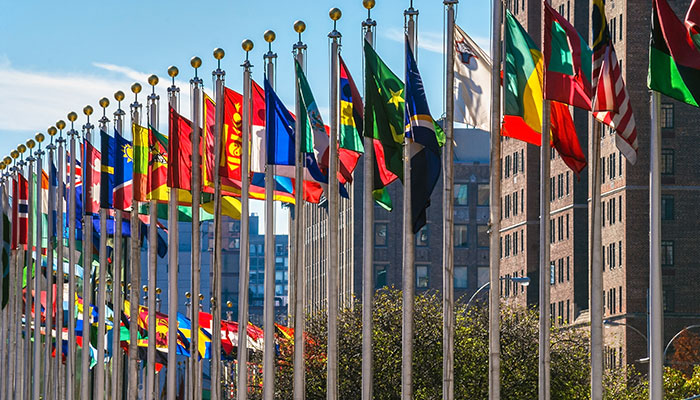
Still, the UN has faced tough times before – over many decades during the Cold War, the Security Council was crippled by deep tensions between the US and the Soviet Union. The UN is not as sidelined or divided today as it was then. However, as the relationship between China and the US sours, the achievements of global co-operation are being eroded.
The way in which people speak about the UN often implies a level of coherence and bureaucratic independence that the UN rarely possesses. A failure of the UN is normally better understood as a failure of international co-operation.
We see this recently in the UN’s inability to deal with crises from the ethnic cleansing of the Rohingya Muslims in Myanmar, to civil conflict in Syria, and the failure of the Security Council to adopt a COVID-19 resolution calling for ceasefires in conflict zones and a co-operative international response to the pandemic.
The UN administration is not primarily to blame for these failures; rather, the problem is the great powers – in the case of COVID-19, China and the US – refusing to co-operate.
Where states fail to agree, the UN is powerless to act.
Marking the 75th anniversary of the official formation of the UN, when 50 founding nations signed the UN Charter on June 26, 1945, we look at some of its key triumphs and resounding failures.
Five successes
1. Peacekeeping
The United Nations was created with the goal of being a collective security organisation. The UN Charter establishes that the use of force is only lawful either in self-defence or if authorised by the UN Security Council. The Security Council’s five permanent members, being China, US, UK, Russia and France, can veto any such resolution.
The UN’s consistent role in seeking to manage conflict is one of its greatest successes.
A key component of this role is peacekeeping. The UN under its second secretary-general, the Swedish statesman Dag Hammarskjöld – who was posthumously awarded the Nobel Peace prize after he died in a suspicious plane crash – created the concept of peacekeeping. Hammarskjöld was responding to the 1956 Suez Crisis, in which the US opposed the invasion of Egypt by its allies Israel, France and the UK.
UN peacekeeping missions involve the use of impartial and armed UN forces, drawn from member states, to stabilise fragile situations. “The essence of peacekeeping is the use of soldiers as a catalyst for peace rather than as the instruments of war,” said then UN Secretary-General Javier Pérez de Cuéllar, when the forces won the 1988 Nobel Peace Prize following missions in conflict zones in the Middle East, Africa, Asia, Central America and Europe.
However, peacekeeping also counts among the UN’s major failures.
2. Law of the Sea
Negotiated between 1973 and 1982, the UN Convention on the Law of the Sea (UNCLOS) set up the current international law of the seas. It defines states’ rights and creates concepts such as exclusive economic zones, as well as procedures for the settling of disputes, new arrangements for governing deep sea bed mining, and importantly, new provisions for the protection of marine resources and ocean conservation.
Mostly, countries have abided by the convention. There are various disputes that China has over the East and South China Seas which present a conflict between power and law, in that although UNCLOS creates mechanisms for resolving disputes, a powerful state isn’t necessarily going to submit to those mechanisms.
Secondly, on the conservation front, although UNCLOS is a huge step forward, it has failed to adequately protect oceans that are outside any state’s control. Ocean ecosystems have been dramatically transformed through overfishing. This is an ecological catastrophe that UNCLOS has slowed, but failed to address comprehensively.
3. Decolonisation
The idea of racial equality and of a people’s right to self-determination was discussed in the wake of World War I and rejected. After World War II, however, those principles were endorsed within the UN system, and the Trusteeship Council, which monitored the process of decolonisation, was one of the initial bodies of the UN.
Although many national independence movements only won liberation through bloody conflicts, the UN has overseen a process of decolonisation that has transformed international politics. In 1945, around one third of the world’s population lived under colonial rule. Today, there are less than 2 million people living in colonies.
When it comes to the world’s First Nations, however, the UN generally has done little to address their concerns, aside from the non-binding UN Declaration on the Rights of Indigenous Peoples of 2007.
4. Human rights
The Human Rights Declaration of 1948 for the first time set out fundamental human rights to be universally protected, recognising that the “inherent dignity and of the equal and inalienable rights of all members of the human family is the foundation of freedom, justice and peace in the world”.
Since 1948, 10 human rights treaties have been adopted – including conventions on the rights of children and migrant workers, and against torture and discrimination based on gender and race – each monitored by its own committee of independent experts.
The language of human rights has created a new framework for thinking about the relationship between the individual, the state and the international system. Although some people would prefer that political movements focus on ‘liberation’ rather than ‘rights’, the idea of human rights has made the individual person a focus of national and international attention.
5. Free trade
Depending on your politics, you might view the World Trade Organisation as a huge success, or a huge failure.
The WTO creates a near-binding system of international trade law with a clear and efficient dispute resolution process.
The majority Australian consensus is that the WTO is a success because it has been good for Australian famers especially, through its winding back of subsidies and tariffs.
However, the WTO enabled an era of globalisation which is now politically controversial.
Recently, the US has sought to disrupt the system. In addition to the trade war with China, the Trump Administration has also refused to appoint tribunal members to the WTO’s Appellate Body, so it has crippled the dispute resolution process. Of course, the Trump Administration is not the first to take issue with China’s trade strategies, which include subsidises for ‘State Owned Enterprises’ and demands that foreign firms transfer intellectual property in exchange for market access.
The existence of the UN has created a forum where nations can discuss new problems, and climate change is one of them. The Intergovernmental Panel on Climate Change (IPCC) was set up in 1988 to assess climate science and provide policymakers with assessments and options. In 1992, the UN Framework Convention on Climate Change created a permanent forum for negotiations.
However, despite an international scientific body in the IPCC, and 165 signatory nations to the climate treaty, global greenhouse gas emissions have continued to increase.
Under the Paris Agreement, even if every country meets its greenhouse gas emission targets we are still on track for ‘dangerous warming’. Yet, no major country is even on track to meet its targets; while emissions will probably decline this year as a result of COVID-19, atmospheric concentrations of greenhouse gases will still increase.
This illustrates a core conundrum of the UN in that it opens the possibility of global cooperation, but is unable to constrain states from pursuing their narrowly conceived self-interests. Deep co-operation remains challenging.
Five failures of the UN
1. Peacekeeping
During the Bosnian War, Dutch peacekeeping forces stationed in the town of Srebrenica, declared a ‘safe area’ by the UN in 1993, failed in 1995 to stop the massacre of more than 8000 Muslim men and boys by Bosnian Serb forces. This is one of the most widely discussed examples of the failures of international peacekeeping operations.
On the massacre’s 10th anniversary, then UN Secretary General Kofi Annan wrote that the UN had “made serious errors of judgement, rooted in a philosophy of impartiality”, contributing to a mass murder that would “haunt our history forever”.
If you look at some of the other infamous failures of peacekeeping missions – in places such as Rwanda, Somalia and Angola – it is the limited powers given to peacekeeping operations that have resulted in those failures.
2. The invasion of Iraq
The invasion of Iraq by the US in 2003, which was unlawful and without Security Council authorisation, reflects the fact that the UN is has very limited capacity to constrain the actions of great powers.
The Security Council designers created the veto power so that any of the five permanent members could reject a Council resolution, so in that way it is programmed to fail when a great power really wants to do something that the international community generally condemns.
In the case of the Iraq invasion, the US didn’t veto a resolution, but rather sought authorisation that it did not get. The UN, if you go by the idea of collective security, should have responded by defending Iraq against this unlawful use of force.
The invasion proved a humanitarian disaster with the loss of more than 400,000 lives, and many believe that it led to the emergence of the terrorist Islamic State.
3. Refugee crises
The UN brokered the 1951 Refugee Convention to address the plight of people displaced in Europe due to World War II; years later, the 1967 Protocol removed time and geographical restrictions so that the Convention can now apply universally (although many countries in Asia have refused to sign it, owing in part to its Eurocentric origins).
Despite these treaties, and the work of the UN High Commission for Refugees, there is somewhere between 30 and 40 million refugees, many of them, such as many Palestinians, living for decades outside their homelands. This is in addition to more than 40 million people displaced within their own countries.
While for a long time refugee numbers were reducing, in recent years, particularly driven by the Syrian conflict, there have been increases in the number of people being displaced.
During the COVID-19 crisis, boatloads of Rohingya refugees were turned away by port after port. This tragedy has echoes of pre-World War II when ships of Jewish refugees fleeing Nazi Germany were refused entry by multiple countries.
And as a catastrophe of a different kind looms, there is no international framework in place for responding to people who will be displaced by rising seas and other effects of climate change.
4. Conflicts without end
Across the world, there is a shopping list of unresolved civil conflicts and disputed territories.
Palestine and Kashmir are two of the longest-running failures of the UN to resolve disputed lands. More recent, ongoing conflicts include the civil wars in Syria and Yemen.
The common denominator of unresolved conflicts is either division among the great powers, or a lack of international interest due to the geopolitical stakes not being sufficiently high. For instance, the inaction during the Rwandan civil war in the 1990s was not due to a division among great powers, but rather a lack of political will to engage.
In Syria, by contrast, Russia and the US have opposing interests and back opposing sides: Russia backs the government of the Syrian dictator Bashar al-Assad, whereas the US does not.
5. Acting like it’s 1945
The UN is increasingly out of step with the reality of geopolitics today.
The permanent members of the Security Council reflect the division of power internationally at the end of World War II. The continuing exclusion of Germany, Japan, and rising powers such as India and Indonesia, reflects the failure to reflect the changing balance of power.
Also, bodies such as the IMF and the World Bank, which are part of the UN system, continue to be dominated by the West. In response, China has created potential rival institutions such as the Asian Infrastructure Investment Bank.
Western domination of UN institutions undermines their credibility. However, a more fundamental problem is that institutions designed in 1945 are a poor fit with the systemic global challenges – of which climate change is foremost – that we face today.