


1)Ice Man of India and Artificial Glacier :-
- Chewang Norphel is an Indian civil engineer from Ladakh, who has built 12 artificial glaciers.He has earned the nickname Ice Man.
- Ladakh is known for its receding glaciers and the people in the region face hardships to obtain water , Norphel came up with an brilliant idea of artificial glacier to store the water longer there by extending the availability of water for longer period .
- Artificial Glaciers:-
- In 1996, Norphel joined the Leh Nutrition Project, a non-governmental organisation, as project manager for watershed development
- Norphel noticed a small stream had frozen solid under the shade of a group of poplar trees, though it flowed freely elsewhere in his yard. He realized the reason for this phenomenon: the flowing water was moving too quickly to freeze, while the sluggish trickle of water beneath the trees was slow enough to freeze. Based on this, he created artificial glaciers by diverting a river into a valley, slowing the stream by constructing checks. The artificial glaciers increase the ground-water recharge, rejuvenating the spring and providing water for irrigation. He constructed them at lower elevations, so that they melt earlier, expanding the growing season.
- The biggest artificial glacier, 1000 ft long and 150 ft wide, with an average depth of 4ft, is situated near the village of Phuktsey. Having cost $2,000, it now provides water for the village of 700 people.Cement water reservoirs of similar capacities typically cost $34,000.

- Documentary :- http://climateheroes.org/portfolio-item/chewang-norphel-ice-mans-dams-himalayas/
2) National Gas Grid and Expansion of Gas Pipeline Project :-
- At present, the country is having about 15,000 kms of natural gas pipeline infrastructure and an additional 15,000 kms of pipeline is required for completion of National Gas Grid.
- GAIL has been appointed as the “Sponsoring Authority” for development of Ranchi-Talcher-Paradip pipeline as a pilot project under PPP mode with Viability Gap Funding.
- Government has taken several steps which inter alia include the following:–
- Intensification of domestic Exploration & Production (E&P) activities through New Exploration Licensing Policy (NELP) rounds
- Shale Gas Policy framework
- Research and development of Gas Hydrate resources in the country
- Import of Liquefied Natural Gas (LNG) from various countries
- Transnational pipelines viz., Turkmenistan-Afghanistan-Pakistan-India (TAPI) pipeline and Iran-Pakistan-India(IPI) pipeline
- Clearance for exploration and development of some NELP blocks where the same was held up by various agencies
- Exploration in the Mining Lease Area has been allowed with certain conditions
- Acquisition of Overseas Oil and Gas assets is being pursued in order to enhance energy security for the country

3)Bharat Stage Emission Standards :-
News:- Government advances roll out of BS-V and BS-VI norms for 4-wheelers .According to the roadmap earlier laid down by the Auto Fuel Policy, BS-V norms were to be implemented from April 1, 2022 and BS-VI from April 1, 2024.
What is Bharat Stage Emission Standard:-
Bharat stage emission standards are emission standards instituted by the Government of India to regulate the output of air pollutants from internal combustion engine equipment, including motor vehicles. The standards and the timeline for implementation are set by the Central Pollution Control Board under the Ministry of Environment & Forests and climate change.
The standards, based on European regulations were first introduced in 2000. Progressively stringent norms have been rolled out since then. All new vehicles manufactured after the implementation of the norms have to be compliant with the regulations.Since October 2010, Bharat stage III norms have been enforced across the country. In 13 major cities, Bharat stage IV emission norms have been in place since April 2010.
The phasing out of 2 stroke engine for two wheelers, the stoppage of production of Maruti 800 & introduction of electronic controls have been due to the regulations related to vehicular emissions.
While the norms help in bringing down pollution levels, it invariably results in increased vehicle cost due to the improved technology & higher fuel prices. However, this increase in private cost is offset by savings in health costs for the public, as there is lesser amount of disease causing particulate matter and pollution in the air. Exposure to air pollution can lead to respiratory and cardiovascular diseases, which is estimated to be the cause for 620,000 early deaths in 2010, and the health cost of air pollution in India has been assessed at 3 per cent of its GDP.
4)Injectable vaccine to prevent re-emergence of polio launched:
- An injectable vaccine to prevent re-emergence of polio was launched today by the government and it will be administered in addition to polio drops to double the protection from the deadly virus, which has chances of coming back.
- The Inactivated Polio Vaccine (IPV) will be introduced in the routine immunization programme of the government to do away with the risk of re-introduction of the disease.
5) eBird: India lists 20 lakh sightings :-
- Bird enthusiasts of India are scripting a popular science record of sorts. Till last month, over 4,000 dedicated volunteer birders have uploaded over 20 lakh bird sightings from India, which has caught even the seasoned ornithologists pleasantly off guard. Birders of all hues and shades are flocking together with their bird sighting data on an electronic platform eBird (www.ebird.org) in a big way.
- According to the site, anyone taking a stroll or even peering from a window can contribute to the careful documentation of nature. eBird is a “platform for birdwatchers” to upload their data and keep track of their sightings.
6)A generation at Risk : The Diabetic Epidemic:-
The Risk:-
- Chronic conditions or non-communicable diseases are virtually lifelong diseases; they can be managed and controlled, but in most cases not cured fully. Examples are diseases of the heart and blood vessels, diabetes, lungs, chronic kidney disease, cancers and arthritis.
- Diabetes has now become a major public health concern especially in India because of several reasons
- Today, over 300 million people live with diabetes. A similar number is at high risk. India has often been referred to as the “diabetes capital of the world” but has now ceded this position to China. According to the International Diabetes Federation, over 66 million people in India live with this metabolic disease; an almost equal number has pre-diabetes which is an immediate precursor to diabetes. The belief is that diabetes is an urban and rich man’s disease but we now know that the annual increase in the numbers of those with diabetes is much higher in the rural areas, poor individuals and those less educated
- Generally, the rise in numbers has been attributed to chaotic urbanisation, an ageing population, reduced physical activity/deskbound lifestyle and a change in diet patterns which includes consuming junk food. Other factors include genetic susceptibility, under-nutrition during foetal and early life and environmental pollutants
- The rapidly changing lifestyle of children is equally important; they are now more sedentary than earlier generations. Most Indians also have abdominal obesity (“pot-belly”) which has a role in the development of diabetes.
- If this continues unchecked, an already overloaded and inefficient health system will run out of solutions. What is needed are prevention and management strategies
The Solution:-
- Public awareness and promotion of healthy diet and way of living is important
- Non-personal policy interventions also play an important role. These include taxation, enabling urban infrastructure development particularly in the new ‘Smart City’ plan, encouraging right agricultural practices and reducing sugar consumption, an increased and daily intake of fruits, vegetables and whole grain-based food and a promotion of physical activity. These are cost-effective and prventive strategies. For example, a 20 per cent increase in taxation on sweetened beverages helped reduce new cases of diabetes by 1.6 per cent over 2014-2023. This means that 400,000 type-2 cases of diabetes can be prevented during the same decade.
- Strengthening health systems at the primary care level is imperative and involves providing low-cost generic drugs, long-term management of the disease with health counselling and a robust surveillance mechanism to study changing trends and progress.
- Here, innovations include developing a cadre of physician assistants to schedule and manage diabetes care, yoga as a lifestyle [improvement] package, self-care apps and innovative use of gaming technologies to improve physical activity.
Questions of the Day
1)Find the incorrect match among the following:-
- Ice Man of India- Chewang Norphel- Ladakh
- Waterman of India – Rajendra Singh- Rajasthan
- Mountain man of India – Dashrath Manjhi – Bihar
- Forest Man of India – Jadav Payeng- Arunachal Pradesh
2)Check the photo and find out the following :-

- What is this Picture ?
- Which kingdom it was related to ?
- Why was it in the recent news ?
3)Find the wrong statement:-
- India has largest no of Diabetic patient in the world
- Diabetes is a lifestyle disease . It also has hereditary implication
- Type-2 Diabetics is most wide spread
- Healthy diet and regular exercise can prevent this disease.
Answers Given By BodhiSatva in Comment sections are correct.
Receive Daily Updates
Recent Posts
The United Nations has shaped so much of global co-operation and regulation that we wouldn’t recognise our world today without the UN’s pervasive role in it. So many small details of our lives – such as postage and copyright laws – are subject to international co-operation nurtured by the UN.
In its 75th year, however, the UN is in a difficult moment as the world faces climate crisis, a global pandemic, great power competition, trade wars, economic depression and a wider breakdown in international co-operation.
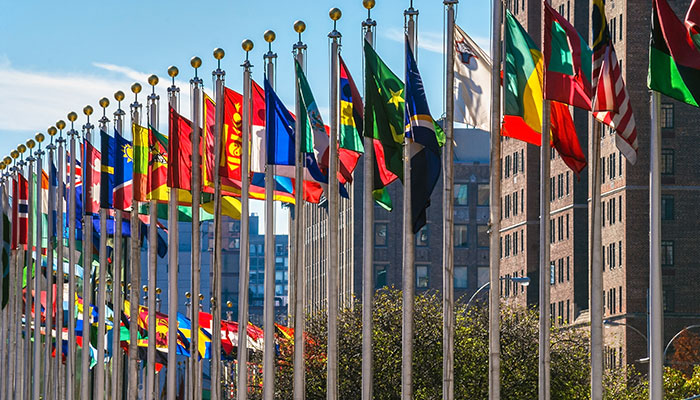
Still, the UN has faced tough times before – over many decades during the Cold War, the Security Council was crippled by deep tensions between the US and the Soviet Union. The UN is not as sidelined or divided today as it was then. However, as the relationship between China and the US sours, the achievements of global co-operation are being eroded.
The way in which people speak about the UN often implies a level of coherence and bureaucratic independence that the UN rarely possesses. A failure of the UN is normally better understood as a failure of international co-operation.
We see this recently in the UN’s inability to deal with crises from the ethnic cleansing of the Rohingya Muslims in Myanmar, to civil conflict in Syria, and the failure of the Security Council to adopt a COVID-19 resolution calling for ceasefires in conflict zones and a co-operative international response to the pandemic.
The UN administration is not primarily to blame for these failures; rather, the problem is the great powers – in the case of COVID-19, China and the US – refusing to co-operate.
Where states fail to agree, the UN is powerless to act.
Marking the 75th anniversary of the official formation of the UN, when 50 founding nations signed the UN Charter on June 26, 1945, we look at some of its key triumphs and resounding failures.
Five successes
1. Peacekeeping
The United Nations was created with the goal of being a collective security organisation. The UN Charter establishes that the use of force is only lawful either in self-defence or if authorised by the UN Security Council. The Security Council’s five permanent members, being China, US, UK, Russia and France, can veto any such resolution.
The UN’s consistent role in seeking to manage conflict is one of its greatest successes.
A key component of this role is peacekeeping. The UN under its second secretary-general, the Swedish statesman Dag Hammarskjöld – who was posthumously awarded the Nobel Peace prize after he died in a suspicious plane crash – created the concept of peacekeeping. Hammarskjöld was responding to the 1956 Suez Crisis, in which the US opposed the invasion of Egypt by its allies Israel, France and the UK.
UN peacekeeping missions involve the use of impartial and armed UN forces, drawn from member states, to stabilise fragile situations. “The essence of peacekeeping is the use of soldiers as a catalyst for peace rather than as the instruments of war,” said then UN Secretary-General Javier Pérez de Cuéllar, when the forces won the 1988 Nobel Peace Prize following missions in conflict zones in the Middle East, Africa, Asia, Central America and Europe.
However, peacekeeping also counts among the UN’s major failures.
2. Law of the Sea
Negotiated between 1973 and 1982, the UN Convention on the Law of the Sea (UNCLOS) set up the current international law of the seas. It defines states’ rights and creates concepts such as exclusive economic zones, as well as procedures for the settling of disputes, new arrangements for governing deep sea bed mining, and importantly, new provisions for the protection of marine resources and ocean conservation.
Mostly, countries have abided by the convention. There are various disputes that China has over the East and South China Seas which present a conflict between power and law, in that although UNCLOS creates mechanisms for resolving disputes, a powerful state isn’t necessarily going to submit to those mechanisms.
Secondly, on the conservation front, although UNCLOS is a huge step forward, it has failed to adequately protect oceans that are outside any state’s control. Ocean ecosystems have been dramatically transformed through overfishing. This is an ecological catastrophe that UNCLOS has slowed, but failed to address comprehensively.
3. Decolonisation
The idea of racial equality and of a people’s right to self-determination was discussed in the wake of World War I and rejected. After World War II, however, those principles were endorsed within the UN system, and the Trusteeship Council, which monitored the process of decolonisation, was one of the initial bodies of the UN.
Although many national independence movements only won liberation through bloody conflicts, the UN has overseen a process of decolonisation that has transformed international politics. In 1945, around one third of the world’s population lived under colonial rule. Today, there are less than 2 million people living in colonies.
When it comes to the world’s First Nations, however, the UN generally has done little to address their concerns, aside from the non-binding UN Declaration on the Rights of Indigenous Peoples of 2007.
4. Human rights
The Human Rights Declaration of 1948 for the first time set out fundamental human rights to be universally protected, recognising that the “inherent dignity and of the equal and inalienable rights of all members of the human family is the foundation of freedom, justice and peace in the world”.
Since 1948, 10 human rights treaties have been adopted – including conventions on the rights of children and migrant workers, and against torture and discrimination based on gender and race – each monitored by its own committee of independent experts.
The language of human rights has created a new framework for thinking about the relationship between the individual, the state and the international system. Although some people would prefer that political movements focus on ‘liberation’ rather than ‘rights’, the idea of human rights has made the individual person a focus of national and international attention.
5. Free trade
Depending on your politics, you might view the World Trade Organisation as a huge success, or a huge failure.
The WTO creates a near-binding system of international trade law with a clear and efficient dispute resolution process.
The majority Australian consensus is that the WTO is a success because it has been good for Australian famers especially, through its winding back of subsidies and tariffs.
However, the WTO enabled an era of globalisation which is now politically controversial.
Recently, the US has sought to disrupt the system. In addition to the trade war with China, the Trump Administration has also refused to appoint tribunal members to the WTO’s Appellate Body, so it has crippled the dispute resolution process. Of course, the Trump Administration is not the first to take issue with China’s trade strategies, which include subsidises for ‘State Owned Enterprises’ and demands that foreign firms transfer intellectual property in exchange for market access.
The existence of the UN has created a forum where nations can discuss new problems, and climate change is one of them. The Intergovernmental Panel on Climate Change (IPCC) was set up in 1988 to assess climate science and provide policymakers with assessments and options. In 1992, the UN Framework Convention on Climate Change created a permanent forum for negotiations.
However, despite an international scientific body in the IPCC, and 165 signatory nations to the climate treaty, global greenhouse gas emissions have continued to increase.
Under the Paris Agreement, even if every country meets its greenhouse gas emission targets we are still on track for ‘dangerous warming’. Yet, no major country is even on track to meet its targets; while emissions will probably decline this year as a result of COVID-19, atmospheric concentrations of greenhouse gases will still increase.
This illustrates a core conundrum of the UN in that it opens the possibility of global cooperation, but is unable to constrain states from pursuing their narrowly conceived self-interests. Deep co-operation remains challenging.
Five failures of the UN
1. Peacekeeping
During the Bosnian War, Dutch peacekeeping forces stationed in the town of Srebrenica, declared a ‘safe area’ by the UN in 1993, failed in 1995 to stop the massacre of more than 8000 Muslim men and boys by Bosnian Serb forces. This is one of the most widely discussed examples of the failures of international peacekeeping operations.
On the massacre’s 10th anniversary, then UN Secretary General Kofi Annan wrote that the UN had “made serious errors of judgement, rooted in a philosophy of impartiality”, contributing to a mass murder that would “haunt our history forever”.
If you look at some of the other infamous failures of peacekeeping missions – in places such as Rwanda, Somalia and Angola – it is the limited powers given to peacekeeping operations that have resulted in those failures.
2. The invasion of Iraq
The invasion of Iraq by the US in 2003, which was unlawful and without Security Council authorisation, reflects the fact that the UN is has very limited capacity to constrain the actions of great powers.
The Security Council designers created the veto power so that any of the five permanent members could reject a Council resolution, so in that way it is programmed to fail when a great power really wants to do something that the international community generally condemns.
In the case of the Iraq invasion, the US didn’t veto a resolution, but rather sought authorisation that it did not get. The UN, if you go by the idea of collective security, should have responded by defending Iraq against this unlawful use of force.
The invasion proved a humanitarian disaster with the loss of more than 400,000 lives, and many believe that it led to the emergence of the terrorist Islamic State.
3. Refugee crises
The UN brokered the 1951 Refugee Convention to address the plight of people displaced in Europe due to World War II; years later, the 1967 Protocol removed time and geographical restrictions so that the Convention can now apply universally (although many countries in Asia have refused to sign it, owing in part to its Eurocentric origins).
Despite these treaties, and the work of the UN High Commission for Refugees, there is somewhere between 30 and 40 million refugees, many of them, such as many Palestinians, living for decades outside their homelands. This is in addition to more than 40 million people displaced within their own countries.
While for a long time refugee numbers were reducing, in recent years, particularly driven by the Syrian conflict, there have been increases in the number of people being displaced.
During the COVID-19 crisis, boatloads of Rohingya refugees were turned away by port after port. This tragedy has echoes of pre-World War II when ships of Jewish refugees fleeing Nazi Germany were refused entry by multiple countries.
And as a catastrophe of a different kind looms, there is no international framework in place for responding to people who will be displaced by rising seas and other effects of climate change.
4. Conflicts without end
Across the world, there is a shopping list of unresolved civil conflicts and disputed territories.
Palestine and Kashmir are two of the longest-running failures of the UN to resolve disputed lands. More recent, ongoing conflicts include the civil wars in Syria and Yemen.
The common denominator of unresolved conflicts is either division among the great powers, or a lack of international interest due to the geopolitical stakes not being sufficiently high. For instance, the inaction during the Rwandan civil war in the 1990s was not due to a division among great powers, but rather a lack of political will to engage.
In Syria, by contrast, Russia and the US have opposing interests and back opposing sides: Russia backs the government of the Syrian dictator Bashar al-Assad, whereas the US does not.
5. Acting like it’s 1945
The UN is increasingly out of step with the reality of geopolitics today.
The permanent members of the Security Council reflect the division of power internationally at the end of World War II. The continuing exclusion of Germany, Japan, and rising powers such as India and Indonesia, reflects the failure to reflect the changing balance of power.
Also, bodies such as the IMF and the World Bank, which are part of the UN system, continue to be dominated by the West. In response, China has created potential rival institutions such as the Asian Infrastructure Investment Bank.
Western domination of UN institutions undermines their credibility. However, a more fundamental problem is that institutions designed in 1945 are a poor fit with the systemic global challenges – of which climate change is foremost – that we face today.