


Food Security :-
Background:-The Economic Survey 2015-16 presented here today in the Parliament by the Union Finance emphasizes that the main aim of food management policy is to provide food security to the population. Providing food security entails making food available at affordable prices at all times, without interruptions. In order to provide food security, in the current agriculture scenario, India has to focus on supplies which are timely and uninterrupted and affordable for the poor. Though India’s GDP growth has been impressive and the agricultural production has also increased over the past few decades, hunger and starvation still persist among the poorer section of the population. There has been moderation of inflation including food inflation during the last two years, but more needs to be achieved by freeing up markets, augmenting supply of food and leveraging the use of IT.
Highlights:-
57 % of Households had Calorie intake below 2160 KCal/Consumer unit/day
Average Protein intake Per Capita per day Rises Steadily
India Has the Second Highest Number of Undernourished People which Warrants Immediate Attention
Economic Survey 2015-16 states that India has the second highest number of undernourished people at 194.6 million person (FAO, State of Food Insecurity in the World, 2015) which warrants immediate attention. Moreover, with 27 per cent of the population below the poverty line, the rise in prices of food impacts the poor adversely, with a greater proportion of their household incomes being spent on food. Therefore, along with provision of food subsidy, stability in agricultural commodity prices is essential for making poorer sections food secure.
There is a strong correlation between stability in agricultural production and food security. Volatility in agricultural production impacts food supplies and can result in spikes in food prices, which adversely affect the lowest income of the population.
With a large number of people who remain undernourished and the issues of volatility in agricultural prices, Economic Survey 2015-16 states that India has one of the largest scheme of food schemes in the World to ensure food security. There is entitlement feeding programs like the Integrated Child Development Scheme (ICDS) (All Children under six, pregnant and lactating mothers) and MDMS (Mid Day Meal Schemes), food subsidy programmes like the Targeted Public Distribution System, Annapurna ( 10 Kgs of free food grain for destitute poor) and the Employment Programmes like Mahatama Gandhi National Rural Employment Guarantee Scheme (100 days of employment at minimum wages) to ensure food security.
Few Data of Importance:-
- India Ranks First in Milk Production, Accounting for 18.5 Per Cent of World Production
- India Recording A Growth of 6.26 % whereas World Milk Production Increases by 3.1 %
- Per Capita Availability of Milk in India has Increased from 176 grams per day in 1990-91 to 322 grams per day by 2014-15
- Egg and Fish Production has also Registered an Increasing trend over the Years
- Production of Horticulture Crops have Outpaced the Production of Food Grain Since 2012-13.Percentage Share of Horticulture Output in Agriculture is more than 33 Per Cent
- Labour Force participation Rate higher in Rural Areas than Urban Areas, significantly lower for females than males. Women account for 57% of employment given under MGNREGA in the Current Financial Year


Indian Economy Outlook
Indian economy stands out as a haven of macroeconomic stability, resilience and optimism and can be expected to register GDP growth that could be in the range of 7.0 per cent to 7.75 per cent in the coming year.
Despite the global meltdown, Indian economy will continue to grow more than 7 percent for the third year in succession in 2016-17 helped by a normal monsoon,. The Economic Survey (2015-16) presented in Parliament today by the Finance Minister states that due to Government’s commitment to carry the reform process forward, conditions do exist for raising the economy’s growth momentum to 8 percent or more in the next couple of years. The survey underlines that despite global headwinds and a truant monsoon, India registered 7.2 per cent growth in 2014-15 and 7.6 per cent in 2015-16, thus becoming the fastest growing major economy in the world.

The survey points-out that the growth in agriculture sector in 2015-16 has continued to be lower than the average of last decade, mainly on account of it being the second successive year of lower-than-normal monsoon rains. As per the information of the Department of Agriculture and Cooperation and Farmers Welfare for 2015-16, the production of foodgrains and oil-seeds is estimated to decline by 0.5 per cent and 4.1 per cent respectively, while the production of fruits and vegetables is likely to increase marginally. A brighter picture is expected to emerge from the allied sectors consisting of livestock products, forestry and fisheries with a growth exceeding 5 per cent in 2015-16, which will provide some impetus to rural incomes.
Growth in industry is estimated to have accelerated during the current year on the strength of improving manufacturing activity. The private corporate sector, with an around 69 per cent share of the manufacturing sector, is estimated to grow by 9.9 per cent at current prices in April-December 2015-16. The Index of Industrial Production (IIP) showed that manufacturing production grew by 3.1 per cent during April-December 2015-16, vis-à-vis a growth of 1.8 per cent in the corresponding period of the previous year. The ongoing manufacturing recovery is aided by robust growth in petroleum refining, automobiles, wearing apparels, chemicals, electrical machinery and wood products including furniture. Apart from manufacturing, the other three segments of the industry sector- electricity, gas, water supply and related utilities, mining and quarrying and construction activities are witnessing a deceleration in growth.

The survey underlines that the growth in the services sector moderated slightly, but still remains robust. Being the main driver of the economy, the sector contributed about 69 per cent of the total growth during 2011-12 to 2015-16 and in the process expanding its share in the economy by 4 percentage points from 49 to 53 per cent.
The services sector in India has remained the most vibrant sector in terms of contribution to national and state incomes, trade flows, FDI inflows, and employment. According to the Economic Survey 2015-16 tabled in Parliament today, the services sector contributed almost 66.1% of its gross value added growth in 2015-16 becoming the important net foreign exchange earner and the most attractive sector for FDI (Foreign Direct Investment) inflows. Despite the slow down in the post crisis period (2010-14) India showed the fastest service sector growth with a CAGR (Compound Annual Growth Rate) of 8.6% followed by China at 8.4%. In 2014 India’s services sector growth at 10.3% was noticeably higher than China at 8.0%. As per the ILO (International Labour Organisation) report on “Global Employment and Social Outlook : Trends 2015” job creation in the coming years will be mainly in the service sector.

The survey in its outlook clearly points out though the emerging market economies have clearly slowed down, the Indian economy stands out as a haven of macroeconomic stability, resilience and optimism and can be expected to register GDP growth that could be in the range of 7.0 per cent to 7.75 per cent in the coming year.
Spreading JAM across India’s Economy:-
The Economic Survey 2015-16 presented here today in the Parliament by the Union Finance emphasizes that JAM Trinity –Jan dhan, Aadhaar, Mobile- can help government to implement large-scale, technology-enabled and real-time Direct Benefit Transfers (DBTs) to improve economic lives of India’s poor. First variety of JAM- PAHAL scheme of transferring LPG subsidies via DBT -has reduced leakages by 24 per cent. Economic Survey suggests that while deciding where next to spread JAM, policymakers should consider the challenges of beneficiary identification, distributor opposition and beneficiary financial inclusion. Spreading JAM to other areas will reduce leakages and provide more fiscal space to the Government.
JAM Components:
Economic Survey divides JAM into three components-
- Identification or First-Mile: Identification of beneficiaries by government
- Transfer or Middle-Mile: Transfer of fund to beneficiaries by government
- Access or Last-Mile: Access of fund by beneficiaries
Identification:
First-mile deals with identification of beneficiary. This layer has issues of ghost and duplicate names due to administrative and political discretion and use of pre-Aadhaar database. It is easier to implement the JAM for universal scheme than targeted one as identification will be easier. Identification of household-individual connection is important to note here as some schemes target at household level like JDY and some at individual level like Aadhaar. Aadhaar can help in better identification of the beneficiaries.
Transfer:
Middle-mile deals with the challenges of payment where government transfer benefits to the banks. But lack of bank accounts and its information with government put hindrances in the middle-layer connectivity. Main issue in this layer is of within-government coordination and dealing with supply chain interest groups. Jan Dhan can help beneficiaries to have bank accounts.
Access:
Last-mile layer faces issues of lesser Bank penetration, mostly in rural areas. It deals with actual transfer of money from Bank to Beneficiary accounts. It also deals with issues of exclusion of genuine beneficiaries. Mobile can inform about benefits and also allow easier fund transfer.
Where next to spread JAM?
Economic Survey argues that policymakers should decide where to apply JAM based on two considerations of-
- Amount of leakages and,
- Control of the central government.
If amount of the leakages in a given scheme/area is huge then it can be next target for introduction of JAM as subsidies with higher leakages will have larger returns from introducing JAM. Similarly control of central government will reduce administrative challenges of co-ordination and political challenges of opposition by interest groups.
Based on these two criteria- leakages and central government control-Survey suggests fertilizer subsidies and within-government transfers as two most promising areas for introduction of the JAM.
JAM Preparedness Index:
Further economic survey has formulated JAM-Preparedness Indices for Urban and Rural areas in each state. It uses Aadhaar penetration, basic bank account penetration and Banking Correspondents (BC) density as indicators for the indices. It has also prepared Biometrically Authenticated Physical Update or BAPU-Preparedness Index, using Aadhaar penetration and Point of Sale machines as indicators, for each state and has compared Rural-JAM Preparedness Index with BAPU-Preparedness Index. It has found that many states are having higher scores in BAPU-Preparedness Index as compared to Rural JAM-Preparedness Index. Thus it suggests use of BAPU as short-term solution to reduce the leakages in these states, till states are well prepared for introduction of the JAM.
Conclusion:
Introduction of DBT in LPG and MGNREGS have proved that use of JAM can considerably reduce leakages, reduce idle funds, lower corruption and improve ease of doing business with the government. Despite huge improvements in financial inclusion due to Jan Dhan, JAM Preparedness indicators suggest that there is still long way to go. Center can invest in last-mile financial inclusion via further improving BC networks and promoting the spread of the mobile money. In the meantime models like BAPU can be used as an alternative to reduce the leakages.
NRHM -National Rural Health Mission
The National Rural Health Mission (NRHM) was launched in 2005 to improve the healthcare services, particularly in rural areas. NRHM has been subsumed as a Sub Mission of the overarching National Health Mission (NHM) with the National Urban Health Mission as the other Sub Mission. Under NHM, support to States/UTs is provided for five key components:-
(i) Health Systems Strengthening including infrastructure, human resource, drugs & equipment, ambulances, MMUs, ASHAs etc under NRHM and NUHM.
(ii) Reproductive, Maternal, Newborn, Child and Adolescent Health Services (RMNCH + A).
(iii) Communicable Disease Control Programmes
(iv) Non-Communicable Diseases Control Programme interventions upto District Hospital level.
(v) Infrastructure Maintenance- to support salary of ANMs and LHVs etc.
Steps to boost Make in India:-
A slew of steps, such as eliminating exemptions on countervailing duties on imports, monetisation of land owned by public sector companies and allowing industries to buy electricity directly from the markets, are needed to enable Make in India Initiative a success, according to the Economic Survey released on Friday.
The duty exemptions are favouring foreign producers over domestically made goods thus defeating the initiative, according to the government statement.
Parts of land belonging to the state-owned companies can be converted into land banks and used to promote Smart City initiatives. “If the land is in dense urban areas, it could be used to develop eco-systems to nurture start-ups, and if located in smaller towns and cities, it could be used to develop sites for industrial clusters.”
Industries with a high demand for power should be allowed to absorb the excess generation capacity through open access (OA). Consumers with electricity load above one MW are permitted by the OA policy (under the Electricity Act 2003) to procure power directly from electricity markets. Presently, the efficiency of electrical energy usage has fallen with an increase in power generation capacity not being able to be capitalised by distribution companies due their financial inability to purchase electricity.
The Make in India Initiative aims to transform India into a global manufacturing hub and increase the share of manufacturing in India’s GDP from a stagnant 15-16 per cent since 1980 to 25 per cent by 2022 and create an additional 100 million jobs.
On the issue of countervailing duty exemptions, the Economic Survey last year had also pointed out that the duties were not imposed on several items of imports. The survey had said the effective rate of excise on domestically-produced non-oil goods was about 9 per cent. Though the effective collection rate of CVDs should theoretically be the same, in real terms it was only around 6 per cent. This difference represents the fiscal cost to the government to the tune of around Rs.40,000 crore, the survey had said.
Eliminating policies — currently providing negative protection for Indian manufacturing and favouring foreign manufacturing — could be achieved by quickly implementing the Goods and Services Tax (GST), according to the survey. However, if delays are envisaged in rolling out the GST, a similar result could be achieved by eliminating the duty exemptions.
Another factor that could have an adverse effecton the Make in India Initiative will be India’s decision to join the US-led mega regional free trade pact called the Trans-Pacific Partnership (TPP) at a future date. Membership of the TPP would prevent the Indian government from using state-owned enterprises and government procurement as vehicles for achieving social and economic objectives, including employment generation, thereby have to compromise on the Make in India Initiative policy.
Poverty and Destitution:-
There is a difference between poverty and destitution, or what I call pauperism. In poverty, it is difficult to make ends meet. You somehow cope, do your level best to add to your income. In destitution, you are simply unable to cope.
Excerpts from the interview of Jan Breman :-
Where is the need for terms such as ‘pauper’ and ‘pauperism’ as analytical categories, when we already have ‘poverty’?
There is a difference between poverty and destitution, or what I call pauperism. In poverty, it is difficult to make ends meet. You somehow cope, do your level best to add to your income. So you also have your wife and children working along. In destitution, you are simply unable to cope. You are so utterly poor that it is difficult to even survive. And if you survive, you need outside support. Unfortunately, the poverty debate in India has more or less been appropriated by economists. So we look at income or consumption or employment levels, and not at the social or political dimension of poverty. A category such as ‘pauperism’ is needed to capture these non-economic aspects as well.
You argue in your book that India’s poverty line is a destitution line. Are you saying that those below poverty line in India are not poor but destitute?
Not all but a good number are. According to the National Commission for Enterprises in the Unorganised Sector (NCEUS), the poverty line fixed by the Planning Commission is a joke: 76 per cent of the Indian population is living in poverty. If you have such a vast mass of poor, you have to differentiate between levels of poverty. Certainly a big number is close to the poverty line. But in my estimate, about 25 per cent of India’s poor are destitute, or paupers.
So from an economist’s perspective, do we need another line, below the poverty line, to identify the paupers?
The poverty line is a sort of magical construction. If you cross it, you are suddenly out of poverty. So the policy focus is always on those who are able to go past that threshold. As a result, there is absolutely no interest in those at the bottom, those way beneath the poverty line.
So who is a pauper, in sociological terms?
In the first place, the paupers are the non-labouring poor, those who have no earning capacity. They never had or have lost their labour power and therefore can’t make a living. These include the elderly, the disabled, the chronically ill, but also widows with small children, divorcees without any support from others. Basically, in order to survive in poverty, you need a household. You cannot manage on your own because the flow of income varies with the seasons. You need to pull the household together to bring in the income — this is why you have child labour in India, isn’t it? But paupers also include the labouring poor, especially those whose income and employment are erratic or seasonal.
But Indian economists don’t believe in terms like ‘pauper’.
That’s true. It was only Gandhi who wrote about paupers in an article published in Young India in 1928, when he was in south Gujarat. He argued that we cannot fight colonialism if we do not fight colonialism in our own society. He pointed out that paupers had been around in India for a long time. I use the term pauper to evoke the conditions in Victorian England, where the casual poor were driven out of the countryside to work in the mills during the industrial revolution. In the same way, the casual poor are being driven out of the countryside in 21st century India.
England amended its Poor Laws in 1834 to pauperise the rural labour and drive them to the cities. What is India doing to create an exodus from the countryside?
Your agrarian crisis. Agriculture is not able to provide livelihood for the land-poor and the landless classes, who have lived in the villages from time immemorial. So they are forced to leave the villages. But the city doesn’t want them either.
How can you say the city doesn’t want them? India is building a hundred smart cities. Who will live in them if not migrants?
Talk to policymakers, talk to municipal officials of any city. They will tell you they don’t want the poor around, that they are a burden on our modern, beautified, smart cities. The policy of the municipality in every Indian city has been to periodically evict the poor.They try desperately to find employment but are unable to establish themselves even in the slums. They hang around in the labour chowks, they become pavement dwellers because there is no shelter for them in the night. When weeks pass by without any work at all, they go back to the villages. I use the term ‘circular migration’ to describe this movement — from villages to cities and back to villages, in an endless cycle. This is widespread in Bihar, Andhra Pradesh, Rajasthan, Uttar Pradesh, Tamil Nadu. But you find it in every State.
Can the poor in India hope for inclusive citizenship?
Citizenship is about rights and obligations. It is about being able to make claims on the state, and at the moment this is a privilege afforded by a minority of the Indian population. Also, inclusive citizenship not only means offering employment (inclusion in economic terms) but also creating space for them in terms of housing, health, schooling, skilling, and inclusion in social terms — which means focussing on equality. But we don’t see pro-equality policies, only pro-inequality policies. The mindset of the Indian elite is: the poor are different from me and I don’t want them around.
Sammakka-Sarakka Jatara:-Tribal Festival in Telengana
Unlike Bathukamma and Bonalu festivals that are celebrated across the state, the tribal festival of Sammakka-Sarakka Jatara sees the convergence of lakhs of people at one particular place — Medaram village in Warangal district. Every two years, the sleepy village comes alive for three days for the Medaram Jatara to commemorate the battle of a mother and daughter, Sammakka and Saralamma against an unjust law imposed by the reigning king.
Receive Daily Updates
Recent Posts
The United Nations has shaped so much of global co-operation and regulation that we wouldn’t recognise our world today without the UN’s pervasive role in it. So many small details of our lives – such as postage and copyright laws – are subject to international co-operation nurtured by the UN.
In its 75th year, however, the UN is in a difficult moment as the world faces climate crisis, a global pandemic, great power competition, trade wars, economic depression and a wider breakdown in international co-operation.
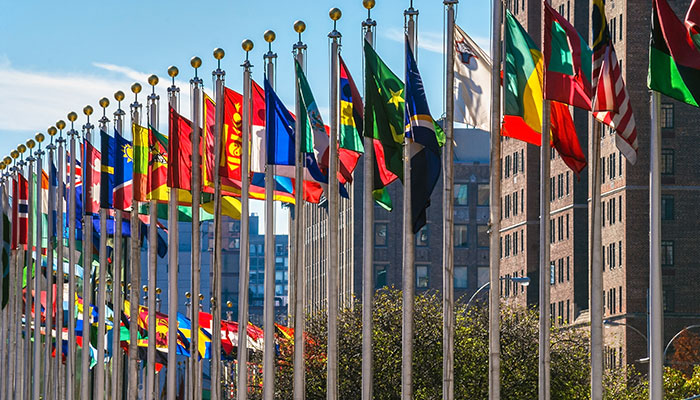
Still, the UN has faced tough times before – over many decades during the Cold War, the Security Council was crippled by deep tensions between the US and the Soviet Union. The UN is not as sidelined or divided today as it was then. However, as the relationship between China and the US sours, the achievements of global co-operation are being eroded.
The way in which people speak about the UN often implies a level of coherence and bureaucratic independence that the UN rarely possesses. A failure of the UN is normally better understood as a failure of international co-operation.
We see this recently in the UN’s inability to deal with crises from the ethnic cleansing of the Rohingya Muslims in Myanmar, to civil conflict in Syria, and the failure of the Security Council to adopt a COVID-19 resolution calling for ceasefires in conflict zones and a co-operative international response to the pandemic.
The UN administration is not primarily to blame for these failures; rather, the problem is the great powers – in the case of COVID-19, China and the US – refusing to co-operate.
Where states fail to agree, the UN is powerless to act.
Marking the 75th anniversary of the official formation of the UN, when 50 founding nations signed the UN Charter on June 26, 1945, we look at some of its key triumphs and resounding failures.
Five successes
1. Peacekeeping
The United Nations was created with the goal of being a collective security organisation. The UN Charter establishes that the use of force is only lawful either in self-defence or if authorised by the UN Security Council. The Security Council’s five permanent members, being China, US, UK, Russia and France, can veto any such resolution.
The UN’s consistent role in seeking to manage conflict is one of its greatest successes.
A key component of this role is peacekeeping. The UN under its second secretary-general, the Swedish statesman Dag Hammarskjöld – who was posthumously awarded the Nobel Peace prize after he died in a suspicious plane crash – created the concept of peacekeeping. Hammarskjöld was responding to the 1956 Suez Crisis, in which the US opposed the invasion of Egypt by its allies Israel, France and the UK.
UN peacekeeping missions involve the use of impartial and armed UN forces, drawn from member states, to stabilise fragile situations. “The essence of peacekeeping is the use of soldiers as a catalyst for peace rather than as the instruments of war,” said then UN Secretary-General Javier Pérez de Cuéllar, when the forces won the 1988 Nobel Peace Prize following missions in conflict zones in the Middle East, Africa, Asia, Central America and Europe.
However, peacekeeping also counts among the UN’s major failures.
2. Law of the Sea
Negotiated between 1973 and 1982, the UN Convention on the Law of the Sea (UNCLOS) set up the current international law of the seas. It defines states’ rights and creates concepts such as exclusive economic zones, as well as procedures for the settling of disputes, new arrangements for governing deep sea bed mining, and importantly, new provisions for the protection of marine resources and ocean conservation.
Mostly, countries have abided by the convention. There are various disputes that China has over the East and South China Seas which present a conflict between power and law, in that although UNCLOS creates mechanisms for resolving disputes, a powerful state isn’t necessarily going to submit to those mechanisms.
Secondly, on the conservation front, although UNCLOS is a huge step forward, it has failed to adequately protect oceans that are outside any state’s control. Ocean ecosystems have been dramatically transformed through overfishing. This is an ecological catastrophe that UNCLOS has slowed, but failed to address comprehensively.
3. Decolonisation
The idea of racial equality and of a people’s right to self-determination was discussed in the wake of World War I and rejected. After World War II, however, those principles were endorsed within the UN system, and the Trusteeship Council, which monitored the process of decolonisation, was one of the initial bodies of the UN.
Although many national independence movements only won liberation through bloody conflicts, the UN has overseen a process of decolonisation that has transformed international politics. In 1945, around one third of the world’s population lived under colonial rule. Today, there are less than 2 million people living in colonies.
When it comes to the world’s First Nations, however, the UN generally has done little to address their concerns, aside from the non-binding UN Declaration on the Rights of Indigenous Peoples of 2007.
4. Human rights
The Human Rights Declaration of 1948 for the first time set out fundamental human rights to be universally protected, recognising that the “inherent dignity and of the equal and inalienable rights of all members of the human family is the foundation of freedom, justice and peace in the world”.
Since 1948, 10 human rights treaties have been adopted – including conventions on the rights of children and migrant workers, and against torture and discrimination based on gender and race – each monitored by its own committee of independent experts.
The language of human rights has created a new framework for thinking about the relationship between the individual, the state and the international system. Although some people would prefer that political movements focus on ‘liberation’ rather than ‘rights’, the idea of human rights has made the individual person a focus of national and international attention.
5. Free trade
Depending on your politics, you might view the World Trade Organisation as a huge success, or a huge failure.
The WTO creates a near-binding system of international trade law with a clear and efficient dispute resolution process.
The majority Australian consensus is that the WTO is a success because it has been good for Australian famers especially, through its winding back of subsidies and tariffs.
However, the WTO enabled an era of globalisation which is now politically controversial.
Recently, the US has sought to disrupt the system. In addition to the trade war with China, the Trump Administration has also refused to appoint tribunal members to the WTO’s Appellate Body, so it has crippled the dispute resolution process. Of course, the Trump Administration is not the first to take issue with China’s trade strategies, which include subsidises for ‘State Owned Enterprises’ and demands that foreign firms transfer intellectual property in exchange for market access.
The existence of the UN has created a forum where nations can discuss new problems, and climate change is one of them. The Intergovernmental Panel on Climate Change (IPCC) was set up in 1988 to assess climate science and provide policymakers with assessments and options. In 1992, the UN Framework Convention on Climate Change created a permanent forum for negotiations.
However, despite an international scientific body in the IPCC, and 165 signatory nations to the climate treaty, global greenhouse gas emissions have continued to increase.
Under the Paris Agreement, even if every country meets its greenhouse gas emission targets we are still on track for ‘dangerous warming’. Yet, no major country is even on track to meet its targets; while emissions will probably decline this year as a result of COVID-19, atmospheric concentrations of greenhouse gases will still increase.
This illustrates a core conundrum of the UN in that it opens the possibility of global cooperation, but is unable to constrain states from pursuing their narrowly conceived self-interests. Deep co-operation remains challenging.
Five failures of the UN
1. Peacekeeping
During the Bosnian War, Dutch peacekeeping forces stationed in the town of Srebrenica, declared a ‘safe area’ by the UN in 1993, failed in 1995 to stop the massacre of more than 8000 Muslim men and boys by Bosnian Serb forces. This is one of the most widely discussed examples of the failures of international peacekeeping operations.
On the massacre’s 10th anniversary, then UN Secretary General Kofi Annan wrote that the UN had “made serious errors of judgement, rooted in a philosophy of impartiality”, contributing to a mass murder that would “haunt our history forever”.
If you look at some of the other infamous failures of peacekeeping missions – in places such as Rwanda, Somalia and Angola – it is the limited powers given to peacekeeping operations that have resulted in those failures.
2. The invasion of Iraq
The invasion of Iraq by the US in 2003, which was unlawful and without Security Council authorisation, reflects the fact that the UN is has very limited capacity to constrain the actions of great powers.
The Security Council designers created the veto power so that any of the five permanent members could reject a Council resolution, so in that way it is programmed to fail when a great power really wants to do something that the international community generally condemns.
In the case of the Iraq invasion, the US didn’t veto a resolution, but rather sought authorisation that it did not get. The UN, if you go by the idea of collective security, should have responded by defending Iraq against this unlawful use of force.
The invasion proved a humanitarian disaster with the loss of more than 400,000 lives, and many believe that it led to the emergence of the terrorist Islamic State.
3. Refugee crises
The UN brokered the 1951 Refugee Convention to address the plight of people displaced in Europe due to World War II; years later, the 1967 Protocol removed time and geographical restrictions so that the Convention can now apply universally (although many countries in Asia have refused to sign it, owing in part to its Eurocentric origins).
Despite these treaties, and the work of the UN High Commission for Refugees, there is somewhere between 30 and 40 million refugees, many of them, such as many Palestinians, living for decades outside their homelands. This is in addition to more than 40 million people displaced within their own countries.
While for a long time refugee numbers were reducing, in recent years, particularly driven by the Syrian conflict, there have been increases in the number of people being displaced.
During the COVID-19 crisis, boatloads of Rohingya refugees were turned away by port after port. This tragedy has echoes of pre-World War II when ships of Jewish refugees fleeing Nazi Germany were refused entry by multiple countries.
And as a catastrophe of a different kind looms, there is no international framework in place for responding to people who will be displaced by rising seas and other effects of climate change.
4. Conflicts without end
Across the world, there is a shopping list of unresolved civil conflicts and disputed territories.
Palestine and Kashmir are two of the longest-running failures of the UN to resolve disputed lands. More recent, ongoing conflicts include the civil wars in Syria and Yemen.
The common denominator of unresolved conflicts is either division among the great powers, or a lack of international interest due to the geopolitical stakes not being sufficiently high. For instance, the inaction during the Rwandan civil war in the 1990s was not due to a division among great powers, but rather a lack of political will to engage.
In Syria, by contrast, Russia and the US have opposing interests and back opposing sides: Russia backs the government of the Syrian dictator Bashar al-Assad, whereas the US does not.
5. Acting like it’s 1945
The UN is increasingly out of step with the reality of geopolitics today.
The permanent members of the Security Council reflect the division of power internationally at the end of World War II. The continuing exclusion of Germany, Japan, and rising powers such as India and Indonesia, reflects the failure to reflect the changing balance of power.
Also, bodies such as the IMF and the World Bank, which are part of the UN system, continue to be dominated by the West. In response, China has created potential rival institutions such as the Asian Infrastructure Investment Bank.
Western domination of UN institutions undermines their credibility. However, a more fundamental problem is that institutions designed in 1945 are a poor fit with the systemic global challenges – of which climate change is foremost – that we face today.