Let us simplify the ‘Timeline of Indian History’. This is a journey of the history of one of the greatest civilizations that the Indian Subcontinent has been. The Indian history timeline is the easiest way to understand the history of an ancient civilization with huge diversity.
This timeline covers all the major events and aspects of history that defines the Indian Subcontinent today. Furthermore, this is not only the history of India but also the timeline of the history of Pakistan and Bangladesh.
Indian History Timeline Chart

Bhimbetka Rock Shelters (30000-7000 BC)
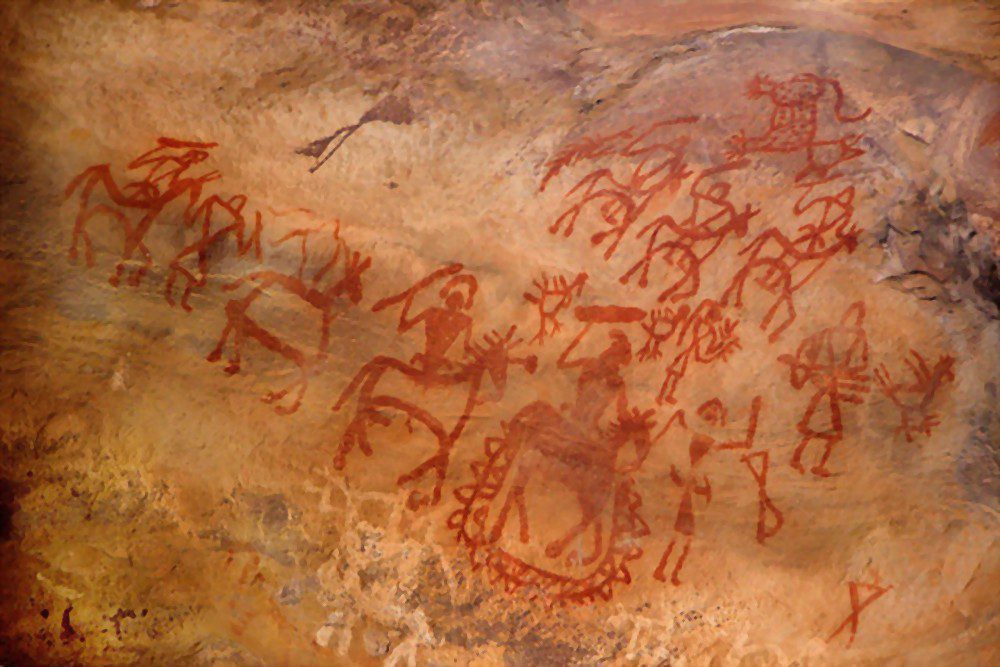
The earliest records of the Indian subcontinent history exist in the form of the Rock Shelters of Bhimbetka. It’s an archaeological site in central India that spans the prehistoric paleolithic and mesolithic periods, as well as the historic period.
It shows the earliest traces of human life on the Indian subcontinent and evidence of Stone Age starting at the site.
Some of the Bhimbetka rock shelters feature prehistoric cave paintings and the earliest are about 30,000 years old.
These shelters are situated on the southern edge of the central Indian plateau, in the foothills of the Vindhyan Mountains.
There are five groups of rock shelters, each of them decorated with paintings that are believed to date from the Mesolithic Period right through to the historical period.
The Bhimbetka site has the oldest known rock art in the Indian subcontinent, as well as is one of the largest prehistoric complexes.
Mehrgarh Culture (7000 BC to 3300 BC)
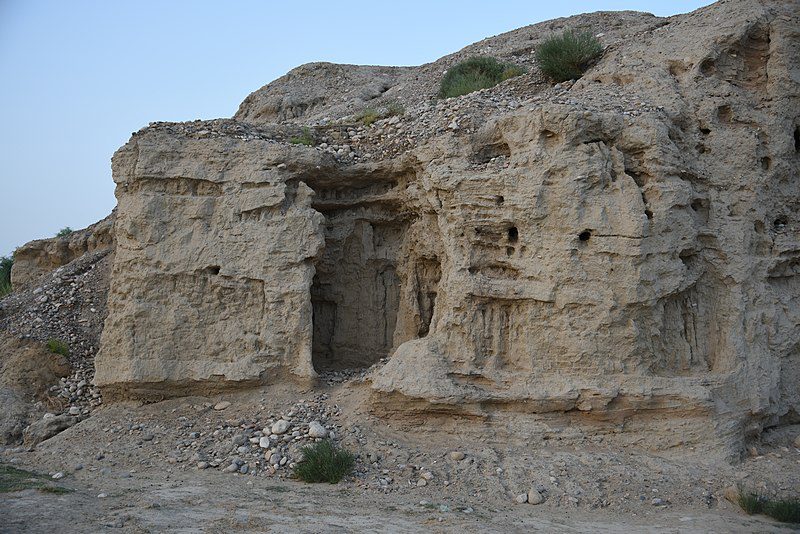
Mehrgarh is one of the most significant sites belonging to the Neolithic Age. At the same time, it is one of the oldest sites that indicate the introduction of the concept of farming and herding.
Mehrgarh, sometimes also anglicized as Mehergarh or Mehrgar, is located near the Bolan Pass on the Kacchi Plain of Balochistan, Pakistan, to the west of the Indus River valley
The site of Mehrgarh, spread over an area of 495-acre, was discovered in the year 1974.
Indus Valley Civilization (3300 BC to 1700 BC)
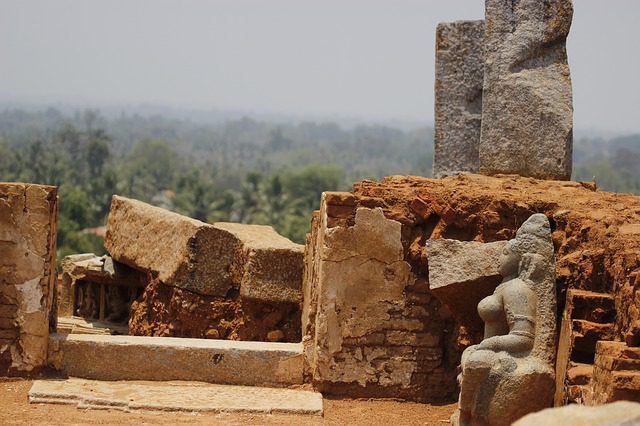
The Indus Valley Civilization was discovered in the 1920s. This is one of the most significant periods in the history of India. Indus Valley Civilization is divided into 6 significant phases.
Early Harappan Phase (3300 BC to 2600 BC)
The early Harappan Phase lasted for approximately 700 years, starting with the Ravi Phase.
It is one of the three earliest urban civilizations and made use of an early form of the Indus script, known as Harappan script, for writing purposes.
Around 2800 BC, the Kot Diji phase of the Indus Valley Civilization started.
Mature Harappan Phase (2600 BC to 1700 BC)
The Mature Harappan Phase started around 2600 BC. Large cities and urban areas started emerging and the civilization expanded to over 2,500 cities and settlements.
Urban planning, excellent sewage and drainage system, system of uniform weights and measures, knowledge of proto-dentistry, etc are some of the other elements that characterize the mature phase.
Late Harappan Phase (1700 BC to 1300 BC)
The Late Harappan Phase began around 1700 BC and came to an end around 1300 BC. However, one can find many elements of the Indus Valley Civilization in later cultures.
Vedic Period/Age (1700 BC to 500 BC)
The Vedic Period or the Vedic Age refers to the time of the compilation of the sacred Vedic Sanskrit texts in India.
Situated on the Indo-Gangetic Plain, the Vedic Civilization formed the basis of Hinduism and the Indian culture. The Vedic Period can be divided into the following two phases:
Early Vedic/Rig Vedic Period (1700 BC to 1000 BC)
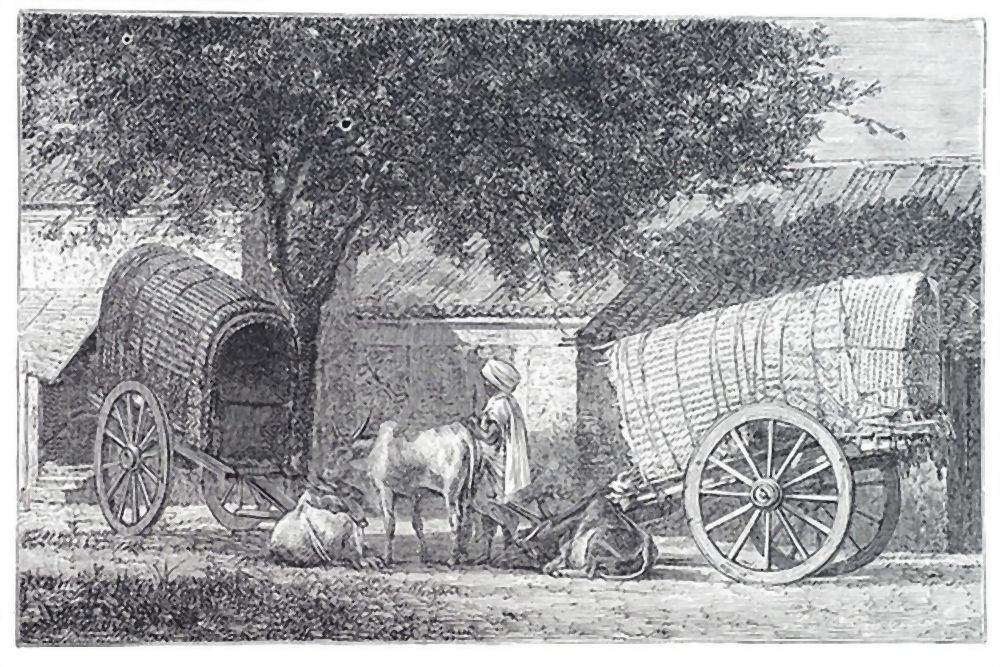
Early Vedic Period represents the time period when the oldest of all Vedas, Rig Veda was compiled.
During this period, the king was believed to be the protector of the people, who took an active part in the government.
The caste system started becoming rigid and the families started becoming patriarchal. The major events of this time are:
- 1700 BC – Late Harappan and Early Vedic period coincide
- 1300 BC – The end of Cemetery H culture
- 1000 BC – Iron Age of India
Later Vedic Age (1000 BC to 500 BC)
The emergence of the later Vedic period was marked with agriculture becoming the dominant economic activity and a decline in the significance of cattle rearing.
The political organization changed completely, with the reduction in the involvement of people in the administration. The major events are:
- 600 BC – The formation of Sixteen Maha Janapadas (Great Kingdoms)
- 599 BC – The birth of Mahavira, founder of Jainism
- 563 BC – The birth of Siddhartha Gautama (Buddha), founder of Buddhism
- 538 BC – Cyrus the Great conquered parts of Pakistan
- 500 BC – Earliest written records in Brahmi
- 500 BC – Panini standardized grammar and morphology of Sanskrit, converting it
- into Classical Sanskrit. With this, the Vedic Civilization came to an end.
Ancient India (500 BCE – 550 AD)
Rise of Jainism and Buddhism
-

The emergence of Buddhism in India -

Buddhism
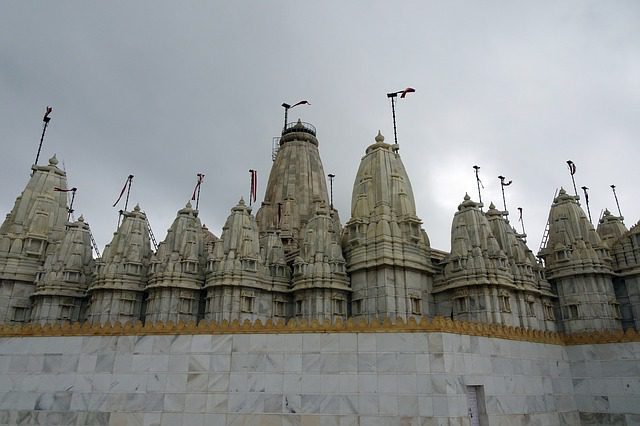
Jainism or Jain Dharma is the religious philosophy that originated in the Ancient India. The religion is based on the teachings of the Tirthankaras.
The 24th Tirthankara, Lord Mahavira, is credited with propagating the religion in the various parts of the world. Buddhism is based on the teachings of Lord Buddha, who was born as Prince Siddhartha Gautama.
After attaining Enlightenment, Lord Buddha set on a task of teaching others how to achieve nirvana. His teachings were later propagated throughout the world by Emperor Asoka.
The other major events of the Ancient Indian period are:
- 333 BC – Darius III was defeated by Alexander the Great. The Macedonian Empire was established
- 326 BC – Ambhi, King of Taxila surrendered to Alexander, Battle of the Hydaspes River
- 321 BC – Chandra Gupta Maurya established the Maurya Empire
- 273 BC – Emperor Ashoka took over the Maurya Empire
- 266 BC – Ashoka conquered most of South Asia, Afghanistan and Iran
- 265 BC – The battle of Kalinga, after which Emperor Ashoka embraced Buddhism
- 232 BC: Ashoka died and was succeeded by Dasaratha
- 230 BC – Satavahana Empire was established
- 200 to 100 BC – Tholkappiyam standardized grammar and morphology of Tamil
- 184 BC – Collapse of Maurya Empire with the assassination of Emperor Brihadrata, Establishment of the Sunga dynasty
- 180 BC – Establishment of the Indo-Greek kingdom
- 80 BC – Establishment of the Indo-Scythian kingdom
- 10 BC – Establishment of the Indo-Parthian kingdom
- 68 AD – Establishment of the Kushan Empire by Kujula Kadphises
- 78 AD – Gautamiputra Satkarni took over Satavahana Empire and defeated Scythian king Vikramaditya
- 240 AD – Establishment of the Gupta Empire by Sri-Gupta
- 320 AD – Chandragupta I took over the Gupta Empire
- 335 AD – Samudragupta took over the Gupta Empire and started expanding it
- 350 AD – Establishment of the Pallava Empire
- 380 AD – Chandragupta II took over the Gupta Empire
- 399 to 414 AD – Chinese scholar Fa-Hien traveled to India
Medieval Period (550 AD to 1526 AD)
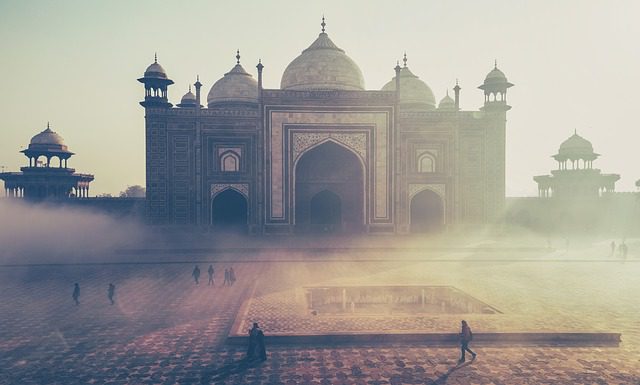
The medieval period can be divided into the following two phases:
Early Medieval Period (Upto 1300 AD)
- 606 AD – Harshavardhana became the King
- 630 AD – Hiuen Tsiang traveled to India
- 761 AD – First Muslim invasion by Mohammed Bin Qasim
- 800 AD – The birth of Shankaracharya
- 814 AD – Nripatunga Amoghavarsha I became Rashtrakuta king
- 1000 AD – Invasion by Mahmud of Ghazni
- 1017AD – Alberuni traveled to India
- 1100s AD – Rule of the Chandelas, Cholas, Kadambas, and Rashrakutas
- 1120 AD – Kalyani Chalukya Empire attained peak, Vikramaditya VI introduced Vikrama Chalukya Era
- 1191 AD – First battle of Tarain between Mohammed Ghori & Prithivi Raj Chauhan III
- 1192 AD – Second battle of Tarain between Ghauri and Prithivi Raj Chauhan III
- 1194 AD – Battle of Chandawar between Ghauri and Jayachandra
- 1288 AD – Marco Polo came to India
Late Medieval Period (1300 AD to 1500 AD)
- 1300 AD – Establishment of the Khilji Dynasty
- 1336 to 1565 AD – Vijayanagar Empire
- 1498 AD – First voyage of Vasco-da-Gama to Goa
Post-Medieval Era (1526 AD to 1818 AD)
The major events in the post medieval era are:
- 1526 AD – Babur, the Mughal ruler of Kabul, invaded Delhi and Agra and killed Sultan Ibrahim Lodi
- 1527 AD – Battle of Khanwa, in which Babur annexed Mewar
- 1530 AD – Babur died and was succeeded Humayun
- 1556 AD – Humayun died and was succeeded by his son Akbar
- 1600 AD – East India company was formed in England
- 1605 AD – Akbar died and was succeeded by Jehangir
- 1628 AD – Jehangir died and was succeeded by Shah Jahan
- 1630 AD – Shivaji was born
- 1658 AD – Shah Jahan built Taj Mahal, Jamia Masjid and Red Fort.
- 1659 AD – Shivaji defeated Adilshahi troops at the Battle of Pratapgarh
- 1674 AD – Maratha Empire was established
- 1680 AD – Shivaji died
- 1707 AD – Aurangzeb died and was succeeded by Bahadur Shah I
- 1707 AD – Maratha Empire broke into two divisions
- 1734 AD – Pamheiba invaded Tripura
- 1737 AD – Bajirao I conquered Delhi
- 1740 AD – Bajirao I died and was succeeded by Balaji Bajirao
- 1757 AD – Battle of Plassey was fought
- 1761 AD – Third battle of Panipat ended the expansion of Maratha Empire
- 1766 AD – First Anglo-Mysore War
- 1777 AD – First Anglo-Maratha War
- 1779 AD – Battle of Wadgaon
- 1780 AD – Second Anglo-Mysore War
- 1789 AD – Third Anglo-Mysore War
- 1798 AD – Fourth Anglo-Mysore War
- 1799 AD – Tipu Sultan died, Wodeyar dynasty was restored
- 1803 AD – Second Anglo-Maratha War
- 1817 AD – Third Anglo-Maratha War begins
- 1818 AD – End of the Maratha Empire and British control over most of India
Colonial Era (1818 AD to 1947 AD)
The Colonial Era started with the British taking control over almost all the parts of India and ended with the freedom of India in 1947.
The major events that took place during the Colonial Era are:
- 1829 AD – Prohibition of Sati
- 1857 AD – First Indian war of Independence, known as Indian Mutiny
- 1885 AD – Indian National Congress was formed
- 1930 AD – Dandi Salt March, Simon Commission, First Round Table Conference
- 1915 AD – Home Rule League was founded by Annie Besant
- 1919 AD – Massacre at Jallianwalabagh
- 1931 AD – Bhagat Singh was hanged by the British, Second Round Table Conference, Gandhi-Irvin Pact
- 1919 AD – Khilafat Movement, Jalianwala Bagh Massacre, Rowlat Act
- 1937 AD – Congress won power in many states, World War II broke out
- 1921 AD – Civil Disobedience Movement
- 1928 AD – Murder of Lala Lajpat Rai
- 1942 AD – Quit India Movement, Rise of Subhash Chandra Bose
- 1922 AD – Quit India Movement suspended after the Chauri-Chura violence
- 1946 AD – Muslim League adamant about the formation of Pakistan
- 1947 AD – India gained independence and witnessed partition
Independent and Modern India (1947 onwards)
In 1947, India became independent and from that year onwards, started India’s struggle to become one of the leading nations of the world.
Today, the country is regarded as one of the fastest-growing major economies of the world.
Recent Posts
- Items provided through FPS
- The scale of rations
- The price of items distributed through FPS across states.
- Kyoto Protocol of 2001
- Reducing Emissions from Deforestation and Forest Degradation (REDD) as well as REDD+ mechanisms proposed by the United Nations Framework Convention on Climate Change
- United Nations-mandated Sustainable Developmental Goals (SDG)
- Paris Agreement
- Carbon Neutrality
- multistrata agroforestry,
- afforestation,
- tree intercropping,
- biomass production,
- regenerative agriculture,
- conservation agriculture,
- farmland restoration,
- silvopasture,
- tropical-staple tree,
- intercropping,
- bamboo and indigenous tree–based land management.
Petrol in India is cheaper than in countries like Hong Kong, Germany and the UK but costlier than in China, Brazil, Japan, the US, Russia, Pakistan and Sri Lanka, a Bank of Baroda Economics Research report showed.
Rising fuel prices in India have led to considerable debate on which government, state or central, should be lowering their taxes to keep prices under control.
The rise in fuel prices is mainly due to the global price of crude oil (raw material for making petrol and diesel) going up. Further, a stronger dollar has added to the cost of crude oil.
Amongst comparable countries (per capita wise), prices in India are higher than those in Vietnam, Kenya, Ukraine, Bangladesh, Nepal, Pakistan, Sri Lanka, and Venezuela. Countries that are major oil producers have much lower prices.
In the report, the Philippines has a comparable petrol price but has a per capita income higher than India by over 50 per cent.
Countries which have a lower per capita income like Kenya, Bangladesh, Nepal, Pakistan, and Venezuela have much lower prices of petrol and hence are impacted less than India.
“Therefore there is still a strong case for the government to consider lowering the taxes on fuel to protect the interest of the people,” the report argued.
India is the world’s third-biggest oil consuming and importing nation. It imports 85 per cent of its oil needs and so prices retail fuel at import parity rates.
With the global surge in energy prices, the cost of producing petrol, diesel and other petroleum products also went up for oil companies in India.
They raised petrol and diesel prices by Rs 10 a litre in just over a fortnight beginning March 22 but hit a pause button soon after as the move faced criticism and the opposition parties asked the government to cut taxes instead.
India imports most of its oil from a group of countries called the ‘OPEC +’ (i.e, Iran, Iraq, Saudi Arabia, Venezuela, Kuwait, United Arab Emirates, Russia, etc), which produces 40% of the world’s crude oil.
As they have the power to dictate fuel supply and prices, their decision of limiting the global supply reduces supply in India, thus raising prices
The government charges about 167% tax (excise) on petrol and 129% on diesel as compared to US (20%), UK (62%), Italy and Germany (65%).
The abominable excise duty is 2/3rd of the cost, and the base price, dealer commission and freight form the rest.
Here is an approximate break-up (in Rs):
a)Base Price | 39 |
b)Freight | 0.34 |
c) Price Charged to Dealers = (a+b) | 39.34 |
d) Excise Duty | 40.17 |
e) Dealer Commission | 4.68 |
f) VAT | 25.35 |
g) Retail Selling Price | 109.54 |
Looked closely, much of the cost of petrol and diesel is due to higher tax rate by govt, specifically excise duty.
So the question is why government is not reducing the prices ?
India, being a developing country, it does require gigantic amount of funding for its infrastructure projects as well as welfare schemes.
However, we as a society is yet to be tax-compliant. Many people evade the direct tax and that’s the reason why govt’s hands are tied. Govt. needs the money to fund various programs and at the same time it is not generating enough revenue from direct taxes.
That’s the reason why, govt is bumping up its revenue through higher indirect taxes such as GST or excise duty as in the case of petrol and diesel.
Direct taxes are progressive as it taxes according to an individuals’ income however indirect tax such as excise duty or GST are regressive in the sense that the poorest of the poor and richest of the rich have to pay the same amount.
Does not matter, if you are an auto-driver or owner of a Mercedes, end of the day both pay the same price for petrol/diesel-that’s why it is regressive in nature.
But unlike direct tax where tax evasion is rampant, indirect tax can not be evaded due to their very nature and as long as huge no of Indians keep evading direct taxes, indirect tax such as excise duty will be difficult for the govt to reduce, because it may reduce the revenue and hamper may programs of the govt.
Globally, around 80% of wastewater flows back into the ecosystem without being treated or reused, according to the United Nations.
This can pose a significant environmental and health threat.
In the absence of cost-effective, sustainable, disruptive water management solutions, about 70% of sewage is discharged untreated into India’s water bodies.
A staggering 21% of diseases are caused by contaminated water in India, according to the World Bank, and one in five children die before their fifth birthday because of poor sanitation and hygiene conditions, according to Startup India.
As we confront these public health challenges emerging out of environmental concerns, expanding the scope of public health/environmental engineering science becomes pivotal.
For India to achieve its sustainable development goals of clean water and sanitation and to address the growing demands for water consumption and preservation of both surface water bodies and groundwater resources, it is essential to find and implement innovative ways of treating wastewater.
It is in this context why the specialised cadre of public health engineers, also known as sanitation engineers or environmental engineers, is best suited to provide the growing urban and rural water supply and to manage solid waste and wastewater.
Traditionally, engineering and public health have been understood as different fields.
Currently in India, civil engineering incorporates a course or two on environmental engineering for students to learn about wastewater management as a part of their pre-service and in-service training.
Most often, civil engineers do not have adequate skills to address public health problems. And public health professionals do not have adequate engineering skills.
India aims to supply 55 litres of water per person per day by 2024 under its Jal Jeevan Mission to install functional household tap connections.
The goal of reaching every rural household with functional tap water can be achieved in a sustainable and resilient manner only if the cadre of public health engineers is expanded and strengthened.
In India, public health engineering is executed by the Public Works Department or by health officials.
This differs from international trends. To manage a wastewater treatment plant in Europe, for example, a candidate must specialise in wastewater engineering.
Furthermore, public health engineering should be developed as an interdisciplinary field. Engineers can significantly contribute to public health in defining what is possible, identifying limitations, and shaping workable solutions with a problem-solving approach.
Similarly, public health professionals can contribute to engineering through well-researched understanding of health issues, measured risks and how course correction can be initiated.
Once both meet, a public health engineer can identify a health risk, work on developing concrete solutions such as new health and safety practices or specialised equipment, in order to correct the safety concern..
There is no doubt that the majority of diseases are water-related, transmitted through consumption of contaminated water, vectors breeding in stagnated water, or lack of adequate quantity of good quality water for proper personal hygiene.
Diseases cannot be contained unless we provide good quality and adequate quantity of water. Most of the world’s diseases can be prevented by considering this.
Training our young minds towards creating sustainable water management systems would be the first step.
Currently, institutions like the Indian Institute of Technology, Madras (IIT-M) are considering initiating public health engineering as a separate discipline.
To leverage this opportunity even further, India needs to scale up in the same direction.
Consider this hypothetical situation: Rajalakshmi, from a remote Karnataka village spots a business opportunity.
She knows that flowers, discarded in the thousands by temples can be handcrafted into incense sticks.
She wants to find a market for the product and hopefully, employ some people to help her. Soon enough though, she discovers that starting a business is a herculean task for a person like her.
There is a laborious process of rules and regulations to go through, bribes to pay on the way and no actual means to transport her product to its market.
After making her first batch of agarbathis and taking it to Bengaluru by bus, she decides the venture is not easy and gives up.
On the flipside of this is a young entrepreneur in Bengaluru. Let’s call him Deepak. He wants to start an internet-based business selling sustainably made agarbathis.
He has no trouble getting investors and to mobilise supply chains. His paperwork is over in a matter of days and his business is set up quickly and ready to grow.
Never mind that the business is built on aggregation of small sellers who will not see half the profit .
Is this scenario really all that hypothetical or emblematic of how we think about entrepreneurship in India?
Between our national obsession with unicorns on one side and glorifying the person running a pakora stall for survival as an example of viable entrepreneurship on the other, is the middle ground in entrepreneurship—a space that should have seen millions of thriving small and medium businesses, but remains so sparsely occupied that you could almost miss it.
If we are to achieve meaningful economic growth in our country, we need to incorporate, in our national conversation on entrepreneurship, ways of addressing the missing middle.
Spread out across India’s small towns and cities, this is a class of entrepreneurs that have been hit by a triple wave over the last five years, buffeted first by the inadvertent fallout of demonetization, being unprepared for GST, and then by the endless pain of the covid-19 pandemic.
As we finally appear to be reaching some level of normality, now is the opportune time to identify the kind of industries that make up this layer, the opportunities they should be afforded, and the best ways to scale up their functioning in the shortest time frame.
But, why pay so much attention to these industries when we should be celebrating, as we do, our booming startup space?
It is indeed true that India has the third largest number of unicorns in the world now, adding 42 in 2021 alone. Braving all the disruptions of the pandemic, it was a year in which Indian startups raised $24.1 billion in equity investments, according to a NASSCOM-Zinnov report last year.
However, this is a story of lopsided growth.
The cities of Bengaluru, Delhi/NCR, and Mumbai together claim three-fourths of these startup deals while emerging hubs like Ahmedabad, Coimbatore, and Jaipur account for the rest.
This leap in the startup space has created 6.6 lakh direct jobs and a few million indirect jobs. Is that good enough for a country that sends 12 million fresh graduates to its workforce every year?
It doesn’t even make a dent on arguably our biggest unemployment in recent history—in April 2020 when the country shutdown to battle covid-19.
Technology-intensive start-ups are constrained in their ability to create jobs—and hybrid work models and artificial intelligence (AI) have further accelerated unemployment.
What we need to focus on, therefore, is the labour-intensive micro, small and medium enterprise (MSME). Here, we begin to get to a definitional notion of what we called the mundane middle and the problems it currently faces.
India has an estimated 63 million enterprises. But, out of 100 companies, 95 are micro enterprises—employing less than five people, four are small to medium and barely one is large.
The questions to ask are: why are Indian MSMEs failing to grow from micro to small and medium and then be spurred on to make the leap into large companies?
At the Global Alliance for Mass Entrepreneurship (GAME), we have advocated for a National Mission for Mass Entrepreneurship, the need for which is more pronounced now than ever before.
Whenever India has worked to achieve a significant economic milestone in a limited span of time, it has worked best in mission mode. Think of the Green Revolution or Operation Flood.
From across various states, there are enough examples of approaches that work to catalyse mass entrepreneurship.
The introduction of entrepreneurship mindset curriculum (EMC) in schools through alliance mode of working by a number of agencies has shown significant improvement in academic and life outcomes.
Through creative teaching methods, students are encouraged to inculcate 21st century skills like creativity, problem solving, critical thinking and leadership which are not only foundational for entrepreneurship but essential to thrive in our complex world.
Udhyam Learning Foundation has been involved with the Government of Delhi since 2018 to help young people across over 1,000 schools to develop an entrepreneurial mindset.
One pilot programme introduced the concept of ‘seed money’ and saw 41 students turn their ideas into profit-making ventures. Other programmes teach qualities like grit and resourcefulness.
If you think these are isolated examples, consider some larger data trends.
The Observer Research Foundation and The World Economic Forum released the Young India and Work: A Survey of Youth Aspirations in 2018.
When asked which type of work arrangement they prefer, 49% of the youth surveyed said they prefer a job in the public sector.
However, 38% selected self-employment as an entrepreneur as their ideal type of job. The spirit of entrepreneurship is latent and waiting to be unleashed.
The same can be said for building networks of successful women entrepreneurs—so crucial when the participation of women in the Indian economy has declined to an abysmal 20%.
The majority of India’s 63 million firms are informal —fewer than 20% are registered for GST.
Research shows that companies that start out as formal enterprises become two-three times more productive than a similar informal business.
So why do firms prefer to be informal? In most cases, it’s because of the sheer cost and difficulty of complying with the different regulations.
We have academia and non-profits working as ecosystem enablers providing insights and evidence-based models for growth. We have large private corporations and philanthropic and funding agencies ready to invest.
It should be in the scope of a National Mass Entrepreneurship Mission to bring all of them together to work in mission mode so that the gap between thought leadership and action can finally be bridged.
Heat wave is a condition of air temperature which becomes fatal to human body when exposed. Often times, it is defined based on the temperature thresholds over a region in terms of actual temperature or its departure from normal.
Heat wave is considered if maximum temperature of a station reaches at least 400C or more for Plains and at least 300C or more for Hilly regions.
a) Based on Departure from Normal
Heat Wave: Departure from normal is 4.50C to 6.40C
Severe Heat Wave: Departure from normal is >6.40C
b) Based on Actual Maximum Temperature
Heat Wave: When actual maximum temperature ≥ 450C
Severe Heat Wave: When actual maximum temperature ≥470C
If above criteria met at least in 2 stations in a Meteorological sub-division for at least two consecutive days and it declared on the second day
It is occurring mainly during March to June and in some rare cases even in July. The peak month of the heat wave over India is May.
Heat wave generally occurs over plains of northwest India, Central, East & north Peninsular India during March to June.
It covers Punjab, Haryana, Delhi, Uttar Pradesh, Bihar, Jharkhand, West Bengal, Odisha, Madhya Pradesh, Rajasthan, Gujarat, parts of Maharashtra & Karnataka, Andhra Pradesh and Telengana.
Sometimes it occurs over Tamilnadu & Kerala also.
Heat waves adversely affect human and animal lives.
However, maximum temperatures more than 45°C observed mainly over Rajasthan and Vidarbha region in month of May.

a. Transportation / Prevalence of hot dry air over a region (There should be a region of warm dry air and appropriate flow pattern for transporting hot air over the region).
b. Absence of moisture in the upper atmosphere (As the presence of moisture restricts the temperature rise).
c. The sky should be practically cloudless (To allow maximum insulation over the region).
d. Large amplitude anti-cyclonic flow over the area.
Heat waves generally develop over Northwest India and spread gradually eastwards & southwards but not westwards (since the prevailing winds during the season are westerly to northwesterly).
The health impacts of Heat Waves typically involve dehydration, heat cramps, heat exhaustion and/or heat stroke. The signs and symptoms are as follows:
1. Heat Cramps: Ederna (swelling) and Syncope (Fainting) generally accompanied by fever below 39*C i.e.102*F.
2. Heat Exhaustion: Fatigue, weakness, dizziness, headache, nausea, vomiting, muscle cramps and sweating.
3. Heat Stoke: Body temperatures of 40*C i.e. 104*F or more along with delirium, seizures or coma. This is a potential fatal condition.

Norman Borlaug and MS Swaminathan in a wheat field in north India in March 1964
Political independence does not have much meaning without economic independence.
One of the important indicators of economic independence is self-sufficiency in food grain production.
The overall food grain scenario in India has undergone a drastic transformation in the last 75 years.
India was a food-deficit country on the eve of Independence. It had to import foodgrains to feed its people.
The situation became more acute during the 1960s. The imported food had to be sent to households within the shortest possible time.
The situation was referred to as ‘ship to mouth’.
Presently, Food Corporation of India (FCI) godowns are overflowing with food grain stocks and the Union government is unable to ensure remunerative price to the farmers for their produce.
This transformation, however, was not smooth.
In the 1960s, it was disgraceful, but unavoidable for the Prime Minister of India to go to foreign countries with a begging bowl.
To avoid such situations, the government motivated agricultural scientists to make India self-sufficient in food grain production.
As a result, high-yield varieties (HYV) were developed. The combination of seeds, water and fertiliser gave a boost to food grain production in the country which is generally referred to as the Green Revolution.
The impact of the Green Revolution, however, was confined to a few areas like Punjab, Haryana, western Uttar Pradesh in the north and (unified) Andhra Pradesh in the south.
Most of the remaining areas were deficit in food grain production.
Therefore the Union government had to procure food grain from surplus states to distribute it among deficit ones.
At the time, farmers in the surplus states viewed procurement as a tax as they were prevented from selling their surplus foodgrains at high prices in the deficit states.
As production of food grains increased, there was decentralisation of procurement. State governments were permitted to procure grain to meet their requirement.
The distribution of food grains was left to the concerned state governments.
Kerala, for instance, was totally a deficit state and had to adopt a distribution policy which was almost universal in nature.
Some states adopted a vigorous public distribution system (PDS) policy.
It is not out of place to narrate an interesting incident regarding food grain distribution in Andhra Pradesh. The Government of Andhra Pradesh in the early 1980s implemented a highly subsidised rice scheme under which poor households were given five kilograms of rice per person per month, subject to a ceiling of 25 kilograms at Rs 2 per kg. The state government required two million tonnes of rice to implement the scheme. But it received only on one million tonne from the Union government.
The state government had to purchase another million tonne of rice from rice millers in the state at a negotiated price, which was higher than the procurement price offered by the Centre, but lower than the open market price.
A large number of studies have revealed that many poor households have been excluded from the PDS network, while many undeserving households have managed to get benefits from it.
Various policy measures have been implemented to streamline PDS. A revamped PDS was introduced in 1992 to make food grain easily accessible to people in tribal and hilly areas, by providing relatively higher subsidies.
Targeted PDS was launched in 1997 to focus on households below the poverty line (BPL).
Antyodaya Anna Yojana (AAY) was introduced to cover the poorest of the poor.
Annapoorna Scheme was introduced in 2001 to distribute 10 kg of food grains free of cost to destitutes above the age of 65 years.
In 2013, the National Food Security Act (NFSA) was passed by Parliament to expand and legalise the entitlement.
Conventionally, a card holder has to go to a particular fair price shop (FPS) and that particular shop has to be open when s/he visits it. Stock must be available in the shop. The card holder should also have sufficient time to stand in the queue to purchase his quota. The card holder has to put with rough treatment at the hands of a FPS dealer.
These problems do not exist once ration cards become smart cards. A card holder can go to any shop which is open and has available stocks. In short, the scheme has become card holder-friendly and curbed the monopoly power of the FPS dealer. Some states other than Chhattisgarh are also trying to introduce such a scheme on an experimental basis.
More recently, the Government of India has introduced a scheme called ‘One Nation One Ration Card’ which enables migrant labourers to purchase rations from the place where they reside. In August 2021, it was operational in 34 states and Union territories.
The intentions of the scheme are good but there are some hurdles in its implementation which need to be addressed. These problems arise on account of variation in:
It is not clear whether a migrant labourer gets items provided in his/her native state or those in the state s/he has migrated to and what prices will s/he be able to purchase them.
The Centre must learn lessons from the experiences of different countries in order to make PDS sustainable in the long-run.
For instance, Sri Lanka recently shifted to organic manure from chemical fertiliser without required planning. Consequently, it had to face an acute food shortage due to a shortage of organic manure.
Some analysts have cautioned against excessive dependence on chemical fertiliser.
Phosphorus is an important input in the production of chemical fertiliser and about 70-80 per cent of known resources of phosphorus are available only in Morocco.
There is possibility that Morocco may manipulate the price of phosphorus.
Providing excessive subsidies and unemployment relief may make people dependent, as in the case of Venezuela and Zimbabwe.
It is better to teach a person how to catch a fish rather than give free fish to him / her.
Hence, the government should give the right amount of subsidy to deserving people.
The government has to increase livestock as in the case of Uruguay to make the food basket broad-based and nutritious. It has to see to it that the organic content in the soil is adequate, in order to make cultivation environmentally-friendly and sustainable in the long-run.
In short, India has transformed from a food-deficit state to a food-surplus one 75 years after independence. However, the government must adopt environmental-friendly measures to sustain this achievement.
Agroforestry is an intentional integration of trees on farmland.
Globally, it is practised by 1.2 billion people on 10 per cent area of total agricultural lands (over 1 billion hectares).
It is widely popular as ‘a low hanging fruit’ due to its multifarious tangible and intangible benefits.
The net carbon sequestered in agroforestry is 11.35 tonnes of carbon per ha
A panacea for global issues such as climate change, land degradation, pollution and food security, agroforestry is highlighted as a key strategy to fulfil several targets:

In 2017, a New York Times bestseller Project Drawdown published by 200 scientists around the world with a goal of reversing climate change, came up with the most plausible 100 solutions to slash–down greenhouse gas (GHG) emissions.
Out of these 100 solutions, 11 strategies were highlighted under the umbrella of agroforestry such as:-
Nowadays, tree-based farming in India is considered a silver bullet to cure all issues.
It was promoted under the Green India mission of 2001, six out of eight missions under the National Action Plan on Climate Change (NAPCC) and National Agroforestry and Bamboo Mission (NABM), 2017 to bring a third of the geographical area under tree cover and offsetting GHG emissions.
These long-term attempts by the Government of India have helped enhance the agroforestry area to 13.75 million hectares.
The net carbon sequestered in agroforestry is 11.35 tonnes of carbon per ha and carbon sequestration potential is 0.35 tonnes of carbon per ha per year at the country level, according to the Central Agroforestry Research Institute, Jhansi.
India will reduce an additional 2.5-3 billion tonnes of CO2 by increasing tree cover. This extra tree cover could be achieved through agroforestry systems because of their ability to withstand minimum inputs under extreme situations.
Here are some examples which portray the role of agroforestry in achieving at least nine out of the 17 SDGs through sustainable food production, ecosystem services and economic benefits:
SDG 1 — No Poverty: Almost 736 million people still live in extreme poverty. Diversification through integrating trees in agriculture unlocks the treasure to provide multifunctional benefits.
Studies carried out in 2003 in the arid regions of India reported a 10-15 per cent increase in crop yield with Prosopis cineraria (khejari). Adoption of agroforestry increases income & production by reducing the cost of input & production.
SDG 2 — Zero hunger: Tree-based systems provide food and monetary returns. Traditional agroforestry systems like Prosopis cineraria and Madhuca longifolia (Mahua) provide edible returns during drought years known as “lifeline to the poor people”.
Studies showed that 26-50 per cent of households involved in tree products collection and selling act as a coping strategy to deal with hunger.
SDG 3 — Good health and well-being: Human wellbeing and health are depicted through the extent of healthy ecosystems and services they provide.
Agroforestry contributes increased access to diverse nutritious food, supply of medicine, clean air and reduces heat stress.
Vegetative buffers can filter airstreams of particulates by removing dust, gas, microbial constituents and heavy metals.
SDG 5 — Gender equality: Throughout the world around 3 billion people depend on firewood for cooking.
In this, women are the main collectors and it brings drudgery and health issues.
A study from India stated that almost 374 hours per year are spent by women for collection of firewood. Growing trees nearby provides easy access to firewood and diverts time to productive purposes.
SDG 6 — Clean Water and Sanitation: Water is probably the most vital resource for our survival. The inherent capacity of trees offers hydrological regulation as evapotranspiration recharges atmospheric moisture for rainfall; enhanced soil infiltration recharges groundwater; obstructs sediment flow; rainwater filtration by accumulation of heavy metals.
An extensive study in 35 nations published in 2017 concluded that 30 per cent of tree cover in watersheds resulted in improved sanitisation and reduced diarrheal disease.
SDG 7 — Affordable & Clean Energy: Wood fuels are the only source of energy to billions of poverty-stricken people.
Though trees are substitutes of natural forests, modern technologies in the form of biofuels, ethanol, electricity generation and dendro-biomass sources are truly affordable and clean.
Ideal agroforestry models possess fast-growing, high coppicing, higher calorific value and short rotation (2-3 years) characteristics and provide biomass of 200-400 tonnes per ha.
SDG 12 — Responsible consumption and production: The production of agricultural and wood-based commodities on a sustainable basis without depleting natural resources and as low as external inputs (chemical fertilisers and pesticides) to reduce the ecological footprints.
SDG 13 — Climate action: Globally, agricultural production accounts for up to 24 per cent of GHG emissions from around 22.2 million square km of agricultural area, according to the Food and Agriculture Organization.
A 2016 study depicted that conversion of agricultural land to agroforestry sequesters about 27.2± 13.5 tonnes CO2 equivalent per ha per year after establishment of systems.
Trees on farmland mitigate 109.34 million tonnes CO2 equivalent annually from 15.31 million ha, according to a 2017 report. This may offset a third of the total GHG emissions from the agriculture sector of India.
SDG 15 — Life on Land: Agroforestry ‘mimics the forest ecosystem’ to contribute conservation of flora and faunas, creating corridors, buffers to existing reserves and multi-functional landscapes.
Delivery of ecosystem services of trees regulates life on land. A one-hectare area of homegardens in Kerala was found to have 992 trees from 66 species belonging to 31 families, a recent study showed.
The report of the World Agroforestry Centre highlighted those 22 countries that have registered agroforestry as a key strategy in achieving their unconditional national contributions.
Recently, the Government of India has allocated significant financial support for promotion of agroforestry at grassroot level to make the Indian economy as carbon neutral. This makes agroforestry a low-hanging fruit to achieve the global goals.