


In 2020: UPSC gave an Essay Topic: Simplicity is the ultimate Sophistication!!!
In 2024: UPSC gave an Essay Topic: All ideas having large consequence are always simple!!!
Both the essays can be attempted with the below content.
RELEVANCE OF THIS ESSAY
This essay is relevant from a multitude of angles – social, environmental, political and from an economic standpoint.
We live in a world, that is getting complex each passing day and as a species, we are entwined in it. It has indeed become a cob-web of complexity. And the only way out of it appears to be simplicity.
NECESSITY OF SIMPLICITY
Our species confronts a triple crisis: every biological system is deteriorating, we face growing social inequality, and the global economy has entered what could be a long depression. With our economy and climate in crisis, these times call for a change in how we live.
Happiness Index says we are not the happiest generation, although we have immense technological power with in our reach, we have access to best of the education, bet of the healthcare and all other aspects of good life, yet we are sad, depressed, isolated and disconnected from real world.
In our way through civilizational progress, it appears we have lost our true soul, lost our being. We have forgotten the ways we used to be happy with so little things, we have more now, and we are less happy, less content, more fragile and more isolated than ever before.
We are not happy with our jobs, our education,our society and our achievements and a void dwindles with in us all asking the pertinent question – What is the meaning of life ? and What went wrong ?
DEFINING SIMPLICITY
People are intuitively drawn to Simplicity, sensing its promise of the re-enchantment of life. But at the same time, they fear it, worrying that they will never enjoy themselves again. But they’re mistaken — if you’re not laughing and smiling more as you simplify, you’re not doing it right.
We’re happier and more fulfilled when we limit our outer riches and focus on inner riches. It’s not about impoverishment — where people do not have enough — particularly enough food, or shelter or safety. It’s about everyone having enough. Simplicity is about having enough, but not too much. Affluence, as the Dali Lama notes, brings inner, spiritual impoverishment.
Is Simplicity relevant to the poor? Yes, but in a different way. The Simplicity movement is a middle-class movement because it concerns making a choice about how to live, and the poor have few choices. Instead of cutting back their spending, the poor need more money to spend. The poor need new policies rather than Simplicity tips. They need policies that support higher minimum wages, good jobs, affordable housing and health care — policies that make it possible for the poor to live simply.
Simplicity is relevant to the poor in another way — it challenges our beliefs about money: As long as we allow unbridled profit to be our primary goal, people, and particularly corporations, will lie, cheat and treat workers unfairly. Ultimately, profit is the reason we go to war, and it’s the poor who fight these wars.
Simplicity, then, is about taking control over your life and resisting the forces of the dominant society that tell us to claw our way to the top, to be a winner, regardless of consequences. Being a winner does not necessarily make you happy! And in fact, it most likely won’t. Again, as Thoreau says, success is when you feel contented “with only a sense of existence”
WHAT SIMPLICITY IS NOT ?
More often than not, we have come across essays on this topic where students equate simplicity with – Poverty, Frugality, Choice of Apparel, Anti-Technology etc.
- Simplicity is not POVERTY (Don’t romanticize Poverty)
- Simplicity is not living in a HUT or leading an ASCETIC life (Instead it is a philosophy on how to lead life)
- Simplicity is not anti-technology (Technology as such is not good or bad, it is good/bad depends on the user)
- Simplicity is not banality or lack of luster
- Simplicity is not Mundane
- Simplicity is not romanticization of our past.
Simplicity is finding balance in our lives and leading a life that is uncluttered yet sophisticated.
CONSUMERISM AND ITS PERIL
Many believe it’s because a lifestyle of overconsumption creates deficiencies in things that we really need, like health, social connections, security and discretionary time. These deficiencies leave us vulnerable to daily lives of dependency, passive consumption — working, watching and waiting.
The typical urban resident waits in line five years of his or her life and spends six months sitting at red lights, eight months opening junk mail, one year searching for misplaced items and four years cleaning house. Every year, the typical high-school student spends 1,500 hours in front of the tube, compared with 900 hours spent at school.
Yet, the game is changing. Just as we approach an all time peak in consumption, converging variables like shrinking resource supplies, necessitate changes in the way we live. Here’s the good news: reducing our levels of consumption will not be a sacrifice but a bonus if we simply redefine the meaning of the word “success.”
Instead of more stuff in our already-stuffed lives, we can choose fewer things but better things of higher quality, fewer visits to the doctor and more visits to museums and the houses of friends. Greater use of our hands and minds in creative activities like playing a flute or building a new kitchen table. If we are successful as a culture, we’ll get more value from each transaction, each relationship and each unit of energy; by reducing the waste and carelessness that now litter our economy — energy hogs like aluminum cans and plastic bottles, huge thirsty lawns, excessive airplane travel, feedlot meat and suburbs without stores — we can finance the coming transition to a lifestyle that feels more comfortable in the present and doesn’t clearcut the future.
Healthy, robust cultures mentor diets that are anthropologically correct, but sadly, in many market-bound economies, food has fallen from its lofty stature as a source of well-being, community and clarity to the simplistic category of fun. “Even wild monkeys have healthier diets than many humans,” says anthropologist Katharine Milton. Again, in our money-mad world, the focus is on snackability, convenience and shelf life rather than human life.
Alarmingly, the value of the food has radically declined in the last century. In 1900, wheat from conventional farms was 90 percent protein, compared to only 9 percent today, according to United Nations data.
The economic crisis of the fall of 2008 was clearly based on greed — the pursuit of wealth regardless of the ethics. As Thomas Friedman says in his November 25, 2008 New York Times column:
This financial meltdown involved a broad national breakdown in personal responsibility, government regulation and financial ethics. So many people were in on it: People who had no business buying a home, with nothing down and nothing to pay for two years; people who had no business pushing such mortgages, but made fortunes doing so; people who had no business bundling those loans into securities and selling them to third parties, as if they were AAA bonds, but made fortunes doing so; people who had no business rating those loans as AAA, but made fortunes doing so; and people who had no business buying those bonds and putting them on their balance sheets so they could earn a little better yield, but made fortunes doing so.
It is clear that the pursuit of wealth changes you. It makes people more greedy and selfish. So the research shows that the pursuit of wealth will not make you happy. However, there’s another, related piece of research that is more compelling than any other: The biggest predictor of the health of a nation, as measured in longevity, is the wealth gap. The bigger the gap, the lower everyone’s longevity. It’s not just that poor people’s health brings down the average. (Which is part of it, of course.) No, it hurts the wealthy as well.
The rich person in this country doesn’t have the longevity the middle-class person has in Norway, a country committed to a small wealth gap. Why is this? It seems that a wealth gap destroys social cohesion. It creates a society in which people do not feel connected with others, do not feel responsible for others, do not care about the common good.
When a society allows a wealth gap, it’s telling people: It’s a jungle out there. It’s a cutthroat world. Do what you must in order to survive. Watch your back. Don’t trust anyone. Don’t expect any help. Don’t expect fairness. It’s every man for himself. You’re on your own.
In this kind of society, people feel like they have to hustle constantly if they are to survive. They lie and cheat to get ahead. Crime and violence grow. Of course citizens come to believe that no one cares, that you can’t trust anyone. Social cohesion is destroyed.
The resulting sense of isolation and lack of belonging takes its toll. But there’s something more: Part of this is the inequality of status. There is something very harmful about inequality. The poorer people are forced to feel shame and envy. The rich people feel arrogance, contempt and disdain, as well as guilt and fear of reprisal. These are not healthy emotions!
Yes, it’s more pleasant to have higher status, but the high-status person never really feels good because there’s always someone higher! And when you’re at the top, you know everyone is trying to dethrone you. And who likes those people at the top? Do they even like each other? No, they never know who will be the one to stick the knife in.
Ultimately, the greatest harm comes because no one feels part of something greater than themselves. You feelisolated, disconnected, ignored, abandoned and alone.
All the research shows thatfeelings of caring and connection lead to health, happiness and longevity. Anger, fear, resentment and loneliness are devastating to people. These emotions will only disappear as the wealth gap disappears.
A country with a large and strong middle class is one in which government has stepped in to say that the important thing is the common good, not extreme profits for a few. People have long argued the “trickle-down” theory of economics. We have seen that it doesn’t work.
What works is equality and connection — people understanding that our fate is tied to others’ fate.
You only become more caring by being cared for. We do not feel cared for in this cutthroat culture. You learn to compete, to achieve, to prove you’re better than others; you judge others, compare yourself to others; you learn to ignore the homeless, to hide your real feelings with a false image; you learn to cheat, to fool people, to trick them, to manipulate them. Who doesn’t worry they will end up alone, abandoned and neglected — sitting drugged in a wheelchair, warehoused with other old people.
Aldous Huxley called it “organized lovelessness.” We choose technology over people and interact more and more with machines — voice mail, e-mail, cash machines. We even check our own library books outs. You don’t need anyone and no one needs you.
Juliete Schorhas noted that, over the past 30 years, real consumption expenditures per person have doubled. Her analysis reveals a double-edged sword that has emerged particularly in the 1980s and 90s: [The] booming economy reinforced a powerful cycle of “work and spend” in which consumer norms accelerated dramatically. People needed to work more to purchase all the new products being churned out by a globalizing consumer economy. And they responded to their stressful lives by participating in an orgy of consumer upscaling.
A study by the psychologist Tim Kasser, The High Price of Materialism, has shown that the ecological footprint of an individual (measured as the number of acres necessary to support one’s chosen lifestyle) increases steadily in proportion to number of hours worked per week, and rises dramatically for those working more than 35 hours per week. Kasser showed that, at the same time that ecological footprints go up, genuine life satisfaction goes down.
Repetitive stress injuries, sleep deprivation, psychological stress, obesity, lack of exercise, anxiety and depression are all quite dangerous individually, but they may also conspire to cause diabetes, heart disease or cancer. All of these illnesses are linked in some way to theculture of overwork.
Dr. Suzanne Schweikerthas noted, however, that there is a deep irony here that brings us back to some social and political questions that are broader than those of work hours alone. “Our desire to keep our health insurance benefits,” she pointed out, “ties us to jobs that are bad for our health.
CULTURAL SHIFT AND JAPAN
Imagine a way of life that’s culturally richer but materially leaner. In this emerging lifestyle, there is less stress, insecurity, pollution, doubt and debt but more vacation time, more solid connections with nature and more participation in the arts, amateur sports and politics. Greater reliance on human energy — fueled by complex carbohydrates — and less reliance on ancient sunlight stored as pollution-filled fossil fuel. Fewer fluorescent hours in the supermarket, more sunny afternoons out in the vegetable garden. Instead of being passive consumers, doggedly treadmilling to keep up with overproduction, we’ll choose healthy, renewable forms of wealth such as social capital (networks and bonds of trust), whose value increases the more we spend it, stimulating work that’s more like a puzzle than a prison sentence, and acquired skills and interests that enhance our free time, making money less of a stressful imperative.
A culture shift like this — from an emphasis on material wealth to an abundance of time, relationships and experiences — has already occurred in many societies such as 18th-century Japan.
Land was in short supply, forest resources were being depleted, and minerals such as gold and copper were suddenly scarce as well. Japan’s culture adapted by developing a national ethic that centered on moderation and efficiency.
An attachment to the material things in life was seen as demeaning, while the advancement of crafts and human knowledge were lofty goals. Quality became ingrained in a culture that eventually produced world-class solar cells and Toyota Priuses. Training and education in aesthetics and ritualistic arts fluorished, resulting in disciplines like fencing, martial arts, the tea ceremony, flower arranging, literature, art and mastery of the abacus.
The three largest cities in Japan had 1,500 bookstores among them, and most people had access to basic education, health care and the necessities of life, further enriching a culture that spent less money but paid more attention.
LESSONS FROM CANADA AND EU
Places such as Canada and the European Union (EU) have already started down this enviable path, making political and cultural space for values that lie beneath the bottom line of monetary wealth. For example, most EU countries give legal standing to mandatory family leave from work, part-time jobs with pro-rated benefits, higher taxes on energy use and pollution in exchange for lower income taxes and take-back laws requiring manufacturers to recycle products at the end of their use.
An everyday ethic is emerging in Europe that encourages sustainable behavior by popular demand. Says John de Graaf, co-author of Affluenza: The All-Consuming Epidemic, “Western European countries have invested in their social contracts. Strategic investments in health care, education, transportation, and public space reduced the need (and desire) of individuals to maximize their own incomes.”
VOLUNTARY SIMPLICITY – “COOL LIFE STYLE FOR A HOT PLANET”
The wake-up alarm is buzzing with news ranging from climate disruption to the end of cheap energy and food riots around the world. The time for changes in how we live is now. Only if we act swiftly and voluntarily, can we transform catastrophe into opportunity. Small steps are not sufficient. We require large-scale changes in our energy systems, the radical redesign of our urban environments, a conscious democracy with the strength to make great changes, and much more.
As individuals, we may protest that we are helpless in the face of such immense challenges and that there is little we can do. However, the reality is just the opposite — only changes in our individual lives can provide a trustworthy foundation for a human future where we can not only maintain ourselves, but also surpass ourselves.
Voluntary Simplicity is a cool lifestyle for a hot planet. Simplicity that is consciously chosen, deliberate and intentional supports a higher quality of life. Here are some of the important reasons to consciously choose Simplicity:
• Simplicity fosters a more harmonious relationship with the Earth — the land, air and water.
• Simplicity promotes fairness and equity among the people of the Earth.
• Simplicity cuts through needless clutter and complexity.
• Simplicity enhances living with balance — inner and outer, work and family, family and community.
• Simplicity reveals the beauty and intelligence of nature’s designs.
• Simplicity increases the resources available for future generations.
• Simplicity helps save animal and plant species from extinction.
• Simplicity responds to global shortages of oil, water and other vital resources.
• Simplicity keeps our eyes on the prize of what matters most in our lives — the quality of our relationships with family, friends, community, nature and cosmos.
• Simplicity yields lasting satisfactions that more than compensate for the fleeting pleasures of consumerism
• Simplicity fosters the sanity of self-discovery and an integrated approach to life.
• Simplicity blossoms in community and connects us to the world with a sense of belonging and common purpose.
• Simplicity is a lighter lifestyle that fits elegantly into the real world of the 21st century.
Voluntary Simplicity is not sacrifice.
• Sacrifice is a consumer lifestyle that is overstressed, overbusy and overworked.
• Sacrifice is investing long hours doing work that is neither meaningful nor satisfying.
• Sacrifice is being apart from family and community to earn a living.
• Sacrifice is the stress of commuting long distances and coping with traffic.
• Sacrifice is the white noise of civilization blotting out the subtle sounds of nature.
• Sacrifice is hiding nature’s beauty behind a jumble of billboard advertisements.
• Sacrifice is the smell of the city stronger than the scent of the Earth.
• Sacrifice is carrying more than 200 toxic chemicals in our bodies with consequences that will cascade for generations ahead.
• Sacrifice is the massive extinction of plants and animals and a dramatically impoverished biosphere. Sacrifice is being cut off from nature’s wildness and wisdom.
• Sacrifice is global climate disruption, crop failure, famine and forced migration.
• Sacrifice is the absence of feelings of neighborliness and community.
• Sacrifice is feeling divided among the different parts of our lives and unsure how they work together in a coherent whole.
• Sacrifice is the lost opportunity for soulful encounter with others.
Consumerism offers lives of sacrifice where Simplicity offers lives of opportunity. Simplicity creates the opportunity for greater fulfillment in work, compassion for others, feelings of kinship with all life and awe of living in a living universe.
UNDERSTANDING SIMPLICITY
Crude / Regressive Simplicity:-
The mainstream media often present Simplicity as a path of regress instead of progress. Simplicity is frequently viewed as anti-technology, anti-innovation and a backward-looking way of life that seeks a romantic return to a bygone era. A regressive Simplicity is often portrayed as a utopian, back-to-nature movement with families leaving the stresses of an urban life in favor of living on a farm or in a recreational vehicle or on a boat. This is a stereotypical view of a crudely simple lifestyle — a throwback to an earlier time and more primitive condition — with no indoor toilet, no phone, no computer, no television and no car. No thanks! Seen in this way, Simplicity is a cartoon lifestyle that seems naive, disconnected and irrelevant — an approach to living that can be easily dismissed as impractical and unworkable. Regarding Simplicity as regressive and primitive makes it easier to embrace a business-as-usual approach to living in the world.
Cosmetic/Superficial Simplicity:-
In recent years, a different view of Simplicity has begun to appear — a cosmetic Simplicity that attempts to cover over deep defects in our modern ways of living by giving the appearance of meaningful change. Shallow Simplicity assumes that green technologies — such as fuel-efficient cars, fluorescent light bulbs and recycling — will fix our problems, give us breathing room and allow us to continue pretty much as we have in the past without requiring that we make fundamental changes in how we live and work.
Cosmetic Simplicity puts green lipstick on our unsustainable lives to give them the outward appearance of health and happiness. A superficial Simplicity gives a false sense of security by implying that small measures will solve great challenges. A cosmetic Simplicity perpetuates the status quo by assuming that, with the use of green technologies, we can moderate our impact and continue along our current path of growth for another half century or more.
Sophisticated / Conscious Simplicity:-
Seldom presented in the mass media and poorly understood is an elegant Simplicity that represents a deep, graceful and sophisticated transformation in our ways of living — the work that we do, the transportation that we use, the homes and neighborhoods in which we live, the food that we eat, the clothes that we wear and much more.
A sophisticated and graceful Simplicity seeks to heal our relationship with the Earth, with one another and with the sacred universe. Conscious Simplicity is not simple. This is a life-way that is growing and flowering with a garden of expressions. Sophisticated Simplicity fits aesthetically and sustainably into the real world of the 21st century. Which of these expressions of Simplicity — crude, cosmetic or sophisticated — is most fitting in our dramatically changing world?
Simplicity is not an alternative lifestyle for a marginal few; it is a creative choice for the mainstream majority, particularly in developed nations. Simplicity is simultaneously a personal choice, a civilizational choice and a species choice.
Even with major technological innovations in energy and transportation, it will require dramatic changes in our overall levels and patterns of living and consuming if we are to maintain the integrity of the Earth as a living system. Overall, a “deep Simplicity” that fosters an elegant transformation of our lives is vital if we are to build a workable and meaningful future.
THE GARDEN OF SIMPLICTY
1) Uncluttered Simplicity
Simplicity means taking charge of lives that are too busy, too stressed, and too fragmented. Simplicity means cutting back on clutter, complexity and trivial distractions, both material and non-material, and focusing on the essentials — whatever those may be for each of our unique lives. As Thoreau said, “Our life is frittered away by detail. Simplify, simplify.” Or, as Plato wrote, “In order to seek one’s own direction, one must simplify the mechanics of ordinary, everyday life.”
2) Ecological Simplicity
Simplicity means to choose ways of living that touch the Earth more lightly and that reduce our ecological impact on the web of life. This life-path remembers our deep roots with the Earth, air and water. It encourages us to connect with nature, the seasons and the cosmos. A natural Simplicity feels a deep reverence for the community of life on Earth and accepts that the non-human realms of plants and animals have their dignity and rights as well the human.
3) Compassionate Simplicity
Simplicity means to feel such a strong sense of kinship with others that we “choose to live simply so that others may simply live.” A compassionate Simplicity means feeling a bond with the community of life and being drawn toward a path of reconciliation — with other species and future generations as well as, for example, between those with great differences of wealth and opportunity. A compassionate Simplicity is a path of cooperation and fairness that seeks a future of mutually assured development for all.
4) Soulful Simplicity
Simplicity means to approach life as a meditation and to cultivate our experience of intimate connection with all that exists. By living simply, we can more directly awaken to the living universe that surrounds and sustains us, moment by moment. Soulful Simplicity is more concerned with consciously tasting life in its unadorned richness than with a particular standard or manner of material living. In cultivating a soulful connection with life, we tend to look beyond surface appearances and bring our interior aliveness into relationships of all kinds.
5) Business Simplicity
Simplicity means a new kind of economy is growing in the world with many expressions of “right livelihood” in the rapidly growing market for healthy and sustainable products and services of all kinds — from home building materials and energy systems to foods and transportation. When the need for a sustainable infrastructure in developing nations is combined with the need to retrofit and redesign the homes, cities, workplaces and transportation systems of developed nations, it is clear that an enormous wave of green economic activity will unfold. A new economics is integral to this new approach to business, for example, where “waste equals food” or the waste of one activity represents resources for another part of the production system.
6) Civic Simplicity
Simplicity means a new approach to governing ourselves, recognizing that to live more lightly and sustainably on the Earth will require changes in every area of public life — from transportation and education to the design of our cities, public buildings and workplaces. The politics of Simplicity is also a media politics as the mass media are the primary vehicle for reinforcing, or transforming, the mass consciousness of consumerism.
7) Frugal Simplicity
Simplicity means that, by cutting back on spending that is not truly serving our lives and by practicing skillful management of our personal finances, we can achieve greater financial independence. Frugality and careful financial management bring increased financial freedom and the opportunity to more consciously choose our path through life. Living with less also decreases the impact of our consumption upon the Earth and frees resources for others.
SIMPLICITY IS THE ULTIMATE SOPHISTICATION- LESSON FROM GOOGLE VS YAHOO
Yahoo search engine was dominant in 1990s when Google was barely starting out. But over the years, Yahoo Search engine became almost irrelevant where as Google took over. The reason was exceptionally simple.
Yahoo Search engine page and Search engine page of other competitors were cluttered with advertisements and links. While Google, kept it exceptionally simple. That’s the prime reason how and why google search engine took over and became a favorite.
Same can be said about the Bing search engine of Microsoft. Now, Yahoo is almost history and and tech journalists have written its obituary already. The reason was simple, it was Google’s simplicity and uncluttered environment that helped it to become what it is today.
Imagine, if google agrees to put an advertisement on its search page, it will reach the global audience instantaneously and how much can google earn from this, yet despite the lucrative nature of this, google stays as it is, that’s because, it very well knows , the day it loses simplicity, it will loose its sophistication and that it will be a history like Yahoo.
SIMPLICITY IS THE ULTIMATE SOPHISTICATION- LESSON FROM APPLE
That’s been one of my mantras – focus and simplicity. Simple can be harder than complex: You have to work hard to get your thinking clean to make it simple. But it’s worth it in the end because once you get there, you can move mountains. – Steve Jobs
Steve Jobs’ interest in design began with his love for his childhood home. It was in one of the many working-class subdivisions between San Francisco and San Jose that were developed by builders who churned out inexpensive modernist tract houses in the 1950s for the postwar suburban migration. Inspired by Frank Lloyd Wright’s vision of simple modern homes for the American “everyman,” developers such as Joseph Eichler and his imitators built houses that featured floor-to-ceiling glass walls, open floor plans, exposed post-and-beam construction, concrete slab floors and lots of sliding glass doors.
“Eichler did a great thing,” Jobs agreed, which featured homes in the Eichler style. “His houses were smart and cheap and good. They brought clean design and simple taste to lower-income people.” His appreciation for Eichler-style homes, Jobs said, instilled his passion for making sharply designed products for the mass market. “I love it when you can bring really great design and simple capability to something that doesn’t cost much,” he said as he pointed out the clean elegance of the Eichlers. “It was the original vision for Apple. That’s what we tried to do with the first Mac. That’s what we did with the iPod.”
Distinctive design—clean and friendly and fun—would become the hallmark of Apple products under Jobs. In an era not known for great industrial designers, Jobs’ partnerships with Hartmut Esslinger in the 1980s and then with Jony Ive starting in 1997 created an engineering and design aesthetic that set Apple apart from other technology companies and ultimately helped make it the most valuable company in the world. Its guiding tenet was simplicity—not merely the shallow simplicity that comes from an uncluttered look and feel and surface of a product, but the deep simplicity that comes from knowing the essence of every product, the complexities of its engineering and the function of every component. “It takes a lot of hard work,” Jobs said, “to make something simple, to truly understand the underlying challenges and come up with elegant solutions.” As the headline of Apple’s first marketing brochure proclaimed in 1977, “Simplicity is the ultimate sophistication.”
Jobs’ love of simplicity in design was honed when he became a practitioner of Buddhism. After dropping out of college, he made a long pilgrimage through India seeking enlightenment, but it was mainly the Japanese path of Zen Buddhism that stirred his sensibilities. “Zen was a deep influence,” said Daniel Kottke, a college friend who accompanied Jobs on the trip. “You see it in his whole approach of stark, minimalist aesthetics, intense focus.” Jobs agreed. “I have always found Buddhism—Japanese Zen Buddhism in particular—to be aesthetically sublime,” . “The most sublime thing I’ve ever seen are the gardens around Kyoto.”, Jobs confides.
One of the few companies in the 1970s with a distinctive industrial design style was Sony. Apple’s first office, after it moved out of the Jobs’ family garage, was in a small building it shared with a Sony sales office, and Jobs would drop by to study the marketing material. “He would come in looking scruffy and fondle the product brochures and point out design features,” said Dan’l Lewin, who worked there. “Every now and then, he would ask, ‘Can I take this brochure?’”
His fondness for the dark, industrial look of Sony had receded by the time he began attending, starting in June 1981, the annual International Design Conference in Aspen, Colorado. There he was exposed to the clean and functional approach of the Bauhaus movement, which was enshrined by Herbert Bayer in the buildings, living suites, sans-serif font typography and furniture on the Aspen Institute campus. Like his mentors Walter Gropius and Ludwig Mies van der Rohe, Bayer believed that design should be simple, yet with an expressive spirit. It emphasized rationality and functionality by employing clean lines and forms. Among the maxims preached by Mies and Gropius was “Less is more.” As with Eichler homes, the artistic sensibility was combined with the capability for mass production.
Jobs publicly discussed his embrace of the Bauhaus style in a talk he gave at the 1983 Aspen design conference, the theme of which was “The Future Isn’t What It Used to Be.” He predicted the passing of the Sony style in favor of Bauhaus simplicity. “The current wave of industrial design is Sony’s high-tech look, which is gunmetal grey, maybe paint it black, do weird stuff to it,” he said. “It’s easy to do that. But it’s not great.” He proposed instead an alternative that was more true to the function and nature of the products. “What we’re going to do is make the products high-tech, and we’re going to package them cleanly so that you know they’re high-tech. We will fit them in a small package, and then we can make them beautiful and white, just like Braun does with its electronics.”
Jobs repeatedly emphasized that Apple’s mantra would be simplicity. “We will make them bright and pure and honest about being high-tech, rather than a heavy industrial look of black, black, black, black, like Sony,” he preached. “The way we’re running the company, the product design, the advertising, it all comes down to this: Let’s make it simple. Really simple.”
Simplicity and Elegance has its Cost too– Jobs’ infatuation with design had a downside. The excess costs and delays he incurred by indulging his artistic sensibilities contributed to his ouster from Apple in 1985 and the gorgeous market failures he produced at his subsequent company, NeXT. When he was recalled to Apple in 1997, he had tempered some of his instincts and learned to make sensible trade-offs, but he was no less passionate about the importance of design. It was destined to make Apple again stand out in a market that was glutted by boxy, beige generic computers and consumer devices such as music players and phones.
“Why do we assume that simple is good? Because with physical products, we have to feel we can understand them. As you bring order to complexity, you find a way to make the product defer to you. Simplicity isn’t just a visual style. It’s not just minimalism or the absence of clutter. It involves digging through the depth of the complexity.
Jobs’ belief in the power of simplicity as a design precept reached its pinnacle with the three consumer device triumphs he produced beginning in 2001: the iPod, iPhone and iPad. He immersed himself daily in the design of the original iPod and its interface. His main demand was “Simplify!” He would go over each screen and apply a rigid test: If he wanted a song or a function, he should be able to get there in three clicks. And the click should be intuitive. If he couldn’t figure out how to navigate to something, or if it took more than three clicks, he would be brutal.
The iPod, and later the iPhone and iPad, were triumphs of Jobs’ original insight in the early 1980s that design simplicity was best accomplished by tightly wedding hardware and software. Unlike Microsoft, which licensed out its Windows operating system software to different hardware makers, such as IBM and Dell, Apple created products that were tightly integrated from end to end. This was particularly true of the first version of the iPod. Everything was tied together seamlessly: the Macintosh hardware, the Macintosh operating system, the iTunes software, the iTunes Store and the iPod hardware and software.
This allowed Apple to make the iPod device itself much simpler than rival MP3 players, such as the Rio. “What made the Rio and other devices so brain dead was that they were complicated,” Jobs explained. “They had to do things like make playlists, because they weren’t integrated with the jukebox software on your computer. So by owning the iTunes software and the iPod device, that allowed us to make the computer and the device work together, and it allowed us to put the complexity in the right place.” The astronomer Johannes Kepler declared that “nature loves simplicity and unity.” So did Steve Jobs. By integrating hardware and software, he was able to achieve both.
SIMPLICITY AND MARKET ECONOMY
The marketplace abounds with promises of simplicity. Citibank has a “simplicity” credit card, Ford has “keep it simple pricing,” and Lexmark vows to “uncomplicate” the consumer experience. Widespread calls for simplicity formed a trend that was inevitable, given the structure of the technology business around selling the same thing “new and improved” where often “improved” simply means more.
Imagine a world in which software companies simplified their programs every year by shipping with 10% fewer features at 10% higher cost due to the expense of simplification. For the consumer to get less and pay more seems to contradict sound economic principles. Offer to share a cookie with a child and which half will the child want?
Yet in spite of the logic of demand, “simplicity sells” as espoused by New York Times columnist David Pogue in a presentation at the 2006 annual TED Conference in Monterey. The undeniable commercial success of the Apple iPod—a device that does less but costs more than other digital music players— is a key supporting example of this trend.
Another example is the deceivingly spare interface of the powerful Google search engine, which is so popular that “googling” has become shorthand for “searching the Web.” People not only buy, but more importantly love, designs that can make their lives simpler. For the foreseeable future, complicated technologies will continue to invade our homes and workplaces, thus simplicity is bound to be a growth industry. Simplicity is a quality that not only evokes passionate loyalty for a product design, but also has become a key strategic tool for businesses to confront their own intrinsic complexities. Dutch conglomerate Philips leads in this area with its utter devotion to realizing “sense and simplicity” and it has a “Simplicity Advisory Board (SAB) unlike any other company.
SIMPLICITY IS NOT SIMPLE
Simplicity is not simple. The world around us is exceptionally complex. Thus, its our ability on how we process complex things and make it simple will be the true achievement. As the saying goes:-
“If you can’t explain it to a six-year-old, you probably don’t understand it yourself.” – Albert Einstein
Thus behind each simplicity, there lies a great deal of complexity and deeper understanding of complexity and making things simple for the general populace to understand and comprehend better.
Simplicity, Minimalism and “Less is More” philosophies are not mere philosophies, they are way of life , a life that is carefully thought and lead. If we look at the Happiness Index, we would know that the greatest economies does not have happiest people. The reason is there is a lack of simplicity, lack of thoughtful approach to life.
We live in ecosystem that is deteriorating rapidly, the generation is not the happiest one either and we are on the verge of collapse-ecologically, morally, socially, psychologically and otherwise. We need to separate between our Want and Need and then only we can approach simplicity, where life is full of joy and its richness is bountiful. Thus, simplicity is the ultimate sophistication.
Indeed, Buddha, left home, travelled far and wide, meditated relentlessly and almost fasted to death, but in the end, gave a simpler yet practicable philosophy of life and to arrive at that, and to find the cause behind all our sorrows was not easy for him, but in doing so, he made lives simpler and elegant. HIs teaching were exceptionally simple yet sophisticated and finding a middle path is the true path to happiness and ultimate realization of pure bliss.
In the teachings of Gandhi too, we find utmost simplicity and thus he is widely read and regarded as Mahatma.
You can explore Gandhi, Buddha and other very well known similar dimensions as well.
Recent Posts
The United Nations has shaped so much of global co-operation and regulation that we wouldn’t recognise our world today without the UN’s pervasive role in it. So many small details of our lives – such as postage and copyright laws – are subject to international co-operation nurtured by the UN.
In its 75th year, however, the UN is in a difficult moment as the world faces climate crisis, a global pandemic, great power competition, trade wars, economic depression and a wider breakdown in international co-operation.
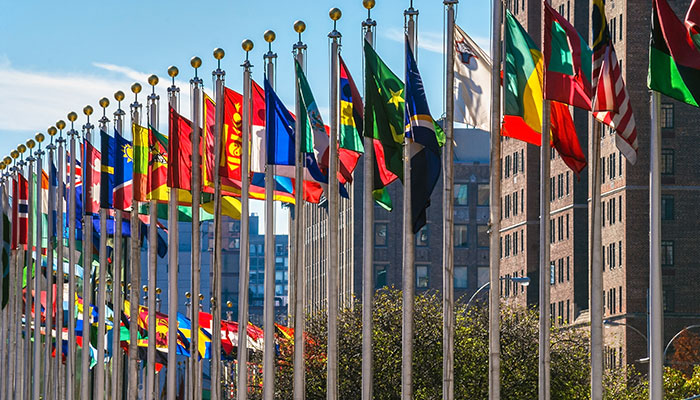
Still, the UN has faced tough times before – over many decades during the Cold War, the Security Council was crippled by deep tensions between the US and the Soviet Union. The UN is not as sidelined or divided today as it was then. However, as the relationship between China and the US sours, the achievements of global co-operation are being eroded.
The way in which people speak about the UN often implies a level of coherence and bureaucratic independence that the UN rarely possesses. A failure of the UN is normally better understood as a failure of international co-operation.
We see this recently in the UN’s inability to deal with crises from the ethnic cleansing of the Rohingya Muslims in Myanmar, to civil conflict in Syria, and the failure of the Security Council to adopt a COVID-19 resolution calling for ceasefires in conflict zones and a co-operative international response to the pandemic.
The UN administration is not primarily to blame for these failures; rather, the problem is the great powers – in the case of COVID-19, China and the US – refusing to co-operate.
Where states fail to agree, the UN is powerless to act.
Marking the 75th anniversary of the official formation of the UN, when 50 founding nations signed the UN Charter on June 26, 1945, we look at some of its key triumphs and resounding failures.
Five successes
1. Peacekeeping
The United Nations was created with the goal of being a collective security organisation. The UN Charter establishes that the use of force is only lawful either in self-defence or if authorised by the UN Security Council. The Security Council’s five permanent members, being China, US, UK, Russia and France, can veto any such resolution.
The UN’s consistent role in seeking to manage conflict is one of its greatest successes.
A key component of this role is peacekeeping. The UN under its second secretary-general, the Swedish statesman Dag Hammarskjöld – who was posthumously awarded the Nobel Peace prize after he died in a suspicious plane crash – created the concept of peacekeeping. Hammarskjöld was responding to the 1956 Suez Crisis, in which the US opposed the invasion of Egypt by its allies Israel, France and the UK.
UN peacekeeping missions involve the use of impartial and armed UN forces, drawn from member states, to stabilise fragile situations. “The essence of peacekeeping is the use of soldiers as a catalyst for peace rather than as the instruments of war,” said then UN Secretary-General Javier Pérez de Cuéllar, when the forces won the 1988 Nobel Peace Prize following missions in conflict zones in the Middle East, Africa, Asia, Central America and Europe.
However, peacekeeping also counts among the UN’s major failures.
2. Law of the Sea
Negotiated between 1973 and 1982, the UN Convention on the Law of the Sea (UNCLOS) set up the current international law of the seas. It defines states’ rights and creates concepts such as exclusive economic zones, as well as procedures for the settling of disputes, new arrangements for governing deep sea bed mining, and importantly, new provisions for the protection of marine resources and ocean conservation.
Mostly, countries have abided by the convention. There are various disputes that China has over the East and South China Seas which present a conflict between power and law, in that although UNCLOS creates mechanisms for resolving disputes, a powerful state isn’t necessarily going to submit to those mechanisms.
Secondly, on the conservation front, although UNCLOS is a huge step forward, it has failed to adequately protect oceans that are outside any state’s control. Ocean ecosystems have been dramatically transformed through overfishing. This is an ecological catastrophe that UNCLOS has slowed, but failed to address comprehensively.
3. Decolonisation
The idea of racial equality and of a people’s right to self-determination was discussed in the wake of World War I and rejected. After World War II, however, those principles were endorsed within the UN system, and the Trusteeship Council, which monitored the process of decolonisation, was one of the initial bodies of the UN.
Although many national independence movements only won liberation through bloody conflicts, the UN has overseen a process of decolonisation that has transformed international politics. In 1945, around one third of the world’s population lived under colonial rule. Today, there are less than 2 million people living in colonies.
When it comes to the world’s First Nations, however, the UN generally has done little to address their concerns, aside from the non-binding UN Declaration on the Rights of Indigenous Peoples of 2007.
4. Human rights
The Human Rights Declaration of 1948 for the first time set out fundamental human rights to be universally protected, recognising that the “inherent dignity and of the equal and inalienable rights of all members of the human family is the foundation of freedom, justice and peace in the world”.
Since 1948, 10 human rights treaties have been adopted – including conventions on the rights of children and migrant workers, and against torture and discrimination based on gender and race – each monitored by its own committee of independent experts.
The language of human rights has created a new framework for thinking about the relationship between the individual, the state and the international system. Although some people would prefer that political movements focus on ‘liberation’ rather than ‘rights’, the idea of human rights has made the individual person a focus of national and international attention.
5. Free trade
Depending on your politics, you might view the World Trade Organisation as a huge success, or a huge failure.
The WTO creates a near-binding system of international trade law with a clear and efficient dispute resolution process.
The majority Australian consensus is that the WTO is a success because it has been good for Australian famers especially, through its winding back of subsidies and tariffs.
However, the WTO enabled an era of globalisation which is now politically controversial.
Recently, the US has sought to disrupt the system. In addition to the trade war with China, the Trump Administration has also refused to appoint tribunal members to the WTO’s Appellate Body, so it has crippled the dispute resolution process. Of course, the Trump Administration is not the first to take issue with China’s trade strategies, which include subsidises for ‘State Owned Enterprises’ and demands that foreign firms transfer intellectual property in exchange for market access.
The existence of the UN has created a forum where nations can discuss new problems, and climate change is one of them. The Intergovernmental Panel on Climate Change (IPCC) was set up in 1988 to assess climate science and provide policymakers with assessments and options. In 1992, the UN Framework Convention on Climate Change created a permanent forum for negotiations.
However, despite an international scientific body in the IPCC, and 165 signatory nations to the climate treaty, global greenhouse gas emissions have continued to increase.
Under the Paris Agreement, even if every country meets its greenhouse gas emission targets we are still on track for ‘dangerous warming’. Yet, no major country is even on track to meet its targets; while emissions will probably decline this year as a result of COVID-19, atmospheric concentrations of greenhouse gases will still increase.
This illustrates a core conundrum of the UN in that it opens the possibility of global cooperation, but is unable to constrain states from pursuing their narrowly conceived self-interests. Deep co-operation remains challenging.
Five failures of the UN
1. Peacekeeping
During the Bosnian War, Dutch peacekeeping forces stationed in the town of Srebrenica, declared a ‘safe area’ by the UN in 1993, failed in 1995 to stop the massacre of more than 8000 Muslim men and boys by Bosnian Serb forces. This is one of the most widely discussed examples of the failures of international peacekeeping operations.
On the massacre’s 10th anniversary, then UN Secretary General Kofi Annan wrote that the UN had “made serious errors of judgement, rooted in a philosophy of impartiality”, contributing to a mass murder that would “haunt our history forever”.
If you look at some of the other infamous failures of peacekeeping missions – in places such as Rwanda, Somalia and Angola – it is the limited powers given to peacekeeping operations that have resulted in those failures.
2. The invasion of Iraq
The invasion of Iraq by the US in 2003, which was unlawful and without Security Council authorisation, reflects the fact that the UN is has very limited capacity to constrain the actions of great powers.
The Security Council designers created the veto power so that any of the five permanent members could reject a Council resolution, so in that way it is programmed to fail when a great power really wants to do something that the international community generally condemns.
In the case of the Iraq invasion, the US didn’t veto a resolution, but rather sought authorisation that it did not get. The UN, if you go by the idea of collective security, should have responded by defending Iraq against this unlawful use of force.
The invasion proved a humanitarian disaster with the loss of more than 400,000 lives, and many believe that it led to the emergence of the terrorist Islamic State.
3. Refugee crises
The UN brokered the 1951 Refugee Convention to address the plight of people displaced in Europe due to World War II; years later, the 1967 Protocol removed time and geographical restrictions so that the Convention can now apply universally (although many countries in Asia have refused to sign it, owing in part to its Eurocentric origins).
Despite these treaties, and the work of the UN High Commission for Refugees, there is somewhere between 30 and 40 million refugees, many of them, such as many Palestinians, living for decades outside their homelands. This is in addition to more than 40 million people displaced within their own countries.
While for a long time refugee numbers were reducing, in recent years, particularly driven by the Syrian conflict, there have been increases in the number of people being displaced.
During the COVID-19 crisis, boatloads of Rohingya refugees were turned away by port after port. This tragedy has echoes of pre-World War II when ships of Jewish refugees fleeing Nazi Germany were refused entry by multiple countries.
And as a catastrophe of a different kind looms, there is no international framework in place for responding to people who will be displaced by rising seas and other effects of climate change.
4. Conflicts without end
Across the world, there is a shopping list of unresolved civil conflicts and disputed territories.
Palestine and Kashmir are two of the longest-running failures of the UN to resolve disputed lands. More recent, ongoing conflicts include the civil wars in Syria and Yemen.
The common denominator of unresolved conflicts is either division among the great powers, or a lack of international interest due to the geopolitical stakes not being sufficiently high. For instance, the inaction during the Rwandan civil war in the 1990s was not due to a division among great powers, but rather a lack of political will to engage.
In Syria, by contrast, Russia and the US have opposing interests and back opposing sides: Russia backs the government of the Syrian dictator Bashar al-Assad, whereas the US does not.
5. Acting like it’s 1945
The UN is increasingly out of step with the reality of geopolitics today.
The permanent members of the Security Council reflect the division of power internationally at the end of World War II. The continuing exclusion of Germany, Japan, and rising powers such as India and Indonesia, reflects the failure to reflect the changing balance of power.
Also, bodies such as the IMF and the World Bank, which are part of the UN system, continue to be dominated by the West. In response, China has created potential rival institutions such as the Asian Infrastructure Investment Bank.
Western domination of UN institutions undermines their credibility. However, a more fundamental problem is that institutions designed in 1945 are a poor fit with the systemic global challenges – of which climate change is foremost – that we face today.