


In the post-Gandhian era, environmental problems surfaced at a breakneck speed with large-scale and indiscriminate industrialisation leading to environmental hazards and degradations. Mahatma Gandhi’s critique of modernity reveals his concern about the emergence of a social order that exploits nature for short-term gains. He had written widely about the need for human beings to exercise restraint with respect to the use of natural resources. His “counter-thinking” is now increasingly becoming a mainstream thought with greater awareness of the environmental problems.
Troubled by unrestricted industrialism and materialism, Gandhi had foreseen a time when the resources of the earth will not be enough to meet the growing demands of the people.
Understanding Gandhi

GANDHI’s Vision and Values is meant to be a serious exploration into the contemporary meaning of Hind Swaraj and the kind of possibility it indicates for agricultural practices in rural India. Hind Swaraj herein refers to Gandhi’s text and also to India’s last 50 years as an independent country.
In recent times, the significance of Hind Swaraj for an understanding of Gandhi’s thought has come to be widely recognised. Vivek Pinto’s book is perhaps among the first few to attempt a serious and comprehensive examination of the significance of Hind Swaraj for agriculture and life in rural India. For that, it merits serious attention.
The principal concern, in the words of the author, is to see if it would be possible to reconstruct a “harmonious, poverty-free, non-violent and self-reliant society” on the basis of ethical principles marked by Gandhi’s Hind Swaraj and his experiments with the agricultural communities.
Pinto’s argument unfolds at three related planes. The first section explores the cognitive significance of Hind Swaraj as a text. Another section seeks to clarify the significance of Gandhi’s own attempts, as also of various individuals, to work out in practice the basic principles marked in Hind Swaraj. The third section is a “Gandhian critique” of the experiment with planned agricultural development in independent India.
If one were to present Pinto’s work as a coherent argument, one could begin by saying that the third section is really the starting point of the argument. It spells out in distressing detail the worsening condition of agriculture in India. Most of the people still depend on agriculture and nearly 40 percent of them live below the poverty line.
After Independence, India chose to adopt the path of planned development. It was seen as a more humane and speedier way of securing a decent living for the millions of poor in the country. But, 50 years later, agricultural productivity still remains low.
Most of these grim details about peasant life and agriculture are fairly well-known. What is relevant is to see how the author proceeds to establish a kind of link between Gandhi’s text, his experiments and the present state of agriculture in the country.
Gandhi, while rejecting modern civilisation as a mode of life and work, invoked agriculture, charkha and the village as metaphors for sane human living. Pinto seeks out the implications of Hind Swaraj for agriculture as it could be practised in India. The citations from Gandhi’s writings on swadeshi as an idea of service and sensitivity to the needs of proximate communities is appropriate. The varied range of writings and case studies make interesting reading.
To Gandhi, the practice of agriculture signified a promise of limitless reach. The act of breaking and tending the soil carried within it an ageless quality. It signified a mode of work and being which, while sustaining life, could nurture an ultimate sense of meaning and worth. At this point, one could perhaps question the Hind Swaraj principles on two accounts:
– What is one to read into the fact that Gandhi, the creator of institutions, never sought to create one devoted specially to the practice and science of agriculture; and
– What about Gandhi’s silence on the practice of shifting cultivation, which at several levels is so close to the fundamental principles of Hind Swaraj?
Gandhian model of development
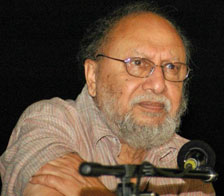
Mahatma Gandhi never used the words environment protection. However what he said and did makes him an environmentalist. His writings are replete with remarks on the excesses of industrial society. Political psychologist and social theorist Ashis Nandy has written extensively on Gandhi. In a freewheeling chat with Kaushik Das Gupta he spoke on Gandhi’s vision of social change, his critique of industrialisation and the way movements draw inspiration from Gandhi.
We often talk of two visions of development, the Gandhian vision and the Nehruvian vision. What is the fundamental difference between the two?
The Nehruvian concept is the dominant concept of development. Gandhi never used the word development. The word was first used by the US president Harry S Truman in 1949. Yes, people often talk of the Gandhian model of development. But if such a model is genuinely Gandhian then it is not about development. And if it’s about development, then bringing in Gandhi is an exercise in legitimising something alien to Gandhi’s vision.
Social change is possible without development. Society did not stop changing before the idea of development was coined. President Truman was not such a great thinker that the concept he enunciated is indispensable to human societies.
Many activists who are against big developmental projects talk of following the Gandhian way. Your comments
Yes. They draw inspiration from Gandhi to resist aspects of development that does not tally with the Gandhian vision. In one way they are humanising Gandhi. All social change is not development. The fundamental aspects of development—for example unending industrialisation, unending urbanisation, unending consumption—are not justifiable according to the Gandhian way.
Gandhians have tried to take head on some major assumptions of development. Those who challenge key aspects of development are doing us a service. They are resisting the framework in which we are caught.
Many of the solutions to the current environmental problems are actually within the purview of industrialised society. But there are others who talk of a path other than that of industrialisation. Is Gandhi’s vision in sync with such alternatives?
Gandhian vision is now seen as an inspiration, as a source, for many enterprises that offer alternative to industrialisation. These movements began in the 1980s.
None of the greatest Gandhians of today belong to India. In fact, the greatest Gandhians of our times have not read Gandhi that carefully. They perhaps read his works after people started calling them Gandhians.
Lech Walesa, the Polish shipyard trade unionist who later headed Poland’s non-Communist government, read Gandhi after people started calling him Gandhian. So did Benito Aquino. Gandhism has become a part of the process that offers alternatives to industrialisation. There are as many varieties of Gandhians as Marxists or liberals. Gandhi is a contemporary hero who is accessible—he was not a religious leader, yet religion has a big part in his politics, he was an ascetic but open to practical ways.
A lot of the de-growth movement, which believes progress is possible without economic growth, takes inspiration from Gandhi. Your comments?
I won’t use the word ‘progress’ because that is a contaminated word. The colonisers used the word progress. But yes, positive social change is possible without economic growth. And Gandhi has been an inspiration for such movements. However, we should also remember that most of the de-growth movement has taken place in societies which are over-consuming, exploiting nature and over-arming themselves—all these are hardly markers of good life.
I don’t think the hedonism associated with globalised capitalism is conducive to human happiness. Many communities have lived in poverty—but not destitution—and they haven’t been unhappy about it.
There are alternative visions but there is little by way of putting them into practice—except the endeavours of a few grassroots organisations. Your comments?
They have not been put into practice because our regimes are technocratic. Our solutions are technocratic. Technocrats go by the development textbooks. They do not keep elbow room for alternatives.
Yes, many with alternative vision keep away from the party-based political system. But they are part of the political process. The movement against dams is part of our political process. We need a group outside party politics to rate parties, rate individual candidates on yardsticks of honesty. We need an impartial agency to do that. For example, Uttar Pradesh has a system where bureaucrats vote on who the most corrupt bureaucrat is.
Recent Posts
Petrol in India is cheaper than in countries like Hong Kong, Germany and the UK but costlier than in China, Brazil, Japan, the US, Russia, Pakistan and Sri Lanka, a Bank of Baroda Economics Research report showed.
Rising fuel prices in India have led to considerable debate on which government, state or central, should be lowering their taxes to keep prices under control.
The rise in fuel prices is mainly due to the global price of crude oil (raw material for making petrol and diesel) going up. Further, a stronger dollar has added to the cost of crude oil.
Amongst comparable countries (per capita wise), prices in India are higher than those in Vietnam, Kenya, Ukraine, Bangladesh, Nepal, Pakistan, Sri Lanka, and Venezuela. Countries that are major oil producers have much lower prices.
In the report, the Philippines has a comparable petrol price but has a per capita income higher than India by over 50 per cent.
Countries which have a lower per capita income like Kenya, Bangladesh, Nepal, Pakistan, and Venezuela have much lower prices of petrol and hence are impacted less than India.
“Therefore there is still a strong case for the government to consider lowering the taxes on fuel to protect the interest of the people,” the report argued.
India is the world’s third-biggest oil consuming and importing nation. It imports 85 per cent of its oil needs and so prices retail fuel at import parity rates.
With the global surge in energy prices, the cost of producing petrol, diesel and other petroleum products also went up for oil companies in India.
They raised petrol and diesel prices by Rs 10 a litre in just over a fortnight beginning March 22 but hit a pause button soon after as the move faced criticism and the opposition parties asked the government to cut taxes instead.
India imports most of its oil from a group of countries called the ‘OPEC +’ (i.e, Iran, Iraq, Saudi Arabia, Venezuela, Kuwait, United Arab Emirates, Russia, etc), which produces 40% of the world’s crude oil.
As they have the power to dictate fuel supply and prices, their decision of limiting the global supply reduces supply in India, thus raising prices
The government charges about 167% tax (excise) on petrol and 129% on diesel as compared to US (20%), UK (62%), Italy and Germany (65%).
The abominable excise duty is 2/3rd of the cost, and the base price, dealer commission and freight form the rest.
Here is an approximate break-up (in Rs):
a)Base Price | 39 |
b)Freight | 0.34 |
c) Price Charged to Dealers = (a+b) | 39.34 |
d) Excise Duty | 40.17 |
e) Dealer Commission | 4.68 |
f) VAT | 25.35 |
g) Retail Selling Price | 109.54 |
Looked closely, much of the cost of petrol and diesel is due to higher tax rate by govt, specifically excise duty.
So the question is why government is not reducing the prices ?
India, being a developing country, it does require gigantic amount of funding for its infrastructure projects as well as welfare schemes.
However, we as a society is yet to be tax-compliant. Many people evade the direct tax and that’s the reason why govt’s hands are tied. Govt. needs the money to fund various programs and at the same time it is not generating enough revenue from direct taxes.
That’s the reason why, govt is bumping up its revenue through higher indirect taxes such as GST or excise duty as in the case of petrol and diesel.
Direct taxes are progressive as it taxes according to an individuals’ income however indirect tax such as excise duty or GST are regressive in the sense that the poorest of the poor and richest of the rich have to pay the same amount.
Does not matter, if you are an auto-driver or owner of a Mercedes, end of the day both pay the same price for petrol/diesel-that’s why it is regressive in nature.
But unlike direct tax where tax evasion is rampant, indirect tax can not be evaded due to their very nature and as long as huge no of Indians keep evading direct taxes, indirect tax such as excise duty will be difficult for the govt to reduce, because it may reduce the revenue and hamper may programs of the govt.
Globally, around 80% of wastewater flows back into the ecosystem without being treated or reused, according to the United Nations.
This can pose a significant environmental and health threat.
In the absence of cost-effective, sustainable, disruptive water management solutions, about 70% of sewage is discharged untreated into India’s water bodies.
A staggering 21% of diseases are caused by contaminated water in India, according to the World Bank, and one in five children die before their fifth birthday because of poor sanitation and hygiene conditions, according to Startup India.
As we confront these public health challenges emerging out of environmental concerns, expanding the scope of public health/environmental engineering science becomes pivotal.
For India to achieve its sustainable development goals of clean water and sanitation and to address the growing demands for water consumption and preservation of both surface water bodies and groundwater resources, it is essential to find and implement innovative ways of treating wastewater.
It is in this context why the specialised cadre of public health engineers, also known as sanitation engineers or environmental engineers, is best suited to provide the growing urban and rural water supply and to manage solid waste and wastewater.
Traditionally, engineering and public health have been understood as different fields.
Currently in India, civil engineering incorporates a course or two on environmental engineering for students to learn about wastewater management as a part of their pre-service and in-service training.
Most often, civil engineers do not have adequate skills to address public health problems. And public health professionals do not have adequate engineering skills.
India aims to supply 55 litres of water per person per day by 2024 under its Jal Jeevan Mission to install functional household tap connections.
The goal of reaching every rural household with functional tap water can be achieved in a sustainable and resilient manner only if the cadre of public health engineers is expanded and strengthened.
In India, public health engineering is executed by the Public Works Department or by health officials.
This differs from international trends. To manage a wastewater treatment plant in Europe, for example, a candidate must specialise in wastewater engineering.
Furthermore, public health engineering should be developed as an interdisciplinary field. Engineers can significantly contribute to public health in defining what is possible, identifying limitations, and shaping workable solutions with a problem-solving approach.
Similarly, public health professionals can contribute to engineering through well-researched understanding of health issues, measured risks and how course correction can be initiated.
Once both meet, a public health engineer can identify a health risk, work on developing concrete solutions such as new health and safety practices or specialised equipment, in order to correct the safety concern..
There is no doubt that the majority of diseases are water-related, transmitted through consumption of contaminated water, vectors breeding in stagnated water, or lack of adequate quantity of good quality water for proper personal hygiene.
Diseases cannot be contained unless we provide good quality and adequate quantity of water. Most of the world’s diseases can be prevented by considering this.
Training our young minds towards creating sustainable water management systems would be the first step.
Currently, institutions like the Indian Institute of Technology, Madras (IIT-M) are considering initiating public health engineering as a separate discipline.
To leverage this opportunity even further, India needs to scale up in the same direction.
Consider this hypothetical situation: Rajalakshmi, from a remote Karnataka village spots a business opportunity.
She knows that flowers, discarded in the thousands by temples can be handcrafted into incense sticks.
She wants to find a market for the product and hopefully, employ some people to help her. Soon enough though, she discovers that starting a business is a herculean task for a person like her.
There is a laborious process of rules and regulations to go through, bribes to pay on the way and no actual means to transport her product to its market.
After making her first batch of agarbathis and taking it to Bengaluru by bus, she decides the venture is not easy and gives up.
On the flipside of this is a young entrepreneur in Bengaluru. Let’s call him Deepak. He wants to start an internet-based business selling sustainably made agarbathis.
He has no trouble getting investors and to mobilise supply chains. His paperwork is over in a matter of days and his business is set up quickly and ready to grow.
Never mind that the business is built on aggregation of small sellers who will not see half the profit .
Is this scenario really all that hypothetical or emblematic of how we think about entrepreneurship in India?
Between our national obsession with unicorns on one side and glorifying the person running a pakora stall for survival as an example of viable entrepreneurship on the other, is the middle ground in entrepreneurship—a space that should have seen millions of thriving small and medium businesses, but remains so sparsely occupied that you could almost miss it.
If we are to achieve meaningful economic growth in our country, we need to incorporate, in our national conversation on entrepreneurship, ways of addressing the missing middle.
Spread out across India’s small towns and cities, this is a class of entrepreneurs that have been hit by a triple wave over the last five years, buffeted first by the inadvertent fallout of demonetization, being unprepared for GST, and then by the endless pain of the covid-19 pandemic.
As we finally appear to be reaching some level of normality, now is the opportune time to identify the kind of industries that make up this layer, the opportunities they should be afforded, and the best ways to scale up their functioning in the shortest time frame.
But, why pay so much attention to these industries when we should be celebrating, as we do, our booming startup space?
It is indeed true that India has the third largest number of unicorns in the world now, adding 42 in 2021 alone. Braving all the disruptions of the pandemic, it was a year in which Indian startups raised $24.1 billion in equity investments, according to a NASSCOM-Zinnov report last year.
However, this is a story of lopsided growth.
The cities of Bengaluru, Delhi/NCR, and Mumbai together claim three-fourths of these startup deals while emerging hubs like Ahmedabad, Coimbatore, and Jaipur account for the rest.
This leap in the startup space has created 6.6 lakh direct jobs and a few million indirect jobs. Is that good enough for a country that sends 12 million fresh graduates to its workforce every year?
It doesn’t even make a dent on arguably our biggest unemployment in recent history—in April 2020 when the country shutdown to battle covid-19.
Technology-intensive start-ups are constrained in their ability to create jobs—and hybrid work models and artificial intelligence (AI) have further accelerated unemployment.
What we need to focus on, therefore, is the labour-intensive micro, small and medium enterprise (MSME). Here, we begin to get to a definitional notion of what we called the mundane middle and the problems it currently faces.
India has an estimated 63 million enterprises. But, out of 100 companies, 95 are micro enterprises—employing less than five people, four are small to medium and barely one is large.
The questions to ask are: why are Indian MSMEs failing to grow from micro to small and medium and then be spurred on to make the leap into large companies?
At the Global Alliance for Mass Entrepreneurship (GAME), we have advocated for a National Mission for Mass Entrepreneurship, the need for which is more pronounced now than ever before.
Whenever India has worked to achieve a significant economic milestone in a limited span of time, it has worked best in mission mode. Think of the Green Revolution or Operation Flood.
From across various states, there are enough examples of approaches that work to catalyse mass entrepreneurship.
The introduction of entrepreneurship mindset curriculum (EMC) in schools through alliance mode of working by a number of agencies has shown significant improvement in academic and life outcomes.
Through creative teaching methods, students are encouraged to inculcate 21st century skills like creativity, problem solving, critical thinking and leadership which are not only foundational for entrepreneurship but essential to thrive in our complex world.
Udhyam Learning Foundation has been involved with the Government of Delhi since 2018 to help young people across over 1,000 schools to develop an entrepreneurial mindset.
One pilot programme introduced the concept of ‘seed money’ and saw 41 students turn their ideas into profit-making ventures. Other programmes teach qualities like grit and resourcefulness.
If you think these are isolated examples, consider some larger data trends.
The Observer Research Foundation and The World Economic Forum released the Young India and Work: A Survey of Youth Aspirations in 2018.
When asked which type of work arrangement they prefer, 49% of the youth surveyed said they prefer a job in the public sector.
However, 38% selected self-employment as an entrepreneur as their ideal type of job. The spirit of entrepreneurship is latent and waiting to be unleashed.
The same can be said for building networks of successful women entrepreneurs—so crucial when the participation of women in the Indian economy has declined to an abysmal 20%.
The majority of India’s 63 million firms are informal —fewer than 20% are registered for GST.
Research shows that companies that start out as formal enterprises become two-three times more productive than a similar informal business.
So why do firms prefer to be informal? In most cases, it’s because of the sheer cost and difficulty of complying with the different regulations.
We have academia and non-profits working as ecosystem enablers providing insights and evidence-based models for growth. We have large private corporations and philanthropic and funding agencies ready to invest.
It should be in the scope of a National Mass Entrepreneurship Mission to bring all of them together to work in mission mode so that the gap between thought leadership and action can finally be bridged.