


News Snippet
- News 1: Tea exports – (All about tea as it has been asked in UPSC CSE 2022 prelims exam)
- News 2: India-USA relations update– (Recent developments with regards to Indo-USA relationship)
- News 3: UAPA (Unlawful Activities Prevention Act) – (Banning of organizations which seeks to disrupt or disturb sovereignty, public order either by direct or indirect attacks)
- News 4: Chief of Defense Staff appointment– (2nd appointment of CDS and is important under various security forces and their mandate as part of syllabus in GS Paper III)
- News 5: ASI finds Buddhist caves, temples in Bandhavgarh Tiger Reserve in M.P– (Conservation reserves and areas are important as it comes in UPSC prelims frequently)
- News 6: BIMSTEC – (Basic Information – BIMSTEC is gaining prominence as SAARC is almost defunct now given Pakistan’s belligerence and Afghanistan under Taliban)
- Other important News:
- Cryogenics
- Saudi Arabia’s Crown Prince appointed as Prime Minister
- World Heart Day: September 29
- World Maritime Day
- Dada Saheb Phalke Award to Smt Asha Parekh for 2020
News 1: Tea – Exports, Condition and tea producing region of India
Background
- Tea exports during the January-July period touched 117 million kg compared with 103 million kg a year earlier.
- Conflict between Russia and Ukraine had caused serious shipment problems.
- UAE is our single largest export destination (Almost 1/6th is exported to UAE alone)
Conditions for Tea production
- Tea grows well under light shade it is a shade loving plant.
- It needs temperature 20°C to 27°C (Under Shade).
- The tea plants grow well in humid climate and cannot stand long spell of dry weather at any time of the year.
- It needs heavy rainfall between 125 cm to 375 cm, but water should be well drained.
- Water logging and frost conditions are injurious for the tea plant.
Tea as a Crop
- Tea cultivation is an example of plantation agriculture
- Introduced in India by British
- Tea is a labor-intensive industry. It requires abundant, cheap and skilled labor.
Major Tea producing states of India
- Assam, hills of Darjeeling and Jalpaiguri districts of West Bengal, Tamil Nadu and Kerala.
- Apart from these, Himachal Pradesh, Uttarakhand, Meghalaya, Andhra Pradesh and Tripura are also tea-producing states in the country

Tea Board of India
- Established: 1954
- Headquarters: Kolkata
- Ministry: Ministry of Commerce and Industry
- Type: Statutory board
- India is the second largest producer of tea globally after China and is the largest consumer in the world.
- India produces some of the world’s finest teas like Darjeeling Tea in West Bengal, Assam Tea in Assam, Nilgiris Tea in Tamil Nadu and Kangra Tea in Himachal Pradesh which are famous for their delicate flavor, strength and brightness.
UPSC Question on Tea
Consider the following States:
- Andhra Pradesh
- Kerala
- Himachal Pradesh
- Tripura
How many of the above are generally known as tea-producing States?
(a) Only one State
(b) Only two States
(b) Only three States
(d) All four States
*Many institutes given C as the option as there was controversy around this. But we have given the screenshot from NCERT, so that resolves the issue here.
News 2: Indo-USA relations update
Background
External Affairs Minister S. Jaishankar and White House National Security Advisor (NSA) Jack Sullivan met and discussed issues related to U.S.-India strategic partnership, the Ukraine war and a free and open Indo-Pacific.
US and India relations
- The U.S.-India strategic partnership is founded on shared values including a commitment to democracy and upholding the rules-based international system.
- The United States and India have shared interests in promoting global security, stability, and economic prosperity through trade, investment, and connectivity.
- India and US relationship has evolved from estranged to engaged democracies due to increased convergence of interests on bilateral, regional and global issues.
Current India – US ties
- The United States supports India’s emergence as a leading global power and a vital partner in efforts to safeguard the Indo-Pacific as a region of peace, stability, and growing prosperity.
- The strong people-to-people ties between our countries, reflected in the four million-strong Indian American diaspora and vibrant educational exchange between the two countries, are a tremendous source of strength for the strategic partnership.
- The 2+2 Ministerial Dialogue is the premier recurring dialogue mechanism between the United States and India.
Areas of cooperation
- U.S.-India Counterterrorism Joint Working Group, which was established in 2000, as well as the Strategic Clean Energy Partnership, Climate Action and Finance Mobilization Dialogue, Cyber Dialogue, Civil Space Working Group, the Education and Skills Development Working Group, Trade Policy Forum, Defense Policy Group, and Counter narcotics Working Group.
Economic relations
- In 2021, overall U.S.-India bilateral trade in goods and services reached a record $157 billion.
- The United States is India’s largest trading partner and most important export market.
- Many U.S. companies view India as a critical market and have expanded their operations there.
- Likewise, Indian companies seek to increase their presence in U.S. markets and at the end of 2020, Indian investment in the United States totaled $13 billion, supporting over 70,000 American jobs.
- The nearly 200,000 Indian students in the United States contribute $7.7 billion annually to the U.S. economy.
International Cooperation
- The United States welcomed India joining the UN Security Council in 2021 for a two-year term and supports a reformed UN Security Council that includes India as a permanent member.
- India is an ASEAN dialogue partner, an Organization for Economic Cooperation and Development partner, and an observer to the Organization of American States.
- Together with Australia and Japan, the United States and India convene as the Quad to promote a free and open Indo-Pacific and provide tangible benefits to the region.
- India is also one of twelve countries partnering with the United States on the Indo-Pacific Economic Framework for Prosperity (IPEF) to make our economies more connected, resilient, clean, and fair.
- India is a member of the Indian Ocean Rim Association (IORA), at which the United States is a dialogue partner.
- In 2021, the United States joined the International Solar Alliance headquartered in India, and in 2022 the United States Agency for International Development (USAID) Administrator Samantha Power became Co-chair of the Governing Council of the Coalition for Disaster Resilient Infrastructure (CDRI) where India is a permanent co-chair.
Civil Nuclear Cooperation
- The bilateral civil nuclear cooperation agreement was finalized in July 2007 and signed in October 2008. During Prime Minister Modi’s visit to the U.S. in September 2014, the two sides set up a Contact Group for advancing the full and timely implementation of the India-U.S. Civil Nuclear Cooperation Agreement, and to resolve pending issues.
- Culminating a decade of partnership on civil nuclear issues, the two sides have started the preparatory work on site in India for six AP 1000 reactors to be built by Westinghouse. Once completed, the project would be among the largest of its kind. The Nuclear Power Corporation of India Ltd, and Westinghouse are in talks toward finalizing the contractual arrangements, and addressing related issues
News 3: UAPA (Unlawful Activities Prevention Act)
Background
The Union Home Ministry recently declared the Popular Front of India (PFI) and its front organizations, including its student wing, the Campus Front of India (CFI), an “unlawful association” under the Unlawful Activities (Prevention) Act (UAPA).
UAPA law
The Unlawful Activities Prevention Act (UAPA) lays down the definitions and rules for designating an organisation as an “unlawful association” if it is engaged in certain types of activities.
The government can then issue a notification designating such an organisation as a terrorist organisation, if it believes that the organisation is part of “terrorist activities.”
Under the Act, ‘unlawful activity’ is not limited to terror activities relating to causing direct violence or attacks, it also includes any activities that disrupt the sovereignty and territorial integrity of the country, disrupts the economic stability of the country or causes disharmony or feelings of enmity, hatred or ill-will between different religious, racial, language or regional groups or castes or communities in the country. Related and ancillary acts, including financing, support or promotion of any such activities are also “unlawful activity”.
In essence, it can ban an organization or arrest an individual if they threaten directy/indirectly sovereignty, integrity of India or intend to bring about any socio-political-communal disruption in India.
What does the ban mean?
- Any person who is a member of these organisations can face arrest and joining membership of these organisations is a criminal offence.
- The government can also seize the properties, bank accounts and offices connected to these organisations.
What is a UAPA tribunal?
- The UAPA provides for a tribunal under a High Court judge to be constituted by the government for its bans to have long-term legal sanctity.
- Orders to declare an organisation as “unlawful” are issued by the Centre under Section 3 of the UAPA. The provision says that “no such notification shall have effect until the tribunal has, by an order made under Section 4, confirmed the declaration made therein and the order is published in the Official Gazette”.
- Thus, a government order would not come into effect until the tribunal has confirmed it. However, in exceptional circumstances, the notification can come into effect immediately once the reasons for it are recorded in writing. The tribunal can endorse or reject it.
The procedure
- According to Section 4 of the UAPA, after the Centre declares an organisation “unlawful”, its notification must reach the tribunal within 30 days to adjudicate “whether or not there is sufficient cause for the move.
- After this, the tribunal calls upon the association, by notice in writing, to show cause within 30 days why it should not be declared unlawful. Once this is done, the tribunal holds an inquiry and decides the matter within six months.
News 4: Chief of Defence Staff appointment
Background
The government recently appointed Lt. Gen. Anil Chauhan (retd.), former General Office Commanding-in-Chief, Eastern Army Commander, as the Chief of Defence Staff (CDS). The post has been vacant since the death of the country’s first CDS, Gen. Bipin Rawat, in a helicopter crash in December 2021.
Chief of Defence Staff
- 1st CDS: General Bipin Rawat
- The Department of Military Affairs was set up and the post of Chief of Defence Staff (CDS) created. General Bipin Rawat assumed office of CDS on 1st January 2020.
- The CDS is made Principal Military Advisor to the Raksha Mantri on all Tri-Services matters.
- The CDS will have a key role in ensuring optimum utilisation of allocated budget, usher in more synergy in procurement, training & operations of the Services through joint planning and integration.
The CDS will facilitate indigenization of weapons and equipment to the maximum extent possible while formulating the overall defence acquisition plan for the three Services.
News 5: ASI finds Buddhist caves, temples in Bandhavgarh Tiger Reserve in M.P.
Background
- The Archaeological Survey of India (ASI) earlier this year discovered Buddhist caves and stupas, and Brahmi inscriptions, dating back to the 2nd century, and Hindu temples from the 9th-11th centuries, and possibly the world’s largest Varaha sculpture also dating to the same period, at the Bandhavgarh Tiger Reserve in Madhya Pradesh.
- The Varaha sculpture is among the many monolithic sculptures of the 10 incarnations of Lord Vishnu discovered by the ASI at the national park earlier this year. The exploration took place 84 years after the last such effort in 1938.
- The ASI team discovered 26 mostly Buddhist caves dating back to the 2nd and 5th centuries. The caves and some of their remains had Chaitya [rounded] doors and stone beds typical of Mahayana Buddhism sites.
Bandhavgarh Tiger Reserve and National Park

- Bandhavgarh National Park is a national park of India, located in the Umaria district of Madhya Pradesh.
- Bandhavgarh National Park resides on the extreme northeastern border of Madhya Pradesh and the northern edges of the Satpura mountain ranges.
- Due to the tropical monsoon climatic zone, the park has been characterized by well-defined winters summers and rains and the sprouted weather definitely makes the whole environment lusher and more unabridged.
- The name Bandhavgarh given to the reserve is due to the presence of an ancient fort in the hillock of the Vindhya ranges of Umaria.
- The Bandhavgarh Fort is a great masterpiece of ancient antiquity.
Wildlife
- There is a large number of tigers in the core zone. There are more than 22 species of mammals and 250 species of birds.
- Common Langurs and Rhesus Macaque represent the primate group. Carnivores include the Asiatic Jackal, Bengal Fox, Sloth Bear, Ratel, Gray Mongoose, Striped Hyena, Jungle Cat, Leopard and Tiger.
- Frequently sighted are Wild Pigs, Spotted Deer, Sambar, Chausingha, Nilgai, Chinkara and Gaur. Mammals such as Dhole, the small Indian Civet, Palm Squirrel and Lesser Bandicoot Rat are seen occasionally.
News 6: BIMSTEC
About
- Bay of Bengal Initiative for Multi-Sectoral Technical and Economic Cooperation (BIMSTEC) is an international organization of seven South Asian and Southeast Asian nations,
- BIMSTEC member states – Bangladesh, Bhutan, India, Myanmar, Nepal, Sri Lanka, and Thailand
- The permanent secretariat is in Dhaka, Bangladesh

Other important news
Integrated Cryogenic Engine Manufacturing Facility (ICMF) at HAL
- President Droupadi Murmu inaugurated Hindustan Aeronautics Limited’s (HAL) Integrated Cryogenic Engine Manufacturing Facility (ICMF) in Bengaluru.
- India successfully flew GSLV-D5 with a cryogenic engine (made by ISRO through private industries) and became the sixth country in developing cryogenic engines.

About Cryogenic
- Cryogenics is the study of the production and behavior of materials at extremely low temperatures (below -150 degree centigrade) to lift and place heavier objects in space.
- Cryogenic engine makes use of Liquid Oxygen (LOX) and Liquid Hydrogen (LH2) as propellants which liquefy at -183 deg C and -253 deg C respectively.
- Prof. Kamerlingh Onnes of the University of Leiden in the Netherlands first used the word in 1894 to describe the art and science of producing much lower temperatures.
Application Cryogenic
- Cryogenics is used in a variety of applications. It can be used to produce cryogenic fields for rockets, in MRI machines that use liquid helium and require cryogenic cooling, storing large quantities of food, special effects fog, recycling, freezing blood and tissue samples, and even cooling superconductors.
- Cryobiology: Branch of biology involving the study of the effects of low temperatures on organisms
- Cryosurgery: Branch of surgery applying very low temperatures (down to -196 °C) to destroy malignant tissue, e.g. cancer cells.
- Cryonics: The emerging medical technology of cryopreserving humans and animals with the intention of future revival.
- Cryoelectronics: Field of research regarding superconductivity at low temperatures.
- Cryotronics: Practical application of cryoelectronics.
Saudi Arabia’s Crown Prince appointed as Prime Minister
Mohammed bin Salman was appointed as Prime Minister of Saudi Arabia.
Saudi Arabia:
- Capital: Riyadh
- Currency: Saudi riyal
It is the second largest in the Arab world, largest in western Asia and 5th largest country in Asia. The country is home to Mecca and Medina, the two holiest cities in Islam.

World Heart Day: September 29
- Theme: Use heart for every heart
- According to World Health Organization, 17.9 million people die each year due to cardiovascular diseases ( CVDs) globally. The annual and global event is designed to create awareness about the risk of death from heart-related diseases and highlight the importance of how to prevent heart diseases.
World Maritime Day
- World Maritime Day is meant to recognise the importance of the maritime industry. It promotes innovations in the industry to improve maritime security, maritime environment, safety, and shipping. The day is marked every year on the last Thursday of September.
- Theme: ‘New Technologies for Greener Shipping
Dada Saheb Phalke Award to Smt Asha Parekh for 2020:
- Instituted in 1969 when presented to Devika Rani, the Dadasaheb Phalke Award was introduced by the Government of India to commemorate Dadasaheb Phalke’s contribution to Indian cinema who directed India’s first full-length feature film, Raja Harishchandra in 1913.
- Honoured with the highest award in the field of cinema, the recipients are recognized for their ‘outstanding contribution to the growth and development of Indian cinema’. The award comprises a Swarna Kamal (Golden Lotus) medallion, a shawl, and a cash prize of ₹10 lakh.
Recent Posts
The United Nations has shaped so much of global co-operation and regulation that we wouldn’t recognise our world today without the UN’s pervasive role in it. So many small details of our lives – such as postage and copyright laws – are subject to international co-operation nurtured by the UN.
In its 75th year, however, the UN is in a difficult moment as the world faces climate crisis, a global pandemic, great power competition, trade wars, economic depression and a wider breakdown in international co-operation.
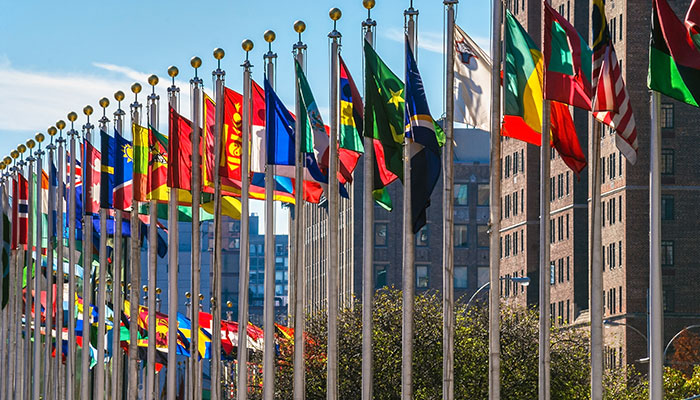
Still, the UN has faced tough times before – over many decades during the Cold War, the Security Council was crippled by deep tensions between the US and the Soviet Union. The UN is not as sidelined or divided today as it was then. However, as the relationship between China and the US sours, the achievements of global co-operation are being eroded.
The way in which people speak about the UN often implies a level of coherence and bureaucratic independence that the UN rarely possesses. A failure of the UN is normally better understood as a failure of international co-operation.
We see this recently in the UN’s inability to deal with crises from the ethnic cleansing of the Rohingya Muslims in Myanmar, to civil conflict in Syria, and the failure of the Security Council to adopt a COVID-19 resolution calling for ceasefires in conflict zones and a co-operative international response to the pandemic.
The UN administration is not primarily to blame for these failures; rather, the problem is the great powers – in the case of COVID-19, China and the US – refusing to co-operate.
Where states fail to agree, the UN is powerless to act.
Marking the 75th anniversary of the official formation of the UN, when 50 founding nations signed the UN Charter on June 26, 1945, we look at some of its key triumphs and resounding failures.
Five successes
1. Peacekeeping
The United Nations was created with the goal of being a collective security organisation. The UN Charter establishes that the use of force is only lawful either in self-defence or if authorised by the UN Security Council. The Security Council’s five permanent members, being China, US, UK, Russia and France, can veto any such resolution.
The UN’s consistent role in seeking to manage conflict is one of its greatest successes.
A key component of this role is peacekeeping. The UN under its second secretary-general, the Swedish statesman Dag Hammarskjöld – who was posthumously awarded the Nobel Peace prize after he died in a suspicious plane crash – created the concept of peacekeeping. Hammarskjöld was responding to the 1956 Suez Crisis, in which the US opposed the invasion of Egypt by its allies Israel, France and the UK.
UN peacekeeping missions involve the use of impartial and armed UN forces, drawn from member states, to stabilise fragile situations. “The essence of peacekeeping is the use of soldiers as a catalyst for peace rather than as the instruments of war,” said then UN Secretary-General Javier Pérez de Cuéllar, when the forces won the 1988 Nobel Peace Prize following missions in conflict zones in the Middle East, Africa, Asia, Central America and Europe.
However, peacekeeping also counts among the UN’s major failures.
2. Law of the Sea
Negotiated between 1973 and 1982, the UN Convention on the Law of the Sea (UNCLOS) set up the current international law of the seas. It defines states’ rights and creates concepts such as exclusive economic zones, as well as procedures for the settling of disputes, new arrangements for governing deep sea bed mining, and importantly, new provisions for the protection of marine resources and ocean conservation.
Mostly, countries have abided by the convention. There are various disputes that China has over the East and South China Seas which present a conflict between power and law, in that although UNCLOS creates mechanisms for resolving disputes, a powerful state isn’t necessarily going to submit to those mechanisms.
Secondly, on the conservation front, although UNCLOS is a huge step forward, it has failed to adequately protect oceans that are outside any state’s control. Ocean ecosystems have been dramatically transformed through overfishing. This is an ecological catastrophe that UNCLOS has slowed, but failed to address comprehensively.
3. Decolonisation
The idea of racial equality and of a people’s right to self-determination was discussed in the wake of World War I and rejected. After World War II, however, those principles were endorsed within the UN system, and the Trusteeship Council, which monitored the process of decolonisation, was one of the initial bodies of the UN.
Although many national independence movements only won liberation through bloody conflicts, the UN has overseen a process of decolonisation that has transformed international politics. In 1945, around one third of the world’s population lived under colonial rule. Today, there are less than 2 million people living in colonies.
When it comes to the world’s First Nations, however, the UN generally has done little to address their concerns, aside from the non-binding UN Declaration on the Rights of Indigenous Peoples of 2007.
4. Human rights
The Human Rights Declaration of 1948 for the first time set out fundamental human rights to be universally protected, recognising that the “inherent dignity and of the equal and inalienable rights of all members of the human family is the foundation of freedom, justice and peace in the world”.
Since 1948, 10 human rights treaties have been adopted – including conventions on the rights of children and migrant workers, and against torture and discrimination based on gender and race – each monitored by its own committee of independent experts.
The language of human rights has created a new framework for thinking about the relationship between the individual, the state and the international system. Although some people would prefer that political movements focus on ‘liberation’ rather than ‘rights’, the idea of human rights has made the individual person a focus of national and international attention.
5. Free trade
Depending on your politics, you might view the World Trade Organisation as a huge success, or a huge failure.
The WTO creates a near-binding system of international trade law with a clear and efficient dispute resolution process.
The majority Australian consensus is that the WTO is a success because it has been good for Australian famers especially, through its winding back of subsidies and tariffs.
However, the WTO enabled an era of globalisation which is now politically controversial.
Recently, the US has sought to disrupt the system. In addition to the trade war with China, the Trump Administration has also refused to appoint tribunal members to the WTO’s Appellate Body, so it has crippled the dispute resolution process. Of course, the Trump Administration is not the first to take issue with China’s trade strategies, which include subsidises for ‘State Owned Enterprises’ and demands that foreign firms transfer intellectual property in exchange for market access.
The existence of the UN has created a forum where nations can discuss new problems, and climate change is one of them. The Intergovernmental Panel on Climate Change (IPCC) was set up in 1988 to assess climate science and provide policymakers with assessments and options. In 1992, the UN Framework Convention on Climate Change created a permanent forum for negotiations.
However, despite an international scientific body in the IPCC, and 165 signatory nations to the climate treaty, global greenhouse gas emissions have continued to increase.
Under the Paris Agreement, even if every country meets its greenhouse gas emission targets we are still on track for ‘dangerous warming’. Yet, no major country is even on track to meet its targets; while emissions will probably decline this year as a result of COVID-19, atmospheric concentrations of greenhouse gases will still increase.
This illustrates a core conundrum of the UN in that it opens the possibility of global cooperation, but is unable to constrain states from pursuing their narrowly conceived self-interests. Deep co-operation remains challenging.
Five failures of the UN
1. Peacekeeping
During the Bosnian War, Dutch peacekeeping forces stationed in the town of Srebrenica, declared a ‘safe area’ by the UN in 1993, failed in 1995 to stop the massacre of more than 8000 Muslim men and boys by Bosnian Serb forces. This is one of the most widely discussed examples of the failures of international peacekeeping operations.
On the massacre’s 10th anniversary, then UN Secretary General Kofi Annan wrote that the UN had “made serious errors of judgement, rooted in a philosophy of impartiality”, contributing to a mass murder that would “haunt our history forever”.
If you look at some of the other infamous failures of peacekeeping missions – in places such as Rwanda, Somalia and Angola – it is the limited powers given to peacekeeping operations that have resulted in those failures.
2. The invasion of Iraq
The invasion of Iraq by the US in 2003, which was unlawful and without Security Council authorisation, reflects the fact that the UN is has very limited capacity to constrain the actions of great powers.
The Security Council designers created the veto power so that any of the five permanent members could reject a Council resolution, so in that way it is programmed to fail when a great power really wants to do something that the international community generally condemns.
In the case of the Iraq invasion, the US didn’t veto a resolution, but rather sought authorisation that it did not get. The UN, if you go by the idea of collective security, should have responded by defending Iraq against this unlawful use of force.
The invasion proved a humanitarian disaster with the loss of more than 400,000 lives, and many believe that it led to the emergence of the terrorist Islamic State.
3. Refugee crises
The UN brokered the 1951 Refugee Convention to address the plight of people displaced in Europe due to World War II; years later, the 1967 Protocol removed time and geographical restrictions so that the Convention can now apply universally (although many countries in Asia have refused to sign it, owing in part to its Eurocentric origins).
Despite these treaties, and the work of the UN High Commission for Refugees, there is somewhere between 30 and 40 million refugees, many of them, such as many Palestinians, living for decades outside their homelands. This is in addition to more than 40 million people displaced within their own countries.
While for a long time refugee numbers were reducing, in recent years, particularly driven by the Syrian conflict, there have been increases in the number of people being displaced.
During the COVID-19 crisis, boatloads of Rohingya refugees were turned away by port after port. This tragedy has echoes of pre-World War II when ships of Jewish refugees fleeing Nazi Germany were refused entry by multiple countries.
And as a catastrophe of a different kind looms, there is no international framework in place for responding to people who will be displaced by rising seas and other effects of climate change.
4. Conflicts without end
Across the world, there is a shopping list of unresolved civil conflicts and disputed territories.
Palestine and Kashmir are two of the longest-running failures of the UN to resolve disputed lands. More recent, ongoing conflicts include the civil wars in Syria and Yemen.
The common denominator of unresolved conflicts is either division among the great powers, or a lack of international interest due to the geopolitical stakes not being sufficiently high. For instance, the inaction during the Rwandan civil war in the 1990s was not due to a division among great powers, but rather a lack of political will to engage.
In Syria, by contrast, Russia and the US have opposing interests and back opposing sides: Russia backs the government of the Syrian dictator Bashar al-Assad, whereas the US does not.
5. Acting like it’s 1945
The UN is increasingly out of step with the reality of geopolitics today.
The permanent members of the Security Council reflect the division of power internationally at the end of World War II. The continuing exclusion of Germany, Japan, and rising powers such as India and Indonesia, reflects the failure to reflect the changing balance of power.
Also, bodies such as the IMF and the World Bank, which are part of the UN system, continue to be dominated by the West. In response, China has created potential rival institutions such as the Asian Infrastructure Investment Bank.
Western domination of UN institutions undermines their credibility. However, a more fundamental problem is that institutions designed in 1945 are a poor fit with the systemic global challenges – of which climate change is foremost – that we face today.