


News Snippet
News 1: ‘India’s coal mines are severely under-utilised amid push for new ones’
News 2: India has potential to attract $475 billion in FDI in 5 years: report
News 3: Public dashboard to track progress of remediation of legacy landfills
News 4: T.N. raises concern over presence of Chinese troops in Sri Lanka
News 5: Understanding the Global Hunger Index
News 6: Tax on windfall profit on crude oil, export of diesel, ATF raised
News 7: Centre considering Sri Lanka’s proposal to translocate gaurs
News 8: U.S.-India Trade Policy Forum set for Nov. 8, modest outcomes likely
News 9: PM for use of regional languages in legal system to bring ease of justice
News 10: 6 varieties of neelakurinji identified in Santhanpara region of Western Ghats
News 11: DBUs to further augment digital infrastructure, says RBI Governor
News 12: Indian travellers to Europe can now make payments via UPI, here’s how
Other important news:
- Dehing Patkai National Park
- Hampi
- Khajuraho Group of Monuments
News 1: ‘India’s coal mines are severely under-utilised amid push for new ones’
Background:
- On average, India’s coal mines use only two-thirds of the capacity, with some large ones using only 1%, says an analysis by Global Energy Monitor (GEM), a firm that tracks utilisation of the fuel-source internationally.
Findings:
- This suggests that 99 of India’s coal mine projects, expected to yield 427 million tonnes per annum (MTPA), under development are unnecessary, and opening new coal mines would not contribute to easing short-term supply-crunches.
- GEM performed its analysis by surveying annual reports of Coal India, the largest coal producer in the world, and its subsidiaries and underlines that the company has not listed capacity constraints as among the reasons it fails to reach production targets.
- Instead, it blames “..competition from renewables, infrastructure impasses, and land-use concerns for hindering output…” the report notes.
Coal mines under development threaten:
- Displacement of villages which will affect families, of which predominant population is tribal communities.
- Agricultural land and 19,297 ha of forest
- Consume at least 168,041 kilolitres of water per day, comparable to the daily water needs of over one million people, according to GEM.
On the heels of Prime Minister Narendra Modi’s announcement of a net zero target of 2070, these new mines “… increase India’s likelihood of stranded assets, delay a clean energy future — and in the process pose irreversible impacts on India’s rural communities and environments for the sake of economically precarious mining ventures”, the report underlines.
‘Warning signs ignored’
- “New mines can’t make the industry’s old problems go away. The irony of this expansion is that opening new mines today could intensify the sector’s weaknesses and inefficiencies tomorrow, especially as competition from renewables and conflicts over land use continue to emerge.”
News 2: India has potential to attract $475 billion in FDI in 5 years: report
Background:
- Even as the COVID-19 pandemic and geopolitical conflict resulted in investor uncertainty, India has the potential to attract Foreign Direct Investment (FDI) flows of $475 billion in the next five years due to the focus on reforms and economic growth, according to a report by the Confederation of Indian Industries (CII) and EY.
Findings:
- The report noted that FDI in India has seen a consistent rise in the past decade, with FY 2021-22 receiving FDI inflow of $84.8 billion despite the impact of the pandemic and geopolitical developments on investment sentiment.
- The report titled, Vision — Developed India: Opportunities and Expectations of MNCs, added that 71% of MNCs working in India consider the country an important destination for their global expansion.
- The confidence in India’s potential, the report said, stems from strong consumption trends, digitisation and a growing services sector, along with government’s strong focus on infrastructure and manufacturing. The Indian government’s consistent efforts to reduce regulatory barriers is also stoking the positive perception among MNCs, it said.
News 3: Public dashboard to track progress of remediation of legacy landfills
Background:
- Preparations to complete one of the targets of the Swachh Bharat Mission (Urban) 2.0 that was launched a year ago — the remediation of all legacy landfills in the country — are in full swing and a public dashboard on the progress at 2,200 such sites is in the offing, Housing and Urban Affairs Ministry officials said.
- To begin with, an official said, there was no data on the exact number of landfill sites. While landfills were only supposed to contain the remnants of solid waste after processing, the segregation and management were not carried out over the years, leaving mountains of trash. Any waste that has remained dumped for over three months is considered “legacy”, the official said.
- Through the portal, citizens would be able to track the progress of their cities’ action plans for remediation of legacy landfills. The plans cover everything from remediation to the eventual reuse of the land. Once removed, the sites would free up 15,000 acres of land, the official said.
Swachh Bharat Mission (Urban):

- Ministry: Ministry of Housing and Urban Affairs
- Launched: 2nd October, 2014
- Aim: Achieving 100% Open Defecation Free (ODF) status through construction of Individual Household Latrines (IHHLs) and Community/ Public Toilets (CT/PTs) in all urban local bodies
Swachh Bharat Mission (Urban) 2.0:
- Ministry: Ministry of Housing and Urban Affairs
- Launched: October 1, 2021
- Ending: October 1, 2026
- Objective: To achieve “Garbage Free” status for all cities through 100 per cent source segregation, door-to-door collection of segregated waste and scientific processing and management of all fractions of waste, including its safe disposal in scientific landfills.
- The scheme envisages remediation of all legacy dumpsites by converting them into green zones.
Focus areas:
- To achieve the vision of a “Garbage Free” Urban India, more focus is required to be given to issues such as source segregation, collection & transportation, and processing, including effective management of Construction & Demolition waste, plastic waste management including reduction in single use plastic, and remediating all legacy dumpsites;
- To sustain the ODF status and prevent slippage, there is a need to ensure that all fecal sludge and waste(used) water are safely contained, transported, processed and disposed off, so that no untreated fecal sludge or used water pollutes the ground or water bodies;
- Intensified focus is required to be given to IEC and behavior change through citizen outreach and jan andolan, as well as capacity building and skilling of all relevant stakeholders, towards achieving the Mission’s objectives.
News 4: T.N. raises concern over presence of Chinese troops in Sri Lanka
Background:
- Tamil Nadu has flagged serious security concerns over the increased presence of the People’s Liberation Army (PLA) of China in Sri Lanka. An alert issued by the State’s intelligence agency a few days ago said the activities of the Chinese in the neighbouring country is a concern to national security and called for intensified vigil along the coastline.
- The movement of PLA cadre and the deployment of hi-tech gadgets such as satellites, drones and other communication equipment in northern Sri Lanka required constant surveillance in coastal districts, the advisory sent to all cities and districts in the State said.
- Citing sources, the alert claimed that the PLA had deployed sophisticated gadgets in the garb of launching sea cucumber farming.
Clandestine entry
- The security advisory comes days after an alert was issued by the same agency warning that Chinese nationals had clandestinely entered India through the sea route with the assistance of cadre belonging to a Sri Lanka-based political party.
- The Tamil Nadu Coastal Security Group had also, citing a Central intelligence agency, issued an alert on the Chinese ship used to monitor satellites, rockets and inter-continental missile launches of China docked at Hambantota Port, and called for adequate security arrangements in view of vital installations such as and seaports along the Tamil Nadu coast.
- Security agencies in Tamil Nadu say there is an urgent need for the Union government to activate the Phase-III funding of the Coastal Security Scheme.
Coastal Security Scheme:
- Ministry: Ministry of Home Affairs
- Aim: To strengthen security of coastal areas against sea borne threats. It also envisages to augment the capabilities of police force of coastal states/UTs. This is being done in phases.
- India has a coastline of 7516.6 km bordering the mainland and the islands with Bay of Bengal in the east, Arabian Sea in the west and Indian ocean on the south.
- Indian Navy has been designated as the authority responsible for overall maritime security, which includes coastal security and offshore security. Indian Navy is assisted by Indian Coast Guard, Coastal Police and other Central and State agencies.
- Indian Coast Guard is additionally responsible for coastal security in territorial waters including areas to be patrolled by coastal police.
News 5: Understanding the Global Hunger Index
Background:
- For the second time in two years, the Ministry of Women and Child Development on Saturday rejected the Global Hunger Index (GHI) that ranked India 107 among 121 countries.
- India was accorded a score of 29.1 out of 100 (with 0 representing no hunger), placing it behind Sri Lanka (66), Myanmar (71), Nepal (81) and Bangladesh (84). It referred to the index as “an erroneous measure of hunger”.
What is the Global Hunger Index?
- The GHI, is a peer-reviewed annual report that endeavours to “comprehensively measure and track hunger at the global, regional, and country levels”. Authors of the report primarily refer to the United Nations’ Sustainable Development Goal 2 (SDG 2) that endeavours to achieve ‘Zero Hunger’ by 2030. According to them, the report attempts to “raise awareness and understanding of the struggle against hunger”.
- The GHI score is computed using four broad indicators — undernourishment (measure of the proportion of the population facing chronic deficiency of dietary energy intake), child stunting (low height for age), child wasting (low weight for height) and child mortality (death of a child under the age of five).
Why these four metrics?
- Undernourishment, as per the authors, provides a basis to measure inadequate access to food and is among the lead indicators for international hunger targets, including the UN SDG 2. Child stunting and mortality, offers perspective about the child’s vulnerability to nutritional deficiencies, access to food and quality of nutrition.
- Since children (especially below five) are at a developmental age there is a greater and urgent requirement for nutrition with results particularly visible. This forms the basis of assessing nutritional requirement among children.
- Adults are at a sustainable age — they are not growing but rather subsisting on nutrition for healthy survival. And lastly, on the same rationale, child mortality indicates the serious consequences of hunger.
What allegations are we looking at?
- As per the Ministry for Women and Child Development, the report lowers India’s rank based on the estimates of the Proportion of Undernourished (PoU) population. It elaborates that the U.S. Food and Agriculture Organisation (FAO) estimate is based on the ‘Food Insecurity Experience Scale (FIES)’ survey module conducted using the Gallup World Poll, that bears a sample size of 3,000 respondents being asked eight questions.
- It stated that the data represented a miniscule proportion for a country of India’s size. It countered the assertions in the report pointing to India’s per capita dietary energy supply increasing year-on-year due to enhanced production of major agricultural commodities in the country over the years.
- The GHI website provides important clarifications on these points raised by the government. It explains that while FAO uses a suite of indicators on food security, including two important indicators — prevalence of undernourishment and prevalence of moderate or severe food insecurity based on FIES — the GHI only uses the PoU obtained through food balance sheets based on data reported by member countries, including India.
- A food balance sheet provides a comprehensive picture of the pattern of a country’s food supply during a specified reference period. It lists down the source of the supply and its utilisation specific to each food category.
Why the controversy?
- According to the Ministry, the report is not only disconnected from ground reality but also chooses to ignore the food security efforts of the Central government especially during the pandemic.
- The Union Cabinet through the Pradhan Mantri Garib Kalyan Ann Yojna (PM-GKAY), provisioned an additional 5 kg ration per person each month in addition to their normal quota of foodgrains. According to Professor of Economics at the Ambedkar University, Dipa Sinha, the schemes definitely helped ease the situation but fell short of being adequate.
News 6: Tax on windfall profit on crude oil, export of diesel, ATF raised
Background:
- The government on Saturday raised the windfall tax on domestically-produced crude oil by more than a third while doubling the rate on export of diesel and reintroducing the levy on export of jet fuel (ATF) in line with the rise in international oil prices.
What is windfall profit tax?
- A windfall tax is a higher tax rate levied by governments against certain industries when economic conditions allow those industries to experience above-average profits.
- So when any industry, in this case-oil and gas- benefits from an event or a one-off external situation ( the Russia-Ukraine war) that they were not responsible for and make sudden profits, these profits are taxed separately, over and above the normal taxes that these companies pay to the governments.
News 7: Centre considering Sri Lanka’s proposal to translocate gaurs
Background:
- Close on the heels of the project that translocated cheetahs from Namibia, the Indian government is considering a proposal from Colombo to export a number of gaurs, or Indian bisons, to Sri Lanka to revive the population of gavaras that have been extinct in the island since the end of the 17th century.
- If the project is cleared, it would be the first such agreement between India and Sri Lanka, and part of a global trend of “wildlife or zoological diplomacy”, say experts.
Wildlife or Zoological diplomacy:
- Experts say that while “zoological diplomacy” had been practiced worldwide, they draw a distinction between “gifts or loans” of animals in captivity to translocation and reintroduction of a species, particularly between neighbouring countries with similar eco-systems.
- “Much depends on whether the conditions that caused the extinction have been removed but reintroduction has frequently been taken up between countries where the range is contiguous,” explained Mahesh Rangaran, Professor of Environmental Studies at Ashoka University
Indian Bison (Gaur):

- IUCN status: Endangered
- Protected under Schedule I of Wildlife Protection Authority Act, 1972
- Distribution: Native to South and South East Asia
- Nowadays, this animal is kept well – protected in some of the famous national parks of India like Nagarhole, Bandipur, Kabini, Masinagudi and BR Hills.
- The Indian Bison of Gaur which is the largest and the tallest in the family of wild cattle, even bigger than water buffalo and bison.
News 8: U.S.-India Trade Policy Forum set for Nov. 8, modest outcomes likely
Background:
- The U.S.- India Trade Policy Forum (TPF) has been scheduled for November 8 in Washington DC, The Hindu has confirmed. U.S. trade officials are arriving in New Delhi next week to finalise issues for discussion, an Indian government official told The Hindu.
Trade Policy Forum:
- The 12th TPF was held in New Delhi in November 2021, after a hiatus of four years, delivering some gains over the past twelve months, such as the resumption of sales of Indian mangoes and pomegranate arils to the U.S. following the pandemic, and the appearance of U.S. cherries on the Indian market.
- For India, many of the historical requests on services are met with responses from USTR that point to other wings of U.S. government, such as the Congress, or to other agencies and departments, having ownership of the issue.
- For the U.S. side, offering one to one market access for goods has been difficult.
- “India has great access to the U.S. market,” a U.S. Government (USG) official told The Hindu, pointing to the lower tariffs in the US market.
- Going into this year’s TPF , they are looking at “a number of products” in the agricultural space as “win wins”.
- Among these, for the Americans, is the resolution of exports of alfalfa hay to India – an issue that is pending from last year’s TPF, the official said. The U.S. is also keen to supplement India’s ethanol and DDGS ( an animal feed product) production, with its supplies, in light of India’s blending goals under the 2022 National Biofuels Policy.
- India’s requests have included high skilled worker visa numbers, fees, and recently, visa processing times; social security portability across countries; and 232 tariffs (i.e., tariffs imposed during the Trump administration on steel and aluminium) ; the Generalized System of Preferences (GSP), a preferential market access program offered by the U.S. to some developing countries.
- For now, GSP had been of interest in previous rounds of talks. Former U.S. President Donald Trump , whose approach to trade was largely guided by differentials in overall trade balance, had taken India out of the program in June 2019.
Generalized System of Preferences:
- The Generalized System of Preferences (GSP), instituted in 1971 under the aegis of UNCTAD, has contributed over the years to creating an enabling trading environment for developing countries.
- Generalized System of Preferences (GSP) is a preferential tariff system extended by developed countries to developing countries (also known as preference receiving countries or beneficiary countries). It is a preferential arrangement in the sense that it allows concessional low/zero tariff imports from developing countries.
- The following 15 countries grant GSP preferences: Armenia, Australia, Belarus, Canada, the European Union, Iceland, Japan, Kazakhstan, New Zealand, Norway, the Russian Federation, Switzerland, Turkey, United Kingdom and the United States of America.
- The objective of UNCTAD’s support on GSP and other preferential arrangements is to help developing countries – particularly LDCs – to increase utilization of GSP and other trade preferences and in turn promote productive capacity development and increased trade.
- Such support includes raising awareness and enhancing understanding among exporters and government officials in beneficiary countries of the trading opportunities available under the schemes; strengthening understanding of technical and administrative regulations and laws governing preferential market access, particularly rules of origin; and disseminating relevant information for users of GSP and other preferential schemes. Support is also provided to providers of preferences in improving their preferential schemes.
News 9: PM for use of regional languages in legal system to bring ease of justice
Background:
- People’s faith in constitutional institutions gets strengthened when justice is seen to be delivered, Prime Minister Narendra Modi said on Saturday even as he cited the delay in getting justice as one of the major challenges faced by the people of the country.
- Mr. Modi stressed that new laws should be written in a clear manner and in regional languages to bring in “ease of justice”, so that even the poor can easily understand them and legal language doesn’t become a barrier for citizens.
Obsolete laws scrapped
- He also urged the State governments to adopt a humane approach towards undertrial prisoners. The Prime Minister made these remarks while inaugurating the All India Conference of Law Ministers and Law Secretaries’ via video conference.
- The two-day conference is being held at Ekta Nagar in Kevadia near the ‘Statue of Unity’ in Gujarat and is being attended by Union Law Minister Kiren Rijiju among others.
- Delivering the inaugural address, Mr. Modi said that people should neither feel the absence of government nor its pressure and that is his government, in the last eight years, has scrapped more than 1,500 obsolete and irrelevant laws that were a relic of British rule and reduced as many as 32,000 compliances for the sake of “innovation and ease of living”.
- Laying stress on ensuring the ease of justice for the citizen, he said, “Delay in getting justice is one of the major challenges being faced by the people of our country. But our judiciary is seriously working towards resolving this issue. In this Amrit Kaal, we will have to work together to tackle this.”
- Mr. Modi stated villages have been resorting alternative dispute resolution mechanism for a long time and it can be adopted at State level as well. On the importance of use of regional languages, he said, If law is comprehensible to the common man, it will have a different impact”.
News 10: 6 varieties of neelakurinji identified in Santhanpara region of Western Ghats
As visitors keep pouring in to witness the blooming of neelakurinji on a vast area on the Kallippara hills at Santhanpara in Idukki, Kerala, an expert team has identified six varieties of the plant across the region.
Neelakurinji (Strobilanthes kunthiana):
- Kurinji or Neelakurinji in Malayalam and Tamil and Gurige in Kannada is a shrub that is found in the shola forests of the Western Ghats in Kerala, Karnataka and Tamil Nadu. The purplish blue flower blossoms only once in 12 years, and gave the Nilgiri Mountains range its name, from the neelam (blue) + giri (mountain).
UPSC prelims question
- With reference to Western Ghats, consider the following:
- Gujarat, Maharashtra, Goa, Karnataka, Tamil Nadu and Kerala are the six Indian states covered by the Western Ghats.
- Western Ghats are also known as Anaimalai hills and cardamom Hills in Kerala.
Which of the statements given above is/are correct?
- a) 1 only
- b) 2 only
- c) Both 1 and 2
- d) Neither 1 nor 2
Answer – Option C (They are also known as Sahyadris in Maharashtra, Nilgiri hills in Tamil Nadu and Karnataka )
News 11: DBUs to further augment digital infrastructure, says RBI Governor
Background:
- Reserve Bank of India (RBI) Governor Shaktikanta Das Sunday said the establishment of digital banking units (DBUs) will further augment the digital infrastructure in the country and improve customer experience in doing banking transactions.
- Prime Minister Narendra Modi today dedicated 75 DBUs to the nation. Finance Minister Nirmala Sitharaman, in her Union Budget speech for 2022-23, had announced setting up of 75 DBUs in as many districts of the country to commemorate 75 years of India’s independence.
What was the initial announcement?
- In the Budget for 2022-23, the Finance Minister said: “In recent years, digital banking, digital payments and fintech innovations have grown at a rapid pace in the country.
- The government is continuously encouraging these sectors to ensure that the benefits of digital banking reach every nook and corner of the country in a consumer-friendly manner.
- Taking forward this agenda, and to mark 75 years of our independence, it is proposed to set up 75 Digital Banking Units (DBUs) in 75 districts of the country by Scheduled Commercial Banks”.
What are these DBUs?
In April this year, the Reserve Bank of India (RBI) announced the guidelines for DBUs, following the report of a working group of the Indian Banks Association (IBA).
- A digital banking unit is a specialised fixed point business unit or hub, housing a certain minimum digital infrastructure for delivering digital banking products and services as well as servicing existing financial products and services digitally in self-service mode at any time.
- “The establishment of DBUs is a step to further augment the digital infrastructure in the country. This will act as an enabler in the digital ecosystem and will improve customer experience by facilitating seamless banking transactions,” Das said at the virtual launch of these DBUs.
- These units will augment the efforts to promote financial inclusion by providing banking services in a paperless, efficient, safe and secure environment, he said.
Who will set up these DBUs?
- DBUs are being set up by commercial banks to ensure that the benefits of digital banking reach every nook and corner of the country. It is a joint initiative of the government, the RBI, the Indian Banks Association and the participating banks.
- Commercial banks (other than regional rural banks, payment banks and local area banks) with past digital banking experience are permitted to open DBUs in tier 1 to tier 6 centres, unless otherwise specifically restricted, without having the need to take permission from the RBI in each case.
What services will be provided by these units?
- As per the RBI, each DBU must offer certain minimum digital banking products and services. Such products should be on both liabilities and assets side of the balance sheet of the digital banking segment. Digitally value-added services to conventional products would also qualify as such.
- The services include saving bank accounts under various schemes, current accounts, fixed deposit and recurring deposit accounts, digital kits for customers, mobile banking, Internet banking, debit cards, credit cards, and mass transit system cardss, digital kits for merchants, UPI QR codes, BHIM Aadhaar and point of sale (PoS).
- Other services include making applications for and onboarding customers for identified retail, MSME or schematic loans. This may also include end-to-end digital processing of such loans, starting from online application to disbursal and identified government-sponsored schemes that are covered under the national portal.
- Shaktikanta Das said the products and services in these units will be provided in two modes – self-service and assisted modes – with self-service mode being available round the clock.
- DBUs will enable customers to have cost effective, convenient access and enhanced digital experience of banking products and services. They will spread digital financial literacy and special emphasis will be given to customer education on cyber security awareness and safeguards.
How will these DBUs compete with fintechs?
- Currently, fintechs operating as neobanks offer digital banking services but they do so in partnership with non-banking financial companies (NBFCs). Some of the neobanks offering services in India are Jupiter, Fi Money, Niyo, Razorpay X.
- Compared to conventional banks with online and mobile banking facilities, neobanks or digital banks excel at product innovation and offer far better digital solutions. However, given the arrangement they have currently with NBFCs or scheduled banks to conduct the actual banking part, some in the industry have pegged these digital banks as “glorified digital distribution companies”.
News 13: Indian travellers to Europe can now make payments via UPI, here’s how
Background:
- Indian travellers to Europe would soon be able to make payments from their Indian bank accounts using the Unified Payments Interface (UPI) with the National Payments Corporation of India’s (NPCI) international arm entering into a pact with payments services operator Worldline.
How will users be able to make payments in Europe using UPI?
- It will be mandatory for users to have an Indian bank account with an UPI activated on their accounts. The users will also need an app to make UPI payments, like the BHIM app.
- The service will be available at point-of-sale terminals deployed by Worldline. Alongside UPI, NPCI’s card network RuPay will also be accepted. The UPI will be facilitated by QR code.
- However, it is noteworthy that the payments made by customers using UPI will be charged in the local currency and not INR. This will attract a currency conversion charge levied by the banks, as it is in the case of card payments.
Does NPCI have other such international arrangements?
- Earlier this year, NPCI and the UAE-based Mashreq Bank’s NEOPAY entered into a partnership, which allowed tourists and migrants to the UAE with Indian bank accounts to be able to make UPI payments at shops, retail establishments and other merchants in the gulf nation.
- Additionally, NPCI’s international arm NIPL has several other such arrangements with international financial services providers for its products, including UPI and RuPay cards. Globally, UPI is accepted in Bhutan and Nepal.
- Further, in Singapore, a project to link UPI with the city-state’s instant payment system PayNow is being undertaken by the RBI and the Monetary Authority of Singapore.
National Payment Corporation of India:
Type: Not for profit company under the provisions of Section 25 of Companies Act 1956 (now Section 8 of Companies Act 2013)
National Payments Corporation of India (NPCI), an umbrella organisation for operating retail payments and settlement systems in India, is an initiative of Reserve Bank of India (RBI) and Indian Banks’ Association (IBA) under the provisions of the Payment and Settlement Systems Act, 2007, for creating a robust Payment & Settlement Infrastructure in India.
Objective:
- Intention to provide infrastructure to the entire Banking system in India for physical as well as electronic payment and settlement systems.
- The Company is focused on bringing innovations in the retail payment systems through the use of technology for achieving greater efficiency in operations and widening the reach of payment systems.
Ten core promoter banks:
- State Bank of India, Punjab National Bank, Canara Bank, Bank of Baroda, Union Bank of India, Bank of India, ICICI Bank Limited, HDFC Bank Limited, Citibank N. A. and HSBC.
- In 2020, new entities regulated by RBI were inducted, consisting of Payment Service Operators, payment banks, Small Finance Banks, etc.
- The shares were allotted pursuant to issuance of equity shares on private placement basis in compliance to the applicable provisions of the Companies Act, 2013.
Unified Payment Interface (UPI):
- Unified Payments Interface (UPI) is a system that powers multiple bank accounts into a single mobile application (of any participating bank), merging several banking features, seamless fund routing & merchant payments into one hood.
- It also caters to the “Peer to Peer” collect request which can be scheduled and paid as per requirement and convenience.
Other important news
Dehing Patkai National Park:
- Assam’s 7th national Park and has has 47 species each of reptiles and mammals, including tiger and clouded leopard.
- The “last remaining stretches” of the Assam Valley tropical wet evergreen forests have become Assam’s seventh National Park.
- The 234.26-sq. km Dihing Patkai straddling eastern Assam’s Dibrugarh and Tinsukia districts is a major elephant habitat and 310 species of butterflies have been recorded there.
- Dehing Patkai National Park is located in the Dibrugarh and Tinsukia districts of Assam and covers an area of 231.65 km2 rainforest. It is located in the Dehing Patkai Landscape which is a dipterocarp-dominated lowland rainforest.
- The rainforest stretches for more than 575 km2 (222 sq mi) in the districts of Dibrugarh, Tinsukia and Charaideo. The forest further spreads over in the Tirap and Changlang districts of Arunachal Pradesh. Dehing Patkai National Park harbours the largest stretch of lowland rainforests in India.
- Dehing Patkai Wildlife Sanctuary was declared as Dehing Patkai Elephant Reserve under Project Elephant.
Hampi:
- Group of Monuments at Hampi, is a UNESCO World Heritage Site located in Hampi town, Vijayanagara district, east-central Karnataka. Hampi was the capital of the Vijayanagara Empire in the 14th century. It was a fortified city.
- The austere, grandiose site of Hampi was the last capital of the last great Hindu Kingdom of Vijayanagar. Its fabulously rich princes built Dravidian temples and palaces which won the admiration of travellers between the 14th and 16th centuries.
- Conquered by the Deccan Muslim confederacy in 1565, the city was pillaged over a period of six months before being abandoned.
- Dravidian architecture flourished under the Vijayanagara Empire and its ultimate form is characterised by their massive dimensions, cloistered enclosures, and lofty towers over the entrances encased by decorated pillars.
- The Vitthla temple is the most exquisitely ornate structure on the site and represents the culmination of Vijayanagara temple architecture. It is a fully developed temple with associated buildings like Kalyana Mandapa and Utsava Mandapa within a cloistered enclosure pierced with three entrance Gopurams.
- Among these, the Krishna temple complex, Narasimha, Ganesa, Hemakuta group of temples, Achyutaraya temple complex, Vitthala temple complex, Pattabhirama temple complex, Lotus Mahal complex, can be highlighted.
Khajuraho Group of Monuments:
- Khajuraho is a city, near Chhatarpur in Chhatarpur district of the Indian state of Madhya Pradesh. he Khajuraho Group of Monuments has been listed as a UNESCO World Heritage Site since 1986 and is considered one of the “seven wonders” of India. The town’s name, anciently “Kharjuravahaka”, is derived from the Sanskrit word kharjur meaning “date palm“.
- The temples at Khajuraho were built during the Chandella dynasty, which reached its apogee between 950 and 1050. Only about 20 temples remain; they fall into three distinct groups and belong to two different religions – Hinduism and Jainism.
- They strike a perfect balance between architecture and sculpture. The Temple of Kandariya is decorated with a profusion of sculptures that are among the greatest masterpieces of Indian art.
- The temples of Khajuraho are known for the harmonious integration of sculptures with their architecture. All surfaces are profusely carved with anthropomorphic and non-anthropomorphic motifs depicting sacred and secular themes.
Recent Posts
- Floods
- Cyclones
- Tornadoes and hurricanes (cyclones)
- Hailstorms
- Cloudburst
- Heat wave and cold wave
- Snow avalanches
- Droughts
- Sea erosion
- Thunder/ lightning
- Landslides and mudflows
- Earthquakes
- Large fires
- Dam failures and dam bursts
- Mine fires
- Epidemics
- Pest attacks
- Cattle epidemics
- Food poisoning
- Chemical and Industrial disasters
- Nuclear
- Forest fires
- Urban fires
- Mine flooding
- Oil Spill
- Major building collapse
- Serial bomb blasts
- Festival related disasters
- Electrical disasters and fires
- Air, road, and rail accidents
- Boat capsizing
- Village fire
- Coastal States, particularly on the East Coast and Gujarat are vulnerable to cyclones.
- 4 crore hectare landmass is vulnerable to floods
- 68 per cent of net sown area is vulnerable to droughts
- 55 per cent of total area is in seismic zones III- V, hence vulnerable to earthquakes
- Sub- Himalayan sector and Western Ghats are vulnerable to landslides.
- Mainstreaming of Disaster Risk Reduction in Developmental Strategy-Prevention and mitigation contribute to lasting improvement in safety and should beintegrated in the disaster management. The Government of India has adopted mitigation and prevention as essential components of their development strategy.
- Mainstreaming of National Plan and its Sub-Plan
- National Disaster Mitigation Fund
- National Earthquake Risk Mitigation Project (NERMP)
- National Building Code (NBC):- Earthquake resistant buildings
- National Cyclone Risk Mitigation Project (NCRMP)
- Integrated Coastal Zone Management Project (ICZMP)-The objective of the project is to assist GoI in building the national capacity for implementation of a comprehensive coastal management approach in the country and piloting the integrated coastal zone management approach in states of Gujarat, Orissa and West Bengal.
- National Flood Risk Mitigation Project (NFRMP)
- National Project for Integrated Drought Monitoring & Management
- National Vector Borne Diseases Control Programme (NVBDCP)- key programme
for prevention/control of outbreaks/epidemics of malaria, dengue, chikungunya etc., vaccines administered to reduce the morbidity and mortality due to diseases like measles, diphtheria, pertussis, poliomyelitis etc. Two key measures to prevent/control epidemics of water-borne diseases like cholera, viral hepatitis etc. include making available safe water and ensuring personal and domestic hygienic practices are adopted. - Training
- Education
- Research
- Awareness
- Hyogo Framework of Action- The Hyogo Framework of Action (HFA) 2005-2015 was adopted to work globally towards sustainable reduction of disaster losses in lives and in the social, economic and environmental assets of communities and countries.
- United Nations International Strategy for Disaster Reduction (UNISDR)-In order to build the resilience of nations and communities to disasters through the implementation of the HFA , the UNISDR strives to catalyze, facilitate and mobilise the
commitment and resources of national, regional and international stakeholders of the ISDR
system. - United Nation Disaster Management Team (UNDMT) –
- To ensure a prompt, effective and concerted country-level support to a governmental
response in the event of a disaster, at the central, state and sub-state levels, - To coordinate UN assistance to the government with respect to long term recovery, disaster mitigation and preparedness.
- To coordinate all disaster-related activities, technical advice and material assistance provided by UN agencies, as well as to take steps for optimal utilisation of resources by UN agencies.
- To ensure a prompt, effective and concerted country-level support to a governmental
- Global Facility for Disaster Risk Reduction (GFDRR):-
- GFDRR was set up in September 2006 jointly by the World Bank, donor partners (21countries and four international organisations), and key stakeholders of the International Strategy for Disaster Reduction (UN-ISDR). It is a long-term global partnership under the ISDR system established to develop and implement the HFA through a coordinated programme for reversing the trend in disaster losses by 2015.
- Its mission is to mainstream disaster reduction and climate change adaptation in a country’s development strategies to reduce vulnerability to natural hazards.
- ASEAN Region Forum (ARF)
- Asian Disaster Reduction Centre (ADRC)
- SAARC Disaster Management Centre (SDMC)
- Program for Enhancement of Emergency Response (PEER):-The Program for Enhancement of Emergency Response (PEER) is a regional training programme initiated in 1998 by the United States Agency for International Development’s, Office of U.S Foreign Disaster Assistance (USAID/OFDA) to strengthen disaster response capacities in Asia.
- Policy guidelines at the macro level that would inform and guide the preparation and
implementation of disaster management and development plans across sectors - Building in a culture of preparedness and mitigation
- Operational guidelines of integrating disaster management practices into development, and
specific developmental schemes for prevention and mitigation of disasters - Having robust early warning systems coupled with effective response plans at district, state
and national levels - Building capacity of all stakeholders
- Involving the community, NGOs, CSOs and the media at all stages of DM
- Addressing gender issues in disaster management planning and developing a strategy for
inclusive approach addressing the disadvantaged sections of the society towards disaster risk reduction. - Addressing climate risk management through adaptation and mitigation
- Micro disaster Insurance
- Flood Proofing
- Building Codes and Enforcement
- Housing Design and Finance
- Road and Infrastructure
A disaster is a result of natural or man-made causes that leads to sudden disruption of normal life, causing severe damage to life and property to an extent that available social and economic protection mechanisms are inadequate to cope.
The International Strategy for Disaster Reduction (ISDR) of the United Nations (U.N.) defines a hazard as “a potentially damaging physical event, phenomenon or human activity that may cause the loss of life or injury, property damage, social and economic disruption or environmental degradation.”
Disasters are classified as per origin, into natural and man-made disasters. As per severity, disasters are classified as minor or major (in impact). However, such classifications are more academic than real.
High Powered Committee (HPC) was constituted in August 1999 under the chairmanship of J.C.Pant. The mandate of the HPC was to prepare comprehensive model plans for disaster management at the national, state and district levels.
This was the first attempt in India towards a systematic comprehensive and holistic look at all disasters.
Thirty odd disasters have been identified by the HPC, which were grouped into the following five categories, based on generic considerations:-
Water and Climate Related:-
Geological:-
Biological:-
Chemical, industrial and nuclear:-
Accidental:-
India’s Key Vulnerabilities as articulated in the Tenth Plan, (2002-07) are as follows:

Vulnerability is defined as:-
“the extent to which a community, structure, service, or geographic area is likely to be damaged or disrupted by the impact of particular hazard, on account of their nature, construction and proximity to hazardous terrain or a disaster prone area”.
The concept of vulnerability therefore implies a measure of risk combined with the level of social and economic ability to cope with the resulting event in order to resist major disruption or loss.
Example:- The 1993 Marathwada earthquake in India left over 10,000 dead and destroyed houses and other properties of 200,000 households. However, the technically much more powerful Los Angeles earthquake of 1971 (taken as a benchmark in America in any debate on the much-apprehended seismic vulnerability of California) left over 55 dead.
Physical Vulnerability:-
Physical vulnerability relates to the physical location of people, their proximity to the hazard zone and standards of safety maintained to counter the effects.
The Indian subcontinent can be primarily divided into three geophysical regions with regard to vulnerability, broadly, as, the Himalayas, the Plains and the Coastal areas.
Socio-economic Vulnerability:-
The degree to which a population is affected by a calamity will not purely lie in the physical components of vulnerability but in contextual, relating to the prevailing social and economic conditions and its consequential effects on human activities within a given society.
Global Warming & Climate Change:-
Global warming is going to make other small local environmental issues seemingly insignificant, because it has the capacity to completely change the face of the Earth. Global warming is leading to shrinking glaciers and rising sea levels. Along with floods, India also suffers acute water shortages.
The steady shrinking of the Himalayan glaciers means the entire water system is being disrupted; global warming will cause even greater extremes. Impacts of El Nino and La Nina have increasingly led to disastrous impacts across the globe.
Scientifically, it is proven that the Himalayan glaciers are shrinking, and in the next fifty to sixty years they would virtually run out of producing the water levels that we are seeing now.
This will cut down drastically the water available downstream, and in agricultural economies like the plains of Uttar Pradesh (UP) and Bihar, which are poor places to begin with. That, as one may realise, would cause tremendous social upheaval.
Urban Risks:-
India is experiencing massive and rapid urbanisation. The population of cities in India is doubling in a period ranging just two decades according to the trends in the recent past.
It is estimated that by 2025, the urban component, which was only 25.7 per cent (1991) will be more than 50 per cent.
Urbanisation is increasing the risks at unprecedented levels; communities are becoming increasingly vulnerable, since high-density areas with poorly built and maintained infrastructure are subjected to natural hazards, environmental degradation, fires, flooding and earthquake.
Urbanisation dramatically increases vulnerability, whereby communities are forced to squat on environmentally unstable areas such as steep hillsides prone to landslide, by the side of rivers that regularly flood, or on poor quality ground, causing building collapse.
Most prominent amongst the disasters striking urban settlements frequently are, floods and fire, with incidences of earthquakes, landslides, droughts and cyclones. Of these, floods are more devastating due to their widespread and periodic impact.
Example: The 2005 floods of Maharashtra bear testimony to this. Heavy flooding caused the sewage system to overflow, which contaminated water lines. On August 11, the state government declared an epidemic of leptospirosis in Mumbai and its outskirts.
Developmental activities:-
Developmental activities compound the damaging effects of natural calamities. The floods in Rohtak (Haryana) in 1995 are an appropriate example of this. Even months after the floodwaters had receded; large parts of the town were still submerged.
Damage had not accrued due to floods, but due to water-logging which had resulted due to peculiar topography and poor land use planning.
Disasters have come to stay in the forms of recurring droughts in Orissa, the desertification of swaths of Gujarat and Rajasthan, where economic depredations continuously impact on already fragile ecologies and environmental degradation in the upstream areas of Uttar Pradesh and Bihar.
Floods in the plains are taking an increasing toll of life, environment, and property, amplified by a huge population pressure.
The unrestricted felling of forests, serious damage to mountain ecology, overuse of groundwater and changing patterns of cultivation precipitate recurring floods and droughts.
When forests are destroyed, rainwater runs off causing floods and diminishing the recharging of groundwater.
The spate of landslides in the Himalayas in recent years can be directly traced to the rampant deforestation and network of roads that have been indiscriminately laid in the name of development.
Destruction of mangroves and coral reefs has increased the vulnerability of coastal areas to hazards, such as storm surges and cyclones.
Commercialisation of coastal areas, particularly for tourism has increased unplanned development in these areas, which has increased disaster potential, as was demonstrated during the Tsunami in December 2004.
Environmental Stresses:- " Delhi-Case Study"
Every ninth student in Delhi’s schools suffers from Asthma. Delhi is the world’s fourth most polluted city.
Each year, poor environmental conditions in the city’s informal areas lead to epidemics.
Delhi has one of the highest road accident fatality ratios in the world. In many ways, Delhi reflects the sad state of urban centers within India that are exposed to risks, which are misconstrued and almost never taken into consideration for urban governance.
The main difference between modernism and postmodernism is that modernism is characterized by the radical break from the traditional forms of urban architecture whereas postmodernism is characterized by the self-conscious use of earlier styles and conventions.


Illustration of Disaster Cycle through Case Study:-
The processes covered by the disaster cycle can be illustrated through the case of the Gujarat Earthquake of 26 January 2001. The devastating earthquake killed thousands of people and destroyed hundreds of thousands of houses and other buildings.
The State Government as well as the National Government immediately mounted a largescale relief operation. The help of the Armed Forces was also taken.
Hundreds of NGOs from within the region and other parts of the country as well as from other countries of the world came to Gujarat with relief materials and personnel to help in the relief operations.
Relief camps were set up, food was distributed, mobile hospitals worked round the clock to help the injured; clothing, beddings, tents, and other commodities were distributed to the affected people over the next few weeks.
By the summer of 2001, work started on long-term recovery. House reconstruction programmes were launched, community buildings were reconstructed, and damaged infrastructure was repaired and reconstructed.
Livelihood programmes were launched for economic rehabilitation of the affected people.
In about two year’s time the state had bounced back and many of the reconstruction projects had taken the form of developmental programmes aiming to deliver even better infrastructure than what existed before the earthquake.
Good road networks, water distribution networks, communication networks, new schools, community buildings, health and education programmes, all worked towards developing the region.
The government as well as the NGOs laid significant emphasis on safe development practices. The buildings being constructed were of earthquake resistant designs.
Older buildings that had survived the earthquake were retrofitted in large numbers to strengthen them and to make them resistant to future earthquakes. Mason and engineer training programmes were carried out at a large scale to ensure that all future construction in the State is disaster resistant.
This case study shows how there was a disaster event during the earthquake, followed by immediate response and relief, then by recovery including rehabilitation and retrofitting, then by developmental processes.
The development phase included mitigation activities, and finally preparedness actions to face future disasters.
Then disaster struck again, but the impact was less than what it could have been, primarily due to better mitigation and preparedness efforts.

Looking at the relationship between disasters and development one can identify ‘four’ different dimensions to this relation:
1) Disasters can set back development
2) Disasters can provide development opportunities
3) Development can increase vulnerability and
4) Development can reduce vulnerability
The whole relationship between disaster and development depends on the development choice made by the individual, community and the nation who implement the development programmes.
The tendency till now has been mostly to associate disasters with negativities. We need to broaden our vision and work on the positive aspects associated with disasters as reflected below:

1)Evolution of Disaster Management in India
Disaster management in India has evolved from an activity-based reactive setup to a proactive institutionalized structure; from single faculty domain to a multi-stakeholder setup; and from a relief-based approach to a ‘multi-dimensional pro-active holistic approach for reducing risk’.
Over the past century, the disaster management in India has undergone substantive changes in its composition, nature and policy.
2)Emergence of Institutional Arrangement in India-
A permanent and institutionalised setup began in the decade of 1990s with set up of a disaster management cell under the Ministry of Agriculture, following the declaration of the decade of 1990 as the ‘International Decade for Natural Disaster Reduction’ (IDNDR) by the UN General Assembly.
Consequently, the disaster management division was shifted under the Ministry of Home Affairs in 2002
3)Disaster Management Framework:-
Shifting from relief and response mode, disaster management in India started to address the
issues of early warning systems, forecasting and monitoring setup for various weather related
hazards.

National Level Institutions:-National Disaster Management Authority (NDMA):-
The National Disaster Management Authority (NDMA) was initially constituted on May 30, 2005 under the Chairmanship of Prime Minister vide an executive order.
SDMA (State Level, DDMA(District Level) also present.
National Crisis Management Committee (NCMC)
Legal Framework For Disaster Management :-
 DMD- Disaster management Dept.
NIDM- National Institute of Disaster Management
NDRF – National Disaster Response Fund
Cabinet Committee on Disaster Management-

Location of NDRF Battallions(National Disaster Response Force):-
 CBRN- Chemical, Biological, Radiological and Nuclear
Policy and response to Climate Change :-
1)National Action Plan on Climate Change (NAPCC)-
National Action Plan on Climate Change identified Eight missions.
• National Solar Mission
• National Mission on Sustainable Habitat
• National Mission for Enhanced Energy Efficiency
• National Mission for Sustaining The Himalayan Ecosystem
• National Water Mission
• National Mission for Green India
• National Mission for Sustainable Agriculture
• National Mission for Strategic Knowledge on Climate Change
2)National Policy on Disaster Management (NPDM),2009-
The policy envisages a safe and disaster resilient India by developing a holistic, proactive, multi-disaster oriented and technologydriven strategy through a culture of prevention, mitigation, preparedness and response. The policy covers all aspects of disaster management including institutional and legal arrangements,financial arrangements, disaster prevention, mitigation and preparedness, techno-legal regime, response, relief and rehabilitation, reconstruction and recovery, capacity development, knowledge management, research and development. It focuses on the areas where action is needed and the institutional mechanism through which such action can be channelised.
Prevention and Mitigation Projects:-
Early Warning Nodal Agencies:-

Post Disaster Management :-Post disaster management responses are created according to the disaster and location. The principles being – Faster Recovery, Resilient Reconstruction and proper Rehabilitation.
Capacity Development:-
Components of capacity development includes :-
National Institute for Capacity Development being – National Institute of Disaster Management (NIDM)
International Cooperation-
Way Forward:-
Principles and Steps:-
The United Nations has shaped so much of global co-operation and regulation that we wouldn’t recognise our world today without the UN’s pervasive role in it. So many small details of our lives – such as postage and copyright laws – are subject to international co-operation nurtured by the UN.
In its 75th year, however, the UN is in a difficult moment as the world faces climate crisis, a global pandemic, great power competition, trade wars, economic depression and a wider breakdown in international co-operation.
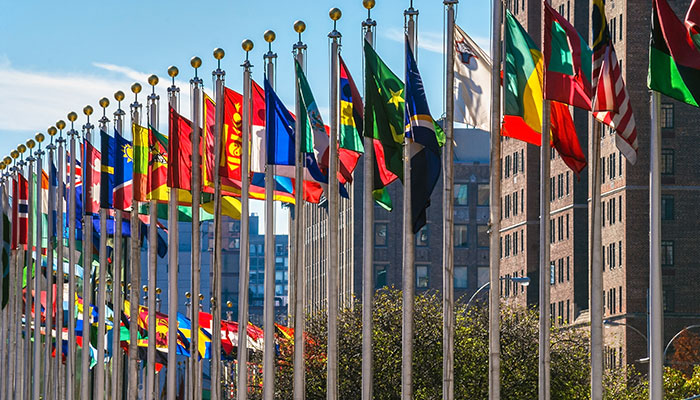
Still, the UN has faced tough times before – over many decades during the Cold War, the Security Council was crippled by deep tensions between the US and the Soviet Union. The UN is not as sidelined or divided today as it was then. However, as the relationship between China and the US sours, the achievements of global co-operation are being eroded.
The way in which people speak about the UN often implies a level of coherence and bureaucratic independence that the UN rarely possesses. A failure of the UN is normally better understood as a failure of international co-operation.
We see this recently in the UN’s inability to deal with crises from the ethnic cleansing of the Rohingya Muslims in Myanmar, to civil conflict in Syria, and the failure of the Security Council to adopt a COVID-19 resolution calling for ceasefires in conflict zones and a co-operative international response to the pandemic.
The UN administration is not primarily to blame for these failures; rather, the problem is the great powers – in the case of COVID-19, China and the US – refusing to co-operate.
Where states fail to agree, the UN is powerless to act.
Marking the 75th anniversary of the official formation of the UN, when 50 founding nations signed the UN Charter on June 26, 1945, we look at some of its key triumphs and resounding failures.
Five successes
1. Peacekeeping
The United Nations was created with the goal of being a collective security organisation. The UN Charter establishes that the use of force is only lawful either in self-defence or if authorised by the UN Security Council. The Security Council’s five permanent members, being China, US, UK, Russia and France, can veto any such resolution.
The UN’s consistent role in seeking to manage conflict is one of its greatest successes.
A key component of this role is peacekeeping. The UN under its second secretary-general, the Swedish statesman Dag Hammarskjöld – who was posthumously awarded the Nobel Peace prize after he died in a suspicious plane crash – created the concept of peacekeeping. Hammarskjöld was responding to the 1956 Suez Crisis, in which the US opposed the invasion of Egypt by its allies Israel, France and the UK.
UN peacekeeping missions involve the use of impartial and armed UN forces, drawn from member states, to stabilise fragile situations. “The essence of peacekeeping is the use of soldiers as a catalyst for peace rather than as the instruments of war,” said then UN Secretary-General Javier Pérez de Cuéllar, when the forces won the 1988 Nobel Peace Prize following missions in conflict zones in the Middle East, Africa, Asia, Central America and Europe.
However, peacekeeping also counts among the UN’s major failures.
2. Law of the Sea
Negotiated between 1973 and 1982, the UN Convention on the Law of the Sea (UNCLOS) set up the current international law of the seas. It defines states’ rights and creates concepts such as exclusive economic zones, as well as procedures for the settling of disputes, new arrangements for governing deep sea bed mining, and importantly, new provisions for the protection of marine resources and ocean conservation.
Mostly, countries have abided by the convention. There are various disputes that China has over the East and South China Seas which present a conflict between power and law, in that although UNCLOS creates mechanisms for resolving disputes, a powerful state isn’t necessarily going to submit to those mechanisms.
Secondly, on the conservation front, although UNCLOS is a huge step forward, it has failed to adequately protect oceans that are outside any state’s control. Ocean ecosystems have been dramatically transformed through overfishing. This is an ecological catastrophe that UNCLOS has slowed, but failed to address comprehensively.
3. Decolonisation
The idea of racial equality and of a people’s right to self-determination was discussed in the wake of World War I and rejected. After World War II, however, those principles were endorsed within the UN system, and the Trusteeship Council, which monitored the process of decolonisation, was one of the initial bodies of the UN.
Although many national independence movements only won liberation through bloody conflicts, the UN has overseen a process of decolonisation that has transformed international politics. In 1945, around one third of the world’s population lived under colonial rule. Today, there are less than 2 million people living in colonies.
When it comes to the world’s First Nations, however, the UN generally has done little to address their concerns, aside from the non-binding UN Declaration on the Rights of Indigenous Peoples of 2007.
4. Human rights
The Human Rights Declaration of 1948 for the first time set out fundamental human rights to be universally protected, recognising that the “inherent dignity and of the equal and inalienable rights of all members of the human family is the foundation of freedom, justice and peace in the world”.
Since 1948, 10 human rights treaties have been adopted – including conventions on the rights of children and migrant workers, and against torture and discrimination based on gender and race – each monitored by its own committee of independent experts.
The language of human rights has created a new framework for thinking about the relationship between the individual, the state and the international system. Although some people would prefer that political movements focus on ‘liberation’ rather than ‘rights’, the idea of human rights has made the individual person a focus of national and international attention.
5. Free trade
Depending on your politics, you might view the World Trade Organisation as a huge success, or a huge failure.
The WTO creates a near-binding system of international trade law with a clear and efficient dispute resolution process.
The majority Australian consensus is that the WTO is a success because it has been good for Australian famers especially, through its winding back of subsidies and tariffs.
However, the WTO enabled an era of globalisation which is now politically controversial.
Recently, the US has sought to disrupt the system. In addition to the trade war with China, the Trump Administration has also refused to appoint tribunal members to the WTO’s Appellate Body, so it has crippled the dispute resolution process. Of course, the Trump Administration is not the first to take issue with China’s trade strategies, which include subsidises for ‘State Owned Enterprises’ and demands that foreign firms transfer intellectual property in exchange for market access.
The existence of the UN has created a forum where nations can discuss new problems, and climate change is one of them. The Intergovernmental Panel on Climate Change (IPCC) was set up in 1988 to assess climate science and provide policymakers with assessments and options. In 1992, the UN Framework Convention on Climate Change created a permanent forum for negotiations.
However, despite an international scientific body in the IPCC, and 165 signatory nations to the climate treaty, global greenhouse gas emissions have continued to increase.
Under the Paris Agreement, even if every country meets its greenhouse gas emission targets we are still on track for ‘dangerous warming’. Yet, no major country is even on track to meet its targets; while emissions will probably decline this year as a result of COVID-19, atmospheric concentrations of greenhouse gases will still increase.
This illustrates a core conundrum of the UN in that it opens the possibility of global cooperation, but is unable to constrain states from pursuing their narrowly conceived self-interests. Deep co-operation remains challenging.
Five failures of the UN
1. Peacekeeping
During the Bosnian War, Dutch peacekeeping forces stationed in the town of Srebrenica, declared a ‘safe area’ by the UN in 1993, failed in 1995 to stop the massacre of more than 8000 Muslim men and boys by Bosnian Serb forces. This is one of the most widely discussed examples of the failures of international peacekeeping operations.
On the massacre’s 10th anniversary, then UN Secretary General Kofi Annan wrote that the UN had “made serious errors of judgement, rooted in a philosophy of impartiality”, contributing to a mass murder that would “haunt our history forever”.
If you look at some of the other infamous failures of peacekeeping missions – in places such as Rwanda, Somalia and Angola – it is the limited powers given to peacekeeping operations that have resulted in those failures.
2. The invasion of Iraq
The invasion of Iraq by the US in 2003, which was unlawful and without Security Council authorisation, reflects the fact that the UN is has very limited capacity to constrain the actions of great powers.
The Security Council designers created the veto power so that any of the five permanent members could reject a Council resolution, so in that way it is programmed to fail when a great power really wants to do something that the international community generally condemns.
In the case of the Iraq invasion, the US didn’t veto a resolution, but rather sought authorisation that it did not get. The UN, if you go by the idea of collective security, should have responded by defending Iraq against this unlawful use of force.
The invasion proved a humanitarian disaster with the loss of more than 400,000 lives, and many believe that it led to the emergence of the terrorist Islamic State.
3. Refugee crises
The UN brokered the 1951 Refugee Convention to address the plight of people displaced in Europe due to World War II; years later, the 1967 Protocol removed time and geographical restrictions so that the Convention can now apply universally (although many countries in Asia have refused to sign it, owing in part to its Eurocentric origins).
Despite these treaties, and the work of the UN High Commission for Refugees, there is somewhere between 30 and 40 million refugees, many of them, such as many Palestinians, living for decades outside their homelands. This is in addition to more than 40 million people displaced within their own countries.
While for a long time refugee numbers were reducing, in recent years, particularly driven by the Syrian conflict, there have been increases in the number of people being displaced.
During the COVID-19 crisis, boatloads of Rohingya refugees were turned away by port after port. This tragedy has echoes of pre-World War II when ships of Jewish refugees fleeing Nazi Germany were refused entry by multiple countries.
And as a catastrophe of a different kind looms, there is no international framework in place for responding to people who will be displaced by rising seas and other effects of climate change.
4. Conflicts without end
Across the world, there is a shopping list of unresolved civil conflicts and disputed territories.
Palestine and Kashmir are two of the longest-running failures of the UN to resolve disputed lands. More recent, ongoing conflicts include the civil wars in Syria and Yemen.
The common denominator of unresolved conflicts is either division among the great powers, or a lack of international interest due to the geopolitical stakes not being sufficiently high. For instance, the inaction during the Rwandan civil war in the 1990s was not due to a division among great powers, but rather a lack of political will to engage.
In Syria, by contrast, Russia and the US have opposing interests and back opposing sides: Russia backs the government of the Syrian dictator Bashar al-Assad, whereas the US does not.
5. Acting like it’s 1945
The UN is increasingly out of step with the reality of geopolitics today.
The permanent members of the Security Council reflect the division of power internationally at the end of World War II. The continuing exclusion of Germany, Japan, and rising powers such as India and Indonesia, reflects the failure to reflect the changing balance of power.
Also, bodies such as the IMF and the World Bank, which are part of the UN system, continue to be dominated by the West. In response, China has created potential rival institutions such as the Asian Infrastructure Investment Bank.
Western domination of UN institutions undermines their credibility. However, a more fundamental problem is that institutions designed in 1945 are a poor fit with the systemic global challenges – of which climate change is foremost – that we face today.