


UPSC/STATE PSC
Curated by Experts For Civil Service Aspirants
The Hindu & Indian Express
News 1: GST Council is a fledgling but vibrant institution, says FM
Background:
- The Goods and Services Tax (GST) Council is still a fledgling five-year old institution that has yet to become well-settled but acts as a vibrant forum for intense interactions between the Centre and the States, Finance Minister Nirmala Sitharaman said on Tuesday.
GST Council:
Constitutional provision:
- The GST Council which will be a joint forum of the Centre and the States, as per Article 279A
- GST Council was set up by the President as per Article 279A (1) of the Constitution. (As per Article 279A (1) of the amended Constitution, the GST Council has to be constituted by the President within 60 days of the commencement of Article 279A.)
Ex-officio secretary to GST Council: Secretary, Department of Revenue
Functions of GST Council:
The Council is tasked to make recommendations to the Union and States on the following:
- The taxes, cesses and surcharges levied by the Centre, the States and the local bodies which may be subsumed under GST;
- The goods and services that may be subjected to or exempted from the GST;
- The date on which the GST shall be levied on petroleum crude, high speed diesel, motor spirit (commonly known as petrol), natural gas and aviation turbine fuel;
- Model GST laws, principles of levy, apportionment of IGST and the principles that govern the place of supply;
- The threshold limit of turnover below which the goods and services may be exempted from GST;
- The rates including floor rates with bands of GST;
- Any special rate or rates for a specified period to raise additional resources during any natural calamity or disaster;
- Special provision with respect to the North-East States, J&K, Himachal Pradesh and Uttarakhand;
- Any other matter relating to the GST, as the Council may decide.
News 2: Buch sees no role for SEBI in IPO pricing
Background:
- SEBI has ‘no business’ suggesting IPO pricing for new-age tech companies, and it is the investment bankers who should allay any concerns around the issue, Chairperson Madhabi Puri Buch said.
IPO:
- In new issue market, if any company or financial corporation (issuer) issues shaes for the first time, it is called as Initial Public Offer (IPO). The issuer maybe an existing company or corporation or maybe a new startup.
SEBI:
- Established: 1988 as non-statutory body
- Type: Statutory Regulatory body in 1992 as per the Securities and Exchange Board of India Act, 1992
- Headquarter: Mumbai
- Objective: The basic functions of the Securities and Exchange Board of India is to protect the interests of investors in securities and to promote the development of, and to regulate the securities market and for matters connected therewith or incidental thereto.
- SEBI has to be responsive to the needs of three groups, which constitute the market:
- issuers of securities
- Investors
- market intermediaries
- SEBI has three powers rolled into one body: quasi-legislative, quasi-judicial and quasi-executive.
News 3: 49 Armenian soldiers killed in clash
Background:
- Armenia said on recently that 49 of its soldiers had been killed in the worst clashes with Azerbaijan since their war two years ago, but Russia said it had convinced the historic rivals to agree to a rapid ceasefire.
- The fighting was the worst since the end of a 2020 war between the ex-Soviet republics over the contested Nagorno-Karabakh region that left more than 6,500 killed on both sides.
Armenia – Azerbaijan conflict:
- Nagorno-Karabakh, which has flared for many years, is located within Azerbaijan but is populated, mostly, by those of Armenian ethnicity.
- The conflict is happening because of the principle of territorial integrity advocated by Azerbaijan and the principle of the right to self-determination invoked by Nagorno-Karabakh and supported by Armenia.
Significance of this region:
- The energy-rich Azerbaijan has built several gas and oil pipelines across the Caucasus (the region between the Black Sea and the Caspian Sea) to Turkey and Europe.
- In an open war between Armenia and Azerbaijan, the pipelines could be targeted, which might impact energy supplies and may even lead to higher oil prices globally, ultimately threatening energy security.
- Several regional and global players particularly Russia, Europe, Turkey and Iran are also involved with both countries so as to secure their strategic, security and economic interests in the region.

News 4: 384 drugs on essential medicines list
Background:
- Twenty-six drugs, including the common gastrointestinal medicines ranitidine and sucralfate, have been excluded from the National List of Essential Medicines (NLEM), 2022, released on Tuesday by Union Health Minister Mansukh Mandaviya.
National List of Essential Medicines:
- The primary purpose of the NLEM is to promote rational use of medicines considering the three important aspects — cost, safety and efficacy.
- It also helps in optimum utilisation of healthcare resources and budget; drug procurement policies; health insurance; improving prescribing habits; medical education and drafting pharmaceutical policies.
National Pharmaceutical Pricing Authority:
Ministry: Ministry of Chemicals and Fertilizers
Type: Attached office of Department of Pharmaceuticals
Objective: It is an independent Regulator for pricing of drugs and to ensure availability and accessibility of medicines at affordable prices.
Function:
- To implement and enforce the provisions of the Drugs Price Control Order (DPCO), 1995/2013 in accordance with the powers delegated to it.
- To undertake and/or sponsor relevant studies in respect of pricing of drugs/formulations.
- To monitor the availability of drugs, identify shortages, if any, and to take remedial steps.
- To collect/maintain data on production, exports and imports, market share of individual companies, profitability of companies etc. for bulk drugs and formulations.
- To deal with all legal matters arising out of the decisions of the Authority.
- To render advice to the Central Government on changes/revisions in the drug policy.
- To render assistance to the Central Government in the parliamentary matters relating to the drug pricing.
News 5: India to hold G20 summit in 2023
Background:
- India will hold over 200 G-20-related meetings across the country during its presidency of the grouping that will begin on December 1, 2022 and continue till November 30, 2023.
- The G-20 Leaders’ Summit will be held in New Delhi on September 9 and 10 in 2023, and Bangladesh, Egypt, Mauritius, the Netherlands, Nigeria, Oman, Singapore, Spain and the UAE will be the “guest countries” at the event, the Ministry of External Affairs (MEA) announced on 13th September.
G20:
- The G20 is a strategic multilateral platform connecting the world’s major developed and emerging economies. The G20 holds a strategic role in securing future global economic growth and prosperity.
- G20 members represent more than 80 percent of world GDP, 75 percent of international trade and 60 percent of the world population.
- Established: 1999
- Purpose: Bring together systemically important industrialized and developing economies to discuss key issues in the global economy
- Members:
Argentina, Australia, Brazil, Canada, China, France, Germany, India, Indonesia, Italy, Japan, Republic of Korea, Mexico, Russia, Saudi Arabia, South Africa, Turkey, the U.K., the U.S. and the European Union (EU).
Spain is also invited as a permanent guest.
G20 Troika:
- The presidency of the G20 rotates every year among its members, with the country that holds the presidency working together with its predecessor and successor, also known as Troika, to ensure the continuity of the agenda.
- India is currently part of the G-20 Troika [current, previous and incoming G20 presidencies] comprising Indonesia, Italy and India. During our Presidency, India, Indonesia and Brazil would form the troika. This would be the first time when the troika would consist of three developing countries and emerging economies.
Discussions in G20:
- It will include issues related to women’s empowerment, digital public infrastructure, health, agriculture, education, culture, tourism, climate financing, circular economy, global food security, energy security, green hydrogen, disaster risk reduction and resilience, fight against economic crime and multilateral reforms.
News 6: Mukul Rohtagi sets to become Attorney General again
Background:
- Senior advocate Mukul Rohatgi is set to become Attorney-General from October 1 for a second time. The tenure of the incumbent Attorney-General, K.K. Venugopal, is coming to a close on September 30.
Attorney General (AG):
Constitutional provision:
- Article 76 of the Constitution provides for the office of Attorney General in India.
- AG is a part of the Union Executive and the highest law officer of the country.
- Appointment:
- AG is appointed by the President of India on the advice of the Government and holds office during the pleasure of the President.
Eligibility:
- S/he must be a person who is qualified to be appointed a judge of the Supreme Court, i.e. s/he must be a citizen of India and must have been a judge of some high court for five years or an advocate of some high court for ten years or an eminent jurist, in the opinion of the President.
Duties and Functions:
- To give advice to the Government of India (GoI) upon such legal matters, which are referred to her/him by the President.
- To perform such other duties of a legal character that are assigned to her/him by the President.
- To appear on behalf of the GoI in all cases in the Supreme Court or in any case in any High Court in which the GoI is concerned.
- To represent the GoI in any reference made by the President to the Supreme Court under Article 143 (Power of the President to consult the Supreme Court) of the Constitution.
- To discharge the functions conferred on her/him by the Constitution or any other law.
Rights and Limitations:
- S/he has the right to speak and to take part in the proceedings of both the Houses of Parliament or their joint sitting and any committee of the Parliament of which s/he may be named a member, but without a right to vote.
- S/he enjoys all the privileges and immunities that are available to a member of Parliament.
- S/he does not fall in the category of government servants. S/he is not debarred from private legal practice.
- However, s/he should not advise or hold a brief against the GoI.
News 7: The fall in natural rubber prices in India
Background:
- After a moderate post-pandemic revival, the price of natural rubber (NR) has crashed to a 16-month low of ₹150 per kg (RSS grade 4) in the Indian market. The price of latex, which soared during the pandemic due to huge demand from glove makers, took a more severe drubbing with its prices rolling down below ₹120.
Position of India in production and consumption of natural rubbers:
- India is currently the world’s fifth largest producer of natural rubber while it also remains the second biggest consumer of the material globally. (About 40% of India’s total natural rubber consumption is currently met through imports)
- The production of the material improved by 8.4% during 2021-22 compared to the previous year.
- An increase in yield, tappable area and area tapped during the year contributed to the rise in production.
- On the demand side, the domestic consumption rose by 12.9%,as compared to the previous year.
- The auto-tyre manufacturing sector accounted for 73.1% of the total quantity of natural rubber consumption.
Reason behind the fall of price:
- Primarily due to a weak Chinese demand and the European energy crisis,
- High inflation and an import glut, among other things.
- Zero COVID policy of China has led to consumption of rubber by Chinese which accounts for 42% of global volume and this has led to acceleration of imports.
- The domestic tyre industry, has an ample inventory, especially in the form of block rubber from the Ivory Coast and compounded rubber from the Far East.
- Implication of falling price on farmers:
- Plunge in prices coupled with high costs has left them in an uncertain future, forcing some farmers to stop production.
- Impact is felt more in rural areas as they have no other option but to reduce expenditure which has led to sluggishness in local economy.
- Falling price might trigger crop switch or fragmentation of rubber holdings.
- Small and medium farmers in Kerala, which accounts for 75% of production has caused widespread panic.
Demand of farmers:
- Raising the import duties on latex products and compound rubber to make it on par with natural rubber, by either 25% or ₹30 per kg, whichever is lower.
- Its demands to the state government are to raise the replanting subsidy in Kerala, which remains at ₹25,000 per ha, and the support price of the crop under the price stabilisation scheme to ₹200 from ₹170.
News 9: Ramlila:
- Inscribed in UNESCO’s Intangible heritage list
- Ramlila, literally “Rama’s play”, is a performance of then Ramayana epic in a series of scenes that include song, narration, recital and dialogue. It is performed across northern India during the festival of Dussehra, held each year according to the ritual calendar in autumn.
- The most representative Ramlilas are those of Ayodhya, Ramnagar and Benares, Vrindavan, Almora, Sattna and Madhubani. This staging of the Ramayana is based on the Ramacharitmanas, one of the most popular storytelling forms in the north of the country.
- The Ramlila brings the whole population together, without distinction of caste, religion or age. All the villagers participate spontaneously, playing roles or taking part in a variety of related activities, such as mask- and costume making, and preparing make-up, effigies and lights.
News 10: India, China confirms withdrawal of troops from PP15 in Ladakh
- India and China on recently carried out verification to confirm withdrawal of troops from Patrolling Point (PP) 15 in the Gogra-Hot Springs area of Eastern Ladakh, marking the completion of the disengagement

Recent Posts
The United Nations has shaped so much of global co-operation and regulation that we wouldn’t recognise our world today without the UN’s pervasive role in it. So many small details of our lives – such as postage and copyright laws – are subject to international co-operation nurtured by the UN.
In its 75th year, however, the UN is in a difficult moment as the world faces climate crisis, a global pandemic, great power competition, trade wars, economic depression and a wider breakdown in international co-operation.
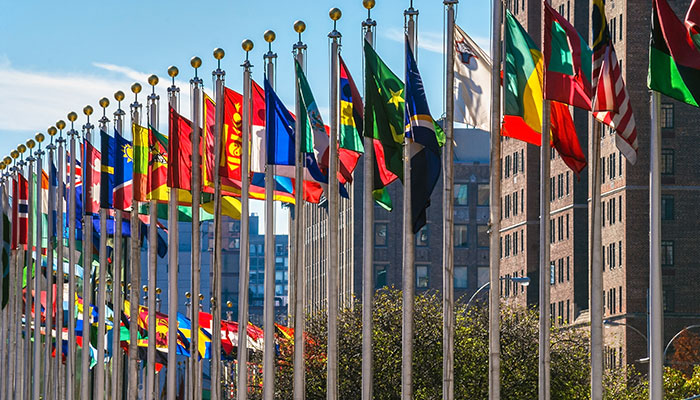
Still, the UN has faced tough times before – over many decades during the Cold War, the Security Council was crippled by deep tensions between the US and the Soviet Union. The UN is not as sidelined or divided today as it was then. However, as the relationship between China and the US sours, the achievements of global co-operation are being eroded.
The way in which people speak about the UN often implies a level of coherence and bureaucratic independence that the UN rarely possesses. A failure of the UN is normally better understood as a failure of international co-operation.
We see this recently in the UN’s inability to deal with crises from the ethnic cleansing of the Rohingya Muslims in Myanmar, to civil conflict in Syria, and the failure of the Security Council to adopt a COVID-19 resolution calling for ceasefires in conflict zones and a co-operative international response to the pandemic.
The UN administration is not primarily to blame for these failures; rather, the problem is the great powers – in the case of COVID-19, China and the US – refusing to co-operate.
Where states fail to agree, the UN is powerless to act.
Marking the 75th anniversary of the official formation of the UN, when 50 founding nations signed the UN Charter on June 26, 1945, we look at some of its key triumphs and resounding failures.
Five successes
1. Peacekeeping
The United Nations was created with the goal of being a collective security organisation. The UN Charter establishes that the use of force is only lawful either in self-defence or if authorised by the UN Security Council. The Security Council’s five permanent members, being China, US, UK, Russia and France, can veto any such resolution.
The UN’s consistent role in seeking to manage conflict is one of its greatest successes.
A key component of this role is peacekeeping. The UN under its second secretary-general, the Swedish statesman Dag Hammarskjöld – who was posthumously awarded the Nobel Peace prize after he died in a suspicious plane crash – created the concept of peacekeeping. Hammarskjöld was responding to the 1956 Suez Crisis, in which the US opposed the invasion of Egypt by its allies Israel, France and the UK.
UN peacekeeping missions involve the use of impartial and armed UN forces, drawn from member states, to stabilise fragile situations. “The essence of peacekeeping is the use of soldiers as a catalyst for peace rather than as the instruments of war,” said then UN Secretary-General Javier Pérez de Cuéllar, when the forces won the 1988 Nobel Peace Prize following missions in conflict zones in the Middle East, Africa, Asia, Central America and Europe.
However, peacekeeping also counts among the UN’s major failures.
2. Law of the Sea
Negotiated between 1973 and 1982, the UN Convention on the Law of the Sea (UNCLOS) set up the current international law of the seas. It defines states’ rights and creates concepts such as exclusive economic zones, as well as procedures for the settling of disputes, new arrangements for governing deep sea bed mining, and importantly, new provisions for the protection of marine resources and ocean conservation.
Mostly, countries have abided by the convention. There are various disputes that China has over the East and South China Seas which present a conflict between power and law, in that although UNCLOS creates mechanisms for resolving disputes, a powerful state isn’t necessarily going to submit to those mechanisms.
Secondly, on the conservation front, although UNCLOS is a huge step forward, it has failed to adequately protect oceans that are outside any state’s control. Ocean ecosystems have been dramatically transformed through overfishing. This is an ecological catastrophe that UNCLOS has slowed, but failed to address comprehensively.
3. Decolonisation
The idea of racial equality and of a people’s right to self-determination was discussed in the wake of World War I and rejected. After World War II, however, those principles were endorsed within the UN system, and the Trusteeship Council, which monitored the process of decolonisation, was one of the initial bodies of the UN.
Although many national independence movements only won liberation through bloody conflicts, the UN has overseen a process of decolonisation that has transformed international politics. In 1945, around one third of the world’s population lived under colonial rule. Today, there are less than 2 million people living in colonies.
When it comes to the world’s First Nations, however, the UN generally has done little to address their concerns, aside from the non-binding UN Declaration on the Rights of Indigenous Peoples of 2007.
4. Human rights
The Human Rights Declaration of 1948 for the first time set out fundamental human rights to be universally protected, recognising that the “inherent dignity and of the equal and inalienable rights of all members of the human family is the foundation of freedom, justice and peace in the world”.
Since 1948, 10 human rights treaties have been adopted – including conventions on the rights of children and migrant workers, and against torture and discrimination based on gender and race – each monitored by its own committee of independent experts.
The language of human rights has created a new framework for thinking about the relationship between the individual, the state and the international system. Although some people would prefer that political movements focus on ‘liberation’ rather than ‘rights’, the idea of human rights has made the individual person a focus of national and international attention.
5. Free trade
Depending on your politics, you might view the World Trade Organisation as a huge success, or a huge failure.
The WTO creates a near-binding system of international trade law with a clear and efficient dispute resolution process.
The majority Australian consensus is that the WTO is a success because it has been good for Australian famers especially, through its winding back of subsidies and tariffs.
However, the WTO enabled an era of globalisation which is now politically controversial.
Recently, the US has sought to disrupt the system. In addition to the trade war with China, the Trump Administration has also refused to appoint tribunal members to the WTO’s Appellate Body, so it has crippled the dispute resolution process. Of course, the Trump Administration is not the first to take issue with China’s trade strategies, which include subsidises for ‘State Owned Enterprises’ and demands that foreign firms transfer intellectual property in exchange for market access.
The existence of the UN has created a forum where nations can discuss new problems, and climate change is one of them. The Intergovernmental Panel on Climate Change (IPCC) was set up in 1988 to assess climate science and provide policymakers with assessments and options. In 1992, the UN Framework Convention on Climate Change created a permanent forum for negotiations.
However, despite an international scientific body in the IPCC, and 165 signatory nations to the climate treaty, global greenhouse gas emissions have continued to increase.
Under the Paris Agreement, even if every country meets its greenhouse gas emission targets we are still on track for ‘dangerous warming’. Yet, no major country is even on track to meet its targets; while emissions will probably decline this year as a result of COVID-19, atmospheric concentrations of greenhouse gases will still increase.
This illustrates a core conundrum of the UN in that it opens the possibility of global cooperation, but is unable to constrain states from pursuing their narrowly conceived self-interests. Deep co-operation remains challenging.
Five failures of the UN
1. Peacekeeping
During the Bosnian War, Dutch peacekeeping forces stationed in the town of Srebrenica, declared a ‘safe area’ by the UN in 1993, failed in 1995 to stop the massacre of more than 8000 Muslim men and boys by Bosnian Serb forces. This is one of the most widely discussed examples of the failures of international peacekeeping operations.
On the massacre’s 10th anniversary, then UN Secretary General Kofi Annan wrote that the UN had “made serious errors of judgement, rooted in a philosophy of impartiality”, contributing to a mass murder that would “haunt our history forever”.
If you look at some of the other infamous failures of peacekeeping missions – in places such as Rwanda, Somalia and Angola – it is the limited powers given to peacekeeping operations that have resulted in those failures.
2. The invasion of Iraq
The invasion of Iraq by the US in 2003, which was unlawful and without Security Council authorisation, reflects the fact that the UN is has very limited capacity to constrain the actions of great powers.
The Security Council designers created the veto power so that any of the five permanent members could reject a Council resolution, so in that way it is programmed to fail when a great power really wants to do something that the international community generally condemns.
In the case of the Iraq invasion, the US didn’t veto a resolution, but rather sought authorisation that it did not get. The UN, if you go by the idea of collective security, should have responded by defending Iraq against this unlawful use of force.
The invasion proved a humanitarian disaster with the loss of more than 400,000 lives, and many believe that it led to the emergence of the terrorist Islamic State.
3. Refugee crises
The UN brokered the 1951 Refugee Convention to address the plight of people displaced in Europe due to World War II; years later, the 1967 Protocol removed time and geographical restrictions so that the Convention can now apply universally (although many countries in Asia have refused to sign it, owing in part to its Eurocentric origins).
Despite these treaties, and the work of the UN High Commission for Refugees, there is somewhere between 30 and 40 million refugees, many of them, such as many Palestinians, living for decades outside their homelands. This is in addition to more than 40 million people displaced within their own countries.
While for a long time refugee numbers were reducing, in recent years, particularly driven by the Syrian conflict, there have been increases in the number of people being displaced.
During the COVID-19 crisis, boatloads of Rohingya refugees were turned away by port after port. This tragedy has echoes of pre-World War II when ships of Jewish refugees fleeing Nazi Germany were refused entry by multiple countries.
And as a catastrophe of a different kind looms, there is no international framework in place for responding to people who will be displaced by rising seas and other effects of climate change.
4. Conflicts without end
Across the world, there is a shopping list of unresolved civil conflicts and disputed territories.
Palestine and Kashmir are two of the longest-running failures of the UN to resolve disputed lands. More recent, ongoing conflicts include the civil wars in Syria and Yemen.
The common denominator of unresolved conflicts is either division among the great powers, or a lack of international interest due to the geopolitical stakes not being sufficiently high. For instance, the inaction during the Rwandan civil war in the 1990s was not due to a division among great powers, but rather a lack of political will to engage.
In Syria, by contrast, Russia and the US have opposing interests and back opposing sides: Russia backs the government of the Syrian dictator Bashar al-Assad, whereas the US does not.
5. Acting like it’s 1945
The UN is increasingly out of step with the reality of geopolitics today.
The permanent members of the Security Council reflect the division of power internationally at the end of World War II. The continuing exclusion of Germany, Japan, and rising powers such as India and Indonesia, reflects the failure to reflect the changing balance of power.
Also, bodies such as the IMF and the World Bank, which are part of the UN system, continue to be dominated by the West. In response, China has created potential rival institutions such as the Asian Infrastructure Investment Bank.
Western domination of UN institutions undermines their credibility. However, a more fundamental problem is that institutions designed in 1945 are a poor fit with the systemic global challenges – of which climate change is foremost – that we face today.