


One-third of total maternal deaths in 2015 happened in India: Report
The latest Lancet series on maternal health reveals that nearly one quarter of babies worldwide are still delivered in the absence of a skilled birth attendant. Further, one-third of the total maternal deaths in 2015 happened in India, where 45,000 mothers died during pregnancy or childbirth while Nigeria shouldered the maximum burden of 58,000 maternal deaths.
Each year, about 210 million women become pregnant and about 140 million newborn babies are delivered. Ahead of the U.N. General Assembly, The Lancet has published a new series of papers on maternal health which reveal that while progress has been made in reducing maternal mortality globally, differences remain at international and national levels.In all countries, the burden of maternal mortality falls disproportionately on the most vulnerable groups of women. This reality presents a challenge to the rapid catch-up required to achieve the underlying aim of the Sustainable Development Goals [SDGs] — to leave no one behind.
According to the academic papers, there are two broad scenarios that describe the landscape of poor maternal health care — the absence of timely access to quality care (defined as ‘too little, too late’) and the over-medicalisation of normal and postnatal care (defined as ‘too much, too soon’).
The problem of over-medicalisation has historically been associated with high-income countries, but it is rapidly becoming more common in low and middle-income countries, increasing health costs and the risk of harm. For instance, 40.5% of all births are now by caesarean section in Latin America and the Caribbean.
In high-income countries, rates of maternal mortality are decreasing but there is still wide variation at national and international level. For instance, in the U.S., the maternal mortality ratio is 14 per 1,00,000 live births compared to 4 per 1,00,000 in Sweden.
The sub-Saharan African region accounted for an estimated 66% (2,01,000) of global maternal deaths, followed by southern Asia at 22% (66,000 deaths).
Will the Paris Pact succeed like the Montreal Protocol?
Though the U.S. and China, the two top global greenhouse gas (GHG) emitters, ratified the treaty at the recently concluded G20 summit, implementation is possible only once the agreement is ready to enter into force. And that won’t happen until 55 countries, accounting for 55 per cent of the global GHG emissions, ratify it.
The Montreal precedent
Back in 1987, on September 16, when 197 member nations of the UN signed the Montreal Protocol on Substances that Deplete the Ozone Layer, little would they have anticipated that in three decades the purpose for which they were signing the pact would begin to bear fruit: the ozone layer, which at that time was discovered to have a big hole in it due to ozone-depleting chemicals being widely used, is now beginning to show signs of healing. Researchers believe that the size of the ozone hole has shrunk by around 4 million sq km since 2000 and is not as deep as it used to be, thanks to the collective efforts of nations to cut the use of chlorofluorocarbons and other dangerous gases.
The Montreal Protocol offers a model of a successful environmental treaty that brought nations together to act swiftly on protecting the ozone layer. Next month, nations that are party to the protocol will get together in Kigali, Rwanda, to discuss the phasing down of hydrofluorocarbons (HFCs) as the next step towards addressing ozone depletion, also necessary to curb global warming.
According to the UN Framework Convention on Climate Change (UNFCCC), an HFC phase-down could prevent warming of up to 0.1°C by 2050 and warming of up to 0.5°C by 2100, offering one of the most cost-effective climate mitigation strategies available to the world today.
Replicating success
The more pertinent question is whether the Paris Agreement could succeed similarly in plugging greenhouse gas emissions, though it has a much bigger goal to chase. The Montreal Protocol had to address the use of ozone-depleting substances in select industries where they were widely used whereas the Paris Agreement has to address the challenge of reducing dependence on fossil fuels that continue to be the world’s primary source of energy, a tall order.
The experience of implementing the Montreal Protocol offers several lessons which can lead the climate treaty to success. For starters, unlike climate change, the science behind ozone depletion was contested at the time when the protocol was signed. It was only eight years after the Montreal Protocol came into being that the Nobel Prize in Chemistry to Paul J. Crutzen, Mario J. Molina and F. Sherwood Rowland brought global validation for their work on the formation and decomposition of ozone in the atmosphere. But that did not stop the countries that were party to the protocol from taking necessary action. However, despite the scientific evidence in support of global warming and climate change, signatories to the Paris treaty have much scepticism to overcome before meeting its goal of keeping global warming levels less than 2°C above pre-industrial levels.
The experience with the Kyoto Protocol signed in 1997 shows that if the U.S. wants, it can topple international efforts to fight climate change — though the then President, Bill Clinton, had signed the protocol in 1997, the U.S. Senate did not approve it, and eventually other major GHG emitters abandoned it as well.
Besides political will, there is the question of funding as well. Industrialised countries had committed in Cancun in 2010 to provide funds rising to $100 billion per year by 2020 for a Green Climate Fund (GCF) to help developing countries invest in green energy and prepare for extreme weather events. However, the GCF has so far raised only $10 billion, and allocated money to only about eight projects since it was first set up.
With the latest addition of Micronesia, 28 countries responsible for over 40 per cent of GHG emissions have ratified the Paris Agreement. But a closer look at the list of countries shows that small countries, especially island nations, with low GHG emissions and high risk of climate catastrophe, have been more prompt.
The UNFCCC is confident that more top emitters, including the EU, would soon join the treaty. But the truth is, even after ratification, the pledges made by signatories to the Paris Agreement would be insufficient to keep global warming levels below the danger threshold, as per the UN’s own estimates.
The latest report from the U.S. National Aeronautics and Space Administration’s Goddard Institute for Space Studies shows that August 2016 was the hottest month on the planet, about 0.16°C warmer than the previous 2014 record. So even as we celebrate the relative success of the Montreal Protocol in fixing the ozone layer today, the real lesson that the experience offers the world is that a stitch in time saves nine.
Pakistan’s MFN tag may stay for now
The Centre is not considering any proposal to withdraw the ‘Most Favoured Nation’ (MFN) status accorded to Pakistan as even without the move the level of bilateral trade is very low.
The MFN status was accorded in 1996 as per India’s commitments as a member of the World Trade Organisation (WTO). According to the MFN principle of the WTO’s General Agreement on Tariffs and Trade (GATT) — to which India is a signatory/contracting party — each of the WTO member countries (including India and Pakistan in this case), should “treat all the other members equally as ‘most-favoured’ trading partners.”
According to the WTO, though the term ‘MFN’ “suggests special treatment, it actually means non-discrimination.”
In the wake of the deadly attack on Indian soldiers in Uri, an incident for which India is holding Pakistan responsible, there have been calls in India for tough action against its neighbour, including the revocation of the MFN status.
Minuscule trade
Bilateral trade between the two South Asian neighbours was just $2.6 billion in 2015-16 (of which $2.2 billion constituted India’s exports to Pakistan) — which represented a minuscule 0.4 per cent of India’s overall goods trade worth $643.3 billion in the same year.
Therefore, even if India revokes the MFN status it would only have a “symbolic” impact. On the other hand it would hit India’s exports to Pakistan if there are retaliatory actions and it could also result in India losing goodwill in the South Asian region (where it enjoys a trade surplus and is a party to a free trade pact called SAFTA, which also includes Pakistan). The move may also not go down well at the WTO-level.
The MFN concept is an integral part of the WTO agreements and is among the principles forming the foundation of the multilateral trading system. As per the WTO, whenever a country brings down a trade barrier or liberalises a sector, “it has to do so for the same goods or services from all its trading partners — whether rich or poor, weak or strong.” However, exceptions allowed to this rule include free trade pacts and special benefits to poor nations.
Trade curbs
After the attack in Uri, in which 18 Indian soldiers were killed, international trade experts said India could consider making use of a ‘security exception’ clause in the GATT to deny the MFN status to Pakistan or bring in certain trade restrictions.
This is because Article 21(b)(iii) of GATT states that “Nothing in this Agreement shall be construed to prevent any contracting party (including India in this case) from taking any action which it considers necessary for the protection of its essential security interests taken in time of war or other emergency in international relations.”
Biswajit Dhar, professor, Jawaharlal Nehru University, said: “There is a possibility of India invoking this clause in view of the fact that it perceives a security threat in the aftermath of the Uri attack.”
However, according to a ‘Working Paper’ of the Centre for WTO Studies at the Indian Institute of Foreign Trade, “GATT and WTO practice shows that the countries have by and large observed self restraint in using the national security exception.” “This is hardly surprising as national security is too sensitive a subject that countries will be comfortable submitting to an international review,” the paper’s author Shailja Singh wrote.
No bar
Singh wrote that a closer scrutiny “reveals that there is no categorical bar on the (WTO dispute settlement) panel from proceeding into an Article 21 dispute.” She pointed out that Article 21(b) is clear that any action under it has to fulfil the specific criteria of the clause, adding that a (WTO) “member does not enjoy a free run to take any action it wishes under the guise of security interest.”
But there have been precedents. The Working Paper points out an Article 21-related dispute in 1949 between Czechoslovak (Socialist Republic) and the U.S., and such disputes between the U.S. and Nicaragua in 1983 and 1985 as well as another one in 1992 between the European Communities and the former Socialist Federal Republic of Yugoslavia.
Merger of Plan and Non Plan classification in Budget and Accounts
The cabinet has approved the merger of Plan and Non Plan classification in Budget and Accounts from 2017-18, with continuance of earmarking of funds for Scheduled Castes Sub-Plan/Tribal Sub-Plan. Similarly, the allocations for North Eastern States will also continue.
- The Plan/Non-Plan bifurcation of expenditure has led to a fragmented view of resource allocation to various schemes, making it difficult not only to ascertain cost of delivering a service but also to link outlays to outcomes.
- The bias in favour of Plan expenditure by Centre as well as the State Governments has led to a neglect of essential expenditures on maintenance of assets and other establishment related expenditures for providing essential social services.
- The merger of plan and non-plan in the budget is expected to provide appropriate budgetary framework having focus on the revenue, and capital expenditure.
Submarine optical fibre cable connectivity between mainland (Chennai) and Andaman & Nicobar Islands
The Union Cabinet has given its approval for provision of a direct communication link through a dedicated submarine Optical Fibre Cable (OFC) between Mainland (Chennai) and Port Blair & five other islands viz. Little Andaman, Car Nicobar, Havelock, Kamorta and Great Nicobar.
The Andaman and Nicobar Islands are of immense strategic significance for India. The geographical configuration and the location of the Andaman & Nicobar Islands chain in the Bay of Bengal safeguard India’s eastern seaboard.
- Provision of secure, reliable, robust, and affordable telecom facilities in these islands is of importance from a strategic point of view to the country and also an important requirement for the socio-economic development of the islands.
- Currently the only medium of providing telecom connectivity between Mainland and Andaman & Nicobar Islands is though satellites, but the bandwidth available is limited to 1 Gbps. Satellite bandwidth is very costly and its availability is limited due to which future bandwidth requirement cannot be met solely through it.
- Then, there is an issue of redundancy, that is, no alternate media is available in case of any emergency. Lack of bandwidth and telecom connectivity is also hampering socio-economic development of the islands.
- Hence it is essential to have submarine OFC connectivity between the Mainland India and Andaman & Nicobar Islands, being the only option for catering to projected future bandwidth requirements.
IIT-M’s cheap solution to make brackish water potable
IIT-M has come up with an idea to convert brackish water into drinking water at about 12 paisa per litre right on the kitchen table by using a potential difference of just 1.8 volts.
The researchers used a stack of tissue paper and carbonised it at high temperature to make graphene. Graphite electrodes were then coated with the graphene produced in the lab.
- When the electrodes are dipped into brackish water and 1.8 volt potential is applied to the electrodes, the sodium and chloride ions move towards respective electrodes and get adsorbed.
- In about five minutes, the brackish water turns into potable water with less than 500 parts per million (ppm) of sodium chloride, which is less than the permissible limit for drinking water.
- To render the graphene porous, silica precursors were added to the graphene and removed subsequently. The removal of silica makes the graphene porous while retaining its structural integrity.
Mission Parivar Vikas to be launched to push contraceptive use
The government will soon launch Mission Parivar Vikas to improve family planning services in seven states where the combined total fertility rate (TFR), or the number of children a woman has in her lifetime) that constitutes 44% of the country’s population.
Highlights:-
- The main objective of ‘Mission Parivar Vikas is to accelerate access to high quality family planning choices based on information, reliable services and supplies within a rights-based framework.
- The Union ministry of health and family welfare will launch the programme in 145 high-focus districts of Uttar Pradesh, Bihar, Rajasthan, Madhya Pradesh, Chhattisgarh, Jharkhand and Assam.
- These districts were identified based on their total fertility rate and sterilization performance among other measures taken for family planning, for immediate, special and accelerated efforts.
- The target of the government is to reach the replacement level fertility goals of 2.1 by the year 2025.
- The key strategic focus of this initiative will be on improving access to contraceptives through delivering assured services, dovetailing with new promotional schemes, ensuring commodity security, building capacity (service providers), creating an enabling environment along with close monitoring and implementation.
Receive Daily Updates
Recent Posts
The United Nations has shaped so much of global co-operation and regulation that we wouldn’t recognise our world today without the UN’s pervasive role in it. So many small details of our lives – such as postage and copyright laws – are subject to international co-operation nurtured by the UN.
In its 75th year, however, the UN is in a difficult moment as the world faces climate crisis, a global pandemic, great power competition, trade wars, economic depression and a wider breakdown in international co-operation.
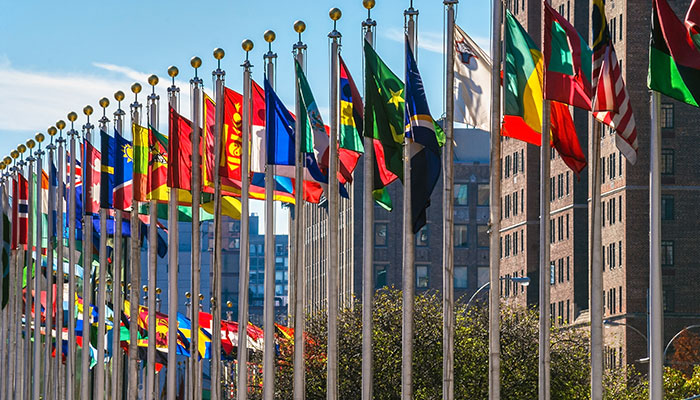
Still, the UN has faced tough times before – over many decades during the Cold War, the Security Council was crippled by deep tensions between the US and the Soviet Union. The UN is not as sidelined or divided today as it was then. However, as the relationship between China and the US sours, the achievements of global co-operation are being eroded.
The way in which people speak about the UN often implies a level of coherence and bureaucratic independence that the UN rarely possesses. A failure of the UN is normally better understood as a failure of international co-operation.
We see this recently in the UN’s inability to deal with crises from the ethnic cleansing of the Rohingya Muslims in Myanmar, to civil conflict in Syria, and the failure of the Security Council to adopt a COVID-19 resolution calling for ceasefires in conflict zones and a co-operative international response to the pandemic.
The UN administration is not primarily to blame for these failures; rather, the problem is the great powers – in the case of COVID-19, China and the US – refusing to co-operate.
Where states fail to agree, the UN is powerless to act.
Marking the 75th anniversary of the official formation of the UN, when 50 founding nations signed the UN Charter on June 26, 1945, we look at some of its key triumphs and resounding failures.
Five successes
1. Peacekeeping
The United Nations was created with the goal of being a collective security organisation. The UN Charter establishes that the use of force is only lawful either in self-defence or if authorised by the UN Security Council. The Security Council’s five permanent members, being China, US, UK, Russia and France, can veto any such resolution.
The UN’s consistent role in seeking to manage conflict is one of its greatest successes.
A key component of this role is peacekeeping. The UN under its second secretary-general, the Swedish statesman Dag Hammarskjöld – who was posthumously awarded the Nobel Peace prize after he died in a suspicious plane crash – created the concept of peacekeeping. Hammarskjöld was responding to the 1956 Suez Crisis, in which the US opposed the invasion of Egypt by its allies Israel, France and the UK.
UN peacekeeping missions involve the use of impartial and armed UN forces, drawn from member states, to stabilise fragile situations. “The essence of peacekeeping is the use of soldiers as a catalyst for peace rather than as the instruments of war,” said then UN Secretary-General Javier Pérez de Cuéllar, when the forces won the 1988 Nobel Peace Prize following missions in conflict zones in the Middle East, Africa, Asia, Central America and Europe.
However, peacekeeping also counts among the UN’s major failures.
2. Law of the Sea
Negotiated between 1973 and 1982, the UN Convention on the Law of the Sea (UNCLOS) set up the current international law of the seas. It defines states’ rights and creates concepts such as exclusive economic zones, as well as procedures for the settling of disputes, new arrangements for governing deep sea bed mining, and importantly, new provisions for the protection of marine resources and ocean conservation.
Mostly, countries have abided by the convention. There are various disputes that China has over the East and South China Seas which present a conflict between power and law, in that although UNCLOS creates mechanisms for resolving disputes, a powerful state isn’t necessarily going to submit to those mechanisms.
Secondly, on the conservation front, although UNCLOS is a huge step forward, it has failed to adequately protect oceans that are outside any state’s control. Ocean ecosystems have been dramatically transformed through overfishing. This is an ecological catastrophe that UNCLOS has slowed, but failed to address comprehensively.
3. Decolonisation
The idea of racial equality and of a people’s right to self-determination was discussed in the wake of World War I and rejected. After World War II, however, those principles were endorsed within the UN system, and the Trusteeship Council, which monitored the process of decolonisation, was one of the initial bodies of the UN.
Although many national independence movements only won liberation through bloody conflicts, the UN has overseen a process of decolonisation that has transformed international politics. In 1945, around one third of the world’s population lived under colonial rule. Today, there are less than 2 million people living in colonies.
When it comes to the world’s First Nations, however, the UN generally has done little to address their concerns, aside from the non-binding UN Declaration on the Rights of Indigenous Peoples of 2007.
4. Human rights
The Human Rights Declaration of 1948 for the first time set out fundamental human rights to be universally protected, recognising that the “inherent dignity and of the equal and inalienable rights of all members of the human family is the foundation of freedom, justice and peace in the world”.
Since 1948, 10 human rights treaties have been adopted – including conventions on the rights of children and migrant workers, and against torture and discrimination based on gender and race – each monitored by its own committee of independent experts.
The language of human rights has created a new framework for thinking about the relationship between the individual, the state and the international system. Although some people would prefer that political movements focus on ‘liberation’ rather than ‘rights’, the idea of human rights has made the individual person a focus of national and international attention.
5. Free trade
Depending on your politics, you might view the World Trade Organisation as a huge success, or a huge failure.
The WTO creates a near-binding system of international trade law with a clear and efficient dispute resolution process.
The majority Australian consensus is that the WTO is a success because it has been good for Australian famers especially, through its winding back of subsidies and tariffs.
However, the WTO enabled an era of globalisation which is now politically controversial.
Recently, the US has sought to disrupt the system. In addition to the trade war with China, the Trump Administration has also refused to appoint tribunal members to the WTO’s Appellate Body, so it has crippled the dispute resolution process. Of course, the Trump Administration is not the first to take issue with China’s trade strategies, which include subsidises for ‘State Owned Enterprises’ and demands that foreign firms transfer intellectual property in exchange for market access.
The existence of the UN has created a forum where nations can discuss new problems, and climate change is one of them. The Intergovernmental Panel on Climate Change (IPCC) was set up in 1988 to assess climate science and provide policymakers with assessments and options. In 1992, the UN Framework Convention on Climate Change created a permanent forum for negotiations.
However, despite an international scientific body in the IPCC, and 165 signatory nations to the climate treaty, global greenhouse gas emissions have continued to increase.
Under the Paris Agreement, even if every country meets its greenhouse gas emission targets we are still on track for ‘dangerous warming’. Yet, no major country is even on track to meet its targets; while emissions will probably decline this year as a result of COVID-19, atmospheric concentrations of greenhouse gases will still increase.
This illustrates a core conundrum of the UN in that it opens the possibility of global cooperation, but is unable to constrain states from pursuing their narrowly conceived self-interests. Deep co-operation remains challenging.
Five failures of the UN
1. Peacekeeping
During the Bosnian War, Dutch peacekeeping forces stationed in the town of Srebrenica, declared a ‘safe area’ by the UN in 1993, failed in 1995 to stop the massacre of more than 8000 Muslim men and boys by Bosnian Serb forces. This is one of the most widely discussed examples of the failures of international peacekeeping operations.
On the massacre’s 10th anniversary, then UN Secretary General Kofi Annan wrote that the UN had “made serious errors of judgement, rooted in a philosophy of impartiality”, contributing to a mass murder that would “haunt our history forever”.
If you look at some of the other infamous failures of peacekeeping missions – in places such as Rwanda, Somalia and Angola – it is the limited powers given to peacekeeping operations that have resulted in those failures.
2. The invasion of Iraq
The invasion of Iraq by the US in 2003, which was unlawful and without Security Council authorisation, reflects the fact that the UN is has very limited capacity to constrain the actions of great powers.
The Security Council designers created the veto power so that any of the five permanent members could reject a Council resolution, so in that way it is programmed to fail when a great power really wants to do something that the international community generally condemns.
In the case of the Iraq invasion, the US didn’t veto a resolution, but rather sought authorisation that it did not get. The UN, if you go by the idea of collective security, should have responded by defending Iraq against this unlawful use of force.
The invasion proved a humanitarian disaster with the loss of more than 400,000 lives, and many believe that it led to the emergence of the terrorist Islamic State.
3. Refugee crises
The UN brokered the 1951 Refugee Convention to address the plight of people displaced in Europe due to World War II; years later, the 1967 Protocol removed time and geographical restrictions so that the Convention can now apply universally (although many countries in Asia have refused to sign it, owing in part to its Eurocentric origins).
Despite these treaties, and the work of the UN High Commission for Refugees, there is somewhere between 30 and 40 million refugees, many of them, such as many Palestinians, living for decades outside their homelands. This is in addition to more than 40 million people displaced within their own countries.
While for a long time refugee numbers were reducing, in recent years, particularly driven by the Syrian conflict, there have been increases in the number of people being displaced.
During the COVID-19 crisis, boatloads of Rohingya refugees were turned away by port after port. This tragedy has echoes of pre-World War II when ships of Jewish refugees fleeing Nazi Germany were refused entry by multiple countries.
And as a catastrophe of a different kind looms, there is no international framework in place for responding to people who will be displaced by rising seas and other effects of climate change.
4. Conflicts without end
Across the world, there is a shopping list of unresolved civil conflicts and disputed territories.
Palestine and Kashmir are two of the longest-running failures of the UN to resolve disputed lands. More recent, ongoing conflicts include the civil wars in Syria and Yemen.
The common denominator of unresolved conflicts is either division among the great powers, or a lack of international interest due to the geopolitical stakes not being sufficiently high. For instance, the inaction during the Rwandan civil war in the 1990s was not due to a division among great powers, but rather a lack of political will to engage.
In Syria, by contrast, Russia and the US have opposing interests and back opposing sides: Russia backs the government of the Syrian dictator Bashar al-Assad, whereas the US does not.
5. Acting like it’s 1945
The UN is increasingly out of step with the reality of geopolitics today.
The permanent members of the Security Council reflect the division of power internationally at the end of World War II. The continuing exclusion of Germany, Japan, and rising powers such as India and Indonesia, reflects the failure to reflect the changing balance of power.
Also, bodies such as the IMF and the World Bank, which are part of the UN system, continue to be dominated by the West. In response, China has created potential rival institutions such as the Asian Infrastructure Investment Bank.
Western domination of UN institutions undermines their credibility. However, a more fundamental problem is that institutions designed in 1945 are a poor fit with the systemic global challenges – of which climate change is foremost – that we face today.