


WCD Ministry and Bill & Melinda Gates Foundation sign MoC for technical support to strengthen the nutrition programme in India:-
The Ministry of Women and Child Development , Government of India, and the Bill & Melinda Gates Foundation signed a Memorandum of Cooperation (MoC) today to provide technical support at the National and State level for strengthening the delivery of nutrition goals, especially during pre-conception, pregnancy and first two years of life.
Further, the Gates’ Foundation will support an enhanced framework of collaboration in Information and Communication Technology enabled Real Time Monitoring (ICT-RTM) of Integrated Child Development Services (ICDS) and technical support on nutrition.
Improving the health and lives of women and children in India, by strengthening nutrition programs in order to promote their holistic development is one of the topmost priorities of the Government. In sync with this focus, the four priority areas of work as part of this MoC would include:
- Development and deployment of ICT solutions for improving and strengthening ICDS Service Delivery System.
- Support Ministry of Women & Child Development in developing a shared national communications campaign for maternal and child nutrition among target populations.
- Provision of technical support for the National Nutrition Mission, Restructured ICDS Systems Strengthening and Nutrition Improvement Project (ISSNIP) and Restructured ICDS through a Technical Support Unit at the national and state level for strengthening their capacities to deliver nutrition especially during pre- conception, pregnancy and first two years of life.
- Technical support and Knowledge management support to strengthen human resource capabilities at various levels in order to deliver effective nutrition interventions.
- This collaboration will strengthen the government’s restructured ICDS Systems Strengthening and Nutrition Improvement Project (ISSNIP) and National Nutrition Mission, with a focus on technological innovation, sharing best practices and use of data and evidence to enhance performance at the national and state level.
New Draft National Policy for Women:-
After a gap of 15 years, the Centre has come up with a draft national policy for women. The new draft policy is aimed at “re-scripting” women’s empowerment by following a “socially inclusive rights-based approach.”
The policy is roughly based on the Pam Rajput Committee report set up by the MWCD in 2012 which submitted its recommendations last year, including a suggested national policy for women and an action plan to end violence against women.
Significance of this policy:
Since 2001, when the last National Policy for Empowerment of Women was formulated, the concept of women empowerment has seen changes, from being recipients of welfare benefits to the need to engage them in the development process, welfare with a heavy dose of rights. This draft policy has tried to address this shift. It will define the government’s action on women in the next 15-20 years.
Key Details:
- The policy aims to create sustainable socio-economic, political empowerment of women to claim their rights and entitlements, control over resources and formulation of strategic choices in realisation of the principles of gender equality and justice.
- The policy envisions a society in which, women attain their full potential and are able to participate as equal partners in all spheres of life. It also emphasises the role of an effective framework to enable the process of developing policies, programmes and practices which will ensure equal rights and opportunities for women.
- The broad objective of the policy is to create a conducive socio-cultural, economic and political environment to enable women enjoy de jure and de facto fundamental rights and realize their full potential.
- The policy also describes emerging issues such as making cyber spaces safe place for women, redistribution of gender roles, for reducing unpaid care work, review of personal and customary laws in accordance with the Constitutional provisions, Review of criminalization of marital rape within the framework women’s human rights etc. relevant in the developmental paradigms.
- Operational strategies laid down in the policy provide a framework for implementation of legislations and strengthening of existing institutional mechanisms through action plan, effective gender institutional architecture. Advocacy and Stakeholder Partnerships, Inter-Sectoral Convergence, Gender Budgeting and generation of gender disaggregated data have also been given due focus.
- The new policy has suggested dependent care and child care leave not for just working women, but working men too.
The policy defines following as the priority areas:
- Health including food security and nutrition.
- Education
- Economy
- Governance and Decision Making.
- Violence Against Women.
- Enabling Environment.
- Environment and Climate Change.
Oil-for-drugs deal likely with crisis-hit Venezuela
India has proposed an oil-for-drugs barter plan with cash-strapped Venezuela to recoup millions of dollars in payments owed to some of India’s largest pharmaceutical companies.
This payment mechanism would allow Venezuela to repay some of the amount owed with oil.
The proposal would use the State Bank of India to mediate the transfer. The plan is now awaiting approval from the Finance Ministry and the Reserve Bank of India, which regulates such payments.
Several Indian generics producers rely on Venezuela as they sought emerging market alternatives to slower-growing economies such as the United States. But the unravelling of Venezuela’s socialist economy amid a fall in oil prices has triggered triple-digit inflation and a full-blown political and financial crisis. Unable to pay its bills, the country is facing severe shortages of even basic supplies such as food, water and medicines.
India, one of the world’s biggest oil importers along with the United States and China, had similarly elaborate barter deals with Iran, swapping rice and wheat for oil.
Speed, Reliability, Safety: 3 Pillars Of Prabhu’s Vision For Railways
-Interview with Raiilway Minister
Disclaimer- We believe interviews are more revealing than editorials ever will be for the simple reason that interviews are usually to the point (sometime off the point though) and represent the authority where as editorials are opinions and above all interviews are usually backed the interviewed person’s institution.This interview is represented as-is and no editorial oversight done by us.Hence read with due care.
How do you assess your first two years as railway minister? What were the challenges and constraints you faced?
On my first day, I only knew about railways as a passenger. I started studying it and I realised that it was in deep trouble. So many things that needed to be done had not been done. It was both acts of commission as well as omission that was responsible for the problem.
I said it is inconceivable that such a large organisation, such a large part of the economy, can be overhauled without a long term regime plan. Therefore, I said let us prepare a five-year plan. But I also knew that the challenge when you deal with the overhaul of a sector is that people will keep asking you, that is alright but what about today? And if you solve only today’s problem, you will never solve the long term problem and railways will get into bigger trouble. So I said let us have a five-year plan (now we are extending it to 15 years, so a 2030 plan will also be ready) but also address immediate problems of the people.
I was once at Varanasi station. A train was delayed because of fog. One person told me not only is the train delayed but there is no charging point, so I cannot tell anyone. So I said, we will put up charging points, improve food quality, cleanliness in stations and coaches, retro-fit coaches internally, provide wi-fi. These are small things that can happen in the short term. They are the deliverables for the customer, but not something that will overhaul the railways. What is important is to keep eye on short term without losing sight of long term. That has to be our strategy.
How did you go about it?
My first budget was the first step in that direction. It was also a complete departure from earlier budgets. One budget had ten pages on stoppages, another had several pages on new trains, there were announcements that had not been provided for in the budget, like starting a new division, a new zone. I said we will not make a budget like this, we will give strategic direction to railways, we will talk about challenges and how to address those challenges and the core budget – the financial statement, expenditure-income – will be very precise and sans fanfare.
It was a very deglamourised budget but people accepted it as a good budget. But everyone was stunned that I have not started new trains. We have started new trains but it has nothing to do with the budget. The budget is a financial statement, a policy statement, showing the direction. All these [new trains, stoppages] are operational issues. In that case I should also announce transfer of one official in my budget speech.
And we did something exceptional. Normally, people would be focussed on getting money from the ministry of finance. If it didn’t give, then nothing would happen. And I would blame the finance minister – I want to do so much, he is not giving money.
I said we will not do this. We will very strongly lobby with the finance ministry to get as much resources as possible, but we will not be constrained by the fact that they are not giving. So we raised the money – got Rs 1.50 lakh crores from LIC [Life Insurance Corporation]. We also went outside the budget.
This year’s budget is, in a way, a continuation but it is also a little higher level of change. We are trying to change the Railway Board management structure; we are also considering cross-functional entities. Compartmentalisation of railways is a problem – it is about specialisation but also creates hurdles to seamless functioning, so that has been addressed. Some task forces have been created. Two directorates have been created – one for mobility and one for revenues. Others are in the process of being created. The idea is that we should try to work as a team, in a focussed manner, knowing your objectives very clearly, and then to realise those objectives. Whatever structural changes need to be brought in should be brought in.
There has been scepticism about your revenue projections – you didn’t achieve what you promised to
But that is something beyond me. What is the revenue of railways? It is from freight. The projection of revenues was based on the projection for development of the core sector. If the core sector does not grow as much, obviously we can do nothing about it. It is an externality to the railways. I knew this, but I wanted to challenge the railways.
I will tell you the result of this. Last year, we were ready, for the first time, with capacity for handling 1.2 billion tonnes of cargo. That capacity is there today. Earlier the cargo handlers had to chase the railways, now the railways is chasing them. It is a very different type of approach. Like China does, we created capacity ahead of demand. So supply side constraints have been removed; whether demand will come or not depends on the market.
What are the areas where you feel you could have done more?
A lot of people compliment me for doing a great job. I am not content. But I don’t think making stations clean, making food quality better, reservation experience better is a great thing. Because this is not my objective. I will be happy when we will be able to transform the railways in the real sense of the term – the speed, the reliability, safety. And, in my opinion, the first stage is 2020; then you can actually judge it
Why I am saying 2020? We are adding, doubling, tripling lines, wherever there is congestion. And all of this cannot be done, unfortunately, in one year, but over three to four years. By 2020, we would have added capacity, modernised signalling to a great extent, completed hopefully the dedicated freight corridor so most of the. . .
When will that be completed?
We are planning for 2019, but 2020 in the worst situation. Land sometime becomes an issue.
Railways operating ratio needs to improve, can you do it without increasing freight charges and passenger fares?
If you increase freight rate, you will lose more share. This year, railways, for the first time probably, reduced the freight. Because then we get more business. My colleagues are talking to various industries. We asked the Cement Manufacturers’ Association, we will reduce [freight] by 5 per cent, how much more [business] will you give? They said we will give you 15-20 per cent more. So this is one strategy.
Globally, you cannot run railways based on these two streams of revenue – freight and fare. In most major countries, the contribution of non-rail revenue is 30 per cent. In India, it is not even 1 per cent. So we have created another directorate – to increase non rail revenue. One [source] is advertisement, then station redevelopment.
But it doesn’t seem to have got too much interest; also there are issues about civic infrastructure in the vicinity
Work on 10-20 will definitely start this year. It is a completely transparent process. We will put all the technical information on the website, then we will invite bids. This is done at the level of general manager because station redevelopment is a very local issue. People bid for it. Then they will try to normalise the proposal, it is a technical issue. So once it is normalised, to say that operational issues are handled, then it will be handed over to a two-member expert group, one technical and one financial. The short-listed companies will again be put on the website.
At that time of I have given a bid for Rs 100 crore, you have a right to improve on it, say Rs 120 crore. But you may do it just to kill competition or spoil the bid. To make sure it does not happen, the first bidder will have right of first refusal by taking the Rs 120 crore. So this is a very unique bid formula. It is not Swiss challenge; it is Indian challenge. Swiss challenge starts with unsolicited bid, but we start with solicited bid.
I am talking to the states. We are forming joint venture companies with them, I am suggesting that we put station development in that. The advantage for them is that the land is ours, they don’t put any money. What are our advantages – they give us more floor space index. Why? Because they also feel the city will get developed properly.
The second strategy is working with foreign governments. Korea, Japan, China, France, Germany are all interested. They will work with the state government entity. I asked the Delhi chief minister, he is interested.
But in many cities, the approach to stations is so congested. What’s the point in having a snazzy station when getting there is a harrowing?
That will be taken care of by the state government, civic bodies. Plus I have already talked to [urban development minister] Venkaiah Naidu. I don’t think a city can be smart without a smart station, so why not include smart station development as part of Smart City?
How much interest has been expressed?
Pre-bid conferences have been held in most of the zones, and there is a lot of interest. We did one for Surat – 17 bids have come.
You are criticised for overly focussing on middle class segment
Look, what are we. We are a transporter. What is my core job? It is to transport people and goods. So if I don’t take care of my customer, why will they come to us?
What is the progress on Rail Development Authority? Why are you shying away from calling it a regulator, which was the original idea?
Functions are completely regulatory. If regulators are going to accept cost as a starting point, then fix fares, that is a very simple thing to do. I want regulators to add one more function, which is very important, which is to find out how to improve efficiency. If you don’t do that, what is the point? I will keep increasing my cost, and the regulator decides the fare. So my customer is going to be overloaded with this.
A regulator should do development work, try to reduce the cost, increase the efficiency. If you don’t do that, what is the purpose? This is my own contribution to the whole process. The Debroy committee had spoken about the need for a regulator. I said it is a good idea, but if you don’t improve the efficiency, if you make it cost plus, how can the economy develop?
You are also not tackling the rigid rail bureaucracy
If you want to have disruption as the sole purpose of doing change then why does change make sense? I personally believe the whole purpose of change is outcome based. If the idea is to come and demolish everything, then it is a great victory because nothing is remaining. But nothing is functional either. Is that a purpose? That is why we have created these cross-functional directorates.
So it is not true that we are not touching. We are changing the bureaucracy. We are talking to the officers’ association. It is a 150 years old organisation, it has not changed much; you cannot just tell them that from tomorrow, what you did for 150 years was wrong. It is counter-productive. Rather, you tell them this is the outcome you want, this is the best way to achieve the outcome. They will also realise it. So the changes we are making are very significant but we are not making a big announcement about it because it will become counter-productive.
The railway unions are very strong. They can trip you up.
We have excellent relations with them. Is having good relations a problem? What is important to realise is that the same union is cooperating with us on safety, on customer service.
What is the progress on shift to accrual based accounting?
That project is on. See, we use generic terms and create a problem. All expert committees have spoken about accounting reform – single entry-double entry, cash to accrual. What is the reform? This is a basic thing. Have I done something more?
What we are doing is an outcome-based accounting. If you have outcomes to be derived, it cannot be done post creation of expenditure. You measure it that time, but the process has to start with budgeting. So it is a way of tracking budgeted expenditure, output and outcome. It is a very complex thing. World Bank people have said nobody has done it, this is how it should be done. They are also collaborating with us.
Recent Posts
The United Nations has shaped so much of global co-operation and regulation that we wouldn’t recognise our world today without the UN’s pervasive role in it. So many small details of our lives – such as postage and copyright laws – are subject to international co-operation nurtured by the UN.
In its 75th year, however, the UN is in a difficult moment as the world faces climate crisis, a global pandemic, great power competition, trade wars, economic depression and a wider breakdown in international co-operation.
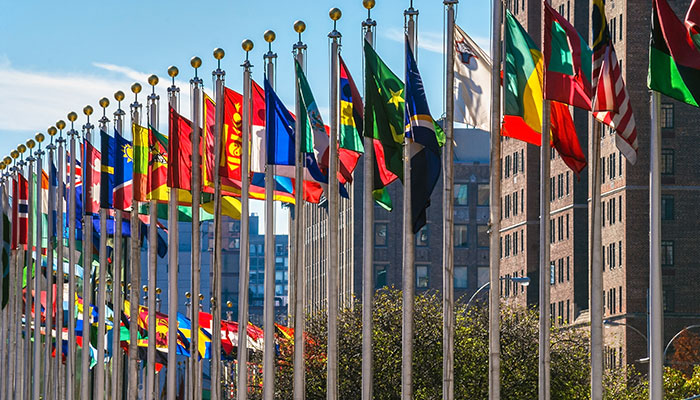
Still, the UN has faced tough times before – over many decades during the Cold War, the Security Council was crippled by deep tensions between the US and the Soviet Union. The UN is not as sidelined or divided today as it was then. However, as the relationship between China and the US sours, the achievements of global co-operation are being eroded.
The way in which people speak about the UN often implies a level of coherence and bureaucratic independence that the UN rarely possesses. A failure of the UN is normally better understood as a failure of international co-operation.
We see this recently in the UN’s inability to deal with crises from the ethnic cleansing of the Rohingya Muslims in Myanmar, to civil conflict in Syria, and the failure of the Security Council to adopt a COVID-19 resolution calling for ceasefires in conflict zones and a co-operative international response to the pandemic.
The UN administration is not primarily to blame for these failures; rather, the problem is the great powers – in the case of COVID-19, China and the US – refusing to co-operate.
Where states fail to agree, the UN is powerless to act.
Marking the 75th anniversary of the official formation of the UN, when 50 founding nations signed the UN Charter on June 26, 1945, we look at some of its key triumphs and resounding failures.
Five successes
1. Peacekeeping
The United Nations was created with the goal of being a collective security organisation. The UN Charter establishes that the use of force is only lawful either in self-defence or if authorised by the UN Security Council. The Security Council’s five permanent members, being China, US, UK, Russia and France, can veto any such resolution.
The UN’s consistent role in seeking to manage conflict is one of its greatest successes.
A key component of this role is peacekeeping. The UN under its second secretary-general, the Swedish statesman Dag Hammarskjöld – who was posthumously awarded the Nobel Peace prize after he died in a suspicious plane crash – created the concept of peacekeeping. Hammarskjöld was responding to the 1956 Suez Crisis, in which the US opposed the invasion of Egypt by its allies Israel, France and the UK.
UN peacekeeping missions involve the use of impartial and armed UN forces, drawn from member states, to stabilise fragile situations. “The essence of peacekeeping is the use of soldiers as a catalyst for peace rather than as the instruments of war,” said then UN Secretary-General Javier Pérez de Cuéllar, when the forces won the 1988 Nobel Peace Prize following missions in conflict zones in the Middle East, Africa, Asia, Central America and Europe.
However, peacekeeping also counts among the UN’s major failures.
2. Law of the Sea
Negotiated between 1973 and 1982, the UN Convention on the Law of the Sea (UNCLOS) set up the current international law of the seas. It defines states’ rights and creates concepts such as exclusive economic zones, as well as procedures for the settling of disputes, new arrangements for governing deep sea bed mining, and importantly, new provisions for the protection of marine resources and ocean conservation.
Mostly, countries have abided by the convention. There are various disputes that China has over the East and South China Seas which present a conflict between power and law, in that although UNCLOS creates mechanisms for resolving disputes, a powerful state isn’t necessarily going to submit to those mechanisms.
Secondly, on the conservation front, although UNCLOS is a huge step forward, it has failed to adequately protect oceans that are outside any state’s control. Ocean ecosystems have been dramatically transformed through overfishing. This is an ecological catastrophe that UNCLOS has slowed, but failed to address comprehensively.
3. Decolonisation
The idea of racial equality and of a people’s right to self-determination was discussed in the wake of World War I and rejected. After World War II, however, those principles were endorsed within the UN system, and the Trusteeship Council, which monitored the process of decolonisation, was one of the initial bodies of the UN.
Although many national independence movements only won liberation through bloody conflicts, the UN has overseen a process of decolonisation that has transformed international politics. In 1945, around one third of the world’s population lived under colonial rule. Today, there are less than 2 million people living in colonies.
When it comes to the world’s First Nations, however, the UN generally has done little to address their concerns, aside from the non-binding UN Declaration on the Rights of Indigenous Peoples of 2007.
4. Human rights
The Human Rights Declaration of 1948 for the first time set out fundamental human rights to be universally protected, recognising that the “inherent dignity and of the equal and inalienable rights of all members of the human family is the foundation of freedom, justice and peace in the world”.
Since 1948, 10 human rights treaties have been adopted – including conventions on the rights of children and migrant workers, and against torture and discrimination based on gender and race – each monitored by its own committee of independent experts.
The language of human rights has created a new framework for thinking about the relationship between the individual, the state and the international system. Although some people would prefer that political movements focus on ‘liberation’ rather than ‘rights’, the idea of human rights has made the individual person a focus of national and international attention.
5. Free trade
Depending on your politics, you might view the World Trade Organisation as a huge success, or a huge failure.
The WTO creates a near-binding system of international trade law with a clear and efficient dispute resolution process.
The majority Australian consensus is that the WTO is a success because it has been good for Australian famers especially, through its winding back of subsidies and tariffs.
However, the WTO enabled an era of globalisation which is now politically controversial.
Recently, the US has sought to disrupt the system. In addition to the trade war with China, the Trump Administration has also refused to appoint tribunal members to the WTO’s Appellate Body, so it has crippled the dispute resolution process. Of course, the Trump Administration is not the first to take issue with China’s trade strategies, which include subsidises for ‘State Owned Enterprises’ and demands that foreign firms transfer intellectual property in exchange for market access.
The existence of the UN has created a forum where nations can discuss new problems, and climate change is one of them. The Intergovernmental Panel on Climate Change (IPCC) was set up in 1988 to assess climate science and provide policymakers with assessments and options. In 1992, the UN Framework Convention on Climate Change created a permanent forum for negotiations.
However, despite an international scientific body in the IPCC, and 165 signatory nations to the climate treaty, global greenhouse gas emissions have continued to increase.
Under the Paris Agreement, even if every country meets its greenhouse gas emission targets we are still on track for ‘dangerous warming’. Yet, no major country is even on track to meet its targets; while emissions will probably decline this year as a result of COVID-19, atmospheric concentrations of greenhouse gases will still increase.
This illustrates a core conundrum of the UN in that it opens the possibility of global cooperation, but is unable to constrain states from pursuing their narrowly conceived self-interests. Deep co-operation remains challenging.
Five failures of the UN
1. Peacekeeping
During the Bosnian War, Dutch peacekeeping forces stationed in the town of Srebrenica, declared a ‘safe area’ by the UN in 1993, failed in 1995 to stop the massacre of more than 8000 Muslim men and boys by Bosnian Serb forces. This is one of the most widely discussed examples of the failures of international peacekeeping operations.
On the massacre’s 10th anniversary, then UN Secretary General Kofi Annan wrote that the UN had “made serious errors of judgement, rooted in a philosophy of impartiality”, contributing to a mass murder that would “haunt our history forever”.
If you look at some of the other infamous failures of peacekeeping missions – in places such as Rwanda, Somalia and Angola – it is the limited powers given to peacekeeping operations that have resulted in those failures.
2. The invasion of Iraq
The invasion of Iraq by the US in 2003, which was unlawful and without Security Council authorisation, reflects the fact that the UN is has very limited capacity to constrain the actions of great powers.
The Security Council designers created the veto power so that any of the five permanent members could reject a Council resolution, so in that way it is programmed to fail when a great power really wants to do something that the international community generally condemns.
In the case of the Iraq invasion, the US didn’t veto a resolution, but rather sought authorisation that it did not get. The UN, if you go by the idea of collective security, should have responded by defending Iraq against this unlawful use of force.
The invasion proved a humanitarian disaster with the loss of more than 400,000 lives, and many believe that it led to the emergence of the terrorist Islamic State.
3. Refugee crises
The UN brokered the 1951 Refugee Convention to address the plight of people displaced in Europe due to World War II; years later, the 1967 Protocol removed time and geographical restrictions so that the Convention can now apply universally (although many countries in Asia have refused to sign it, owing in part to its Eurocentric origins).
Despite these treaties, and the work of the UN High Commission for Refugees, there is somewhere between 30 and 40 million refugees, many of them, such as many Palestinians, living for decades outside their homelands. This is in addition to more than 40 million people displaced within their own countries.
While for a long time refugee numbers were reducing, in recent years, particularly driven by the Syrian conflict, there have been increases in the number of people being displaced.
During the COVID-19 crisis, boatloads of Rohingya refugees were turned away by port after port. This tragedy has echoes of pre-World War II when ships of Jewish refugees fleeing Nazi Germany were refused entry by multiple countries.
And as a catastrophe of a different kind looms, there is no international framework in place for responding to people who will be displaced by rising seas and other effects of climate change.
4. Conflicts without end
Across the world, there is a shopping list of unresolved civil conflicts and disputed territories.
Palestine and Kashmir are two of the longest-running failures of the UN to resolve disputed lands. More recent, ongoing conflicts include the civil wars in Syria and Yemen.
The common denominator of unresolved conflicts is either division among the great powers, or a lack of international interest due to the geopolitical stakes not being sufficiently high. For instance, the inaction during the Rwandan civil war in the 1990s was not due to a division among great powers, but rather a lack of political will to engage.
In Syria, by contrast, Russia and the US have opposing interests and back opposing sides: Russia backs the government of the Syrian dictator Bashar al-Assad, whereas the US does not.
5. Acting like it’s 1945
The UN is increasingly out of step with the reality of geopolitics today.
The permanent members of the Security Council reflect the division of power internationally at the end of World War II. The continuing exclusion of Germany, Japan, and rising powers such as India and Indonesia, reflects the failure to reflect the changing balance of power.
Also, bodies such as the IMF and the World Bank, which are part of the UN system, continue to be dominated by the West. In response, China has created potential rival institutions such as the Asian Infrastructure Investment Bank.
Western domination of UN institutions undermines their credibility. However, a more fundamental problem is that institutions designed in 1945 are a poor fit with the systemic global challenges – of which climate change is foremost – that we face today.