


Karnataka forest encroachments outpace reclamation efforts:-
Forest land, as much as thrice the size of Bengaluru, has been encroached upon in Karnataka as of October 2016. According to data from the ministry of environment, forests and climate change (MoEF), a total of 187,000 hectares of forests were encroached in this southern state. After Madhya Pradesh (534,000 hectares) and Assam (317,000 hectares), Karnataka reported the highest encroachment of forests in India.
Other problems
Evicted people are targeting other forests. so the state forest department is trying to ensure maximum plantation on the reclaimed land so that encroachers find it difficult to settle in that area in future.
“Encroachments are done by illegal land grabbers. Traditional forest dwellers don’t suddenly encroach into forest lands,”.
“There’s a 50 per cent shortage of frontline staff like beat patrolling officers in certain districts. Without enough human resources to monitor forest areas, it is becoming difficult to identify encroachment cases.”
According to forest officials, the nature of offences ranges from chopping of trees like sandalwood and teak and cutting of forest trees for housing needs.
Are we ready for Diwali?
Diwali is less than a week away and New Delhi’s air quality has already plunged to “very poor” levels. Delhi’s air quality index showed a reading of 318 and 306 on October 23 and 24 respectively, both categorised as “very poor”. It is unusual for levels to rise this early in the season. The air quality has been fluctuating between the “poor” and “very poor” categories, made worse by a sudden dip in temperatures and low wind speed.
According to Anumita Roy Chowdhury, executive director at Delhi-based non-profit Centre for Science and Environment (CSE) Crop burning in the neighbouring states has also affected air pollution. According to the satellite images from NASA, there is an increase in the number of crop fires in Haryana and Punjab. Locally too, waste burning has been rampant.
An analysis of the air quality done by CSE between October 7 and October 24 showed that air quality on almost 78 per cent of the days was “very poor”, on 16.6 per cent of the days, it was “poor”, and on 5.6 per cent of the days, it was “moderately polluted”.

 CSE’s analysis of air quality data from Delhi Pollution Control Committee
India Meteorological Department officials have said that the wind speed might come down just before or on Diwali. Northwesterly winds were favourable for dispersion of pollutants. “But we see the wind pattern changing around October 29 when it may become calm. Visibility will reduce and winds may have a westerly influence. This will obviously lead to accumulation of aerosols, which will be accentuated by fire-crackers during Diwali.
Town today, gone tomorrow
Perhaps for the first time, an entire town will be brought down for mining development. The Coal Bearing Areas (Acquisition and Development) Amendment Act, 1957, is threatening to wipe Morwa—a town in Madhya Pradesh—off the map. Northern Coalfields Limited (NCL), a subsidiary of Coal India Limited, is set to acquire the entire town and 10 adjoining villages under the Act, turning the area into a coal mine. This is an emergency provision that allows immediate takeover of land and will cover the entire town. The Madhya Pradesh government has decided to invest one trillion rupees in thermal power plants. By 2017, Singrauli alone is expected to feed around 35,000 MW of electricity to the national grid.
Morwa is situated at the heart of Singrauli district, which is home to abundant reserves of power grade coal and is known as India’s energy capital. The town was born in the 1950s when rapid infrastructure and industrial development in the region displaced people by the thousands (see ‘Displaced, again’). They flocked to the seven villages in Morwa, and gradually the area mushroomed into a bustling township of 11 municipal wards with a population of 50,000 residents.
Acquisition process
Towards the end of 2015, local media first reported that Ward number 10 of Morwa and 10 villages dominated by the Gond tribe would be acquired for expansion of coal mines. The move would affect areas on the outskirts of the town and displace 400 families.
A senior NCL official told Down To Earth that the company has already planned to set up a smart city called New Morwa to relocate the displaced people. But the city will be spread over only 4 sq km, making the resettlement of 50,000 residents of Morwa town and 3,500 residents of the adjoining villages seem impossible.
Compensation hurdles
In Kathas village on the outskirts of Morwa, many land owners do not stand a chance of getting compensation because they do not have pattas. The collector has also banned the registration of new pattas because “land sharks are trying to usurp adivasi land.
So despite the Despite the Forests Rights Act (FRA), the Adivasis are unable to convert their land. The FRA may also not apply in this case since the acquisition is for the expansion of existing mines, and not the digging of new ones.
| Displaced, again
Thousands of people in Singrauli have suffered recurring displacement due to industrial and infrastructure development
|
Bird flu monitoring panel says containment measures in place
The Monitoring Committee constituted by the MoEFCC for overseeing outbreak of H5N8 avian influenza, reviewed the control and containment of the avian influenza and submitted its first ’24-hour Mortality Status Report’ on Tuesday, October 25. The committee, comprising the Member Secretary of Central Zoo Authority as the chairman, Director of the National Zoological Park as the Member Convenor and the Deputy Inspector General of Forest (Wildlife) as the Member, was constituted on October 22.
Prime Minister Narendra Modi launched the National SC/ST hub and the Zero Defect, Zero Effect (ZED) scheme for Micro, Small and Medium Enterprises (MSMEs) at Ludhiana in Punjab.
What is National SC/ST hub?The objective of the SC/ST (Schedule Castes/Schedule Tribes) Hub is to provide professional support to entrepreneurs from the SC/ST. It also seeks to promote enterprise culture and entrepreneurship among the SC/ST population and to enable them to participate more effectively in public procurement. It will work towards strengthening market access/linkage, capacity building, monitoring, sharing industry-best practices and leveraging financial support schemes.What is Zero Defect, Zero Effect (ZED) scheme?
- ZED Scheme aims to rate and handhold all MSMEs to deliver top quality products using clean technology. It will have sector-specific parameters for each industry.
- MSME sector is crucial for the economic progress of India and this scheme will help to match global quality control standards. T
- It was given for producing high quality manufacturing products with a minimal negative impact on environment.
- ZED Scheme is meant to raise quality levels in unregulated MSME sector which is engine of growth for Indian economy. The scheme will be cornerstone of the Central Government’s flagship Make in India programme, which is aimed at turning India into a global manufacturing hub, generating jobs, boosting growth and increase incomes.
Green train corridors
GS III Topic: Conservation, environmental pollution and degradation, environmental impact assessment.
Green Train Corridors are sections of the railways which will be free of human waste on the tracks. The Indian Railways has declared the Okha-Kanalus (141 Kms) and Porbandar-Wansjaliya (34 Kms) sections of Gujarat in Western Railway as the Green Train Corridors. This will be achieved by the installation of bio-toilets in all coaches of Indian Railways.
first Green Train Corridors of India- Rameswaram to Manamadurai ( 114-km) had been identified as a Human Waste Discharge Free Train Corridor and was formally inaugurated as the first green corridor in July this year. Accordingly, ten passenger trains consisting of 286 coaches moving over this section have been provided with bio-toilets.
Bio-toilets:
To ensure proper working of the bio-toilets, Southern Railway had established a bio-lab at the coaching depot, which handled the coaches, in September last year for testing the discharge. Indian Railway had developed the environment friendly ‘IR-DRDO Bio-toilets’, in association with Defence Research and Development Organisation (DRDO).
Regenerative type anaerobic bacteria in liquid form was poured into the six-chamber retention tanks in the bio-toilets and the bacteria helped in disintegrating human waste into liquid and gas. The liquid would be chlorinated and discharged with no harm to the environment. The bio-lab had facilities to test total solids, total dissolved solids and total volatile solids.
2nd joint tactical exercise by India and China:
- Indian and Chinese armies recently held Second Joint Exercise “Sino India Cooperation 2016” in Ladakh.
- During the day long exercise on Humanitarian Aid and Disaster Relief (HADR) a fictitious situation of earthquake striking an Indian Border village was painted. Thereafter joint teams carried out rescue operations, evacuation and rendering of medical assistance.
- The exercise is aimed at increasing the level of trust and cooperation between the two border guarding forces along the LAC in Eastern Ladakh.
- The joint exercise, compliments the Hand in Hand series of the India -China joint exercises and the effort of both the nations to enhance cooperation and maintain peace and tranquility along the border areas of India and China.
INS Tihayu
- The Indian Navy has commissioned the highly manoeuvrable fast attack craft INS Tihayu at the Eastern Naval Command.
- INS Tihayu is the second ship of the four follow-on Water Jet Fast Attack Craft (FO-WJFAC), being built by M/s Garden Reach Shipbuilders and Engineers Ltd (GRSE).
- Conceived, designed and built indigenously, the commissioning of this ship completes the addition of another chapter to the nation’s ‘Make in India’ initiative and indigenisation efforts in the field of warship design and construction
- Named after Tihayu island (presently known as Katchal island) in the Nicobar group, the 320-tonne INS Tihayu, measuring 49 meters can achieve speeds in excess of 35 knots.
- The ship is capable of operating in shallow waters at high speeds and is equipped with enhanced fire power. Built for extended coastal and offshore surveillance and patrol the warship is fitted with advanced MTU engines, water jet propulsion and the latest communication equipment.
India look forward to a JV in fertilizer sector
The huge phosphatic reserve available in Algeria draws the attention of India to explore the possibilities of setting up a multi-billion dollar fertilizer project. The estimated phosphate reserve in Algeria is estimated to be more than 5 billion tonnes and possible Indian investment in the sector is expected to be $5 to 7 billion.
Benefits
Around 90 to 95% phosphate being used by Indian fertilizer companies is imported and the production cost is also very high. The price of fertilizer in India is expected to come down along with the subsidy burden if the talks between the two countries lead to setting up of a joint venture mega fertilizer company in Algiers.
- India currently imports raw phosphate resources from a number of African countries including Tunisia, Jordan, Egypt and Syria, as also from Russia, Canada and Israel among others.
- India ranks second in the production of nitrogenous fertilizers and third in phosphatic fertilizers.
Recent Posts
The United Nations has shaped so much of global co-operation and regulation that we wouldn’t recognise our world today without the UN’s pervasive role in it. So many small details of our lives – such as postage and copyright laws – are subject to international co-operation nurtured by the UN.
In its 75th year, however, the UN is in a difficult moment as the world faces climate crisis, a global pandemic, great power competition, trade wars, economic depression and a wider breakdown in international co-operation.
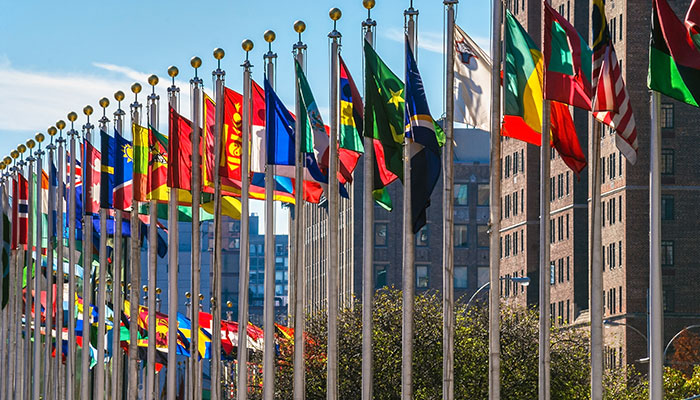
Still, the UN has faced tough times before – over many decades during the Cold War, the Security Council was crippled by deep tensions between the US and the Soviet Union. The UN is not as sidelined or divided today as it was then. However, as the relationship between China and the US sours, the achievements of global co-operation are being eroded.
The way in which people speak about the UN often implies a level of coherence and bureaucratic independence that the UN rarely possesses. A failure of the UN is normally better understood as a failure of international co-operation.
We see this recently in the UN’s inability to deal with crises from the ethnic cleansing of the Rohingya Muslims in Myanmar, to civil conflict in Syria, and the failure of the Security Council to adopt a COVID-19 resolution calling for ceasefires in conflict zones and a co-operative international response to the pandemic.
The UN administration is not primarily to blame for these failures; rather, the problem is the great powers – in the case of COVID-19, China and the US – refusing to co-operate.
Where states fail to agree, the UN is powerless to act.
Marking the 75th anniversary of the official formation of the UN, when 50 founding nations signed the UN Charter on June 26, 1945, we look at some of its key triumphs and resounding failures.
Five successes
1. Peacekeeping
The United Nations was created with the goal of being a collective security organisation. The UN Charter establishes that the use of force is only lawful either in self-defence or if authorised by the UN Security Council. The Security Council’s five permanent members, being China, US, UK, Russia and France, can veto any such resolution.
The UN’s consistent role in seeking to manage conflict is one of its greatest successes.
A key component of this role is peacekeeping. The UN under its second secretary-general, the Swedish statesman Dag Hammarskjöld – who was posthumously awarded the Nobel Peace prize after he died in a suspicious plane crash – created the concept of peacekeeping. Hammarskjöld was responding to the 1956 Suez Crisis, in which the US opposed the invasion of Egypt by its allies Israel, France and the UK.
UN peacekeeping missions involve the use of impartial and armed UN forces, drawn from member states, to stabilise fragile situations. “The essence of peacekeeping is the use of soldiers as a catalyst for peace rather than as the instruments of war,” said then UN Secretary-General Javier Pérez de Cuéllar, when the forces won the 1988 Nobel Peace Prize following missions in conflict zones in the Middle East, Africa, Asia, Central America and Europe.
However, peacekeeping also counts among the UN’s major failures.
2. Law of the Sea
Negotiated between 1973 and 1982, the UN Convention on the Law of the Sea (UNCLOS) set up the current international law of the seas. It defines states’ rights and creates concepts such as exclusive economic zones, as well as procedures for the settling of disputes, new arrangements for governing deep sea bed mining, and importantly, new provisions for the protection of marine resources and ocean conservation.
Mostly, countries have abided by the convention. There are various disputes that China has over the East and South China Seas which present a conflict between power and law, in that although UNCLOS creates mechanisms for resolving disputes, a powerful state isn’t necessarily going to submit to those mechanisms.
Secondly, on the conservation front, although UNCLOS is a huge step forward, it has failed to adequately protect oceans that are outside any state’s control. Ocean ecosystems have been dramatically transformed through overfishing. This is an ecological catastrophe that UNCLOS has slowed, but failed to address comprehensively.
3. Decolonisation
The idea of racial equality and of a people’s right to self-determination was discussed in the wake of World War I and rejected. After World War II, however, those principles were endorsed within the UN system, and the Trusteeship Council, which monitored the process of decolonisation, was one of the initial bodies of the UN.
Although many national independence movements only won liberation through bloody conflicts, the UN has overseen a process of decolonisation that has transformed international politics. In 1945, around one third of the world’s population lived under colonial rule. Today, there are less than 2 million people living in colonies.
When it comes to the world’s First Nations, however, the UN generally has done little to address their concerns, aside from the non-binding UN Declaration on the Rights of Indigenous Peoples of 2007.
4. Human rights
The Human Rights Declaration of 1948 for the first time set out fundamental human rights to be universally protected, recognising that the “inherent dignity and of the equal and inalienable rights of all members of the human family is the foundation of freedom, justice and peace in the world”.
Since 1948, 10 human rights treaties have been adopted – including conventions on the rights of children and migrant workers, and against torture and discrimination based on gender and race – each monitored by its own committee of independent experts.
The language of human rights has created a new framework for thinking about the relationship between the individual, the state and the international system. Although some people would prefer that political movements focus on ‘liberation’ rather than ‘rights’, the idea of human rights has made the individual person a focus of national and international attention.
5. Free trade
Depending on your politics, you might view the World Trade Organisation as a huge success, or a huge failure.
The WTO creates a near-binding system of international trade law with a clear and efficient dispute resolution process.
The majority Australian consensus is that the WTO is a success because it has been good for Australian famers especially, through its winding back of subsidies and tariffs.
However, the WTO enabled an era of globalisation which is now politically controversial.
Recently, the US has sought to disrupt the system. In addition to the trade war with China, the Trump Administration has also refused to appoint tribunal members to the WTO’s Appellate Body, so it has crippled the dispute resolution process. Of course, the Trump Administration is not the first to take issue with China’s trade strategies, which include subsidises for ‘State Owned Enterprises’ and demands that foreign firms transfer intellectual property in exchange for market access.
The existence of the UN has created a forum where nations can discuss new problems, and climate change is one of them. The Intergovernmental Panel on Climate Change (IPCC) was set up in 1988 to assess climate science and provide policymakers with assessments and options. In 1992, the UN Framework Convention on Climate Change created a permanent forum for negotiations.
However, despite an international scientific body in the IPCC, and 165 signatory nations to the climate treaty, global greenhouse gas emissions have continued to increase.
Under the Paris Agreement, even if every country meets its greenhouse gas emission targets we are still on track for ‘dangerous warming’. Yet, no major country is even on track to meet its targets; while emissions will probably decline this year as a result of COVID-19, atmospheric concentrations of greenhouse gases will still increase.
This illustrates a core conundrum of the UN in that it opens the possibility of global cooperation, but is unable to constrain states from pursuing their narrowly conceived self-interests. Deep co-operation remains challenging.
Five failures of the UN
1. Peacekeeping
During the Bosnian War, Dutch peacekeeping forces stationed in the town of Srebrenica, declared a ‘safe area’ by the UN in 1993, failed in 1995 to stop the massacre of more than 8000 Muslim men and boys by Bosnian Serb forces. This is one of the most widely discussed examples of the failures of international peacekeeping operations.
On the massacre’s 10th anniversary, then UN Secretary General Kofi Annan wrote that the UN had “made serious errors of judgement, rooted in a philosophy of impartiality”, contributing to a mass murder that would “haunt our history forever”.
If you look at some of the other infamous failures of peacekeeping missions – in places such as Rwanda, Somalia and Angola – it is the limited powers given to peacekeeping operations that have resulted in those failures.
2. The invasion of Iraq
The invasion of Iraq by the US in 2003, which was unlawful and without Security Council authorisation, reflects the fact that the UN is has very limited capacity to constrain the actions of great powers.
The Security Council designers created the veto power so that any of the five permanent members could reject a Council resolution, so in that way it is programmed to fail when a great power really wants to do something that the international community generally condemns.
In the case of the Iraq invasion, the US didn’t veto a resolution, but rather sought authorisation that it did not get. The UN, if you go by the idea of collective security, should have responded by defending Iraq against this unlawful use of force.
The invasion proved a humanitarian disaster with the loss of more than 400,000 lives, and many believe that it led to the emergence of the terrorist Islamic State.
3. Refugee crises
The UN brokered the 1951 Refugee Convention to address the plight of people displaced in Europe due to World War II; years later, the 1967 Protocol removed time and geographical restrictions so that the Convention can now apply universally (although many countries in Asia have refused to sign it, owing in part to its Eurocentric origins).
Despite these treaties, and the work of the UN High Commission for Refugees, there is somewhere between 30 and 40 million refugees, many of them, such as many Palestinians, living for decades outside their homelands. This is in addition to more than 40 million people displaced within their own countries.
While for a long time refugee numbers were reducing, in recent years, particularly driven by the Syrian conflict, there have been increases in the number of people being displaced.
During the COVID-19 crisis, boatloads of Rohingya refugees were turned away by port after port. This tragedy has echoes of pre-World War II when ships of Jewish refugees fleeing Nazi Germany were refused entry by multiple countries.
And as a catastrophe of a different kind looms, there is no international framework in place for responding to people who will be displaced by rising seas and other effects of climate change.
4. Conflicts without end
Across the world, there is a shopping list of unresolved civil conflicts and disputed territories.
Palestine and Kashmir are two of the longest-running failures of the UN to resolve disputed lands. More recent, ongoing conflicts include the civil wars in Syria and Yemen.
The common denominator of unresolved conflicts is either division among the great powers, or a lack of international interest due to the geopolitical stakes not being sufficiently high. For instance, the inaction during the Rwandan civil war in the 1990s was not due to a division among great powers, but rather a lack of political will to engage.
In Syria, by contrast, Russia and the US have opposing interests and back opposing sides: Russia backs the government of the Syrian dictator Bashar al-Assad, whereas the US does not.
5. Acting like it’s 1945
The UN is increasingly out of step with the reality of geopolitics today.
The permanent members of the Security Council reflect the division of power internationally at the end of World War II. The continuing exclusion of Germany, Japan, and rising powers such as India and Indonesia, reflects the failure to reflect the changing balance of power.
Also, bodies such as the IMF and the World Bank, which are part of the UN system, continue to be dominated by the West. In response, China has created potential rival institutions such as the Asian Infrastructure Investment Bank.
Western domination of UN institutions undermines their credibility. However, a more fundamental problem is that institutions designed in 1945 are a poor fit with the systemic global challenges – of which climate change is foremost – that we face today.