


Free power for farmers fuelling water crisis
Union Minister for Environment, Forest and Climate Change, Anil Dave, linked the rampant extraction of groundwater to the free electricity supplied to farmers and mooted a fresh approach towards rivers and water bodies to impose discipline on water consumption.
The Minister backed a call for stronger ground water management regulations made by NITI Aayog CEO Amitabh Kant, who said free electricity has made people drill deeper to get water for irrigation and is turning large parts of States such as Punjab, Rajasthan and Haryana barren.
‘Disciplined consumption’
“Shouldn’t the country have a policy on its water and rivers? We think about consumption but we don’t talk about utility and disciplined consumption. If the country’s future water problem has to be tackled, then it needs the Gandhian philosophy that others also have a right on water bodies and one must take only as much as you need,” the Minister said, while addressing a sustainability conference hosted by the Confederation of Indian Industry in the capital.
“Not only do we have to enhance and improve water consumption for irrigation, we need very strong regulations for ground water management. Too much of water is being consumed because we are not charging people for electricity,” said NITI Aayog CEO Mr. Kant, stressing that groundwater consumption for irrigation has gone up from 20 per cent in the 1950s to over 64 per cent now.
“Several parts of States like Punjab, Haryana and Rajasthan are becoming deserts as you have gone so deep to drill water that we are leaving nothing for future generations and are actually drilling out poison,” Mr Kant said, adding that the country is not recharging its aquifier.
Water-intensive crops needed
In a country, which has 17% of the world’s population but only four per cent of the fresh water reserves, we are consuming three times more water for agriculture than USA, Brazil or China.
Arguing that soil degradation has resulted from excessive use of inorganic fertilisers like urea, Mr Dave said that India must pursue policies based on its own realities. “India’s decolonisation is still pending. The British had drafted the Indian Penal Code and the Forest Act. Shouldn’t independent India now have its own forest law, where the forests, its dwellers, scheduled tribes and wildlife can live in an integrated manner?” he said.
Babies fall victim to antibiotic resistance
Infected with ‘superbugs’ in birth facilities within 72 hours of being born, thousands of Indian babies are dying due to an ‘alarming degree’ of drug resistance, a major study has found. The researchers found that nearly 26 per cent of babies with sepsis died, as multi drug resistance made the ailment untreatable.
We are now staring at overwhelming evidence of rampant antibiotic resistance, across all ages, all over the country. This worrying epidemic-like situation is a result of overuse of antibiotics in humans, agriculture and livestock.
The DeNIS study (Delhi Neonatal Infection) followed a group of 88,636 newborn infants for 3 years starting July 2011. The doctors tracked babies born in three of Delhi’s largest hospitals- AIIMS, Safdarjung Hospital and Maulana Azad Medical College -as they were subsequently admitted to the Intensive Care Units (ICUs).
‘Superbugs’ kill babies as antibiotic resistance rises
Out of over 88,000 children, 13,530 were ‘enrolled’ in the study – that is, admitted to the ICU.
Three ‘superbugs’ in particular – Klebsiella, Acinetobacter, and E. coli – were associated with more than half (53 per cent) of the infections. Out of this 1,934 babies (14 per cent) were resistant to drugs and 496 babies (26 per cent) died due to causes attributable to drug resistance and formerly curable infections.
Multi drug resistance was the highest with Acinetobacter followed by Klebsiella and E. coli
Study results grim
The study results show that we are exposing newborns to deadly infections even within 72 hours of their being born. Over 80 per cent of Acinetobacter infections were multi drug resistant, confirming a pan-resistant, untreatable problem of high mortality in our neonatal [newborn] nurseries. We are at a breaking point and India needs to clean up its birthing facilities.
Sepsis or meningitis in newborns accounted for 4,21,000 deaths, or about 16 per cent in the category in 2013. Estimates indicate that 56,524 newborn babies die each year from resistance to first line antibiotics.
New single-dose treatment shows promise in anti-malaria battle
Scientists have discovered a series of a novel compound (bicyclic azetidine series) that shows great promise in the battle against malaria.
Four candidate agents were characterised and one compound was found to act on all three life stages of the malaria parasite.
The compound was found to cure the disease with just a single, low-dose treatment, provide prophylaxis and prevent disease transmission both in the lab and in animals. The prophylactic effect lasted for as long as 30 days in mice
The compound was able to achieve extraordinary results in mice as it targets the parasite’s protein translation machinery (phenylalanine tRNA synthetase), which is the very core of the parasite’s housekeeping function of synthesising about 5,000 proteins. Protein translation is vital at every stage of the Plasmodium life cycle.
Since the target is so essential for the parasite’s functioning, it is quite unlikely that it would undergo mutations. So, there are less chances of the parasite developing resistance against the compounds. “In a standard tool for measuring for generation of resistance, we found a low propensity for resistance,” Dr. Marshall L. Morningstar, a co-author of the paper from Broad Institute of MIT and Harvard said in an email.
Addition of a highly potent drug component to the already very successful artemisinin combination therapy will go a long way in stemming malaria infections, and may present therapeutic options when artemisinin drug-resistance becomes a problem.
Sardar Sarovar dam irrigation project brings migrants back to Saurashtra
An ambitious Rs. 12,000 crore project to bring the water of the Narmada River to Gujarat’s parched Saurashtra region is helping reunite families, but experts caution that such lift-irrigation schemes had failed the world over.
Thousands of men from the region, who had to leave their homes in search of livelihood due to crop failures, are returning home, a visit to the area revealed.
SAUNI, abbreviated in Gujarati from Saurashtra Narmada Avtaran Irrigation Yojna, plans to fill up 115 dams of the region with excess run-off water of the Sardar Sarovar Dam across the Narmada River. The dams will be fed through a network of pipelines and water will be supplied for drinking and irrigation.
Water problem triggered migration
Villagers mostly grow cotton during the kharif season. But now they will also grow oilseeds, sugarcane or wheat during the rabi season (January-April). With the promise of assured water supply in the area, we can grow two crops every year,” Chabariya said.
Villagers also said they had to dig deep to get drinking water and this was often saline.
The SAUNI project promises to provide water to over 900 villages in all the 11 districts of the Saurashtra region and is slated to be completed by 2019.
Independent experts feel that pumping water to the parched region is going to be a tough task for the Gujarat government.
The Sardar Sarovar Dam can accumulate about 28 million acre feet of water in its reservoir but Gujarat has been allocated only nine million acre feet from the tribunal (that adjudicated the issue). No one can guarantee how much water the dam will get every year depending upon the rainfall.
Extension of contract between India and the International Seabed Authority
The Union Cabinet has approved the extension of contract between Ministry of Earth Sciences, Government of India and the International Seabed Authority (ISA) for exploration of Polymetallic Nodules for a further period of 5 years (2017-22). The earlier contract is expiring on 24th March 2017.
By extending the contract, India’s exclusive rights for exploration of Polymetallic Nodules in the allotted Area in the Central Indian Ocean Basin will continue.It would open up new opportunities for resources of commercial and strategic value in area beyond national jurisdiction.
It would also provide strategic importance for India in terms of enhanced presence in Indian Ocean where other international: players are also active.
International Seabed Authority
The International Seabed Authority (ISA) is an intergovernmental body based in Kingston, Jamaica, that was established to organize, regulate and control all mineral-related activities in the international seabed area beyond the limits of national jurisdiction, an area underlying most of the world’s oceans.
It is an organization established by the 1982 United Nations Law of the Sea Convention. It was established in 1994.ISA governs non-living resources of seabed lying in international waters.
Cabinet approves establishment of Higher Education Financing Agency
The Union Cabinet has approved the creation of the Higher Education Financing Agency (HEFA) to give a major push for creation of high quality infrastructure in premier educational institutions.
The HEFA would be jointly promoted by the identified Promoter and the Ministry of Human Resource Development (MHRD) with an authorised capital of Rs.2,000 crore. The Government equity would be Rs.1,000 crore.
The HEFA would be formed as a SPV within a PSU Bank/ Government-owned-NBFC (Promoter). It would leverage the equity to raise up to Rs. 20,000 crore for funding projects for infrastructure and development of world class Labs in IITs/IIMs/NITs and such other institutions.
The HEFA would also mobilise CSR funds from PSUs/Corporates, which would in turn be released for promoting research and innovation in these institutions on grant basis.
The HEFA would finance the civil and lab infrastructure projects through a 10-year loan. The principal portion of the loan will be repaid through the ‘internal accruals’ (earned through the fee receipts, research earnings etc) of the institutions. The Government would service the interest portion through the regular Plan assistance.
All the Centrally Funded Higher Educational Institutions would be eligible for joining as members of the HEFA. For joining as members, the Institution should agree to escrow a specific amount from their internal accruals to HEFA for a period of 10 years. This secured future flows would be securitised by the HEFA for mobilising the funds from the market. Each member institution would be eligible for a credit limit as decided by HEFA based on the amount agreed to be escrowed from the internal accruals.
Cabinet approves creation of GST Council and its Secretariat
The Union Cabinet has approved setting up of GST Council and setting up its Secretariat.
The GST Council has been created as per Article 279A of the amended Constitution.GST Council Secretariat will be set up with its office at New Delhi.
The Secretary (Revenue) will be appointed as the Ex-officio Secretary to the GST Council.
The Chairperson, Central Board of Excise and Customs (CBEC), will be included as a permanent invitee (non-voting) to all proceedings of the GST Council.
One post of Additional Secretary to the GST Council in the GST Council Secretariat (at the level of Additional Secretary to the Government of India) will be created.
Four posts of Commissioner in the GST Council Secretariat (at the level of Joint Secretary to the Government of India) will also be created.
Background:
The Constitution (One Hundred and Twenty-second Amendment) Bill, 2016, for introduction of Goods and Services tax in the country was accorded assent by the President on 8th September, 2016, and the same has been notified as the Constitution (One Hundred and First Amendment) Act, 2016.
As per Article 279A (1) of the amended Constitution, the GST Council has to be constituted by the President within 60 days of the commencement of Article 279A. The notification for bringing into force Article 279A with effect from 12th September, 2016 was issued on 10th September, 2016.
As per Article 279A of the amended Constitution, the GST Council which will be a joint forum of the Centre and the States, shall consist of the following members: –
- Union Finance Minister -Chairperson
- The Union Minister of State,in-charge of Revenue of finance -Member
- The Minister In-charge of finance or taxation or any other Minister nominated by each State Government-Member
As per Article 279A (4), the Council will make recommendations to the Union and the States on important issues related to GST, like the goods and services that may be subjected or exempted from GST, model GST Laws, principles that govern Place of Supply, threshold limits, GST rates including the floor rates with bands, special rates for raising additional resources during natural calamities/disasters, special provisions for certain States, etc.
Recent Posts
The United Nations has shaped so much of global co-operation and regulation that we wouldn’t recognise our world today without the UN’s pervasive role in it. So many small details of our lives – such as postage and copyright laws – are subject to international co-operation nurtured by the UN.
In its 75th year, however, the UN is in a difficult moment as the world faces climate crisis, a global pandemic, great power competition, trade wars, economic depression and a wider breakdown in international co-operation.
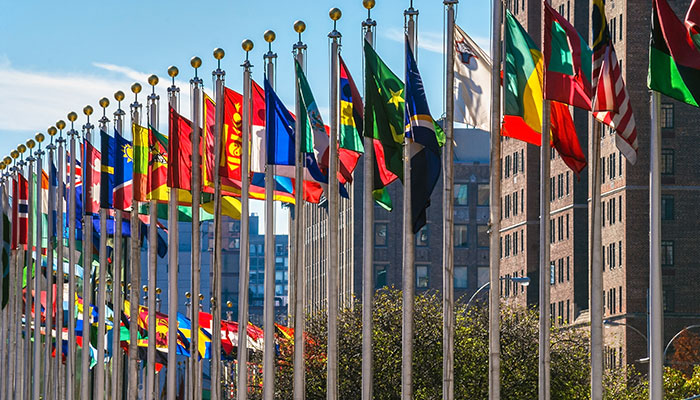
Still, the UN has faced tough times before – over many decades during the Cold War, the Security Council was crippled by deep tensions between the US and the Soviet Union. The UN is not as sidelined or divided today as it was then. However, as the relationship between China and the US sours, the achievements of global co-operation are being eroded.
The way in which people speak about the UN often implies a level of coherence and bureaucratic independence that the UN rarely possesses. A failure of the UN is normally better understood as a failure of international co-operation.
We see this recently in the UN’s inability to deal with crises from the ethnic cleansing of the Rohingya Muslims in Myanmar, to civil conflict in Syria, and the failure of the Security Council to adopt a COVID-19 resolution calling for ceasefires in conflict zones and a co-operative international response to the pandemic.
The UN administration is not primarily to blame for these failures; rather, the problem is the great powers – in the case of COVID-19, China and the US – refusing to co-operate.
Where states fail to agree, the UN is powerless to act.
Marking the 75th anniversary of the official formation of the UN, when 50 founding nations signed the UN Charter on June 26, 1945, we look at some of its key triumphs and resounding failures.
Five successes
1. Peacekeeping
The United Nations was created with the goal of being a collective security organisation. The UN Charter establishes that the use of force is only lawful either in self-defence or if authorised by the UN Security Council. The Security Council’s five permanent members, being China, US, UK, Russia and France, can veto any such resolution.
The UN’s consistent role in seeking to manage conflict is one of its greatest successes.
A key component of this role is peacekeeping. The UN under its second secretary-general, the Swedish statesman Dag Hammarskjöld – who was posthumously awarded the Nobel Peace prize after he died in a suspicious plane crash – created the concept of peacekeeping. Hammarskjöld was responding to the 1956 Suez Crisis, in which the US opposed the invasion of Egypt by its allies Israel, France and the UK.
UN peacekeeping missions involve the use of impartial and armed UN forces, drawn from member states, to stabilise fragile situations. “The essence of peacekeeping is the use of soldiers as a catalyst for peace rather than as the instruments of war,” said then UN Secretary-General Javier Pérez de Cuéllar, when the forces won the 1988 Nobel Peace Prize following missions in conflict zones in the Middle East, Africa, Asia, Central America and Europe.
However, peacekeeping also counts among the UN’s major failures.
2. Law of the Sea
Negotiated between 1973 and 1982, the UN Convention on the Law of the Sea (UNCLOS) set up the current international law of the seas. It defines states’ rights and creates concepts such as exclusive economic zones, as well as procedures for the settling of disputes, new arrangements for governing deep sea bed mining, and importantly, new provisions for the protection of marine resources and ocean conservation.
Mostly, countries have abided by the convention. There are various disputes that China has over the East and South China Seas which present a conflict between power and law, in that although UNCLOS creates mechanisms for resolving disputes, a powerful state isn’t necessarily going to submit to those mechanisms.
Secondly, on the conservation front, although UNCLOS is a huge step forward, it has failed to adequately protect oceans that are outside any state’s control. Ocean ecosystems have been dramatically transformed through overfishing. This is an ecological catastrophe that UNCLOS has slowed, but failed to address comprehensively.
3. Decolonisation
The idea of racial equality and of a people’s right to self-determination was discussed in the wake of World War I and rejected. After World War II, however, those principles were endorsed within the UN system, and the Trusteeship Council, which monitored the process of decolonisation, was one of the initial bodies of the UN.
Although many national independence movements only won liberation through bloody conflicts, the UN has overseen a process of decolonisation that has transformed international politics. In 1945, around one third of the world’s population lived under colonial rule. Today, there are less than 2 million people living in colonies.
When it comes to the world’s First Nations, however, the UN generally has done little to address their concerns, aside from the non-binding UN Declaration on the Rights of Indigenous Peoples of 2007.
4. Human rights
The Human Rights Declaration of 1948 for the first time set out fundamental human rights to be universally protected, recognising that the “inherent dignity and of the equal and inalienable rights of all members of the human family is the foundation of freedom, justice and peace in the world”.
Since 1948, 10 human rights treaties have been adopted – including conventions on the rights of children and migrant workers, and against torture and discrimination based on gender and race – each monitored by its own committee of independent experts.
The language of human rights has created a new framework for thinking about the relationship between the individual, the state and the international system. Although some people would prefer that political movements focus on ‘liberation’ rather than ‘rights’, the idea of human rights has made the individual person a focus of national and international attention.
5. Free trade
Depending on your politics, you might view the World Trade Organisation as a huge success, or a huge failure.
The WTO creates a near-binding system of international trade law with a clear and efficient dispute resolution process.
The majority Australian consensus is that the WTO is a success because it has been good for Australian famers especially, through its winding back of subsidies and tariffs.
However, the WTO enabled an era of globalisation which is now politically controversial.
Recently, the US has sought to disrupt the system. In addition to the trade war with China, the Trump Administration has also refused to appoint tribunal members to the WTO’s Appellate Body, so it has crippled the dispute resolution process. Of course, the Trump Administration is not the first to take issue with China’s trade strategies, which include subsidises for ‘State Owned Enterprises’ and demands that foreign firms transfer intellectual property in exchange for market access.
The existence of the UN has created a forum where nations can discuss new problems, and climate change is one of them. The Intergovernmental Panel on Climate Change (IPCC) was set up in 1988 to assess climate science and provide policymakers with assessments and options. In 1992, the UN Framework Convention on Climate Change created a permanent forum for negotiations.
However, despite an international scientific body in the IPCC, and 165 signatory nations to the climate treaty, global greenhouse gas emissions have continued to increase.
Under the Paris Agreement, even if every country meets its greenhouse gas emission targets we are still on track for ‘dangerous warming’. Yet, no major country is even on track to meet its targets; while emissions will probably decline this year as a result of COVID-19, atmospheric concentrations of greenhouse gases will still increase.
This illustrates a core conundrum of the UN in that it opens the possibility of global cooperation, but is unable to constrain states from pursuing their narrowly conceived self-interests. Deep co-operation remains challenging.
Five failures of the UN
1. Peacekeeping
During the Bosnian War, Dutch peacekeeping forces stationed in the town of Srebrenica, declared a ‘safe area’ by the UN in 1993, failed in 1995 to stop the massacre of more than 8000 Muslim men and boys by Bosnian Serb forces. This is one of the most widely discussed examples of the failures of international peacekeeping operations.
On the massacre’s 10th anniversary, then UN Secretary General Kofi Annan wrote that the UN had “made serious errors of judgement, rooted in a philosophy of impartiality”, contributing to a mass murder that would “haunt our history forever”.
If you look at some of the other infamous failures of peacekeeping missions – in places such as Rwanda, Somalia and Angola – it is the limited powers given to peacekeeping operations that have resulted in those failures.
2. The invasion of Iraq
The invasion of Iraq by the US in 2003, which was unlawful and without Security Council authorisation, reflects the fact that the UN is has very limited capacity to constrain the actions of great powers.
The Security Council designers created the veto power so that any of the five permanent members could reject a Council resolution, so in that way it is programmed to fail when a great power really wants to do something that the international community generally condemns.
In the case of the Iraq invasion, the US didn’t veto a resolution, but rather sought authorisation that it did not get. The UN, if you go by the idea of collective security, should have responded by defending Iraq against this unlawful use of force.
The invasion proved a humanitarian disaster with the loss of more than 400,000 lives, and many believe that it led to the emergence of the terrorist Islamic State.
3. Refugee crises
The UN brokered the 1951 Refugee Convention to address the plight of people displaced in Europe due to World War II; years later, the 1967 Protocol removed time and geographical restrictions so that the Convention can now apply universally (although many countries in Asia have refused to sign it, owing in part to its Eurocentric origins).
Despite these treaties, and the work of the UN High Commission for Refugees, there is somewhere between 30 and 40 million refugees, many of them, such as many Palestinians, living for decades outside their homelands. This is in addition to more than 40 million people displaced within their own countries.
While for a long time refugee numbers were reducing, in recent years, particularly driven by the Syrian conflict, there have been increases in the number of people being displaced.
During the COVID-19 crisis, boatloads of Rohingya refugees were turned away by port after port. This tragedy has echoes of pre-World War II when ships of Jewish refugees fleeing Nazi Germany were refused entry by multiple countries.
And as a catastrophe of a different kind looms, there is no international framework in place for responding to people who will be displaced by rising seas and other effects of climate change.
4. Conflicts without end
Across the world, there is a shopping list of unresolved civil conflicts and disputed territories.
Palestine and Kashmir are two of the longest-running failures of the UN to resolve disputed lands. More recent, ongoing conflicts include the civil wars in Syria and Yemen.
The common denominator of unresolved conflicts is either division among the great powers, or a lack of international interest due to the geopolitical stakes not being sufficiently high. For instance, the inaction during the Rwandan civil war in the 1990s was not due to a division among great powers, but rather a lack of political will to engage.
In Syria, by contrast, Russia and the US have opposing interests and back opposing sides: Russia backs the government of the Syrian dictator Bashar al-Assad, whereas the US does not.
5. Acting like it’s 1945
The UN is increasingly out of step with the reality of geopolitics today.
The permanent members of the Security Council reflect the division of power internationally at the end of World War II. The continuing exclusion of Germany, Japan, and rising powers such as India and Indonesia, reflects the failure to reflect the changing balance of power.
Also, bodies such as the IMF and the World Bank, which are part of the UN system, continue to be dominated by the West. In response, China has created potential rival institutions such as the Asian Infrastructure Investment Bank.
Western domination of UN institutions undermines their credibility. However, a more fundamental problem is that institutions designed in 1945 are a poor fit with the systemic global challenges – of which climate change is foremost – that we face today.