


UN court rejects disarmament case against India
The United Nations’ highest court recently rejected nuclear disarmament cases filed by the Pacific nation of the Marshall Islands against Britain, India and Pakistan, saying it did not have jurisdiction.
The International Court of Justice ruled that the Marshall Islands had failed to prove that a legal dispute over disarmament existed between it and the three nuclear powers before the case was filed in 2014, and that “consequently the court lacks jurisdiction.”
Casting vote
It took a casting vote by the court’s President Ronny Abraham to break an eight-eight deadlock between the 16 judges on the question of jurisdiction in the case against Britain.
In the cases against India and Pakistan, the margin was nine-seven.
Phon van den Biesen, a Dutch lawyer who represented the Marshall Islands, said he was deeply disappointed by the rulings.
Mr. Abraham acknowledged that the Marshall Islands had a particular interest in nuclear disarmament “by virtue of the suffering which its people endured as a result of it being used as a site for extensive nuclear testing programmes.”
Marshall Islands representative Tony deBrum said he watched one of the U.S. nuclear tests in his home country as a 9-year-old boy while fishing with his grandfather.
“The entire sky turned blood red,” he told judges in an emotional speech. He said some of his country’s islands were “vaporised” by the tests.
The Marshall Islands originally filed cases against all nine nations that have declared or are believed to possess nuclear weapons: the U.S., Russia, Britain, France, China, India, Pakistan, Israel and North Korea. But only the cases against Britain, India and Pakistan got to the preliminary stage of proceedings.
In a landmark 1996 advisory opinion, the court said that using or threatening to use nuclear arms would “generally be contrary to” the laws of war and humanitarian law. But it added that it could not definitively rule on whether the threat or use of nuclear weapons would be legal “in an extreme circumstance of self-defence, in which the very survival of a state would be at stake.”
The judges in 1996 also unanimously stated that there is a legal obligation “to pursue in good faith” nuclear disarmament talks.
Mohalla Clinics in Delhi
Provision of primary healthcare system has been a big challenge in Indian healthcare system. The need for a functioning primary healthcare system, which can be accessible within a reasonable geographical distance, has been recognised long back in 1970s. The Alma Ata declaration (1978) and India’s National Health Policy of 1983 and 2002 had accepted the importance of a functioning primary healthcare system.
Absence of a functioning primary healthcare system leads to large proportion of patients with common illness turning to secondary and tertiary care institutions for treatment. This results in overcrowding, long hours of wait, poor quality of service delivery, etc. Finally these patients end up in consulting non-qualified doctors or private doctors with out-of-pocket expenditure. The tertiary healthcare systems neither have time nor resources to handle every common illness.
Mohalla Clinics in Delhi
The Delhi government has come up with an innovative concept called Mohalla clinics. The concept was announced in the state budget for 2015-16, and the aim was to set up 500 such clinics in the first year.
Each clinic will have a doctor, a nurse, a pharmacist, and a laboratory technician.At a later stage, the clinics would be provided with specialist doctors. The clinic will take care of primary healthcare needs of people living within a kilometre of it.
The services provided by them include outpatient consultations, immunisation, free medicines and diagnostics, family planning, referral and counselling services.
Each Mohalla clinic is linked to polyclinics (multi-speciality clinics) for logistical support and also for referral of patients who needs specialist care.
The concept of Mohalla clinic has a number of advantages. These clinics would increase the geographical access to healthcare services and reduces the travelling time and waiting time at the health facilities.
Majority of patients feels uneasy in approaching big health facilities until they become seriously ill. The easy access provided by the Mohalla clinics would encourage patients to approach the clinics during early stage of the illness. Patients spend around 70% of the health expenditure on medicines and diagnostics.
The provision of free medicines and 50 diagnostic services at free of cost would considerably reduce the healthcare expenditure for poor people.
The easy access would also reduce the transportation cost and waiting time (opportunity cost of missing work). The rising burden of non-communicable diseases among poor would require lot of preventive care. T
he patients with hypertension and diabetes would require free medicines and also counselling services. The counselling services provided at Mohalla clinics would attract the patients to access those services. An effective referral service from these clinics would help the patients.
The cost for setting up of such clinics would be much less than the cost for setting up of a secondary hospital.
The one disadvantage with the concept of Mohalla clinics is they may not work in rural areas, which are low population density areas. The potential challenges in running of Mohalla clinics would be monitoring the working of 500 such clinics. There is a chance of abuse of drugs as they are easily accessible.
Maintaining of medicine stocks at so many locations would be a challenge. However, use of technologies like CCTV’s, IT solutions for inventory management, providing necessary skills to staff, use of biometric IDs to track patients, tie up with local NGos, etc. can help in facing the challenges.
The mohalla clinic concept is well designed than earlier healthcare interventions. The other state governments can study the concept of neighbourhood clinics and take up the pilot projects in Metros and other big urban areas.
Need to adopt prefab tech to provide housing for all
The Centre plans to provide housing for all by 2022 and one of the ways to achieve this goal is to go for ‘prefab’ technology.
Prefabrication is the practice of assembling components of a structure in a factory or other manufacturing site, and transporting complete assemblies or sub-assemblies to the construction site where the structure is to be located.
The term is used to distinguish this process from the more conventional construction practice of transporting the basic materials to the construction site where all assembly is carried out.
The term prefabrication also applies to the manufacturing of things other than structures at a fixed site. It is frequently used when fabrication of a section of a machine or any movable structure is shifted from the main manufacturing site to another location, and the section is supplied assembled and ready to fit. It is not generally used to refer to electrical or electronic components of a machine, or mechanical parts such as pumps, gearboxes and compressors which are usually supplied as separate items, but to sections of the body of the machine which in the past were fabricated with the whole machine. Prefabricated parts of the body of the machine may be called ‘sub-assemblies’ to distinguish them from the other components.
“Hide Special Forces’ signature”

Army officers were reluctant to share operational details of the September 29 cross-LoC surgical strikes with the public. “The only beneficiary of the information would be the adversary,” said an official.
Portuguese ex-PM to be the new UN chief
Former Portuguese Prime Minister Antonio Guterres is poised to be the next United Nations Secretary-General and is expected to be formally recommended to the 193-member General Assembly for election by the Security Council on Thursday, diplomats said.
Russia’s UN Ambassador Vitaly Churkin, president of the 15-member council for October, said he hoped the council would unanimously recommend Mr. Guterres, who was also the United Nations High Commissioner for Refugees from June 2005 to December 2015. Mr. Guterres will replace Ban Ki-moon of South Korea, who will step down at the end of 2016 after serving two terms.
The Security Council will adopt a resolution, traditionally behind closed doors, recommending that the General Assembly appoint Mr. Guterres for a five-year term from Jan. 1, 2017. The resolution needs nine votes in favour and no vetoes to pass.
3 share Chemistry Nobel for molecular machines
A trio of French, British and Dutch scientists won the Nobel Chemistry Prize recently for developing molecular machines, the world’s smallest machines that may one day act as artificial muscles to power tiny robots or even prosthetic limbs.
Jean-Pierre Sauvage of France, J. Fraser Stoddart of Britain and Bernard Feringa of the Netherlands “have developed molecules with controllable movements, which can perform a task when energy is added”.
Inspired by proteins that naturally act as biological machines within cells, these synthetic copies are usually constructed of a few molecules fused together.
Also called nanomachines or nanobots, they can be put to work as tiny motors, ratchets, pistons or wheels to produce mechanical motion in response to stimuli such as light or temperature change.
Molecular machines can move objects many time their size. The three laureates will share the eight million Swedish kronor (around $933,000) prize equally.
The first step towards a molecular machine was taken by Mr. Sauvage in 1983, when he succeeded in linking together two ring-shaped molecules to form a chain.
Mr. Sauvage (71) is currently the director of research emeritus at France’s National Center for Scientific Research (CNRS).
The second step was taken by Mr. Stoddart in 1991, when he threaded a molecular ring onto a thin molecular axle and demonstrated that the ring was able to move along the axle.
Mr. Stoddart (74) is a professor of Chemistry at Northwestern University in the U.S.
Mr. Feringa (65) was meanwhile the first person to develop a molecular motor — in 1999 he was able to make a molecular rotor blade to spin continually in the same direction.
Using molecular motors, he has also designed a nanocar. He is currently a professor at the University of Groningen
Also called nanobots, these tiny machines can be put to work as motors, ratchets, pistons or wheels
Automation threatens 69% jobs in India: World Bank
Automation threatens 69 per cent of the jobs in India, while 77 per cent in China, according to a World Bank research which has said that technology could fundamentally disrupt the pattern of traditional economic path in developing countries.
As we continue to encourage more investment in infrastructure to promote growth, we also have to think about the kinds of infrastructure that countries will need in the economy of the future. We all know that technology has and will continue to fundamentally reshape the world.
But the traditional economic path from increasing productivity of agriculture to light manufacturing and then to full-scale industrialisation may not be possible for all developing countries.
In large parts of Africa, it is likely that technology could fundamentally disrupt this pattern. Research based on World Bank data has predicted that the proportion of jobs threatened in India by automation is 69 per cent, in China it is 77 per cent and in Ethiopia, the percentage of jobs threatened by automation is 85 per cent.
A burning issue crops up in Delhi
The Delhi government has written to Punjab and Rajasthan to not allow the practice of burning crops this year and look for other alternatives. Delhi has taken up the issue of crop burning due to its detrimental effects on air quality.
Pollution arising from burning of crops is a major factor behind the heavy smog in the Capital.
As per a recent WHO report on Air Pollution, Delhi is the second-most polluted city in the country after Gwalior in Madhya Pradesh.
Last year, the Punjab Pollution Control Board had directed its staff to take action against farmers involved in the illegal practice of burning paddy straw. The practise is common among farmers, who clear their fields at the end of the harvest season.
Despite the board stating that it poses serious threat to the environment and health of people, the practice continues.
Manibhadra Project

Mahanadi Godavari Link Project envisages construction of a storage reservoir on Mahanadi River at Manibhadra and a link canal from this reservoir to the Godavari River.
The Mahanadi-Godavari link will originate from Barmul dam at FSL 75.00m with all the design features of conveyance system as proposed in the FR of Mahanadi-Godavari link and additional length of 14 km. Thus the total length of the link canal be 842 km. Six dam projects at Salki and Ong in Ong sub-basin and Uttei Roul Integrated Project, Khadago, Udanti and Tel Integrated Project in Tel sub-basin in Mahanadi basin will be included in the Mahanadi – Godavari Flood moderation scheme. The six dam projects will utillise 1162 MCM of water within Odisha State. The submergence from Barmul dam will be 13768 ha. and from six dam projects will be 10222 ha. Thus total submergence shall be about 23990 ha.
Projected Benefits:
The Mahanadi – Godavari flood Moderation Project shall provide irrigation to the tune of 3.21 lakh ha. in Odisha through link canal and 1.82 lakh ha. through six dam projects. Thus total irrigation in Odisha shall be 5.03 lakh ha.
It is proposed to provide 125 MCM water for drinking water supply. The six dam projects have a potential of generating 240 MW hydro power. There will be flood moderation in Mahanadi river basin. The proposal prepared is preliminary based on remote sensing studies and will be firmed up by detailed studies.
Murga bags Swachh Bharat short film award
Young filmmaker Katyayan Shivpuri, from Maharashtra, won the first prize at the Swachh Bharat Short Film Festival for his work Murga..
The short film promoting the idea of clean India had Murga as the metaphor depicting the victims that citizens have made of themselves and of the children by not keeping the surroundings clean.
China blocks tributary of Brahmaputra to build dam

China has blocked a tributary of the Brahmaputra as part of a major hydro-electric project, whose construction began in 2014.
The state-run Xinhua news agency is reporting that the blockage of a tributary of the Yarlung Zangbo river is part of China’s “most expensive” hydro project.
The Brahmaputra in its upper reaches is called Yarlung Zangbo, after it originates from the Angsi glacier in western Tibet, southeast of Mount Kailash and Mansarovar Lake.
Impact on India
Shigatse, a railhead of the Qinghai-Tibet railway, is a few hours driving distance away from the junction of Bhutan and Sikkim. It is also the city from where China intends to extend its railway towards Nepal.
It is as yet unclear whether the dam will have any impact on water flows towards India and Bangladesh — the two riparian states that are drained by the Brahmaputra.
So far, China has maintained that its dams do not restrict the flow of water towards India as they are based on run-of-the river principle.
Ambitious hydro power plans
China’s 13th five year plan has proposed significant hydropower expansion along rivers that also originate in the Tibetan plateau. Although the plan does not mention any river specifically, it is anticipated that the new dams are envisaged along the Yarlung Zangbo, Lancang (Mekong) and Nu (Salween), all originating in the Tibetan plateau.
Analysts say that aware of the downstream impact of dams along trans-boundary rivers, the plan document underscored need to “scientifically develop and harness international rivers” and “deepen cooperation with other riparian countries / along the rivers.”
2013 MoU
India and China have set up an Expert Level Mechanism on trans-border rivers. In 2013, they signed a memorandum of understanding on trans-border rivers, under which China has been supplying data to India on water flows.
Relieve judiciary of avoidable burden: CJI
Chief Justice of India T.S. Thakur on Saturday urged the Law Ministry to devise a mechanism to relieve the judicial system of the “avoidable burden” arising out of “sheer apathy, indifference or incapacity” of the government and its departments to take certain decisions.
He also asked the government to set up a panel, comprising former judges, to decide whether or not to fight a case against any citizen when the issue could be resolved outside court.
He was speaking at the launch of a theme song for the National Legal Services Authority (NALSA) . The NALSA was constituted under the Legal Services Authorities Act, 1987, to provide free legal services to the weaker sections.
Minister of Law and Justice Ravi Shankar Prasad, who addressed the inaugural session of ‘National Consultation on Challenges in Mediation and Way Forward’, proposed the digitalisation of 622 district NALSA centres to make them more efficient and effective.
‘Help acid attack victims’
He also asked the NALSA to help the victims of acid attacks. “I would recommend that victims of acid attack also be taken on a priority basis by framing a special scheme for them,” he said.
Senior Supreme Court Judge and NALSA executive chairman Justice A.R. Dave said mediation was the best way to resolve a dispute in the alternate dispute redress system.
Recent Posts
The United Nations has shaped so much of global co-operation and regulation that we wouldn’t recognise our world today without the UN’s pervasive role in it. So many small details of our lives – such as postage and copyright laws – are subject to international co-operation nurtured by the UN.
In its 75th year, however, the UN is in a difficult moment as the world faces climate crisis, a global pandemic, great power competition, trade wars, economic depression and a wider breakdown in international co-operation.
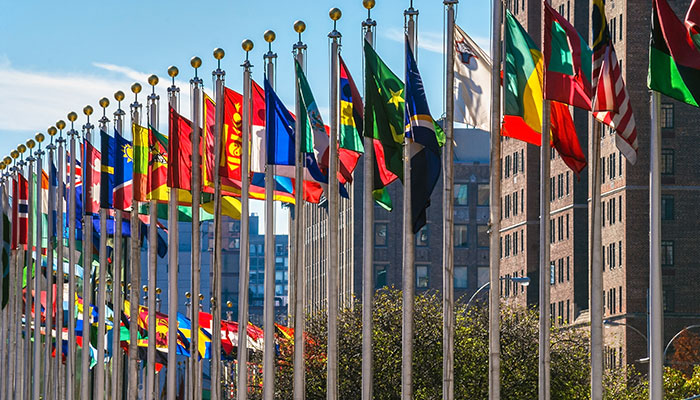
Still, the UN has faced tough times before – over many decades during the Cold War, the Security Council was crippled by deep tensions between the US and the Soviet Union. The UN is not as sidelined or divided today as it was then. However, as the relationship between China and the US sours, the achievements of global co-operation are being eroded.
The way in which people speak about the UN often implies a level of coherence and bureaucratic independence that the UN rarely possesses. A failure of the UN is normally better understood as a failure of international co-operation.
We see this recently in the UN’s inability to deal with crises from the ethnic cleansing of the Rohingya Muslims in Myanmar, to civil conflict in Syria, and the failure of the Security Council to adopt a COVID-19 resolution calling for ceasefires in conflict zones and a co-operative international response to the pandemic.
The UN administration is not primarily to blame for these failures; rather, the problem is the great powers – in the case of COVID-19, China and the US – refusing to co-operate.
Where states fail to agree, the UN is powerless to act.
Marking the 75th anniversary of the official formation of the UN, when 50 founding nations signed the UN Charter on June 26, 1945, we look at some of its key triumphs and resounding failures.
Five successes
1. Peacekeeping
The United Nations was created with the goal of being a collective security organisation. The UN Charter establishes that the use of force is only lawful either in self-defence or if authorised by the UN Security Council. The Security Council’s five permanent members, being China, US, UK, Russia and France, can veto any such resolution.
The UN’s consistent role in seeking to manage conflict is one of its greatest successes.
A key component of this role is peacekeeping. The UN under its second secretary-general, the Swedish statesman Dag Hammarskjöld – who was posthumously awarded the Nobel Peace prize after he died in a suspicious plane crash – created the concept of peacekeeping. Hammarskjöld was responding to the 1956 Suez Crisis, in which the US opposed the invasion of Egypt by its allies Israel, France and the UK.
UN peacekeeping missions involve the use of impartial and armed UN forces, drawn from member states, to stabilise fragile situations. “The essence of peacekeeping is the use of soldiers as a catalyst for peace rather than as the instruments of war,” said then UN Secretary-General Javier Pérez de Cuéllar, when the forces won the 1988 Nobel Peace Prize following missions in conflict zones in the Middle East, Africa, Asia, Central America and Europe.
However, peacekeeping also counts among the UN’s major failures.
2. Law of the Sea
Negotiated between 1973 and 1982, the UN Convention on the Law of the Sea (UNCLOS) set up the current international law of the seas. It defines states’ rights and creates concepts such as exclusive economic zones, as well as procedures for the settling of disputes, new arrangements for governing deep sea bed mining, and importantly, new provisions for the protection of marine resources and ocean conservation.
Mostly, countries have abided by the convention. There are various disputes that China has over the East and South China Seas which present a conflict between power and law, in that although UNCLOS creates mechanisms for resolving disputes, a powerful state isn’t necessarily going to submit to those mechanisms.
Secondly, on the conservation front, although UNCLOS is a huge step forward, it has failed to adequately protect oceans that are outside any state’s control. Ocean ecosystems have been dramatically transformed through overfishing. This is an ecological catastrophe that UNCLOS has slowed, but failed to address comprehensively.
3. Decolonisation
The idea of racial equality and of a people’s right to self-determination was discussed in the wake of World War I and rejected. After World War II, however, those principles were endorsed within the UN system, and the Trusteeship Council, which monitored the process of decolonisation, was one of the initial bodies of the UN.
Although many national independence movements only won liberation through bloody conflicts, the UN has overseen a process of decolonisation that has transformed international politics. In 1945, around one third of the world’s population lived under colonial rule. Today, there are less than 2 million people living in colonies.
When it comes to the world’s First Nations, however, the UN generally has done little to address their concerns, aside from the non-binding UN Declaration on the Rights of Indigenous Peoples of 2007.
4. Human rights
The Human Rights Declaration of 1948 for the first time set out fundamental human rights to be universally protected, recognising that the “inherent dignity and of the equal and inalienable rights of all members of the human family is the foundation of freedom, justice and peace in the world”.
Since 1948, 10 human rights treaties have been adopted – including conventions on the rights of children and migrant workers, and against torture and discrimination based on gender and race – each monitored by its own committee of independent experts.
The language of human rights has created a new framework for thinking about the relationship between the individual, the state and the international system. Although some people would prefer that political movements focus on ‘liberation’ rather than ‘rights’, the idea of human rights has made the individual person a focus of national and international attention.
5. Free trade
Depending on your politics, you might view the World Trade Organisation as a huge success, or a huge failure.
The WTO creates a near-binding system of international trade law with a clear and efficient dispute resolution process.
The majority Australian consensus is that the WTO is a success because it has been good for Australian famers especially, through its winding back of subsidies and tariffs.
However, the WTO enabled an era of globalisation which is now politically controversial.
Recently, the US has sought to disrupt the system. In addition to the trade war with China, the Trump Administration has also refused to appoint tribunal members to the WTO’s Appellate Body, so it has crippled the dispute resolution process. Of course, the Trump Administration is not the first to take issue with China’s trade strategies, which include subsidises for ‘State Owned Enterprises’ and demands that foreign firms transfer intellectual property in exchange for market access.
The existence of the UN has created a forum where nations can discuss new problems, and climate change is one of them. The Intergovernmental Panel on Climate Change (IPCC) was set up in 1988 to assess climate science and provide policymakers with assessments and options. In 1992, the UN Framework Convention on Climate Change created a permanent forum for negotiations.
However, despite an international scientific body in the IPCC, and 165 signatory nations to the climate treaty, global greenhouse gas emissions have continued to increase.
Under the Paris Agreement, even if every country meets its greenhouse gas emission targets we are still on track for ‘dangerous warming’. Yet, no major country is even on track to meet its targets; while emissions will probably decline this year as a result of COVID-19, atmospheric concentrations of greenhouse gases will still increase.
This illustrates a core conundrum of the UN in that it opens the possibility of global cooperation, but is unable to constrain states from pursuing their narrowly conceived self-interests. Deep co-operation remains challenging.
Five failures of the UN
1. Peacekeeping
During the Bosnian War, Dutch peacekeeping forces stationed in the town of Srebrenica, declared a ‘safe area’ by the UN in 1993, failed in 1995 to stop the massacre of more than 8000 Muslim men and boys by Bosnian Serb forces. This is one of the most widely discussed examples of the failures of international peacekeeping operations.
On the massacre’s 10th anniversary, then UN Secretary General Kofi Annan wrote that the UN had “made serious errors of judgement, rooted in a philosophy of impartiality”, contributing to a mass murder that would “haunt our history forever”.
If you look at some of the other infamous failures of peacekeeping missions – in places such as Rwanda, Somalia and Angola – it is the limited powers given to peacekeeping operations that have resulted in those failures.
2. The invasion of Iraq
The invasion of Iraq by the US in 2003, which was unlawful and without Security Council authorisation, reflects the fact that the UN is has very limited capacity to constrain the actions of great powers.
The Security Council designers created the veto power so that any of the five permanent members could reject a Council resolution, so in that way it is programmed to fail when a great power really wants to do something that the international community generally condemns.
In the case of the Iraq invasion, the US didn’t veto a resolution, but rather sought authorisation that it did not get. The UN, if you go by the idea of collective security, should have responded by defending Iraq against this unlawful use of force.
The invasion proved a humanitarian disaster with the loss of more than 400,000 lives, and many believe that it led to the emergence of the terrorist Islamic State.
3. Refugee crises
The UN brokered the 1951 Refugee Convention to address the plight of people displaced in Europe due to World War II; years later, the 1967 Protocol removed time and geographical restrictions so that the Convention can now apply universally (although many countries in Asia have refused to sign it, owing in part to its Eurocentric origins).
Despite these treaties, and the work of the UN High Commission for Refugees, there is somewhere between 30 and 40 million refugees, many of them, such as many Palestinians, living for decades outside their homelands. This is in addition to more than 40 million people displaced within their own countries.
While for a long time refugee numbers were reducing, in recent years, particularly driven by the Syrian conflict, there have been increases in the number of people being displaced.
During the COVID-19 crisis, boatloads of Rohingya refugees were turned away by port after port. This tragedy has echoes of pre-World War II when ships of Jewish refugees fleeing Nazi Germany were refused entry by multiple countries.
And as a catastrophe of a different kind looms, there is no international framework in place for responding to people who will be displaced by rising seas and other effects of climate change.
4. Conflicts without end
Across the world, there is a shopping list of unresolved civil conflicts and disputed territories.
Palestine and Kashmir are two of the longest-running failures of the UN to resolve disputed lands. More recent, ongoing conflicts include the civil wars in Syria and Yemen.
The common denominator of unresolved conflicts is either division among the great powers, or a lack of international interest due to the geopolitical stakes not being sufficiently high. For instance, the inaction during the Rwandan civil war in the 1990s was not due to a division among great powers, but rather a lack of political will to engage.
In Syria, by contrast, Russia and the US have opposing interests and back opposing sides: Russia backs the government of the Syrian dictator Bashar al-Assad, whereas the US does not.
5. Acting like it’s 1945
The UN is increasingly out of step with the reality of geopolitics today.
The permanent members of the Security Council reflect the division of power internationally at the end of World War II. The continuing exclusion of Germany, Japan, and rising powers such as India and Indonesia, reflects the failure to reflect the changing balance of power.
Also, bodies such as the IMF and the World Bank, which are part of the UN system, continue to be dominated by the West. In response, China has created potential rival institutions such as the Asian Infrastructure Investment Bank.
Western domination of UN institutions undermines their credibility. However, a more fundamental problem is that institutions designed in 1945 are a poor fit with the systemic global challenges – of which climate change is foremost – that we face today.