


1)Gender Ratio and the irony :-
- Even given the small genetic and biological advantage that boys enjoy, meaning that a slightly larger number of boys than girls are naturally born, there is an implication of pre-natal sex selection which is leading to more boys being born.
- India has had remarkable success in lowering fertility to the extent that its southern States have now reached replacement levels of fertility, at which the population growth will stabilise and the population as a whole will stop growing. What’s all the more admirable is that this change has come largely without coercive measures of the sort adopted by China, with the belief that education, access to health and economic prosperity, particularly for women, automatically drive down female fertility among all social groups
- However, there is growing evidence that in the absence of a genuine transformation in gender relations, the push for smaller families is making pre-natal sex selection more common.
- While families might have chosen in the past to have repeated pregnancies until a male child was born — as borne out by the far higher likelihood of the youngest children of a large family being boys — as smaller families become a social norm, families are being pushed towards artificial methods of ensuring a male offspring. ( This question was asked in 2014 Mains- Why advanced and urban regions have disadvantageous gender ratio? )
- Smaller families are more likely to have more boys than girls, while the larger ones have more girls than boys. Anecdotal evidence suggests that lack of access to pre-natal sex determination technology meant better sex ratios among more marginalised communities, but with growing urbanisation these barriers are falling too.
- The Irony :- Policy makers argued countless times that , with greater penetration of education , India can achieve healthy gender ratio . However to our dismay – it is the most educated , and financially well-off urbanites who are killing the girl child through the sex-determination technologies. Education or Economic Empowerment seems no solution.
2) PAN-based litigation management system :-
- Aimed to reduce lengthy proceedings and time taken in litigation, the Income Tax department has activated a PAN-based online system which enables the taxman to access cases in their jurisdiction on a click, amongst a building database of over 5 lakh appeals and 1.50 lakh judgements
- The new facility is part of the National Judicial Reference System (NJRS), an electronic repository of cases under the direct taxes category or income tax pending in legal forums like the Income Tax Appellate Tribunal (ITAT), Authority for Advanced Ruling (AAR), various High Courts and the Supreme Court..
- A new link has been activated recently in the NJRS which enables the Assessing Officer (AO) and his superiors to view appeals pertaining to their jurisdiction based on the Permanent Account Number (PAN). It is essential that the PAN number for each case is fed in the appeal to allow the system help the taxman
- The new measure will drastically cut down time in appeal and litigation management in the department
3) The Human Cost of Weather Related Disasters (1995- 2015) :- UN Report
Highlights :-
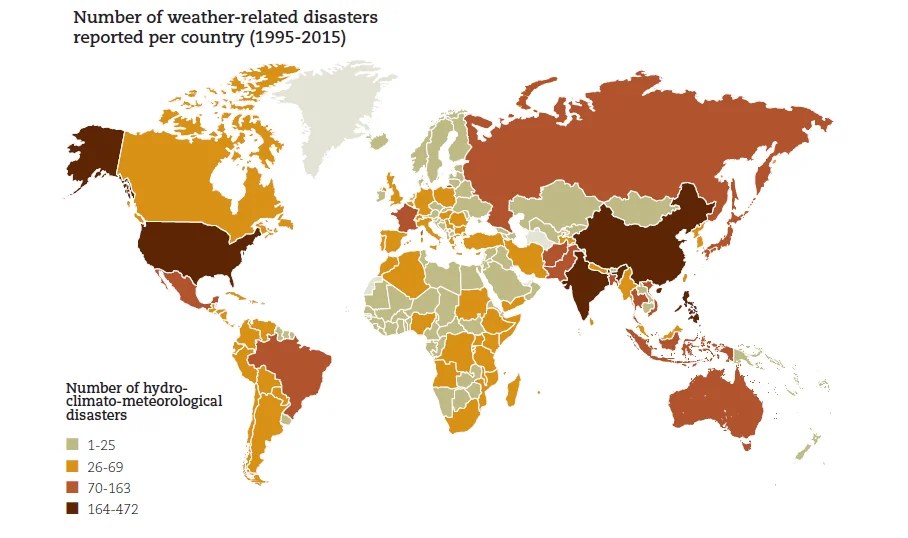
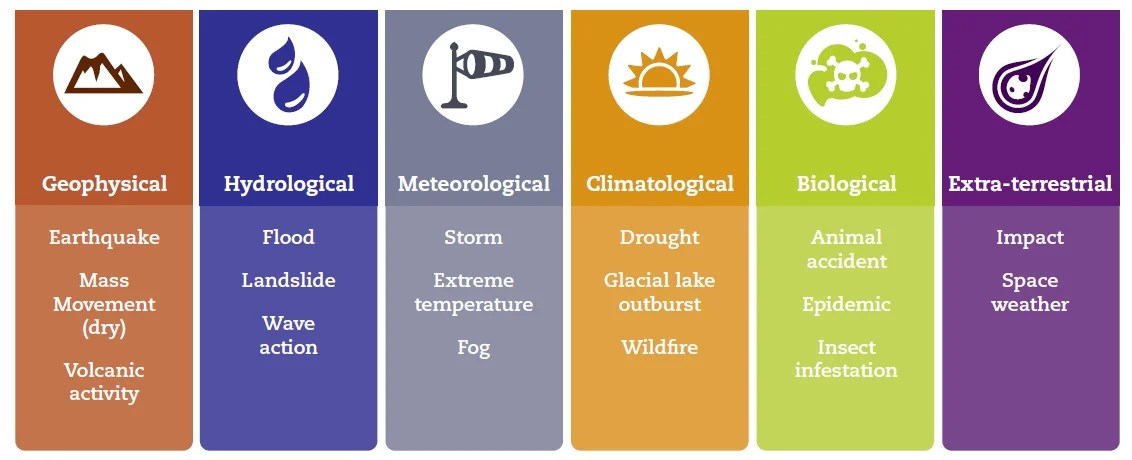
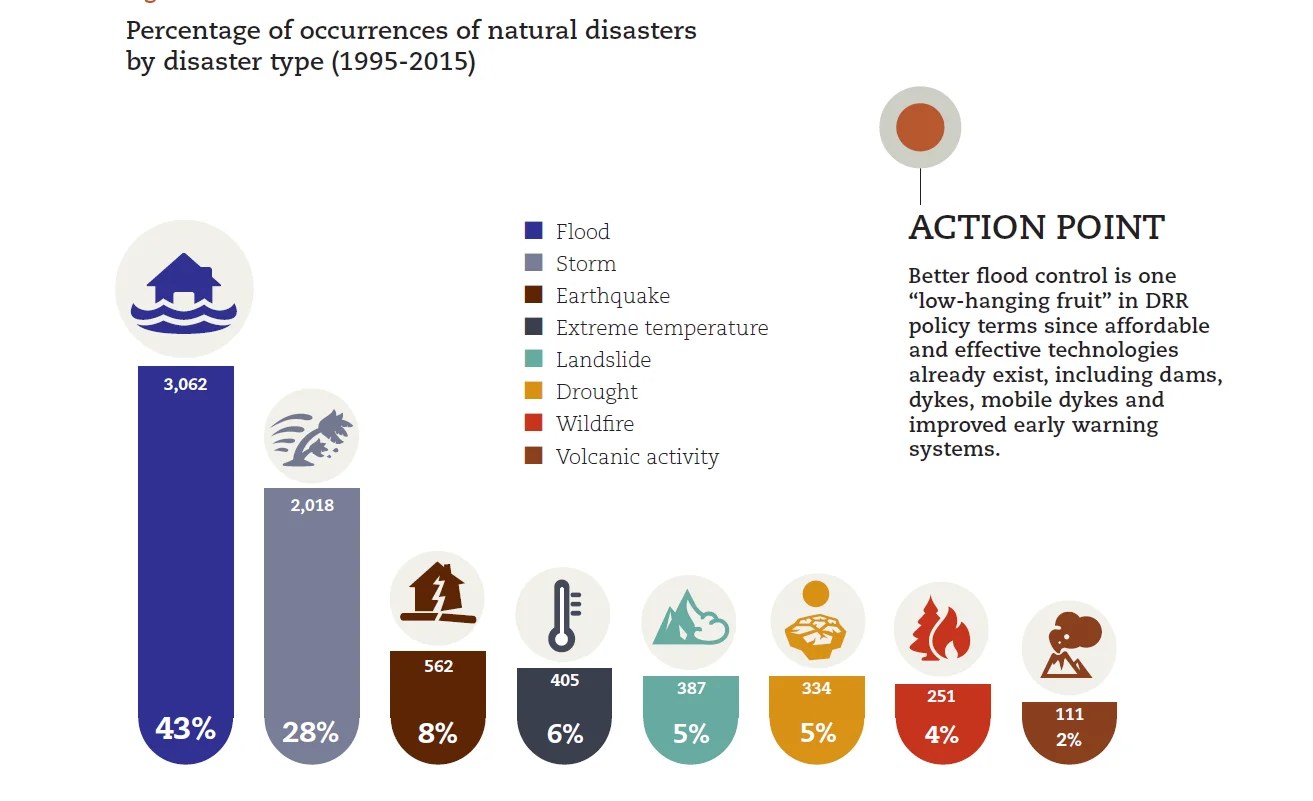
- Over the last twenty years, the overwhelming majority (90%) of disasters have been caused by floods, storms, heatwaves and other weather-related events.
- In total, 6,457 weather-related disasters were recorded worldwide by EM-DAT, the foremost international database of such events. Over this period, weather-related disasters claimed 606,000 lives, an average of some 30,000 per annum, with an additional 4.1 billion people injured, left homeless or in need of emergency assistance.
- High-income countries reported that 76% of weather-related disaster deaths were due to extreme temperatures, mainly heatwaves
- In order to plan for future risk reduction, two critical factors must be kept in mind: population growth will continue to put more and more people in harm’s way, while uncontrolled building on flood plains and storm-prone coastal zones will increase human vulnerabilities to extreme weather events
- Overall, annual economic losses from disasters are estimated by UNISDR at between US$ 250 billion and US$ 300 billion .
The Sendai Framework :-
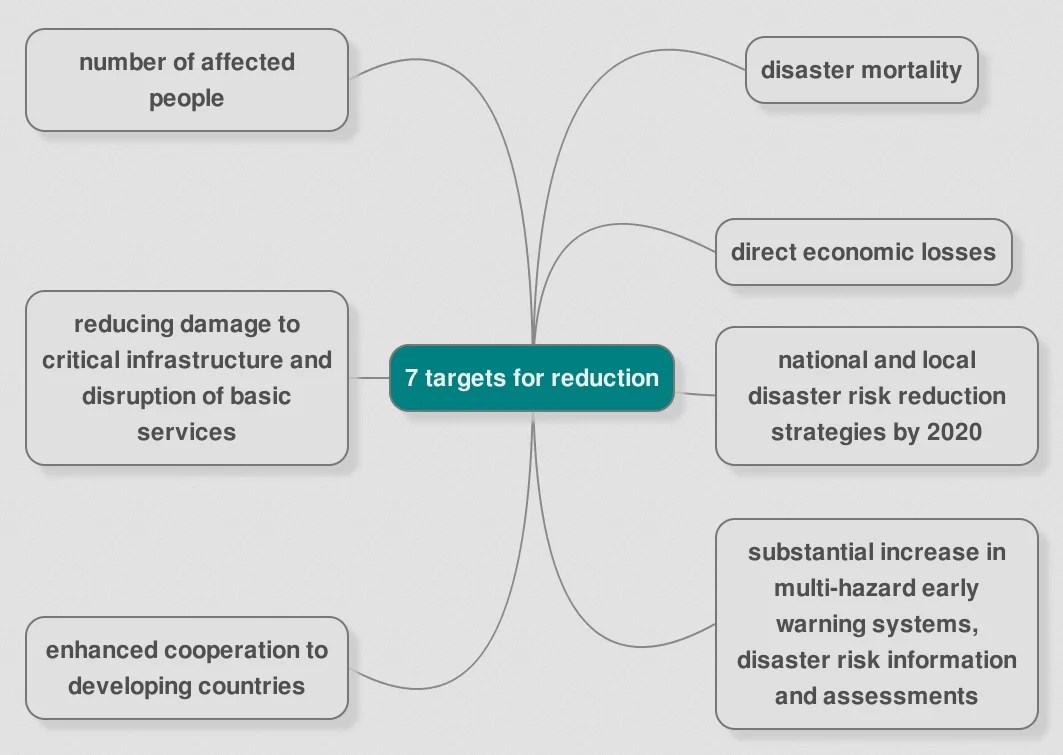
The Sendai Framework is a 15-year, voluntary, non-binding agreement which recognizes that the state has the primary role to reduce disaster risk but that responsibility should be shared with other stakeholders, including local governments, the private sector, the scientific community and NGOs. It aims for a substantial reduction in disaster losses resulting from both man-made and natural hazards.
It lists priority areas for action such as understanding disaster risk,strengthening disaster risk governance to manage disaster risk,investing in disaster risk reduction for resilience and enhancing disaster preparedness for effective response, and to “Build Back Better” in recovery, rehabilitation and reconstruction.
The Sendai Framework’s seven targets focus on substantial reductions in :-
Natural Hazard Classification
Statistics of Disasters
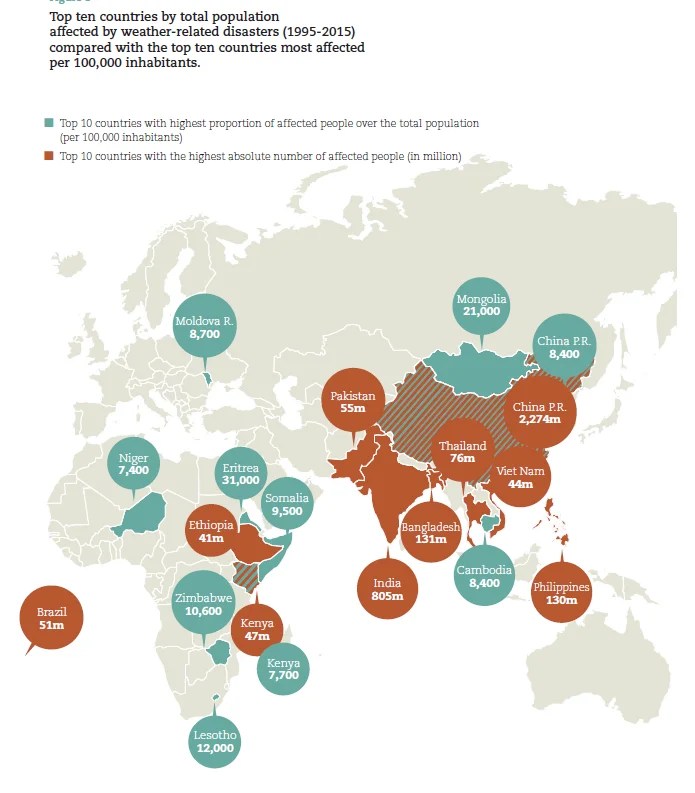
Profile of Most affected Countries
4) 2015 set to be ‘hottest year on record- UN
- This is due to a combination of a strong El Niũo and human-induced global warming
- The World Meteorological Organization (WMO) said global average surface temperatures in 2015 were likely to reach what it called the “symbolic and significant milestone” of 1° Celsius above the pre-industrial era
- The El Nino weather pattern, marked by warming sea-surface temperatures in the Pacific Ocean, causes extremes such as scorching weather and flooding. Meteorologists expect El Nino to peak between October and January and to be one of the strongest on record.
- The years 2011-2015 have also been the hottest five year period on record
- The world’s ten warmest years have all occurred since 1998, with eight of them being since 2005
5)International Film Festival of India :-
News:- 46th IFFI is underway in Goa.
The International Film Festival of India (IFFI), founded in 1952, is one of the most significant film festivals in Asia . Held annually in the state of Goa. The festival aims at providing a common platform for the cinemas of the world to project the excellence of the film art; contributing to the understanding and appreciation of film cultures of different nations in the context of their social and cultural ethos; and promoting friendship and cooperation among people of the world.
The festival is conducted jointly by the Ministry of Information and Broadcasting, Directorate of Film Festivals and the government of Goa
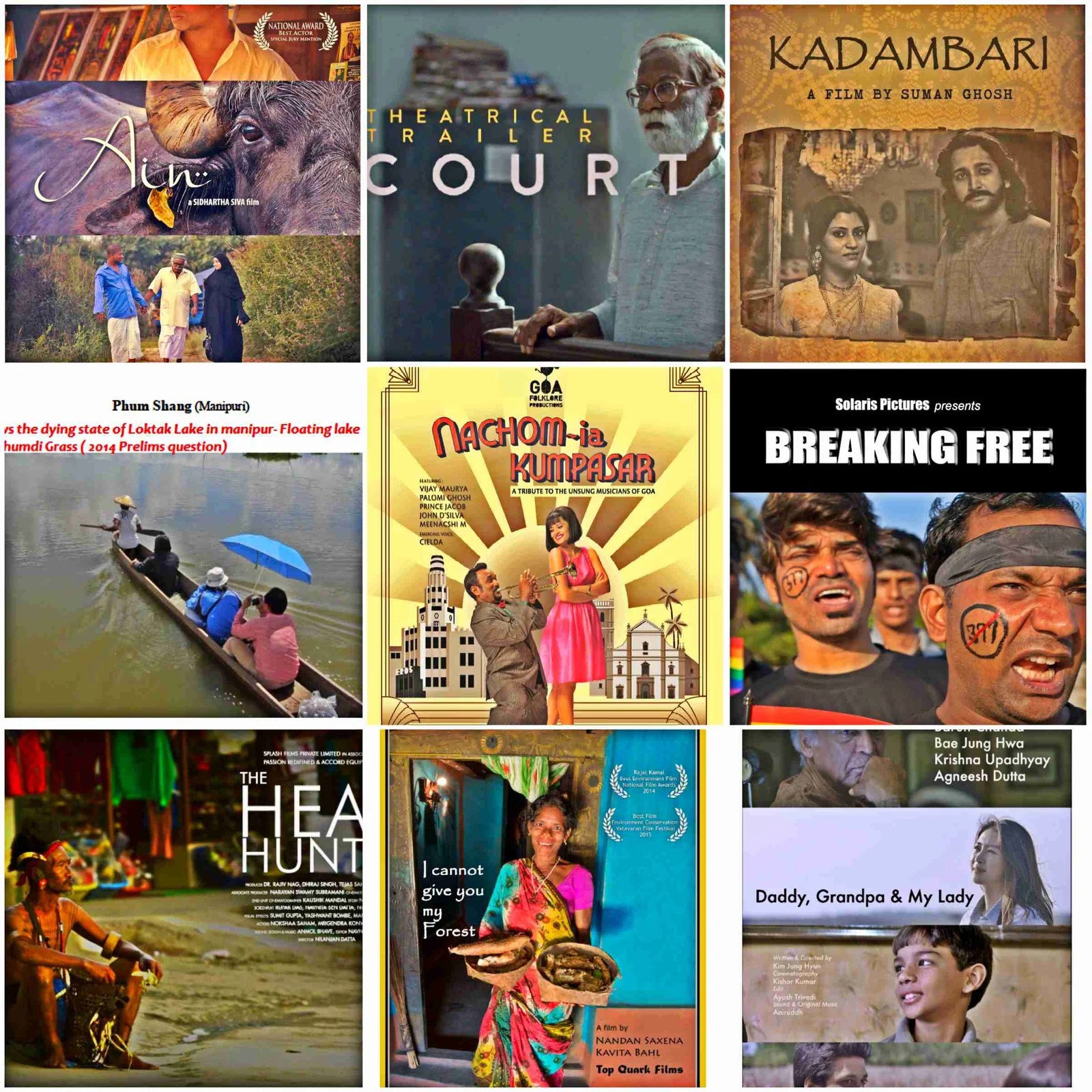
Phum Shang– Shows the dying state of Loktak Lake (Floating lake ) and it’s Phumdi grass. (2014 Prelims question)
I cannot Give my forest (Dongardeiparibinaahin) – Based upon the Kondh tribe who resisted to give away their forest in Niyamgiri Hills , Odisha
Breaking Free – Shows the plight of LGBT community in India
The Head Hunter – The film questions the creation of a homogenous culture of existence and morality.Is it mainstreaming of tribal people is good ?
Ain – Story of a Malabar youth ( Moplah rebellion took place in this region)
Nachom-ia Kumpasar – It is a Konkani feature film that is a tribute to Goan music and musicians.
Kadambari – One of the most sensational cultural events in the history of Bengal was the controversial suicide of Kadambari Devi, Tagore’s sister-in-law and literary muse, in 1883. There are different interpretations of the suicide amongst scholars but the most controversial interpretation relates the event to the relationship which Kadambari Devi shared with Rabindranath Tagore. Through this incident the film explores the human dynamics and the socio-cultural equations during that period. and aims to get an insight into the genius of Rabindranath Tagore in his formative years.
UPSC, Cinema and question:-
- Does Indian cinema shape our popular culture or merely reflect it?
- Role of films in promotion of freedom struggle.
- How Indian Movies are on a different footing that other form of Indian art and literature ?