


The Fourth Industrial Revolution: what it means, how to respond:-
Background:-
We stand on the brink of a technological revolution that will fundamentally alter the way we live, work, and relate to one another. In its scale, scope, and complexity, the transformation will be unlike anything humankind has experienced before. We do not yet know just how it will unfold, but one thing is clear: the response to it must be integrated and comprehensive, involving all stakeholders of the global polity, from the public and private sectors to academia and civil society.
The Chronology of Industrial Revolution:-
The First Industrial Revolution used water and steam power to mechanize production
The Second used electric power to create mass production.
The Third used electronics and information technology to automate production.
Now a Fourth Industrial Revolution is building on the Third, the digital revolution that has been occurring since the middle of the last century. It is characterized by a fusion of technologies that is blurring the lines between the physical, digital, and biological spheres.

Fourth Industrial Revolution:
There are three reasons why today’s transformations represent not merely a prolongation of the Third Industrial Revolution but rather the arrival of a Fourth and distinct one: velocity, scope, and systems impact.
The speed of current breakthroughs has no historical precedent. When compared with previous industrial revolutions, the Fourth is evolving at an exponential rather than a linear pace. Moreover, it is disrupting almost every industry in every country.
And the breadth and depth of these changes herald the transformation of entire systems of production, management, and governance.
The possibilities of billions of people connected by mobile devices, with unprecedented processing power, storage capacity, and access to knowledge, are unlimited. And these possibilities will be multiplied by emerging technology breakthroughs in fields such as artificial intelligence, robotics, the Internet of Things, autonomous vehicles, 3-D printing, nanotechnology, biotechnology, materials science, energy storage, and quantum computing.
Already, artificial intelligence is all around us, from self-driving cars and drones to virtual assistants and software that translate or invest. Impressive progress has been made in AI in recent years, driven by exponential increases in computing power and by the availability of vast amounts of data, from software used to discover new drugs to algorithms used to predict our cultural interests
Digital fabrication technologies, meanwhile, are interacting with the biological world on a daily basis. Engineers, designers, and architects are combining computational design, additive manufacturing, materials engineering, and synthetic biology to pioneer a symbiosis between microorganisms, our bodies, the products we consume, and even the buildings we inhabit.
Challenges and Opportunities:-
Like the revolutions that preceded it, the Fourth Industrial Revolution has the potential to raise global income levels and improve the quality of life for populations around the world. To date, those who have gained the most from it have been consumers able to afford and access the digital world; technology has made possible new products and services that increase the efficiency and pleasure of our personal lives. Ordering a cab, booking a flight, buying a product, making a payment, listening to music, watching a film, or playing a game—any of these can now be done remotely.
In the future, technological innovation will also lead to a supply-side miracle, with long-term gains in efficiency and productivity. Transportation and communication costs will drop, logistics and global supply chains will become more effective, and the cost of trade will diminish, all of which will open new markets and drive economic growth.
At the same time, as the economists Erik Brynjolfsson and Andrew McAfee have pointed out, the revolution could yield greater inequality, particularly in its potential to disrupt labor markets.
As automation substitutes for labor across the entire economy, the net displacement of workers by machines might exacerbate the gap between returns to capital and returns to labor. On the other hand, it is also possible that the displacement of workers by technology will, in aggregate, result in a net increase in safe and rewarding jobs.
We cannot foresee at this point which scenario is likely to emerge, and history suggests that the outcome is likely to be some combination of the two. However, in the future, talent, more than capital, will represent the critical factor of production.
This will give rise to a job market increasingly segregated into “low-skill/low-pay” and “high-skill/high-pay” segments, which in turn will lead to an increase in social tensions.
In addition to being a key economic concern, inequality represents the greatest societal concern associated with the Fourth Industrial Revolution. The largest beneficiaries of innovation tend to be the providers of intellectual and physical capital—the innovators, shareholders, and investors—which explains the rising gap in wealth between those dependent on capital versus labor.
Technology is therefore one of the main reasons why incomes have stagnated, or even decreased, for a majority of the population in high-income countries: the demand for highly skilled workers has increased while the demand for workers with less education and lower skills has decreased. The result is a job market with a strong demand at the high and low ends, but a hollowing out of the middle.
This helps explain why so many workers are disillusioned and fearful that their own real incomes and those of their children will continue to stagnate. It also helps explain why middle classes around the world are increasingly experiencing a pervasive sense of dissatisfaction and unfairness. A winner-takes-all economy that offers only limited access to the middle class is a recipe for democratic malaise and dereliction.
Discontent can also be fueled by the pervasiveness of digital technologies and the dynamics of information sharing typified by social media. More than 30 percent of the global population now uses social media platforms to connect, learn, and share information. In an ideal world, these interactions would provide an opportunity for cross-cultural understanding and cohesion. However, they can also create and propagate unrealistic expectations as to what constitutes success for an individual or a group, as well as offer opportunities for extreme ideas and ideologies to spread.
Acceleration of innovation and the velocity of disruption are hard to comprehend or anticipate and that these drivers constitute a source of constant surprise, even for the best connected and most well informed. Indeed, across all industries, there is clear evidence that the technologies that underpin the Fourth Industrial Revolution are having a major impact on businesses.
On the supply side, many industries are seeing the introduction of new technologies that create entirely new ways of serving existing needs and significantly disrupt existing industry value chains. Disruption is also flowing from agile, innovative competitors who, thanks to access to global digital platforms for research, development, marketing, sales, and distribution, can oust well-established incumbents faster than ever by improving the quality, speed, or price at which value is delivered.
Major shifts on the demand side are also occurring, as growing transparency, consumer engagement, and new patterns of consumer behavior (increasingly built upon access to mobile networks and data) force companies to adapt the way they design, market, and deliver products and services.
On the whole, there are four main effects that the Fourth Industrial Revolution has on business—on customer expectations, on product enhancement, on collaborative innovation, and on organizational forms.
Overall, the inexorable shift from simple digitization (the Third Industrial Revolution) to innovation based on combinations of technologies (the Fourth Industrial Revolution) is forcing companies to reexamine the way they do business. The bottom line, however, is the same: business leaders and senior executives need to understand their changing environment, challenge the assumptions of their operating teams, and relentlessly and continuously innovate.
The Impact on Government:-
As the physical, digital, and biological worlds continue to converge, new technologies and platforms will increasingly enable citizens to engage with governments, voice their opinions, coordinate their efforts, and even circumvent the supervision of public authorities.
Simultaneously, governments will gain new technological powers to increase their control over populations, based on pervasive surveillance systems and the ability to control digital infrastructure. On the whole, however, governments will increasingly face pressure to change their current approach to public engagement and policymaking, as their central role of conducting policy diminishes owing to new sources of competition and the redistribution and decentralization of power that new technologies make possible.
Ultimately, the ability of government systems and public authorities to adapt will determine their survival. If they prove capable of embracing a world of disruptive change, subjecting their structures to the levels of transparency and efficiency that will enable them to maintain their competitive edge, they will endure. If they cannot evolve, they will face increasing trouble.
This will be particularly true in the realm of regulation. Current systems of public policy and decision-making evolved alongside the Second Industrial Revolution, when decision-makers had time to study a specific issue and develop the necessary response or appropriate regulatory framework. The whole process was designed to be linear and mechanistic, following a strict “top down” approach.
But such an approach is no longer feasible. Given the Fourth Industrial Revolution’s rapid pace of change and broad impacts, legislators and regulators are being challenged to an unprecedented degree and for the most part are proving unable to cope.
This means regulators must continuously adapt to a new, fast-changing environment, reinventing themselves so they can truly understand what it is they are regulating. To do so, governments and regulatory agencies will need to collaborate closely with business and civil society.
The Fourth Industrial Revolution will also profoundly impact the nature of national and international security, affecting both the probability and the nature of conflict.
The history of warfare and international security is the history of technological innovation, and today is no exception. Modern conflicts involving states are increasingly “hybrid” in nature, combining traditional battlefield techniques with elements previously associated with nonstate actors. The distinction between war and peace, combatant and noncombatant, and even violence and nonviolence (think cyberwarfare) is becoming uncomfortably blurry.
As this process takes place and new technologies such as autonomous or biological weapons become easier to use, individuals and small groups will increasingly join states in being capable of causing mass harm. This new vulnerability will lead to new fears. But at the same time, advances in technology will create the potential to reduce the scale or impact of violence, through the development of new modes of protection, for example, or greater precision in targeting.
The impact on People:-
The Fourth Industrial Revolution, finally, will change not only what we do but also who we are. It will affect our identity and all the issues associated with it: our sense of privacy, our notions of ownership, our consumption patterns, the time we devote to work and leisure, and how we develop our careers, cultivate our skills, meet people, and nurture relationships. It is already changing our health and leading to a “quantified” self, and sooner than we think it may lead to human augmentation. The list is endless because it is bound only by our imagination.
Inexorable integration of technology in our lives could diminish some of our quintessential human capacities, such as compassion and cooperation. Our relationship with our smartphones is a case in point. Constant connection may deprive us of one of life’s most important assets: the time to pause, reflect, and engage in meaningful conversation.
One of the greatest individual challenges posed by new information technologies is privacy. We instinctively understand why it is so essential, yet the tracking and sharing of information about us is a crucial part of the new connectivity. Debates about fundamental issues such as the impact on our inner lives of the loss of control over our data will only intensify in the years ahead. Similarly, the revolutions occurring in biotechnology and AI, which are redefining what it means to be human by pushing back the current thresholds of life span, health, cognition, and capabilities, will compel us to redefine our moral and ethical boundaries.
Shaping the Future:-
In the end, it all comes down to people and values. We need to shape a future that works for all of us by putting people first and empowering them. In its most pessimistic, dehumanized form, the Fourth Industrial Revolution may indeed have the potential to “robotize” humanity and thus to deprive us of our heart and soul. But as a complement to the best parts of human nature—creativity, empathy, stewardship—it can also lift humanity into a new collective and moral consciousness based on a shared sense of destiny. It is incumbent on us all to make sure the latter prevails.
Global Risk Report ,2016 :-
Background – Global risk report published by World Economic Forum.
Top global Risks for 2016 :-
- Failure of climate change mitigation and adaptation
- weapons of mass destruction
- water crises
- large-scale involuntary migration
- severe energy price shock
The Security Outlook :-
“International security” refers to the measures taken by state or non-state actors, individually or collectively, to ensure their survival and integrity against transboundary threats.
The Seven Driving Forces of International Security:-
Technological innovation: Emerging technologies create challenges, but also opportunities to solve them.
Resources, climate management and security: Tensions are raised by growing competition over access to resources including energy, water and food.
Efficient governance: Corruption and lack of transparency or rule of law limits the progress of development and destabilizes societies.
Geo-strategic competition: Shifts in economic and political power and weakened mutual trust lead great powers to compete for influence, often creating competing spheres of influence.
Demographic shifts: Countries may struggle with bulges of youth or elderly populations, or with rapid influxes of migrants.
Social cohesion and trust: Fuelled by inequality, feelings of social exclusion, mistrust and marginalization threaten social stability.
Hybrid and asymmetric threats: More complex threats, indistinct adversaries and “black swans” are arising from a more interconnected world.

Top 10 Global Challenges:-
1)Food Security:-
By 2050, the world must feed 9 billion people. Yet the demand for food will be 60% greater than it is today.
The United Nations has set ending hunger, achieving food security and improved nutrition, and promoting sustainable agriculture as the second of its 17 Sustainable Development Goals (SDGs) for the year 2030.
To achieve these objectives we will need to address a host of issues, from gender parity and ageing populations to skills development and global warming.
Agriculture sectors will have to become more productive by adopting efficient business models and forging public-private partnerships. And they need to become sustainable by reducing greenhouse gas emissions, water use and waste.
The risks if we fail? Malnutrition, hunger and even conflict.

2)Why growth should be Inclusive:-
The push for economic growth in recent decades has led to substantial increases in wealth for large numbers of people across the globe. But despite huge gains in global economic output, there is evidence that our current social, political and economic systems are exacerbating inequalities, rather than reducing them.
A growing body of research also suggests that rising income inequality is the cause of economic and social ills, ranging from low consumption to social and political unrest, and is damaging to our future economic well-being.
In order to boost growth and counter the slowdown in emerging markets, we need to step up efforts around the world to accelerate economic activity and to ensure that its benefits reach everybody in society.
3)What will the world of work look like?
The scale of the employment challenge is vast. The International Labour Organization estimates that more than 61 million jobs have been lost since the start of the global economic crisis in 2008, leaving more than 200 million people unemployed globally.
Nearly 500 million new jobs will need to be created by 2020 to provide opportunities to those currently unemployed and to the young people who are projected to join the workforce over the next few years.
At the same time, many industries are facing difficulty hiring qualified staff. One 2015 survey found that, globally, 38% of all employers are reporting difficulty filling jobs, a two-percentage point rise from 2014.
Put simply, we need jobs for the hundreds of millions of unemployed people around the world, and we need the skilled employees that businesses are struggling to find.

4)Climate change: can we turn words into action?
The Earth’s average land temperature has warmed nearly 1°C in the past 50 years as a result of human activity, global greenhouse gas emissions have grown by nearly 80% since 1970, and atmospheric concentrations of the major greenhouse gases are at their highest level in 800,000 years.
We’re already seeing and feeling the impacts of climate change with weather events such as droughts and storms becoming more frequent and intense, and changing rainfall patterns. Insurers estimate that since the 1980s weather-related economic loss events have tripled.
Policy-makers have been advised by the Intergovernmental Panel on Climate Change that there is a high risk of catastrophic climate change if warming is not limited to 2°C.
The historic agreement reached in Paris in December 2015 outlines a global commitment to keep warming to 2°C and to strive to limit global temperature rise to 1.5°C.
Under the agreement, every country will implement its own climate action plan that will be reviewed in 2018 and then every five years to ratchet up ambition levels. Wealthier countries also committed to deliver significant flows of money and technical support to help poor countries cope with curbing their greenhouse gas emissions and adapt to climate change.
The world has agreed what is to be done. Now it is time for implementation.
5)What’s the future of global finance?
The global financial crisis revealed significant weaknesses in the financial system and some of the vulnerabilities that can result from having such an interconnected global market.
Several years after the crisis, the world economy is still struggling with slow growth, unconventional monetary policy in major economies, and constrained government budgets. It is vital that we find ways of making the financial system more resilient and able to withstand shocks in the market.
The crisis also caused a significant drop in levels of public trust and confidence in financial institutions. To function efficiently, the system needs to re-establish that trust.
Providing access to credit and savings is a major challenge in the battle against global poverty – yet 2 billion people do not have access to high-quality, affordable financial services. Additionally, there are 200 million small and medium-sized enterprises worldwide that have no access to formal financial services.
The challenge is to create a resilient, accessible financial system that people trust.

6)What’s the future of the internet?
The internet is changing the way we live, work, produce and consume. With such extensive reach, digital technologies cannot help but disrupt many of our existing models of business and government.
We are entering the age of the Fourth Industrial Revolution, a technological transformation driven by a ubiquitous and mobile internet. The challenge is to manage this seismic change in a way that promotes the long-term health and stability of the internet.
Within the next decade, it is expected that more than a trillion sensors will be connected to the internet.
By 2025, 10% of people are expected to be wearing clothes connected to the internet and the first implantable mobile phone is expected to be sold.
If almost everything is connected, it will transform how we do business and help us manage resources more efficiently and sustain-ably.
But how will this affect our personal privacy, data security and our personal relationships? Today, 43% of the world’s population are connected to the internet, mostly in developed countries. How will we achieve the United Nations’ goal of connecting all the world’s inhabitants to affordable internet by 2020?

7)Will the future be gender equal?
Achieving gender equality isn’t just a moral issue – it makes economic sense. Equality between men and women in all aspects of life, from access to health and education to political power and earning potential, is fundamental to whether and how societies thrive.
Although we are getting closer to gender parity, change isn’t happening fast enough. For the past decade, the World Economic Forum been measuring the pace of change through the Global Gender Gap Report, and at current rates, it would take the world another 118 years – or until 2133 – to close the economic gap entirely.
There has been a significant increase in awareness of the importance of gender parity and much has been done by international organizations, civil society, governments and business.
However, often the work centres on single-issue awareness-raising campaigns. Existing work also frequently involves either cooperation between different public bodies or different private bodies.
More needs to be done to bridge the gap and facilitate cooperation between the public and private sectors.

8)What’s the deal with global trade and investment?
International trade and investment are vital drivers of economic growth. With the size and shape of the world economy changing dramatically in recent years, traditional patterns of trading and investing have had to rapidly evolve alongside it. The challenge is to ensure that the regulatory framework keeps up.
There have been so many changes in the way we do business. The growth of the digital economy, the rise of the service sector and the spread of international production networks have all been game-changers for international trade.
As well as this, foreign direct investment has become a key element of trade between different countries. Rather than simply trading with international partners, more and more companies are buying controlling stakes in foreign enterprises.
Despite fundamental changes in the way business is done across borders, international regulations and agreements have not evolved at the same speed. In addition, negotiations to reach a new global trade agreement have stalled.
While there have been a string of bilateral deals struck between countries and regions, there is a pressing need to reform the global trade framework. We also need to address the growing unease over globalization, which is evident from the number of questions being asked about the power of corporations and the adequacy of the regulations governing employment, environmental issues and taxation.
9)Long-term investing: how can we plug the gap?
Investing for the long term is vital for economic growth and social well-being. Whether it’s building new infrastructure or maintaining what already exists, funding is vital to maximize the economic benefits that flow from it.
But seven years after the global financial crisis, the world is still facing sluggish economic growth and constrained government budgets. As a result, there is an overall lack of long-term investment, which has serious implications for global growth.
The challenge is to find ways of funding the basic systems and services that countries need to function in a difficult financial climate.
10)How can we make healthcare fit for the future?
Over the past few decades, the world has seen major advancements in health and largely as a result, people are generally living longer, healthier lives. However, serious challenges to global health remain, ranging from dealing with pandemics to the rise of noncommunicable diseases (NCDs) to the prohibitive costs of care, particularly in developing countries.
The number of people on the planet is set to rise to 9.7 billion in 2050 with 2 billion aged over 60.
The global health system will need to adjust to this massive population growth, which will be concentrated in the poorest countries, and increasing numbers of elderly. This will mean shifting the current focus on treating sick people towards preventing illness and preserving the health of populations.
To cope with this huge demographic shift and build a global healthcare system that is fit for the future, the world needs to address these challenges now.

Note:- Any uncovered news will be covered in subsequent posts.
Recent Posts
- Floods
- Cyclones
- Tornadoes and hurricanes (cyclones)
- Hailstorms
- Cloudburst
- Heat wave and cold wave
- Snow avalanches
- Droughts
- Sea erosion
- Thunder/ lightning
- Landslides and mudflows
- Earthquakes
- Large fires
- Dam failures and dam bursts
- Mine fires
- Epidemics
- Pest attacks
- Cattle epidemics
- Food poisoning
- Chemical and Industrial disasters
- Nuclear
- Forest fires
- Urban fires
- Mine flooding
- Oil Spill
- Major building collapse
- Serial bomb blasts
- Festival related disasters
- Electrical disasters and fires
- Air, road, and rail accidents
- Boat capsizing
- Village fire
- Coastal States, particularly on the East Coast and Gujarat are vulnerable to cyclones.
- 4 crore hectare landmass is vulnerable to floods
- 68 per cent of net sown area is vulnerable to droughts
- 55 per cent of total area is in seismic zones III- V, hence vulnerable to earthquakes
- Sub- Himalayan sector and Western Ghats are vulnerable to landslides.
- Mainstreaming of Disaster Risk Reduction in Developmental Strategy-Prevention and mitigation contribute to lasting improvement in safety and should beintegrated in the disaster management. The Government of India has adopted mitigation and prevention as essential components of their development strategy.
- Mainstreaming of National Plan and its Sub-Plan
- National Disaster Mitigation Fund
- National Earthquake Risk Mitigation Project (NERMP)
- National Building Code (NBC):- Earthquake resistant buildings
- National Cyclone Risk Mitigation Project (NCRMP)
- Integrated Coastal Zone Management Project (ICZMP)-The objective of the project is to assist GoI in building the national capacity for implementation of a comprehensive coastal management approach in the country and piloting the integrated coastal zone management approach in states of Gujarat, Orissa and West Bengal.
- National Flood Risk Mitigation Project (NFRMP)
- National Project for Integrated Drought Monitoring & Management
- National Vector Borne Diseases Control Programme (NVBDCP)- key programme
for prevention/control of outbreaks/epidemics of malaria, dengue, chikungunya etc., vaccines administered to reduce the morbidity and mortality due to diseases like measles, diphtheria, pertussis, poliomyelitis etc. Two key measures to prevent/control epidemics of water-borne diseases like cholera, viral hepatitis etc. include making available safe water and ensuring personal and domestic hygienic practices are adopted. - Training
- Education
- Research
- Awareness
- Hyogo Framework of Action- The Hyogo Framework of Action (HFA) 2005-2015 was adopted to work globally towards sustainable reduction of disaster losses in lives and in the social, economic and environmental assets of communities and countries.
- United Nations International Strategy for Disaster Reduction (UNISDR)-In order to build the resilience of nations and communities to disasters through the implementation of the HFA , the UNISDR strives to catalyze, facilitate and mobilise the
commitment and resources of national, regional and international stakeholders of the ISDR
system. - United Nation Disaster Management Team (UNDMT) –
- To ensure a prompt, effective and concerted country-level support to a governmental
response in the event of a disaster, at the central, state and sub-state levels, - To coordinate UN assistance to the government with respect to long term recovery, disaster mitigation and preparedness.
- To coordinate all disaster-related activities, technical advice and material assistance provided by UN agencies, as well as to take steps for optimal utilisation of resources by UN agencies.
- To ensure a prompt, effective and concerted country-level support to a governmental
- Global Facility for Disaster Risk Reduction (GFDRR):-
- GFDRR was set up in September 2006 jointly by the World Bank, donor partners (21countries and four international organisations), and key stakeholders of the International Strategy for Disaster Reduction (UN-ISDR). It is a long-term global partnership under the ISDR system established to develop and implement the HFA through a coordinated programme for reversing the trend in disaster losses by 2015.
- Its mission is to mainstream disaster reduction and climate change adaptation in a country’s development strategies to reduce vulnerability to natural hazards.
- ASEAN Region Forum (ARF)
- Asian Disaster Reduction Centre (ADRC)
- SAARC Disaster Management Centre (SDMC)
- Program for Enhancement of Emergency Response (PEER):-The Program for Enhancement of Emergency Response (PEER) is a regional training programme initiated in 1998 by the United States Agency for International Development’s, Office of U.S Foreign Disaster Assistance (USAID/OFDA) to strengthen disaster response capacities in Asia.
- Policy guidelines at the macro level that would inform and guide the preparation and
implementation of disaster management and development plans across sectors - Building in a culture of preparedness and mitigation
- Operational guidelines of integrating disaster management practices into development, and
specific developmental schemes for prevention and mitigation of disasters - Having robust early warning systems coupled with effective response plans at district, state
and national levels - Building capacity of all stakeholders
- Involving the community, NGOs, CSOs and the media at all stages of DM
- Addressing gender issues in disaster management planning and developing a strategy for
inclusive approach addressing the disadvantaged sections of the society towards disaster risk reduction. - Addressing climate risk management through adaptation and mitigation
- Micro disaster Insurance
- Flood Proofing
- Building Codes and Enforcement
- Housing Design and Finance
- Road and Infrastructure
A disaster is a result of natural or man-made causes that leads to sudden disruption of normal life, causing severe damage to life and property to an extent that available social and economic protection mechanisms are inadequate to cope.
The International Strategy for Disaster Reduction (ISDR) of the United Nations (U.N.) defines a hazard as “a potentially damaging physical event, phenomenon or human activity that may cause the loss of life or injury, property damage, social and economic disruption or environmental degradation.”
Disasters are classified as per origin, into natural and man-made disasters. As per severity, disasters are classified as minor or major (in impact). However, such classifications are more academic than real.
High Powered Committee (HPC) was constituted in August 1999 under the chairmanship of J.C.Pant. The mandate of the HPC was to prepare comprehensive model plans for disaster management at the national, state and district levels.
This was the first attempt in India towards a systematic comprehensive and holistic look at all disasters.
Thirty odd disasters have been identified by the HPC, which were grouped into the following five categories, based on generic considerations:-
Water and Climate Related:-
Geological:-
Biological:-
Chemical, industrial and nuclear:-
Accidental:-
India’s Key Vulnerabilities as articulated in the Tenth Plan, (2002-07) are as follows:

Vulnerability is defined as:-
“the extent to which a community, structure, service, or geographic area is likely to be damaged or disrupted by the impact of particular hazard, on account of their nature, construction and proximity to hazardous terrain or a disaster prone area”.
The concept of vulnerability therefore implies a measure of risk combined with the level of social and economic ability to cope with the resulting event in order to resist major disruption or loss.
Example:- The 1993 Marathwada earthquake in India left over 10,000 dead and destroyed houses and other properties of 200,000 households. However, the technically much more powerful Los Angeles earthquake of 1971 (taken as a benchmark in America in any debate on the much-apprehended seismic vulnerability of California) left over 55 dead.
Physical Vulnerability:-
Physical vulnerability relates to the physical location of people, their proximity to the hazard zone and standards of safety maintained to counter the effects.
The Indian subcontinent can be primarily divided into three geophysical regions with regard to vulnerability, broadly, as, the Himalayas, the Plains and the Coastal areas.
Socio-economic Vulnerability:-
The degree to which a population is affected by a calamity will not purely lie in the physical components of vulnerability but in contextual, relating to the prevailing social and economic conditions and its consequential effects on human activities within a given society.
Global Warming & Climate Change:-
Global warming is going to make other small local environmental issues seemingly insignificant, because it has the capacity to completely change the face of the Earth. Global warming is leading to shrinking glaciers and rising sea levels. Along with floods, India also suffers acute water shortages.
The steady shrinking of the Himalayan glaciers means the entire water system is being disrupted; global warming will cause even greater extremes. Impacts of El Nino and La Nina have increasingly led to disastrous impacts across the globe.
Scientifically, it is proven that the Himalayan glaciers are shrinking, and in the next fifty to sixty years they would virtually run out of producing the water levels that we are seeing now.
This will cut down drastically the water available downstream, and in agricultural economies like the plains of Uttar Pradesh (UP) and Bihar, which are poor places to begin with. That, as one may realise, would cause tremendous social upheaval.
Urban Risks:-
India is experiencing massive and rapid urbanisation. The population of cities in India is doubling in a period ranging just two decades according to the trends in the recent past.
It is estimated that by 2025, the urban component, which was only 25.7 per cent (1991) will be more than 50 per cent.
Urbanisation is increasing the risks at unprecedented levels; communities are becoming increasingly vulnerable, since high-density areas with poorly built and maintained infrastructure are subjected to natural hazards, environmental degradation, fires, flooding and earthquake.
Urbanisation dramatically increases vulnerability, whereby communities are forced to squat on environmentally unstable areas such as steep hillsides prone to landslide, by the side of rivers that regularly flood, or on poor quality ground, causing building collapse.
Most prominent amongst the disasters striking urban settlements frequently are, floods and fire, with incidences of earthquakes, landslides, droughts and cyclones. Of these, floods are more devastating due to their widespread and periodic impact.
Example: The 2005 floods of Maharashtra bear testimony to this. Heavy flooding caused the sewage system to overflow, which contaminated water lines. On August 11, the state government declared an epidemic of leptospirosis in Mumbai and its outskirts.
Developmental activities:-
Developmental activities compound the damaging effects of natural calamities. The floods in Rohtak (Haryana) in 1995 are an appropriate example of this. Even months after the floodwaters had receded; large parts of the town were still submerged.
Damage had not accrued due to floods, but due to water-logging which had resulted due to peculiar topography and poor land use planning.
Disasters have come to stay in the forms of recurring droughts in Orissa, the desertification of swaths of Gujarat and Rajasthan, where economic depredations continuously impact on already fragile ecologies and environmental degradation in the upstream areas of Uttar Pradesh and Bihar.
Floods in the plains are taking an increasing toll of life, environment, and property, amplified by a huge population pressure.
The unrestricted felling of forests, serious damage to mountain ecology, overuse of groundwater and changing patterns of cultivation precipitate recurring floods and droughts.
When forests are destroyed, rainwater runs off causing floods and diminishing the recharging of groundwater.
The spate of landslides in the Himalayas in recent years can be directly traced to the rampant deforestation and network of roads that have been indiscriminately laid in the name of development.
Destruction of mangroves and coral reefs has increased the vulnerability of coastal areas to hazards, such as storm surges and cyclones.
Commercialisation of coastal areas, particularly for tourism has increased unplanned development in these areas, which has increased disaster potential, as was demonstrated during the Tsunami in December 2004.
Environmental Stresses:- " Delhi-Case Study"
Every ninth student in Delhi’s schools suffers from Asthma. Delhi is the world’s fourth most polluted city.
Each year, poor environmental conditions in the city’s informal areas lead to epidemics.
Delhi has one of the highest road accident fatality ratios in the world. In many ways, Delhi reflects the sad state of urban centers within India that are exposed to risks, which are misconstrued and almost never taken into consideration for urban governance.
The main difference between modernism and postmodernism is that modernism is characterized by the radical break from the traditional forms of urban architecture whereas postmodernism is characterized by the self-conscious use of earlier styles and conventions.


Illustration of Disaster Cycle through Case Study:-
The processes covered by the disaster cycle can be illustrated through the case of the Gujarat Earthquake of 26 January 2001. The devastating earthquake killed thousands of people and destroyed hundreds of thousands of houses and other buildings.
The State Government as well as the National Government immediately mounted a largescale relief operation. The help of the Armed Forces was also taken.
Hundreds of NGOs from within the region and other parts of the country as well as from other countries of the world came to Gujarat with relief materials and personnel to help in the relief operations.
Relief camps were set up, food was distributed, mobile hospitals worked round the clock to help the injured; clothing, beddings, tents, and other commodities were distributed to the affected people over the next few weeks.
By the summer of 2001, work started on long-term recovery. House reconstruction programmes were launched, community buildings were reconstructed, and damaged infrastructure was repaired and reconstructed.
Livelihood programmes were launched for economic rehabilitation of the affected people.
In about two year’s time the state had bounced back and many of the reconstruction projects had taken the form of developmental programmes aiming to deliver even better infrastructure than what existed before the earthquake.
Good road networks, water distribution networks, communication networks, new schools, community buildings, health and education programmes, all worked towards developing the region.
The government as well as the NGOs laid significant emphasis on safe development practices. The buildings being constructed were of earthquake resistant designs.
Older buildings that had survived the earthquake were retrofitted in large numbers to strengthen them and to make them resistant to future earthquakes. Mason and engineer training programmes were carried out at a large scale to ensure that all future construction in the State is disaster resistant.
This case study shows how there was a disaster event during the earthquake, followed by immediate response and relief, then by recovery including rehabilitation and retrofitting, then by developmental processes.
The development phase included mitigation activities, and finally preparedness actions to face future disasters.
Then disaster struck again, but the impact was less than what it could have been, primarily due to better mitigation and preparedness efforts.

Looking at the relationship between disasters and development one can identify ‘four’ different dimensions to this relation:
1) Disasters can set back development
2) Disasters can provide development opportunities
3) Development can increase vulnerability and
4) Development can reduce vulnerability
The whole relationship between disaster and development depends on the development choice made by the individual, community and the nation who implement the development programmes.
The tendency till now has been mostly to associate disasters with negativities. We need to broaden our vision and work on the positive aspects associated with disasters as reflected below:

1)Evolution of Disaster Management in India
Disaster management in India has evolved from an activity-based reactive setup to a proactive institutionalized structure; from single faculty domain to a multi-stakeholder setup; and from a relief-based approach to a ‘multi-dimensional pro-active holistic approach for reducing risk’.
Over the past century, the disaster management in India has undergone substantive changes in its composition, nature and policy.
2)Emergence of Institutional Arrangement in India-
A permanent and institutionalised setup began in the decade of 1990s with set up of a disaster management cell under the Ministry of Agriculture, following the declaration of the decade of 1990 as the ‘International Decade for Natural Disaster Reduction’ (IDNDR) by the UN General Assembly.
Consequently, the disaster management division was shifted under the Ministry of Home Affairs in 2002
3)Disaster Management Framework:-
Shifting from relief and response mode, disaster management in India started to address the
issues of early warning systems, forecasting and monitoring setup for various weather related
hazards.

National Level Institutions:-National Disaster Management Authority (NDMA):-
The National Disaster Management Authority (NDMA) was initially constituted on May 30, 2005 under the Chairmanship of Prime Minister vide an executive order.
SDMA (State Level, DDMA(District Level) also present.
National Crisis Management Committee (NCMC)
Legal Framework For Disaster Management :-
 DMD- Disaster management Dept.
NIDM- National Institute of Disaster Management
NDRF – National Disaster Response Fund
Cabinet Committee on Disaster Management-

Location of NDRF Battallions(National Disaster Response Force):-
 CBRN- Chemical, Biological, Radiological and Nuclear
Policy and response to Climate Change :-
1)National Action Plan on Climate Change (NAPCC)-
National Action Plan on Climate Change identified Eight missions.
• National Solar Mission
• National Mission on Sustainable Habitat
• National Mission for Enhanced Energy Efficiency
• National Mission for Sustaining The Himalayan Ecosystem
• National Water Mission
• National Mission for Green India
• National Mission for Sustainable Agriculture
• National Mission for Strategic Knowledge on Climate Change
2)National Policy on Disaster Management (NPDM),2009-
The policy envisages a safe and disaster resilient India by developing a holistic, proactive, multi-disaster oriented and technologydriven strategy through a culture of prevention, mitigation, preparedness and response. The policy covers all aspects of disaster management including institutional and legal arrangements,financial arrangements, disaster prevention, mitigation and preparedness, techno-legal regime, response, relief and rehabilitation, reconstruction and recovery, capacity development, knowledge management, research and development. It focuses on the areas where action is needed and the institutional mechanism through which such action can be channelised.
Prevention and Mitigation Projects:-
Early Warning Nodal Agencies:-

Post Disaster Management :-Post disaster management responses are created according to the disaster and location. The principles being – Faster Recovery, Resilient Reconstruction and proper Rehabilitation.
Capacity Development:-
Components of capacity development includes :-
National Institute for Capacity Development being – National Institute of Disaster Management (NIDM)
International Cooperation-
Way Forward:-
Principles and Steps:-
The United Nations has shaped so much of global co-operation and regulation that we wouldn’t recognise our world today without the UN’s pervasive role in it. So many small details of our lives – such as postage and copyright laws – are subject to international co-operation nurtured by the UN.
In its 75th year, however, the UN is in a difficult moment as the world faces climate crisis, a global pandemic, great power competition, trade wars, economic depression and a wider breakdown in international co-operation.
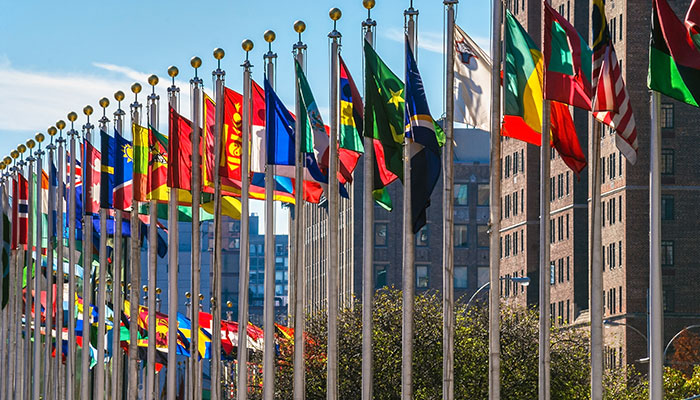
Still, the UN has faced tough times before – over many decades during the Cold War, the Security Council was crippled by deep tensions between the US and the Soviet Union. The UN is not as sidelined or divided today as it was then. However, as the relationship between China and the US sours, the achievements of global co-operation are being eroded.
The way in which people speak about the UN often implies a level of coherence and bureaucratic independence that the UN rarely possesses. A failure of the UN is normally better understood as a failure of international co-operation.
We see this recently in the UN’s inability to deal with crises from the ethnic cleansing of the Rohingya Muslims in Myanmar, to civil conflict in Syria, and the failure of the Security Council to adopt a COVID-19 resolution calling for ceasefires in conflict zones and a co-operative international response to the pandemic.
The UN administration is not primarily to blame for these failures; rather, the problem is the great powers – in the case of COVID-19, China and the US – refusing to co-operate.
Where states fail to agree, the UN is powerless to act.
Marking the 75th anniversary of the official formation of the UN, when 50 founding nations signed the UN Charter on June 26, 1945, we look at some of its key triumphs and resounding failures.
Five successes
1. Peacekeeping
The United Nations was created with the goal of being a collective security organisation. The UN Charter establishes that the use of force is only lawful either in self-defence or if authorised by the UN Security Council. The Security Council’s five permanent members, being China, US, UK, Russia and France, can veto any such resolution.
The UN’s consistent role in seeking to manage conflict is one of its greatest successes.
A key component of this role is peacekeeping. The UN under its second secretary-general, the Swedish statesman Dag Hammarskjöld – who was posthumously awarded the Nobel Peace prize after he died in a suspicious plane crash – created the concept of peacekeeping. Hammarskjöld was responding to the 1956 Suez Crisis, in which the US opposed the invasion of Egypt by its allies Israel, France and the UK.
UN peacekeeping missions involve the use of impartial and armed UN forces, drawn from member states, to stabilise fragile situations. “The essence of peacekeeping is the use of soldiers as a catalyst for peace rather than as the instruments of war,” said then UN Secretary-General Javier Pérez de Cuéllar, when the forces won the 1988 Nobel Peace Prize following missions in conflict zones in the Middle East, Africa, Asia, Central America and Europe.
However, peacekeeping also counts among the UN’s major failures.
2. Law of the Sea
Negotiated between 1973 and 1982, the UN Convention on the Law of the Sea (UNCLOS) set up the current international law of the seas. It defines states’ rights and creates concepts such as exclusive economic zones, as well as procedures for the settling of disputes, new arrangements for governing deep sea bed mining, and importantly, new provisions for the protection of marine resources and ocean conservation.
Mostly, countries have abided by the convention. There are various disputes that China has over the East and South China Seas which present a conflict between power and law, in that although UNCLOS creates mechanisms for resolving disputes, a powerful state isn’t necessarily going to submit to those mechanisms.
Secondly, on the conservation front, although UNCLOS is a huge step forward, it has failed to adequately protect oceans that are outside any state’s control. Ocean ecosystems have been dramatically transformed through overfishing. This is an ecological catastrophe that UNCLOS has slowed, but failed to address comprehensively.
3. Decolonisation
The idea of racial equality and of a people’s right to self-determination was discussed in the wake of World War I and rejected. After World War II, however, those principles were endorsed within the UN system, and the Trusteeship Council, which monitored the process of decolonisation, was one of the initial bodies of the UN.
Although many national independence movements only won liberation through bloody conflicts, the UN has overseen a process of decolonisation that has transformed international politics. In 1945, around one third of the world’s population lived under colonial rule. Today, there are less than 2 million people living in colonies.
When it comes to the world’s First Nations, however, the UN generally has done little to address their concerns, aside from the non-binding UN Declaration on the Rights of Indigenous Peoples of 2007.
4. Human rights
The Human Rights Declaration of 1948 for the first time set out fundamental human rights to be universally protected, recognising that the “inherent dignity and of the equal and inalienable rights of all members of the human family is the foundation of freedom, justice and peace in the world”.
Since 1948, 10 human rights treaties have been adopted – including conventions on the rights of children and migrant workers, and against torture and discrimination based on gender and race – each monitored by its own committee of independent experts.
The language of human rights has created a new framework for thinking about the relationship between the individual, the state and the international system. Although some people would prefer that political movements focus on ‘liberation’ rather than ‘rights’, the idea of human rights has made the individual person a focus of national and international attention.
5. Free trade
Depending on your politics, you might view the World Trade Organisation as a huge success, or a huge failure.
The WTO creates a near-binding system of international trade law with a clear and efficient dispute resolution process.
The majority Australian consensus is that the WTO is a success because it has been good for Australian famers especially, through its winding back of subsidies and tariffs.
However, the WTO enabled an era of globalisation which is now politically controversial.
Recently, the US has sought to disrupt the system. In addition to the trade war with China, the Trump Administration has also refused to appoint tribunal members to the WTO’s Appellate Body, so it has crippled the dispute resolution process. Of course, the Trump Administration is not the first to take issue with China’s trade strategies, which include subsidises for ‘State Owned Enterprises’ and demands that foreign firms transfer intellectual property in exchange for market access.
The existence of the UN has created a forum where nations can discuss new problems, and climate change is one of them. The Intergovernmental Panel on Climate Change (IPCC) was set up in 1988 to assess climate science and provide policymakers with assessments and options. In 1992, the UN Framework Convention on Climate Change created a permanent forum for negotiations.
However, despite an international scientific body in the IPCC, and 165 signatory nations to the climate treaty, global greenhouse gas emissions have continued to increase.
Under the Paris Agreement, even if every country meets its greenhouse gas emission targets we are still on track for ‘dangerous warming’. Yet, no major country is even on track to meet its targets; while emissions will probably decline this year as a result of COVID-19, atmospheric concentrations of greenhouse gases will still increase.
This illustrates a core conundrum of the UN in that it opens the possibility of global cooperation, but is unable to constrain states from pursuing their narrowly conceived self-interests. Deep co-operation remains challenging.
Five failures of the UN
1. Peacekeeping
During the Bosnian War, Dutch peacekeeping forces stationed in the town of Srebrenica, declared a ‘safe area’ by the UN in 1993, failed in 1995 to stop the massacre of more than 8000 Muslim men and boys by Bosnian Serb forces. This is one of the most widely discussed examples of the failures of international peacekeeping operations.
On the massacre’s 10th anniversary, then UN Secretary General Kofi Annan wrote that the UN had “made serious errors of judgement, rooted in a philosophy of impartiality”, contributing to a mass murder that would “haunt our history forever”.
If you look at some of the other infamous failures of peacekeeping missions – in places such as Rwanda, Somalia and Angola – it is the limited powers given to peacekeeping operations that have resulted in those failures.
2. The invasion of Iraq
The invasion of Iraq by the US in 2003, which was unlawful and without Security Council authorisation, reflects the fact that the UN is has very limited capacity to constrain the actions of great powers.
The Security Council designers created the veto power so that any of the five permanent members could reject a Council resolution, so in that way it is programmed to fail when a great power really wants to do something that the international community generally condemns.
In the case of the Iraq invasion, the US didn’t veto a resolution, but rather sought authorisation that it did not get. The UN, if you go by the idea of collective security, should have responded by defending Iraq against this unlawful use of force.
The invasion proved a humanitarian disaster with the loss of more than 400,000 lives, and many believe that it led to the emergence of the terrorist Islamic State.
3. Refugee crises
The UN brokered the 1951 Refugee Convention to address the plight of people displaced in Europe due to World War II; years later, the 1967 Protocol removed time and geographical restrictions so that the Convention can now apply universally (although many countries in Asia have refused to sign it, owing in part to its Eurocentric origins).
Despite these treaties, and the work of the UN High Commission for Refugees, there is somewhere between 30 and 40 million refugees, many of them, such as many Palestinians, living for decades outside their homelands. This is in addition to more than 40 million people displaced within their own countries.
While for a long time refugee numbers were reducing, in recent years, particularly driven by the Syrian conflict, there have been increases in the number of people being displaced.
During the COVID-19 crisis, boatloads of Rohingya refugees were turned away by port after port. This tragedy has echoes of pre-World War II when ships of Jewish refugees fleeing Nazi Germany were refused entry by multiple countries.
And as a catastrophe of a different kind looms, there is no international framework in place for responding to people who will be displaced by rising seas and other effects of climate change.
4. Conflicts without end
Across the world, there is a shopping list of unresolved civil conflicts and disputed territories.
Palestine and Kashmir are two of the longest-running failures of the UN to resolve disputed lands. More recent, ongoing conflicts include the civil wars in Syria and Yemen.
The common denominator of unresolved conflicts is either division among the great powers, or a lack of international interest due to the geopolitical stakes not being sufficiently high. For instance, the inaction during the Rwandan civil war in the 1990s was not due to a division among great powers, but rather a lack of political will to engage.
In Syria, by contrast, Russia and the US have opposing interests and back opposing sides: Russia backs the government of the Syrian dictator Bashar al-Assad, whereas the US does not.
5. Acting like it’s 1945
The UN is increasingly out of step with the reality of geopolitics today.
The permanent members of the Security Council reflect the division of power internationally at the end of World War II. The continuing exclusion of Germany, Japan, and rising powers such as India and Indonesia, reflects the failure to reflect the changing balance of power.
Also, bodies such as the IMF and the World Bank, which are part of the UN system, continue to be dominated by the West. In response, China has created potential rival institutions such as the Asian Infrastructure Investment Bank.
Western domination of UN institutions undermines their credibility. However, a more fundamental problem is that institutions designed in 1945 are a poor fit with the systemic global challenges – of which climate change is foremost – that we face today.