


Is the war against the IS India’s war?
Background :- Recently there has been several discussion going on at various levels and various platforms – whether India should join the fight against IS ?At a recent counter-terror conference in Jaipur, which included experts from about 25 countries, the most prominent discussion was on a unified global response to the threat from the Islamic State (IS). “The problem the world faces is that while the bad guys think global, the good guys still think national, sometimes still departmental,” said Foreign Secretary S. Jaishankar. “Encouraging a ‘whole of the world’ approach in countering terrorism is one of the major goals of Indian diplomacy.”
Excerpts From the article:-
A less heated consideration of the issue must prevail over what exactly India’s role in the “global war on IS” should be, if sending troops is indeed a possibility. To begin with, the theory of a global war suggests that the threat to all countries is uniform in nature. The IS has claimed that its Caliphate represents Muslim populations everywhere, and its targeting of people from the U.S., France, Jordan, China and Japan indicates that it does not see a difference. Yet, on the ground, the ‘target populations’ are very different, with varied motivations.
While the threat in the U.S. and Europe comes from immigrants who have settled in these places in recent decades, in South and Central Asia, the Muslim populations are indigenous. In West Asia, many of the populations from which fighters are joining the IS were already fighting against their governments. And in countries such as Saudi Arabia and Qatar, those who migrated to IS territory received no opposition from their governments, which were already at odds with the Iraqi and Syrian regimes. Therefore, while the motivation for all of them may have been the desire for an Islamist jihad, the factors influencing them are entirely different.
In particular, there is a difference between India and other countries. According to government figures, 27 Indians are confirmed to have travelled to IS-held territories, 200 are under watch, and about 18 have been charged with attempting to join the IS in India (not counting 30 recent detentions on which details are awaited). The figures for Indians joining the IS are low enough to be statistically negligible (less than 0.00004 per cent) compared to the rest of the world
In the 44 countries tracked by the U.K.-based International Centre for the Study of Radicalisation and the Central Intelligence Agency, India finds no mention.These statistics should certainly not give the impression that India has nothing to fear. But they must be seen in relation to the threat perception at present, so as to guard against an overreaction. If India were to consider sending troops under the U.N. flag to IS territories, as Defence Minister said it could, what would be the human costs of such a venture over the benefits?
Analysis :-
- The analysis needs an approach that cuts across multiple facets of what it means by “global terrorism” and “global fight against terrorism”
- In light of this it is indeed very important to understand the Syrian crisis – Details can be found here – Click Here .
- The spill over of failed Arab Spring resulted in mass exodus,internal displacement , extremism in all forms , and this decade has seen the worst brutalities that mankind has ever endured in the past.The sheer no. of human casualties is numbing. People became refugees in their own country , the refugee crisis is enervating the Government across Europe and to protect their demographic profile without any significant alteration , Countries have stepped up vigil along the border with intermittent sealing of border.Desperate attempt by many to flee the conflict zone has led to loss of lives. Children and women are the most vulnerable groups among these and the brutalities that laid upon them is emotionally numbing.There seems no vestige of beginning , no prospect of an end of this crisis.Solution lays in constructive engagement of global powers and institutions , but major players are fighting each other , and Syria became their geopolitical battleground
- An interesting note from the National Security Adviser of India who stated recently – “Why is it, that 15 years after countries have signed on to the global war on terror, terror casualties are 320 per cent higher than in 2001, terror groups have spread to areas they have never been in before, and states have spent enormous figures on fighting terror?
- Keeping in view the aforementioned facts , it is important to note that terrorism is a political tool where religion is selectively used to run the propaganda. The vital questions on who funds the terror camps gives a different dimension to the meaning of terror altogether.The more one delves to understand the terrorism , the more it takes shape of a geopolitical ambition than savior of any cast or creed or religion.And , given the geopolitical overtones is it essential to question – why should India fight and how it should fight ?
- It is also said that – threat to humanity anywhere is a threat to humanity everywhere . And hence it makes sense to fight the war on terror. How to fight, is a different question altogether. Fight on terror has 2 dimensions – ideological level and geopolitical level.
- Just when we thought we have progressed to modernity and filth such as slavery and sex slave is over. The situation in the conflict ridden region and the sex slave trade is deeply disturbing.Women and children have been captured and sold as merchandise and against this backdrop it becomes necessary to transcend beyond the geopolitical boundaries and do something for the sake of humanity.
- Given the scale, reach and fire power of the extremist organisation it is indeed became necessary for India and other such countries to stand for humanity and save it from the clutches of horrors it is currently enduring.
- How and what kind of approach is the best approach – is a question for policy makers to decide , but at the core of it India or any country for that matter can not remain indifferent to it.
Note:-The analysis part is exclusive to upsctree.Do let us know if you have any alternative viewpoints or feedback in this regard.We will be glad to debate, deliberate and discuss on this.
A wave of awe and opportunity, and yet again Einstein was right:-
Backgorund:-After four months of analysis, a consortium of scientists— including from India — confirmed recently that they had detected a signal from space from 1.3 billion years ago. The signal, which travelled as a gravitational wave was from the fusion of two black holes into a single one — the first time ever that such a phenomenon was observed — and registered as a “çhirp’’ at two highly sensitive detectors, called the Laser Interferometer Gravitational Wave Observatory (LIGO) located in Washington and Louisiana.
Details:-Gravitational waves are the last, unobserved prediction from Albert Einstein’s iconic general relativity equations that were developed 100 years ago. These equations are the reason space and time — in the eyes of contemporary science — are seen as malleable shape-shifting entities rather than fixed and eternal, as our senses suggest to us. Black holes, which result when stars die, can collide with each other and sometimes birth new universes. These collisions are so violent that they can distort space and time around it, just as dropping a heavy ball on a tarpaulin sheet can massively wrinkle it. These wrinkles propagate, as gravitational waves through space-time but are extremely hard to detect.
Gravitational waves Explained
What are gravitational waves?
Gravitational waves are small ripples in space-time that are believed to travel across the universe at the speed of light. They are like tiny waves on a lake — from far away, the lake’s surface looks glassy smooth; only up very close can the details of the surface be seen. They were predicted to exist by Albert Einstein in 1916 as a consequence of his General Theory of Relativity.
What does Einstein say about gravity?
While Sir Isaac Newton visualised gravitational force as a pulling force between objects, Albert Einstein opined it to be a pushing force due to the curvature of four dimensional spacetime fabric. The curvature of spacetime stems from the dent heavy objects produce on spacetime fabric, which can be compared to the dent one could see on a plastic sheet when a massive ball is placed.
Why is the study of gravitational waves important?
Discovery of gravitational waves would represent a scientific landmark, opening the door to an entirely new way to observe the cosmos and unlock secrets about the early universe and mysterious objects like black holes and neutron stars.
India’s digital transformation:-
Background:-
There is little doubt that China has stolen a march on India when it comes to leveraging the Internet. Of the top 20 Internet companies in the world, 13 are American, five are Chinese, with one each for Japan and the United Kingdom. Alibaba, China’s largest e-commerce company, has a market capitalisation that is 25 times higher than that of Flipkart, the largest e-commerce company in India.
Why did India, which has had the remarkable achievement of being the largest exporter of information technology services and skilled manpower among developing countries, fall behind China in digitally transforming its economy? Is it now making a comeback?
Details:-
The World Bank’s recently released World Development Report (WDR) ‘Digital Dividends’ provides some answers.
The WDR finds that digital technologies have spread rapidly throughout much of the world, but their digital dividends — the broader development benefits from using these technologies — have lagged behind. In many instances digital technologies have boosted growth, expanded opportunities, and improved service delivery. Yet their aggregate impact has fallen short and is unevenly distributed.
The report argues that for digital technologies to confer their full benefit on society, it is vital to close the digital divide, especially in Internet access. But greater digital adoption will not be enough. To get the most out of the digital revolution, countries also need to work on its “analogue complements” — by strengthening regulations that ensure competition among businesses, by adapting workers’ skills to the demands of the new economy, and by ensuring that government institutions and others are accountable.
Measuring the performance of India and China with the WDR metrics of connectivity and complements shows why India has not yet taken full advantage of the digital revolution.
The contrast with China:-
At the end of 2014, India had 227 million Internet users, compared to 665 million in China. Fewer than two out of every five Indian businesses had an online presence compared to almost two-thirds of firms in China.
The cost of a 1 Mbit/s residential broadband service in India is 6-10 times higher than in China. And by most accounts, the digital divide across age, gender, geography and income within India is significantly higher than in China. Thanks to its successful digital ID programme, Aadhaar, India scores higher than China in digital adoption by governments, but the need now is to use the platform that Aadhaar provides more widely and effectively.
The slow pace of improvement of the quality of basic infrastructure — expressways, logistics, storage, postal delivery system and reliable supply of electricity — have also hampered the growth of e-commerce in India. And the excessively cautious approach of Indian regulators towards disruptive technological innovations such as mobile money or ride-sharing services has made it difficult for digital start-ups to enter new markets and achieve scale
While Indian technology workers and entrepreneurs excel in Silicon Valley in the United States, the skills level of the average Indian worker remains significantly behind his or her Chinese counterpart. India has made considerable strides in improving its human capital, but a vast majority of its population still lacks the skills to meaningfully participate in the digital economy.
Around 25 per cent of India’s adult population cannot read and write compared to fewer than 5 per cent in China.
There is also major difference in quality of education: The latest Annual Status of Education Report (ASER) test scores in rural India show that 10 per cent of children aged 16 and below cannot identify single-digit numbers consistently. Fewer than one in five can do a subtraction, performing considerably below their grade level.
Clearly, India’s challenge to becoming a digital economy remains formidable. The government has announced a slew of new initiatives: Digital India; Make in India; Start-up India; and innovative applications of Aadhaar such as JAM (Jan-Dhan Yojana-Aadhaar-Mobile trinity) and Digital Lockers. Successful and accelerated implementation of these programmes can make up for some of the lost time. But India also needs to do more by strengthening the basic foundations of its digital economy.
Making the Internet accessible, open and safe for all Indians is an urgent priority. The cost of mobile phone access is already low by international standards. And with a supportive policy environment involving smart spectrum management, public-private partnerships, and intelligent regulations of Internet markets, the same can be achieved for Internet access. Zero-rated services for mobile data access have become controversial, though they could be an intermediate step to fully open and affordable Internet access for the poorest, provided that the choice of selecting services is transparent and inclusive.
The road ahead:-
Access, however, is only one part of the agenda. An important lesson from the WDR is that even the most sophisticated technologies are no substitute for tackling long-standing shortcomings in other areas — most importantly basic health, education and a regulatory ethos that encourages competition and enterprise.
When the World Bank adopted in 2013 “shared prosperity” as one of its mission goals, it was the first time that combating inequality was being set up as a target. There was a lot of initial opposition because while the battling of poverty seems like a fairly impersonal goal, the goal of “sharing” makes many uncomfortable.
Fortunately, the way the shared prosperity goal is formalised has deep conceptual roots. The aim of ending the digital divide discussed in our most recent WDR stems from this same basic idea and is an urgent need of our times.
Inclusive Development :-The quintile income and the poverty line
Background:-
The rhetoric of “inclusive development” tends often to be lost in vague generalities, when it is not altogether absent in various processes on the ground or in state policy that claims to be inspired by its demands. This note suggests that in at least one specific and restricted area of application – the intersection of poverty, inequality and growth – it should be possible to capture some elementary aspect of inclusiveness by monitoring trends, set against targets, of the “quintile income” statistic. This statistic, which was proposed in earlier work by Kaushik Basu, is a simple and useful aid to verifying the reach of inclusiveness in a specific dimension of development, a theme that is elaborated on in this note.
Introduction:-
Every season has its buzzword, and the vogue today, it would appear, is “inclusive development”. One supposes that the term is intended to cover a multitude of desirable aims and goals. As such, it seems reasonable to believe, for instance, that “inclusive development” would have implications for the notions of “national integration” and “citizenship”, and therefore for recent events on the ground in Jammu and Kashmir, the north-east, and the so-called “Maoist Belt”. Similarly, one must expect that an engagement with “inclusive development” must imply also an engagement with various manifestations of social exclusion based – for example – on caste, religious,and gender identities. A third area of relevance would presumably relate to the extent – measured by both depth and coverage – of social security provisioning for the deprived. This is just a minute sample of the objects of concern of the term under discussion – but the sample is large enough to highlight certain elementary distinctions and contrasts. In particular, it is impossible not to see that there is the engagement in principle and disengagement in practice, just as there are pretty phrases and ugly facts. Thus, for many, the State’s protestations of “inclusive development” make for a clanging, angling discord when juxtaposed with talk of sedition and anti-national activity; with the facts of manual scavenging, the socio-economic status of Muslims (as revealed in the Sachar Committee’s report), and the scale of sex-selective foeticide in the country; and with the widespread perception that the unique identification (UID) programme which has been advertised as facilitating the “targeting” of public benefits is, on the contrary, a mechanism for excluding large numbers of deserving citizens from the ambit of social assistance (when it is not associated with more sinister forms of intrusive surveillance of the citizenry). But we live in the age of the specialist, and it may not be for me to dwell at any length on these subjects. Having said this, it is also true that a further area of concern when we speak of “inclusive development” relates to the domains of poverty, inequality, and growth.
The Quintile income:-
It appears that the World Bank is planning to maintain and disseminate systematic information on a version of what Kaushik Basu had some years ago advanced as the ‘quintile income statistic’. The quintile income—which we shall find convenient to refer to simply as Q—is just the average income of the poorest quintile (that is to say, poorest 20 per cent) of a population. The quintile income statistic is a very simple, but also very versatile, welfare indicator—one which can be employed to cast light, admittedly in a somewhat elementary way, on aspects of both income poverty and the ‘inclusiveness’ of growth. The World Bank aims to track, subject to the availability of data, country-specific performance with respect to the average income of the poorest 40 per cent of the population (rather than 20 per cent, as Basu had proposed in his original version of the statistic).
The Poverty Line:-
As is well-known, extant protocols of money-metric poverty measurement follow what one may call the route of ‘identification-cum-aggregation’. The identification exercise is concerned with specifying an income ‘poverty line’ designed to distinguish the poor segment of a population from its non-poor segment. The aggregation exercise is concerned with combining information on the distribution of income and the poverty line in order to come up with a single real number which is supposed to signify the extent of poverty in the society under review. A particularly simple aggregate measure of poverty, and one which is very widely employed, is the so-called headcount ratio, or proportion of the population in poverty (that is to say, the proportion of the population with incomes or consumption expenditure levels below the poverty line).
It is important to recognize that the language of a ‘poverty line’ is ill-suited to treating income as anything but a means to an end—specifically the end of avoiding deprivation in the space of human functionings. After all, what is the common sense meaning of the term ‘poverty line’? Is it not a reference to that level of income which, when it is attained, enables an individual to escape deprivation? And what is deprivation, if not a failure to achieve certain ‘minimally satisfactory’ states of being and doing—such as the state of being reasonably well-nourished, reasonably mobile, reasonably free of disease and ignorance, reasonably sheltered against the forces of nature and climate, reasonably equipped to participate without shame in the affairs of one’s society, and so on? And if this is the case, surely the right way of going about fixing the poverty line would be to first make a list of human functionings in respect of which it is reasonable to insist that one should avoid deprivation in order to be counted non-poor; to identify the reasonable cost of achieving each reasonable level of functioning; and to add up all of these functioning-specific costs in order to arrive at the money-metric poverty line.
Notice now that there can be both inter-personal and ‘environment-’ or ‘context-dependent’ factors which can make for differences in the rate at which incomes (or resources in general) are converted into functionings.
Thus, a pregnant or lactating mother will typically need more nutritional resources than a person who, other things equal, is not in this condition. Similarly, a differently abled person would typically need more resources to achieve the functioning of mobility than one who is not so. Apart from such individual heterogeneities, are also differences wrought by variations in the objective environment. Thus, a person living in unsanitary conditions without access to clean drinking water might be expected to require more food to achieve the same nutritional status as one whose absorptive capacity is not compromised by infected potable water. Similarly, a person living in a cold climate would require more resources to expend on protective clothing than one living in a temperate climate. We owe all of these insights to Amartya Sen who, many years ago, employed this line of argumentation to assert that poverty is best seen as an absolute concept in the space of functionings, but (and precisely because of variations across regimes in the ability to convert resources into functionings), as a relative concept in the space of resources (including income).
The practical issue is this: for poverty comparisons to be meaningful, the poverty standard must be invariant across the contexts of comparison. But invariant in what space? In the space of functionings (which is compatible with variability in the space of resources), not in the space of real incomes or of commodity bundles.
Yet, in practice, the World Bank’s ‘dollar-a-day’ international poverty line preserves invariance in the space of real incomes, while India’s official poverty lines preserve invariance in the space of commodity bundles. Regrettably, the language of a ‘poverty line’—in terms of which incomes or resources are seen as a means to the end of avoiding deprivation in the space of functionings—is wholly incompatible with such postulated invariance of real incomes or commodity bundles. The resulting estimates of ‘poverty’ are, quite straightforwardly put, hard to interpret in any conceptually coherent or meaningful way. And the problem cannot simply be taken care of by impatient assertions regarding the unavoidability of some element of arbitrariness in the specification of an income poverty line
Conclusion:-
Rectification of standard practice would require that poverty be treated as an absolute conception in the space of human functionings, and as a relative conception—allowing for both interpersonal and contextual heterogeneities—in the space of incomes. This is a practically very difficult exercise to implement, but is the price that must be paid for treating income—in terms of the language of a ‘poverty line’—as a means to an end. Failing this, income could be treated as an end in itself, in which case the quintile income can be employed as a legitimate money-metric indicator of poverty. Over-time comparisons of the actual quintile income with reasonably targeted levels based on a normative growth rate should yield a picture of how money-metric poverty has fared over time. Suitable comparisons of the over-time performance of the average incomes of the richest and the poorest declines over time—should yield a picture of the inclusiveness or otherwise of growth. In conclusion, there is a strong case for replacing dollar-a-day-type approaches to the estimation of money-metric poverty by a more straightforward ‘quintile income approach’, which can also be employed in order to pronounce judgment on whether or not growth in income has been ‘pro-poor’ or inclusive.
India handloom Brand Scheme:-
Background:-India Handloom brand has been launched by the Hon’ble Prime Minister of India on the occasion of the first National Handloom Day on August 7, 2015. The Handloom Mark Scheme was launched by the Government of India on June 28, 2006 to provide assurance to the consumers about authenticity of handloom products. However, it did not cover the aspect of product quality assurance.Therefore, the India Handloom brand is an initiative for branding of high quality handloom products with zero defects and zero effect on the environment.It would differentiate high quality handloom products and help in earning trust of customers by endorsing their quality in terms of raw materials, processing, embellishments, weaving design and other quality parameters and by ensuring social and environmental compliances in their production.The registration for India Handloom will be granted to certain specified eligible entities in respect of identified product categories which meet prescribed quality parameters.
Objectives of India Handloom Brand:-
- To earn the trust of consumers by endorsing the quality of handloom products in terms of raw materials, processing, embellishments, weaving design and other quality parameters.
- To ensure social and environmental compliances in production of handlooms.
- To create a niche market space for high quality handloom products which cater especially to the demand for diverse products among the younger generation and export markets with high growth potential.
- To increase the earnings of the weavers.
Benefits of India Handloom Brand:-
The India Handloom brand initiative is intended to bring the following benefits to various stakeholders of the handloom sector:
- Handloom products with the premium India Handloom brand would be differentiated from other products in terms of quality.
- Through the brand, the customer will be assured that the product quality is high because of proper texture, use of good quality yarns and dyeing with safe dyes which are free from banned amines.
- Bulk buyers and exporters will be able to source quality branded fabrics as per their designs.
- Weavers will be able to get bulk orders and higher wages by interacting directly with the market.
- Weaver entrepreneurs and other manufacturers will take up production and marketing of quality handloom fabrics in bulk within and outside the country.
- Ministry of Textiles will actively promote the brand through media campaigns to raise awareness among manufacturers as well as consumers and create demand for products with the India Handloom brand.
Mega handloom Clusters of India:-
Varanasi
Sivasagar
Murshidabad
Godda
Virudhunagar
Prakasham and Guntur
Trichy
Bhagalpur
Significance:-
India’s Textile Industry is the country’s second largest industry in terms of employment potential. Handloom sector plays a very important role in the country’s economy. Handloom industry is the largest cottage industry in the country with 23.77 lakh looms.
The major handloom export centres are Karur, Panipat, Varanasi & Kannur where handloom products like Bed linen, Table linen, Kitchen linen, Toilet linen, Floor coverings, embroidered textile materials, curtains etc. are produced for export markets.
The Handloom industry mainly exports fabrics, bed linen, table linen, toilet and kitchen linen, towels, curtains, cushions and pads, tapestries and upholstery’s, carpets, floor coverings, etc. The major importing countries of Handloom products from India are USA, UK, Germany, Italy, France, Japan, Saudi Arabia, Australia, Netherland and UAE.
Handloom Export Promotion Council (HEPC) is a nodal agency constituted under “The Ministry of Textiles, Government of India” to promote exports of all handloom products like fabrics, home furnishings, carpets, floor coverings, etc. HEPC was constituted in the year 1965 with 96 members and its present membership is around 1400 spread all over the country.
The prime object of HEPC is to provide all support and guidance to the Indian Handloom exporters and International buyers for trade promotion and international marketing. HEPC organizes / participates in International Trade fairs, Buyer Seller Meets in India and abroad & seminars.
“When the world starts dreaming Our hand starts weaving”

Recent Posts
The United Nations has shaped so much of global co-operation and regulation that we wouldn’t recognise our world today without the UN’s pervasive role in it. So many small details of our lives – such as postage and copyright laws – are subject to international co-operation nurtured by the UN.
In its 75th year, however, the UN is in a difficult moment as the world faces climate crisis, a global pandemic, great power competition, trade wars, economic depression and a wider breakdown in international co-operation.
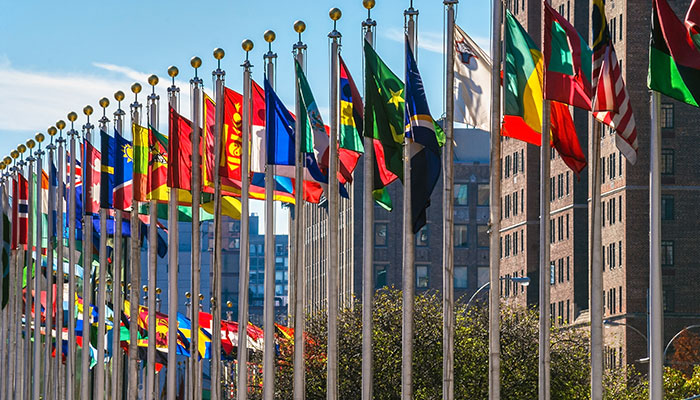
Still, the UN has faced tough times before – over many decades during the Cold War, the Security Council was crippled by deep tensions between the US and the Soviet Union. The UN is not as sidelined or divided today as it was then. However, as the relationship between China and the US sours, the achievements of global co-operation are being eroded.
The way in which people speak about the UN often implies a level of coherence and bureaucratic independence that the UN rarely possesses. A failure of the UN is normally better understood as a failure of international co-operation.
We see this recently in the UN’s inability to deal with crises from the ethnic cleansing of the Rohingya Muslims in Myanmar, to civil conflict in Syria, and the failure of the Security Council to adopt a COVID-19 resolution calling for ceasefires in conflict zones and a co-operative international response to the pandemic.
The UN administration is not primarily to blame for these failures; rather, the problem is the great powers – in the case of COVID-19, China and the US – refusing to co-operate.
Where states fail to agree, the UN is powerless to act.
Marking the 75th anniversary of the official formation of the UN, when 50 founding nations signed the UN Charter on June 26, 1945, we look at some of its key triumphs and resounding failures.
Five successes
1. Peacekeeping
The United Nations was created with the goal of being a collective security organisation. The UN Charter establishes that the use of force is only lawful either in self-defence or if authorised by the UN Security Council. The Security Council’s five permanent members, being China, US, UK, Russia and France, can veto any such resolution.
The UN’s consistent role in seeking to manage conflict is one of its greatest successes.
A key component of this role is peacekeeping. The UN under its second secretary-general, the Swedish statesman Dag Hammarskjöld – who was posthumously awarded the Nobel Peace prize after he died in a suspicious plane crash – created the concept of peacekeeping. Hammarskjöld was responding to the 1956 Suez Crisis, in which the US opposed the invasion of Egypt by its allies Israel, France and the UK.
UN peacekeeping missions involve the use of impartial and armed UN forces, drawn from member states, to stabilise fragile situations. “The essence of peacekeeping is the use of soldiers as a catalyst for peace rather than as the instruments of war,” said then UN Secretary-General Javier Pérez de Cuéllar, when the forces won the 1988 Nobel Peace Prize following missions in conflict zones in the Middle East, Africa, Asia, Central America and Europe.
However, peacekeeping also counts among the UN’s major failures.
2. Law of the Sea
Negotiated between 1973 and 1982, the UN Convention on the Law of the Sea (UNCLOS) set up the current international law of the seas. It defines states’ rights and creates concepts such as exclusive economic zones, as well as procedures for the settling of disputes, new arrangements for governing deep sea bed mining, and importantly, new provisions for the protection of marine resources and ocean conservation.
Mostly, countries have abided by the convention. There are various disputes that China has over the East and South China Seas which present a conflict between power and law, in that although UNCLOS creates mechanisms for resolving disputes, a powerful state isn’t necessarily going to submit to those mechanisms.
Secondly, on the conservation front, although UNCLOS is a huge step forward, it has failed to adequately protect oceans that are outside any state’s control. Ocean ecosystems have been dramatically transformed through overfishing. This is an ecological catastrophe that UNCLOS has slowed, but failed to address comprehensively.
3. Decolonisation
The idea of racial equality and of a people’s right to self-determination was discussed in the wake of World War I and rejected. After World War II, however, those principles were endorsed within the UN system, and the Trusteeship Council, which monitored the process of decolonisation, was one of the initial bodies of the UN.
Although many national independence movements only won liberation through bloody conflicts, the UN has overseen a process of decolonisation that has transformed international politics. In 1945, around one third of the world’s population lived under colonial rule. Today, there are less than 2 million people living in colonies.
When it comes to the world’s First Nations, however, the UN generally has done little to address their concerns, aside from the non-binding UN Declaration on the Rights of Indigenous Peoples of 2007.
4. Human rights
The Human Rights Declaration of 1948 for the first time set out fundamental human rights to be universally protected, recognising that the “inherent dignity and of the equal and inalienable rights of all members of the human family is the foundation of freedom, justice and peace in the world”.
Since 1948, 10 human rights treaties have been adopted – including conventions on the rights of children and migrant workers, and against torture and discrimination based on gender and race – each monitored by its own committee of independent experts.
The language of human rights has created a new framework for thinking about the relationship between the individual, the state and the international system. Although some people would prefer that political movements focus on ‘liberation’ rather than ‘rights’, the idea of human rights has made the individual person a focus of national and international attention.
5. Free trade
Depending on your politics, you might view the World Trade Organisation as a huge success, or a huge failure.
The WTO creates a near-binding system of international trade law with a clear and efficient dispute resolution process.
The majority Australian consensus is that the WTO is a success because it has been good for Australian famers especially, through its winding back of subsidies and tariffs.
However, the WTO enabled an era of globalisation which is now politically controversial.
Recently, the US has sought to disrupt the system. In addition to the trade war with China, the Trump Administration has also refused to appoint tribunal members to the WTO’s Appellate Body, so it has crippled the dispute resolution process. Of course, the Trump Administration is not the first to take issue with China’s trade strategies, which include subsidises for ‘State Owned Enterprises’ and demands that foreign firms transfer intellectual property in exchange for market access.
The existence of the UN has created a forum where nations can discuss new problems, and climate change is one of them. The Intergovernmental Panel on Climate Change (IPCC) was set up in 1988 to assess climate science and provide policymakers with assessments and options. In 1992, the UN Framework Convention on Climate Change created a permanent forum for negotiations.
However, despite an international scientific body in the IPCC, and 165 signatory nations to the climate treaty, global greenhouse gas emissions have continued to increase.
Under the Paris Agreement, even if every country meets its greenhouse gas emission targets we are still on track for ‘dangerous warming’. Yet, no major country is even on track to meet its targets; while emissions will probably decline this year as a result of COVID-19, atmospheric concentrations of greenhouse gases will still increase.
This illustrates a core conundrum of the UN in that it opens the possibility of global cooperation, but is unable to constrain states from pursuing their narrowly conceived self-interests. Deep co-operation remains challenging.
Five failures of the UN
1. Peacekeeping
During the Bosnian War, Dutch peacekeeping forces stationed in the town of Srebrenica, declared a ‘safe area’ by the UN in 1993, failed in 1995 to stop the massacre of more than 8000 Muslim men and boys by Bosnian Serb forces. This is one of the most widely discussed examples of the failures of international peacekeeping operations.
On the massacre’s 10th anniversary, then UN Secretary General Kofi Annan wrote that the UN had “made serious errors of judgement, rooted in a philosophy of impartiality”, contributing to a mass murder that would “haunt our history forever”.
If you look at some of the other infamous failures of peacekeeping missions – in places such as Rwanda, Somalia and Angola – it is the limited powers given to peacekeeping operations that have resulted in those failures.
2. The invasion of Iraq
The invasion of Iraq by the US in 2003, which was unlawful and without Security Council authorisation, reflects the fact that the UN is has very limited capacity to constrain the actions of great powers.
The Security Council designers created the veto power so that any of the five permanent members could reject a Council resolution, so in that way it is programmed to fail when a great power really wants to do something that the international community generally condemns.
In the case of the Iraq invasion, the US didn’t veto a resolution, but rather sought authorisation that it did not get. The UN, if you go by the idea of collective security, should have responded by defending Iraq against this unlawful use of force.
The invasion proved a humanitarian disaster with the loss of more than 400,000 lives, and many believe that it led to the emergence of the terrorist Islamic State.
3. Refugee crises
The UN brokered the 1951 Refugee Convention to address the plight of people displaced in Europe due to World War II; years later, the 1967 Protocol removed time and geographical restrictions so that the Convention can now apply universally (although many countries in Asia have refused to sign it, owing in part to its Eurocentric origins).
Despite these treaties, and the work of the UN High Commission for Refugees, there is somewhere between 30 and 40 million refugees, many of them, such as many Palestinians, living for decades outside their homelands. This is in addition to more than 40 million people displaced within their own countries.
While for a long time refugee numbers were reducing, in recent years, particularly driven by the Syrian conflict, there have been increases in the number of people being displaced.
During the COVID-19 crisis, boatloads of Rohingya refugees were turned away by port after port. This tragedy has echoes of pre-World War II when ships of Jewish refugees fleeing Nazi Germany were refused entry by multiple countries.
And as a catastrophe of a different kind looms, there is no international framework in place for responding to people who will be displaced by rising seas and other effects of climate change.
4. Conflicts without end
Across the world, there is a shopping list of unresolved civil conflicts and disputed territories.
Palestine and Kashmir are two of the longest-running failures of the UN to resolve disputed lands. More recent, ongoing conflicts include the civil wars in Syria and Yemen.
The common denominator of unresolved conflicts is either division among the great powers, or a lack of international interest due to the geopolitical stakes not being sufficiently high. For instance, the inaction during the Rwandan civil war in the 1990s was not due to a division among great powers, but rather a lack of political will to engage.
In Syria, by contrast, Russia and the US have opposing interests and back opposing sides: Russia backs the government of the Syrian dictator Bashar al-Assad, whereas the US does not.
5. Acting like it’s 1945
The UN is increasingly out of step with the reality of geopolitics today.
The permanent members of the Security Council reflect the division of power internationally at the end of World War II. The continuing exclusion of Germany, Japan, and rising powers such as India and Indonesia, reflects the failure to reflect the changing balance of power.
Also, bodies such as the IMF and the World Bank, which are part of the UN system, continue to be dominated by the West. In response, China has created potential rival institutions such as the Asian Infrastructure Investment Bank.
Western domination of UN institutions undermines their credibility. However, a more fundamental problem is that institutions designed in 1945 are a poor fit with the systemic global challenges – of which climate change is foremost – that we face today.