


How can we close the tech skills gap for older workers?-Case study of India and Poland
Background :-
We need to make sure that older workers and those already in the work force have the skills to take advantage of technological change. The ongoing debate on how advancing technology impact the demand for labor sets up a dichotomy. The future will be a utopia or a dystopia; as work reduces, society will face either unprecedented abundance or deepening inequality. But these transitions will not occur suddenly, nor will they be binary. And they will happen in very different ways depending on which firms adopt technology, and how workers might be able to respond. It is not just about youth in education; countries need to develop lifelong learning to ensure existing workers do not fall into a skills gap.
Two recent studies looking at Poland and India illuminate this unpredictability. In Poland the changes in the task content of jobs have been substantial. But they have also created jobs. In India the capital-augmenting technological progress has reduced labor share in gross value added, but also increased incomes of highly skilled, non-production workers. However, in both Poland and India, low skilled, production workers, and older workers have been disadvantaged as employers and economies adopt technology. Efforts to skill workers may hence need to focus on today’s workers and not only workforce entrants.
Poland: An unusual trend
Since the transition to a market economy in the 1990s, the structure of Poland’s economy changed. Employment in services grew by 2.25 million people between 1996 and 2014, equivalent to an 11.7% increase in the share of total employment. Employment in agriculture declined.
Modern services—which require higher-level skills, employ professionals, and often benefit from the use of information and communication technology (ICT)—grew the most. Similar changes occurred in manufacturing. Consequently, the intensity (the number of particular tasks performed by an average worker) of non-routine cognitive analytical and personal tasks rose between 1996 and 2014. At the same time, the intensity of routine and non-routine manual tasks declined.
However, unlike trends seen in many advanced economies, the intensity of routine cognitive tasks also rose, as Poland increased the number of medium-skilled, non-manual jobs.

A striking difference has emerged between younger cohorts (born between 1970 and 1994), who experienced task content evolution typical for most developed countries, and older cohorts (born between 1950 and 1969), who did not. Every new cohort entering the Polish labour market since the middle 1990s reached a higher intensity of non-routine cognitive tasks than that achieved by the previous cohort at the same age.
After a dozen years of a decline in the intensity of manual tasks in Poland, in 2014 workers born between 1970 and 1989 exhibited a lower than average intensity of manual tasks than workers born between 1950 and 1969, who have barely experienced any change since the mid-1990s. The developments among the younger group accounted for the majority of the overall change in task contents recorded between 1996 and 2014.
Educational opportunities are likely responsible for these inter-generational differences. Younger cohorts benefited from increasing tertiary education enrolment since the 1970s. From the viewpoint of task content of jobs, labour demand has largely accommodated the growing inflow of better-educated entrants without deteriorating their job prospects. Younger generations may be increasingly likely to work in computerized jobs (in line with Levy and Murnane, 2013). At the same time, both the education structure and task content of jobs held by older workers have barely changed.
India’s Organized Manufacturing Sector
The liberalization of the Indian economy in the 1990s created new opportunities for its manufacturing sector. Faced with easier access to foreign technology and imported capital goods, firms in the organized manufacturing sector adopted advanced techniques of production. This led to increased automation and a rise in the capital intensity of production.
This has raised much concern about the ability of the manufacturing sector to create jobs for India’s rapidly rising, largely low skilled and unskilled workforce. However, what has attracted less attention in the literature is the impact of capital augmenting technological progress on the distribution of income and wage inequality. Using enterprise level data from the India’s Annual Survey of Industries, we see that with growing capital intensity of production, the role of labour vis-à-vis capital has declined.
The share of total emoluments paid to labour fell from 34.7% to 22.4% of gross value added (GVA) between 2000-2001 and 2011-12. At the same time, the share of wages to workers in GVA declined steeply from 26.9% to 18.5%. Commensurately, the share of profits in GVA rose from 19.9% to 46.1% of GVA over the same period. This declining share of GVA going to workers rather than capital, raises the issue of equity in the distribution of income.
Importantly, even within the working class, inequalities have increased. The share of skilled labour such as non-production supervisory and managerial staff in the wage pie rose from 26.1% to 35.8%. At the same time that of unskilled production workers fell from 57.6% to 48.8% of the total wage bill. The rising disparity in the wages of skilled and unskilled workers is also reflected in the fact that the ratio of the average wages paid to them increased from 3.6 to 5.7 over the last decade.
These results underline the existence of capital-skill complementarity: firms with higher capital intensity employed a higher share of skilled workers and the wage differential between skilled and unskilled workers was higher in these firms. The fact that technological change has not been accompanied by a large increase in the supply of skilled workers has exacerbated wage disparity.
The Government of India’s ambitious Skill India program, with a target to skill 400 million workers over the next five year attempts to address this gap. However, assembly line methods of skill development which produce large numbers of electricians, machine operators, plumbers and other such narrowly skilled and certified persons will not address India’s skills challenge.
Takeaways
Technological advancement will create new types of jobs. In Poland, many younger workers benefited from education that allowed them to participate in an increasingly sophisticated, digital economy. But older workers may be left behind by technological progress and the emergence of new types of jobs. In India, workers that had the skills to use and manage more technologically-advanced processes and firms benefited. Poorly skilled workers lacked the skills to catch up with new modes of production.
Public policy will need to consider how to improve the skills or older and less-skilled workers to adapt to technological change. This is especially the case for countries with undeveloped systems of life-long learning. This means going beyond the important task of preparing young people for the future of work, but also ensuring that today’s (and tomorrow’s) workers are able to learn and update their skills, as enterprises adopt technology and seek higher-skilled workers
Why Zika is not the new Ebola
A rise in birth defects in the Americas is increasingly linked to Zika virus, previously undetected in that part of the world. Regardless of the underlying cause for these congenital abnormalities, the key to success lies in strong global health leadership. While some lessons from the Ebola outbreak can be applied, this new threat presents a different challenge and needs a different response.
Origins of Zika
In December 2015, the journal Nature asked infectious disease experts to predict which pathogens would trigger the next global crisis. None suggested Zika virus, a mosquito-borne disease first identified 70 years ago in Africa. Yet, a month later, the World Health Organization (WHO) is ‘deeply concerned’ and predicts up to four million cases in the Americas over the next year, including in the United States.
Zika virus infection causes mild, flu-like symptoms in most cases. What prompted concern was not the infection, but Brazil’s live birth information system (a system not readily available in less-developed countries) detecting a 30-fold increase in the number of babies born with microcephaly, a congenital defect limiting brain development. If the spreading virus is associated with microcephaly, as evidence increasingly suggests, the global social-economic repercussions could be severe. A large increase in the number of children born with profound learning disabilities worldwide would have severe human as well as socio-economic repercussions globally, causing productivity loss and high associated healthcare costs.
Very much like the West African Ebola outbreak, the spread of Zika virus was an almost unpredictable event – a characteristic common to most emerging infectious diseases that end up causing global crises. Unlike Ebola, it occurred in a part of the world where surveillance capacity enabled prompt detection of an unusual event.

Source: Center for Disease Control and Prevention.
Delayed reaction
When Brazil detected Zika virus in May 2015 there was no strong evidence of a link with microcephaly, and there is still no definite causal relationship, although evidence now suggests that infection during pregnancy is associated with microcephaly. Zika is also suspected to cause severe neurological symptoms in a small minority of infected adults. Regardless of the underlying cause − infectious, chemical or environmental causes are all plausible at the onset of the event − such a large-scale, unusual health event should prompt the WHO to take rapid action − particularly in light of the criticism the agency faced for delaying the Ebola response. The WHO International Health Regulations (IHR) emergency committee will convene on 1 February to decide whether the spread of Zika virus constitutes a Public Health Emergency of International Concern and advise on next steps.
An earlier convening could have affirmed WHO’s position as the global leader during health emergencies − a much needed message after the Ebola outbreak − and galvanized research into microcephaly and its underlying causes. The WHO’s Regional Office for the Americas (PAHO) has already been involved in supporting the investigations in Brazil. The Brazilian Ministry of Health declared a public health emergency on 11 November 2015 and PAHO issued an ‘epidemiological alert’ on 1 December, but these did not attract widespread global attention.
However, Zika is not Ebola; it does not spread from person to person, has a low mortality, and does not kill healthcare workers. Zika therefore warrants a different response. It does not require healthcare worker mobilization, treatment centres, contact tracing or safe burial teams. Rather the immediate needs are about research to determine the cause of the microcephaly, diagnostic capacity building and sustained efforts to reduce the mosquito population.
Much of this is already underway: Brazilian authorities inspected over seven million households looking for mosquito breeding sites. Their public health agency has generated key evidence for an association between Zika virus and microcephaly and has developed a rapid diagnostic test. The spread of Zika virus, detected in over 20 countries so far, has led to extraordinary measures, such as Brazil, Colombia and El Salvador asking women to delay pregnancy for up to two years, as well as widespread travel warnings to affected countries for pregnant women. What is needed now is strong leadership to ensure coordinated, consistent and proportionate advice to the public and a real focus on the critical research to help us understand what is really happening in Brazil and elsewhere.
While infections with Zika virus are currently largely concentrated in South and Central America, a rapid spread and mounting evidence of association with microcephaly means it could become a global crisis. Aedes aegypti, the mosquito that carries the virus, can be found in Southern Europe, Africa and the southern United States. There is additional concern that aedes albopictus, the highly aggressive tiger mosquito, could become a vector for Zika virus, further expanding areas at risk. It is unclear how Zika virus spread to the Americas. But like West Nile Virus, another mosquito-borne disease unknown to the Western hemisphere until 1999 but now endemic in North America, Zika could be here to stay.
The new threat
As the Ebola crisis wanes, it is clearer than ever that the nature or location of the next health crisis cannot be accurately predicted. The potential consequences of the Zika virus outbreak highlight once more the need for decisive and prompt global leadership, with robust surveillance and a flexible response capacity ready to face unexpected rather than predicted threats; lessons from Ebola will help but they are not the whole answer − the international community has to stop planning for last year’s problems and solve the current crisis.
Digital Media and Society :- Implications in a Hyperconnected Era
Innovations in technology, particularly in digital media,increasingly are changing the way people use Media,Entertainment & Information (MEI) services. More than this, the very fabric of daily life is being altered. People are interacting and connecting with each other in different ways. Their sensibilities and psychologies are changing.Blurring boundaries between private and professional lives,and the hunger for immediate information are driving online connection time. Trust in individuals’ relationship with digital media has become an increasingly prominent issue. In some ways, new generations are leading the evolution in changing behaviour, but in others, older generations are “catching up” surprisingly quickly.
Definitions
For the purposes of the Digital Media and Society report, digital media is defined as products and services that come from the media, entertainment and information industry and its subsectors. It includes digital platforms (e.g. websites and applications), digitized content (e.g. text, audio, video and images) and services (e.g.information, entertainment and communication) that can be accessed and consumed through different digital devices. People’s online behaviours shape their digital identities. Individuals may show different behaviour patterns in different contexts (e.g. private versus professional), which may be described as different digital personae.
User behaviour, preferences and concerns
People are spending more and more time online. Consider these approximate figures for 2015:-
–– 3 billion internet users
–– 2 billion active social media users
–– More than 1.6 billion mobile social accounts
While laptops and desktops are still most commonly used, mobile devices are gaining fast on them, causing a significant change in people’s engagement with digital media. Growth in mobile encounters is particularly strong in emerging countries, where consumers are leapfrogging from “no digital use” straight to “mobile use”.
Increased online connection time appears to be driven mainly by work or information seeking, followed by social and entertainment needs, based on findings from the five countries surveyed for this report. Digital media consumption for private and professional motives is more and more integrated, with individuals using digital media to move seamlessly back and forth between work and personal activities.
Sharing content has become a very important element of using digital media, with users most likely to share content that entertains, informs or inspires. Digital media also has made it possible for billions of online media consumers to participate in content creation. One-third of respondents to the Implications of Digital Media Survey conducted in October 2015 for this report, say they post written content, pictures or videos on social media sites either daily or a few times each week.
The main characteristics of today’s consumption patterns can be summarized as follows:
Mobile: People now spend an average of two hours daily on the mobile web, one-third of their total online time, with Millennials and digital media users in emerging countries emerging countries leading the mobile revolution.3 The obvious advantages are that mobile usage is less dependent on place and time, and devices are more affordable than laptops/personal computers (PCs).
Social and interactive: Social networking is by far the most popular online activity, clocking in at an average of 1.8 hours or 30% of daily online time.4
Flexible and personalized: Users can have a more active role and more control over the digital media offerings they use and engage, compared with traditional media. User accounts and cookies allow for customization of content displayed based on user characteristics and usage patterns.
Fast, instant and convenient: Fast internet and new technologies (hardware and software) allow for easier access and use, and enriched content.
More content: As content creation and distribution become simpler, a greater amount of content and services are becoming available. Content is more diverse, but consumption is potentially focused more on breadth than depth, as capacity is limited. The importance of content filtering, curation and recommendation has grown.
Collective: The possibility to connect, share, recommend and communicate creates a collective experience that shapes not only behaviours and preferences, but also a collective consciousness of shared beliefs, ideas and moral attitudes.
Fragmented and multi-channel: The huge number of channels and creators makes content ever more fragmented. Users access multiple platforms from multiple devices. Adapting content to these multiple platforms becomes imperative.
The higher the usage of digital media, the higher the willingness to pay: Increased connection and use of digital media should tip the revenue scale in industry’s favour, but innovation in creating better user experiences is crucial, as it is clearly evident that traditional digital advertising is losing its appeal and efficacy.
But new consumption patterns, along with the presence of more players and creators in the market, bring challenges.Consumer trust is at risk because of fundamental concerns about:
–– Truthfulness of content, given its volume, the large number of creators and sources, and need for more clarity around filtering mechanisms.
–– Integrity of the company/consumer value exchange.
–– Security of personal data and digital identities from cybercrime, given the significance of this information to a consumer’s professional, financial and social well-being
User engagement
Engaging consumers through digital media requires much more than simply “pushing” marketing content or services at them. Consumers have become savvy at ignoring ubiquitous display advertisements and more and more are using ad-blocking software. Instead, engagement requires providing valuable content that meets user needs for information, convenience andentertainment, stimulates content sharing and “pulls” in consumers. For any brand or service, critical elements of this engagement strategy include:-
––Entering into a conversation with consumers through social media
––Engaging employees to advocate the company through their social media activities
––Exhibiting socially responsible behaviour, particularly regarding use and control of users’ personal data.
The impact of digital media on individuals,organizations and society
The greater use of digital media today is changing people’s everyday lives and the way they connect and collaborate in the broader societal context, at work and in civil society. Much of the impact of this heightened use is beneficial to both individuals and society. Digital media has empowered people so that they no longer are passive bystanders or recipients in the transformations wrought by the digital revolution, but are actively shaping digital media and its meaning for society.
The benefits to both individuals and society of increased digital media usage include the following:
––Assists social interaction and empowers individuals, connecting the like-minded across vast distances, as well as connecting those usually separated by social, economic, cultural, political, religious and ideological boundaries
––Offers the means to increase civic participation and facilitates the creation of communities with a common interest or cause
––Enhances flexibility for workers and employers, boosting productivity and enabling greater work-life integration
––Facilitates education and life-long learning to build and source skills
The main risks of higher digital media consumption include the following:
–– Can be used with harmful intentions to spread propaganda and mobilize followers
–– Influences human decision making as a result of content filtering mechanisms that can target specific information to certain people with potentially discriminatory effects. This can happen through information sharing or manipulation of information,for example, during an electoral process (“digital gerrymandering”)
–– Potential for near term inequality due to the disruptions in labour markets and different skill requirements brought about by digital technology
–– Changes in social skills and sense of empathy as children and adults spend more time online. Facilitates bullying, harassment and social defamation, reflecting threats and patterns seen in the offline world
–– May impact mental and physical health if screen time is excessive. The harm includes stress, greater vulnerability to addictive behaviour, and less time spent in physical activity. Can pose health and developmental risks for young children if usage is not monitored
Way Forward:-
The public sector can help to update, promote and enforce evidence-based standards and regulations in order to facilitate the benefits of digital media and innovative solutions to mitigate the negative effects. It can also facilitate the creation of social institutions and programmes that assist individuals and the private sector in making digital culture healthier at home, in education, at work and in public life.
The private sector, principally industry, should consider the implications for individuals when designing platforms and services or creating content. The private sector can deepen efforts to build trust with consumers, for example, by becoming more transparent about how personal data are used and showing a corporate ethos of accountability and social responsibility. An effective tool is sponsoring public and non-profit organizations that help to promote beneficial use of digital media. From an employer’s perspective, organizations should forge a strategy to integrate digital media and technology into workflows, and should be proactive in addressing the opportunities and pitfalls that increased connectivity brings to the business and employees.
Finally, individuals are encouraged to enhance their digital literacy and skills, and use digital media responsibly. Individuals thus can protect themselves and others, especially those who are vulnerable. Individual scan also get involved with civic organizations and NGOs on digital media issues that have an impact on their lives.
Pradhan Mantri Kaushal VikasYojana
Background:-PMKVY completes 10 lakh enrolments under Skill India, 70% have completed their skill trainings since its launch.Pradhan Mantri Kaushal VikasYojana (PMKVY), the flagship of Ministry of Skill Development and Entrepreneurship has completed 10 lakh enrolments under the scheme.
The scheme has been implemented by National Skill Development Corporation (NSDC) through a network of 1012 training partners affiliated to the scheme.
Pradhan Mantri Kaushal Vikas Yojana (PMKVY):
This is the flagship schemeof government of India for skill training of youth being implemented by the Ministry of Skill Development and Entrepreneurship through the National Skill Development Corporation (NSDC). The scheme will cover 24 lakh persons.
- Skill training would be done based on the National Skill Qualification Framework (NSQF) and industry led standards.
- Under the scheme, a monetary reward is given to trainees on assessment and certification by third party assessment bodies.
- Focus under the PMKVY would be on improved curricula, better pedagogy and better trained instructors. Training would include soft skills, personal grooming, behavioral change for cleanliness, good work ethics.
- Skill Development Management System (SDMS) would be put in place to verify and record details of all training centres a certain quality of training locations and courses.
- Biometric system and video recording of the training process would be put in place where feasible.
- A good grievance redressal system being put in place to address grievances relating to implementation of the scheme. An online citizen portal to disseminate information about the scheme.
Genetically Modified Crops- the good , the bad and the unknown
Background :- The government has assured that the commercial release of the genetically modified mustard will not be approved without due process. In this regard, the Genetic Engineering Appraisal Committee (GEAC) has put on hold any decision on it for now.The GEAC,being the apex body to accord approval for large-scale use and commercial release of genetically modified organisms in India, discussed safety issues of GM mustard’s application, but refrained from taking a final decision.
GM mustard
- The GM variant, called DMH11 (Dhara Mustard Hybrid 11), is said to deliver 25-30% higher mustard-seed yields compared to the best “check” varieties currently being grown in the country.
Government’s Stand
- The government indicated that the introduction of GM crops would happen only if other avenues of increasing production were not available.
- The GEAC has prepared a time-bound “roadmap” for taking a final decision on DMH11 mustard that involves holding public consultations as well. If the roadmap is followed, the hybrid would be back to the GEAC for approval by the end of May.
GM Crop
A GM or transgenic crop is a plant that has a novel combination of genetic material obtained through the use of modern biotechnology.
- For example, a GM crop can contain a gene(s) that has been artificially inserted instead of the plant acquiring it through pollination.
- The resulting plant is said to be “genetically modified” although in reality all crops have been “genetically modified” from their original wild state by domestication, selection, and controlled breeding over long periods of time.
Potential benefits:-
- Higher yield
- Reduced input cost
- Increased farm profit and economic assurance for the farmers on good return
- Improvement in health and the environment.
Potential risks:-
- Danger looms on unintentionally introducing allergens or other antinutrition factors in foods.
- Gene escape from cultivated crops into wild relatives.
- The potential of pests to evolve resistance to the toxins produced by GM crops.
- The risk of these toxins affecting non-target organisms and harming the beneficial ones.
Analysis:- The core of the issue is rather simple- “it is unknown” . The benefits can be seen instantly but the harmful effects on health and crop ecosystem looms large.The darker zone of unintended harm is what makes the GM crop less attractive and in this regard the government’s decision to follow the due process is welcome and treating it as a measure of last resort is good.
Source- The Hindu,Pib,WeForum etc
Recent Posts
The United Nations has shaped so much of global co-operation and regulation that we wouldn’t recognise our world today without the UN’s pervasive role in it. So many small details of our lives – such as postage and copyright laws – are subject to international co-operation nurtured by the UN.
In its 75th year, however, the UN is in a difficult moment as the world faces climate crisis, a global pandemic, great power competition, trade wars, economic depression and a wider breakdown in international co-operation.
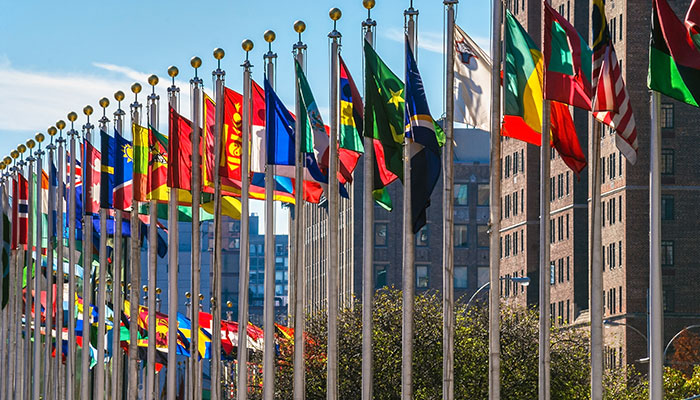
Still, the UN has faced tough times before – over many decades during the Cold War, the Security Council was crippled by deep tensions between the US and the Soviet Union. The UN is not as sidelined or divided today as it was then. However, as the relationship between China and the US sours, the achievements of global co-operation are being eroded.
The way in which people speak about the UN often implies a level of coherence and bureaucratic independence that the UN rarely possesses. A failure of the UN is normally better understood as a failure of international co-operation.
We see this recently in the UN’s inability to deal with crises from the ethnic cleansing of the Rohingya Muslims in Myanmar, to civil conflict in Syria, and the failure of the Security Council to adopt a COVID-19 resolution calling for ceasefires in conflict zones and a co-operative international response to the pandemic.
The UN administration is not primarily to blame for these failures; rather, the problem is the great powers – in the case of COVID-19, China and the US – refusing to co-operate.
Where states fail to agree, the UN is powerless to act.
Marking the 75th anniversary of the official formation of the UN, when 50 founding nations signed the UN Charter on June 26, 1945, we look at some of its key triumphs and resounding failures.
Five successes
1. Peacekeeping
The United Nations was created with the goal of being a collective security organisation. The UN Charter establishes that the use of force is only lawful either in self-defence or if authorised by the UN Security Council. The Security Council’s five permanent members, being China, US, UK, Russia and France, can veto any such resolution.
The UN’s consistent role in seeking to manage conflict is one of its greatest successes.
A key component of this role is peacekeeping. The UN under its second secretary-general, the Swedish statesman Dag Hammarskjöld – who was posthumously awarded the Nobel Peace prize after he died in a suspicious plane crash – created the concept of peacekeeping. Hammarskjöld was responding to the 1956 Suez Crisis, in which the US opposed the invasion of Egypt by its allies Israel, France and the UK.
UN peacekeeping missions involve the use of impartial and armed UN forces, drawn from member states, to stabilise fragile situations. “The essence of peacekeeping is the use of soldiers as a catalyst for peace rather than as the instruments of war,” said then UN Secretary-General Javier Pérez de Cuéllar, when the forces won the 1988 Nobel Peace Prize following missions in conflict zones in the Middle East, Africa, Asia, Central America and Europe.
However, peacekeeping also counts among the UN’s major failures.
2. Law of the Sea
Negotiated between 1973 and 1982, the UN Convention on the Law of the Sea (UNCLOS) set up the current international law of the seas. It defines states’ rights and creates concepts such as exclusive economic zones, as well as procedures for the settling of disputes, new arrangements for governing deep sea bed mining, and importantly, new provisions for the protection of marine resources and ocean conservation.
Mostly, countries have abided by the convention. There are various disputes that China has over the East and South China Seas which present a conflict between power and law, in that although UNCLOS creates mechanisms for resolving disputes, a powerful state isn’t necessarily going to submit to those mechanisms.
Secondly, on the conservation front, although UNCLOS is a huge step forward, it has failed to adequately protect oceans that are outside any state’s control. Ocean ecosystems have been dramatically transformed through overfishing. This is an ecological catastrophe that UNCLOS has slowed, but failed to address comprehensively.
3. Decolonisation
The idea of racial equality and of a people’s right to self-determination was discussed in the wake of World War I and rejected. After World War II, however, those principles were endorsed within the UN system, and the Trusteeship Council, which monitored the process of decolonisation, was one of the initial bodies of the UN.
Although many national independence movements only won liberation through bloody conflicts, the UN has overseen a process of decolonisation that has transformed international politics. In 1945, around one third of the world’s population lived under colonial rule. Today, there are less than 2 million people living in colonies.
When it comes to the world’s First Nations, however, the UN generally has done little to address their concerns, aside from the non-binding UN Declaration on the Rights of Indigenous Peoples of 2007.
4. Human rights
The Human Rights Declaration of 1948 for the first time set out fundamental human rights to be universally protected, recognising that the “inherent dignity and of the equal and inalienable rights of all members of the human family is the foundation of freedom, justice and peace in the world”.
Since 1948, 10 human rights treaties have been adopted – including conventions on the rights of children and migrant workers, and against torture and discrimination based on gender and race – each monitored by its own committee of independent experts.
The language of human rights has created a new framework for thinking about the relationship between the individual, the state and the international system. Although some people would prefer that political movements focus on ‘liberation’ rather than ‘rights’, the idea of human rights has made the individual person a focus of national and international attention.
5. Free trade
Depending on your politics, you might view the World Trade Organisation as a huge success, or a huge failure.
The WTO creates a near-binding system of international trade law with a clear and efficient dispute resolution process.
The majority Australian consensus is that the WTO is a success because it has been good for Australian famers especially, through its winding back of subsidies and tariffs.
However, the WTO enabled an era of globalisation which is now politically controversial.
Recently, the US has sought to disrupt the system. In addition to the trade war with China, the Trump Administration has also refused to appoint tribunal members to the WTO’s Appellate Body, so it has crippled the dispute resolution process. Of course, the Trump Administration is not the first to take issue with China’s trade strategies, which include subsidises for ‘State Owned Enterprises’ and demands that foreign firms transfer intellectual property in exchange for market access.
The existence of the UN has created a forum where nations can discuss new problems, and climate change is one of them. The Intergovernmental Panel on Climate Change (IPCC) was set up in 1988 to assess climate science and provide policymakers with assessments and options. In 1992, the UN Framework Convention on Climate Change created a permanent forum for negotiations.
However, despite an international scientific body in the IPCC, and 165 signatory nations to the climate treaty, global greenhouse gas emissions have continued to increase.
Under the Paris Agreement, even if every country meets its greenhouse gas emission targets we are still on track for ‘dangerous warming’. Yet, no major country is even on track to meet its targets; while emissions will probably decline this year as a result of COVID-19, atmospheric concentrations of greenhouse gases will still increase.
This illustrates a core conundrum of the UN in that it opens the possibility of global cooperation, but is unable to constrain states from pursuing their narrowly conceived self-interests. Deep co-operation remains challenging.
Five failures of the UN
1. Peacekeeping
During the Bosnian War, Dutch peacekeeping forces stationed in the town of Srebrenica, declared a ‘safe area’ by the UN in 1993, failed in 1995 to stop the massacre of more than 8000 Muslim men and boys by Bosnian Serb forces. This is one of the most widely discussed examples of the failures of international peacekeeping operations.
On the massacre’s 10th anniversary, then UN Secretary General Kofi Annan wrote that the UN had “made serious errors of judgement, rooted in a philosophy of impartiality”, contributing to a mass murder that would “haunt our history forever”.
If you look at some of the other infamous failures of peacekeeping missions – in places such as Rwanda, Somalia and Angola – it is the limited powers given to peacekeeping operations that have resulted in those failures.
2. The invasion of Iraq
The invasion of Iraq by the US in 2003, which was unlawful and without Security Council authorisation, reflects the fact that the UN is has very limited capacity to constrain the actions of great powers.
The Security Council designers created the veto power so that any of the five permanent members could reject a Council resolution, so in that way it is programmed to fail when a great power really wants to do something that the international community generally condemns.
In the case of the Iraq invasion, the US didn’t veto a resolution, but rather sought authorisation that it did not get. The UN, if you go by the idea of collective security, should have responded by defending Iraq against this unlawful use of force.
The invasion proved a humanitarian disaster with the loss of more than 400,000 lives, and many believe that it led to the emergence of the terrorist Islamic State.
3. Refugee crises
The UN brokered the 1951 Refugee Convention to address the plight of people displaced in Europe due to World War II; years later, the 1967 Protocol removed time and geographical restrictions so that the Convention can now apply universally (although many countries in Asia have refused to sign it, owing in part to its Eurocentric origins).
Despite these treaties, and the work of the UN High Commission for Refugees, there is somewhere between 30 and 40 million refugees, many of them, such as many Palestinians, living for decades outside their homelands. This is in addition to more than 40 million people displaced within their own countries.
While for a long time refugee numbers were reducing, in recent years, particularly driven by the Syrian conflict, there have been increases in the number of people being displaced.
During the COVID-19 crisis, boatloads of Rohingya refugees were turned away by port after port. This tragedy has echoes of pre-World War II when ships of Jewish refugees fleeing Nazi Germany were refused entry by multiple countries.
And as a catastrophe of a different kind looms, there is no international framework in place for responding to people who will be displaced by rising seas and other effects of climate change.
4. Conflicts without end
Across the world, there is a shopping list of unresolved civil conflicts and disputed territories.
Palestine and Kashmir are two of the longest-running failures of the UN to resolve disputed lands. More recent, ongoing conflicts include the civil wars in Syria and Yemen.
The common denominator of unresolved conflicts is either division among the great powers, or a lack of international interest due to the geopolitical stakes not being sufficiently high. For instance, the inaction during the Rwandan civil war in the 1990s was not due to a division among great powers, but rather a lack of political will to engage.
In Syria, by contrast, Russia and the US have opposing interests and back opposing sides: Russia backs the government of the Syrian dictator Bashar al-Assad, whereas the US does not.
5. Acting like it’s 1945
The UN is increasingly out of step with the reality of geopolitics today.
The permanent members of the Security Council reflect the division of power internationally at the end of World War II. The continuing exclusion of Germany, Japan, and rising powers such as India and Indonesia, reflects the failure to reflect the changing balance of power.
Also, bodies such as the IMF and the World Bank, which are part of the UN system, continue to be dominated by the West. In response, China has created potential rival institutions such as the Asian Infrastructure Investment Bank.
Western domination of UN institutions undermines their credibility. However, a more fundamental problem is that institutions designed in 1945 are a poor fit with the systemic global challenges – of which climate change is foremost – that we face today.