


The illusion of equity in the education:-
Background :-As the Right to Education (RTE) Act just completed five years of operation, it is time to take note of some facts. Kerala became the first State to achieve 100 per cent primary education, but in Uttar Pradesh, only 12 out of 75 districts have admitted students from disadvantaged groups to private schools. The Act mandates that schools reserve 25 per cent seats for these students. There are rumours that due to the pressure exerted by the private schools’ lobby, Karnataka may dilute the Act. A large number of Dalits, Adivasis and girls discontinue education because of discrimination in schools. And more than 60 per cent of urban primary schools are overcrowded, and about 50 per cent of Indian students cannot do basic mathematics or read a short story when they complete elementary education.
Equitable quality education
Universalising education involves issues of both distributive justice and quality. While the former concerns taking education to marginalised communities, the latter asks, ‘what counts as meaningful education?’
Considering that inadequate education affects the disadvantaged groups more severely, it is a possibility that these groups will end up with restricted opportunities and diminished outcomes given the market-driven economy we live in.
The RTE, therefore, entails the right to equitable quality education. It is with this aim that India enacted the Right of Children to Free and Compulsory Education Act, 2009.
According to the 2011 Census, the average literacy rates of people aged above 15 among Scheduled Castes (SCs) and Scheduled Tribes (STs) are about 9 per cent and 17.4 per cent less than the national average, respectively.
The female literacy rate is 19.5 per cent less than that of males. This difference increases to 23 per cent and 23.5 per cent among the SCs and STs, respectively, indicating the double discrimination faced by Dalit and Adivasi women. The dropout rates among SCs and STs are significantly higher than the national average and more girls discontinue schooling than boys. Of course, there is a wide variation across States and the gap is wider in rural areas as compared to urban, but these statistics suggest significant inequalities in the distribution of educational opportunities.
The Annual Status of Education Report (ASER) 2014 reveals that enrolment in private schools has increased from 18.7 per cent in 2006 to 30.8 per cent in 2014. But has this increase been accompanied by a proportionate inclusion of disadvantaged groups?
The National University of Educational Planning and Administration’s 2011-12 report shows that only about 16 per cent of students from SCs and STs attend private schools and the average Indian household spends five times more money on each child annually if s/he is enrolled in a private school compared to a government school. It is reasonable to say that private schools are ordinarily more accessible to higher income groups.
ASER reports suggest that private schools fare only marginally better in terms of imparting quality education compared to government schools. While the ASER methodology of quantifying learning has been disputed, these statistics suggest that our education system has fared poorly on both equity and quality parameters.
The Constitution provides a flexible framework for a welfare state. Article 39 directs the state to frame policies that distribute the “ownership and control of the material resources of the community” such that it serves the “common good”, and “provide opportunities and facilities that enable children to develop in a healthy manner in conditions of freedom and dignity”.
While Directive Principles are non-justiciable, Article 37 commands that they shall be “fundamental in the governance of the country and it shall be the duty of the State to apply these principles in making laws”.
Initially, universal elementary education was a Directive Principle under Article 45. The fact that it was made a fundamental right vide the 86th Amendment does not jettison the egalitarian perspective that placed it in the same scheme as other Directive Principles, particularly those under Article 39.
The Kothari Commission recommended a common school system (CSS) to “bring the different social classes and groups together and thus promote the emergence of an egalitarian and integrated society”. It lamented that “instead of doing so, education itself is tending to increase social segregation and to perpetuate and widen class distinctions”. This results in the “anaemic and incomplete” education of both the rich and poor as it forecloses sharing of perspectives.
The CSS was adopted by both the 1968 and 1986 national policies on education. While the interventions from ‘Operation Blackboard’ to Sarva Shiksha Abhiyan brought universalisation and quality to the forefront, the CSS was somehow relegated to the background.
The road ahead
The RTE Act provides for minimum quality standards and mandates 25 per cent reservation for children belonging to weaker sections. This provision has caused much debate. The Ministry of Human Resource Development has clarified that “the larger objective [of this provision] is to provide a common place where children sit, eat and live together for at least eight years of their lives across caste, class and gender divides in order that it narrows down such divisions in our society”.
Four caveats could be issued here. One, in conceiving ‘disadvantaged groups’, we must also include children of sex workers, transgendered groups, disabled persons and minorities. Two, equality also means the right to be treated with dignity and respect. Three, the government must not abdicate its responsibility to make its schools inclusive. If Dalit children sit separately and clean toilets and girls perform stereotypical gender roles, then we have only engrafted inequality and entrenched hierarchies. Four, education itself needs to celebrate the diverse ways in which knowledge is transferred and acquired.
As the RTE Act emerges from its nascence and education statistics continue to disappoint on both quality and inclusion parameters, the government is deliberating the first education policy post-1991. Its success would depend on how it socialises the private and provides a vision for an equitable quality education.
Brief History on Education in India:-
| Year/Commission | Details |
| 1781 | Calcutta Madrash established by Warren Hastings to study Muslim Laws |
| 1791 | Sanskrit College , Benaras , by Jonathan Duncan to study Hindu law and philosophy |
| Charter act 1813 | One lakh rupees annually |
| 1817 | Raja Ram Mohan Ray and David Hare – Hindu College Calcutta |
| Macauley’s Minute | Favoured Anglicist |
| Indian learning inferior to European learning | |
| Creating a class ” Indian in blood and colour but English in tastes , in opinion, in morals and in intellect” | |
| Downward filtration Theory | |
| Wood’s Despatch/1854 | Magna Carta of English Education in India |
| Asked govt. to assume responsibility of Mass education and repudiated downward filtration theory | |
| Stress on Female and Vocational Education | |
| Secular education | |
| Grant-in-Aid to encourage private enterprise | |
| 1849 | Bethune school for female education |
| 1857 | University of Calcutta, |
| Agriculture University at Pusa, Bihar | |
| Roorkee Engineering College | |
| Hunter Commission/1882 | Primary and secondary education |
| Punjab University -1882 | |
| Allahabad University -1887 | |
| India Universities Act/ 1904 | Retrograde Measures by greater control in universities functioning and affiliation |
| Saddler report/ 1917-1919 | 12 yrs School course |
| Secondary education to be emphasized | |
| Separate board for secondary and intermediate education | |
| University should function as centralized and unitary residential college | |
| Hartog Committee /1929 | Deserving student should go for higher education and rest should go for vocational training |
| entry to university should be restricted | |
| Wardha Scheme of Basic Education /1937 (Zakir Hussain Committee) | learning through activity |
| basic handicraft in syllabus | |
| first 7 yrs free education | |
| child-centered and co-operative scheme | |
| Hindi till 8th standard and English afterwards | |
| Sergent Plan | pre-premary (3-6 yrs) |
| elementary (6-11yrs) | |
| high school (11-17 yrs) | |
| university (3 yrs course) | |
| High school – academic and vocational | |
| teacher’s training and physical education | |
| Radhakrishna Committee/1948 | 12 yrs pre-university education |
| 3 objectives – central, liberal and occupational | |
| rural universities modeled around Shantiniketan | |
| no over-crowding of colleges (100 students per college only | |
| university education in concurrent list | |
| University Grant Commission to be set up | |
| UGC – 1953, statutory status in 1956 | |
| Kothari commission /1964 | National pattern of education |
| National Policy on Education – 1968 | |
| Free and compulsory education till age of 14 | |
| 3 language formula | |
| 6% of national income for investment on education | |
| development of agriculture and industrial education | |
Maharashtra rolls out deradicalisation plan:-
To face the challenges posed by various home-grown extremists and the global Islamic State (IS) terrorists, Maharashtra state government has rolled out a deradicalisation programme for the minority community.
The plan, brought out by the State Home Department, is a 50-point socio-economic strategy with the aim of ‘bringing youth of the minority community into the mainstream’ and making coordinated efforts and policies in 13 sectors, including education, sports, urban planning, law and order, skill development, women and child, social justice, and health.
- The proposed responses drawn up against the threat of home-grown extremism include: plans to teach religious texts from all sects in minority schools and teaching merits of democratic States and demerits of dictatorships as a separate chapter in the Urdu textbooks.
- The plan aims to create an environment of solidarity and trust among the minority, and envisages different departments undertaking various schemes to reach out to the minority, implement a scheme a year, while setting aside 15% of their funds for the same.
- The State police has been directed to deal with religious extremism in the strictest possible manner. Individuals and organisations disturbing communal harmony, spreading propaganda on social websites and services, will also be dealt with strongly.
- The cops have been told to identify and reduce any feeling of communalism within the force and reach out to the minority community and win their hearts at all costs.
- As per this plan, the State Education Department will launch a mid-day meal scheme in Urdu schools, provide textbooks at subsidised rates, and teach Urdu as optional subject in 300 Marathi shalas (schools).
Cabinet approves formation of Joint Venture Companies with State Governments:-
The Union Cabinet has given its approval for allowing the Ministry of Railways to form Joint Venture Companies with the State Governments to mobilize resources for undertaking various rail infrastructure projects in States.
- Joint Venture exercise would ensure greater participation of State Governments in implementation of Railway Projects both in terms of financial participation as well as decision making process.
- This will also facilitate in faster statutory approvals and land acquisition.
- With this, various cement, steel, power plants etc. would also get the necessary rail link for transportation of their raw material and finished products.
Protecting India’s trade Interests:-
Background :-
Twelve Pacific rim countries, in October 2015, agreed on the Trans-Pacific Partnership (TPP), the largest regional trade agreement ever, which covers countries that account for 40% of the global economy.
- The aim of TPP is to ease the flow of goods, services and investments among them, and to strengthen the rules on labour standards, environmental issues, origin criteria and intellectual property.
- It is touted as the most ambitious of trade deals between these countries that have about 800 million people and account for 40% of the global trade.
- Though not part of it, TPP still holds significant lessons and warnings for India.
Impacts on India:-
The TPP will likely affect India’s exports to the 12 Pacific countries. According to one estimate, trade worth $2.7 billion will be diverted away from India. This number could increase to $3.8 billion if South Korea joins the club. The costs could be even higher if India is unable to participate in global supply chains due to the TPP’s rules on standards, labour and environment policies.
- Further, standardisation of intellectual property regimes across the TPP countries and rules on expropriation may make it more difficult for India to attract foreign investment over, say, a Vietnam.
- The TPP has even altered India’s bargaining power and negotiating positions.
Way ahead for India:-
Concluding other free trade negotiations:
Impelled by the looming onset of the TPP, India should conclude, on a priority basis, its ongoing free trade negotiations. These include the India-EU Bilateral Trade and Investment Agreement and the mega Regional Comprehensive Economic Partnership with the Association of Southeast Asian Nations, China and others. Benefits from these agreements will help mitigate some of the export losses that India may face in leather goods, textile, and plastics on account of trade diversion due to TPP. Aiming to diversify export destinations to hitherto untapped markets like Latin America and Africa would also help.
Protecting traditional knowledge:
India also needs to identify its trade interest areas and propose alternative negotiating templates. One such area is biopiracy, protection of traditional knowledge, and the link between the WTO’s Trade-Related Aspects of Intellectual Property Rights agreement and the Convention on Biological Diversity. There have been several instances of biopiracy in the past, of Indian traditional knowledge, such as the patenting of the wound-healing properties of haldi (turmeric). Being among the 12 mega biodiversity-rich countries, India needs to bring this issue to the negotiating table in its own free trade agreements.
Making products more cost-competitive:
On the domestic front, India should accelerate the process of making its products more cost-competitive. There is no denying that India’s infrastructural deficiency, including port congestion and poor road connectivity, is one of the main hurdles in attaining this cost competitiveness. Addressing these will have the dual effect of not only making India’s exports cost-competitive, but will also make them more attractive for international lead firms to integrate India in global value chains.
Having appropriate conformity-assessment procedures:
The government should launch a comprehensive initiative to enable Indian exporters to not only comply with standards prevalent in the importing market, but also demonstrate the compliance through appropriate conformity-assessment procedures. India should resist any attempt to converge its domestic public standards with the dominant private standards in TPP countries. If India’s public standards are harmonised with foreign standards, they will be equally applicable to domestic and export sales on account of the ‘national treatment’ principle of the WTO which prohibits less favourable treatment to imported products. The harmonised standards may result in most producers not only being excluded from export markets, but also being edged out of the domestic market, undermining the Make in India initiative in the process.
Ensuring WTO commitments are not violated:
India also needs to closely watch the regulatory regimes in TPP countries, ensuring that these countries do not violate their WTO commitments in the process of implementing the TPP. The WTO does allow a member to deviate from its obligations with respect to a free trade area; however, such a deviation is not unqualified. If a TPP country restricts the market access for non-TPP members such as India on account of higher labour standards, a potential violation of WTO provisions may arise, which India should not shy away from pursuing using the WTO’s dispute settlement mechanism.
Conclusion:
By not being part of the TPP, India will certainly incur losses on account of trade diversion. Yet, joining the TPP is not an option for the country. This would entail very heavy costs. Hence, the government should draw a cohesive trade policy approach on the international as well as domestic front, aimed at protecting and promoting India’s trade interests. Further, it needs to urgently strengthen its negotiating teams and re-establish its credibility to conclude big-ticket agreements.
India Signs an Agreement to Become an Associate Member State of European Molecular Biology Organisation
India through the Department of Biotechnology, Ministry of Science and Technology, has signed a Cooperation Agreement to acquire the status of the Associate Member State European Molecular Biology Organisation (EMBO).
Benefits:-
- This would strengthen scientific interaction and collaborative research between India and Europe in this field.
- With this, researchers working in India are now eligible to participate in all EMBO programmes and activities.
- Indian scientists can apply to EMBO’s programmes, such as long-term fellowships for postdoctoral researchers, short-term fellowships, courses and workshops, as well as the EMBO Young Investigator Programme.
About EMBO:
- EMBO is an organization of more than 1700 leading researchers that promotes excellence in the life sciences.
- The major goals of the organization are to support talented researchers at all stages of their careers, stimulate the exchange of scientific information.
- The organization is based in Germany.
Recent Posts
- Floods
- Cyclones
- Tornadoes and hurricanes (cyclones)
- Hailstorms
- Cloudburst
- Heat wave and cold wave
- Snow avalanches
- Droughts
- Sea erosion
- Thunder/ lightning
- Landslides and mudflows
- Earthquakes
- Large fires
- Dam failures and dam bursts
- Mine fires
- Epidemics
- Pest attacks
- Cattle epidemics
- Food poisoning
- Chemical and Industrial disasters
- Nuclear
- Forest fires
- Urban fires
- Mine flooding
- Oil Spill
- Major building collapse
- Serial bomb blasts
- Festival related disasters
- Electrical disasters and fires
- Air, road, and rail accidents
- Boat capsizing
- Village fire
- Coastal States, particularly on the East Coast and Gujarat are vulnerable to cyclones.
- 4 crore hectare landmass is vulnerable to floods
- 68 per cent of net sown area is vulnerable to droughts
- 55 per cent of total area is in seismic zones III- V, hence vulnerable to earthquakes
- Sub- Himalayan sector and Western Ghats are vulnerable to landslides.
- Mainstreaming of Disaster Risk Reduction in Developmental Strategy-Prevention and mitigation contribute to lasting improvement in safety and should beintegrated in the disaster management. The Government of India has adopted mitigation and prevention as essential components of their development strategy.
- Mainstreaming of National Plan and its Sub-Plan
- National Disaster Mitigation Fund
- National Earthquake Risk Mitigation Project (NERMP)
- National Building Code (NBC):- Earthquake resistant buildings
- National Cyclone Risk Mitigation Project (NCRMP)
- Integrated Coastal Zone Management Project (ICZMP)-The objective of the project is to assist GoI in building the national capacity for implementation of a comprehensive coastal management approach in the country and piloting the integrated coastal zone management approach in states of Gujarat, Orissa and West Bengal.
- National Flood Risk Mitigation Project (NFRMP)
- National Project for Integrated Drought Monitoring & Management
- National Vector Borne Diseases Control Programme (NVBDCP)- key programme
for prevention/control of outbreaks/epidemics of malaria, dengue, chikungunya etc., vaccines administered to reduce the morbidity and mortality due to diseases like measles, diphtheria, pertussis, poliomyelitis etc. Two key measures to prevent/control epidemics of water-borne diseases like cholera, viral hepatitis etc. include making available safe water and ensuring personal and domestic hygienic practices are adopted. - Training
- Education
- Research
- Awareness
- Hyogo Framework of Action- The Hyogo Framework of Action (HFA) 2005-2015 was adopted to work globally towards sustainable reduction of disaster losses in lives and in the social, economic and environmental assets of communities and countries.
- United Nations International Strategy for Disaster Reduction (UNISDR)-In order to build the resilience of nations and communities to disasters through the implementation of the HFA , the UNISDR strives to catalyze, facilitate and mobilise the
commitment and resources of national, regional and international stakeholders of the ISDR
system. - United Nation Disaster Management Team (UNDMT) –
- To ensure a prompt, effective and concerted country-level support to a governmental
response in the event of a disaster, at the central, state and sub-state levels, - To coordinate UN assistance to the government with respect to long term recovery, disaster mitigation and preparedness.
- To coordinate all disaster-related activities, technical advice and material assistance provided by UN agencies, as well as to take steps for optimal utilisation of resources by UN agencies.
- To ensure a prompt, effective and concerted country-level support to a governmental
- Global Facility for Disaster Risk Reduction (GFDRR):-
- GFDRR was set up in September 2006 jointly by the World Bank, donor partners (21countries and four international organisations), and key stakeholders of the International Strategy for Disaster Reduction (UN-ISDR). It is a long-term global partnership under the ISDR system established to develop and implement the HFA through a coordinated programme for reversing the trend in disaster losses by 2015.
- Its mission is to mainstream disaster reduction and climate change adaptation in a country’s development strategies to reduce vulnerability to natural hazards.
- ASEAN Region Forum (ARF)
- Asian Disaster Reduction Centre (ADRC)
- SAARC Disaster Management Centre (SDMC)
- Program for Enhancement of Emergency Response (PEER):-The Program for Enhancement of Emergency Response (PEER) is a regional training programme initiated in 1998 by the United States Agency for International Development’s, Office of U.S Foreign Disaster Assistance (USAID/OFDA) to strengthen disaster response capacities in Asia.
- Policy guidelines at the macro level that would inform and guide the preparation and
implementation of disaster management and development plans across sectors - Building in a culture of preparedness and mitigation
- Operational guidelines of integrating disaster management practices into development, and
specific developmental schemes for prevention and mitigation of disasters - Having robust early warning systems coupled with effective response plans at district, state
and national levels - Building capacity of all stakeholders
- Involving the community, NGOs, CSOs and the media at all stages of DM
- Addressing gender issues in disaster management planning and developing a strategy for
inclusive approach addressing the disadvantaged sections of the society towards disaster risk reduction. - Addressing climate risk management through adaptation and mitigation
- Micro disaster Insurance
- Flood Proofing
- Building Codes and Enforcement
- Housing Design and Finance
- Road and Infrastructure
A disaster is a result of natural or man-made causes that leads to sudden disruption of normal life, causing severe damage to life and property to an extent that available social and economic protection mechanisms are inadequate to cope.
The International Strategy for Disaster Reduction (ISDR) of the United Nations (U.N.) defines a hazard as “a potentially damaging physical event, phenomenon or human activity that may cause the loss of life or injury, property damage, social and economic disruption or environmental degradation.”
Disasters are classified as per origin, into natural and man-made disasters. As per severity, disasters are classified as minor or major (in impact). However, such classifications are more academic than real.
High Powered Committee (HPC) was constituted in August 1999 under the chairmanship of J.C.Pant. The mandate of the HPC was to prepare comprehensive model plans for disaster management at the national, state and district levels.
This was the first attempt in India towards a systematic comprehensive and holistic look at all disasters.
Thirty odd disasters have been identified by the HPC, which were grouped into the following five categories, based on generic considerations:-
Water and Climate Related:-
Geological:-
Biological:-
Chemical, industrial and nuclear:-
Accidental:-
India’s Key Vulnerabilities as articulated in the Tenth Plan, (2002-07) are as follows:

Vulnerability is defined as:-
“the extent to which a community, structure, service, or geographic area is likely to be damaged or disrupted by the impact of particular hazard, on account of their nature, construction and proximity to hazardous terrain or a disaster prone area”.
The concept of vulnerability therefore implies a measure of risk combined with the level of social and economic ability to cope with the resulting event in order to resist major disruption or loss.
Example:- The 1993 Marathwada earthquake in India left over 10,000 dead and destroyed houses and other properties of 200,000 households. However, the technically much more powerful Los Angeles earthquake of 1971 (taken as a benchmark in America in any debate on the much-apprehended seismic vulnerability of California) left over 55 dead.
Physical Vulnerability:-
Physical vulnerability relates to the physical location of people, their proximity to the hazard zone and standards of safety maintained to counter the effects.
The Indian subcontinent can be primarily divided into three geophysical regions with regard to vulnerability, broadly, as, the Himalayas, the Plains and the Coastal areas.
Socio-economic Vulnerability:-
The degree to which a population is affected by a calamity will not purely lie in the physical components of vulnerability but in contextual, relating to the prevailing social and economic conditions and its consequential effects on human activities within a given society.
Global Warming & Climate Change:-
Global warming is going to make other small local environmental issues seemingly insignificant, because it has the capacity to completely change the face of the Earth. Global warming is leading to shrinking glaciers and rising sea levels. Along with floods, India also suffers acute water shortages.
The steady shrinking of the Himalayan glaciers means the entire water system is being disrupted; global warming will cause even greater extremes. Impacts of El Nino and La Nina have increasingly led to disastrous impacts across the globe.
Scientifically, it is proven that the Himalayan glaciers are shrinking, and in the next fifty to sixty years they would virtually run out of producing the water levels that we are seeing now.
This will cut down drastically the water available downstream, and in agricultural economies like the plains of Uttar Pradesh (UP) and Bihar, which are poor places to begin with. That, as one may realise, would cause tremendous social upheaval.
Urban Risks:-
India is experiencing massive and rapid urbanisation. The population of cities in India is doubling in a period ranging just two decades according to the trends in the recent past.
It is estimated that by 2025, the urban component, which was only 25.7 per cent (1991) will be more than 50 per cent.
Urbanisation is increasing the risks at unprecedented levels; communities are becoming increasingly vulnerable, since high-density areas with poorly built and maintained infrastructure are subjected to natural hazards, environmental degradation, fires, flooding and earthquake.
Urbanisation dramatically increases vulnerability, whereby communities are forced to squat on environmentally unstable areas such as steep hillsides prone to landslide, by the side of rivers that regularly flood, or on poor quality ground, causing building collapse.
Most prominent amongst the disasters striking urban settlements frequently are, floods and fire, with incidences of earthquakes, landslides, droughts and cyclones. Of these, floods are more devastating due to their widespread and periodic impact.
Example: The 2005 floods of Maharashtra bear testimony to this. Heavy flooding caused the sewage system to overflow, which contaminated water lines. On August 11, the state government declared an epidemic of leptospirosis in Mumbai and its outskirts.
Developmental activities:-
Developmental activities compound the damaging effects of natural calamities. The floods in Rohtak (Haryana) in 1995 are an appropriate example of this. Even months after the floodwaters had receded; large parts of the town were still submerged.
Damage had not accrued due to floods, but due to water-logging which had resulted due to peculiar topography and poor land use planning.
Disasters have come to stay in the forms of recurring droughts in Orissa, the desertification of swaths of Gujarat and Rajasthan, where economic depredations continuously impact on already fragile ecologies and environmental degradation in the upstream areas of Uttar Pradesh and Bihar.
Floods in the plains are taking an increasing toll of life, environment, and property, amplified by a huge population pressure.
The unrestricted felling of forests, serious damage to mountain ecology, overuse of groundwater and changing patterns of cultivation precipitate recurring floods and droughts.
When forests are destroyed, rainwater runs off causing floods and diminishing the recharging of groundwater.
The spate of landslides in the Himalayas in recent years can be directly traced to the rampant deforestation and network of roads that have been indiscriminately laid in the name of development.
Destruction of mangroves and coral reefs has increased the vulnerability of coastal areas to hazards, such as storm surges and cyclones.
Commercialisation of coastal areas, particularly for tourism has increased unplanned development in these areas, which has increased disaster potential, as was demonstrated during the Tsunami in December 2004.
Environmental Stresses:- " Delhi-Case Study"
Every ninth student in Delhi’s schools suffers from Asthma. Delhi is the world’s fourth most polluted city.
Each year, poor environmental conditions in the city’s informal areas lead to epidemics.
Delhi has one of the highest road accident fatality ratios in the world. In many ways, Delhi reflects the sad state of urban centers within India that are exposed to risks, which are misconstrued and almost never taken into consideration for urban governance.
The main difference between modernism and postmodernism is that modernism is characterized by the radical break from the traditional forms of urban architecture whereas postmodernism is characterized by the self-conscious use of earlier styles and conventions.


Illustration of Disaster Cycle through Case Study:-
The processes covered by the disaster cycle can be illustrated through the case of the Gujarat Earthquake of 26 January 2001. The devastating earthquake killed thousands of people and destroyed hundreds of thousands of houses and other buildings.
The State Government as well as the National Government immediately mounted a largescale relief operation. The help of the Armed Forces was also taken.
Hundreds of NGOs from within the region and other parts of the country as well as from other countries of the world came to Gujarat with relief materials and personnel to help in the relief operations.
Relief camps were set up, food was distributed, mobile hospitals worked round the clock to help the injured; clothing, beddings, tents, and other commodities were distributed to the affected people over the next few weeks.
By the summer of 2001, work started on long-term recovery. House reconstruction programmes were launched, community buildings were reconstructed, and damaged infrastructure was repaired and reconstructed.
Livelihood programmes were launched for economic rehabilitation of the affected people.
In about two year’s time the state had bounced back and many of the reconstruction projects had taken the form of developmental programmes aiming to deliver even better infrastructure than what existed before the earthquake.
Good road networks, water distribution networks, communication networks, new schools, community buildings, health and education programmes, all worked towards developing the region.
The government as well as the NGOs laid significant emphasis on safe development practices. The buildings being constructed were of earthquake resistant designs.
Older buildings that had survived the earthquake were retrofitted in large numbers to strengthen them and to make them resistant to future earthquakes. Mason and engineer training programmes were carried out at a large scale to ensure that all future construction in the State is disaster resistant.
This case study shows how there was a disaster event during the earthquake, followed by immediate response and relief, then by recovery including rehabilitation and retrofitting, then by developmental processes.
The development phase included mitigation activities, and finally preparedness actions to face future disasters.
Then disaster struck again, but the impact was less than what it could have been, primarily due to better mitigation and preparedness efforts.

Looking at the relationship between disasters and development one can identify ‘four’ different dimensions to this relation:
1) Disasters can set back development
2) Disasters can provide development opportunities
3) Development can increase vulnerability and
4) Development can reduce vulnerability
The whole relationship between disaster and development depends on the development choice made by the individual, community and the nation who implement the development programmes.
The tendency till now has been mostly to associate disasters with negativities. We need to broaden our vision and work on the positive aspects associated with disasters as reflected below:

1)Evolution of Disaster Management in India
Disaster management in India has evolved from an activity-based reactive setup to a proactive institutionalized structure; from single faculty domain to a multi-stakeholder setup; and from a relief-based approach to a ‘multi-dimensional pro-active holistic approach for reducing risk’.
Over the past century, the disaster management in India has undergone substantive changes in its composition, nature and policy.
2)Emergence of Institutional Arrangement in India-
A permanent and institutionalised setup began in the decade of 1990s with set up of a disaster management cell under the Ministry of Agriculture, following the declaration of the decade of 1990 as the ‘International Decade for Natural Disaster Reduction’ (IDNDR) by the UN General Assembly.
Consequently, the disaster management division was shifted under the Ministry of Home Affairs in 2002
3)Disaster Management Framework:-
Shifting from relief and response mode, disaster management in India started to address the
issues of early warning systems, forecasting and monitoring setup for various weather related
hazards.

National Level Institutions:-National Disaster Management Authority (NDMA):-
The National Disaster Management Authority (NDMA) was initially constituted on May 30, 2005 under the Chairmanship of Prime Minister vide an executive order.
SDMA (State Level, DDMA(District Level) also present.
National Crisis Management Committee (NCMC)
Legal Framework For Disaster Management :-
 DMD- Disaster management Dept.
NIDM- National Institute of Disaster Management
NDRF – National Disaster Response Fund
Cabinet Committee on Disaster Management-

Location of NDRF Battallions(National Disaster Response Force):-
 CBRN- Chemical, Biological, Radiological and Nuclear
Policy and response to Climate Change :-
1)National Action Plan on Climate Change (NAPCC)-
National Action Plan on Climate Change identified Eight missions.
• National Solar Mission
• National Mission on Sustainable Habitat
• National Mission for Enhanced Energy Efficiency
• National Mission for Sustaining The Himalayan Ecosystem
• National Water Mission
• National Mission for Green India
• National Mission for Sustainable Agriculture
• National Mission for Strategic Knowledge on Climate Change
2)National Policy on Disaster Management (NPDM),2009-
The policy envisages a safe and disaster resilient India by developing a holistic, proactive, multi-disaster oriented and technologydriven strategy through a culture of prevention, mitigation, preparedness and response. The policy covers all aspects of disaster management including institutional and legal arrangements,financial arrangements, disaster prevention, mitigation and preparedness, techno-legal regime, response, relief and rehabilitation, reconstruction and recovery, capacity development, knowledge management, research and development. It focuses on the areas where action is needed and the institutional mechanism through which such action can be channelised.
Prevention and Mitigation Projects:-
Early Warning Nodal Agencies:-

Post Disaster Management :-Post disaster management responses are created according to the disaster and location. The principles being – Faster Recovery, Resilient Reconstruction and proper Rehabilitation.
Capacity Development:-
Components of capacity development includes :-
National Institute for Capacity Development being – National Institute of Disaster Management (NIDM)
International Cooperation-
Way Forward:-
Principles and Steps:-
The United Nations has shaped so much of global co-operation and regulation that we wouldn’t recognise our world today without the UN’s pervasive role in it. So many small details of our lives – such as postage and copyright laws – are subject to international co-operation nurtured by the UN.
In its 75th year, however, the UN is in a difficult moment as the world faces climate crisis, a global pandemic, great power competition, trade wars, economic depression and a wider breakdown in international co-operation.
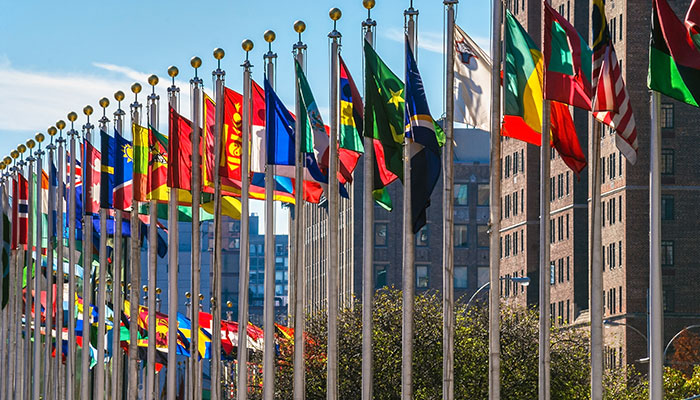
Still, the UN has faced tough times before – over many decades during the Cold War, the Security Council was crippled by deep tensions between the US and the Soviet Union. The UN is not as sidelined or divided today as it was then. However, as the relationship between China and the US sours, the achievements of global co-operation are being eroded.
The way in which people speak about the UN often implies a level of coherence and bureaucratic independence that the UN rarely possesses. A failure of the UN is normally better understood as a failure of international co-operation.
We see this recently in the UN’s inability to deal with crises from the ethnic cleansing of the Rohingya Muslims in Myanmar, to civil conflict in Syria, and the failure of the Security Council to adopt a COVID-19 resolution calling for ceasefires in conflict zones and a co-operative international response to the pandemic.
The UN administration is not primarily to blame for these failures; rather, the problem is the great powers – in the case of COVID-19, China and the US – refusing to co-operate.
Where states fail to agree, the UN is powerless to act.
Marking the 75th anniversary of the official formation of the UN, when 50 founding nations signed the UN Charter on June 26, 1945, we look at some of its key triumphs and resounding failures.
Five successes
1. Peacekeeping
The United Nations was created with the goal of being a collective security organisation. The UN Charter establishes that the use of force is only lawful either in self-defence or if authorised by the UN Security Council. The Security Council’s five permanent members, being China, US, UK, Russia and France, can veto any such resolution.
The UN’s consistent role in seeking to manage conflict is one of its greatest successes.
A key component of this role is peacekeeping. The UN under its second secretary-general, the Swedish statesman Dag Hammarskjöld – who was posthumously awarded the Nobel Peace prize after he died in a suspicious plane crash – created the concept of peacekeeping. Hammarskjöld was responding to the 1956 Suez Crisis, in which the US opposed the invasion of Egypt by its allies Israel, France and the UK.
UN peacekeeping missions involve the use of impartial and armed UN forces, drawn from member states, to stabilise fragile situations. “The essence of peacekeeping is the use of soldiers as a catalyst for peace rather than as the instruments of war,” said then UN Secretary-General Javier Pérez de Cuéllar, when the forces won the 1988 Nobel Peace Prize following missions in conflict zones in the Middle East, Africa, Asia, Central America and Europe.
However, peacekeeping also counts among the UN’s major failures.
2. Law of the Sea
Negotiated between 1973 and 1982, the UN Convention on the Law of the Sea (UNCLOS) set up the current international law of the seas. It defines states’ rights and creates concepts such as exclusive economic zones, as well as procedures for the settling of disputes, new arrangements for governing deep sea bed mining, and importantly, new provisions for the protection of marine resources and ocean conservation.
Mostly, countries have abided by the convention. There are various disputes that China has over the East and South China Seas which present a conflict between power and law, in that although UNCLOS creates mechanisms for resolving disputes, a powerful state isn’t necessarily going to submit to those mechanisms.
Secondly, on the conservation front, although UNCLOS is a huge step forward, it has failed to adequately protect oceans that are outside any state’s control. Ocean ecosystems have been dramatically transformed through overfishing. This is an ecological catastrophe that UNCLOS has slowed, but failed to address comprehensively.
3. Decolonisation
The idea of racial equality and of a people’s right to self-determination was discussed in the wake of World War I and rejected. After World War II, however, those principles were endorsed within the UN system, and the Trusteeship Council, which monitored the process of decolonisation, was one of the initial bodies of the UN.
Although many national independence movements only won liberation through bloody conflicts, the UN has overseen a process of decolonisation that has transformed international politics. In 1945, around one third of the world’s population lived under colonial rule. Today, there are less than 2 million people living in colonies.
When it comes to the world’s First Nations, however, the UN generally has done little to address their concerns, aside from the non-binding UN Declaration on the Rights of Indigenous Peoples of 2007.
4. Human rights
The Human Rights Declaration of 1948 for the first time set out fundamental human rights to be universally protected, recognising that the “inherent dignity and of the equal and inalienable rights of all members of the human family is the foundation of freedom, justice and peace in the world”.
Since 1948, 10 human rights treaties have been adopted – including conventions on the rights of children and migrant workers, and against torture and discrimination based on gender and race – each monitored by its own committee of independent experts.
The language of human rights has created a new framework for thinking about the relationship between the individual, the state and the international system. Although some people would prefer that political movements focus on ‘liberation’ rather than ‘rights’, the idea of human rights has made the individual person a focus of national and international attention.
5. Free trade
Depending on your politics, you might view the World Trade Organisation as a huge success, or a huge failure.
The WTO creates a near-binding system of international trade law with a clear and efficient dispute resolution process.
The majority Australian consensus is that the WTO is a success because it has been good for Australian famers especially, through its winding back of subsidies and tariffs.
However, the WTO enabled an era of globalisation which is now politically controversial.
Recently, the US has sought to disrupt the system. In addition to the trade war with China, the Trump Administration has also refused to appoint tribunal members to the WTO’s Appellate Body, so it has crippled the dispute resolution process. Of course, the Trump Administration is not the first to take issue with China’s trade strategies, which include subsidises for ‘State Owned Enterprises’ and demands that foreign firms transfer intellectual property in exchange for market access.
The existence of the UN has created a forum where nations can discuss new problems, and climate change is one of them. The Intergovernmental Panel on Climate Change (IPCC) was set up in 1988 to assess climate science and provide policymakers with assessments and options. In 1992, the UN Framework Convention on Climate Change created a permanent forum for negotiations.
However, despite an international scientific body in the IPCC, and 165 signatory nations to the climate treaty, global greenhouse gas emissions have continued to increase.
Under the Paris Agreement, even if every country meets its greenhouse gas emission targets we are still on track for ‘dangerous warming’. Yet, no major country is even on track to meet its targets; while emissions will probably decline this year as a result of COVID-19, atmospheric concentrations of greenhouse gases will still increase.
This illustrates a core conundrum of the UN in that it opens the possibility of global cooperation, but is unable to constrain states from pursuing their narrowly conceived self-interests. Deep co-operation remains challenging.
Five failures of the UN
1. Peacekeeping
During the Bosnian War, Dutch peacekeeping forces stationed in the town of Srebrenica, declared a ‘safe area’ by the UN in 1993, failed in 1995 to stop the massacre of more than 8000 Muslim men and boys by Bosnian Serb forces. This is one of the most widely discussed examples of the failures of international peacekeeping operations.
On the massacre’s 10th anniversary, then UN Secretary General Kofi Annan wrote that the UN had “made serious errors of judgement, rooted in a philosophy of impartiality”, contributing to a mass murder that would “haunt our history forever”.
If you look at some of the other infamous failures of peacekeeping missions – in places such as Rwanda, Somalia and Angola – it is the limited powers given to peacekeeping operations that have resulted in those failures.
2. The invasion of Iraq
The invasion of Iraq by the US in 2003, which was unlawful and without Security Council authorisation, reflects the fact that the UN is has very limited capacity to constrain the actions of great powers.
The Security Council designers created the veto power so that any of the five permanent members could reject a Council resolution, so in that way it is programmed to fail when a great power really wants to do something that the international community generally condemns.
In the case of the Iraq invasion, the US didn’t veto a resolution, but rather sought authorisation that it did not get. The UN, if you go by the idea of collective security, should have responded by defending Iraq against this unlawful use of force.
The invasion proved a humanitarian disaster with the loss of more than 400,000 lives, and many believe that it led to the emergence of the terrorist Islamic State.
3. Refugee crises
The UN brokered the 1951 Refugee Convention to address the plight of people displaced in Europe due to World War II; years later, the 1967 Protocol removed time and geographical restrictions so that the Convention can now apply universally (although many countries in Asia have refused to sign it, owing in part to its Eurocentric origins).
Despite these treaties, and the work of the UN High Commission for Refugees, there is somewhere between 30 and 40 million refugees, many of them, such as many Palestinians, living for decades outside their homelands. This is in addition to more than 40 million people displaced within their own countries.
While for a long time refugee numbers were reducing, in recent years, particularly driven by the Syrian conflict, there have been increases in the number of people being displaced.
During the COVID-19 crisis, boatloads of Rohingya refugees were turned away by port after port. This tragedy has echoes of pre-World War II when ships of Jewish refugees fleeing Nazi Germany were refused entry by multiple countries.
And as a catastrophe of a different kind looms, there is no international framework in place for responding to people who will be displaced by rising seas and other effects of climate change.
4. Conflicts without end
Across the world, there is a shopping list of unresolved civil conflicts and disputed territories.
Palestine and Kashmir are two of the longest-running failures of the UN to resolve disputed lands. More recent, ongoing conflicts include the civil wars in Syria and Yemen.
The common denominator of unresolved conflicts is either division among the great powers, or a lack of international interest due to the geopolitical stakes not being sufficiently high. For instance, the inaction during the Rwandan civil war in the 1990s was not due to a division among great powers, but rather a lack of political will to engage.
In Syria, by contrast, Russia and the US have opposing interests and back opposing sides: Russia backs the government of the Syrian dictator Bashar al-Assad, whereas the US does not.
5. Acting like it’s 1945
The UN is increasingly out of step with the reality of geopolitics today.
The permanent members of the Security Council reflect the division of power internationally at the end of World War II. The continuing exclusion of Germany, Japan, and rising powers such as India and Indonesia, reflects the failure to reflect the changing balance of power.
Also, bodies such as the IMF and the World Bank, which are part of the UN system, continue to be dominated by the West. In response, China has created potential rival institutions such as the Asian Infrastructure Investment Bank.
Western domination of UN institutions undermines their credibility. However, a more fundamental problem is that institutions designed in 1945 are a poor fit with the systemic global challenges – of which climate change is foremost – that we face today.