


1)Vertical Farming :-
- Vertical farming as a component of urban agriculture is the practice of cultivating plant life within a skyscraper greenhouse or on vertically inclined surfaces. A common version of vertical farming uses techniques similar to glass houses, where natural sunlight can be augmented with artificial lighting and metal reflectors.
- Ecologist Dickson Despommier argues that vertical farming is legitimate for environmental reasons. He claims that the cultivation of plant life within skyscrapers will produce less embedded energy and toxicity than plant life produced on natural landscapes. He moreover claims that natural landscapes are too toxic for natural, agricultural production, despite the ecological and environmental costs of extracting materials to build skyscrapers for the simple purpose of agricultural production.
- Criticism :-
- Opponents question the potential profitability of vertical farming. A detailed cost analysis of start-up costs, operation costs, and revenue has not been done. The extra cost of lighting, heating, and powering the vertical farm may negate any of the cost benefits received by the decrease in transportation expense
- During the growing season, the sun shines on a vertical surface at an extreme angle such that much less light is available to crops than when they are planted on flat land. Therefore, supplemental light, would be required in order to obtain economically viable yields. Few believe that power demands of vertical farming will be too expensive and noncompetitive with traditional farms using only free natural light
- Relevance in India :-
- Land is a a scarce commodity in India.
- Indian farmers are small and marginal farmers , save few.
- In a land of huge population and limited geography ,India needs to adopt to vertical farming given it is viable.This will solve issue of small land holdings and feeding 1.2 billion mouths and ensuring food security
- News related Item :-
- Antony John, a progressive farmer at Sakthikulangara in Kerala, harvesting vegetables from his vertical garden set up on the terrace of his house
- Antony uses Bio-char* and compost tea as recipe with soil being constituting only 5% of the total frame where plants are grown
- Kerala, is known for its acidic soil and hence not suitable for agriculture, however Antony’s unique method of vertical farming can be a solution to the problem
*Bio-char :-
- Biochar is charcoal used as a soil amendment. Like most charcoal, biochar is made from biomass via pyrolysis{(Pyrolysis is a thermochemical decomposition of organic material at elevated temperatures in the absence of oxygen (or any halogen)}. Biochar is under investigation as an approach to carbon sequestration to produce negative carbon dioxide emissions.
- Biochar is found in soils around the world as a result of vegetation fires and historic soil management practices. Intensive study of biochar-rich dark earths in the Amazon (terra preta), has led to a wider appreciation of biochar’s unique properties as a soil enhancer.Biochar can be an important tool to increase food security and cropland diversity in areas with severely depleted soils, scarce organic resources, and inadequate water and chemical fertilizer supplies.Biochar also improves water quality and quantity by increasing soil retention of nutrients and agrochemicals for plant and crop utilization. More nutrients stay in the soil instead of leaching into groundwater and causing pollution.
- It also reduces Acidity of soil as well.
2)Red – Sanders a.k.a Red Sandalwood :-
Prelude- Red-sanders has been in news since past few months. What important from UPSC perspective is red-sanders itself, not the news related to it, which is , of course has little/no value as long as UPSC preparation is concerned..
- Red sanders biologically known as – Pterocarpus santalinus (no necessary to remember) occurs in Southern Tropical Dry Deciduous Forests
-
It prefers lateritic and gravelly soil and cannot tolerate water logging
-
Red Sanders has a highly restrictive distribution in the South Eastern portion of Indian peninsula to which it is endemic
-
The Palakonda and Seshachalam hill ranges of Cuddapah-Chittoor districts of the State of Andhra Pradesh are its principal geographical range.
-
Use of red-sanders:- Red Sanders is said to be used in the making of oriental musical instruments like Shamisen, Koto and Erhu . It has a wide significance in religious practices and hence it has been smuggled at a large scale.
-
Recently smugglers and police conflict led to death of many smugglers. Given its endemic nature , it must be protected , while at the same time the commercial farming of red sanders can be promoted to meet the commercial needs.But due to its high incubation period , commercial farming is not viable at a personal economic activity , hence govt must take proactive action to increase the no. of red sanders trees in the wild through afforestation.
3) Terrorism, Internet and Anti -Radicalization Measures :-
- Youth and especially adolescence is a wonderful yet a dangerous age to be in .Most have an impressionist mind at this age.Teens are extremely susceptible to radicalization at this age.
- Given the terrorist propaganda and abundance of radicalizing literature availability over internet, recruiters for ISIS or any other terror organization are just a click away.
- The terrorist and their recruiting agencies are as close as they have ever been in the history , to the teens of various countries , even their propaganda is so strong that a mature reasoning mind even falls prey for their antics.
- It is in this context that Govt has adopted Anti-radicalizing measures :-
- Create positive Internet content
- Counter radicalization messages and its online promotion
- Penalizing the radicalizers
- Counseling the youth
- Making parents involvement more robust in this manner
Note:-This is a bigger debate indeed, and we are contemplating to write an essay for this topic as topic like this needs holistic analysis and only an essay could do justice to such topic.The Essay section will soon be updated with this issue.
4)Buffer Stock for Pulses :-
- Hoarding has been a major issue where the hoarders artificially create a supply -demand mismatch . Recently Govt raids across states led release of huge amount of pulses.
- To offset any artificial manipulation of supply-demand mismatch Govt has come up with Buffer Stock proposal for Pulses where in it will create a buffer of 3.5 Lakh ton of pulses by utilizing the recently created price stabilization fund (Rs-500 cr )
5) BrahMos missile test-fired from Indian Navy’s stealth destroyer INS Kochi, hits target:-
- The BrahMos (Hindi: brahmos, Russian: Брамос) is a short range ramjet supersonic cruise missile that can be launched from submarines, ships, aircraft or land. It is a joint venture between the Russian Federation’s NPO Mashinostroeyenia and India’s Defence Research and Development Organisation (DRDO) who have together formed BrahMos Aerospace Private Limited.It is based on the Russian P-800 Oniks cruise missile and other similar sea-skimming Russian cruise missile technology.
- The name BrahMos is a portmanteau formed from the names of two rivers, the Brahmaputra of India and the Moskva of Russia.
- It is the world’s fastest cruise missile in operation. A hypersonic version of the missile, BrahMos-II, is also presently under development with speed of Mach 7 to boost aerial fast strike capability.
Appeal:-
Dear Aspirants, If you find our initiatives useful , we request you to promote it in your circles ( Promote only if you believe in us and our strategy ). It keeps us inspired to outdo ourselves each time at UPSCTREE.COM and help you realize your goal.
Thank you
Receive Daily Updates
Recent Posts
The United Nations has shaped so much of global co-operation and regulation that we wouldn’t recognise our world today without the UN’s pervasive role in it. So many small details of our lives – such as postage and copyright laws – are subject to international co-operation nurtured by the UN.
In its 75th year, however, the UN is in a difficult moment as the world faces climate crisis, a global pandemic, great power competition, trade wars, economic depression and a wider breakdown in international co-operation.
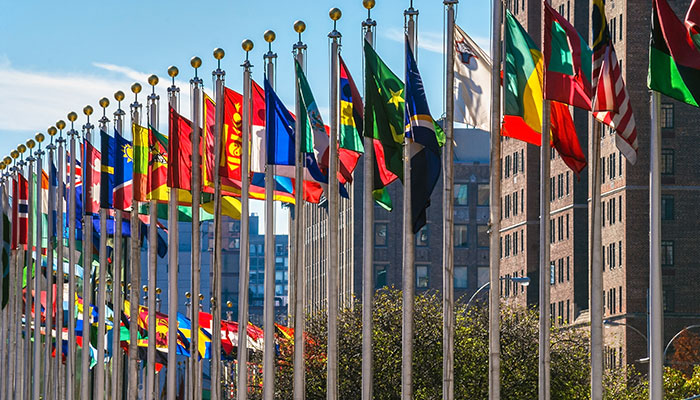
Still, the UN has faced tough times before – over many decades during the Cold War, the Security Council was crippled by deep tensions between the US and the Soviet Union. The UN is not as sidelined or divided today as it was then. However, as the relationship between China and the US sours, the achievements of global co-operation are being eroded.
The way in which people speak about the UN often implies a level of coherence and bureaucratic independence that the UN rarely possesses. A failure of the UN is normally better understood as a failure of international co-operation.
We see this recently in the UN’s inability to deal with crises from the ethnic cleansing of the Rohingya Muslims in Myanmar, to civil conflict in Syria, and the failure of the Security Council to adopt a COVID-19 resolution calling for ceasefires in conflict zones and a co-operative international response to the pandemic.
The UN administration is not primarily to blame for these failures; rather, the problem is the great powers – in the case of COVID-19, China and the US – refusing to co-operate.
Where states fail to agree, the UN is powerless to act.
Marking the 75th anniversary of the official formation of the UN, when 50 founding nations signed the UN Charter on June 26, 1945, we look at some of its key triumphs and resounding failures.
Five successes
1. Peacekeeping
The United Nations was created with the goal of being a collective security organisation. The UN Charter establishes that the use of force is only lawful either in self-defence or if authorised by the UN Security Council. The Security Council’s five permanent members, being China, US, UK, Russia and France, can veto any such resolution.
The UN’s consistent role in seeking to manage conflict is one of its greatest successes.
A key component of this role is peacekeeping. The UN under its second secretary-general, the Swedish statesman Dag Hammarskjöld – who was posthumously awarded the Nobel Peace prize after he died in a suspicious plane crash – created the concept of peacekeeping. Hammarskjöld was responding to the 1956 Suez Crisis, in which the US opposed the invasion of Egypt by its allies Israel, France and the UK.
UN peacekeeping missions involve the use of impartial and armed UN forces, drawn from member states, to stabilise fragile situations. “The essence of peacekeeping is the use of soldiers as a catalyst for peace rather than as the instruments of war,” said then UN Secretary-General Javier Pérez de Cuéllar, when the forces won the 1988 Nobel Peace Prize following missions in conflict zones in the Middle East, Africa, Asia, Central America and Europe.
However, peacekeeping also counts among the UN’s major failures.
2. Law of the Sea
Negotiated between 1973 and 1982, the UN Convention on the Law of the Sea (UNCLOS) set up the current international law of the seas. It defines states’ rights and creates concepts such as exclusive economic zones, as well as procedures for the settling of disputes, new arrangements for governing deep sea bed mining, and importantly, new provisions for the protection of marine resources and ocean conservation.
Mostly, countries have abided by the convention. There are various disputes that China has over the East and South China Seas which present a conflict between power and law, in that although UNCLOS creates mechanisms for resolving disputes, a powerful state isn’t necessarily going to submit to those mechanisms.
Secondly, on the conservation front, although UNCLOS is a huge step forward, it has failed to adequately protect oceans that are outside any state’s control. Ocean ecosystems have been dramatically transformed through overfishing. This is an ecological catastrophe that UNCLOS has slowed, but failed to address comprehensively.
3. Decolonisation
The idea of racial equality and of a people’s right to self-determination was discussed in the wake of World War I and rejected. After World War II, however, those principles were endorsed within the UN system, and the Trusteeship Council, which monitored the process of decolonisation, was one of the initial bodies of the UN.
Although many national independence movements only won liberation through bloody conflicts, the UN has overseen a process of decolonisation that has transformed international politics. In 1945, around one third of the world’s population lived under colonial rule. Today, there are less than 2 million people living in colonies.
When it comes to the world’s First Nations, however, the UN generally has done little to address their concerns, aside from the non-binding UN Declaration on the Rights of Indigenous Peoples of 2007.
4. Human rights
The Human Rights Declaration of 1948 for the first time set out fundamental human rights to be universally protected, recognising that the “inherent dignity and of the equal and inalienable rights of all members of the human family is the foundation of freedom, justice and peace in the world”.
Since 1948, 10 human rights treaties have been adopted – including conventions on the rights of children and migrant workers, and against torture and discrimination based on gender and race – each monitored by its own committee of independent experts.
The language of human rights has created a new framework for thinking about the relationship between the individual, the state and the international system. Although some people would prefer that political movements focus on ‘liberation’ rather than ‘rights’, the idea of human rights has made the individual person a focus of national and international attention.
5. Free trade
Depending on your politics, you might view the World Trade Organisation as a huge success, or a huge failure.
The WTO creates a near-binding system of international trade law with a clear and efficient dispute resolution process.
The majority Australian consensus is that the WTO is a success because it has been good for Australian famers especially, through its winding back of subsidies and tariffs.
However, the WTO enabled an era of globalisation which is now politically controversial.
Recently, the US has sought to disrupt the system. In addition to the trade war with China, the Trump Administration has also refused to appoint tribunal members to the WTO’s Appellate Body, so it has crippled the dispute resolution process. Of course, the Trump Administration is not the first to take issue with China’s trade strategies, which include subsidises for ‘State Owned Enterprises’ and demands that foreign firms transfer intellectual property in exchange for market access.
The existence of the UN has created a forum where nations can discuss new problems, and climate change is one of them. The Intergovernmental Panel on Climate Change (IPCC) was set up in 1988 to assess climate science and provide policymakers with assessments and options. In 1992, the UN Framework Convention on Climate Change created a permanent forum for negotiations.
However, despite an international scientific body in the IPCC, and 165 signatory nations to the climate treaty, global greenhouse gas emissions have continued to increase.
Under the Paris Agreement, even if every country meets its greenhouse gas emission targets we are still on track for ‘dangerous warming’. Yet, no major country is even on track to meet its targets; while emissions will probably decline this year as a result of COVID-19, atmospheric concentrations of greenhouse gases will still increase.
This illustrates a core conundrum of the UN in that it opens the possibility of global cooperation, but is unable to constrain states from pursuing their narrowly conceived self-interests. Deep co-operation remains challenging.
Five failures of the UN
1. Peacekeeping
During the Bosnian War, Dutch peacekeeping forces stationed in the town of Srebrenica, declared a ‘safe area’ by the UN in 1993, failed in 1995 to stop the massacre of more than 8000 Muslim men and boys by Bosnian Serb forces. This is one of the most widely discussed examples of the failures of international peacekeeping operations.
On the massacre’s 10th anniversary, then UN Secretary General Kofi Annan wrote that the UN had “made serious errors of judgement, rooted in a philosophy of impartiality”, contributing to a mass murder that would “haunt our history forever”.
If you look at some of the other infamous failures of peacekeeping missions – in places such as Rwanda, Somalia and Angola – it is the limited powers given to peacekeeping operations that have resulted in those failures.
2. The invasion of Iraq
The invasion of Iraq by the US in 2003, which was unlawful and without Security Council authorisation, reflects the fact that the UN is has very limited capacity to constrain the actions of great powers.
The Security Council designers created the veto power so that any of the five permanent members could reject a Council resolution, so in that way it is programmed to fail when a great power really wants to do something that the international community generally condemns.
In the case of the Iraq invasion, the US didn’t veto a resolution, but rather sought authorisation that it did not get. The UN, if you go by the idea of collective security, should have responded by defending Iraq against this unlawful use of force.
The invasion proved a humanitarian disaster with the loss of more than 400,000 lives, and many believe that it led to the emergence of the terrorist Islamic State.
3. Refugee crises
The UN brokered the 1951 Refugee Convention to address the plight of people displaced in Europe due to World War II; years later, the 1967 Protocol removed time and geographical restrictions so that the Convention can now apply universally (although many countries in Asia have refused to sign it, owing in part to its Eurocentric origins).
Despite these treaties, and the work of the UN High Commission for Refugees, there is somewhere between 30 and 40 million refugees, many of them, such as many Palestinians, living for decades outside their homelands. This is in addition to more than 40 million people displaced within their own countries.
While for a long time refugee numbers were reducing, in recent years, particularly driven by the Syrian conflict, there have been increases in the number of people being displaced.
During the COVID-19 crisis, boatloads of Rohingya refugees were turned away by port after port. This tragedy has echoes of pre-World War II when ships of Jewish refugees fleeing Nazi Germany were refused entry by multiple countries.
And as a catastrophe of a different kind looms, there is no international framework in place for responding to people who will be displaced by rising seas and other effects of climate change.
4. Conflicts without end
Across the world, there is a shopping list of unresolved civil conflicts and disputed territories.
Palestine and Kashmir are two of the longest-running failures of the UN to resolve disputed lands. More recent, ongoing conflicts include the civil wars in Syria and Yemen.
The common denominator of unresolved conflicts is either division among the great powers, or a lack of international interest due to the geopolitical stakes not being sufficiently high. For instance, the inaction during the Rwandan civil war in the 1990s was not due to a division among great powers, but rather a lack of political will to engage.
In Syria, by contrast, Russia and the US have opposing interests and back opposing sides: Russia backs the government of the Syrian dictator Bashar al-Assad, whereas the US does not.
5. Acting like it’s 1945
The UN is increasingly out of step with the reality of geopolitics today.
The permanent members of the Security Council reflect the division of power internationally at the end of World War II. The continuing exclusion of Germany, Japan, and rising powers such as India and Indonesia, reflects the failure to reflect the changing balance of power.
Also, bodies such as the IMF and the World Bank, which are part of the UN system, continue to be dominated by the West. In response, China has created potential rival institutions such as the Asian Infrastructure Investment Bank.
Western domination of UN institutions undermines their credibility. However, a more fundamental problem is that institutions designed in 1945 are a poor fit with the systemic global challenges – of which climate change is foremost – that we face today.