


Deepening the French connection:-
Background :-President François Hollande’s visit is the fifth such by a French leader to have been honoured as the chief guest at the Republic Day, more so than any other country. Equally significant, this was his second state visit (the first was in 2013), a trend that was started by his predecessor, Nicolas Sarkozy, who was chief guest at the 2008 Republic Day and returned for another state visit in 2010. With corresponding visits by Indian Prime Ministers, this annual summitry highlights the expanding areas of cooperation and convergence between the two countries.
Details :-
In recent years, India has entered into more than three dozen “strategic partnerships”, but France remains the original one. President Jacques Chirac had a long-standing interest in India and undertook three visits to India, in 1976, 1998 and 2006, the only leader to have been chief guest at the Republic Day twice, first as Prime Minister in 1976 and then as President in 1998
The second visit saw the establishment of the “strategic partnership” which was tested months later in May when India conducted a series of nuclear weapon tests. France was the first major power to open a dialogue with India. Within weeks, Brajesh Mishra (accompanied by the writer) was in Paris as Special Envoy of Prime Minister Atal Bihar Vajpayee. We were received by Mr. Chirac, who not only gave us a patient hearing, but also responded with a keen appreciation of India’s security predicament arising from the unbridled nuclear proliferation that had taken place in our neighbourhood.
Robust strategic partnership:-
This is the strategic dialogue that became institutionalised at the level of the National Security Advisers. The agenda has also expanded to include counter-terrorism, intelligence sharing and cyber-security issues, in addition to the original nuclear, space and defence related matters. The 57-paragraph-long Joint Statement covers these and also a wide range of other areas of cooperation — climate change and sustainable development, economic cooperation, urban development, human resource development, heritage preservation and cultural cooperation.
The terrorist attacks last year, on the Charlie Hebdo office in January and at multiple locations in Paris in November, have changed the way France looks at global terrorism. There is a realisation of vulnerability on account of the alienation in the French Muslim community. Radicalisation and the growing appeal of the ideology of global jihad is a real threat. This resulted in a standalone Joint Statement on counter-terrorism which seeks to do away with the caste system in terror strikes.
If New York, London and Paris were horrific, so must Mumbai, Beirut and Nairobi be, and the statement makes that point effectively. It underlines the need for a comprehensive approach, removes any distinction between al-Qaeda and the terrorist groups targeting India like Lashkar-e-Toiba, Jaish-e-Mohammed and Hizbul Mujahideen, calls on Pakistan to bring to justice the perpetrators of the Mumbai attacks and calls for a dismantling of sanctuaries and safe havens in Pakistan’s border areas that can destabilise Afghanistan.
A push has been given to the Jaitapur nuclear plant negotiations by seeking to conclude these by the end of 2016, coupled with the affirmation that there will be six European pressurised reactors which should help in bringing the cost to below $5 billion for each reactor. To mark 50 years of India-France space cooperation, new projects for cooperation between the Indian Space Research Organisation and the French government space agency, Centre national d’études spatiales (CNES) have been announced, dealing with environment and weather monitoring, mapping of water resources and a joint Thermal Infrared Earth observation mission.
The implementation of the announcement made during Prime Minister of India’s visit to Paris last April about the decision to purchase 36 Rafale combat aircraft in a flyaway condition, has been taken forward by signing a memorandum of understanding (MoU) which freezes the technical parameters, weapon payloads and lifetime servicing and spares needed. It is expected that the negotiations of the financial terms will be concluded in coming months. More significant are the joint ventures (JV) proposed to be set up between private sector entities in both countries that can provide a much needed boost to “Make in India” in defence. This should give greater content to the Agreement on Defence Cooperation, originally signed in 2006 and now extended till 2026, providing a framework for cooperation in defence production, research and development and procurement of defence materials.
Among the emerging areas of cooperation are homeland security, cyber security, special forces like the National Security Guard and its French counterpart GIGN, and intelligence sharing to tackle the common threats of terrorism and global criminal networks. Closely linked are concerns about Internet governance, surveillance by external powers and the dominance of U.S. companies in this field.
Maritime security in the Indian Ocean region is another sector ripe for greater cooperation, given French presence by virtue of its territories (the Reunion Islands) for maintaining safety of sea lanes, tackling piracy and enhancing maritime domain awareness.
Business and educational ties
Cooperation in “strategic” areas is growing and the government-to-government relationship is the principal driver for this. Two areas that have been lagging are economic and trade relations as well as the people-to-people exchanges. The Hollande visit has sought to fix these by announcing a range of new measures. Bilateral trade between the two countries has been languishing at $8 billion, well below potential.
French foreign direct investment has picked up and there are more than 800 French enterprises operating in India. These include industry leaders like Alstom, Airbus, Schneider, Alcatel, Total, BNP Paribas, L’Oréal, Renault, Sanofi Aventis, Veolia, Engie (GDF Suez), Thales, Vinci, etc. Capgemini, an IT major has a large workforce in India.
With a large number of MoUs signed in sectors like urban development, solar energy, sewage and sanitation, urban transport including railways, water supply and entertainment, there appears to be a determined effort to make the business-to-business link more robust. Dovetailing the Smart Cities initiative is a good move in this regard. Nagpur, Chandigarh and Puducherry have been identified as three cities where French technical assistance and funding has also been promised. However, the challenge will be to develop viable public-private partnerships that can generate long-term funding and also make the projects self-sustaining in the long run.
An attempt has also been made to energise the people-to-people relationship by focusing on educational exchanges and skill development which creates a resource pool as Indo-French JVs generate greater employment opportunities. The number of Indian students going to France annually is 2,500 while the number of Chinese students is 10 times larger. Allowing larger number of French youth to intern in enterprises in India and easing visa norms for Indian students to work for two years after completing their education in France are steps in the right direction. Linkages between educational institutions need to be built up as more and more French institutions begin to offer bilingual courses.
Traditionally, the people-to-people relationship has been driven at the elite level of artists, musicians, dancers, writers and film-makers as eminent Indians in these fields have engaged with their French counterparts, but at a popular level, it lacks a buzz. Out of seven million foreign tourists visiting India annually, the number of French tourists is less than 3,00,000! Direct air links between India and France are a fourth of those between India and Germany. An Indo-French Centre for the Promotion of Advanced Research has been in existence for nearly three decades but limited budgetary resources hamper its activities. It needs to be restructured to permit it to raise resources from Indian and French industry; for this, the scope of projects needs to be broadened. Cultural festivals have been a regular feature but events need to be planned outside the metropolises, taking local calendars into account.
The strategic relationship between the two countries has developed over the years generating a sense of comfort between the relevant government agencies. What are needed are initiatives that can strengthen business-to-business linkages and people-to-people contacts which can, in turn, provide a broader underpinning to the overall bilateral relationship. The Hollande visit has rightly sought to focus on these sectors. If these can be effectively implemented, it will help establish a more balanced relationship between the two countries, with overlapping networks of stakeholders from all sections in both societies.
Source- The Hindu
Government may ask central bank to consider roads as a priority sector:-
Background :-One of the main reasons behind the delay in highway projects is shortage of funds. While the road contractors said banks were reluctant to fund projects due to mounting non-performing assets, the government officials said the ‘managerial inefficiencies’ of developers have stalled these projects.
Details:-
The government will soon approach the Reserve Bank of India (RBI) Governor Raghuram Rajan with a proposal to include road projects under the priority sector list for lending purposes and review the non-performing assets norms to revive Rs. 40,000-crore worth of highway projects that have not taken off due to bureaucratic delays and cost overruns.
The banks provide a certain portion of ‘priority sector’ lending in the form of small value loans to farmers for agriculture, micro and small enterprises, poor people for housing, students for education and low income groups and weaker sections.
At present, 40 per cent of loans given by banks should go to priority sectors defined by the RBI. Out of this, 18 per cent should go toward agriculture lending.
What is meant by Priority Sector?
Priority sector refers to those sectors of the economy which may not get timely and adequate credit in the absence of this special dispensation. Typically, these are small value loans to farmers for agriculture and allied activities, micro and small enterprises, poor people for housing, students for education and other low income groups and weaker sections.
What are the different categories under priority sector?
Priority Sector includes the following categories:
(i) Agriculture
(ii) Micro and Small Enterprises
(iii) Education
(iv) Housing
(v) Export Credit
(vi) Others
Targets and Sub-targets for banks under priority sector:-
|
Categories |
Domestic commercial banks / Foreign banks with 20 and above branches (As percent of ANBC or Credit Equivalent of Off-Balance Sheet Exposure, whichever is higher) |
Foreign banks with less than 20 branches (As percent of ANBC or Credit Equivalent of Off-Balance Sheet Exposure, whichever is higher) |
| Total Priority Sector |
40 |
32 |
| Total agriculture |
18 |
No specific target. |
| Advances to Weaker Sections |
10 |
No specific target. |
Source- The Hindu and RBI
NASA’s airborne survey of coral reefs :-
Background :- Coral reefs are home to a quarter of all ocean fish species.If 33-50 per cent of the world’s coral reefs have already been degraded or lost due to climate change and human impacts, most of the functioning reef ecosystems may well disappear by mid-century, say reef scientists.
Details:-
As a first step to estimate the extent of damage to coral reefs, NASA has embarked on an air-borne three-year field experiment called The COral Reef Airborne Laboratory (CORAL), which aims to survey the conditions of the major reefs of the world through remote-sensing.
Dr. Erich Hochberg’s team will survey the condition of entire reef systems in Hawaii, Palau, the Mariana Islands and Australia. The regions were chosen because they represent a wide range of reef types (fringing, barrier, atoll, oceanic and continental) and a wide range of environmental conditions (from pristine to heavily impacted).
CORAL will involve the aerial deployment of a spectrometer called PRISM (Portable Remote Imaging Spectrometer) developed and managed at NASA’s Jet Propulsion Laboratory in Pasadena, California, which will detect the spectral signature of the various components of a reef such as coral, algae, sand etc. which will enable assessment of the condition of the reef.
For example, as coral is degraded, it is replaced by algae and hence the ratio of algae to coral is an indicator of reef condition. PRISM records the spectrum (all the different colours) of incoming light from the ocean below, across the ultraviolet, through the visible region and up to the near infrared. The CORAL data processing takes into account the complex interactions of sunlight with the atmosphere, ocean, and reef.
The signatures are used for identifying reef areas that are coral, algae, etc. CORAL also uses those signatures to model photosynthesis.
The PRISM data are validated by in-water measurements. There are three fundamental types of data to be gathered by PRISM: optical, reef benthic cover (area of the ocean-bottom covered by the reef), and reef primary productivity.
Measuring the oxygen concentration is very important as productivity is indicated by the change in oxygen over time for a given area of the reef. A more productive reef releases more oxygen.
Coral reefs are home to a quarter of all ocean fish species. They protect shorelines from storms and provide food for millions of people, yet very little of the world’s reef area has been studied scientifically. Virtually all measurements have been made by expensive, labour-intensive diving expeditions. Many reefs have never been surveyed, and those reefs that have been studied were measured only at a few dive sites.

Source- The Hindu
Recent Posts
The United Nations has shaped so much of global co-operation and regulation that we wouldn’t recognise our world today without the UN’s pervasive role in it. So many small details of our lives – such as postage and copyright laws – are subject to international co-operation nurtured by the UN.
In its 75th year, however, the UN is in a difficult moment as the world faces climate crisis, a global pandemic, great power competition, trade wars, economic depression and a wider breakdown in international co-operation.
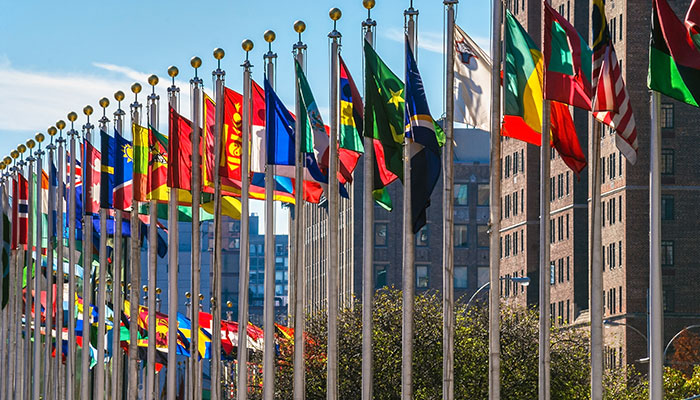
Still, the UN has faced tough times before – over many decades during the Cold War, the Security Council was crippled by deep tensions between the US and the Soviet Union. The UN is not as sidelined or divided today as it was then. However, as the relationship between China and the US sours, the achievements of global co-operation are being eroded.
The way in which people speak about the UN often implies a level of coherence and bureaucratic independence that the UN rarely possesses. A failure of the UN is normally better understood as a failure of international co-operation.
We see this recently in the UN’s inability to deal with crises from the ethnic cleansing of the Rohingya Muslims in Myanmar, to civil conflict in Syria, and the failure of the Security Council to adopt a COVID-19 resolution calling for ceasefires in conflict zones and a co-operative international response to the pandemic.
The UN administration is not primarily to blame for these failures; rather, the problem is the great powers – in the case of COVID-19, China and the US – refusing to co-operate.
Where states fail to agree, the UN is powerless to act.
Marking the 75th anniversary of the official formation of the UN, when 50 founding nations signed the UN Charter on June 26, 1945, we look at some of its key triumphs and resounding failures.
Five successes
1. Peacekeeping
The United Nations was created with the goal of being a collective security organisation. The UN Charter establishes that the use of force is only lawful either in self-defence or if authorised by the UN Security Council. The Security Council’s five permanent members, being China, US, UK, Russia and France, can veto any such resolution.
The UN’s consistent role in seeking to manage conflict is one of its greatest successes.
A key component of this role is peacekeeping. The UN under its second secretary-general, the Swedish statesman Dag Hammarskjöld – who was posthumously awarded the Nobel Peace prize after he died in a suspicious plane crash – created the concept of peacekeeping. Hammarskjöld was responding to the 1956 Suez Crisis, in which the US opposed the invasion of Egypt by its allies Israel, France and the UK.
UN peacekeeping missions involve the use of impartial and armed UN forces, drawn from member states, to stabilise fragile situations. “The essence of peacekeeping is the use of soldiers as a catalyst for peace rather than as the instruments of war,” said then UN Secretary-General Javier Pérez de Cuéllar, when the forces won the 1988 Nobel Peace Prize following missions in conflict zones in the Middle East, Africa, Asia, Central America and Europe.
However, peacekeeping also counts among the UN’s major failures.
2. Law of the Sea
Negotiated between 1973 and 1982, the UN Convention on the Law of the Sea (UNCLOS) set up the current international law of the seas. It defines states’ rights and creates concepts such as exclusive economic zones, as well as procedures for the settling of disputes, new arrangements for governing deep sea bed mining, and importantly, new provisions for the protection of marine resources and ocean conservation.
Mostly, countries have abided by the convention. There are various disputes that China has over the East and South China Seas which present a conflict between power and law, in that although UNCLOS creates mechanisms for resolving disputes, a powerful state isn’t necessarily going to submit to those mechanisms.
Secondly, on the conservation front, although UNCLOS is a huge step forward, it has failed to adequately protect oceans that are outside any state’s control. Ocean ecosystems have been dramatically transformed through overfishing. This is an ecological catastrophe that UNCLOS has slowed, but failed to address comprehensively.
3. Decolonisation
The idea of racial equality and of a people’s right to self-determination was discussed in the wake of World War I and rejected. After World War II, however, those principles were endorsed within the UN system, and the Trusteeship Council, which monitored the process of decolonisation, was one of the initial bodies of the UN.
Although many national independence movements only won liberation through bloody conflicts, the UN has overseen a process of decolonisation that has transformed international politics. In 1945, around one third of the world’s population lived under colonial rule. Today, there are less than 2 million people living in colonies.
When it comes to the world’s First Nations, however, the UN generally has done little to address their concerns, aside from the non-binding UN Declaration on the Rights of Indigenous Peoples of 2007.
4. Human rights
The Human Rights Declaration of 1948 for the first time set out fundamental human rights to be universally protected, recognising that the “inherent dignity and of the equal and inalienable rights of all members of the human family is the foundation of freedom, justice and peace in the world”.
Since 1948, 10 human rights treaties have been adopted – including conventions on the rights of children and migrant workers, and against torture and discrimination based on gender and race – each monitored by its own committee of independent experts.
The language of human rights has created a new framework for thinking about the relationship between the individual, the state and the international system. Although some people would prefer that political movements focus on ‘liberation’ rather than ‘rights’, the idea of human rights has made the individual person a focus of national and international attention.
5. Free trade
Depending on your politics, you might view the World Trade Organisation as a huge success, or a huge failure.
The WTO creates a near-binding system of international trade law with a clear and efficient dispute resolution process.
The majority Australian consensus is that the WTO is a success because it has been good for Australian famers especially, through its winding back of subsidies and tariffs.
However, the WTO enabled an era of globalisation which is now politically controversial.
Recently, the US has sought to disrupt the system. In addition to the trade war with China, the Trump Administration has also refused to appoint tribunal members to the WTO’s Appellate Body, so it has crippled the dispute resolution process. Of course, the Trump Administration is not the first to take issue with China’s trade strategies, which include subsidises for ‘State Owned Enterprises’ and demands that foreign firms transfer intellectual property in exchange for market access.
The existence of the UN has created a forum where nations can discuss new problems, and climate change is one of them. The Intergovernmental Panel on Climate Change (IPCC) was set up in 1988 to assess climate science and provide policymakers with assessments and options. In 1992, the UN Framework Convention on Climate Change created a permanent forum for negotiations.
However, despite an international scientific body in the IPCC, and 165 signatory nations to the climate treaty, global greenhouse gas emissions have continued to increase.
Under the Paris Agreement, even if every country meets its greenhouse gas emission targets we are still on track for ‘dangerous warming’. Yet, no major country is even on track to meet its targets; while emissions will probably decline this year as a result of COVID-19, atmospheric concentrations of greenhouse gases will still increase.
This illustrates a core conundrum of the UN in that it opens the possibility of global cooperation, but is unable to constrain states from pursuing their narrowly conceived self-interests. Deep co-operation remains challenging.
Five failures of the UN
1. Peacekeeping
During the Bosnian War, Dutch peacekeeping forces stationed in the town of Srebrenica, declared a ‘safe area’ by the UN in 1993, failed in 1995 to stop the massacre of more than 8000 Muslim men and boys by Bosnian Serb forces. This is one of the most widely discussed examples of the failures of international peacekeeping operations.
On the massacre’s 10th anniversary, then UN Secretary General Kofi Annan wrote that the UN had “made serious errors of judgement, rooted in a philosophy of impartiality”, contributing to a mass murder that would “haunt our history forever”.
If you look at some of the other infamous failures of peacekeeping missions – in places such as Rwanda, Somalia and Angola – it is the limited powers given to peacekeeping operations that have resulted in those failures.
2. The invasion of Iraq
The invasion of Iraq by the US in 2003, which was unlawful and without Security Council authorisation, reflects the fact that the UN is has very limited capacity to constrain the actions of great powers.
The Security Council designers created the veto power so that any of the five permanent members could reject a Council resolution, so in that way it is programmed to fail when a great power really wants to do something that the international community generally condemns.
In the case of the Iraq invasion, the US didn’t veto a resolution, but rather sought authorisation that it did not get. The UN, if you go by the idea of collective security, should have responded by defending Iraq against this unlawful use of force.
The invasion proved a humanitarian disaster with the loss of more than 400,000 lives, and many believe that it led to the emergence of the terrorist Islamic State.
3. Refugee crises
The UN brokered the 1951 Refugee Convention to address the plight of people displaced in Europe due to World War II; years later, the 1967 Protocol removed time and geographical restrictions so that the Convention can now apply universally (although many countries in Asia have refused to sign it, owing in part to its Eurocentric origins).
Despite these treaties, and the work of the UN High Commission for Refugees, there is somewhere between 30 and 40 million refugees, many of them, such as many Palestinians, living for decades outside their homelands. This is in addition to more than 40 million people displaced within their own countries.
While for a long time refugee numbers were reducing, in recent years, particularly driven by the Syrian conflict, there have been increases in the number of people being displaced.
During the COVID-19 crisis, boatloads of Rohingya refugees were turned away by port after port. This tragedy has echoes of pre-World War II when ships of Jewish refugees fleeing Nazi Germany were refused entry by multiple countries.
And as a catastrophe of a different kind looms, there is no international framework in place for responding to people who will be displaced by rising seas and other effects of climate change.
4. Conflicts without end
Across the world, there is a shopping list of unresolved civil conflicts and disputed territories.
Palestine and Kashmir are two of the longest-running failures of the UN to resolve disputed lands. More recent, ongoing conflicts include the civil wars in Syria and Yemen.
The common denominator of unresolved conflicts is either division among the great powers, or a lack of international interest due to the geopolitical stakes not being sufficiently high. For instance, the inaction during the Rwandan civil war in the 1990s was not due to a division among great powers, but rather a lack of political will to engage.
In Syria, by contrast, Russia and the US have opposing interests and back opposing sides: Russia backs the government of the Syrian dictator Bashar al-Assad, whereas the US does not.
5. Acting like it’s 1945
The UN is increasingly out of step with the reality of geopolitics today.
The permanent members of the Security Council reflect the division of power internationally at the end of World War II. The continuing exclusion of Germany, Japan, and rising powers such as India and Indonesia, reflects the failure to reflect the changing balance of power.
Also, bodies such as the IMF and the World Bank, which are part of the UN system, continue to be dominated by the West. In response, China has created potential rival institutions such as the Asian Infrastructure Investment Bank.
Western domination of UN institutions undermines their credibility. However, a more fundamental problem is that institutions designed in 1945 are a poor fit with the systemic global challenges – of which climate change is foremost – that we face today.