


WCRP History
The main objectives of WCRP, defined at its inception and still valid today, are to determine the predictability of climate and to determine the effect of human activities on climate.
WCRP has made enormous contributions to advancing climate science over the past 30+ years. As a result of WCRP efforts, it is now possible for climate scientists to monitor, simulate and project global climate with unprecedented accuracy, and provide climate information for use in governance, decision-making and in support of a wide range of practical end-user applications.
India and WCRP
In 2015, Agreement was signed between Indian Institute of Tropical Meteorology (ESSO-IITM), an autonomous organization under the Earth System Science Organization (ESSO), Ministry of Earth Sciences and World Climate Research Program (WCRP), Geneva for setting up of an International Climate Variability and Predictability (CLIVAR) Monsoon Project Office (ICMPO) at ESSO-IITM in Pune.
The ICMPO at ESSO-IITM Pune will be responsible for implementation of (i) intra-seasonal, seasonal and inter-annual variability and predictability of Monsoon systems, in close cooperation with relevant WCRP activities and (ii) development of a CLIVAR “Research Opportunity” on links between the Monsoons and the cryosphere.
ESSO-IITM is a premiere research Institute generating scientific knowledge in the field of meteorology and atmospheric sciences that has potential application in various fields such as agriculture, economics, health, water resources, transportation, communications, etc. It functions as a national centre for basic and applied research in Monsoon meteorology.
The main foci of WCRP research are:
- observing changes in the components of the Earth system (atmosphere, oceans, land and cryosphere) and in the interfaces between these components;
- improving our knowledge and understanding of global and regional climate variability and change, and of the mechanisms responsible for this change;
- assessing and attributing significant trends in global and regional climates;
- developing and improving numerical models that are capable of simulating and assessing the climate system for a wide range of space and time scales; and
- investigating the sensitivity of the climate system to natural and human-induced forcing and estimating the changes resulting from specific disturbing influences.
The organizational structure consists of:
- WCRP Joint Scientific Committee (JSC) Advisory councils
- WCRP Modelling Advisory Council (WMAC)
- WCRP Data Advisory Council (WDAC).
- WCRP Working Groups
- WCRP Core Projects
- WCRP Grand Challenges
- The Joint Planning Staff (JPS)
- Climate and Cryosphere (CliC): CliC encourages and promotes research into the cryosphere in order to improve understanding of the cryosphere and its interactions with the global climate system, and to enhance the ability to use parts of the cryosphere for detection of climate change.
- Climate and Ocean Variability, Predictability and Change (CLIVAR): CLIVAR’s mission is to understand the dynamics, the interaction, and the predictability of the coupled ocean-atmosphere system. To this end it facilitates observations, analysis and predictions of changes in the Earth’s climate system, enabling better understanding of climate variability, predictability and change.
- Global Energy and Water Exchanges (GEWEX): GEWEX is an integrated program of research, observations, and science activities that focuses on the atmospheric, terrestrial, radiative, hydrological, coupled precesses, and interactions that determine the global and regional hydrological cycle, radiation and energy transitions and their involvement in global changes.
- Stratosphere-troposphere Processes And their Role in Climate (SPARC): SPARC coordinates international efforts to bring knowledge of the stratosphere to bear on relevant issues in climate variability and prediction.
In addition, WCRP has the following major projects:
Coordinated Regional Climate Downscaling Experiment (CORDEX): The CORDEX vision is to advance and coordinate the science and application of regional climate downscaling through global partnerships.
WCRP Grand Challenges
The WCRP Grand Challenges represent areas of emphasis in scientific research, modelling, analysis and observations for WCRP and its affiliate projects in the coming decade. They were developed by the WCRP Joint Scientific Committee (JSC) through consultation with WCRP sponsors, stakeholders and affiliate networks of scientists. WCRP promotes the Grand Challenges through community-organized workshops, conferences and strategic planning meetings to identify exciting and high-priority research that requires international partnership and coordination, and that yields “actionable information” for decision makers.
The Grand Challenges:
- are both highly specific and highly focused, identifying a specific barrier preventing progress in a critical area of climate science;
- enable the development of targeted research efforts with the likelihood of significant progress over 5-10 years, even if their ultimate success is uncertain;
- enable the implementation of effective and measurable performance metrics;
- are transformative – a Grand Challenge should bring the best minds to the table (voluntarily), building and strengthening communities of collaborative innovators, perhaps also extending beyond “in-house expertise”;
- capture the public’s imagination – teams of renowned scientists working to solve pressing challenges; and
- offer compelling storylines to capture the interest of media and the public
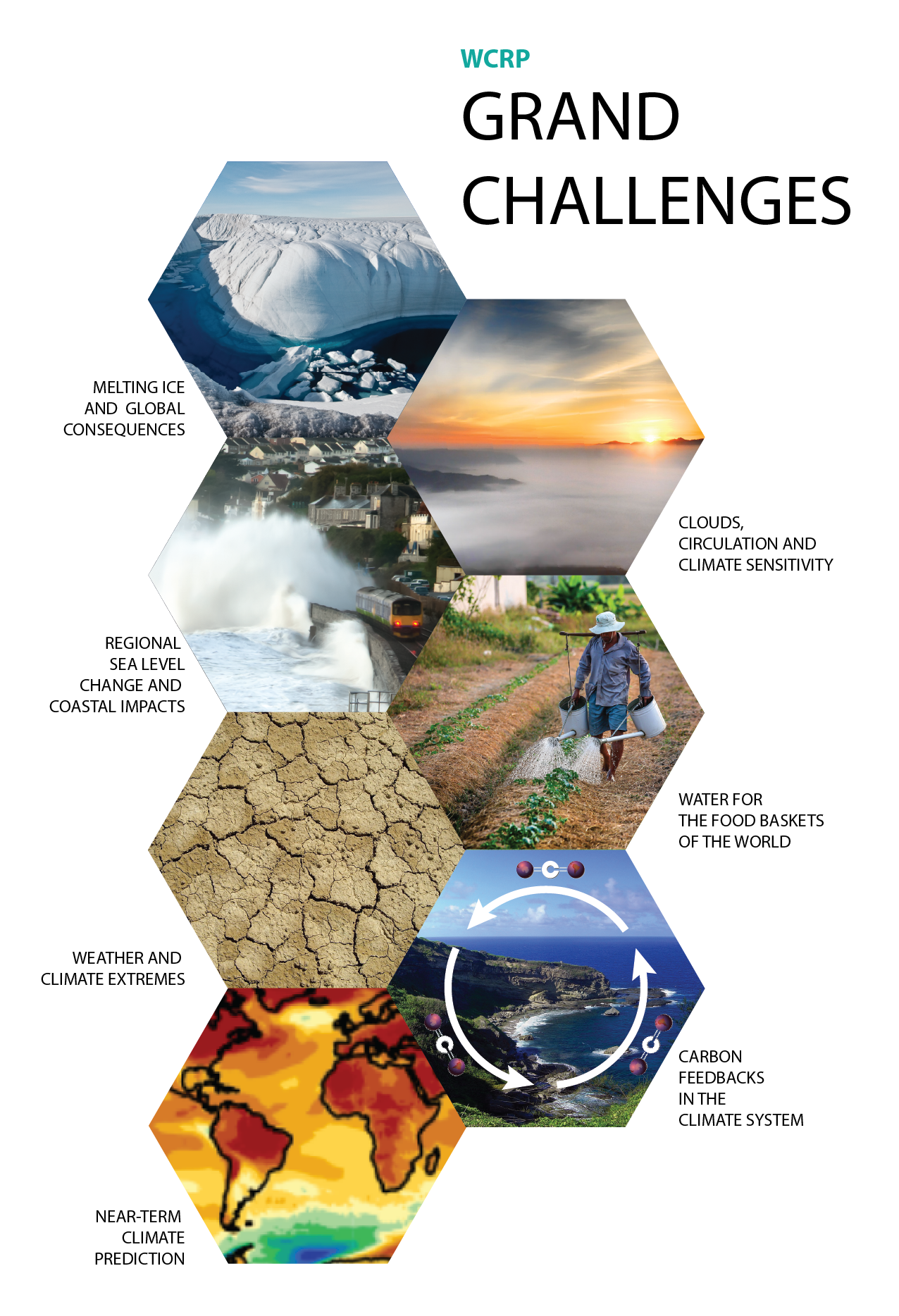
- Melting Ice and Global Consequences Clouds,
- Circulation and Climate Sensitivity
- Carbon Feedbacks in the Climate System
- Weather and Climate Extremes
- Water for the Food Baskets of the World
- Regional Sea-Level Change and Coastal Impacts
- Near-term Climate Prediction
Receive Daily Updates
Recent Posts
Petrol in India is cheaper than in countries like Hong Kong, Germany and the UK but costlier than in China, Brazil, Japan, the US, Russia, Pakistan and Sri Lanka, a Bank of Baroda Economics Research report showed.
Rising fuel prices in India have led to considerable debate on which government, state or central, should be lowering their taxes to keep prices under control.
The rise in fuel prices is mainly due to the global price of crude oil (raw material for making petrol and diesel) going up. Further, a stronger dollar has added to the cost of crude oil.
Amongst comparable countries (per capita wise), prices in India are higher than those in Vietnam, Kenya, Ukraine, Bangladesh, Nepal, Pakistan, Sri Lanka, and Venezuela. Countries that are major oil producers have much lower prices.
In the report, the Philippines has a comparable petrol price but has a per capita income higher than India by over 50 per cent.
Countries which have a lower per capita income like Kenya, Bangladesh, Nepal, Pakistan, and Venezuela have much lower prices of petrol and hence are impacted less than India.
“Therefore there is still a strong case for the government to consider lowering the taxes on fuel to protect the interest of the people,” the report argued.
India is the world’s third-biggest oil consuming and importing nation. It imports 85 per cent of its oil needs and so prices retail fuel at import parity rates.
With the global surge in energy prices, the cost of producing petrol, diesel and other petroleum products also went up for oil companies in India.
They raised petrol and diesel prices by Rs 10 a litre in just over a fortnight beginning March 22 but hit a pause button soon after as the move faced criticism and the opposition parties asked the government to cut taxes instead.
India imports most of its oil from a group of countries called the ‘OPEC +’ (i.e, Iran, Iraq, Saudi Arabia, Venezuela, Kuwait, United Arab Emirates, Russia, etc), which produces 40% of the world’s crude oil.
As they have the power to dictate fuel supply and prices, their decision of limiting the global supply reduces supply in India, thus raising prices
The government charges about 167% tax (excise) on petrol and 129% on diesel as compared to US (20%), UK (62%), Italy and Germany (65%).
The abominable excise duty is 2/3rd of the cost, and the base price, dealer commission and freight form the rest.
Here is an approximate break-up (in Rs):
a)Base Price | 39 |
b)Freight | 0.34 |
c) Price Charged to Dealers = (a+b) | 39.34 |
d) Excise Duty | 40.17 |
e) Dealer Commission | 4.68 |
f) VAT | 25.35 |
g) Retail Selling Price | 109.54 |
Looked closely, much of the cost of petrol and diesel is due to higher tax rate by govt, specifically excise duty.
So the question is why government is not reducing the prices ?
India, being a developing country, it does require gigantic amount of funding for its infrastructure projects as well as welfare schemes.
However, we as a society is yet to be tax-compliant. Many people evade the direct tax and that’s the reason why govt’s hands are tied. Govt. needs the money to fund various programs and at the same time it is not generating enough revenue from direct taxes.
That’s the reason why, govt is bumping up its revenue through higher indirect taxes such as GST or excise duty as in the case of petrol and diesel.
Direct taxes are progressive as it taxes according to an individuals’ income however indirect tax such as excise duty or GST are regressive in the sense that the poorest of the poor and richest of the rich have to pay the same amount.
Does not matter, if you are an auto-driver or owner of a Mercedes, end of the day both pay the same price for petrol/diesel-that’s why it is regressive in nature.
But unlike direct tax where tax evasion is rampant, indirect tax can not be evaded due to their very nature and as long as huge no of Indians keep evading direct taxes, indirect tax such as excise duty will be difficult for the govt to reduce, because it may reduce the revenue and hamper may programs of the govt.