


Background :-
President of India recently presentted Shilp Guru Awards and National Awards to Master Craftspersons at Rashtrapati Bhavan.
*The craft and the associated region is important.
Kalamkari Painting – Andhra Pradesh – Shri K.Siva Prasada Reddy
Kalamkari or qalamkari is a type of hand-painted or block-printed cotton textile, produced in parts of India and Iran. Its name originates in the Persian which is derived from the words qalam (pen) and kari (craftmanship), meaning drawing with a pen.
The Machilipatnam Kalamkari craft made at Pedana near by Machilipatnam in Krishna district, Andhra Pradesh, evolved with patronage of the Mughals and the Golconda sultanate.

Ajrakh Hand Block Printing – Gujarat – Khatri Abdul Razak Mohmed
Ajrak is a name given to a unique form of block printed shawls and tiles found in Sindh, Pakistan; Kutch, Gujarat; and Barmer, Rajasthan in India. These shawls display special designs and patterns made using block printing by stamps. Common colours used while making these patterns may include but are not limited to blue, red, black, yellow and green. Over the years, ajraks have become a symbol of the Sindhi culture and traditions

Bidri Craft – Karnataka – Abdul Raouf
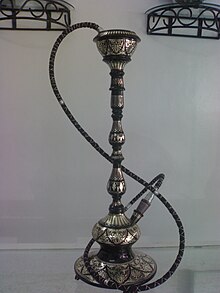
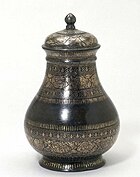
Bidriware is a metal handicraft from Bidar. It was developed in the 14th century C.E. during the rule of the Bahamani Sultans.The term ‘Bidriware’ originates from the township of Bidar, which is still the chief centre for the manufacture of the unique metalware.Due to its striking inlay artwork, Bidriware is an important export handicraft of India and is prized as a symbol of wealth. The metal used is a blackened alloy of zinc and copper inlaid with thin sheets of pure silver.This native art form has obtained Geographical Indications (GI) registry.
Thewa Craft – Madhya Pradesh – Sh.Girish Kumar Rajsoni
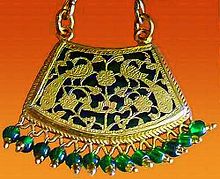
Thewa is a craft practised by a few craftsmen who specialise in the art of fusing filigreed gold sheets on to glass. The craft of thewa is still practised by hereditary craftspersons in the small fortified town of Pratapgarh in district Chittorgarh of south Rajasthan and in Rampur in Madhya Pradesh. This unique craft uses plaques of glass as its base material. Till today the tradition of using red, green, and blue glass continues.The technique of thewa has been used to create extremely interesting ornaments, plates, trays and jewellery, as well as small objects for daily use. This skill and the expertise required to create thewa objects is unique to Pratapgarh and Rampur. However, in the 19th century the towns of Indore and Ratlam in Madhya Pradesh also achieved widespread fame for this jewellery craft.
Stone Carving – Odisha – Shri Pravakar Maharana
Stone carving in Odisha is the ancient practice of sculpting stone into art and utilitarian objects. It is an ancient practice in the Indian state of Odisha. Stone carving is practiced by artisans mainly in Puri, Bhubaneswar and Lalitgiri in the Cuttack district, though some carvings can be found in Khiching in the Mayurbhanj District. Stone carving is one of the major handcrafts of Odisha. The art form primarily consists of custom carved works,[1] with the Sun Temple of Konark and its intricate sculpture and delicate carvings on the red vivid sandstone exemplifying the practice. Other noteworthy monuments include the Stupas of Udayagiri and Ratnagiri and the temples at Jagannath, Lingaraj, Mukteshwar and as well as other temples in the region.

Mithila Painting – Bihar – Smt.Punam Das
Mithila painting (also known as Madhubani painting) is practiced in the Mithila state of Nepal and in the Bihar state of India. Painting is done with fingers, twigs, brushes, nib-pens, and matchsticks, using natural dyes and pigments, and is characterized by eye-catching geometrical patterns. There is ritual content for particular occasions, such as birth or marriage, and festivals, such as Holi, Surya Shasti, Kali Puja, Upanayanam, Durga Puja. The Mithila region, from which the name Mithila art is derived, is believed to have been the kingdom of King Janak in present-day Janakpur in Nepal.

Papier Machie – Jammu & Kashmir –Zahid Hussain Beig
Papier-mâché is a handicraft of Kashmir that was brought by Muslims from Persia in the 15th century. It is based primarily on paper pulp, and is a richly decorated, colourful artifact; generally in the form of vases, bowls, or cups (with and without metal rims), boxes, trays, bases of lamps, and many other small objects. These are made in homes, and workshops, in Srinagar, and other parts of the Kashmir Valley, and are marketed primarily within India, although there is a significant international market
The product is protected under the Geographic Indication Act 1999 of Government of India, and was registered by the Controller General of Patents Designs and Trademarks during the period from April 2011 to March 2012 under the title “Kashmir Paper Machie”

Palmleaf Engraving – Odisha – Shri Biswanath Swain
It is believed that the craft emerged during the construction of temples and converted into hereditary craft for some families. Raghurajpura is famous for the artists belonging to this craft. Great or the well known tales are etched on palm leaf bearing in mind all ethics of craft and mythology.

Bone Carving – Uttar Pradesh – Shri Israr Ahmed
The British introduced ivory on furniture.Since the worldwide ban on ivory, craftsmen have been carving camel and buffalo bone with great skills.

Gulabi Meenakari – Uttar Pradesh – Shri Kunjbihari Singh
Meenakari is a crystal form of glass fused with metal oxides like silver, gold, copper and zinc. The meenakari of Varanasi is known by its pink colour and is known as gulabi meenakari.
The Pink painted enamel style was brought in Varanasi by the Persian enamellists around early 17th century during the Mughal era. This enameling style reached its peak of perfection at the Persian Court at Isfahan during the Qajar dynasty. The art of Meenakari was prosperous till about hundred year ago. Today there are only a handful of craft persons. They work on gold enamel, and silver enamel jewelry and other objects.

Black Pottery – Uttar Pradesh – Shri Sohit Kumar Prajapati
The black clay pottery of Nizamabad in Azamgarh district of Uttar Pradesh, India is unique type of clay pottery known for its dark shiny body with engraved silver patterns.It was registered for Geographical Indication tag in December 2015
Recent Posts
Petrol in India is cheaper than in countries like Hong Kong, Germany and the UK but costlier than in China, Brazil, Japan, the US, Russia, Pakistan and Sri Lanka, a Bank of Baroda Economics Research report showed.
Rising fuel prices in India have led to considerable debate on which government, state or central, should be lowering their taxes to keep prices under control.
The rise in fuel prices is mainly due to the global price of crude oil (raw material for making petrol and diesel) going up. Further, a stronger dollar has added to the cost of crude oil.
Amongst comparable countries (per capita wise), prices in India are higher than those in Vietnam, Kenya, Ukraine, Bangladesh, Nepal, Pakistan, Sri Lanka, and Venezuela. Countries that are major oil producers have much lower prices.
In the report, the Philippines has a comparable petrol price but has a per capita income higher than India by over 50 per cent.
Countries which have a lower per capita income like Kenya, Bangladesh, Nepal, Pakistan, and Venezuela have much lower prices of petrol and hence are impacted less than India.
“Therefore there is still a strong case for the government to consider lowering the taxes on fuel to protect the interest of the people,” the report argued.
India is the world’s third-biggest oil consuming and importing nation. It imports 85 per cent of its oil needs and so prices retail fuel at import parity rates.
With the global surge in energy prices, the cost of producing petrol, diesel and other petroleum products also went up for oil companies in India.
They raised petrol and diesel prices by Rs 10 a litre in just over a fortnight beginning March 22 but hit a pause button soon after as the move faced criticism and the opposition parties asked the government to cut taxes instead.
India imports most of its oil from a group of countries called the ‘OPEC +’ (i.e, Iran, Iraq, Saudi Arabia, Venezuela, Kuwait, United Arab Emirates, Russia, etc), which produces 40% of the world’s crude oil.
As they have the power to dictate fuel supply and prices, their decision of limiting the global supply reduces supply in India, thus raising prices
The government charges about 167% tax (excise) on petrol and 129% on diesel as compared to US (20%), UK (62%), Italy and Germany (65%).
The abominable excise duty is 2/3rd of the cost, and the base price, dealer commission and freight form the rest.
Here is an approximate break-up (in Rs):
a)Base Price | 39 |
b)Freight | 0.34 |
c) Price Charged to Dealers = (a+b) | 39.34 |
d) Excise Duty | 40.17 |
e) Dealer Commission | 4.68 |
f) VAT | 25.35 |
g) Retail Selling Price | 109.54 |
Looked closely, much of the cost of petrol and diesel is due to higher tax rate by govt, specifically excise duty.
So the question is why government is not reducing the prices ?
India, being a developing country, it does require gigantic amount of funding for its infrastructure projects as well as welfare schemes.
However, we as a society is yet to be tax-compliant. Many people evade the direct tax and that’s the reason why govt’s hands are tied. Govt. needs the money to fund various programs and at the same time it is not generating enough revenue from direct taxes.
That’s the reason why, govt is bumping up its revenue through higher indirect taxes such as GST or excise duty as in the case of petrol and diesel.
Direct taxes are progressive as it taxes according to an individuals’ income however indirect tax such as excise duty or GST are regressive in the sense that the poorest of the poor and richest of the rich have to pay the same amount.
Does not matter, if you are an auto-driver or owner of a Mercedes, end of the day both pay the same price for petrol/diesel-that’s why it is regressive in nature.
But unlike direct tax where tax evasion is rampant, indirect tax can not be evaded due to their very nature and as long as huge no of Indians keep evading direct taxes, indirect tax such as excise duty will be difficult for the govt to reduce, because it may reduce the revenue and hamper may programs of the govt.
Globally, around 80% of wastewater flows back into the ecosystem without being treated or reused, according to the United Nations.
This can pose a significant environmental and health threat.
In the absence of cost-effective, sustainable, disruptive water management solutions, about 70% of sewage is discharged untreated into India’s water bodies.
A staggering 21% of diseases are caused by contaminated water in India, according to the World Bank, and one in five children die before their fifth birthday because of poor sanitation and hygiene conditions, according to Startup India.
As we confront these public health challenges emerging out of environmental concerns, expanding the scope of public health/environmental engineering science becomes pivotal.
For India to achieve its sustainable development goals of clean water and sanitation and to address the growing demands for water consumption and preservation of both surface water bodies and groundwater resources, it is essential to find and implement innovative ways of treating wastewater.
It is in this context why the specialised cadre of public health engineers, also known as sanitation engineers or environmental engineers, is best suited to provide the growing urban and rural water supply and to manage solid waste and wastewater.
Traditionally, engineering and public health have been understood as different fields.
Currently in India, civil engineering incorporates a course or two on environmental engineering for students to learn about wastewater management as a part of their pre-service and in-service training.
Most often, civil engineers do not have adequate skills to address public health problems. And public health professionals do not have adequate engineering skills.
India aims to supply 55 litres of water per person per day by 2024 under its Jal Jeevan Mission to install functional household tap connections.
The goal of reaching every rural household with functional tap water can be achieved in a sustainable and resilient manner only if the cadre of public health engineers is expanded and strengthened.
In India, public health engineering is executed by the Public Works Department or by health officials.
This differs from international trends. To manage a wastewater treatment plant in Europe, for example, a candidate must specialise in wastewater engineering.
Furthermore, public health engineering should be developed as an interdisciplinary field. Engineers can significantly contribute to public health in defining what is possible, identifying limitations, and shaping workable solutions with a problem-solving approach.
Similarly, public health professionals can contribute to engineering through well-researched understanding of health issues, measured risks and how course correction can be initiated.
Once both meet, a public health engineer can identify a health risk, work on developing concrete solutions such as new health and safety practices or specialised equipment, in order to correct the safety concern..
There is no doubt that the majority of diseases are water-related, transmitted through consumption of contaminated water, vectors breeding in stagnated water, or lack of adequate quantity of good quality water for proper personal hygiene.
Diseases cannot be contained unless we provide good quality and adequate quantity of water. Most of the world’s diseases can be prevented by considering this.
Training our young minds towards creating sustainable water management systems would be the first step.
Currently, institutions like the Indian Institute of Technology, Madras (IIT-M) are considering initiating public health engineering as a separate discipline.
To leverage this opportunity even further, India needs to scale up in the same direction.
Consider this hypothetical situation: Rajalakshmi, from a remote Karnataka village spots a business opportunity.
She knows that flowers, discarded in the thousands by temples can be handcrafted into incense sticks.
She wants to find a market for the product and hopefully, employ some people to help her. Soon enough though, she discovers that starting a business is a herculean task for a person like her.
There is a laborious process of rules and regulations to go through, bribes to pay on the way and no actual means to transport her product to its market.
After making her first batch of agarbathis and taking it to Bengaluru by bus, she decides the venture is not easy and gives up.
On the flipside of this is a young entrepreneur in Bengaluru. Let’s call him Deepak. He wants to start an internet-based business selling sustainably made agarbathis.
He has no trouble getting investors and to mobilise supply chains. His paperwork is over in a matter of days and his business is set up quickly and ready to grow.
Never mind that the business is built on aggregation of small sellers who will not see half the profit .
Is this scenario really all that hypothetical or emblematic of how we think about entrepreneurship in India?
Between our national obsession with unicorns on one side and glorifying the person running a pakora stall for survival as an example of viable entrepreneurship on the other, is the middle ground in entrepreneurship—a space that should have seen millions of thriving small and medium businesses, but remains so sparsely occupied that you could almost miss it.
If we are to achieve meaningful economic growth in our country, we need to incorporate, in our national conversation on entrepreneurship, ways of addressing the missing middle.
Spread out across India’s small towns and cities, this is a class of entrepreneurs that have been hit by a triple wave over the last five years, buffeted first by the inadvertent fallout of demonetization, being unprepared for GST, and then by the endless pain of the covid-19 pandemic.
As we finally appear to be reaching some level of normality, now is the opportune time to identify the kind of industries that make up this layer, the opportunities they should be afforded, and the best ways to scale up their functioning in the shortest time frame.
But, why pay so much attention to these industries when we should be celebrating, as we do, our booming startup space?
It is indeed true that India has the third largest number of unicorns in the world now, adding 42 in 2021 alone. Braving all the disruptions of the pandemic, it was a year in which Indian startups raised $24.1 billion in equity investments, according to a NASSCOM-Zinnov report last year.
However, this is a story of lopsided growth.
The cities of Bengaluru, Delhi/NCR, and Mumbai together claim three-fourths of these startup deals while emerging hubs like Ahmedabad, Coimbatore, and Jaipur account for the rest.
This leap in the startup space has created 6.6 lakh direct jobs and a few million indirect jobs. Is that good enough for a country that sends 12 million fresh graduates to its workforce every year?
It doesn’t even make a dent on arguably our biggest unemployment in recent history—in April 2020 when the country shutdown to battle covid-19.
Technology-intensive start-ups are constrained in their ability to create jobs—and hybrid work models and artificial intelligence (AI) have further accelerated unemployment.
What we need to focus on, therefore, is the labour-intensive micro, small and medium enterprise (MSME). Here, we begin to get to a definitional notion of what we called the mundane middle and the problems it currently faces.
India has an estimated 63 million enterprises. But, out of 100 companies, 95 are micro enterprises—employing less than five people, four are small to medium and barely one is large.
The questions to ask are: why are Indian MSMEs failing to grow from micro to small and medium and then be spurred on to make the leap into large companies?
At the Global Alliance for Mass Entrepreneurship (GAME), we have advocated for a National Mission for Mass Entrepreneurship, the need for which is more pronounced now than ever before.
Whenever India has worked to achieve a significant economic milestone in a limited span of time, it has worked best in mission mode. Think of the Green Revolution or Operation Flood.
From across various states, there are enough examples of approaches that work to catalyse mass entrepreneurship.
The introduction of entrepreneurship mindset curriculum (EMC) in schools through alliance mode of working by a number of agencies has shown significant improvement in academic and life outcomes.
Through creative teaching methods, students are encouraged to inculcate 21st century skills like creativity, problem solving, critical thinking and leadership which are not only foundational for entrepreneurship but essential to thrive in our complex world.
Udhyam Learning Foundation has been involved with the Government of Delhi since 2018 to help young people across over 1,000 schools to develop an entrepreneurial mindset.
One pilot programme introduced the concept of ‘seed money’ and saw 41 students turn their ideas into profit-making ventures. Other programmes teach qualities like grit and resourcefulness.
If you think these are isolated examples, consider some larger data trends.
The Observer Research Foundation and The World Economic Forum released the Young India and Work: A Survey of Youth Aspirations in 2018.
When asked which type of work arrangement they prefer, 49% of the youth surveyed said they prefer a job in the public sector.
However, 38% selected self-employment as an entrepreneur as their ideal type of job. The spirit of entrepreneurship is latent and waiting to be unleashed.
The same can be said for building networks of successful women entrepreneurs—so crucial when the participation of women in the Indian economy has declined to an abysmal 20%.
The majority of India’s 63 million firms are informal —fewer than 20% are registered for GST.
Research shows that companies that start out as formal enterprises become two-three times more productive than a similar informal business.
So why do firms prefer to be informal? In most cases, it’s because of the sheer cost and difficulty of complying with the different regulations.
We have academia and non-profits working as ecosystem enablers providing insights and evidence-based models for growth. We have large private corporations and philanthropic and funding agencies ready to invest.
It should be in the scope of a National Mass Entrepreneurship Mission to bring all of them together to work in mission mode so that the gap between thought leadership and action can finally be bridged.
Heat wave is a condition of air temperature which becomes fatal to human body when exposed. Often times, it is defined based on the temperature thresholds over a region in terms of actual temperature or its departure from normal.
Heat wave is considered if maximum temperature of a station reaches at least 400C or more for Plains and at least 300C or more for Hilly regions.
a) Based on Departure from Normal
Heat Wave: Departure from normal is 4.50C to 6.40C
Severe Heat Wave: Departure from normal is >6.40C
b) Based on Actual Maximum Temperature
Heat Wave: When actual maximum temperature ≥ 450C
Severe Heat Wave: When actual maximum temperature ≥470C
If above criteria met at least in 2 stations in a Meteorological sub-division for at least two consecutive days and it declared on the second day
It is occurring mainly during March to June and in some rare cases even in July. The peak month of the heat wave over India is May.
Heat wave generally occurs over plains of northwest India, Central, East & north Peninsular India during March to June.
It covers Punjab, Haryana, Delhi, Uttar Pradesh, Bihar, Jharkhand, West Bengal, Odisha, Madhya Pradesh, Rajasthan, Gujarat, parts of Maharashtra & Karnataka, Andhra Pradesh and Telengana.
Sometimes it occurs over Tamilnadu & Kerala also.
Heat waves adversely affect human and animal lives.
However, maximum temperatures more than 45°C observed mainly over Rajasthan and Vidarbha region in month of May.

a. Transportation / Prevalence of hot dry air over a region (There should be a region of warm dry air and appropriate flow pattern for transporting hot air over the region).
b. Absence of moisture in the upper atmosphere (As the presence of moisture restricts the temperature rise).
c. The sky should be practically cloudless (To allow maximum insulation over the region).
d. Large amplitude anti-cyclonic flow over the area.
Heat waves generally develop over Northwest India and spread gradually eastwards & southwards but not westwards (since the prevailing winds during the season are westerly to northwesterly).
The health impacts of Heat Waves typically involve dehydration, heat cramps, heat exhaustion and/or heat stroke. The signs and symptoms are as follows:
1. Heat Cramps: Ederna (swelling) and Syncope (Fainting) generally accompanied by fever below 39*C i.e.102*F.
2. Heat Exhaustion: Fatigue, weakness, dizziness, headache, nausea, vomiting, muscle cramps and sweating.
3. Heat Stoke: Body temperatures of 40*C i.e. 104*F or more along with delirium, seizures or coma. This is a potential fatal condition.