


Disclaimer-This is a compilation of agriculture news from the HINDU newspaper. We will keep updating this post as and when we come across new initiatives/concepts related to agriculture until Prelims 2017.
Kudimaramathu
- It is a centuries-old concept of participatory water management in Tamilnadu
- Pandya king issued an order asking each family to send one person to work on strengthening the banks of Vaigai river which gave rise to this practice.
- Though the Madras Local Board Act of 1930 provided for activities associated with agriculture like kudimaramathu and keeping a watch over crops (kaaval), the provisions could not be implemented by village panchayats as the government was not willing to offer financial powers or transfer control over natural resources to them.
- The biggest challenge thus far to the execution of the kudimaramathu scheme is the removal of seemaikaruvelam trees and hyacinth from water courses. seemaikaruvelam is an invasive species.
Milk and the Breeds
- One reason for heightened interest in the milk of local breeds is a raft of research that implicates a protein — called A1 beta-casein and found in the milk of several European breeds — being linked to a risk of diabetes, ischemic disease and heart disease. Cattle that lack the A1 gene are categorised as A2.
- A1 and A2 beta-casein are genetic variants of the beta-casein milk protein that differ by a single amino acid. The A1 beta-casein type is the most common type found in cow’s milk in Europe (excluding France), the U.S., Australia and New Zealand.
- While commercial breeds in India are dominantly A1, there are several indigenous breeds that may have the safer A2 genes that lead to milk free of A1 proteins.
- However, scientists now say that techniques are round the corner that can potentially ‘silence’ A1 genes. Genome editing software such as CRISPR-Cas9 can be used to achieve this
- Beta-lactoglobulin is a protein in cow’s milk that triggers an allergic reaction in many infants. However, in 2014, a group of researchers at the University of Vienna discovered that it was the absence of iron in beta-lactoglobulin which led to allergies. That means that if there were ways to set off another set of genes to produce iron, cow’s milk would be palatable to many more children.
Persa Pen (Bada Dev Puja)
- It is a ritual performed by Gonds of Telengana which literally means “Bada Dev puja” or the “Worship of the great god”.
- Gonds belonging to Mesalkar Madavi clan seeking blessings from Bada Dev for good crop season.
Permaculture
- Australian biologist Bill Mollison’s widely well-received book Permaculture One,written along with David Holmgren, lead to the coining of the term ‘permaculture’ in the 1970s.
- This revolution has three basic principles: care for the earth, care for the people, and the return of surplus to the Earth and people or ‘fair share’
- Two of the ethics of permaculture: ‘people care’ and ‘fair share’.
- Permaculture day is celebrated by Aranya Agricultural Alternatives (AAA) along with IPC India on May 6th and 7th.
- Terra Madre-
- Terra Madre is a network of food communities, which are groups of small-scale food producers committed to producing quality food in a responsible, sustainable way.
- There are more than 2,000 Terra Madre food communities around the world.
- Terra Madre network was launched by the Slow Food grass roots organization, and the intent is to provide small-scale farmers, breeders, fishers and food artisans whose approach to food production protects the environment and communities.
- The network brings them together with academics, cooks, consumers and youth groups so that they can join forces in working to improve the food system.
- The Terra Madre network holds a major biennial conference which are held in Torino, Italy intended to foster discussion and introduce innovative concepts in the field of food, gastronomy, globalization, economics. The first of these conferences was held in 2004.
- The founding members of the Terra Madre Foundation include: The Italian Ministry of Agricultural, Food and Forestry Policies, The Development Cooperation of the Italian Ministry of Foreign Affairs, Piedmont Regional Authority, The City of Turin, Slow Food.
Banganapalle mango gets GI tag
- The Andhra Pradesh government is the registered proprietor of the GI tag for mangoes, often hailed as “the king of fruits.”
- GI is covered under the Intellectual Property Rights and the Trade Related Aspects of Intellectual Property Rights.
- A GI tag certifies the origin of a product or produce from a particular region as the quality or other features of the product is attributable only to the place of its origin.
- The tag helps farmers or manufacturers, as the case may be, to get a better price in the market.
Kokum Mela
- The first Kokum Mela of Dakshina Kannada and Udupi conducted at Muliya village in Bantwal taluk of Dakshina Kannada on May 1, Karnataka
- The mela would feature different food items made from Kokum. Value added products of Kokum would be on sale.
Fertigation
- Fertigation is the injection of fertilizers, soil amendments, and other water-soluble products into an irrigation system.Fertigation is related to chemigation, the injection of chemicals into an irrigation system
- The benefits of fertigation over the conventional or drop-fertilizing methods include increased nutrient absorption, reduction of fertilizer and water needed and greater control in the application of nutrients.
- There is a reduction in soil erosion because the nutrients are pumped through the water drip system. Leaching of nutrients from the soil is also decreased.
Turmeric(rhizomes)
- Andhra Pradesh is the leading state in producing turmeric followed by Maharashtra, Tamil Nadu, Odisha, Kerala and Bihar.
Plant nutrients
- Kerala Agricultural University (KAU) has come up with innovative plant nutrient formulations to improve crop productivity.
- Multi-nutrient mixtures, micro-nutrient preparations, nutrient sticks and pellets, fortified manure discs and multi-nutrient water soluble tablets are the products being brought out by the university. Most of them are applied on the foliage instead of soil.
- Soil quality evaluation has indicated that soil in many parts of Kerala is deficient not only in major soil nutrients, but also secondary nutrients like magnesium and calcium and micro-nutrients like boron, zinc and copper.
- Sampoorna KAU multi-mix is a crop-specific formulation for use in rice, banana and vegetables.
Smart Shoe for Catttle
- The ‘smart shoe’ developed by the Karnataka Veterinary, Animal and Fisheries Sciences University is made using rubber waste, and is being tried out on a set of animals in the Shivamogga veterinary college. The problem, however, is that cattle are reluctant to wear it and the shoe keeps falling off.
Apple in Tropics
- Apple cultivation isn’t something one expects to see in the tropics. But in the hills of north Telangana, an experiment to change that is, literally, bearing fruit.
- The achievement is a result of a few years of experimentation in apple genomics by scientists from the Centre for Cellular and Molecular Biology (CCMB), Hyderabad, which produced ‘low-chilling’ varieties of the plant, that is, they are able to withstand hot weather.
Govt. regulator gives nod for GM mustard
- Genetic Engineering Appraisal Committee (GEAC), India’s apex regulator for genetically modified seeds, recently cleared GM mustard for environmental release and use in farmer fields.
- However, the approval is contingent on a final nod from Environment Minister.
- Should the Minister’s consent be obtained, GM mustard would be the first transgenic food crop to be allowed for commercial cultivation in Indian fields and would be a gateway for several genetically-modified food crops in India.
- Bt brinjal blocked
- Bt Brinjal was cleared by the Committee in 2010 but was blocked by then Environment Minister.
- Dhara Mustard Hybrid (DMH -11), the transgenic mustard in question, has been developed by a team of scientists at Delhi University led by former vice-chancellor Deepak Pental under a government-funded project.
- In essence, it uses a system of genes from soil bacterium that makes mustard — generally a self pollinating plant — better suited to hybridisation than current methods.
A banana variety resistant to wilt disease on the anvil
- The wilt disease called ‘Fusarium’ causes extensive damage to banana and it has been a global challenge to evolve a variety resistant to it. In many African countries, where banana is a staple food, the incidence of wilt means a major setback to food productivity.
- The National Research Centre for Banana (NRCB) at Podhavur working on developing a banana variety which is resistant to wilt disease.
Krishi Mitro
- RML AgTech, a Mumbai based start-up , which has created the app — RML Farmer — Krishi Mitro, used by seven lakh farmers.
- The app has been designed in a manner to provide customised data to the farmer based on his or her area, weather, soil condition and market demand. Through the app along with customer support service and on-ground intervention, the company keeps a track of the information that each farmer is seeking.
- Moving beyond the basics, the start-up also provides information about farm production management, pesticide & nutri-management, harvest, packaging, storage and finally the place where the best price is available.
- The paid version has features called CropDock and DigiMandi. With CropDock, a farmer can click and upload photographs of his crop that has been infested with pests and within four hours, the company will revert with a solution and also the manner in which it has to be implemented.
- With DigiMandi, a farmer can get mandi-specific information like the distance from the farm to the nearest mandi, transportation cost and contact details of traders.
Sandponics
- Sandponics, a unique cultivation system that uses no soil, only sunlight and greenhouse facilities, being experimented in Japan.
- It is not resource-intensive faring method.
- India isn’t far behind in exploring urban farms either. Chennai-based Future Farms, Jaipur-based Hamari Krishi and a few others are bringing the urban farm revolution to India.
- Spirulina, an algae can be a key to fighting malnutrition
Thanneermukkam -the curry leaf village
- It is in Kerala.
- Consumption of curry leaves is considered beneficial to the body. Curry leaf has anti-carcinogenic properties due to the presence of carbazole alkaloids. Curry leaf can be used as an anti-oxidant as it contains the anti-oxidants tocopherol, b-carotene, and lutein.
Sugarcane cultivation
- FRP (Fair and Remunerative price) deals with sugarcane.
- M.S. Swaminathan committee urged the State government to give crop loss compensation of ₹25, 000 per acre to farmers who have incurred crop loss owing to drought in the State in the past two years.
- Mr. Shanthkumar also urged the government to waive off all farm loans to prevent farmers resorting to drastic measures.
‘Mattu Gulla’
- a special variety of brinjal grown in two villages of Udupi district, Karnataka
- The ‘Mattu Gulla’ enjoys a Geographical Indication (GI) tag, and is reputed for its unique taste.
Bt cotton varieties
- The Indian Council of Agricultural Research (ICAR) has identified three Bt cotton varieties – PAU Bt 1, F1861 and RS2013 – for cultivation in Punjab, Haryana and Rajasthan.
- All three varieties carry the Cry1Ac gene imparting resistance against bollworm complex.The genetic modification involves introduction of the Bt bacterial gene that codes for a protein which kills the bollworm cotton pest.
Pests eat away 35% of total crop yield
- About 30-35% of the annual crop yield in India gets wasted because of pests
- Nematodes, consisting of roundworms, threadworms and eelworms, are causing loss of crops to the tune of almost 60 million tonnes or 10-12 % of crop production every year
Agariyas of Wild Ass Country
- Agariyas or salt farmers (‘agar’ is a salt farm) of Rann of Kutch, Gujarat.
- The majority are Hindus, belonging to the Chunvaliya Koli community while the Miyana and Sandhi are Muslims
- They are a Denotified Tribe, united by their shared occupation, their culture, folk songs and the hardships of salt farming.
- Denotified Tribes (DNTs), also known as Vimukta Jati, are the tribes that were originally listed under the Criminal Tribes Act of 1871, as “Criminal Tribes” and “addicted to the systematic commission of non-bailable offences.” Once a tribe became “notified” as criminal, all its members were required to register with the local magistrate, failing which they would be charged with a “crime” under the Indian Penal Code. The Criminal Tribes Act of 1952 repealed the notification, i.e. ‘de-notified’ the tribal communities. This Act, however, was replaced by a series of Habitual Offenders Acts, that asked police to investigate a “suspect’s” “criminal tendencies” and whether their occupation is “conducive to settled way of life.” The denotified tribes were reclassified as “habitual offenders” in 1959.
- Just before the dust-laden winds called udaan (and intense vaavar) begin in summer, the salt crop is harvested.
- The Agariyas and activists are also demanding Forest Rights Act that will assure them traditional user rights for salt farming. They have no farm land and no other skills. Salt farming is their sole livelihood.
Buffaloes and Breeds
- Murrah breed – Haryana
- Jaffrabadi breed- Gujarat
- Girs, Khillaris and Shahiwal are indigenous cow breeds of India.
Spread of parasitic weed worries tobacco growers
- Orabanche cernua is the weed that infests tobacco plants
The miracle rice-‘IR8’
The introduction of ‘IR8’ — a new variety of rice in November 1967, by the International Rice Research Institute (IRRI) in Manila, pioneered the green revolution in rice.
Biotech- KISAN (Biotech-Krishi Innovation Science Application Network)
Biotech-KISAN is a new programme of GOI that empowers farmers, especially women farmers. Cash crops and horticulture can be a major source of income but the vagaries of climate, disease and market often prevent this. Farmers are eager to use scientific tools that can mitigate these factors. The Department of Biotechnology is partnering to stimulate these exciting directions.
The Scheme is for farmers, developed by and with farmers, it empowers women, impacts locally, connects globally, is Pan-India, has a hub-and spoke model and stimulates entrepreneurship and innovation in farmers.
Biotech-KISAN is:
- For Farmers: The Biotech-KISAN is a Farmer centric scheme launched by of the Department of Biotechnology, where scientists will work in sync with farmers to understand problems and find solutions.
- By Farmers: Developed in consultation with the farmers. Soil, Water, Seed and Market are some key points that concern small and marginal farmers. Biotech-KISAN aims to link farmers, scientists and science institutions across the country in a network that identifies and helps solve their problems in a cooperative manner.
- Empower women. The woman farmer is often neglected. It is important to empower the women farmer, help her meet her concerns for better seed, storage of seed and protection of the crops from disease and pest. The women farmer is also the prime caretaker of livestock and she is eager to combine traditional wisdom in handling the livestock and with current best practices, especially in the context of emerging livestock disease. The scheme includes the Mahila Biotech- KISAN fellowships, for training and education in farm practices, for women farmers. The Scheme also aims to support the women farmers/ entrepreneur in their small enterprises, making her a grass root innovator.
- Connects Globally. Biotech-KISAN will connect farmers to best global practices; training workshops will be held in India and other countries. Farmers and Scientists will partner across the globe.
- Impacts Locally. The scheme is targeted towards the least educated marginalised farmer; Scientists will spend time on farms and link communication tools to soil, water seed and market. The aim is to understand individual problems of the smallholding farmers and provide ready solutions.
- Across India. Biotech KISAN will connect farmers with science in the 15 agro-climatic zones of the country in a manner, which constantly links problems with available solutions.
- Hubs and Spoke. In each of these 15 regions, a Farmer organisation will be the hub connected to different science labs, Krishi Vigyan Kendra and State Agriculture Universities co-located in the region. The hub will reach out to the farmers in the region and connect them to scientists and institutions.
- Farmers as Innovators. The hub will have tinkering lab, communication cell and will run year-long training, awareness, workshops and which will act as education demonstration units to encourage grass root innovation in the young as well as women farmers.
- Communicating Best Practises There will be a communication set-up to make radio and TV programmes for local stations, as well as daily connectivity through social media.
Cattle Genomics
Livestock is a Lifeline. Livestock contributes significantly to the livelihood of rural poor in our country and has enormous potential to reduce poverty. There is a predicted increase in demand for animal food products in India by 2020. In the wake of climate change challenges, quality breeding of indigenous livestock is essential. When breeding is selective, our native livestock can transform the lives of small farmers.
Selecting Hardy Livestock That Give High-yields. Better livestock can be genetically, selected which ultimately leads to enhancement of productivity in a sustainable, resilient manner.
Traditional Breeding Takes Time. Genetic improvement of livestock through traditional selection for increasing livestock productivity has major limitations. To overcome these, genomic selection has played a crucial role in livestock industry globally.
Global Best Methods for Local Livestock. Our aim is to develop these tools for our native livestock.
Genomic Selection will transform local livestock breeding. This uses information on variation in DNA sequences between animals to predict the breeding value of animals more accurately.
Genome Sequencing of Indigenous Cattle Breeds from all registered cattle breeds of India by involving various stakeholders starting immediately.
Development of High-density DNA Chips. This will reduce the cost and time interval of breeding programme in future and productivity of indigenous cattle will be enhanced.
Rice fortification technology to fight anaemia
Seeking to address the problem of anaemia in India, scientists of department of biotechnology (DBT) have developed an innovative way to fortify rice with iron which can be mixed with normal rice and consumed without compromising on its flavour.
The fortified rice, manufactured using broken rice kernel through the DBT’s technology, matches the normal rice kernel in shape, size and sheen. It provides 50% of recommended daily allowance (RDA) of iron to children when mixed with normal rice in the ratio of 1:100
It referred to the National Family Health Survey (conducted in 2005-2006) which noted the prevalence of anaemia in 70% of the children of 6-59 months age group. Anaemia – low haemoglobin condition that results in weariness or lack of energy or shortness of breadth – is mainly caused by iron deficiency.
Rice-fortification initiative in India was first launched by the UN’s World Food Programme (WFP) in Odisha where it had successfully completed its pilot programme on iron fortified rice served to children under the Mid-Day Meal programme in Gajapati district.
Appropriate quantities of iron, iodine, zinc, water soluble vitamins (folic acid, B1, B2, B6, Niacin, B12 ) and fat soluble vitamins (A and D) are added to commonly consumed foods under this technology to bridge the “gap” between the daily requirements and the daily food intake
‘Water4Crops’
‘Water4Crops’ — a joint project undertaken by the European Union (EU) and India — offers ‘Constructed Wetland’, a technology to reuse the wastewater in rural areas for irrigation which would also increase the productivity and quality of crops as compared to freshwater.
Tribe offers clues to hidden wonders of medicinal plant
e-Krishi Samvad is internet-based interface and is a unique platform that will provide direct and effective solutions to the problems faced by farmers and stakeholders in the agriculture sector.
The ICRISAT Governing Board honored Dr Rajeev Varshney, Research Program Director, Genetic Gains, with the 2016 Doreen Margaret Mashler Award. This award was conferred upon him for his outstanding scientific achievements in the areas of genome sequencing, genetic mapping and functional genomics, and for his leadership in increasing ICRISAT’s international visibility in the area of genome science and molecular biology.
Hakki Pikki community threatens to intensify protest
Suttur Jatra Mahotsava
Recent Posts
The United Nations has shaped so much of global co-operation and regulation that we wouldn’t recognise our world today without the UN’s pervasive role in it. So many small details of our lives – such as postage and copyright laws – are subject to international co-operation nurtured by the UN.
In its 75th year, however, the UN is in a difficult moment as the world faces climate crisis, a global pandemic, great power competition, trade wars, economic depression and a wider breakdown in international co-operation.
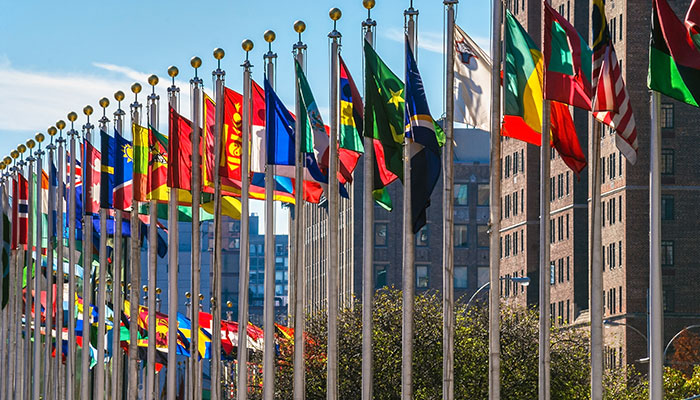
Still, the UN has faced tough times before – over many decades during the Cold War, the Security Council was crippled by deep tensions between the US and the Soviet Union. The UN is not as sidelined or divided today as it was then. However, as the relationship between China and the US sours, the achievements of global co-operation are being eroded.
The way in which people speak about the UN often implies a level of coherence and bureaucratic independence that the UN rarely possesses. A failure of the UN is normally better understood as a failure of international co-operation.
We see this recently in the UN’s inability to deal with crises from the ethnic cleansing of the Rohingya Muslims in Myanmar, to civil conflict in Syria, and the failure of the Security Council to adopt a COVID-19 resolution calling for ceasefires in conflict zones and a co-operative international response to the pandemic.
The UN administration is not primarily to blame for these failures; rather, the problem is the great powers – in the case of COVID-19, China and the US – refusing to co-operate.
Where states fail to agree, the UN is powerless to act.
Marking the 75th anniversary of the official formation of the UN, when 50 founding nations signed the UN Charter on June 26, 1945, we look at some of its key triumphs and resounding failures.
Five successes
1. Peacekeeping
The United Nations was created with the goal of being a collective security organisation. The UN Charter establishes that the use of force is only lawful either in self-defence or if authorised by the UN Security Council. The Security Council’s five permanent members, being China, US, UK, Russia and France, can veto any such resolution.
The UN’s consistent role in seeking to manage conflict is one of its greatest successes.
A key component of this role is peacekeeping. The UN under its second secretary-general, the Swedish statesman Dag Hammarskjöld – who was posthumously awarded the Nobel Peace prize after he died in a suspicious plane crash – created the concept of peacekeeping. Hammarskjöld was responding to the 1956 Suez Crisis, in which the US opposed the invasion of Egypt by its allies Israel, France and the UK.
UN peacekeeping missions involve the use of impartial and armed UN forces, drawn from member states, to stabilise fragile situations. “The essence of peacekeeping is the use of soldiers as a catalyst for peace rather than as the instruments of war,” said then UN Secretary-General Javier Pérez de Cuéllar, when the forces won the 1988 Nobel Peace Prize following missions in conflict zones in the Middle East, Africa, Asia, Central America and Europe.
However, peacekeeping also counts among the UN’s major failures.
2. Law of the Sea
Negotiated between 1973 and 1982, the UN Convention on the Law of the Sea (UNCLOS) set up the current international law of the seas. It defines states’ rights and creates concepts such as exclusive economic zones, as well as procedures for the settling of disputes, new arrangements for governing deep sea bed mining, and importantly, new provisions for the protection of marine resources and ocean conservation.
Mostly, countries have abided by the convention. There are various disputes that China has over the East and South China Seas which present a conflict between power and law, in that although UNCLOS creates mechanisms for resolving disputes, a powerful state isn’t necessarily going to submit to those mechanisms.
Secondly, on the conservation front, although UNCLOS is a huge step forward, it has failed to adequately protect oceans that are outside any state’s control. Ocean ecosystems have been dramatically transformed through overfishing. This is an ecological catastrophe that UNCLOS has slowed, but failed to address comprehensively.
3. Decolonisation
The idea of racial equality and of a people’s right to self-determination was discussed in the wake of World War I and rejected. After World War II, however, those principles were endorsed within the UN system, and the Trusteeship Council, which monitored the process of decolonisation, was one of the initial bodies of the UN.
Although many national independence movements only won liberation through bloody conflicts, the UN has overseen a process of decolonisation that has transformed international politics. In 1945, around one third of the world’s population lived under colonial rule. Today, there are less than 2 million people living in colonies.
When it comes to the world’s First Nations, however, the UN generally has done little to address their concerns, aside from the non-binding UN Declaration on the Rights of Indigenous Peoples of 2007.
4. Human rights
The Human Rights Declaration of 1948 for the first time set out fundamental human rights to be universally protected, recognising that the “inherent dignity and of the equal and inalienable rights of all members of the human family is the foundation of freedom, justice and peace in the world”.
Since 1948, 10 human rights treaties have been adopted – including conventions on the rights of children and migrant workers, and against torture and discrimination based on gender and race – each monitored by its own committee of independent experts.
The language of human rights has created a new framework for thinking about the relationship between the individual, the state and the international system. Although some people would prefer that political movements focus on ‘liberation’ rather than ‘rights’, the idea of human rights has made the individual person a focus of national and international attention.
5. Free trade
Depending on your politics, you might view the World Trade Organisation as a huge success, or a huge failure.
The WTO creates a near-binding system of international trade law with a clear and efficient dispute resolution process.
The majority Australian consensus is that the WTO is a success because it has been good for Australian famers especially, through its winding back of subsidies and tariffs.
However, the WTO enabled an era of globalisation which is now politically controversial.
Recently, the US has sought to disrupt the system. In addition to the trade war with China, the Trump Administration has also refused to appoint tribunal members to the WTO’s Appellate Body, so it has crippled the dispute resolution process. Of course, the Trump Administration is not the first to take issue with China’s trade strategies, which include subsidises for ‘State Owned Enterprises’ and demands that foreign firms transfer intellectual property in exchange for market access.
The existence of the UN has created a forum where nations can discuss new problems, and climate change is one of them. The Intergovernmental Panel on Climate Change (IPCC) was set up in 1988 to assess climate science and provide policymakers with assessments and options. In 1992, the UN Framework Convention on Climate Change created a permanent forum for negotiations.
However, despite an international scientific body in the IPCC, and 165 signatory nations to the climate treaty, global greenhouse gas emissions have continued to increase.
Under the Paris Agreement, even if every country meets its greenhouse gas emission targets we are still on track for ‘dangerous warming’. Yet, no major country is even on track to meet its targets; while emissions will probably decline this year as a result of COVID-19, atmospheric concentrations of greenhouse gases will still increase.
This illustrates a core conundrum of the UN in that it opens the possibility of global cooperation, but is unable to constrain states from pursuing their narrowly conceived self-interests. Deep co-operation remains challenging.
Five failures of the UN
1. Peacekeeping
During the Bosnian War, Dutch peacekeeping forces stationed in the town of Srebrenica, declared a ‘safe area’ by the UN in 1993, failed in 1995 to stop the massacre of more than 8000 Muslim men and boys by Bosnian Serb forces. This is one of the most widely discussed examples of the failures of international peacekeeping operations.
On the massacre’s 10th anniversary, then UN Secretary General Kofi Annan wrote that the UN had “made serious errors of judgement, rooted in a philosophy of impartiality”, contributing to a mass murder that would “haunt our history forever”.
If you look at some of the other infamous failures of peacekeeping missions – in places such as Rwanda, Somalia and Angola – it is the limited powers given to peacekeeping operations that have resulted in those failures.
2. The invasion of Iraq
The invasion of Iraq by the US in 2003, which was unlawful and without Security Council authorisation, reflects the fact that the UN is has very limited capacity to constrain the actions of great powers.
The Security Council designers created the veto power so that any of the five permanent members could reject a Council resolution, so in that way it is programmed to fail when a great power really wants to do something that the international community generally condemns.
In the case of the Iraq invasion, the US didn’t veto a resolution, but rather sought authorisation that it did not get. The UN, if you go by the idea of collective security, should have responded by defending Iraq against this unlawful use of force.
The invasion proved a humanitarian disaster with the loss of more than 400,000 lives, and many believe that it led to the emergence of the terrorist Islamic State.
3. Refugee crises
The UN brokered the 1951 Refugee Convention to address the plight of people displaced in Europe due to World War II; years later, the 1967 Protocol removed time and geographical restrictions so that the Convention can now apply universally (although many countries in Asia have refused to sign it, owing in part to its Eurocentric origins).
Despite these treaties, and the work of the UN High Commission for Refugees, there is somewhere between 30 and 40 million refugees, many of them, such as many Palestinians, living for decades outside their homelands. This is in addition to more than 40 million people displaced within their own countries.
While for a long time refugee numbers were reducing, in recent years, particularly driven by the Syrian conflict, there have been increases in the number of people being displaced.
During the COVID-19 crisis, boatloads of Rohingya refugees were turned away by port after port. This tragedy has echoes of pre-World War II when ships of Jewish refugees fleeing Nazi Germany were refused entry by multiple countries.
And as a catastrophe of a different kind looms, there is no international framework in place for responding to people who will be displaced by rising seas and other effects of climate change.
4. Conflicts without end
Across the world, there is a shopping list of unresolved civil conflicts and disputed territories.
Palestine and Kashmir are two of the longest-running failures of the UN to resolve disputed lands. More recent, ongoing conflicts include the civil wars in Syria and Yemen.
The common denominator of unresolved conflicts is either division among the great powers, or a lack of international interest due to the geopolitical stakes not being sufficiently high. For instance, the inaction during the Rwandan civil war in the 1990s was not due to a division among great powers, but rather a lack of political will to engage.
In Syria, by contrast, Russia and the US have opposing interests and back opposing sides: Russia backs the government of the Syrian dictator Bashar al-Assad, whereas the US does not.
5. Acting like it’s 1945
The UN is increasingly out of step with the reality of geopolitics today.
The permanent members of the Security Council reflect the division of power internationally at the end of World War II. The continuing exclusion of Germany, Japan, and rising powers such as India and Indonesia, reflects the failure to reflect the changing balance of power.
Also, bodies such as the IMF and the World Bank, which are part of the UN system, continue to be dominated by the West. In response, China has created potential rival institutions such as the Asian Infrastructure Investment Bank.
Western domination of UN institutions undermines their credibility. However, a more fundamental problem is that institutions designed in 1945 are a poor fit with the systemic global challenges – of which climate change is foremost – that we face today.