


Doraisanipalya Jallary Reserve Forest
- It is in Bangalore,Karnataka
- It could become the country’s first Butterfly Conservation Reserve.
G20
- The G20 (or G-20 or Group of Twenty) is an international forum for the governments and central bank governors from 20 major economies. It was founded in 1999 with the aim of studying, reviewing, and promoting high-level discussion of policy issues pertaining to the promotion of international financial stability
- The G20 heads of government or heads of state have periodically conferred at summits since their initial meeting in 2008, and the group also hosts separate meetings of finance ministers and central bank governors.
- The members include 19 individual countries and along with the European Union (EU).
- India, China are its members but not Pakistan. It has no HQ/secretariat yet. Hangzhou hosted 2016 summit.
G5 – made up of 5 emerging economies of the 21st century: Brazil, China, India, Mexico, and South Africa.
G8 – Group of 7 biggest (at the time) advanced economies plus the EU: Canada, France, Germany, UK, USA, Japan, Italy, EU, and Russia (suspended most likely due to Ukraine crisis).
Gangetic Dophin
- The mammal is blind.
- The Gangetic dolphin lost its eyes in the course of evolution to adapt to the muddy water of rivers. They largely navigate by echo-location or sonar.
- They also have rods and cones, found in mammal eyes, that help tell light from dark.
- Dolphins have usually limited eyesight and is common to all dolphins around the world- Yangtze dolphins,Amazon, La Plata and the Indus dolphins.
- They have rods and cones, found in mammal eyes, that help distinguish light from dark.
- IUCN- Endangered
NGT’s notice on implementation of the Biological Diversity Act
- Right to Information responses from 15 States reveal the status of implementation of the act. While these States have more than 61,000 panchayats or municipalities, only 14 per cent of PBRs (less than 1,400) have been set up.
- The act calls for the protection and management of biodiversity through the setting up of biodiversity management committees (BMC) for managing biodiversity, and managing peoples’ biodiversity registers (PBR) to document biodiversity in each district.
Misuse of EIA (Examples)
- Monpa community in Arunachal Pradesh’s Tawang district had to struggle for three years to prove before the NGT that the riverine area proposed for the construction of a dam isthe one of the two wintering sites of the black-necked crane(IUCN-Vulnerable, State bird of J & K), a protected species held sacred by Buddhists.
- Tribals in Kinnaur, Himachal Pradesh, are struggling to protect the last remaining chilgoza (pine nut – Near Threatened) trees from being lost to a series of hydropower projects.
- Lakhwar-Vyasi hydroelectric project in Uttarakhand (Yamuna river) is almost the size of the Tehri hydroelectric project(Bhagirathi river), which means that an EIA should be conducted. But it has been exempted because of an ingenious and questionable interpretation of the law, which states that the project was proposed in 1987 before the EIA Notification of 2006.
- The law requires that only projects above 25 MW should undergo EIA studies. Therefore, it is no surprise that most mini-hydel power projects in India are of 24.99 MW capacity!
India’s famed “green judge”, Justice Kuldip Singh, had observed in ICELA v. Union of India, 1996 that “enacting of a law but tolerating its infringement is worse than not enacting a law at all”.
Predatory journals
- Predatory journals use deception to trick authors into submitting papers, do not peer-review manuscripts before publishing, thus allowing even sub-standard material to get published, rarely
index papers with standard indexing bodies, carry impact factors (a rough measure of the quality of the journal) that are not calculated by Thomson Reuters and are more focussed on the article processing fees. - Jefrey Beall, Scholarly Communications Librarian at Auraria Library,coined the term ‘predatory journal’ and maintains a list of such journals.
- Few Indian scientists were tricked to published their papers in these journals.
Competition Commission of India
- Competition Commission of India is a body of the Government of India responsible for enforcing The Competition Act, 2002 throughout India and to prevent activities that have an appreciable adverse effect on competition in India. It was established on 14 October 2003. It became fully functional in May 2009.
- It is a statutory body under Ministry of Corporate Affairs
Carnatic singer T.M. Krishna and campaigner for eradication of manual scavenging Bezwada Wilson received Raman Magsaysay award.
The Manila-based award, named after a Filipino president killed in an aircraft crash, was set up in 1957 to honour people and groups tackling development problems. This award is considered as Asia’s Nobel Prize.
Child Marriage – Census-2011
- Ten million married men and 35 million married women in the north India were married as children, according to a detailed analysis of the 2011 Census data.
- Topping the list is Rajasthan, where almost one-third or 30 per cent of the currently married persons were victims of child marriage. In absolute numbers UP tops the list.
- Close on the heels is Madhya Pradesh at 26 per cent, followed by Uttar Pradesh and Haryana at 21 per cent and 20 per cent respectively.
- National average is 19 percent.
- These revelations were made by non-government organisation Child Rights and You (CRY).
Pre-Conception and Pre-Natal Diagnostic Techniques (PCPNDT) Act
As per the Act, their centres may be sealed for minor lapses while doctors can be booked, or their licences be suspended.
National Board for Wildlife (NBWL)
- National Board for Wild Life is a “Statutory Organization” constituted under the Wildlife Protection Act, 1972
- It is chaired by India’s Prime Minister and its vice chairman is Minister of Environment. Further, the board is mammoth body with 47-members including Parliament Members, NGOs, eminent conservationists, ecologists and environmentalists, Government secretaries of various departments, Chief of the Army Staff, Director General of Forests, tourism etc.
- Its mandate is to promote conservation of wildlife and Protected Areas (PAs).
INS Kalvari
- It is a Scorpene class submarine
Stromatolites
- The tiny structures —called stromatolites — were found in ancient rock along the edge of Greenland’s ice cap, and were 220 million years older than the previous record holders.
- They show that life emerged fairly shortly — in geological terms — after Earth was formed some 4.5 billion years ago.
- Stromatolites are tiny layered structures that are remnants of a community of ancient microbes. Stromatolites are formed when microorganisms, such as certain kinds of bacteria, trap bits of sediment together in layers. These layers build up over time to create solid rock.
Vijaya Vittala temple
- It is part of Hampi group of monuments,
- It has musical pillars and ancient stone chariots.
- It is also a UNESCO World Heritage Site
Hampi
Hampi (Hampe) is a village and temple town recognised as a UNESCO World Heritage Site, listed as the Group of Monuments at Hampi in northern Karnataka, India. It is located within the ruins of the city of Vijayanagara, the former capital of the Vijayanagara Empire.
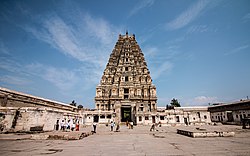
Virupaksha Temple
Hampi — traditionally known as Pampa-kshetra, Kishkindha-kshetra or Bhaskara-kshetra — is derived from Pampa, the old name of the Tungabhadra River.
Emperor Ashoka’s Rock Edicts in Nittur & Udegolan (both in Bellary district) suggest that this region was part of the Maurya Empire during the 3rd century BC.
The ruins of Hampi were surveyed in 1800 by Scottish Colonel Colin Mackenzie, first Surveyor General of India.The Islamic Quarter, sometimes called the Moorish Quarter, is located between the northern slope of the Malyavanta hill and the Talarigatta Gate. According to archaeologists, high-ranking Muslim officers of the king’s court and military officers lived in this area
- Malyavanta Raghunathaswamy temple
- Hazara Rama Temple Complex(well-known for elaborate frescoes from the Hindu theosophy and a sprawling courtyard well-laid with gardens. It is noted for its thousands of carvings and inscriptions around the temple which tell of Ramayana)
- Jain Temples (Hemkut Jain temples, Ratnantraykut, Parsvanath Charan and Ganigatti jain temple)
- Krishna Temple (This is an ASI-protected monument, built in 1513 CE during the reign of king Krishnadevaraya after his successful campaign against the Gajapatis of Orissa. There is a halegannada (old Kannada) stone inscription by Krishnadevaraya dating to 1513 CE in the temple’s frontyard)
- Vittala Temple (The iconic stone chariot in the vicinity of this temple complex is a symbol of Karnataka Tourism. Unfortunately it had a brick tower above it which was demolished. The great “swing-pavilion” of this temple is one of the technical marvels of Vijayanagara architecture. The temple houses the famous musical pillars.)
- Virupaksha Temple (known as the Pampavathi temple,. It predates the founding of the Vijayanagara empire.)
Check the wiki page for gallery- https://en.wikipedia.org/wiki/Hampi
Roka ceremony a social evil, says HC

Dengue
- A mosquito-borne viral disease occurring in tropical and subtropical areas
- Dengue fever is transmitted by the bite of an Aedes mosquito infected with a dengue virus. The mosquito becomes infected when it bites a person with denguevirus in their blood. It can’t be spread directly from one person to another person.
Vizhinjam International Seaport
- It is in Kerala, being developed by the Kerala government in collaboration with the Adani Group.
Siruvani dam (TN vs KL)
- Siruvani is an inter-State river and a sub-tributary of the Cauvery. The Siruvani River is a river near Coimbatore, India. It is tributary of Bhavani river
- Bhavani is tributary of Cauvery.
- Tamil Nadu assembly passed a resolution, opposing Kerala’s Attappady Valley irrigation project on the Siruvani River
Cauvery
- The River Cauvery originates at Talakaveri in Coorg District of Karnataka in Brahmagiri Range of hills in the Western ghats
- The Cauvery basin is bounded by Tungabhadra sub-basin of Krishna basin on the Northern side and Palar basin on the Southern side
- At Shivanasamudram, the river branches off into two parts and falls through a height of 91 m. in a series of falls and rapids. The falls at this point is utilised for power generation.The power station at Shivanasamudram was built as early as 1902.
- The two branches of the river join after the fall and flow through a wide gorge which is known as “Mekedatu“(Goats leap) and continues its journey to form the boundary between Karnataka and Tamilnadu States for a distance of 64 Kms
- At Hogennekkal Falls, it takes Southernly direction and enters the Mettur Reservoir which was constructed in 1934.
- A tributary called Bhavani joins Cauvery on the Right bank about 45 Kms below Mettur Reservoir.Thereafter it takes Easternly course to enter the plains of Tamilnadu.Two more tributaries Noyil and Amaravathi join on the right bank and here the river widens with sandy bed and flows as “Akhanda Cauvery“.
- Immediately after crossing Tiruchirapalli district, the river divides into two parts, the Northern branch being called “The Coleron”/Kollidam and Southern branch remains as Cauvery and from here the Cauvery Delta begins.
- After flowing for about 16 Kms, the two branches join again to form “Srirangam Island“.
- On the Cauvery branch lies the “Grand Anicut”/Kallanai Dam said to have been constructed by a Chola King in 1st Century A.D. Below the Grand Anicut, the Cauvery branch splits into two, Cauvery and Vennar.
- The total length of the river from the origin to its outfall into the sea is 800 Kms. of which 320 Kms.is in Karnataka,416 Kms.in Tamilnadu and 64 Kms. forms the common border between the Karnataka and Tamilnadu states.The Cauvery basin is fan shaped in Karnataka and leaf shaped in Tamilnadu.
- The run-off does not drain off quickly because of its shape and therefore no fast raising floods occur in the basin.
- Tributaries:-
- Shimsa(KN)
- Amaravathi(KL,TN)
- Kabini (KL,KL,TN) – perennial river-forms border between Kerala and Karnataka
- Bhavani (KL,KL,TN) – perennial river
- Hemavathi (KN)
- Distrubutaries-All non-perennial
1. Nandalar
2. Nattar
3. Vanjiyar
4. Noolar
5. Arasalar
6. Thirumalairajanar
7. Puravadaiyanar
UIDAI
Unique Identification Authority of India (UIDAI), a statutory authority established on 12 July 2016 by the Government of India, under the Ministry of Electronics and Information Technology, under the provisions of the Aadhaar Act 2016.
TRAI
- It is a statutory body created through Telecom Regulatory Authority of India Act, 1997, to regulate telecom services, including fixation/revision of tariffs for telecom services which were earlier vested in the Central Government.
- The TRAI Act was amended by an ordinance, effective from 24 January 2000, establishing a Telecommunications Dispute Settlement and Appellate Tribunal (TDSAT) to take over the adjudicatory and disputes functions from TRAI
- TRAI introduced an important change in telecommunication that would benefit all consumers. Effective from 1 January 2016, consumers will be compensated for call drops. However, there is a catch, per the rule, mobile users will get a compensation of Re 1 for every dropped call but it will be limited to a maximum three dropped calls in a day. This regulation has been quashed by Supreme Court on the ground of being “unreasonable, arbitrary and unconstitutional”
BRICS FILM FESTIVAL AND BRICS FILM PANCHAYAT
- The first BRICS film festival was held at New Delhi from 2 September to 6 September 2016. The five-day film festival screened four films each from the participating states.
- Raam Reddy’s Kannada film Thithi was conferred the Best Film award at 1st BRICS Film Festival by Union Minister of Information and Broadcasting
Hypersensitive Pneumonitis (HP)
- Bird Fancier’s Lung — an inflammatory lung condition caused by bird droppings that are highly allergenic.
- The case– When G.S. Srinivas took his mother, K. Sitakumari, to a pulmonologist for a recurring breathing problem, the doctor’s line of questioning seemed bizarre.Do you live in close proximity to pigeons,” the doctor had asked. When the answer was in the affirmative, the doctor’s prescription was even stranger — put up a fish net and keep the birds at Bay. The remedy worked.
PAVA shells or Chilli Grenedes :-
- Chilli grenades used as an alternative to pellet guns as a crowd control measure in Kashmir
- A committee of experts had recommended the use of Pelargonic Acid Vanillylamide (PAVA) shells as an alternative to pellet guns.
Guillain-Barré syndrome
- It is a a rare disorder that can cause muscle weakness and paralysis for a few weeks to several months.
- The syndrome is strongly associated with Zika.
Human Rights Watch
- It is a nonprofit, nongovernmental human rights organization.
- HRW headquartered in New York
- Human Rights Watch in 1997 shared in the Nobel Peace Prize as a founding member of the International Campaign to Ban Landmines, and it played a leading role in the 2008 treaty banning cluster munitions.(The Convention on Cluster Munitions (CCM) is an international treaty that prohibits the use, transfer, and stockpiling of cluster bombs, a type of explosive weapon which scatters submunitions (“bomblets”) over an area –the non-signatories include China, Russia, the United States, India, Israel, Pakistan and Brazil)
- Recently it released its report – World Report 2017: Demagogues Threaten Human Rights.
- Human Rights Watch (HRW), in its 2016 report on India titled ‘Stifling Dissent: The Criminalisation of Dissent in India,’ presents a list of draconian Indian laws that “restrict
freedom of expression”. - Alongside laws like section 124 A (the sedition law), and section 295 A (hurting of religious sentiments) of the IPC, which are predictable inclusions, also in the list are the Scheduled Castes and Scheduled Tribes (Prevention of Atrocities) Act, 1989, and its amendment, the SC and ST (Prevention of Atrocities) Act, 2015.
- While noting that SC/ST Prevention Act is “one of the most important pieces of legislation for the protection of Dalits”, the report singles out section 3 (1) (x) of the Act as a provision ripe for misuse. This section penalises anyone who intentionally insults or intimidates with intent to humiliate a member of a Scheduled Caste or a Scheduled Tribe in any place within public view.” The report highlights the case of sociologist Ashis Nandy as illustrative of “how this well intentioned law could be misused. In January 2013, at the Jaipur Literature Festival, Nandy had allegedly made a comment about Dalits being among the “most corrupt”. Nandy apologised but he was still booked under section 3 (1) (x) of the SC/ST Prevention Act.
Ahuna Mons
- It is a volcano that rises 13,000 feet high and spreads 11 miles is in Ceres, a dwarf planet less than 600 miles wide that orbits the Sun between Mars and Jupiter
- Ahuna Mons isn’t built from lava the way terrestrial volcanoes are — it’s built from ice.(cryovolcanism)
- NASA’s Dawn mission recorded these findings.
Kardashev scale
- It is named after Soviet astronomer Nikolai Kardashev — rates the technological advancement of a civilization.
- A ‘type 1’ civilization on the Kardashev scale is equipped to harness all the energy available to it from its sun, a ‘type 2’ strong enough to harness all of its star’s energy, and a ‘type 3’ powerful enough to capture all the energy from its galaxy. Suffice to say, us earthlings (a ‘type 0’ civilization).
Markha Valley – Kormang Pass (at 17000 feet) are in Leh of Jammu & Kashmir
Kunde Habba festival
- It is a traditional festival of the tribal people in Kodagu District, Karnataka
- On the cool, green hills of Coorg, the Kunde festival is when Jenu Kurumba (tribe) men, liberated by disguise and liquor, curse their gods, their employers and all passers-by.
- Once a year, the usual peace of the Coorg hills is rent by expletives and abuse, the staccato beat of plastic drums, and rhythmic chants and yells. Then, from the muted shades of green and brown foliage emerge the neon-yellow-silver-red Jenu Kurumba men. They are dressed as women, in a playful take on Western sexuality. They are walking to a forest temple to invert normality — they will not worship but berate the gods.
- Kunde Habba in the local dialect means the festival of abusing god.

Showcase on Republic day
GOA-
- ‘Jagor’, the traditional folk dance-drama, is performed by the Hindu Kunbi and Christian Gauda community of Goa.
- Perni Jagor, is the ancient mask dance – drama of Goa, performed by Perni families, using well crafted and painted wooden masks, depicting various animals, birds, super natural power, deities, demons and social characters.
- Gauda Jagor, is an impression of social life, that displays all the existing moods and modes of human characters. It is predominantly based on three main characters, Gharasher, Nikhandar and Parpati wearing shining dress and headgears. The performance is accompanied by vibrant tunes of Goan folk instruments like Nagara/Dobe, Ghumat, Madale and Kansale.
GUJARAT
- Sidi community, settled in the Gir forest.
SIKKIM
- Saga Dawa,Celebration of Buddha Jayanti in Sikkim, which is popularly called Saga Dawa. It is an important occasion which marks the Gautama Buddha’s birth, enlightenment and attainment of Nirvana or Moksha.
- The Buddhist communities of Sikkim on this day take a religious procession carrying the chariot of Gautama Buddha and sacred Scriptures on their shoulder and enchant “Om Mane Padme Hum”. These Holy Scriptures are called “Kangyurtengyur”.
RAJASTHAN
- Hawa Mahal, It was built in 1799 by the King of Jaipur Maharaja Sawai Pratap Singh and was designed by the architect Lal Chand Usta
- “Panihaarin” – the famous folk dance of Jaipur.
CHANDIGARH
- Planned by the famous French Architect ‘Le Corbusier’. Picturesquely located at the foothills of Shivaliks, the conception of the city has been formulated on the basis of four major functions – Working, Care of the Body, Spirit and Circulation. It is known as one of the best experiments in urban planning and modern architecture.The Capitol Complex, the focal point, both visually and symbolically, is considered to be the most representative of Le-Corbusier’s work.
- Corbusier defined the Open Hand as ‘a hand to give and a hand to receive’ and projected it as city’s official emblem dictating the ideology of the city.
TRIPURA
- Unakoti, a Shiva pilgrimage site, located about 186 km away from Agartala and dates back to 7th to 9th centuries AD. The word Unakoti, means one less than a crore.
- The Unakoti rock-cut carvings have the distinction of being the largest bas-relief sculpture in India.
ODISHA
- Boita-Bandana,a festival of ancient Odisha.
- This more or less concentrates around the Sadhava tradition in Odisha, who were great maritime traders.
- Tamralipti, Chelitalo, Palur, Pithunda are ancient seaports of Odisha
WEST BENGAL
- Bauls,a wandering minstrels community of Bengal, who follow a distinctive spiritual and musical tradition that had its roots in the Bhakti and Sufi movement.
- Baul genre, recognised among the ‘Masterpieces of the Oral and Intangible Heritage of Humanity’ by UNESCO.
- The folk singers, coming both from Hindu and Muslim communities, spread the ideals of peace, brotherhood and mystic philosophy through simple words and metaphors
- Bauls try to find their or ‘Monner Manush’ (the Infinite Self), through music. Ektara, Dotara, Khamak, Nupur, Premjuri, Dubki etc. are commonly used instruments of Baul music
- Baul is not a religion, but rather a way of life. Ignoring all kinds of religious social stigma and social barriers.
BIHAR
- Champaran Movement of 1917, The peasants of Champaran, were forced to grow the Indigo under the teenkathia system. Under which the peasants were forced to plant 3 out of 20 parts of his land with indigo. One local peasant leader, Rajkumar Shukla had invited Mahatma Gandhi to visit Champaran. Gandhiji arrived in Champaran but was ordered by the District Magistrate of Champaran, WB Heycock, to leave the district. Gandhiji refused and persisted and decided to commit Satyagraha. He proceeded towards the Champaran, finally succeeding in the movement and was called ‘Bapu’ since then. (EXPECT A QUESTION THIS YEAR- IN PRELIMS OR MAINS)
KARNATAKA
- Kodagu, the coffee land of Karnataka, set amidst misty hills, sandal-wood forests and vast tracts of coffee and tea plantations, is a picturesque sight to behold, inhabited by Kodava community with distinct culture and traditions.
MADHYA PRADESH
- Madhya Pradesh, with the largest forest cover in the country and one of the largest populations of tigers in the country, also has the honour of being the natural habitat of the rarest breed of tigers – the White Tiger. The White Tiger was first captured by king Martand Singh in the year 1951 in district of Rewa. All the White Tigers seen in the world are the progeny of that first captured tiger.
- Government of Madhya Pradesh is setting up the White Tiger Safari at a place called Mukundpur Satna near the city of Rewa, where the people will have the opportunity of watching the White Tigers in their natural surroundings.
CHHATTISGARH
- Khairagarh Music and Art University – one of the oldest universities in Asia dedicated to various forms of music, dance, fine arts and theatre.
TAMILNADU
- Toda tribe of Nilgiri district of Tamil Nadu identified as one of the six primitive tribal groups of the state. They speak a non-linguistic language and have unique appearance, manners and customs.
- The Toda village is called a Mund. The huts are small and half barrel-shaped, with a small doorway. The village also has a unique hut, called “Tirierl” or dairy temple.
- The sole occupation of Todas is Cattle-herding and dairy-work. The traditional garment of Todas consists of a single piece of cloth with red and black embroidery. Todas are vegetarians.
- The mountain District of the Nilgiris is also home to the flowers called “Kurinji” which blooms once in 12 years.
UTTARAKHAND
- Ramman,the festival has been declared World Heritage in 2009 by UNESCO.
- Dance is performed wearing the mask at Temple complex of Bhumyal God in night. There are masks of various epical, historical and imaginative characters. The masks are of two types. “Dhyo Pattar” and “Khyalari Pattar”. “Dhyo Pattar” mask and character is related to god. “Khyalari Pattar” are entertaining characters.
UTTAR PRADESH
- Zardozi,one of the ancient and lavish embroidery.
- Initially, the embroidery was done with pure silver wires and real gold leaves. However, today, craftsmen make use of a combination of copper wire, with a golden or silver polish, and a silk thread.
ASSAM
- Rangoli Bihu, or Bohag Bihu is the most important festival of state of Assam. It is celebrated in spring season during the month of April. Rangoli Bihu festival also marks the beginning of the Assamese New Year.
Panchayat Raj
- One success story is the initiative taken up on the Gaurmati Gram Panchayat, Chattisgarh to fight against alcoholism in the village using the State Government campaign of “Bharat Mukti Vahini”, which has made the Gram Panchayat alcohol free.
- Another example is the holistic development of a tribal Gram Panchayat in Nashik District, Maharashtra, named Dari Gram Panchayat, which has become a model Panchayat for health, education, safe drinking water supply and innovative income generation.
Folk dance in India
- Assam: Khel, Gopal, Rakhal Lila, Tabal Chongli, Canoe, Nongkrem, Ankiya Nat, Kirtania Natak, Ojapali,Bihu
- Bihar: Jadur, Kathaputli, Bhako, Jhijiya, Karma, Jatra, Natna, Bidesia, Senkela Chhau, Jat-Jatni Bidpada, Ramkhelia.
- Gujarat : Bhavai, Garba, Tippani Dance, Padhar dance, Dangi Nritya, Hudo, Matukdi, Aagwa, Siddi Dhamal
- Haryana : Swang, Naqqal
- Himachal Pradesh : Kariyala, Bhagat, Ras Ihanld, Harnatra Haran or Harin.
- Jammu and Kashmir: Bhand Pathar or Bhand lashna, Vetal Dhamali.
- Karnataka: Yakshagana, Bedara Vesha, Dollu Kunitha, Santa, Doddata-Bayalata, Tala Maddle or Prasang. Dasarata, Radhna.,veeragase
- Kerala: Kodiyattam, Margam Kali, Mudiattam, Thirayattam, Chavittu Nadakam, Chakyar koothu,
- Madhya Pradesh: Maanch, Nacha.
- Maharashtra: Tamasha, Lalit Bharud, Gondha, Dashavatar, Lavani, Koli dance.
- Orissa: Pala Jtra, Daskathia, Mayurbhanj Chhau, Mangal Ras, Sowang.sambalpuri(dalkhai,rasarkeli),parbha
- Punjab: Naqqal, Swang bhangra .
- Rajasthan: Khyal, Rasdhari, Rammat, Turra Kilangi, Gauri, Nautanki, Ihamtara.
- Andhra Pradesh: Veethi Natakam, Burrakatha, lambadi, koya.
- Tamil Nadu: Therukuttu, Veethi Natakam, Bhagwat Mela Natakam, Kurvaanji, Pagal Vasham, Kavadi Chindu.
- Telangana: Bathukamma
- Uttar Pradesh: Bhagat, Sang-Swang, Naqqual, Mayur Nritya, Charukala
- Uttrakhand : Chholiya
- Goa : Fugadi, Dashavatar, Perni jagar, Musal khel, Samai nrutya, Gonph dance, Dekhni, Kunbi dance, Ghode modni, Dhalo, Tonya mel, Talgadi
- West Bengal : Chhau (Purulia), Santhali
Heritage Heroes Award of IUCN
- Assam-based ecologist and conservation activist Bibhuti Lahkar has become the first Asian to be awarded the prestigious Heritage Heroes Award by the International Union for Conservation of Nature (IUCN).
- The ecologist has intensively studied the grasslands of Manas and is now globally recognised as an expert in the threatened flora and fauna of the Terai region along the southern foothills of the Himalayas
- The awards aimed at recognising – outstanding efforts” around the world in making a diference in the conservation of World Heritage sites in challenging situation.
Hague Convention on the Civil Aspects of International Child Abduction
- The Hague Convention on the Civil Aspects of International Child Abduction or Hague Abduction Convention is a multilateral treaty developed by the Hague Conference on Private International Law (HCCH) that provides an expeditious method to return a child internationally abducted by a parent from one member country to another.
- India has not ratified it yet.
Indian scientists unlock preterm birth mystery
- At 35 per cent, India accounts for the highest burden of preterm births in the world
- The researchers found for the first time that gram-positive Group B Streptococcus (GBS) bacteria produce small balloons called membrane vesicles, which contain toxins that kill both foetal and maternal cells and destroy the collagen that binds the cells together.
- The GBS bacteria have been associated with premature rupture of amniotic membrane and preterm birth.
Rann of Kuchh: Flora and Fauna
Prosopis juliflora, is an invasive plant
Griffon vulture – Least Concern

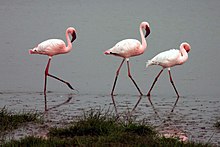
Lesser flamingo-Near Threatened
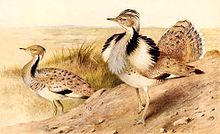
MacQueen’s bustard-Vulnerable
Great Indian Bustard, the Indian Vulture and Siberian cranes – Critically endangered
Sarus crane – Vulnebale
Indian wild ass- Near Threatened
Receive Daily Updates
Recent Posts
- Lowering Emissions by Accelerating Forest Finance (LEAF) Coalition, a collective of the United States, United Kingdom and Norway governments, came up with a $1 billion fund.
- LEAF is supported by transnational corporations (TNCs) like Unilever plc, Amazon.com, Inc, Nestle, Airbnb, Inc as well as Emergent, a US-based non-profit.
- The world lost more than 10 million hectares of primary tropical forest cover last year, an area roughly the size of Switzerland.
- Ending tropical and subtropical forest loss by 2030 is a crucial part of meeting global climate, biodiversity and sustainable development goals. Protecting tropical forests offers one of the biggest opportunities for climate action in the coming decade.
- Tropical forests are massive carbon sinks and by investing in their protection, public and private players are likely to stock up on their carbon credits.
- The LEAF coalition initiative is a step towards concretising the aims and objectives of the Reducing Emissions from Deforestation and Forest Degradation (REDD+) mechanism.
- REDD+ was created by the United Nations Framework Convention on Climate Change (UNFCCC). It monetised the value of carbon locked up in the tropical forests of most developing countries, thereby propelling these countries to help mitigate climate change.
- It is a unique initiative as it seeks to help developing countries in battling the double-edged sword of development versus ecological commitment.
- The initiative comes at a crucial time. The tropics have lost close to 12.2 million hectares (mha) of tree cover last year according to global estimates released by Global Forest Watch.
- Of this, a loss of 4.2 mha occurred within humid tropical primary forests alone. It should come as no surprise that most of these lost forests were located in the developing countries of Latin America, Africa and South Asia.
- Brazil has fared dismally on the parameter of ‘annual primary forest loss’ among all countries. It has lost 1.7 mha of primary forests that are rich storehouse of carbon. India’s estimated loss in 2020 stands at 20.8 kilo hectares.
- Between 2002-2020, Brazil’s total area of humid primary forest reduced by 7.7 per cent while India’s reduced by 3.4 per cent.
- Although the loss in India is not as drastic as in Brazil, its position is nevertheless precarious. For India, this loss is equivalent to 951 metric tonnes worth carbon dioxide emissions released in the atmosphere.
- It is important to draw comparisons between Brazil and India as both countries have adopted a rather lackadaisical attitude towards deforestation-induced climate change. The Brazilian government hardly did anything to control the massive fires that gutted the Amazon rainforest in 2019.
- It is mostly around May that forest fires peak in India. However, this year India, witnessed massive forest fires in early March in states like Odisha, Uttarakhand, Madhya Pradesh and Mizoram among others.
- The European Union’s Copernicus Atmospheric Monitoring Service claimed that 0.2 metric tonnes of carbon was emitted in the Uttarakhand forest fires.
- Implementation of the LEAF Coalition plan will help pump in fresh rigour among developing countries like India, that are reluctant to recognise the contributions of their forest dwelling populations in mitigating climate change.
- With the deadline for proposal submission fast approaching, India needs to act swiftly on a revised strategy.
- Although India has pledged to carry out its REDD+ commitments, it is impossible to do so without seeking knowledge from its forest dwelling population.
Context:-
At the recently concluded Leaders’ Summit on Climate in April 2021, Lowering Emissions by Accelerating Forest Finance (LEAF) Coalition, a collective of the United States, United Kingdom and Norway governments, came up with a $1 billion fund plan that shall be offered to countries committed to arrest the decline of their tropical forests by 2030.
[wptelegram-join-channel link=”https://t.me/s/upsctree” text=”Join @upsctree on Telegram”]What is LEAF Coalition?
Why LEAF Coalition?
Brazil & India
According to the UN-REDD programme, after the energy sector, deforestation accounts for massive carbon emissions — close to 11 per cent — in the atmosphere. Rapid urbanisation and commercialisation of forest produce are the main causes behind rampant deforestation across tropical forests.
Tribes, Forests and Government
Disregarding climate change as a valid excuse for the fires, Indian government officials were quick to lay the blame for deforestation on activities of forest dwellers and even labelled them “mischievous elements” and “unwanted elements”.
Policy makers around the world have emphasised the role of indigenous tribes and local communities in checking deforestation. These communities depend on forests for their survival as well as livelihood. Hence, they understand the need to protect forests. However, by posing legitimate environmental concerns as obstacles to real development, governments of developing countries swiftly avoid protection of forests and rights of forest dwellers.
For instance, the Government of India has not been forthcoming in recognising the socio-economic, civil, political or even cultural rights of forest dwellers. According to data from the Union Ministry of Tribal Affairs in December, 2020 over 55 per cent of this population has still not been granted either individual or community ownership of their lands.
To make matters worse, the government has undertaken systematic and sustained measures to render the landmark Scheduled Tribes and Other Traditional Forest Dwellers (Recognition of Forest Rights) Act, 2006 ineffective in its implementation. The Act had sought to legitimise claims of forest dwellers on occupied forest land.
Various government decisions have seriously undermined the position of indigenous people within India. These include proposing amendments to the obsolete Indian Forest Act, 1927 that give forest officials the power to take away forest dwellers’ rights and to even use firearms with impunity.
There is also the Supreme Court’s order of February, 2019 directing state governments to evict illegal encroachers of forest land or millions of forest dwellers inhabiting forests since generations as a measure to conserve wildlife. Finally, there is the lack of data on novel coronavirus disease (COVID-19) deaths among the forest dwelling population;
Tardy administration, insufficient supervision, apathetic attitude and a lack of political intent defeat the cause of forest dwelling populations in India, thereby directly affecting efforts at arresting deforestation.
Way Forward
Tuntiak Katan, a global indigenous leader from Ecuador and general coordinator of the Global Alliance of Territorial Communities, aptly indicated the next steps at the Climate Summit:
“The first step is recognition of land rights. The second step is the recognition of the contributions of local communities and indigenous communities, meaning the contributions of indigenous peoples.We also need recognition of traditional knowledge practices in order to fight climate change”
Perhaps India can begin by taking the first step.