


Intellectual Property and India:- A Complete Coverage.
Background :- Recently Government of India released Indian Intellectual Property Panorama which is a single window interface for information on Intellectual Property and guidance on leveraging it for competitive advantage.The Indian IP Panorama is a customized version of IP Panorama Multimedia toolkit, developed by World Intellectual Property Organization, Korean Intellectual Property Office and Korea Invention Promotion Association .
The toolkit has been adapted to cater to SMEs and start-ups, especially in the ICT sector of India, based on an agreement signed between WIPO and DeitY. The Indian IP Panorama is thus a customized version of WIPO’s original product and is in accordance with Indian IP laws, standards, challenges and needs of the Indian ICT sector.
Modules Under the Toolkit:-
- “Importance of IP for SMEs”,
- “Trademark”,
- “Industrial design”,
- “Invention and Patent” and
- “Patent Information”
What is Intellectual Property:-
The concept of intellectual property (IP) will be understood better if we understand what is meant by the term property. To a lay person property means some material object belonging to a particular person. The concept of ownership is critical to the concept of property. Ownership means the right to possess, use and dispose of the property and exclude the others. If a society does not recognise ownership, it will have no concept of property. In the legal sense, property refers to the bundle of rights that the law confers on a person by virtue of the ownership and possession of an object.
However, a material object under one’s possession may not amount to much as property if it does not become a resource to satisfy some human want or need. Man by exertion of his intellect, either in the form of ideas or technology, converts a natural resource into something of utility, making it an item of property.
Two factors significantly influence the value of an object as property. The first is scarcity, which refers to its availability in relation to the need. The scarcer is a thing in relation to the demand for it, the higher is its value. The second important factor influencing the value of an object is the knowledge of its use or uses. The higher the value of an object, the more zealously it is guarded as a ‘property’.
What rights constitute the bundle of rights that are termed as property?
These rights deal with various aspects of the relationship between persons and their property, such as: ownership and possession; use and enjoyment of the fruits of its application; exclusion of others from use and application of the property; and transfer of rights in the property.
The property can relate to a tangible thing e.g. land or buildings, or to an intangible thing e.g. a copyright. In the former case they are referred to as tangible or corporeal property, in the latter case they are known as intangible or incorporeal property.
Tangible property has a big advantage over intangible property: the fact of possession of a physical object by the owner ensures that any other person is excluded from using it. It is not so with the creations of the mind, say, an invention or a book which can be reproduced otherwise.
This brings us to the concept of intellectual property. It is simply the property created by the application of human mind. It is non-physical (intangible) and it derives its value from idea(s).There is no uniform definition of IP.
The domain of IP is expanding fast as knowledge and information become key drivers of techno-economic growth and of societal progress in general.IP is a dynamic area; as science & technology make rapid advances, and as competition for markets becomes ever more fierce, human ingenuity is throwing up ever new ideas and newer products.
Newer areas are emerging with claims for recognition as IP. They have to be accommodated as IP either in one of the existing categories or in new categories that have to be created. Thus while copyright originally was concerned with works of literature and artistic works gradually its scope expanded to cover works of drama, music, photography, cinematography, audio-visual recordings, performances, broadcasts and now computer programmes.
Among the successful new categories to be recognised as entitled to the status of IP are: ‘Geographical Indications’ which combine in themselves appellations of origin and indication of source and accord special treatment to wines and spirits; lay out design (topography) of integrated circuits, which has been recognised as an independent form of IP under the Agreement on Trade Related Aspects of the Intellectual Property Rights (TRIPS Agreement) of the World Trade Organisation (WTO). Genetic resources, and traditional knowledge and folklore have made strong claims for protection as IP. Galloping advances in the realm of internet and convergence may be the harbinger of new forms of IP.
Types of IP :-
IP has been generally divided into two main branches viz., (a) Industrial Property, and (b) Copyright.
Industrial property consists of rights relating to inventions, trade marks, industrial designs and geographical indications. Copyright protects rights related to creation of human mind in the fields of literature, scientific, music, art and audio-visual works, etc. Related rights protect performances of performing artists, phonograms and broadcasts. Related rights and neighbouring rights are terms used interchangeably.
The TRIPS Agreement of the WTO recognises seven categories of intellectual property rights (IPRs), which had already been enshrined in various treaties administered by the World Intellectual Property Organization (WIPO) since the late 19th century:-
i) Copyright and Related Rights
ii) Trade marks, Trade names and Service marks
iii) Geographical Indications
iv) Industrial Designs
v) Patents
vi) Layout Designs of Integrated Circuits
vii) Undisclosed Information
Copyright is granted in respect of original literary, musical, artistic or audio-visual works – the creations of authors, playwrights, composers, artists, film makers. The rights under copyright include: rights of reproduction, communication to the public, adaptation and translation of work.
Copyright is now spoken together with the related or neighbouring rights as one category. Though originality in expression is a requirement for copyright, the quality of the works is not an issue at all. It is to be noted that though the copyright subsists in works which are the creation of ideas, it is not the idea that the copyright protects, but merely the expression of the idea as fixed in a particular form.
If an author thinks up the plot of a story, it is not the idea of the plot that is entitled for protection under a copyright but only the written form of the story flowing from the idea. Any other person can come up with a differently written story on the same idea and have a valid claim for a copyright over it. If a painter has a copyright in a painting which depicts sunrise no one else can legally copy that painting without his / her permission.
However, there is no copyright in the idea of sunrise and anybody is free to paint sunrise as per his / her own imagination, and everyone will be entitled to copyright in one’s own creation. The copyright is in the painting, not in the idea of sunrise. Copyright is an inherent right that commences since the completion of the work as an expression of the idea. Copyright comes with the doctrine of ‘fair use’, which includes use of the work for purposes of criticism, comment, news reporting, teaching and education, scholarship and research. Fair use does not constitute infringement.
We may also remember that unlike patents or registered designs, copyright confers no monopoly rights. In fact if two persons can produce precisely similar work demonstrably working independently of each other, each one will have the legal right to his / her own creation. It should be reiterated that registration is not required for a work to be protected. A copyright work is protected from its creation.
Trade marks and service marks are distinctive symbols, signs, logos that help the consumer to distinguish between competing goods or services and are a major part of the goodwill a company enjoys in the trade. A trade name is the name of an enterprise, which also individualises the enterprise in the minds of the customers. They are therefore protected as IP.
Thus a trade mark is a sign that individualises the goods of a given enterprise and distinguishes them from the goods of its competitors. You may be quite familiar with the distinctive marks of Pepsi-Cola and Coca-Cola Companies. Similarly in passenger cars a characteristic star in front, or a characteristic treelike T, enclosed in an ellipse and displayed in the front and the rear of a vehicle immediately proclaims that the first vehicle is from the Mercedes and the second one is from the Tatas stable. Trade marks invariably come to symbolise quality of goods or services in the customer’s mind. However, there is no requirement in law that trade mark has to meet any quality standards. If quality is not maintained, customers will shift to another brand. A trade mark is required to be distinctive and not deceptive. If you market goods of fake leather under the trade mark ‘Realeather’ you will be taken in by a deceptive trademark.
A geographical indication (GI) is a sign used on goods that have a specific geographical origin and possess qualities or a reputation that are due solely to the place of origin e.g. its specific climate, soil or method of production. Such goods enjoy an advantage over competing goods solely because of their geographical origin, which thus becomes a kind of IP and is protected. A GI is different from a trade mark. A trade mark is a sign that distinguishes the product and services of an enterprise from those of another. The owner of a trade mark is entitled to exclude others from using the trade mark. A GI merely tells that a product is produced in a certain place and has certain characteristics which are due to the place of production like specific soil, or climate or method of production. It can be used by all producers who make their products in a place designated by the GI and share the same qualities. Some best known examples of GI are: Champagne (special kind of sparkling wine originating in the French region of that name; Kolhapuri chappals from Kolhapur, India).
The Paris Convention for the Protection of Industrial Property uses two terms in the context of geographical indication: appellation of origin and indication of source. Indication of source on a product merely indicates that the product originates in the place indicated. Appellation of origin indicates not only the place of origin but also the essential quality link between the product and the area of its origin. Protection of GI can be done in many ways: through a sui generis legislation or through decrees, or through registration or through reliance on tort of ‘passing off’ (which basically says that unfair trade practices should not be used). GI can also be protected by collective marks belonging to a group of traders or producers or a certification trade mark that does not belong to any one; the understanding for its registration is that anyone who meets the specified conditions can use it.
An industrial design is the ornamental or aesthetic aspect of an article; it may consist of three dimensional features such as shape or surface, or of two-dimensional features such as patterns, lines or colour. The design serves as a tool for product differentiation and lures customers by enhanced visual appeal. Industrial designs are applied to a wide variety of products of industry or handicraft: from watches, jewellery, fashion and other luxury items to industrial and medical implements; from houseware, furniture, electrical appliances to vehicles and architectural structures; from practical goods and textile designs to leisure items such as toys.
An industrial design is distinguished from trade mark primarily because it is constituted by the appearance of a product, which is not necessarily distinctive, whereas a trade mark is necessarily to be distinctive to serve as a sign for product differentiation. The functions of, and the justification for protecting industrial designs and trade marks are quite different. Designs must relate to the appearance of the object which is not determined by technical or functional necessity. Designs enhance the visual appeal and add to the commercial value of the product; they also facilitate the marketing and commercialisation of the product. For registration a design needs to be new and original, though the notion of these qualities may vary from country to country. In certain conditions, an industrial design can be protected under copyright law or the law against unfair competition.
A patent is a statutory right granted for a limited period to an inventor in respect of an invention to exclude any other person from manufacturing, using or selling the patented product or from using the patented process, without due permission. Under the TRIPS Agreement of the WTO, inventions in all fields of technology, whether products or processes are patentable if they meet the three criteria of novelty, involving an inventive step and being capable of industrial application. Patents are one of the oldest forms of IP protection.
Layout design (topography) of integrated circuits is a relatively new area in IP which has appeared with computer technology and has acquired importance as the technology makes rapid advances. The programming instructions on a computer chip are implemented through a circuitry printed on semiconductor layers. The design of circuitry on the chip requires great investment of knowledge, skills and capital and this needs to be protected as IP. The right in topography aims to prevent copying of the layout design but reverse engineering to come up with improved design is regarded as fair. It may also be noted that while for claiming a patent an invention is required to meet the criteria both of novelty and inventive step, a layout design is only required to be original. Protection of layout design confers no monopoly right; independent development of a design, identical with a protected design is permitted.
Undisclosed information gets recognition as a kind of IP that needs to be protected under the TRIPS Agreement. Earlier to it, the WIPO treaty (1967) and the Paris Convention recognised unfair competition as a part of IP. Unfair competition includes all acts contrary to honest practices in industrial or commercial matters; undisclosed information restricts honest practices to protection of trade secrets. The TRIPs Agreement (Article 40) does refer to the control of Anti-Competitive Practices in Contractual Licences; the Agreement also empowers member-States to make in their national legislation suitable provisions to prevent abuse of IPRs.
The intellectual property thus vests in a creation of human mind involving knowledge, labour and skill. It is the result of sustained intellectual application and efforts of inventors, authors and other creative persons, including first adapters and is a powerful factor of production and wealth generation in a modern economy. The IP is a significant factor in gaining competitive advantage over rivals in the trade and industry as the entire idea of IP is to protect the owner against its unlawful use by any person or party offering same or similar products or services.
IPRs, as their exercise has evolved in practice, can secure for the owner a broad range of advantages depending on the national law; for example, IPRs can effectively block imports or exports of relevant goods, or they can be used to divide markets, or restrict movement of goods produced by an enterprise from one territory to another. To fully comprehend the consequences of a national legislation in matters of IPR, it is important to grasp the purpose the law seeks to serve by creating these private rights in property. The chain of production to distribution of goods involves the following major steps: manufacture; first sale by the manufacturer; subsequent sales; exports/imports; use, other dealings. It is for the state to decide in which steps it should intervene to grant exclusive rights to the owner to ensure just reward for creative activity and best techno-economic returns for the State and the society.
A point to appreciate here is that IP is concerned with the human capacity to produce something new and offer it for public use. The property does not lie in the thing so produced and offered but in the owner’s rights over the creation of his/her intellect. This intellectual property is intangible, and though in each case it is associated with a tangible object, it is independent of the object itself. Again, what IP protects is the use or value of ideas and not the abstract ideas themselves; there are no rights, hence no property, over the ideas per se.
Should Intellectual Property be protected ?
More often , it is argued that if intellectuals deliberations and manifestations are protected through Laws and conventions , it harms the creativity of human genius.This line of argument is often found in the context of debate between “Open source” vs “Licensed products ” (For example – Linus Operating system VS Microsoft ).
Hence to understand the rationale behind the rights is important.
Just as one goes back to the concept of ‘property’ to appreciate better the meaning of intellectual property, one may look to the justifications advanced for protection of tangible property to appreciate the justification for IP. Within the capitalist system such justification comes from two angles: the labour justification and the personality justification.
The labour justification was propounded by Locke who viewed the labour of an individual as belonging to the individual and when one takes from the State what Nature has provided to it – some ‘goods’ akin to ‘commons’ – and mixes one’s labour with it, one creates property for one self.
Labour adds value to the goods and converts ‘commons’ into property. The creation of social value both by converting commons into goods and adding more value to goods by investment of labour deserves to be rewarded to encourage people to be innovative as also to perform better.
In moving from the tangible property to the intellectual property, both the views – rewarding innovation as well as rewarding value creation – have relevance. The society has to encourage people to strive to be innovative and come up with creative solutions to generate wealth and welfare as also to add value to existing goods and services.
Locke’s idea of occurrence of commons in abundance in the primitive stage is apt in the consideration of intellectual property because ideas are always around us in abundance; this is the public domain. The IPRs do not appropriate the ‘public domain’ – the ‘commons’ are no body’s private property. The IP law takes care of it by ensuring that no protection is given to either the everyday ideas, or highly extraordinary ideas like advances in mathematics. The IP law takes care that nobody unduly appropriates ‘public domain’ by ensuring that the rights are available only for a limited period after which the intellectual creation comes to the public domain.
Lets draw the attention to a rather subtle parallel between the fields of tangible property and the intangible intellectual property. In the field of tangible property the rights of slaves as generators of property were not recognised. Even now the labour of housewife fetches no remuneration, and remains unrecognised as generator of wealth. Similarly, in the realm of IP the traditional knowledge and folklore, is yet to gain solid recognition as IP, and enjoys no commensurate protection as the creation of knowledge, skills and ideas, developed and perfected by local communities over centuries. This only confirms the view that property laws, whether for the tangible property or the intellectual property reflect power relations in society.
The justification for IP from the ‘personality’ angle regards property as a mechanism of expression of one’s persona. Hegel is the main proponent of this view: property is the embodiment of personality. Thus property is a very personal and private thing and needs to be protected. In the case of the intellectual property, however, this justification may apply in varying degrees to subject matters of different categories of IP. While products of art, music and literature and trade marks may reflect the personality of their creator to a remarkable degree, the inventions or engineering designs may not really support the personality thesis.
A major recognition for the personality justification of property is seen in the moral rights under the copyright law. These are deemed to be the inalienable rights of the author to safeguard the integrity of the work against any change that would damage the author’s reputation or the message of the work.
Clearly a completely satisfactory rationale for intellectual property protection is not available either from the labour angle or the personality angle. Different categories of IP would appear to derive different degrees of justification from different angles. Patents and industrial designs would be better supported from the labour point of view; copyrights and trade marks would find better justification from the personality angle. The entire domain of the IP, however, is served better when both the views are taken together as justification for the protection of property.
IPRs are based on three underlying premises:-
1. Creative activity culminating in IP can be increased by measures aimed to encourage it. Also, it will not be generated in economically adequate quantity for public use without economic incentives.
2. Grant of legal monopoly powers, even if for a limited period is the only way to ensure adequate economic benefits as just reward for the creation of IP.
3. The provisions of the global IP regime ensure just economic returns to the creation of IP while safeguarding the interest of other entrepreneurs and the society in general.
Constitution of India and IPR :-
The Constitution of India makes no specific mention of intellectual property. Property in the Constitution generally means tangible property. However, IP as a form of property can be put under Article 300A which deals with property and be entitled to a legal right.
Experts have spotted possibilities of a conflict between the IP, specially the copyright, and the constitutionally guaranteed freedom of speech and expression. The Courts have zealously upheld this fundamental freedom. In a case of any restriction on speech and expression, the perspective of the rights of viewers and listeners, is likely to get precedence over the perspective of the rights of broadcasters. Any rights (monopolies) that undermine the right to freedom of speech and expression may face a challenge.
IP and Indian Scenario :-
The tradition of scholarship and intellectual creativity in India goes back to a fewmillennia. Yet the concept of Intellectual Property Rights in the modern sense is rathernew and would appear to have no cultural moorings or sanction in our country. Thehistory of intellectual property rights in India backed by enforceable legal provisionsscarcely goes back to 150 years.
IP acts enacted by India :-
1. The Patents Act, 1970, as amended by the Patents (Amendment) Act, 1999, anthe Patents (Amendment) Act, 2002
2. The Copyright Act, 1957 as amended in 1999
3. The Trade marks Act, 1999
4. The Designs Act, 2000
5. The Geographical Indications of Goods (Registration and Protection) Act, 1999
6. The Protection of Plant Varieties and Farmers Rights Act, 2001
7. Integrated Circuit Layout Designs Act, 2000
8. The Biological Diversity Act, 2002
Major international treaties signed by India :-
1. The Convention Establishing the World Intellectual Property Organisation
2.The Paris Convention for the Protection of Industrial Property
3.The Berne convention on Protection of Literary and Artistic works
4.Patent cooperation Treay
5.The Geneva Convention for the Protection of Producers of Phonograms againt Unauthorised Duplication of their Phonograms.
6.The Budapest Treaty on the International Reorganition of the Deposit of Micro organisms for the Purposes of Patent Procedure
7.The Universal Convention of Copyrights
Emerging Issues in IP :-
The global intellectual property system has constantly to cope with new challenges as on the one hand advances in science and technology give rise to ever new unprecedented issues and, on the other, new, legitimate claims crop up from commercialisation of knowledge embedded in traditional systems. The emergence of information and communication technology (ICT), and biotechnology (BT), the two fields of knowledge which have seen staggering advances at breath-taking pace, has posed new issues before the IP protection system. The progress in these two fields has literally transformed the way one had known the world, transacted business and carried out other activities even only a quarter century ago. Similarly as the conduct of R & D as mega business brought out predatory forays into commercialisation of knowledge embedded in traditional systems and exploitation of cultural heritage of indigenous communities without any share or acknowledgement going to the traditional communities that owned these resources, several issues of ethics and equity have come to the fore.
Summary of Issues :-
- Advances in ICT have changed the way people live, work and conduct business. Reproduction with high fidelity, in very large numbers, has become easy and cheap. It can be done anywhere and transmitted from any where to anywhere on the globe across national boundaries. Enforcing IPR under these circumstances is difficult.
- Multiple user computer systems enable pirated digital works to be used by several persons simultaneously.
- Manipulation of digital works is easy, leading the resulting work to be claimed as new and original.
- Protection of IP over digital products is following two approaches: control of access; metering usage. Protecting integrity of work is an area of concern.
- WIPO through its Digital Agenda is helping in crystallising all issues and evolving their solutions through international consensus.
- A domain name is the address of a website. Disputes arise due to cybersquatting. WIPO is the leading ICANN accredited agency for resolution of domain name disputes.
- Biotechnological processes and products have vast economic potential, and thus they are hot items of IP. It is full of ethical questions and moral debates.
- Access to rich biodiversity and traditional knowledge of developing nations for developing biotechnological processes and products raises questions of ownership and benefit sharing.
- Extension of IP to living things is recent. It raises question of discovery vs invention besides the propriety of appropriating natural living organisms as private property.
- The USPTO (United States Patent and Trademark Office) does not grant patent on a fundamental gene, ESTs (Expressed-sequence tags or SNP) (Single nucleotide polymorphisms,), unless they have a role in human health and a commercial potential.
- Traditional Knowledge covers knowledge of a community to deal with all life situations i.e. its science and technology, agriculture, medicine, biodiversity, folk art and craft, folk music and dance, drama, folk motifs, designs and symbols, in fact all moveable cultural material.
- Traditional Knowledge (TK) and the folk lore, on the one hand, and the IP system on the other, are products of two very different cultural and value systems, one regarding knowledge and folklore as belonging to the community, the other seeing creations of ones own mind and skills as belonging to the individual, as personal property. Areconciliation of the two views is engaging serious attention at the international level with WIPO playing a lead role.
Eight Core Industries to measure Economic growth and other indices : –
The Eight Core Industries comprise nearly 38% of the weight of items included in the Index of Industrial Production (IIP).The combined Index of Eight Core Industries stands at 172.2 in February, 2016, which was 5.7 %higher compared to the index of February, 2015. Its cumulative growth during April to February, 2015-16 was 2.3 %.
- Coal:-Coal production (weight: 4.38%)
- Crude Oil:-Crude Oil production (weight: 5.22%)
- Natural Gas:-The Natural Gas production (weight: 1.71%)
- Refinery Products (93% of Crude Throughput):-Petroleum Refinery production (weight: 5.94%)
- Fertilizers:-Fertilizer production (weight: 1.25%)
- Steel (Alloy + Non-Alloy):-Steel production (weight: 6.68%)
- Cement:-Cement production (weight: 2.41%)
- Electricity:-Electricity generation (weight: 10.32%)
Inclusiveness and Accessibility Index :-
Background :- Government launches ‘Inclusiveness and Accessibility Index’ to mark the next chapter of its flagship Campaign, the ‘Sugamya Bharat Abhiyan’
Accessible India (Sugamya Bharat Abhiyan) :-
- DEPwD – Department of Empowerment of Persons with Disabilities , had launched the Accessible India Campaign as a nation-wide flagship campaign for achieving universal accessibility for the PwDs.
- For PwDs , universally is critical for enabling them to gain for equal opportunity and live independently.
- Persons with Disabilities(Equal opportunities, Protection of rights and Full participation ) Act ,1995 under section 44,45,46 categorically provides for non-discrimination in transport and non-discrimination in built environments.
- UN Convention on the rights of persons with disabilities (UNCRPD), to which India is a signatory , under article 9 casts obligations on the governments for ensuring the PWDs accessibility to :-
- Information
- Transportation
- Physical Environment
- Communication Technology
- Accessibility to services as well as emergency services
- Keeping this in view and creating India as a more inclusive and accessible society , the Government of India had launched this program.
‘Gram Uday Se Bharat Uday Abhiyan’ (Village Self Governance Campaign)
Starting with Dr. Bhimrao Ambedkar’s 125th Birth Anniversary on 14th April 2016 and culminating in Panchayati Raj Day on 24th April 2016, in the period between 14th April to 24th April 2016, the Central Government, in collaboration with States and Panchayats, will organize a ‘Gram Uday Se Bharat Uday Abhiyan’ (Village Self Governance Campaign).
The campaign aims to generate nation-wide efforts to increase social harmony across villages, strengthen Panchayati Raj, promote rural development, and foster farmers’ progress.
A Budget for Groundwater :-
Background :-
The protest by farmers in Chikballapur recently, over the scarcity of drinking water, received extensive news coverage as it halted Bengaluru in its tracks after key highways were blocked. Interestingly, very little of that coverage was devoted to the groundwater crisis that underpins the problem in such regions.
Details :-
Groundwater plays an important role in our lives and India’s economy, but it is disappearing fast. There is mounting evidence that we are extracting more than can be naturally replenished. In the hard-rock aquifers of peninsular India, drilling 800 ft or deeper is becoming the norm. Groundwater-dependent towns and villages spend an increasing fraction of their budgets chasing the water table. Stories abound of farmers spending their life savings or taking loans to drill a borewell, but failing to find water. If we “run out” of groundwater, millions of people will be left without any means to sustain themselves.
Scientific evidence also points to over-exploitation. The Central Ground Water Board classifies all blocks in India based on the fraction of recharge that is extracted and trends in long-term groundwater levels. Since 2004, almost a third of blocks have been classified “over-exploited” or “semi-critical”. If we understand the problem and if the consequences are so severe, why are we unable to address it? The answer lies partly in politics, partly in the invisible nature of groundwater, and partly in our reliance on simple techno-economic fixes.
Flawed regulatory structure
Electricity is supplied to farmers free of cost. This policy made sense when groundwater was abundant in the 1980s. Indeed, it helped millions of farmers escape poverty. But today, where groundwater levels have fallen hundreds of feet below the ground, the subsidy is actually only utilised by the richest farmers who can afford to drill deep. And even so, not all are lucky enough to strike water. Access to groundwater in hard-rock regions has almost become a lottery. Yet in the absence of alternative water sources, charging farmers for electricity is seen as political suicide.
Groundwater is inherently difficult to monitor and control, in part because of its invisibility, which also perpetuates the illusion that each well is independent. The myth is enshrined in Indian groundwater law that allows landowners to extract as much as they want. In reality, not only is groundwater within an aquifer interconnected, but aquifers and rivers are also interconnected. So depleting groundwater means drying rivers. Despite this, groundwater and rivers are regulated by different agencies that do not properly account for the linkages between them, often double counting the quantum of the resource.
Much of the current action on the ground is through techno-economic fixes. These have clear benefits in terms of reducing pumping costs and using local aquifers instead of building big, expensive dams. But what they do not do is create “new” water.
Boosting recharge through rainwater harvesting structures such as small check dams is a popular measure. However, any water that recharges is water that does not flow downstream. Often users located near check dams simply extract more water, while users further downstream wonder why their rivers and tanks are drying up. Another technological solution is to improve efficiency through subsidised drip irrigation or energy-saving pumps. Again, these have often resulted in farmers increasing their irrigation area with no decrease in water extracted. And farmers are not alone; conscientious urban dwellers take pride in reusing wastewater for gardens and parks. But this could result in more wasteful water use, with the additional “wastewater” used in lawns or golf courses where none previously existed.
Science and fairness
Techno-economic fixes do not address the underlying “zero-sum game” nature of water resource use. Ultimately, the water management problem is that of allocating the water available each year among users — both people and the ecosystem. Without understanding how much water is available, how much is being used and by whom, solving India’s water crisis is going to be a non-starter.
The way forward is comprehensive water budgeting, simultaneously in each watershed and the river basin as a whole. Water budgets at the watershed level will inform communities about how much water they have, so it can be equitably shared within communities. Water budgets for the river basin will inform communities how much must be left for downstream users, ensuring that water resources are allocated between communities fairly and transparently.
Given the zero-sum nature of the game and the impossibility of creating “new” water, it is likely that we cannot restore the water balance in severely depleted regions without painful cuts in water use. However, there are some glimmers of hope. Water users everywhere are worried about the disappearing resource and willing to engage. The trick lies in combining technology (low-water-use crops, xeriscaping) and economic incentives that reduce actual water use (“cash-for-blue” schemes) without reducing productivity or quality of life. This needs a strong water governance system based on awareness building, science and a commitment to fairness and sustainability.
ARIES :-
Recently India launched Aryabhatta Research Institute of Observational Sciences (ARIES), built with Belgian assistance. It is located in Nainital, Uttarakhand.
Few Facts :-
- ARIES telescope is a joint collaboration between Indian, Russian, and Belgian scientists.
- The telescope is located at Devasthal, Nainital at a height of 2,500 metres.
- It is said that the site was chosen to get a clear view of the sky.
- The high end technology incorporated in the telescope enables it to be operated with the help of remote control from anywhere in the world.
- The telescope will be used in the study and exploration of planets, starts, magnetic field and astronomical debris.
- The scientists will also help in research of the structures of stars and magnetic field structures of stars.
Simultaneous Lok Sabha and Assembly elections :-
Background :-
Recently there has been a report that Government of India . is considering to hold Lok sabha and Assembly election simultaneouly.
Details:-
The decision is also based on the 78th report of the parliamentary standing committee of Law and Justice that had been asked to go into the issue in detail. The report was submitted in December 2015.
- The committee recommended a two-phase election schedule to make the Lok Sabha and Assembly polls coterminous, but had raised uneasiness in different political parties.
- The first general elections to the Lok Sabha was held simultaneously with all State Assemblies in 1951-52. That practice continued in three subsequent general elections held in the years — 1957, 1962 and 1967.
- However, due to the premature dissolution of some Legislative Assemblies in 1968 and 1969, the cycle got disrupted.
- In 1970, the Lok Sabha was itself dissolved prematurely and fresh elections were held in 1971. The term of the fifth Lok Sabha was extended till 1977 under Article 352. After that, the eighth, tenth, fourteenth and fifteenth Lok Sabha could complete their five year terms. The sixth, seventh, ninth, eleventh, twelfth and thirteenth ones were dissolved prematurely.
- As a result of premature dissolutions and extension of terms of both the Lok Sabha and various State Assemblies, the last 48 years have seen separate elections to the Lok Sabha and the Assemblies
Skin bank
Recently Karnataka got its first skin bank, the sixth in the country.Doctors hope that the skin bank may help save the lives of countless burn victims, as harvested skin is the best form of “biological dressing” available today.Although artificial skin is available, it is prohibitively expensive. The government has agreed to fund all skin grafts done at the skin bank. A nominal charge may be executed.
Working of the skin bank:
- Like any other organ donation, skin donation needs to be pledged by a living person or needs to be offered for donation by the family soon after death.
- The skin is harvested within 6 hours of death either at hospital or home. The harvesting is done from hidden areas such as the back and the thigh with no bleeding or deformity to the body. The skin donation does not hamper the rituals of last rites.
- The process is fairly simple and takes less than 45 minutes. The donor could be anyone above 16 years of age.
- The donor should not have skin disease or skin cancer and should be negative for HIV and Hepatitis C.
- No blood group matching is required.
- The harvested skin is processed and stored as per international protocol in the skin bank ready for dispensing and safe use in burns care as the best biological dressing. This dressing not only saves the life but also relieves the pain, reduces infection increasing chances of survival significantly, especially when the burn area exceeds 40%.
100% FDI in e-commerce retail
The government has allowed 100% foreign direct investment (FDI) through the automatic route in the marketplace model of e-commerce retailing.
Details:
- However, as per the guidelines issued by the Department of Industrial Policy and Promotion (DIPP) on FDI in e-commerce, foreign direct investment has not been permitted in inventory-based model.
- According to the guidelines, the e-commerce marketplace may provide support services to sellers in warehousing, and logistics., order fulfilment, call centre, payment collection and other services. However, such entities will not exercise ownership over the inventory.
- According to the guidelines, any warranty/guarantee on goods and services sold will be responsibility of the seller, not the market place operator.
- Also, an e-commerce firm will not be permitted to sell more than 25% of total sales from one vendor or its group companies.
Marketplace Model:-
The marketplace model has been defined as providing an “information technology platform by an e-commerce entity on a digital and electronic network to act as a facilitator between buyer and seller.” Example – Amazon, Flipkart ,Snapdeal etc.
Inventory-based model:
An inventory-led model is defined as one where the e-commerce entity owns the inventory of goods and services and sells directly to consumers. Earlier Flipkart used to be inventory based e-commerce venture.
Implications:
This move could potentially end the discount wars, much to the disappointment of consumers. This is because the rules now prohibit marketplaces from offering discounts and capping total sales originating from a group company or one vendor at 25%. With this, online marketplaces will now not be allowed to directly or indirectly influence pricing of products and services on the platform.This could, however, level the playing field with offline stores, which have witnessed a slump in footfalls corresponding to the increase in e-commerce.
The press note issued by the department of industrial policy and promotion (DIPP) said 100% FDI via the automatic route would be allowed only for e-commerce players under the marketplace model, and not under the inventory led model. This means that companies such as Amazon and Alibaba can set up an online marketplace legally now where sellers can sell their products. But the policy does not allow Amazon or Flipkart to become a seller.
Need of the Policy:-
So far, India has allowed 100% foreign investment in business-to-business (B2B) e-commerce but none in retail e-commerce—i.e., business-to-consumer, or B2C.
- Even so, Indian e-commerce companies such as Flipkart and Snapdeal have been following the marketplace model—which was not defined—and attracting large foreign investments. Marketplaces essentially act as a platform connecting sellers and buyers.
- This had led to allegations from time to time by brick-and-mortar stores that Indian e-commerce companies were flouting existing policy norms to gain an unfair advantage, given that the government does not allow FDI in multi-brand retail companies.
Telecom panel clears entry of virtual operators:-
In order to allow telecom service providers to improve utilisation of their networks, the Telecom Commission has cleared a proposal to allow licensing of virtual network operators (VNOs). These VNOs, after getting a licence for operations, will be able to buy minutes and bytes to offer voice and data services, respectively.
VNO:-
A virtual network operator is akin to a retailer selling products and services of various companies under one roof, and a customer has to pay a single bill for all items purchased.Such an operator will primarily provide various services to end consumers by using the underlying network of a network service operator.
Details:-
- VNOs do not have spectrum of their own for access service, but can provide access services to its own customers through an agreement with the licensed access provider. A VNO leases bandwidth from various telecom operators to provide voice and data services to customers.
- They cannot participate in spectrum auction for access services in their service areas, as they cannot have their own spectrum.
- VNO will be able to invest in setting up mobile towers and other elements in network required for providing services. However, it will not be able to sign deal directly to interconnect infrastructure laid by it with other telecom operator.
- VNO will be able to integrate service and offer it to customer as it wants. There will be no limit on integration and offering of services from licence or government that will be available shortly.
- In case a VNO has partnered with multiple service providers, then it can offer voice call service of one and data service of other player.
Significance of this move:
- The VNO, after obtaining licence from the government for its operations, can function under its own brand offering a plethora of services such as mobile telephony, broadband, wireless hotspots, etc at the last mile and in areas where stressed balance sheets of large telecom companies do not allow them to invest for rolling out infrastructure.
- This would also allow telecom companies to leverage network and spectrum investment made by them, as this move will allow the virtual network operators to invest in setting up almost 70% to 80% of the equipment required to offer communication services. And hence, VNOs would contribute to the efficient use of existing telecommunication infrastructure.
- VNOs may also offer some relief to telecom PSUs, BSNL and MTNL, which have already adopted a revenue-sharing model focusing on reducing capital expenditure.
New Defence Procurement Policy :-
Details:-
- The procurement policy lays the roadmap on how India, the world’s largest arms importer, will acquire defence equipment in the future.
- The new DPP has included a new category to acquire weapons–IDDM (Indigenously Designed, Developed and Manufactured). The IDDM will be the first preferred category of preference.
- The new policy also allows the Defence Acquisition Council to take a “fast-track” route to acquire weapons, something which was limited to only the armed forces till now.
- In a bid to cut down on the time taken for acquisition process, it mandates that all AONs (Acceptance of Necessity) of a particular platform will be valid for only six months as against the 12-month deadline now.
- Also, no AON will be notified until it is accompanied by a finalised RFP (Request for Proposal or tender). This means that the time taken for an RFP is cut down drastically.
- Defence export clearances will now be granted online. The policy will also include ‘Start-up India’ initiative.
- A review of the new DPP will be undertaken after six months.
Recent Posts
The United Nations has shaped so much of global co-operation and regulation that we wouldn’t recognise our world today without the UN’s pervasive role in it. So many small details of our lives – such as postage and copyright laws – are subject to international co-operation nurtured by the UN.
In its 75th year, however, the UN is in a difficult moment as the world faces climate crisis, a global pandemic, great power competition, trade wars, economic depression and a wider breakdown in international co-operation.
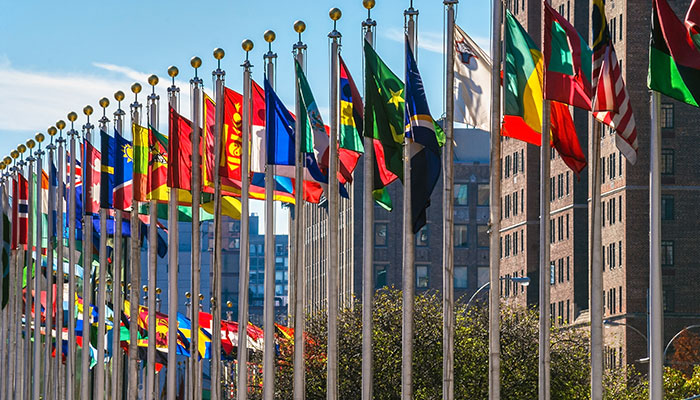
Still, the UN has faced tough times before – over many decades during the Cold War, the Security Council was crippled by deep tensions between the US and the Soviet Union. The UN is not as sidelined or divided today as it was then. However, as the relationship between China and the US sours, the achievements of global co-operation are being eroded.
The way in which people speak about the UN often implies a level of coherence and bureaucratic independence that the UN rarely possesses. A failure of the UN is normally better understood as a failure of international co-operation.
We see this recently in the UN’s inability to deal with crises from the ethnic cleansing of the Rohingya Muslims in Myanmar, to civil conflict in Syria, and the failure of the Security Council to adopt a COVID-19 resolution calling for ceasefires in conflict zones and a co-operative international response to the pandemic.
The UN administration is not primarily to blame for these failures; rather, the problem is the great powers – in the case of COVID-19, China and the US – refusing to co-operate.
Where states fail to agree, the UN is powerless to act.
Marking the 75th anniversary of the official formation of the UN, when 50 founding nations signed the UN Charter on June 26, 1945, we look at some of its key triumphs and resounding failures.
Five successes
1. Peacekeeping
The United Nations was created with the goal of being a collective security organisation. The UN Charter establishes that the use of force is only lawful either in self-defence or if authorised by the UN Security Council. The Security Council’s five permanent members, being China, US, UK, Russia and France, can veto any such resolution.
The UN’s consistent role in seeking to manage conflict is one of its greatest successes.
A key component of this role is peacekeeping. The UN under its second secretary-general, the Swedish statesman Dag Hammarskjöld – who was posthumously awarded the Nobel Peace prize after he died in a suspicious plane crash – created the concept of peacekeeping. Hammarskjöld was responding to the 1956 Suez Crisis, in which the US opposed the invasion of Egypt by its allies Israel, France and the UK.
UN peacekeeping missions involve the use of impartial and armed UN forces, drawn from member states, to stabilise fragile situations. “The essence of peacekeeping is the use of soldiers as a catalyst for peace rather than as the instruments of war,” said then UN Secretary-General Javier Pérez de Cuéllar, when the forces won the 1988 Nobel Peace Prize following missions in conflict zones in the Middle East, Africa, Asia, Central America and Europe.
However, peacekeeping also counts among the UN’s major failures.
2. Law of the Sea
Negotiated between 1973 and 1982, the UN Convention on the Law of the Sea (UNCLOS) set up the current international law of the seas. It defines states’ rights and creates concepts such as exclusive economic zones, as well as procedures for the settling of disputes, new arrangements for governing deep sea bed mining, and importantly, new provisions for the protection of marine resources and ocean conservation.
Mostly, countries have abided by the convention. There are various disputes that China has over the East and South China Seas which present a conflict between power and law, in that although UNCLOS creates mechanisms for resolving disputes, a powerful state isn’t necessarily going to submit to those mechanisms.
Secondly, on the conservation front, although UNCLOS is a huge step forward, it has failed to adequately protect oceans that are outside any state’s control. Ocean ecosystems have been dramatically transformed through overfishing. This is an ecological catastrophe that UNCLOS has slowed, but failed to address comprehensively.
3. Decolonisation
The idea of racial equality and of a people’s right to self-determination was discussed in the wake of World War I and rejected. After World War II, however, those principles were endorsed within the UN system, and the Trusteeship Council, which monitored the process of decolonisation, was one of the initial bodies of the UN.
Although many national independence movements only won liberation through bloody conflicts, the UN has overseen a process of decolonisation that has transformed international politics. In 1945, around one third of the world’s population lived under colonial rule. Today, there are less than 2 million people living in colonies.
When it comes to the world’s First Nations, however, the UN generally has done little to address their concerns, aside from the non-binding UN Declaration on the Rights of Indigenous Peoples of 2007.
4. Human rights
The Human Rights Declaration of 1948 for the first time set out fundamental human rights to be universally protected, recognising that the “inherent dignity and of the equal and inalienable rights of all members of the human family is the foundation of freedom, justice and peace in the world”.
Since 1948, 10 human rights treaties have been adopted – including conventions on the rights of children and migrant workers, and against torture and discrimination based on gender and race – each monitored by its own committee of independent experts.
The language of human rights has created a new framework for thinking about the relationship between the individual, the state and the international system. Although some people would prefer that political movements focus on ‘liberation’ rather than ‘rights’, the idea of human rights has made the individual person a focus of national and international attention.
5. Free trade
Depending on your politics, you might view the World Trade Organisation as a huge success, or a huge failure.
The WTO creates a near-binding system of international trade law with a clear and efficient dispute resolution process.
The majority Australian consensus is that the WTO is a success because it has been good for Australian famers especially, through its winding back of subsidies and tariffs.
However, the WTO enabled an era of globalisation which is now politically controversial.
Recently, the US has sought to disrupt the system. In addition to the trade war with China, the Trump Administration has also refused to appoint tribunal members to the WTO’s Appellate Body, so it has crippled the dispute resolution process. Of course, the Trump Administration is not the first to take issue with China’s trade strategies, which include subsidises for ‘State Owned Enterprises’ and demands that foreign firms transfer intellectual property in exchange for market access.
The existence of the UN has created a forum where nations can discuss new problems, and climate change is one of them. The Intergovernmental Panel on Climate Change (IPCC) was set up in 1988 to assess climate science and provide policymakers with assessments and options. In 1992, the UN Framework Convention on Climate Change created a permanent forum for negotiations.
However, despite an international scientific body in the IPCC, and 165 signatory nations to the climate treaty, global greenhouse gas emissions have continued to increase.
Under the Paris Agreement, even if every country meets its greenhouse gas emission targets we are still on track for ‘dangerous warming’. Yet, no major country is even on track to meet its targets; while emissions will probably decline this year as a result of COVID-19, atmospheric concentrations of greenhouse gases will still increase.
This illustrates a core conundrum of the UN in that it opens the possibility of global cooperation, but is unable to constrain states from pursuing their narrowly conceived self-interests. Deep co-operation remains challenging.
Five failures of the UN
1. Peacekeeping
During the Bosnian War, Dutch peacekeeping forces stationed in the town of Srebrenica, declared a ‘safe area’ by the UN in 1993, failed in 1995 to stop the massacre of more than 8000 Muslim men and boys by Bosnian Serb forces. This is one of the most widely discussed examples of the failures of international peacekeeping operations.
On the massacre’s 10th anniversary, then UN Secretary General Kofi Annan wrote that the UN had “made serious errors of judgement, rooted in a philosophy of impartiality”, contributing to a mass murder that would “haunt our history forever”.
If you look at some of the other infamous failures of peacekeeping missions – in places such as Rwanda, Somalia and Angola – it is the limited powers given to peacekeeping operations that have resulted in those failures.
2. The invasion of Iraq
The invasion of Iraq by the US in 2003, which was unlawful and without Security Council authorisation, reflects the fact that the UN is has very limited capacity to constrain the actions of great powers.
The Security Council designers created the veto power so that any of the five permanent members could reject a Council resolution, so in that way it is programmed to fail when a great power really wants to do something that the international community generally condemns.
In the case of the Iraq invasion, the US didn’t veto a resolution, but rather sought authorisation that it did not get. The UN, if you go by the idea of collective security, should have responded by defending Iraq against this unlawful use of force.
The invasion proved a humanitarian disaster with the loss of more than 400,000 lives, and many believe that it led to the emergence of the terrorist Islamic State.
3. Refugee crises
The UN brokered the 1951 Refugee Convention to address the plight of people displaced in Europe due to World War II; years later, the 1967 Protocol removed time and geographical restrictions so that the Convention can now apply universally (although many countries in Asia have refused to sign it, owing in part to its Eurocentric origins).
Despite these treaties, and the work of the UN High Commission for Refugees, there is somewhere between 30 and 40 million refugees, many of them, such as many Palestinians, living for decades outside their homelands. This is in addition to more than 40 million people displaced within their own countries.
While for a long time refugee numbers were reducing, in recent years, particularly driven by the Syrian conflict, there have been increases in the number of people being displaced.
During the COVID-19 crisis, boatloads of Rohingya refugees were turned away by port after port. This tragedy has echoes of pre-World War II when ships of Jewish refugees fleeing Nazi Germany were refused entry by multiple countries.
And as a catastrophe of a different kind looms, there is no international framework in place for responding to people who will be displaced by rising seas and other effects of climate change.
4. Conflicts without end
Across the world, there is a shopping list of unresolved civil conflicts and disputed territories.
Palestine and Kashmir are two of the longest-running failures of the UN to resolve disputed lands. More recent, ongoing conflicts include the civil wars in Syria and Yemen.
The common denominator of unresolved conflicts is either division among the great powers, or a lack of international interest due to the geopolitical stakes not being sufficiently high. For instance, the inaction during the Rwandan civil war in the 1990s was not due to a division among great powers, but rather a lack of political will to engage.
In Syria, by contrast, Russia and the US have opposing interests and back opposing sides: Russia backs the government of the Syrian dictator Bashar al-Assad, whereas the US does not.
5. Acting like it’s 1945
The UN is increasingly out of step with the reality of geopolitics today.
The permanent members of the Security Council reflect the division of power internationally at the end of World War II. The continuing exclusion of Germany, Japan, and rising powers such as India and Indonesia, reflects the failure to reflect the changing balance of power.
Also, bodies such as the IMF and the World Bank, which are part of the UN system, continue to be dominated by the West. In response, China has created potential rival institutions such as the Asian Infrastructure Investment Bank.
Western domination of UN institutions undermines their credibility. However, a more fundamental problem is that institutions designed in 1945 are a poor fit with the systemic global challenges – of which climate change is foremost – that we face today.